
Best Things to Do in Egypt With Kids
The best things to do in Egypt with kids are the experiences that capture their attention without making every day feel the same. The Pyramids of Giza have sheer scale, Luxor’s painted tombs bring ancient Egypt to life, while a boat ride to Philae, time on the Nile, a desert adventure or a few days at the Red Sea give children something completely different to experience.
You do not need to remove Egypt’s history to make the trip work for children. You need to vary how they experience it.
A week made up entirely of pyramids, museums, temples and tombs can eventually feel repetitive even when every individual site is extraordinary. A stronger family itinerary interrupts monumental history with boats, water, desert, markets or simply an afternoon when nobody is expected to learn anything.
This guide focuses on which experiences are worth making room for. For the larger decisions about ages, pacing, accommodation and route planning, start with Egypt With Kids.
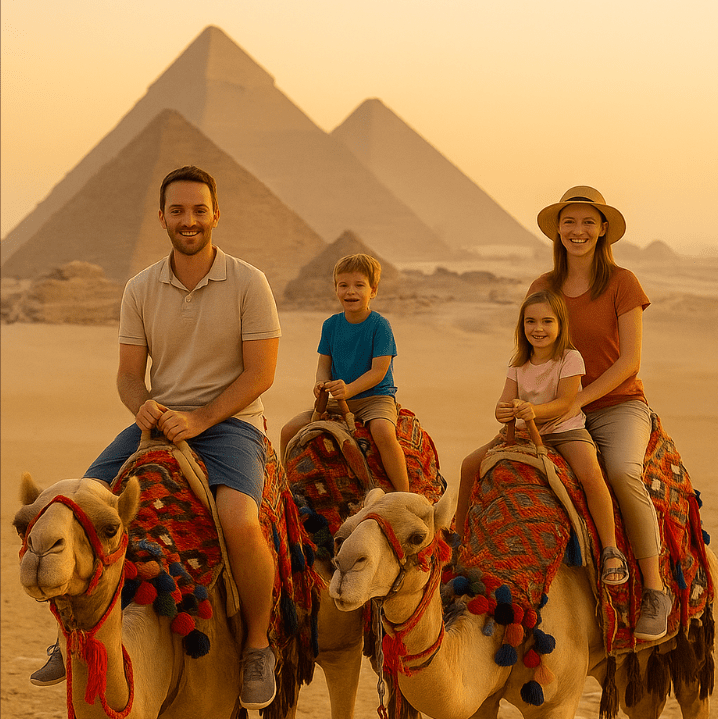
Start With the Pyramids of Giza
If children are visiting Egypt for the first time, Giza deserves its place near the top of the list.
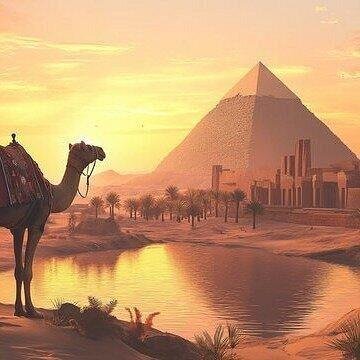
The pyramids have an advantage that many historical attractions do not: children understand the scale before anyone explains the history. They can stand beneath enormous blocks of stone, look across the plateau toward the pyramids and see the Sphinx rather than having to imagine a vanished ancient landscape.
That does not mean the visit should be long simply because Giza is important.
The plateau is large, exposed and uneven in places. Explore ENA’s Giza Pyramids Guide covers realistic visit length, movement around the plateau, heat, pyramid interiors and the other practical decisions families need to make.
With younger children, the outside experience may be more successful than taking everyone inside the Great Pyramid. The interior involves confined spaces and steep passages and should be chosen because the child wants that experience, not because entering a pyramid feels compulsory.
Let the scale of Giza do some of the work. Children do not need a lecture at every stop to understand that they are standing somewhere extraordinary.
Use GEM Selectively Rather Than Trying to Finish It
The Grand Egyptian Museum can be one of Egypt’s strongest family museum experiences, but trying to see everything is the wrong goal.
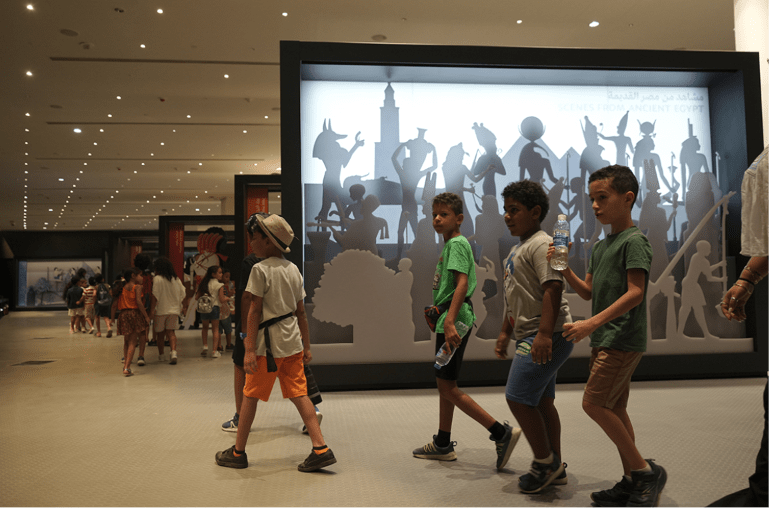
GEM’s Children’s Museum is designed as an interactive learning environment and particularly welcomes children ages 6–12 and families. Families in that age range should check its current program and access arrangements when planning the visit.
The main museum still deserves time, but children do not need to examine every gallery. Choose the objects and spaces most likely to make an impression and leave before museum fatigue replaces curiosity.
This is especially important if GEM follows the pyramids on the same day. Giza and GEM make geographical sense together, but they are both major experiences.
The Grand Egyptian Museum Guide handles detailed museum planning, while Cairo With Kids helps decide whether your particular family should combine Giza and GEM or split them across separate days.
In Luxor, Choose Experiences That Feel Different From One Another
Luxor is where families are most likely to become overloaded by the idea that every important archaeological site must be visited.
It doesn’t.
For children, variety matters more than monument count.
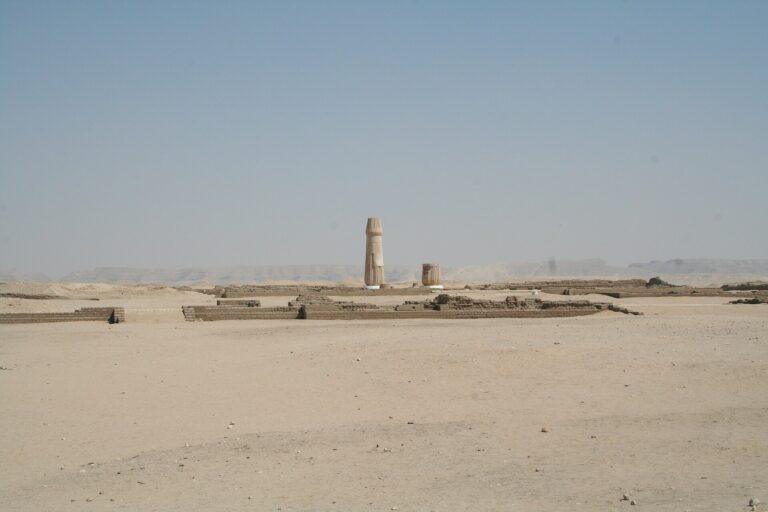
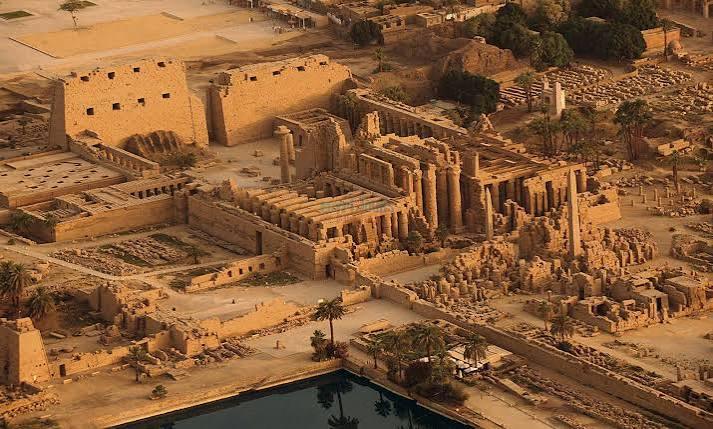
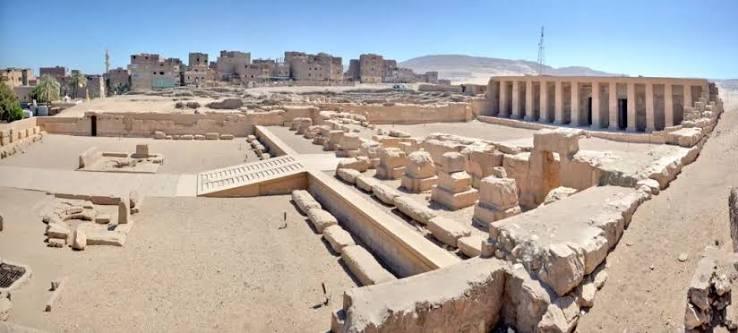
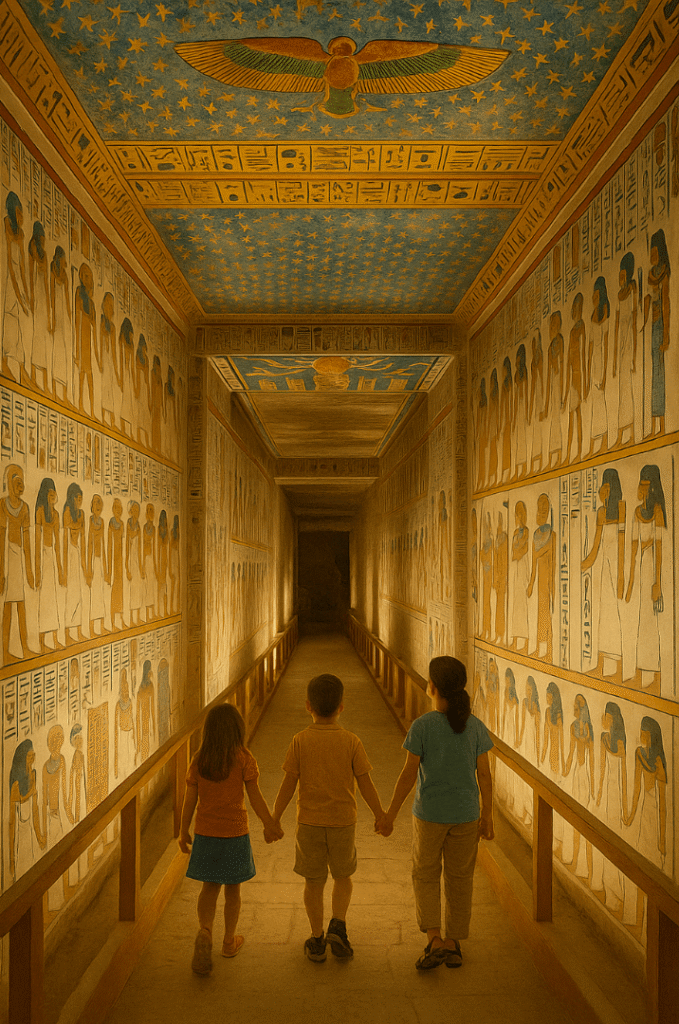
The Valley of the Kings gives them the physical experience of entering the desert hillside and walking into decorated royal tombs. Karnak offers monumental scale above ground. Luxor Temple creates another atmosphere again, particularly later in the day.
Those experiences are different enough to remain memorable.
The trouble starts when adults keep adding sites because each one is historically important. A child who has already visited a tomb, enormous temple complex and another decorated monument may gain very little from the fourth major archaeological stop of the day.
Choose places that show children different sides of ancient Egypt and give each enough time to make an impression. The Luxor Travel Guide helps you decide how to divide the East and West Banks without turning Luxor into a temple marathon.
Let the Nile Be an Experience, Not Just Scenery
Some of the best family moments in Upper Egypt happen when nobody is standing in front of a monument.
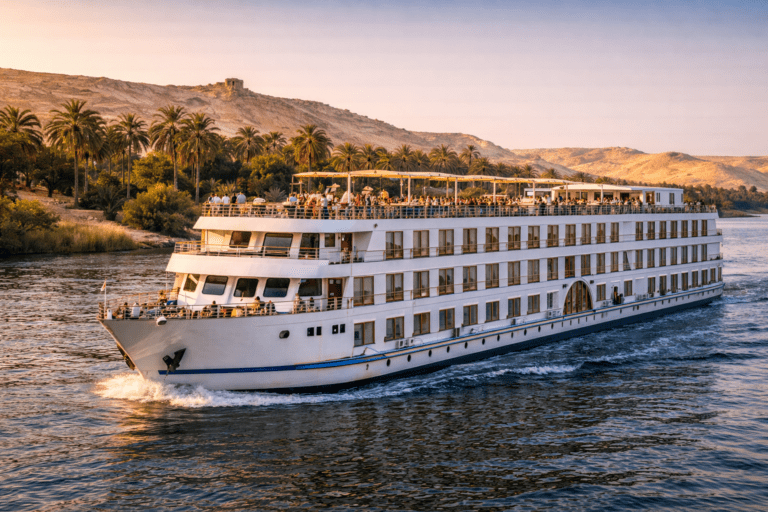
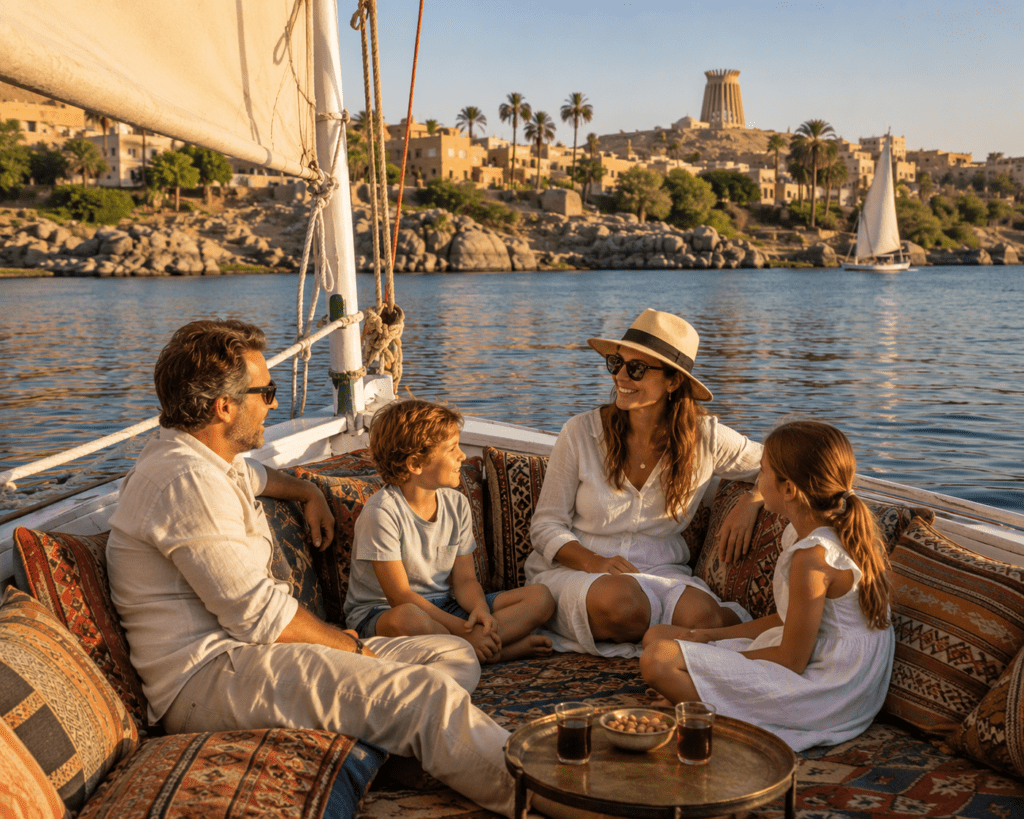
A felucca sail in Aswan lets children experience the Nile at a human scale. A multi-night motor cruise does something different: it becomes the family’s moving base between Luxor and Aswan and reduces repeated hotel changes.
That can be particularly useful for families, but a motor Nile cruise should not be mistaken for a resort cruise built around children’s entertainment. Sightseeing remains a major part of the journey, and several days can include archaeological visits.
If you are deciding whether the cruise format actually suits your children, read Nile Cruise With Kids before choosing it simply because cruising sounds relaxing.
Families who do not want a multi-night cruise can still make the Nile part of the trip. A shorter felucca sail, particularly in Aswan, gives children the experience of being on the river without determining several days of the itinerary.
In Aswan, Use the Boat Ride to Make Philae Part of the Adventure
Philae works particularly well after children have already seen several land-based temples because getting there is part of the experience.
The temple complex stands on Agilkia Island, so visitors reach it by boat. That transition from shore to boat to island changes the rhythm before the family even begins exploring the monuments.
For children who are starting to feel that every historical visit begins with getting out of a vehicle and walking toward another stone building, that difference matters.
Aswan also gives families opportunities to slow down around the Nile rather than filling every available hour with archaeology. A felucca sail or quieter time near the river can be more valuable after a substantial sightseeing morning than another attraction added simply because there is space in the schedule.
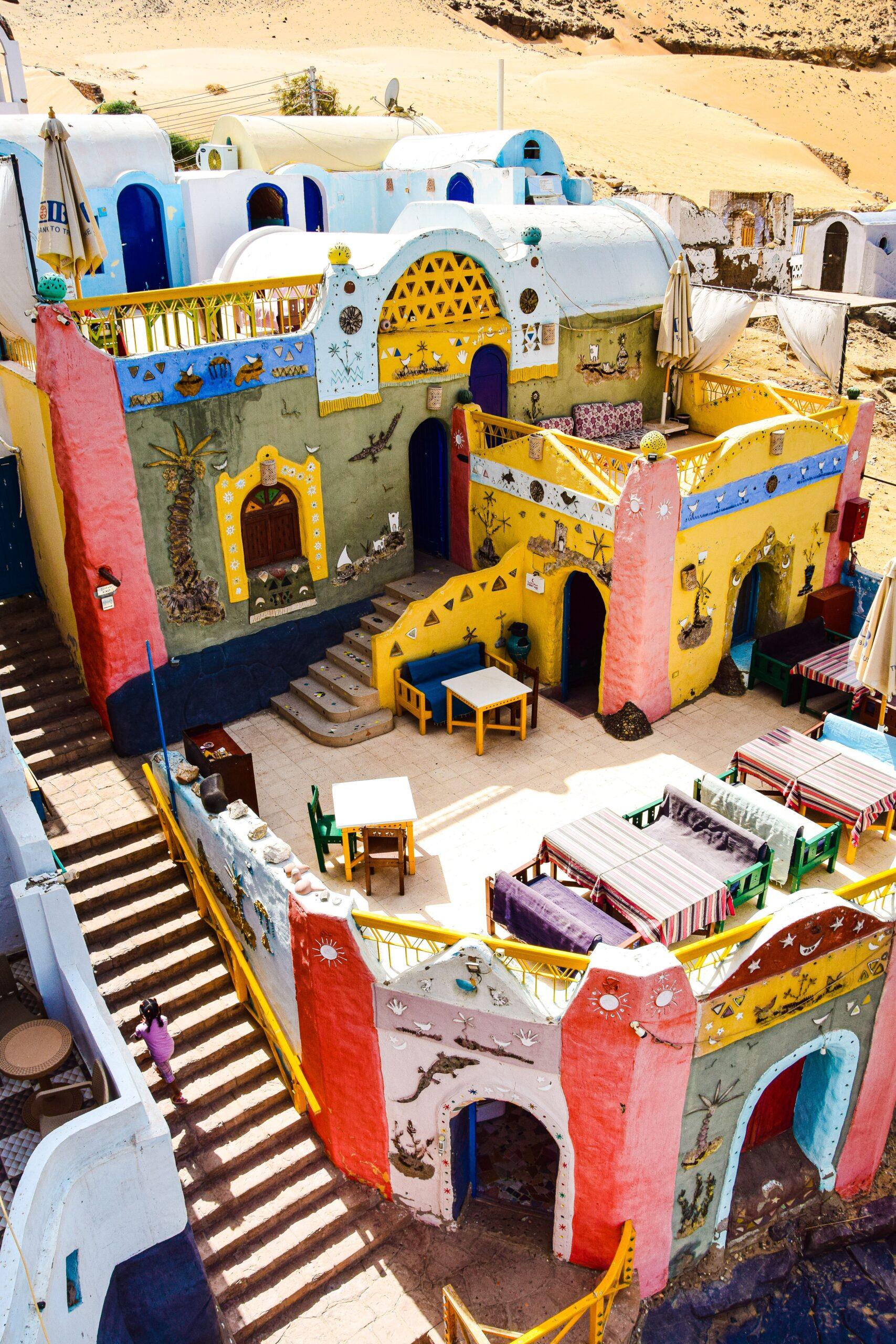
A Nubian Village experience can add another change of subject, but choose it because the family genuinely wants the cultural experience rather than treating it as a mandatory component of every Aswan visit.
The Aswan Travel Guide helps put Philae, Nile time and the city’s other major experiences into a realistic stay.
What About Abu Simbel With Children?
Abu Simbel can be extraordinary for children, but I would not put it on the universal family must-do list.
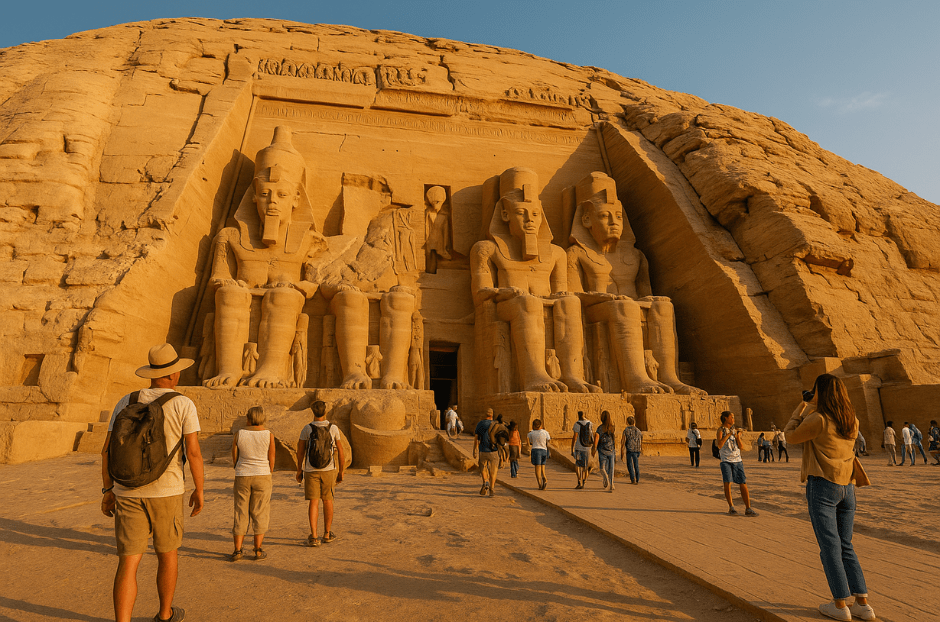
The reason is not the temples. The enormous seated statues of Ramses II are exactly the kind of scale that can make an immediate impression on a child.
The complication is getting there.
Abu Simbel lies roughly 280 kilometres south of Aswan. A road visit normally means several hours of travel in each direction and often an early departure, which changes the family calculation considerably.
For an older child who is fascinated by ancient Egypt, Abu Simbel may easily justify that effort. For a younger child already tiring of early starts and archaeological visits, the same day may be a poor trade.
The Abu Simbel Travel Guide explains the road and flight options so you can judge the experience against the actual travel involved.
Put the Red Sea After the History-Heavy Part of the Trip
For families with enough time, the Red Sea is one of the strongest ways to balance an Egypt itinerary.
After Cairo and several days in Upper Egypt, children suddenly have a completely different set of possibilities: swimming, snorkeling, boat trips, beaches and resort time.
Egypt’s official tourism authority highlights family activities in Egypt, including Red Sea water experiences such as glass-bottom boats and other activities that let families experience the coast differently from the archaeological portion of the trip.
The best Red Sea destination depends partly on the route.
Hurghada sits on the mainland and connects naturally with the Luxor side of many first-time itineraries. Sharm El Sheikh creates a different route and resort choice.
Do not choose between them solely by asking which has the “better beach.” Think about how the family will get there, the type of water access you want, snorkeling priorities and what happens after the Red Sea portion of the trip.
For a family already traveling through Cairo and Upper Egypt, Hurghada often fits the route more naturally. That does not make it universally better; it makes route logic part of the decision.

Fayoum Is One of the Best Ways to Break the Monument Pattern
Fayoum gives families something that the classic Cairo–Luxor–Aswan route cannot: a day or two where the landscape itself keeps changing.
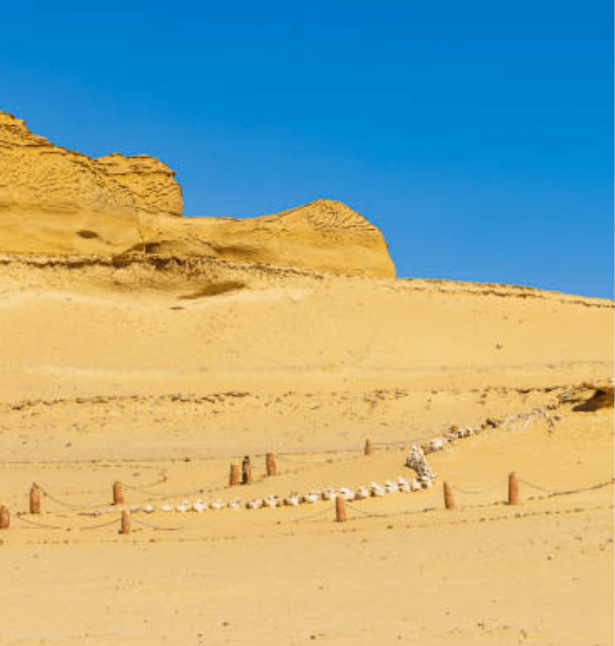
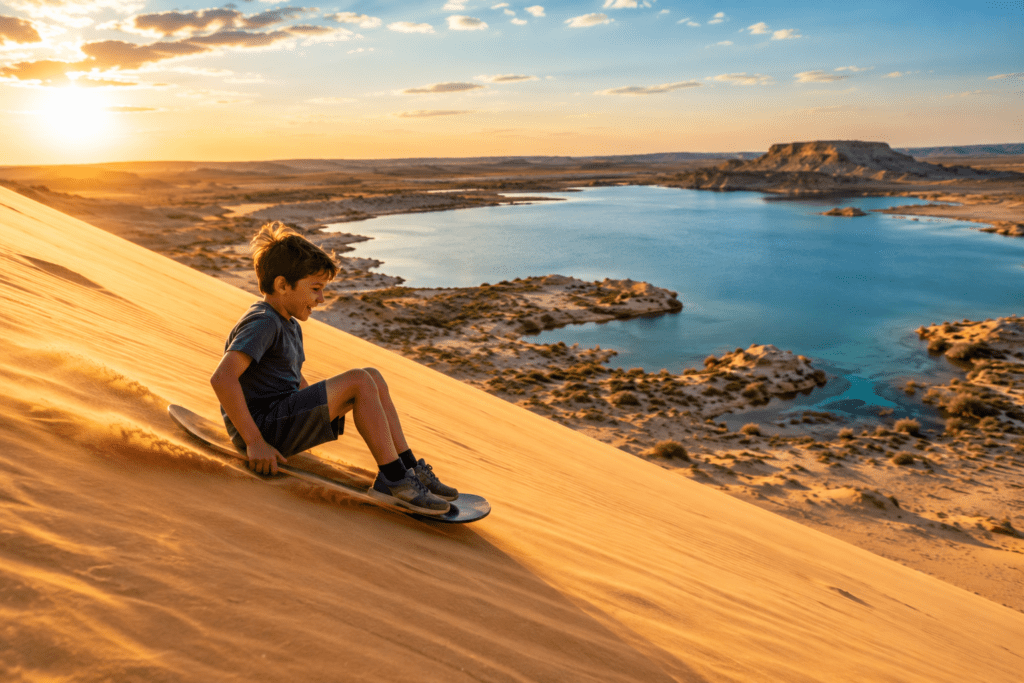
Around Wadi El Rayan, water, desert and dunes create a completely different physical experience from Cairo’s museums or Upper Egypt’s temples. Magic Lake changes the scenery again. Sandboarding adds movement, while Wadi Al-Hitan turns the desert into a fossil experience rather than another archaeological monument.
The fossil story is not minor. UNESCO describes Wadi Al-Hitan, or Whale Valley, as an exceptional record of the transition of early whales from land-based ancestors to ocean-going mammals. The number, concentration and quality of the fossils are why the valley is a World Heritage Site.
That gives children a remarkably tangible question to carry into the desert: why are whale skeletons here?
Fayoum works particularly well after several Cairo sightseeing days or before the family moves into another history-heavy part of the itinerary. It does not ask children to appreciate another dynasty, ruler or temple plan. They can climb sand, see water in the desert and encounter a completely different chapter of Egypt’s past.
Use the Fayoum Travel Guide for the wider region and the Wadi El Rayan Guide for more detailed planning.
Families who specifically want the fuller combination discussed here—including Wadi El Rayan, Magic Lake, sandboarding and Wadi Al-Hitan—can look at Explore ENA’s Fayoum Nature Escape: Lakes, Desert & Glamping. That is a two-day experience rather than the shorter Fayoum day tour, which is why it is the closer match for this particular combination.
Modern Cairo Can Be Useful When Everyone Needs a Complete Break
Not every family day in Cairo has to justify itself historically.
Sometimes the useful choice is an afternoon when the children do something familiar, physical or simply fun.
Ski Egypt at Mall of Egypt offers indoor snow experiences, including snow play, skiing and snowboarding. Activities have their own participation requirements, so check the current option for your children’s ages rather than assuming every activity is suitable for everyone.
That can sound like an odd recommendation in a country full of extraordinary ancient sites, but that is precisely why it can work. A few hours in snow after several hot outdoor sightseeing days can reset a child who has reached the limit of archaeology.
For a completely different break from Cairo’s historical sightseeing, there’s a Dolphinarium with dolphin and seal shows. Families looking for a more interactive experience can also book a separate swim-with-dolphins experience.
These are break options, not substitutes for Giza, GEM or Egypt’s major experiences. Their value comes from being different.

Give Children Something to Do at a Market
Markets work better for many children when they have a purpose.
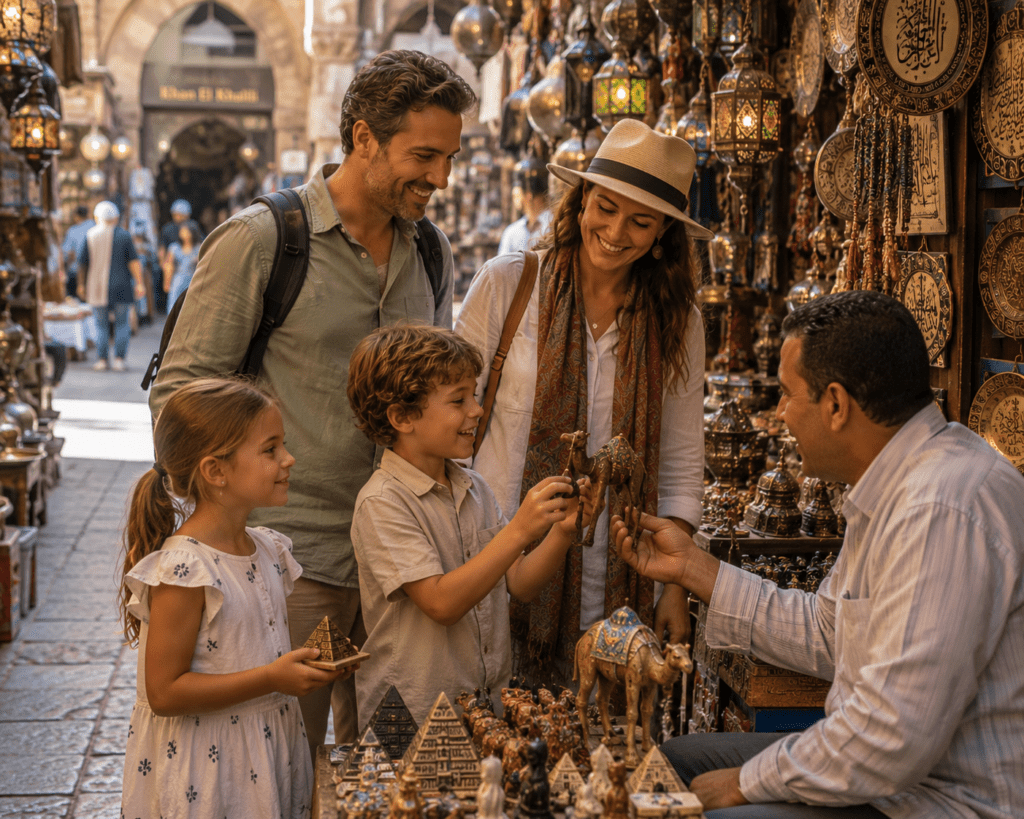
Instead of telling them to follow the adults through a crowded shopping area, give them a small amount of money to choose a souvenir, ask them to find a particular spice or object, or let an older child take responsibility for photographing details that interest them.
Keep the visit proportional to the child’s tolerance for crowds and stimulation.
A short market visit while everyone is still curious can be enjoyable. Stretching it until children are tired and overwhelmed does not make the experience more authentic.
This works particularly well in Cairo when a market or Historic Cairo visit becomes a different kind of experience after the more structured sightseeing at Giza and GEM.
Alexandria Can Give Older Children a Science Day
Alexandria does not have to become another sequence of historical stops.
At the Bibliotheca Alexandrina, the Planetarium Science Center includes a Planetarium, History of Science Museum and ALEXploratorium, giving science-interested children a different type of experience from Egypt’s archaeological sites. The Bibliotheca also runs resources and programs specifically for children and young people.
That makes Alexandria particularly interesting for families who already want to add the Mediterranean city and are looking for variety within the visit.
It does not mean every family should add Alexandria simply for the science center. The city makes most sense when Alexandria already fits the route or the family wants the Mediterranean experience as well.
Let Older Children Choose One Part of the Trip
By the time children are old enough to have strong travel preferences, giving them genuine influence can be more effective than continually trying to make adult choices “kid-friendly.”
Let an older child or teenager choose one experience.
It might be snorkeling, a particular royal tomb, sandboarding in Fayoum, a food experience, a photography walk or an afternoon with no sightseeing at all.
They do not need control of the itinerary. They need evidence that their interests matter inside it.
This is particularly useful in Egypt because the trip can otherwise become a long sequence of decisions made by adults: which pyramid, which temple, which tomb, which museum and how early everyone needs to leave tomorrow.
One meaningful choice can change how an older child relates to the rest of the trip.
How Do You Choose Between All of These?
For a first family trip, I would not try to include everything in this guide.
Start with the experiences that define Egypt and then deliberately add contrast.
A strong first family route might include Giza and selected GEM highlights in Cairo; a small number of distinct Luxor experiences; time on the Nile; and then either the Red Sea or Fayoum to change the physical and mental rhythm of the trip.
With more time, you can add both. Abu Simbel becomes easier to justify when the route has enough space for the travel involved rather than forcing it into an already crowded Upper Egypt schedule.
What I would not do is fill every open half-day with another monument simply because it is famous. Children usually remember experiences that felt different from one another more clearly than a long sequence of historically important places requiring the same kind of attention.
If you are deciding how much can realistically fit, compare the 7 Day Egypt Itinerary With Kids with the 10 Day Egypt Itinerary With Kids.
Frequently Asked Questions
What are the best things to do in Egypt with kids?
For most first-time families, start with the Pyramids of Giza, a selective visit to GEM, a few contrasting experiences in Luxor, time on the Nile and at least one substantial change of pace such as the Red Sea or Fayoum. The strongest family itinerary combines history with water, outdoor activity and recovery time rather than trying to visit every major monument.
Is the Grand Egyptian Museum good for children?
Yes, particularly when the visit is selective. GEM also has a Children’s Museum aimed especially at children ages 6–12 and families, with an interactive learning environment. Check current Children’s Museum access when planning because programs and admission arrangements can change.
Will children get bored with temples in Egypt?
Some will if too many similar archaeological visits are placed together. Choose sites that offer noticeably different experiences and interrupt history-heavy days with sailing, desert, markets, swimming or genuine downtime.
Is Abu Simbel good for children?
It can be, particularly for older children interested in ancient Egypt. The temples themselves have enormous visual impact, but the long journey from Aswan and commonly early departure make Abu Simbel less universally family-friendly than Giza or Philae. Judge it by your children’s tolerance for the travel involved.
Is the Red Sea worth adding to a family Egypt trip?
For many families, yes, particularly after Cairo and Upper Egypt. It changes the pace completely and gives children opportunities for swimming, snorkeling, boat trips and beach time. Hurghada often connects more naturally with Luxor, while Sharm El Sheikh creates a different route.
Is Fayoum good for children?
Fayoum can be one of the strongest additions for children who enjoy outdoor activity and variety. Wadi El Rayan, desert dunes, Magic Lake and Wadi Al-Hitan create an experience built around landscapes, movement and fossils rather than another sequence of monuments.
Do we need special children’s attractions in Egypt?
No. Many of Egypt’s strongest family experiences are the same places adults come to see. The difference is in how many you visit, how you explain them and what you put between them. Modern children’s attractions can be useful breaks, but they should complement the Egypt experience rather than replace it.
Build the Family Trip Around Experiences That Fit Together
The best family itinerary in Egypt is not the one with the longest attraction list.
It is the one where Giza still feels exciting because the children were not exhausted before they arrived; where a painted tomb feels different from a temple; where the Nile provides a pause; and where desert or Red Sea time arrives before everyone has had enough of sightseeing.
If the experiences your family wants do not line up neatly inside one existing itinerary, tell Explore ENA what you want to include. We can use those priorities to build the route and pacing around your family instead of sending you to a generic tour category and asking you to make the pieces fit yourself.