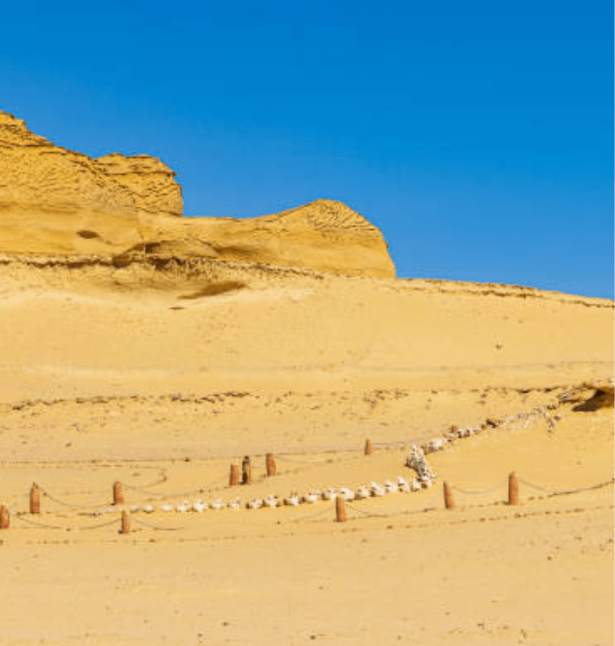
Valley of the Whales Guide
The Valley of the Whales, known in Arabic as Wadi Al-Hitan, is one of Egypt’s most unexpected landscapes. Deep in Fayoum’s desert, far from the Nile and the Red Sea, fossilized whale skeletons lie preserved in the sand, showing that this dry wilderness was once covered by an ancient ocean.
Most travelers come to Egypt expecting pyramids, temples, and tombs. Wadi Al-Hitan offers a completely different kind of history. Instead of pharaohs and dynasties, the story here stretches back millions of years, to a time when early whales were still evolving from land-dwelling mammals into fully aquatic creatures.
For visitors exploring Fayoum, the Valley of the Whales is one of the region’s strongest stops because it combines desert scenery, paleontology, hiking, and a quiet sense of scale that feels far removed from Egypt’s crowded archaeological sites.
Expert Insight: Wadi Al-Hitan is not a quick roadside photo stop. The site is most rewarding when visitors take time to walk the trails, visit the museum, and understand why these fossils matter globally.
Why It Is a UNESCO Site
The Valley of the Whales is a UNESCO World Heritage Site because it preserves one of the clearest fossil records of whale evolution anywhere in the world.
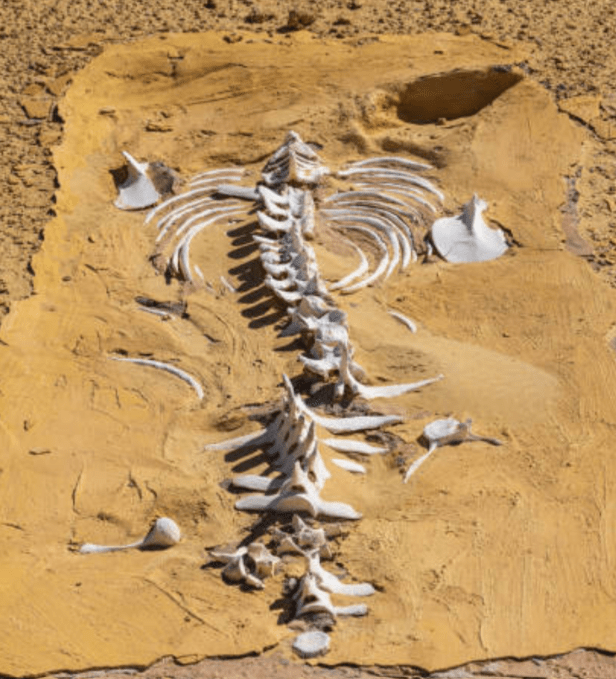
The exposed skeletons show an important stage in the transition from land mammals to ocean-dwelling whales. Some fossils still reveal small hind limbs, a remarkable detail that helps scientists understand how ancient whales gradually adapted to life in the water.
What makes the site especially powerful is that the fossils remain in their desert setting. Visitors do not only see bones behind glass; they walk through the landscape where these animals were discovered, surrounded by cliffs, sand, and silence.
That combination of scientific importance and natural setting is what makes Wadi Al-Hitan one of Egypt’s most unusual protected areas.
How Ancient Whales Ended Up in the Desert
The desert around Fayoum was not always desert.
Millions of years ago, this region was covered by a shallow sea connected to the ancient Tethys Ocean. Marine animals lived, died, and were buried beneath layers of sediment. Over enormous spans of time, those sediments hardened while the sea retreated and the landscape slowly transformed into desert.
Wind erosion later exposed the fossils, revealing whale skeletons, shark teeth, shells, and other marine remains in an environment that now appears completely dry.
This contrast is what makes the Valley of the Whales so striking. Standing in the desert heat while looking at ancient marine fossils forces visitors to imagine Egypt in a form almost impossible to recognize today.
What You’ll See
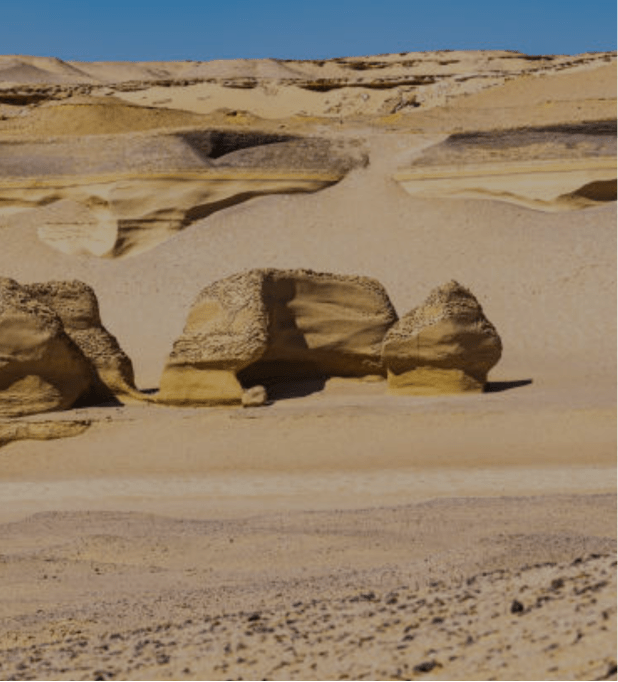
A visit to Wadi Al-Hitan usually includes a walk through the open-air fossil site, time inside the small fossil museum, and views across the surrounding desert formations.
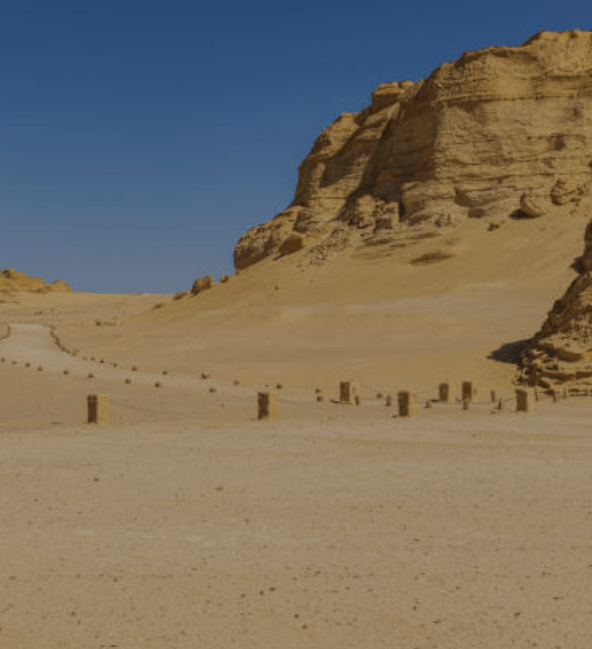
The landscape is quiet and exposed. Trails lead visitors between marked fossil locations, where skeletons rest in the sand under simple protective structures. The experience feels more like walking through a natural history site than visiting a traditional museum.
Because the area is remote, the silence becomes part of the visit. There are no city sounds, no temple crowds, and very little shade once you begin walking. The desert setting helps make the fossils feel even more extraordinary.
Fossil Skeletons
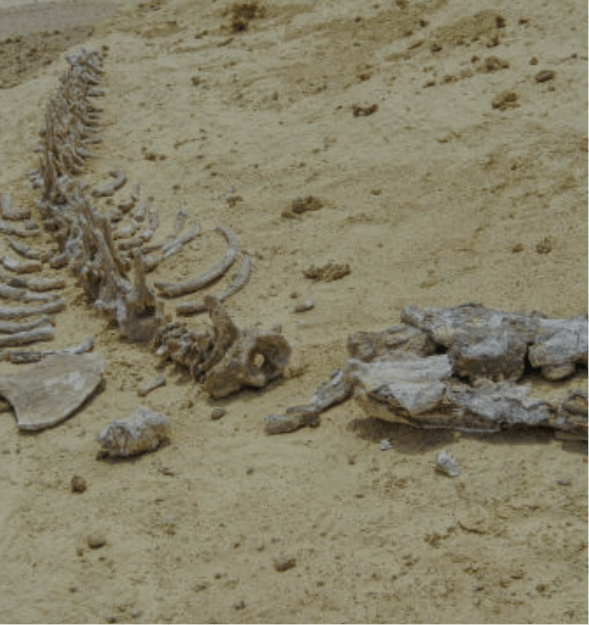
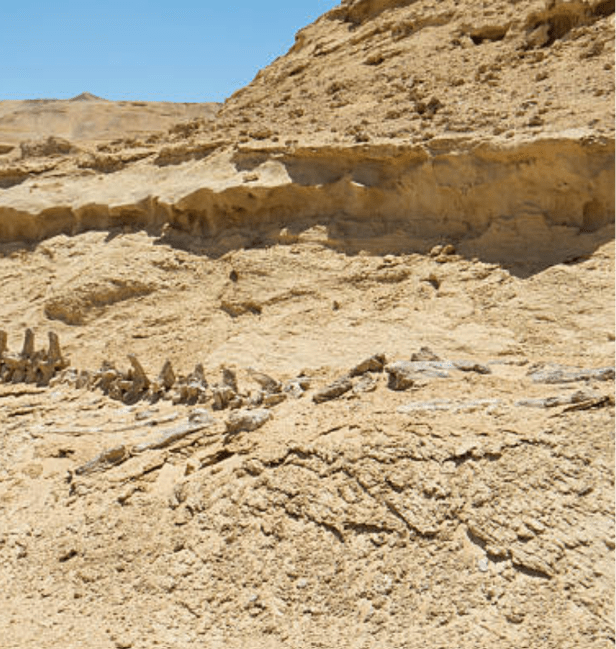
The fossil skeletons are the main reason travelers visit the Valley of the Whales.
Some remains are partial, while others clearly show the elongated bodies of ancient whales preserved in the desert floor. The most important fossils belong to early whale species such as Basilosaurus and Dorudon, which lived roughly 37 million years ago.
Seeing these fossils in place is very different from seeing them inside a museum. The surrounding desert makes the scale of time feel more real. These animals lived in a sea that vanished long before humans, pharaohs, or even the Nile Valley civilizations existed.
For travelers used to Egypt’s ancient temples, Wadi Al-Hitan expands the idea of “old” dramatically.
Fossil Museum
The Fossil and Climate Change Museum adds important context before or after walking the site.
Inside, visitors can see displays explaining whale evolution, fossil discovery, ancient marine environments, and the changing climate history of the region. The museum helps make the outdoor fossil trail more meaningful, especially for travelers who are not already familiar with paleontology.
The museum is small, but it is worth visiting because it explains why the site matters beyond its visual impact. Without that context, some visitors may see only scattered bones in the desert. With it, the landscape becomes part of a much larger scientific story.
Hiking Trails
The walking trails at the Valley of the Whales are one of the best ways to experience the site properly.
The paths are not technically difficult, but the desert environment makes them feel more demanding than they appear. Sun exposure is strong, shade is limited, and the ground can be sandy or uneven in places.
Most visitors can complete the main trail comfortably with proper shoes, water, and sun protection. Walking slowly is better than rushing because the site rewards attention to detail. Fossils, desert textures, rock formations, and long views across the protected area all contribute to the experience.
The best visits allow enough time for both the fossil trail and the museum rather than treating one as optional.
Visitor Information
The Valley of the Whales is usually visited as part of a Fayoum day trip or overnight desert itinerary.
Most travelers reach the site by 4×4 vehicle from Fayoum, often after visiting Wadi El Rayan, Magic Lake, or the surrounding desert areas. The roads and protected desert terrain make guided transport strongly recommended, especially for travelers unfamiliar with the region.
Facilities are limited compared to major tourist sites in Cairo or Luxor, so visitors should arrive prepared. Water, sunglasses, sunscreen, a hat, and comfortable walking shoes make a major difference, especially during warmer months.
The site is remote, and that remoteness is part of its appeal. It feels best when included in a properly planned Fayoum itinerary rather than rushed as a last-minute add-on.
Best Time to Visit
The best time to visit the Valley of the Whales is from October through April, when temperatures are more comfortable for walking outdoors.
Summer visits are possible, but the desert heat can become intense, especially in the middle of the day. During hotter months, early morning departures are strongly recommended so the fossil trail can be explored before the strongest sun arrives.
Late afternoon light is especially beautiful across the desert landscape, but travelers should plan carefully because the site is remote and return drives take time.
For most visitors, winter and shoulder-season trips provide the best balance of comfort, visibility, and photography conditions.
Valley of the Whales FAQ
Is the Valley of the Whales worth visiting?
The Valley of the Whales is worth visiting for travelers interested in natural history, desert landscapes, and experiences beyond Egypt’s temples and pyramids. It is one of the most unique sites in Egypt because it shows an ancient marine world preserved in the middle of the desert.
How far is the Valley of the Whales from Cairo?
The journey from Cairo usually takes several hours depending on traffic, route, and stops in Fayoum. Most travelers visit as part of a full-day excursion or an overnight Fayoum itinerary rather than a short half-day trip.
Can you visit Wadi Al-Hitan without a guide?
Independent visits may be possible with the right vehicle and planning, but most travelers should go with an experienced guide or driver. The site is remote, desert roads can be challenging, and guided visits provide important context that makes the fossils more meaningful.
How long do you need at the Valley of the Whales?
Most visitors spend one to two hours exploring the fossil trail and museum. Travelers with a deeper interest in photography, geology, or natural history may want more time.
Is the Valley of the Whales good for families?
Families with curious children often enjoy the site because the fossils are visible outdoors and the story of ancient whales in the desert is easy to understand. The main challenge is heat, so families should visit during cooler months or earlier in the day.
Many travelers visit Fayoum only for sandboarding or quick desert photos, then miss the site that makes the region globally important. Explore Egyptian Nile Adventures designs Fayoum experiences that balance adventure with context, combining places like the Valley of the Whales, Wadi El Rayan, Magic Lake, and the desert dunes in a route that makes sense on the ground. Before choosing a Fayoum trip, make sure your itinerary gives Wadi Al-Hitan enough time to feel like a discovery, not a rushed stop at the edge of the desert.