The Forgotten Capitals of Ancient Egypt: Memphis, Akhetaten, Avaris & Thebes
You can spend several days in Luxor without realizing that you are walking through one of ancient Egypt’s former capitals.
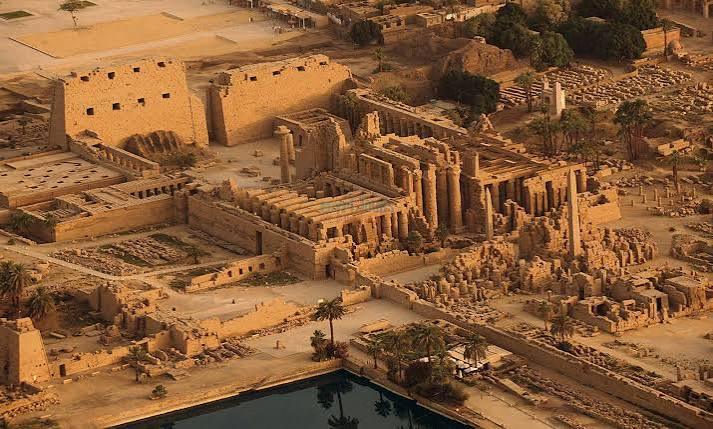
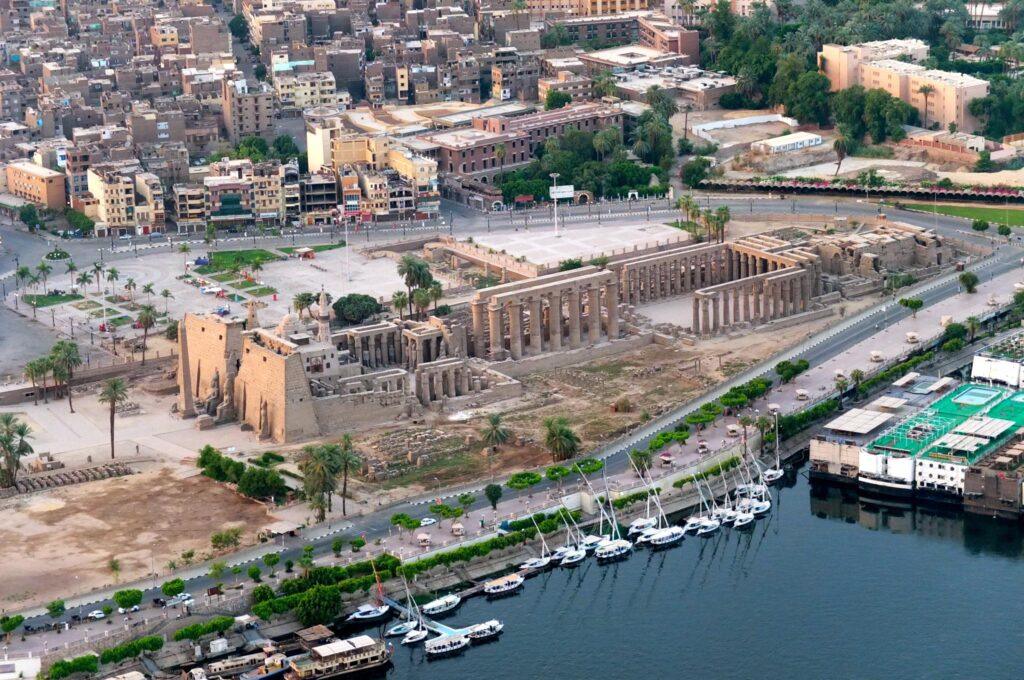
The temples are called Karnak and Luxor. The royal tombs lie across the Nile in the Valley of the Kings and Valley of the Queens. Hotels, restaurants, road signs and airport boards all say Luxor. Yet this landscape belonged to Thebes, one of the most powerful capitals in ancient Egyptian history.
Thebes is not alone.
Memphis, Akhetaten and Avaris were also capitals of ancient Egypt, although many travelers would struggle to place all four on a modern map. Part of the reason is surprisingly simple: the names under which these cities were known in antiquity are no longer the names most visitors encounter today.
Ancient Thebes is now associated with Luxor. Akhetaten is better known as Amarna or Tell el-Amarna. Avaris has been identified at Tell el-Dab’a in the eastern Nile Delta. Ancient Memphis survives around Mit Rahina, south of modern Cairo.
The cities were not forgotten by archaeologists or historians.
Their identities as former capitals have largely disappeared from the way modern travelers encounter Egypt.
That matters because ancient Egypt did not have one permanent capital. Its political center shifted as dynasties rose and fell, rival rulers divided the country, religious power moved, trade routes gained importance, and kings deliberately created new centers of authority.
Following these four forgotten capitals therefore tells a different story of Egypt.
Instead of beginning with monuments, it begins with where power actually lived.
Where Are Ancient Egypt’s Forgotten Capitals Today?
Before going deeper, it helps to put the ancient names back onto the modern map.
| Ancient capital | Name/location travelers encounter today | Region | Why it mattered |
|---|---|---|---|
| Memphis | Mit Rahina | South of Cairo | Early capital positioned near the meeting of Upper and Lower Egypt |
| Thebes | Luxor | Upper Egypt | Major royal capital and religious center of Amun |
| Akhetaten | Amarna / Tell el-Amarna | Minya Governorate | Akhenaten’s purpose-built capital centered on the Aten |
| Avaris | Tell el-Dab’a | Eastern Nile Delta | Capital of the Hyksos Fifteenth Dynasty and major trade center |
That table explains why these capitals can feel “lost” even when their remains are not.
A traveler searching for Thebes does not book a hotel in a modern city called Thebes. They book Luxor.
A traveler interested in Akhetaten usually encounters maps and archaeological material labeled Amarna.
Avaris is not a recognizable tourism city at all. Its remains are studied at Tell el-Dab’a.
And Memphis, despite its enormous historical importance, survives as an archaeological landscape rather than a modern metropolis carrying the same ancient name.
Why Ancient Egypt Kept Changing Capitals
Ancient Egypt lasted for more than three thousand years. Expecting one city to remain its political center throughout that entire span would be a little like expecting the political geography of Europe to stay unchanged from the Roman Empire to today.
Different rulers needed different things from a capital.
Geography mattered. So did access to trade, control of the Nile Valley and Delta, military security, family power bases, religious institutions and the personal ambitions of individual kings.
Political authority could also overlap.
A city might lose its role as the principal royal residence but remain one of the country’s most important religious centers. Egypt could split into rival regions, each governed from a different city. A king could create an entirely new capital while older cities remained populated and influential.
That is why calling a place “the capital of ancient Egypt” without specifying the period can be misleading.
Memphis, Thebes, Avaris and Akhetaten were all capitals, but they represent very different versions of political power.
Memphis: Egypt’s First Great Capital, Now Mit Rahina
Memphis is one of the clearest examples of a capital hiding in plain sight.
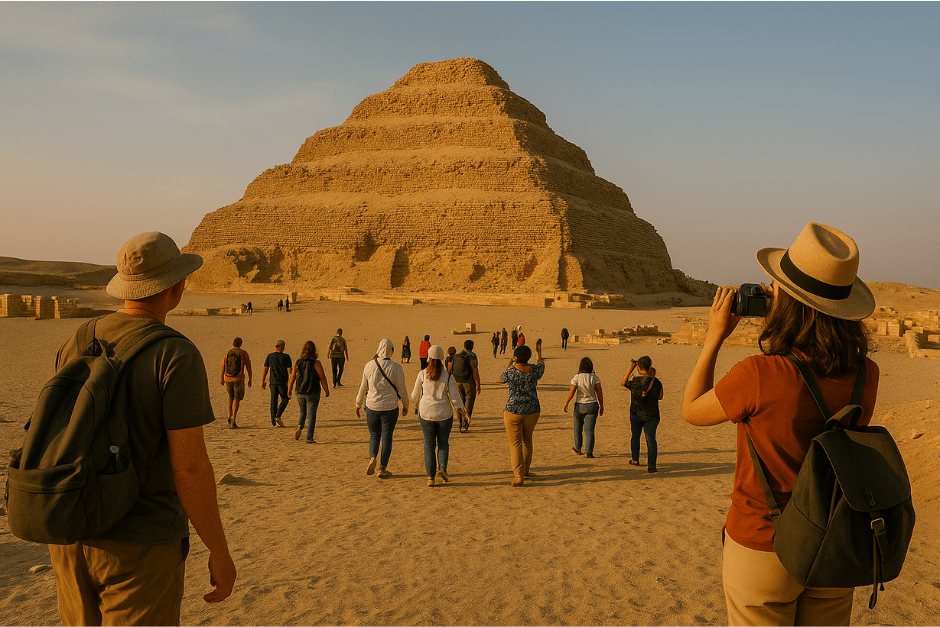
Travelers visiting Cairo often know about Saqqara and Dahshur. They may know that the Step Pyramid of Djoser predates the Great Pyramid or that the Bent and Red Pyramids show important stages in pyramid development.
What is easier to miss is that those enormous royal cemeteries belonged to the wider landscape of Memphis.
UNESCO identifies Memphis as the first capital of ancient Egypt and describes its location near the entrance to the Nile Delta as one of the key reasons for its political importance. From here, rulers were well placed to control the narrow Nile Valley to the south and the branching Delta to the north.
Traditionally associated with the political unification of Egypt around 3000 BCE, Memphis became the effective administrative capital during the Old Kingdom and remained important during later periods as well.
That long history is easy to underestimate today.
Why Memphis Does Not Look Like a Great Ancient Capital
Walk through the archaeological remains at Mit Rahina and the first surprise may be how little the site resembles a conventional idea of a capital city.
There is no preserved ancient skyline.
That is partly a question of what ancient cities were built from and where they were located. Much of the everyday urban fabric consisted of mudbrick and other materials far less durable than the stone used for royal tombs and temples. The city occupied the Nile floodplain, while many royal cemeteries were placed on the desert edge where preservation conditions were better.
As a result, the dead often survive more visibly than the city of the living.
That is why the Memphite necropolis—from Giza through Saqqara, Abusir and Dahshur—can seem more monumental today than Memphis itself. UNESCO treats that wider landscape as a single World Heritage property because the capital and its cemeteries belonged to the same political and religious system.
Our Saqqara and Dahshur guide explains this relationship in more detail and, importantly, why Memphis should not automatically be added if doing so means cutting Saqqara down to a rushed stop.
Memphis Was Still Important Long After the Pyramid Age
Memphis did not vanish when the Old Kingdom ended.
Its temples, administration, workshops and strategic location continued to matter under later dynasties. It was particularly associated with Ptah, the creator god and patron of craftsmen.
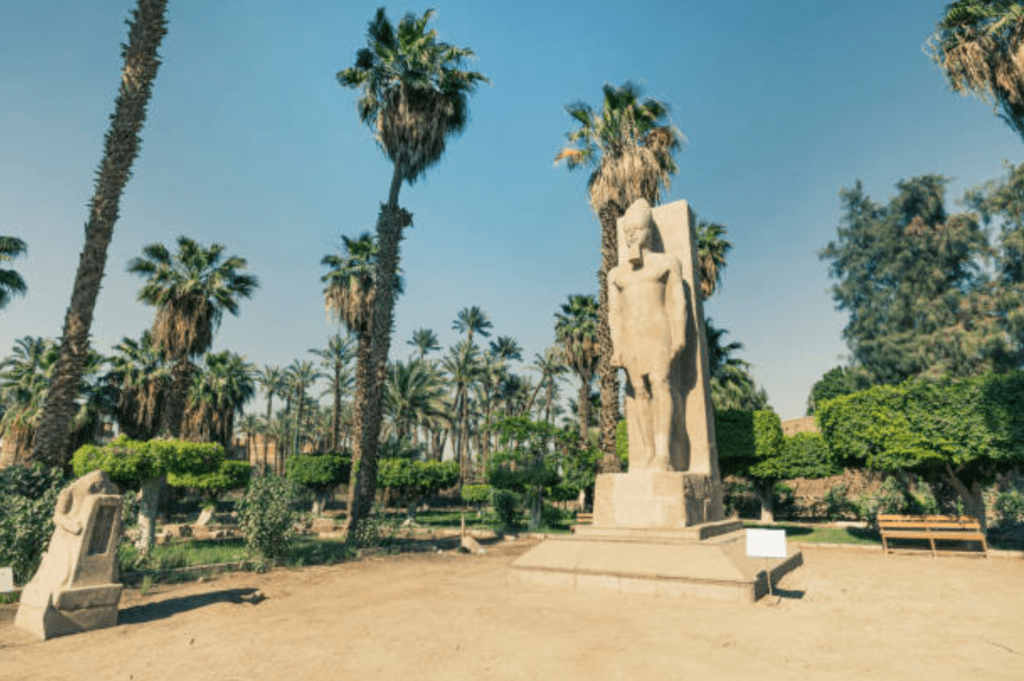
The archaeological area contains remains connected with the Temple of Ptah as well as monumental sculpture from much later reigns. The colossal statues of Ramesses II at Mit Rahina are a useful visual reminder that the city’s history extends far beyond the kings who built the earliest pyramids.
For travelers, Memphis works best when its relationship with the surrounding necropolis is understood.
Seeing Memphis, Saqqara and Dahshur together is not simply a matter of putting three attractions into one excursion. It reconnects the capital with the landscape created to bury its kings.
Explore ENA’s Memphis, Saqqara & Dahshur tour from Cairo follows that historical geography, with the three areas visited as parts of the same early-Egypt story rather than unrelated stops.
Thebes: The Forgotten Capital Hidden in Plain Sight at Luxor
Of these four capitals, Thebes is the least physically forgotten and perhaps the most forgotten by name.
Millions of travelers know Luxor.
They know Karnak. They know the Valley of the Kings. They know Hatshepsut’s mortuary temple, Luxor Temple and the Colossi of Memnon.
What many do not realize until someone explains it is that these are surviving parts of ancient Thebes.
UNESCO identifies Ancient Thebes as the capital of Egypt during important periods of the Middle and New Kingdoms and describes its surviving landscape as including Karnak and Luxor on the East Bank and the major necropolises on the West Bank.
Modern Luxor did not simply appear beside an unrelated collection of ancient attractions.
It occupies the landscape of one of Egypt’s great political and religious centers.
How Thebes Became Powerful
Thebes rose from Upper Egypt rather than from the traditional northern political center around Memphis.
Its rulers became particularly important during periods when Egypt was divided. The city ultimately produced dynasties that reunited the country and placed Thebes at the center of royal power.
That pattern repeated in different forms.
During the Second Intermediate Period, rulers based at Thebes controlled southern Egypt while the Hyksos ruled in the north from Avaris. The conflict between those centers eventually ended with Theban victory and the beginning of the New Kingdom.
Thebes then became closely associated with one of the most powerful periods in ancient Egyptian history.
Its importance, however, cannot be explained by politics alone.
Thebes Became the City of Amun
The rise of Thebes was intertwined with the rise of Amun.
At Karnak, successive rulers added temples, courts, pylons, chapels and obelisks to a sacred complex that continued developing for centuries.
Luxor Temple formed another major ceremonial center nearby. Across the Nile, the West Bank became an enormous funerary landscape containing royal tombs, elite burials, mortuary temples and the community at Deir el-Medina whose workers created many of the royal tombs.
This is why Thebes remained important even when the royal court moved elsewhere.
A capital can lose its government and still retain enormous religious authority.
That is exactly what happened here.
Why Travelers Know Luxor but Not Thebes
The answer is partly linguistic and partly practical.
Luxor is the name of the modern city. It is the name travelers see on flight bookings, hotels, maps and tours.
“Thebes” survives mainly as the historical name used when discussing the ancient city and its archaeological landscape.
That split creates an odd situation: a traveler may spend three days exploring Thebes while repeatedly saying they are visiting Luxor.
Once you understand the connection, the sites begin to fit together more naturally.
Karnak is not simply one temple on a sightseeing list. The Valley of the Kings is not merely another attraction across the river. They belong to opposite sides of a much larger ancient capital.
Our Complete Luxor Guide is the better place to plan that modern visit because it explains how the East Bank and West Bank work together rather than repeating all of that practical material here.
Avaris: The Hyksos Capital Now Known as Tell el-Dab’a
Avaris is different from both Memphis and Thebes because most travelers have never heard of either the ancient city or the modern archaeological site.
Yet during the Second Intermediate Period, Avaris was one of the most important political centers in Egypt.
The site has been securely identified at Tell el-Dab’a in the eastern Nile Delta, in modern Sharqia Governorate. The Austrian Archaeological Institute identifies it as the capital of the Hyksos and places its period of greatest importance roughly between 1640 and 1530 BCE.
The location was not accidental.
Avaris stood in a part of the Delta connected both to the Mediterranean and to routes leading through northern Sinai toward the Levant. Archaeological research shows it functioning as an important port and trading center.
That international position helps explain why Avaris complicates one of the older, simpler stories about ancient Egypt.
Avaris Was Not Just a “Foreign Invader’s Capital”
The Hyksos were rulers of non-Egyptian origin who controlled northern Egypt during part of the Second Intermediate Period.
Older popular accounts often compress that history into a simple invasion narrative: foreigners arrived, conquered Egypt and established themselves at Avaris.
Archaeology has produced a more complicated picture.
The eastern Delta had longstanding connections with the Levant. People, goods and ideas moved through this region before the Hyksos kings established political control.
Excavations at Tell el-Dab’a have revealed Egyptian and Near Eastern cultural elements side by side. The Austrian Archaeological Institute has documented sacred areas containing both Egyptian and Syrian-Palestinian temple traditions, evidence of the mixed cultural environment present at Avaris.
That does not make the Hyksos politically Egyptian in the same way as the dynasties based farther south.
It does mean the reality is more interesting than an image of outsiders suddenly appearing in an isolated country.
Avaris stood in a region where Egypt had long interacted with its northeastern neighbors.
Avaris and Thebes Became Rival Capitals
This is where two of the four forgotten capitals meet directly.
While the Hyksos ruled northern Egypt from Avaris, rulers based at Thebes controlled much of the south.
Eventually, Theban kings fought northward and defeated Hyksos power.
The victory helped launch the New Kingdom and elevated Thebes into one of the greatest political centers of the following era.
Seen this way, Avaris is not a side story.
Without understanding Avaris, it is harder to understand why Thebes rose.
What Happened to Avaris?
The strategic value of this part of the Delta survived the Hyksos.
The Tell el-Dab’a archaeological area is also associated with the southern part of Pi-Ramesses, the later royal residence of Ramesses II and his successors.
Political regimes changed.
The geography remained useful.
Today, however, Avaris is primarily an archaeological research landscape rather than a conventional tourist attraction. There are no standing monumental complexes comparable with Karnak or the Valley of the Kings.
That distinction matters.
Historical importance does not automatically translate into a site that should be inserted into a normal Egypt itinerary.
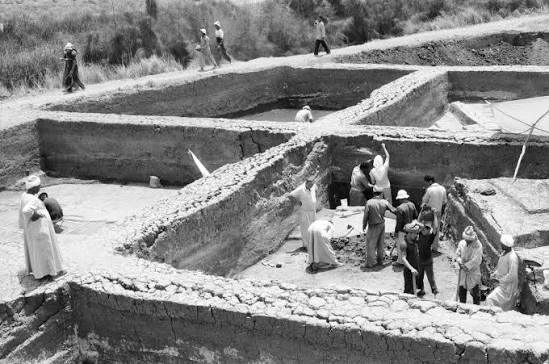
Akhetaten: Akhenaten’s Capital, Now Called Amarna
Akhetaten is perhaps the clearest case of a capital whose ancient name vanished from ordinary geography.
Most people who know the site today know it as Amarna or Tell el-Amarna.
But the city was founded under another name entirely: Akhetaten, usually translated as “Horizon of the Aten.”
Unlike Memphis, which developed around a strategically useful location, or Thebes, which grew in importance over centuries, Akhetaten was created deliberately by one king.
That king was Amenhotep IV, better known by the name he later adopted: Akhenaten.
Akhenaten Built a New Capital for a New Religious Order
During the 18th Dynasty, Akhenaten broke dramatically with the religious establishment centered on Amun and elevated the Aten, represented as the solar disk, to the center of royal worship.
He did not simply change temple rituals.
He created a new capital in Middle Egypt.
Egypt’s Ministry of Tourism and Antiquities describes Akhetaten as a city founded on previously undeveloped ground in what is now Minya Governorate. Boundary stelae carved into the surrounding cliffs marked the territory of the new city.
That makes Akhetaten unusual among ancient capitals.
It was not merely inherited.
It was planned as the political and religious setting for a particular reign.
The City Was Designed Around the Aten
Akhetaten stretched along the east bank of the Nile.
A major north-south route, now referred to as the Royal Road, linked important royal, religious and administrative areas. Palaces, residences, workshops and temples occupied the city, while tombs for elite officials were cut into the cliffs around it.
The religious architecture reflected Akhenaten’s program.
Aten worship emphasized the sun’s visible light, and temple design relied heavily on open courts rather than the increasingly dark progression toward an enclosed sanctuary familiar from many traditional Egyptian temples.
The period also produced one of the most recognizable changes in ancient Egyptian art.
Representations of Akhenaten, Nefertiti and the royal family have a distinctive appearance that makes Amarna-period works easy to recognize even for many non-specialists.
But the city behind those objects is less familiar.
That is another reason Akhetaten feels forgotten: the art of the Amarna Period is more famous than the capital where much of that transformation took place.
Akhetaten Barely Outlived the King Who Created It
Akhetaten’s political life was remarkably short.
After Akhenaten’s death, the royal court abandoned the city and the religious changes associated with his reign were reversed. The Ministry of Tourism and Antiquities describes the city as abandoned and destroyed after his death.
That rapid abandonment makes Amarna archaeologically unusual.
Cities such as Memphis and Thebes were rebuilt, altered and reused over very long periods. Akhetaten’s brief life means archaeologists can study the layout of a purpose-built New Kingdom capital with unusual clarity.
Homes, workshops, palaces, temples, administrative areas and cemeteries help reconstruct not only Akhenaten’s religious experiment but also aspects of how the city itself functioned.
Why We Call Akhetaten “Amarna” Today
“Amarna” is the modern archaeological name used for the area.
So someone searching for Akhenaten’s capital usually encounters Amarna long before they encounter Akhetaten.
The ancient city’s original name survives in Egyptology.
The modern site name survives on maps.
Once again, an ancient capital has not exactly disappeared.
Its name has.
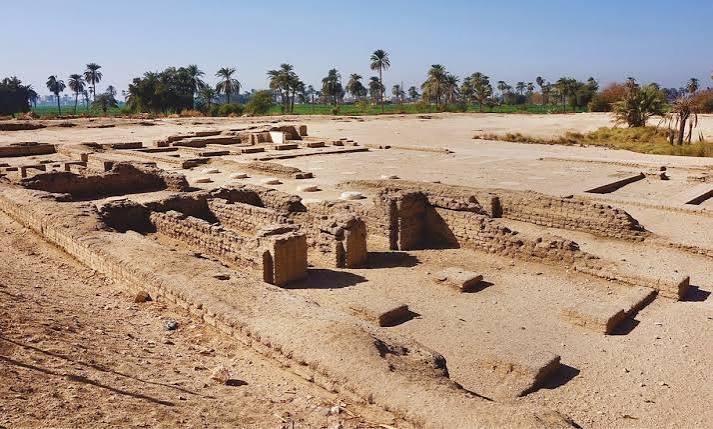
Four Forgotten Capitals, Four Different Kinds of Power
Once the ancient names are restored to the map, the four cities stop looking like interchangeable capitals.
Memphis shows the importance of geography. Its position near the meeting of the Nile Valley and Delta made it exceptionally useful for rulers governing a unified Egypt.
Thebes shows how regional power and religion could transform a city. Its association with Amun gave it influence that survived even when the royal court moved elsewhere.
Avaris reveals an Egypt that was politically divided and deeply connected to the wider eastern Mediterranean world.
Akhetaten shows something rarer: a king attempting to relocate the center of political and religious life to a new city designed around his own program.
The capital moved because Egypt itself was changing.
That movement is easy to miss when we learn ancient Egyptian history mainly as a sequence of dynasties and monuments.
Put the cities back into the story and the politics becomes geographical again.
What Happened to the Names?
There is no single reason these ancient capital names disappeared from ordinary travel language.
Egypt’s cities and settlements continued changing for thousands of years after the pharaonic period.
Languages changed. Political systems changed. Populations shifted. New settlements developed. Ancient cities declined, moved, were rebuilt or survived beside later communities.
Modern place names therefore do not necessarily preserve the names used three thousand years earlier.
Thebes became associated with the modern city of Luxor.
Akhetaten became an archaeological landscape called Amarna.
Avaris was identified through archaeology at Tell el-Dab’a.
Memphis survives as ruins around Mit Rahina.
For archaeologists, those relationships are fundamental.
For travelers, they are often a revelation.
That is why understanding the old names does more than add vocabulary.
It changes what you think you are looking at.
Which Forgotten Capitals Can You Actually Visit?
The four sites are historically connected, but they are not equivalent travel experiences.
Thebes/Luxor
This is by far the easiest capital to experience as a traveler.
Luxor contains major surviving elements of ancient Thebes on both banks of the Nile. Karnak, Luxor Temple, the Valley of the Kings, Valley of the Queens, mortuary temples and other sites can occupy several days.
If you want to understand a former Egyptian capital as a physical landscape, Thebes is the strongest of the four.
Memphis
Memphis is easy to reach from Cairo and fits naturally with Saqqara and Dahshur.
The surviving city is less visually dramatic than Luxor, but that is part of its value. It helps explain the political center behind the pyramid fields.
If time is limited, however, do not reduce Saqqara to a rushed stop simply to add Memphis. Our Saqqara and Dahshur guide explains why protecting enough time at Saqqara may matter more than collecting another site name.
Akhetaten/Amarna
Amarna is a specialist archaeological destination.
It is especially worthwhile for travelers seriously interested in Akhenaten, Nefertiti, the Amarna Period, ancient city planning or archaeology.
It should not be expected to resemble Luxor’s monumental visitor experience.
Avaris/Tell el-Dab’a
Avaris is primarily an archaeological research site.
Its importance is enormous, but that does not mean it functions as a conventional tourist attraction. Current access and arrangements should be confirmed specifically before anyone plans a visit.
This is a useful reminder that historical significance and visitor readiness are not the same thing.
Why These Capitals Matter More Than Their Ruins
It would be easy to make this article about what survives at each site.
That would miss the larger point.
The real value of Memphis, Thebes, Avaris and Akhetaten is that each exposes a different ancient Egypt.
Memphis belongs to the early political idea of a unified country and the great pyramid age.
Avaris belongs to a period when Egypt was divided and northern power was connected strongly with the Levant.
Thebes belongs to the rise of southern dynasties, the cult of Amun and the imperial ambitions of the New Kingdom.
Akhetaten belongs to one king’s attempt to pull religious and political authority away from those established centers and rebuild it somewhere new.
These were not simply four addresses used by Egyptian kings.
They represented four different answers to the question:
Where should power be centered now?
Once you see that, ancient Egypt stops looking quite so static.
The monuments may survive in stone.
The political map kept moving.
Frequently Asked Questions About the Forgotten Capitals of Ancient Egypt
What were the main capitals of ancient Egypt?
Ancient Egypt had several important capitals across its long history rather than one permanent capital. Among the best known are Memphis, Thebes, Avaris and Akhetaten, although other cities also served major royal or administrative roles during different periods.
What is Thebes called today?
Ancient Thebes corresponds to modern Luxor and the surrounding archaeological landscape on both sides of the Nile. Karnak and Luxor Temple lie on the East Bank, while the Valley of the Kings and other major Theban necropolis sites lie on the West Bank. UNESCO identifies this landscape as Ancient Thebes with its Necropolis.
What is Akhetaten called today?
Akhetaten is now generally known as Amarna or Tell el-Amarna, in modern Minya Governorate. Akhenaten founded the city during the 18th Dynasty as a new capital centered on the Aten.
Where is ancient Memphis today?
The remains of Memphis are concentrated around Mit Rahina, south of Cairo. The wider Memphite archaeological landscape includes the pyramid fields stretching through areas such as Giza, Saqqara, Abusir and Dahshur.
What is Avaris called today?
Ancient Avaris has been securely identified with the archaeological site at Tell el-Dab’a in Egypt’s eastern Nile Delta. It served as the capital of the Hyksos during the Second Intermediate Period.
Was Luxor once the capital of ancient Egypt?
Yes. The ancient city of Thebes occupied the area of modern Luxor and served as a major Egyptian capital during important periods of the Middle and New Kingdoms. It also remained one of Egypt’s principal religious centers because of the cult of Amun.
Why did ancient Egypt have different capitals?
The political center changed as dynasties, military power, religious institutions, trade routes and regional power bases changed. In some periods Egypt was divided between rival rulers; in others a king deliberately established a new royal center. A capital’s political role could also end while the city remained religiously or economically important.
Follow the Capitals That Can Still Be Experienced on the Ground
You do not need to reach all four sites to understand what the movement of Egypt’s capitals tells us.
For most travelers, Memphis and Thebes provide the clearest physical connection.
At Memphis, the ancient capital begins to reconnect with the pyramid landscape surrounding it. At Luxor, ancient Thebes survives on a completely different scale: temples on the East Bank, royal cemeteries and mortuary temples across the Nile, and centuries of political and religious building layered into the same landscape.
Explore ENA’s 5-Day Cairo & Luxor Tour currently connects both former capitals in one journey, including Memphis and Saqqara near Cairo before continuing to Karnak, Luxor Temple and the major Theban West Bank sites. For travelers who want to see how Egypt’s center of power shifted rather than simply collect famous monuments, it is the most direct current Explore ENA route linking the history in this article to places you can actually stand in today.