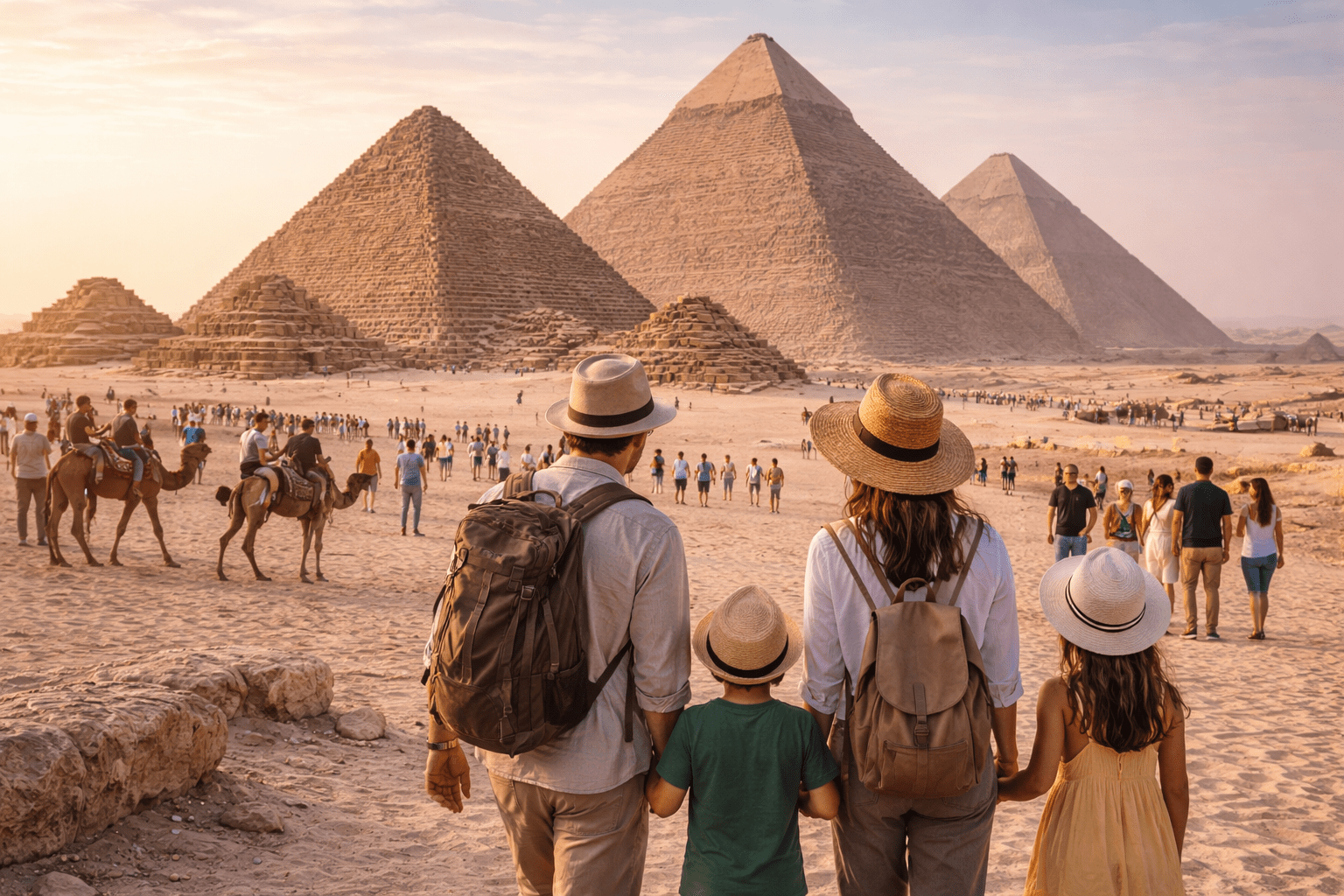
Egypt With Kids: The Complete Family Travel Guide
Egypt can be an extraordinary family trip, but it works best when the itinerary is designed for children from the beginning rather than built as an adult sightseeing schedule with children added to it.
The pyramids, painted tombs, enormous temples, boats on the Nile, desert landscapes and Red Sea can hold a child’s attention remarkably well. The harder part is deciding how much sightseeing to attempt in one day, how often to change hotels, when an early start is worth it and when the family needs several hours with absolutely nothing scheduled.
For most families, that is the central planning decision. Egypt does not need to be simplified for children; it needs to be paced for them.
Is Egypt a Good Family Vacation?
For families who enjoy history, boats, beaches, wildlife, outdoor adventure or simply seeing somewhere completely different from home, Egypt can work extremely well.
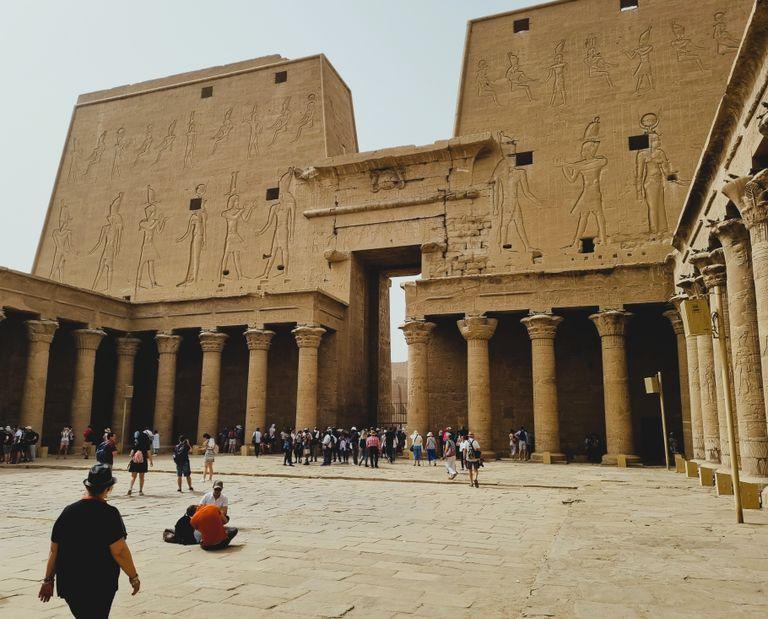
One advantage is that many of Egypt’s most important sights do not require children to understand their history before they can appreciate them. The scale of the Giza Pyramids is immediately obvious. Walking into a painted tomb feels different from looking at an object through museum glass. Reaching Philae Temple by boat changes the experience before the family has even entered the temple. Sailing the Nile gives children a break without removing them from the journey.
The difficulty comes when adults treat every famous site as compulsory.
Cairo traffic consumes time. Archaeological sites involve heat, walking and relatively little shade. Nile cruise excursions can start early. Domestic flights and hotel changes take more out of a day than their flight times suggest. Three temples that look perfectly reasonable on an itinerary can feel very different to a child after several consecutive days of sightseeing.
Good family planning in Egypt therefore starts with subtraction. Choose the experiences that matter, leave room between them and resist the temptation to measure the trip by how many attractions the family manages to collect.
What Age Is Best for Egypt?
There is no single best age for Egypt.
Babies and toddlers make the logistics more complicated because naps, feeding, carrying, shade and familiar routines can determine the entire day. That does not make Egypt unsuitable; it means the itinerary needs to protect those routines rather than expecting a very young child to adapt continuously.
School-age children may be able to walk farther and are often beginning to recognize the pyramids, mummies, hieroglyphs and pharaohs they have encountered in books or school. That familiarity can make the real sites surprisingly engaging, but it does not mean every child wants a long history lesson at every temple.
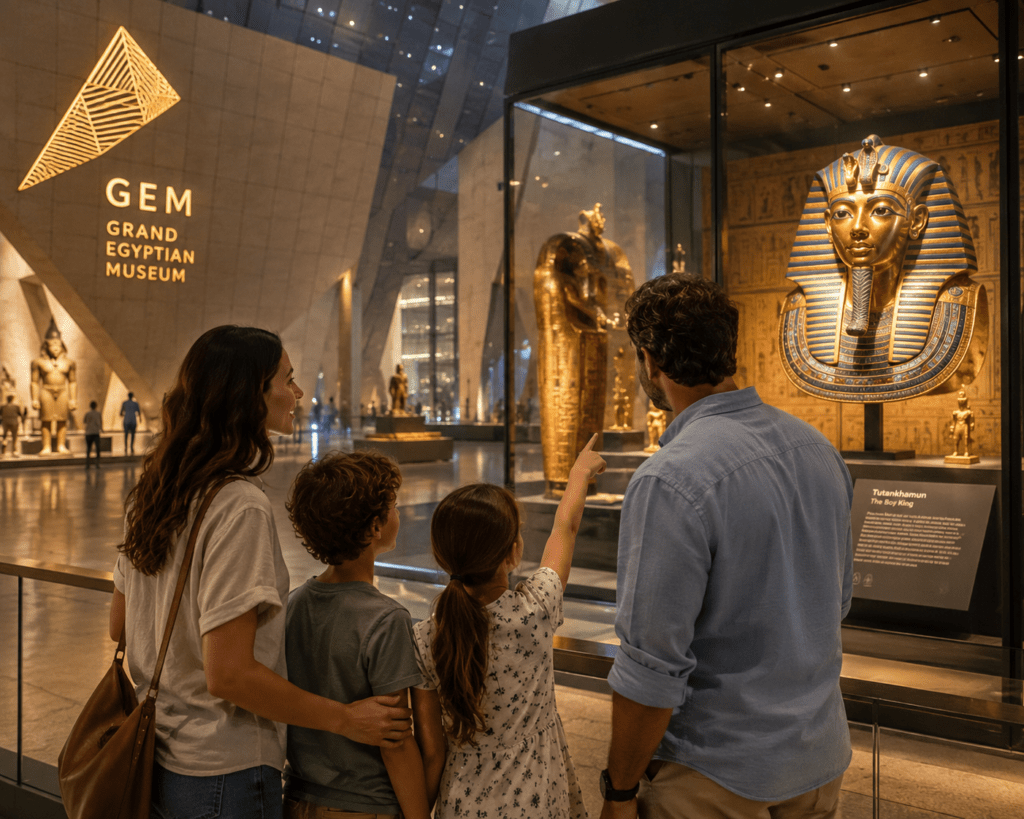
Teenagers can usually manage longer days and more complex sightseeing, but variety still matters. A teenager who happily spends hours at the Grand Egyptian Museum may still appreciate a felucca sail, desert afternoon or Red Sea day more than another consecutive archaeological site.
The useful question is therefore not, “Is my child old enough for Egypt?” It is, “What version of Egypt fits my child now?”
How Many Days Does a Family Need in Egypt?
For most first family trips, 7 to 10 days is the most useful range.
Seven days can work when the route stays disciplined. Cairo combined with Upper Egypt gives the family a substantial introduction without trying to cover the entire country. Families who want that combination can see how Explore ENA structures it in the 7 Day Egypt Tour With Kids, which combines Cairo, Aswan, a Nile cruise and Luxor while building downtime into the route.
Ten days creates something more important than three additional sightseeing days: breathing room. It becomes much easier to combine Cairo and the Nile Valley with several days in Hurghada, giving children and adults a genuine change of pace after the archaeology-heavy portion of the trip. Explore ENA’s 10 Day Egypt Family Tour follows that pattern, continuing from Cairo and the Nile to a Red Sea stay in Hurghada.
If you have fewer than 7 days, reduce the geography rather than compressing a 7- or 10-day route. Cairo and one additional region will usually produce a better family trip than repeatedly packing, flying and checking into hotels simply to say that everyone reached more destinations.
With 2 weeks or longer, the extra time is best used selectively. Slow the route, stay longer somewhere the family enjoys or introduce a genuinely different environment such as Fayoum, the Red Sea or the Western Desert. More time does not automatically mean more temples.
The Most Important Rule: Protect the Family’s Energy
The most useful family rule in Egypt is simple: finish some days with energy left.
At large outdoor sites, an earlier start can make an enormous difference, particularly during warmer months. But an early morning should earn its place. There is little benefit in waking children before sunrise repeatedly and then filling the afternoon because the itinerary still has empty space.
After a major morning at Giza, the Valley of the Kings or another demanding site, a long lunch, hotel break, pool period or quiet sailing time may improve the trip more than another attraction.
This is also where private guiding and arranged transport can be particularly useful for families. The advantage is not that a guide somehow prevents children from becoming tired or bored. It is flexibility: explanations can be adjusted, a visit can be shortened when attention disappears, bathroom stops can be handled more easily and the family does not have to solve every transport problem while children are already tired.
The goal is not to keep children entertained every minute. It is to avoid turning Egypt into an endurance test.

When Is the Best Time to Visit Egypt With Kids?
For sightseeing-heavy family trips, October through April is generally the easiest period because outdoor conditions are more comfortable than during the hottest part of the year.
That does not make summer impossible. Families tied to school holidays can still travel successfully, but the itinerary needs to change with the season. In Upper Egypt especially, outdoor archaeological visits are better concentrated earlier in the day, with shorter sightseeing blocks and more recovery time.
Egypt’s official tourism portal provides practical information about climate, clothing and preparing for Egypt’s conditions in its Useful Information guide.
School calendars create another issue: availability.
Christmas through New Year is one of the most difficult periods for last-minute family planning. Family room configurations, preferred cruise cabins, useful domestic flight times and well-timed private arrangements can tighten earlier than travelers expect. Families traveling during that period should secure the components that determine the route rather than waiting in the hope that better availability will appear later.
For a broader month-by-month comparison, see the Best Time to Visit Egypt guide.
Where Should Families Stay?
With children, hotel location can matter as much as hotel category.
A hotel that looks like excellent value can cost the family considerable energy if every day begins and ends with a long drive across Cairo. Choose accommodation around the sightseeing you actually plan to do rather than simply selecting the property with the highest rating or most impressive photographs.
Room configuration deserves equal attention. Families needing connecting rooms, an extra bed or a cot should confirm the arrangement before arrival rather than assuming it can be solved at check-in.
Small conveniences become disproportionately valuable during a family trip. A reliable breakfast, swimming pool, easy food access and the ability to return to the room without crossing half the city may matter more than a marginally better view.
Cairo and Giza With Kids
Cairo and Giza are the natural starting point for most first family trips, but they need careful sequencing.
The Giza Plateau and Grand Egyptian Museum can already make a substantial family sightseeing day. Trying to squeeze several unrelated Cairo attractions around them may turn what should be one of the trip’s strongest days into a race between stops.
Giza is particularly good for children because scale does much of the work. The pyramids do not require a long explanation to make an impression. At the same time, the plateau is large and exposed, so heat, walking distance and energy matter.
The Grand Egyptian Museum changes the pace but can still become overwhelming if adults approach it as a collection that must be completed. Choose the galleries and objects that matter to your family and allow the museum to be part of the day rather than a test of endurance.
The Cairo With Kids guide goes deeper into family pacing and planning in the city.
Is a Nile Cruise Good for Families?
A Nile cruise can solve one of the biggest problems in a family Egypt itinerary: repeated hotel changes between Aswan and Luxor.
Instead of packing and unpacking as the family moves through Upper Egypt, accommodation travels with you. Sailing periods also create natural downtime between archaeological visits.
That does not automatically make a Nile cruise restful.
Cruise sightseeing can involve early excursions, and several consecutive days still revolve around temples and tombs. Families also need to think about cabin configuration, stairs, railings, deck supervision and how much structured archaeology their children will actually enjoy.
The decision therefore depends less on whether cruises are “family-friendly” in the abstract and more on whether the cruise rhythm fits your particular children. The Nile Cruise With Kids guide covers that decision in greater detail.
For families who decide that the cruise rhythm suits them, the 7 Day Egypt Tour With Kids uses a Nile cruise to connect Aswan and Luxor while reducing hotel changes and creating sailing time between visits.

Aswan Can Be the Break From the Temple Pattern
Aswan is useful in a family itinerary partly because it does not have to be planned as another sequence of monuments.
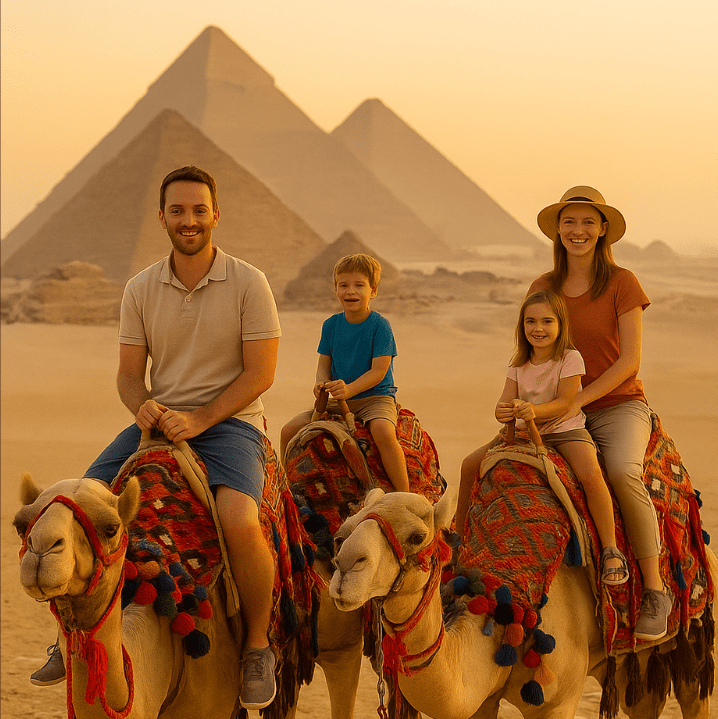
Philae Temple remains an important archaeological visit, but reaching it by boat already makes the experience feel different. A felucca sail, Nile-side downtime or a thoughtfully arranged Nubian cultural experience can change the rhythm again.
This matters when parents begin worrying that their children are becoming “templed out.” The solution is not necessarily to remove Aswan. It may simply be to stop planning every hour in Aswan around another ancient site.
Fayoum Gives Families a Completely Different Egypt
Fayoum can perform a similar role for families based in Cairo.
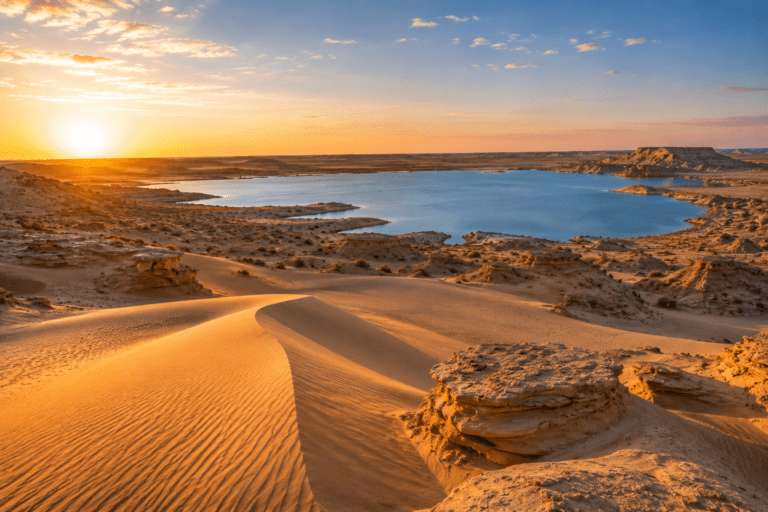
Instead of another city or temple day, the landscape changes to lakes, dunes and desert. Wadi El Rayan adds water and desert scenery, while Wadi Al-Hitan turns the day toward natural history through its extraordinary fossil record of ancient whales.
Sandboarding and the dunes around the Magic Lake area can add a more active element for suitable ages, while an overnight stay gives families the option of experiencing the desert without immediately driving back to Cairo.
That change of subject can be especially valuable after several archaeology-heavy days. Families who want to make Fayoum an actual excursion rather than adding another hotel to the itinerary can take Explore ENA’s Fayoum Oasis & Wadi El Rayan Day Tour from Cairo, which returns to Cairo after the day’s sightseeing.
The Fayoum Travel Guide and Wadi El Rayan Guide cover the detailed planning.

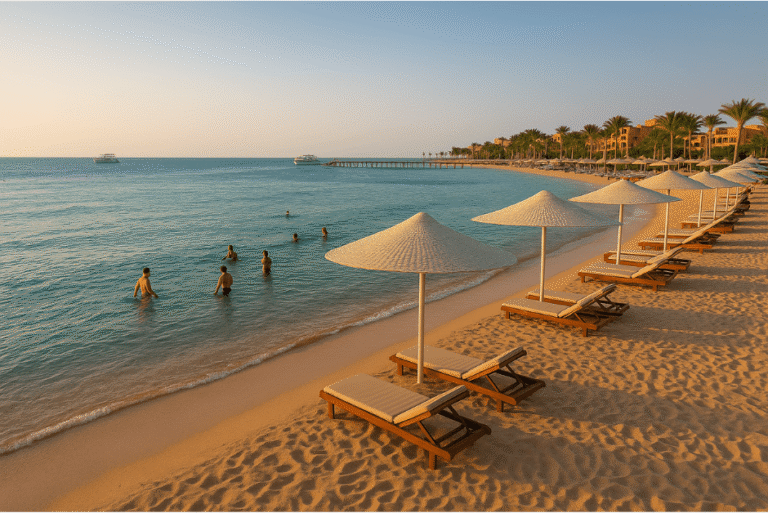
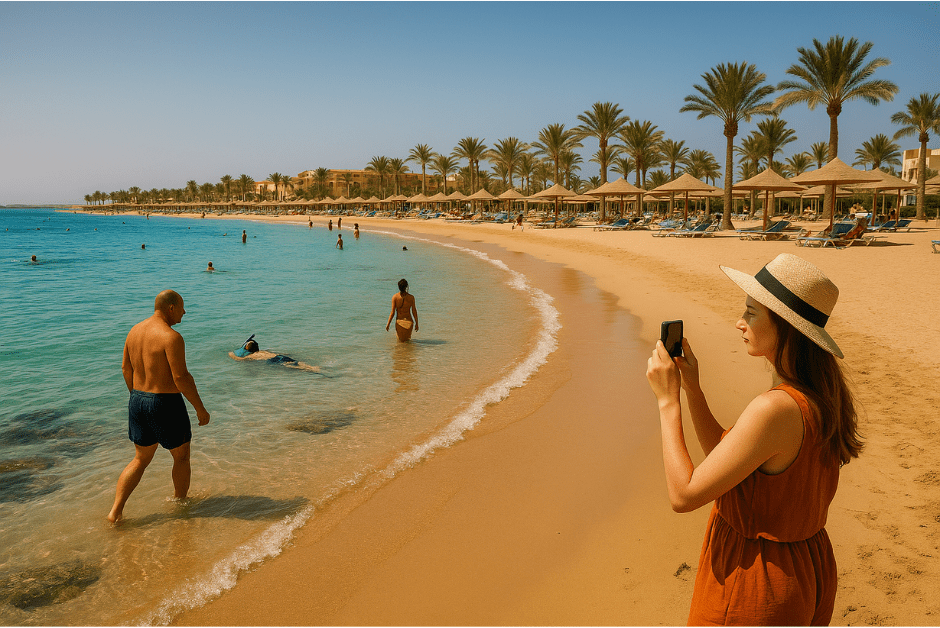
The Red Sea Is More Than an Extra Beach Stop
For many families, the Red Sea works best after Cairo and Upper Egypt.
That order matters. Instead of interrupting the history portion of the trip, the coast becomes a deliberate change of pace after several days of monuments, museums and early starts.
Hurghada is often the more natural addition when the family is already traveling through Luxor because the route connects more easily with the Nile Valley. Sharm El Sheikh may be the stronger choice for a different itinerary, particularly when South Sinai itself is part of the trip.
The two should not be treated as interchangeable simply because both offer Red Sea resorts.
For families who want the Red Sea to serve as the slower finish to a broader Egypt trip, the 10 Day Egypt Family Tour moves from Cairo through the Nile Valley before spending the final portion of the trip in Hurghada.
Egypt’s official tourism portal also highlights a range of activities suitable for families in its Family Fun guide.
For a family trip, however, the important question is not how many activities a resort offers. It is whether the coastal stay gives everyone the kind of recovery they need before the next stage of the journey or the flight home.
Food, Bathrooms and the Small Things That Affect the Day
Parents often worry about the practical details more than the monuments.
Carry tissues, hand sanitizer, water and a familiar snack during longer sightseeing days. Families managing food allergies or medical diets should communicate requirements clearly rather than assuming every kitchen will interpret a restriction in exactly the same way.
Bathrooms at major tourism sites vary, so using a good facility when the opportunity appears is often easier than waiting until a child urgently needs one.
For babies and toddlers, a carrier is often more useful than a stroller at archaeological sites because sand, steps and uneven stone are common. A stroller can still be extremely useful in airports, hotels, malls and smoother museum spaces. For some families, bringing both is more practical than trying to make one solve every situation.
Getting Around Egypt With Children
In Cairo, app-based ride services such as Uber or arranged private transportation are generally easier for international families than negotiating street taxis.
If a child restraint is important to your family, arrange it specifically in advance. Do not assume that the correct type of child seat will automatically be available in an ordinary ride-hailing vehicle.
Between major destinations, the best transport depends on the route. Domestic flights can prevent a very long travel day, while a Nile cruise can eliminate repeated hotel changes along the Luxor-Aswan corridor. The fastest option on paper is not always the easiest family option once airport time, packing and transfers are included.
What Should Families Actually Do in Egypt?
This guide deliberately does not try to rank every family activity in the country.
That is the job of Best Things to Do in Egypt With Kids, where you can compare historical sites, boats, desert experiences, beaches and other activities based on the children traveling with you.
The more important decision here is how those experiences fit together.
A family does not need pyramids, temples, a museum, camel ride, market, desert excursion and boat ride squeezed into every available day. Children usually remember the strongest experiences better when they have enough space to experience them.
Frequently Asked Questions
Is Egypt good for kids?
Yes, for many families. Egypt works particularly well when the route combines visually engaging historical sites with different kinds of experiences and enough downtime. The important factor is not simply the child’s age but whether the itinerary matches the child’s energy, interests and tolerance for long sightseeing days.
How many days do you need in Egypt with kids?
For most first family trips, 7 to 10 days is a useful range. Seven days can combine Cairo with Upper Egypt when the route is disciplined. Ten days makes it much easier to add Red Sea downtime without rushing the history-heavy portion of the trip.
Is a Nile cruise good for families?
It can be. A cruise reduces hotel changes between Aswan and Luxor and creates sailing time between visits, but families should still consider early excursions, cabin arrangements, stairs, railings and how many consecutive archaeological visits suit their children.
What is the best age to take children to Egypt?
There is no universal best age. Babies and toddlers require more logistical support, school-age children may connect strongly with familiar ancient-Egypt themes, and teenagers can usually manage more complex sightseeing. The itinerary should be designed around the individual child rather than an age cutoff.
Is Egypt too hot for children in summer?
Summer travel is possible, but the itinerary should be different from a cooler-season trip. In Upper Egypt especially, families should prioritize earlier outdoor sightseeing, shorter exposed visits, shade, hydration and substantial breaks during the hottest part of the day.
Should we include the Red Sea on a family trip?
If you have enough time, it can substantially improve the balance of the itinerary. The Red Sea is particularly useful after Cairo and Upper Egypt because it gives the family several days with a completely different rhythm before continuing the trip or flying home.
Choose the Family Route That Fits Your Children
There is no single correct family itinerary for Egypt. A family that wants a focused week of pyramids, museums and the Nile needs a different route from one that wants history followed by several days at the Red Sea.
Explore ENA’s EgyptTours brings the current journeys together in one place. You can compare the actual itineraries—including the 7-day Cairo-and-Nile route and the longer Cairo, Nile and Red Sea option—and choose according to your children’s pace rather than trying to fit your family into the busiest possible version of Egypt.