
How Much Does a Trip to Egypt Cost? (Realistic Budget Guide)
One of the most common — and most misunderstood — questions travelers ask is: how much does a trip to Egypt actually cost?
Egypt is often described as an “affordable” destination, but that can be misleading. While everyday expenses like food and accommodation are relatively low compared to Europe or North America, the overall cost of a trip depends heavily on how your itinerary is structured. If you’re still deciding how long to stay, see our guide on how many days you need in Egypt.
Unlike single-city destinations, most Egypt trips involve multiple regions — typically Cairo, Luxor, Aswan, and sometimes the Red Sea — which means transportation, logistics, and guided experiences play a much bigger role in the total budget.
For most travelers, a realistic cost falls between $1,500 and $4,000+ per person, excluding international flights. Shorter trips may cost less overall but more per day, while longer, well-paced itineraries often provide better value.
The key is understanding where your money actually goes — and how different choices affect both cost and experience.
What Affects the Cost of a Trip to Egypt?
The cost of a trip to Egypt is shaped less by the destination itself and more by how your itinerary is designed.
Egypt is not a single-location trip. Most travelers move between multiple regions — Cairo, Luxor, Aswan, and often the Red Sea — and each transition adds time, logistics, and cost. As a result, the structure of your itinerary has a direct impact on both your budget and your overall experience.
One of the biggest cost drivers is how you move between destinations. Choosing domestic flights instead of long road transfers or overnight trains increases the upfront cost but significantly reduces travel time and fatigue. For many travelers, this trade-off is worth it, especially on shorter trips.
Accommodation also varies widely. Egypt offers everything from simple hotels to high-end properties and Nile cruises. While budget options exist, many travelers choose mid-range or higher-end stays to ensure comfort, location, and service — particularly in cities like Cairo or during multi-day cruises.
Another major factor is the level of structure in your trip. Independent travel may appear cheaper at first, but organizing transport, tickets, and site visits separately can add complexity and hidden costs. Well-planned itineraries that include guides, transfers, and entry fees often provide better value by saving time and reducing friction throughout the journey.
Trip length plays a more subtle role. Short trips tend to have a higher daily cost because fixed expenses — such as flights and transfers — are compressed into fewer days. Longer itineraries spread those costs out and allow for a more balanced pace.
If you’re still deciding on duration, understanding how many days you need in Egypt can help you find the right balance between cost, pace, and overall experience.
Average Cost by Travel Style
Egypt can be experienced at different price points, but most trips fall into three broad ranges depending on comfort, structure, and how much support is included.
At the lower end, it’s possible to travel Egypt for around $50–$90 per day, using basic hotels, public or shared transport, and arranging activities independently. This approach works for experienced travelers, but it requires time, flexibility, and a willingness to manage logistics on your own — especially when moving between cities or visiting complex historical sites.
Most travelers fall into the mid-range category, typically spending $120–$250 per day. This usually includes comfortable hotels, some guided experiences, and a mix of private and organized transport. It offers a good balance between cost and convenience, though it still involves some planning and coordination along the way.
At the higher end, $250–$500+ per day reflects a more seamless, fully supported experience. This often includes 4–5 star hotels, Nile cruises, private Egyptologist guides, domestic flights, and door-to-door transfers. While the upfront cost is higher, it removes most of the logistical friction and allows travelers to focus entirely on the experience.
In Egypt, the difference between these tiers is not just about comfort — it’s about how much of the journey is handled for you. Many travelers find that structured itineraries provide better overall value by saving time, reducing uncertainty, and making complex travel between destinations feel effortless.
Major Cost Categories
Understanding where your money goes is key to planning a realistic Egypt budget. Unlike many destinations, Egypt’s costs are not evenly distributed — a few categories (like flights and logistics) have a much bigger impact than others.
Flights
International flights are usually the largest single expense and can vary significantly depending on departure city and season. Most travelers from Europe or the U.S. pay between $600 and $1,200, though prices can rise during peak travel periods.
Within Egypt, domestic flights — such as Cairo to Luxor or Aswan — typically range from $150 to $300 per leg. While optional, they are often one of the most valuable upgrades in an itinerary, saving hours of travel time and making multi-destination trips far more manageable.
Accommodation
Accommodation in Egypt spans a wide range, but the biggest differences are not just price — they are location, comfort, and service consistency.
Budget hotels may cost $20–$50 per night, while mid-range properties typically fall between $60–$150. Higher-end hotels and resorts range from $150 to $400+, particularly in Cairo and along the Red Sea.
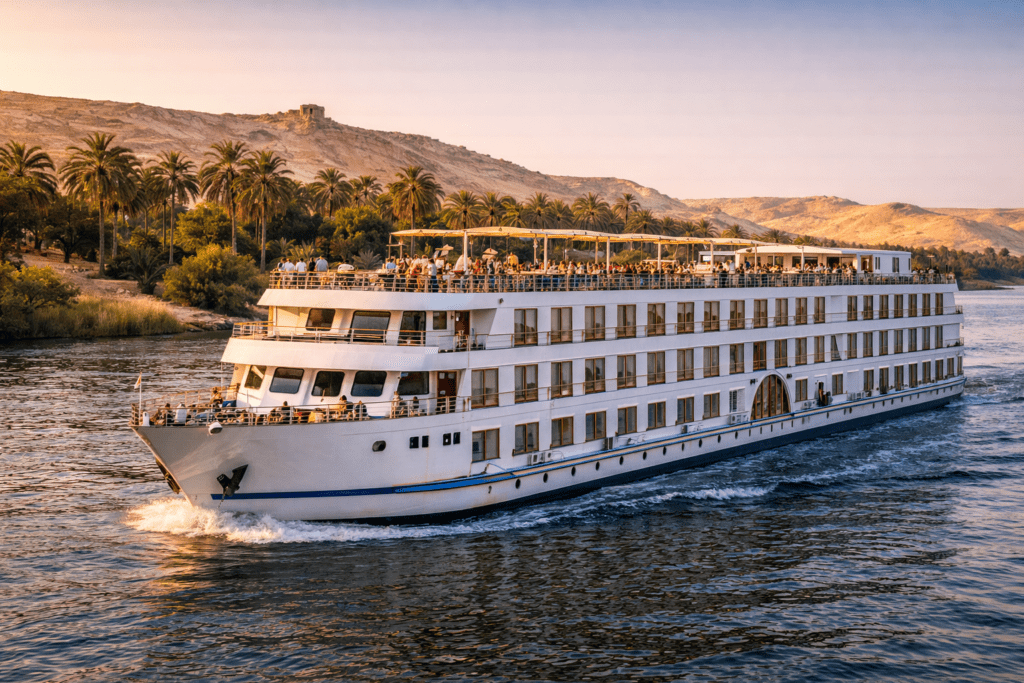
Nile cruises are a category of their own. A 3–4 night cruise usually costs between $800 and $1600+ per person, depending on the level of luxury and inclusions. For many travelers, this becomes one of the defining parts of the trip — combining accommodation, transportation, and guided sightseeing into a single experience.
Tours and Guides
Guides in Egypt are not just an added feature — they are often central to the experience.
Private Egyptologist guides typically cost $30–$100 per day, but the real value lies in how they structure your visit, manage timing, and bring historical sites to life. Without context, many of Egypt’s major sites can feel overwhelming or difficult to fully appreciate.
Packaged tours that include guides, transport, and entry fees vary depending on itinerary length and level of service, but they often simplify the experience significantly. For many travelers, this is where spending slightly more has the greatest impact on the overall quality of the trip.
Transportation
Transportation in Egypt is less about distance and more about efficiency and comfort.
Private drivers and organized transfers are common and relatively affordable, especially compared to many other countries. However, travel times between destinations can be longer than expected.
For example, routes like Cairo to Hurghada or Luxor involve several hours by road. Choosing flights instead of overland travel can increase cost, but it often improves the overall flow of the itinerary and reduces fatigue.
Food and Daily Expenses
Food is one of the most affordable aspects of traveling in Egypt.
Local meals can cost as little as $3–$10, while mid-range restaurants typically range from $10–$25 per person. Even higher-end dining remains relatively inexpensive compared to Western destinations.
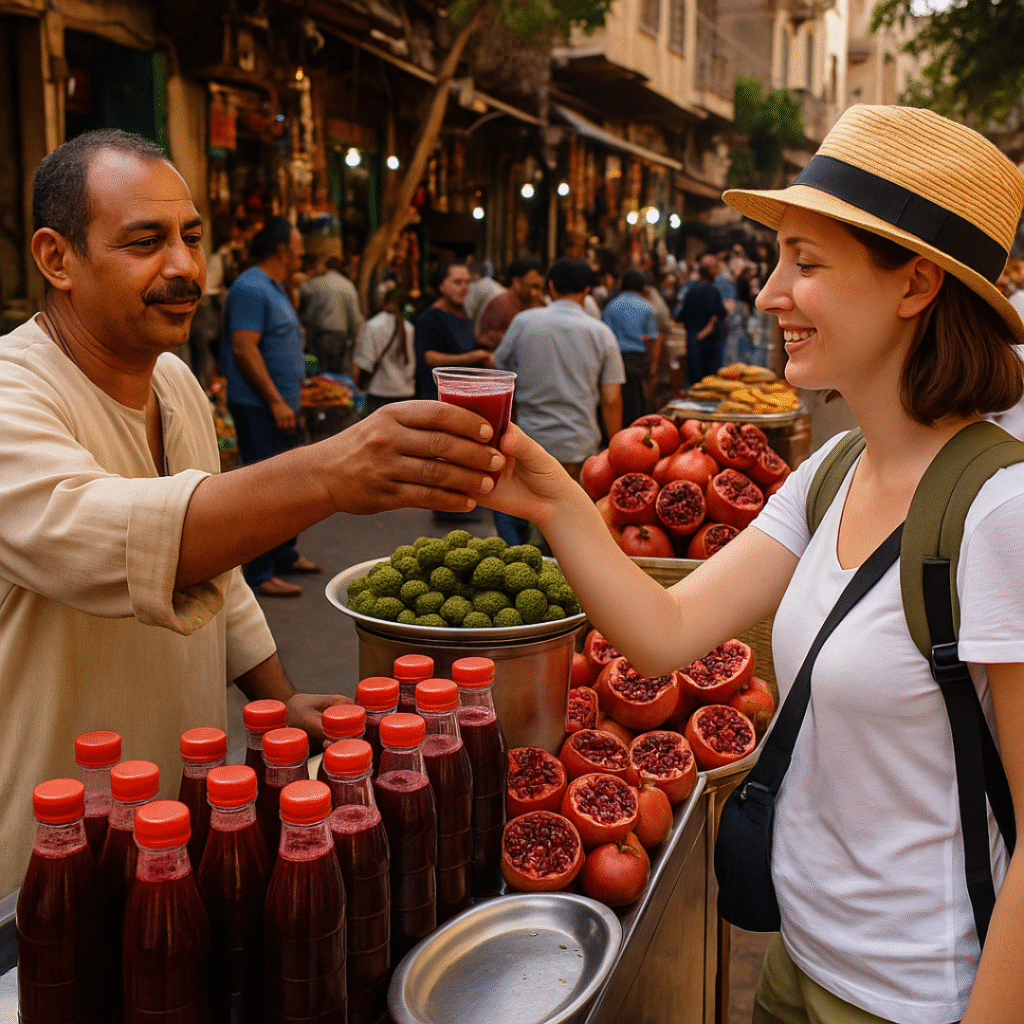
Additional daily expenses — including tips, drinks, and small purchases — usually add around $10–$30 per day. While individually small, these costs can accumulate over the course of a longer trip.
How Trip Length Affects Total Cost
The number of days you spend in Egypt has a direct impact on your total budget — but more importantly, it affects the value of your trip.
At first glance, shorter trips seem more affordable. However, many of the biggest expenses in Egypt — such as international flights, domestic flights, and major transfers — are fixed costs. When these are compressed into a 3–5 day itinerary, the cost per day becomes significantly higher, often without allowing enough time to fully experience the country.
Longer trips, on the other hand, distribute those fixed costs across more days. This lowers the daily average and allows for a more balanced pace, where travelers can combine major highlights with time to rest and absorb each destination.
There is also a practical factor. Egypt is a multi-stop journey, and moving between Cairo, Luxor, Aswan, and the Red Sea takes time. Short itineraries tend to prioritize speed, while longer ones allow for a smoother flow and fewer rushed transitions.
For most travelers, a 7 to 12 day itinerary offers the best balance. It provides enough time to experience Egypt’s main regions without unnecessary repetition or fatigue, while still maintaining good overall value.
When You Travel Matters
Timing plays a major role in how much your trip to Egypt will cost — often more than travelers expect.
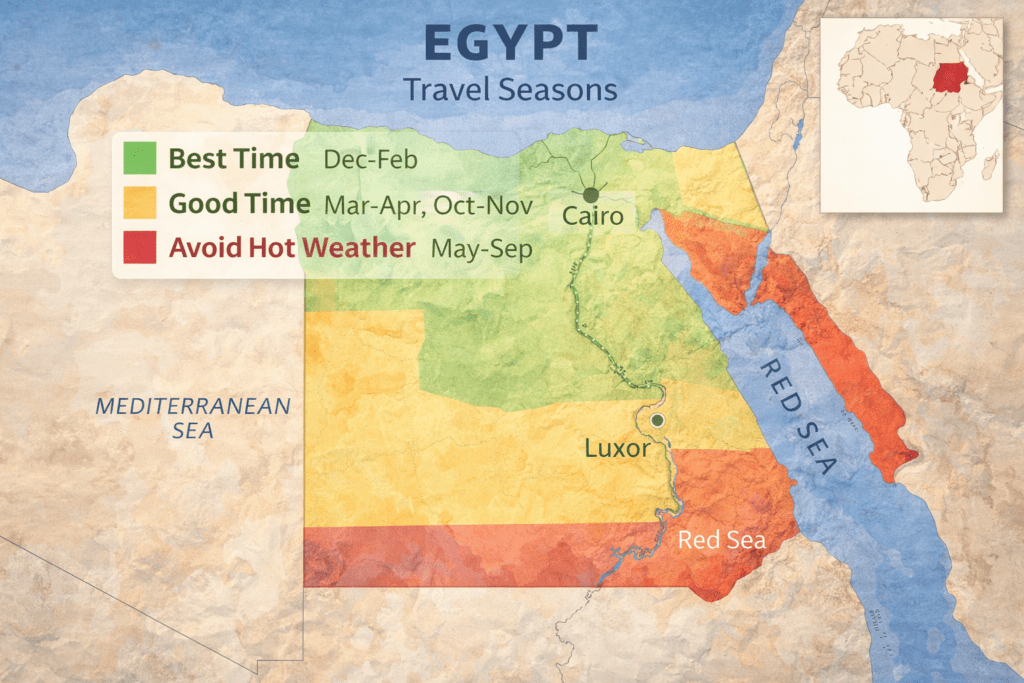
Egypt’s peak travel season runs from October to April, when temperatures are comfortable for sightseeing across the country. This is when international demand is highest, particularly around holidays such as Christmas, New Year, and spring travel periods. As a result, prices for flights, hotels, and Nile cruises are typically at their highest, and availability can become limited if not booked in advance.
In contrast, the summer months from June to August are considered low season. Temperatures rise significantly, especially in Upper Egypt, which leads to lower demand. During this time, hotels, cruises, and tour providers often offer discounted rates, making it one of the most cost-effective times to visit — particularly for travelers who can plan around the heat.
The months in between, such as May and September, fall into the shoulder season. These periods can offer a useful balance, with moderate pricing, fewer crowds, and still-manageable weather in many parts of the country.
Understanding the best time to visit Egypt allows you to make a strategic decision — whether your priority is lower prices, better weather, or a balance of both.
Is Egypt Expensive Compared to Other Destinations?
For most travelers, Egypt is considered a high-value destination rather than a cheap one.
On a day-to-day level, expenses such as food, entry fees, and even high-quality accommodations are often significantly lower than in Europe or North America. Dining out, hiring private guides, or staying in well-located hotels typically costs less than travelers expect.
However, what surprises many visitors is that the total trip cost can still add up. This is because Egypt is rarely a single-location destination. Most itineraries involve multiple regions — Cairo, Luxor, Aswan, and often the Red Sea — which introduces additional costs through domestic flights, transfers, and logistics.
In contrast to destinations where you stay in one city or region, Egypt functions as a multi-stop journey, and that structure naturally increases the overall budget.
The result is a destination that offers exceptional experiences for the price — but where the total cost reflects the scope of the journey rather than the cost of any single place.
Ways to Manage Your Budget
Managing your budget in Egypt is less about cutting experiences and more about making strategic decisions early in the planning process.
One of the most effective ways to control costs is timing. Traveling during shoulder seasons — particularly May and September — can reduce prices on hotels and cruises while still offering reasonable weather and fewer crowds.
How your itinerary is structured also plays a major role. Poorly planned routes can lead to unnecessary transfers, extra flights, or long travel days that add both cost and fatigue. A well-designed itinerary groups destinations efficiently, reducing wasted time and keeping logistics streamlined.
Booking key elements in advance is equally important. Nile cruises, in particular, operate on fixed schedules and can increase in price as availability decreases, especially during peak months. Securing these early helps stabilize both cost and planning.
There is also a balance to consider between saving money and saving time. Choosing slightly higher-cost options — such as domestic flights instead of long drives, or organized transfers instead of ad hoc transport — often improves the overall experience while preventing hidden inefficiencies.
In Egypt, the most successful trips are not necessarily the cheapest — they are the ones where cost, comfort, and pacing are aligned from the start.
Sample Budget Breakdown (10-Day Trip)
To give a clearer picture of what a trip to Egypt actually costs, it helps to look at a realistic mid-range itinerary.
For a well-balanced 10-day trip that includes Cairo, a Nile cruise, and time at the Red Sea, most travelers can expect a total cost in the range of $2,600 to $4,500 per person, excluding international flights.
This total is typically made up of several key components. International flights are often the largest variable, usually ranging from $800 to $1,200 depending on departure location and season.
Accommodation and the Nile cruise form the core of the experience, generally falling between $1,200 and $2,000 combined. Domestic flights within Egypt — such as Cairo to Aswan and Hurghada to Cairo — usually add another $150 to $300, but significantly improve travel time and overall comfort.
Guided tours, entry fees, and local logistics typically account for $300 to $700, depending on how much structure is included. Daily expenses, including food, tips, and small purchases, tend to remain relatively low, averaging around $150 to $300 over the course of the trip.
While these numbers can shift depending on travel style, they reflect what most travelers actually spend when combining multiple destinations into a single itinerary.
Frequently Asked Questions About the Cost of a Trip to Egypt
How much does a trip to Egypt cost on average?
For most travelers, a trip to Egypt costs between $1,500 and $4,000+ per person, excluding international flights. The total depends on trip length, travel style, and how much of the itinerary is guided or pre-arranged.
Is Egypt cheap or expensive to visit?
Egypt is generally considered good value rather than cheap. Daily expenses like food and accommodation are affordable, but the total cost can increase due to flights, transportation between cities, and multi-destination itineraries.
How much money do you need per day in Egypt?
Most travelers spend between $100 and $250 per day for a comfortable mid-range experience. Budget travelers may spend less, while higher-end trips with private guides and luxury hotels can exceed $300 per day.
How much does a 7-day trip to Egypt cost?
A 7-day trip typically costs between $1,200 and $3,000 per person, excluding international flights. This usually includes Cairo and a Nile cruise, depending on the itinerary.
How much does a 10-day trip to Egypt cost?
A 10-day trip usually ranges from $2,500 to $4,500 per person, depending on accommodation level, internal flights, and whether the trip includes Red Sea destinations.
Are Nile cruises expensive?
Nile cruises vary widely in price, but most cost between $800 and $1600+ per person for a 3–4 night cruise. They often include accommodation, meals, and guided sightseeing, making them a strong value within an itinerary.
What is the cheapest way to travel in Egypt?
The cheapest way to travel is by using budget hotels, public transportation, and booking activities independently. However, this requires more time and planning, especially when visiting multiple destinations.
When is the cheapest time to visit Egypt?
The cheapest time to visit Egypt is typically during the summer months (June to August), when high temperatures reduce demand and prices for hotels and tours drop.
What is the most expensive part of a trip to Egypt?
International flights are usually the most expensive part. After that, domestic travel and logistics between destinations (flights, transfers, tours) make up a large portion of the total cost.
Can you visit Egypt on a budget?
Yes, Egypt can be visited on a budget, especially by choosing lower-cost accommodations and minimizing internal travel. However, many travelers choose to spend more on logistics to make the trip smoother and more comfortable.
Final Thoughts: What Should You Expect to Spend?
A trip to Egypt can be adapted to a wide range of budgets, but for most travelers, the experience naturally falls into the mid-range category, where comfort, efficiency, and meaningful experiences are balanced.
While Egypt is often described as affordable, the real value comes from what the trip delivers. Few destinations combine world-class historical sites, diverse landscapes, and multi-region travel in a single itinerary — and that structure is what shapes the overall cost.
Rather than focusing only on spending less, the goal is to spend intentionally — investing in the parts of the journey that improve flow, reduce friction, and make the experience more immersive.
With the right planning, Egypt becomes not just affordable, but exceptionally rewarding for what it offers.
Planning Your Trip to Egypt?
At Explore Egyptian Nile Adventures, we design well-structured, thoughtfully paced itineraries that align your budget with the experience you want to have.
Whether you’re planning a short Cairo visit, a classic Nile cruise journey, or a full multi-destination itinerary, we help you make smart decisions that maximize both your time and your budget.
Explore our Egypt travel experiences and start planning your journey