
10 Day Egypt Itinerary With Kids – Cairo, Nile Cruise & Hurghada Beach Escape
A ten-day family trip gives you enough time to combine Cairo and Upper Egypt with a few slower days at the Red Sea without trying to squeeze the coast into an already active week.
For a first family trip, a strong route is Cairo and Giza → Aswan → Nile cruise → Luxor → Hurghada → Cairo. The historical sightseeing is concentrated in the first part of the trip, while Hurghada changes the pace at the end rather than adding another round of major sites.
Ten days still requires choices. Egypt has far more to see than will fit comfortably into one trip, particularly with children. The aim of this itinerary is not to include everything. It is to give the family enough time for the major experiences without making every day another transfer or long sightseeing day.
If you are still working out the broader questions of ages, pacing, transportation and what family travel in Egypt is actually like, start with our Egypt With Kids family guide.
For more ideas about choosing experiences around your children’s interests, see Best Things to Do in Egypt With Kids.
What Ten Days Changes for a Family Trip
Seven days is enough for a focused Cairo, Giza and Upper Egypt trip. Ten days gives families another option: adding Red Sea time without squeezing it between the major historical stops.
Those extra days are most useful when they change the pace rather than simply add more sightseeing. Cairo and Giza still get their own time, the Nile cruise connects the Upper Egypt portion without repeated hotel changes, and Hurghada provides several days when the family does not need to prepare for another major archaeological visit.
If your available time is closer to one week, compare this route with our 7 Day Egypt Itinerary With Kids. The shorter route keeps the focus on Cairo and Upper Egypt rather than trying to squeeze the Red Sea into the same week.
Day-by-Day 10 Day Egypt Itinerary With Kids
Day 1: Arrive in Cairo (Keep it Light)
After an international flight, keep the first day deliberately light.
Transfer to the hotel, eat, hydrate and give everyone time to settle in. If the children still have energy, a relaxed dinner or short walk is enough.
Save the major sightseeing for the following morning. Giza and the Grand Egyptian Museum already make Day 2 substantial, and there is little benefit in beginning that day with a family that is still recovering from the flight.
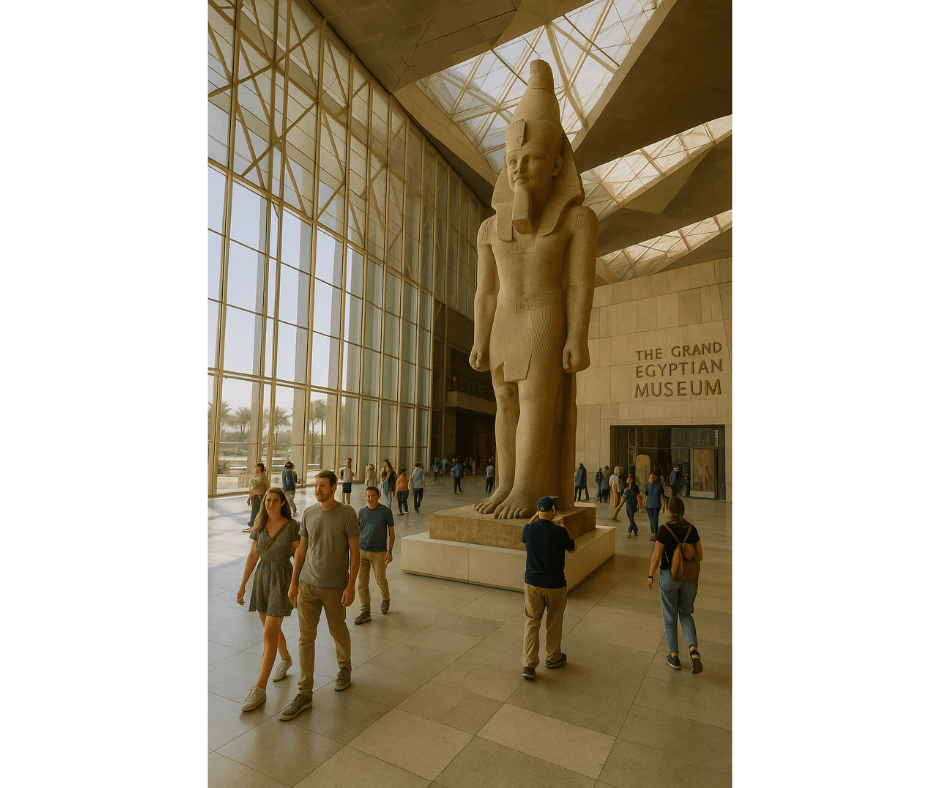
Day 2: Giza Plateau + Grand Egyptian Museum (The Two Anchor Experiences)
Start at the Giza Plateau. During warmer months, an earlier visit can make the outdoor portion of the day more comfortable.
At Giza, concentrate on the parts of the plateau that will make the day worthwhile for your family rather than trying to complete every possible stop. The Great Pyramid, the wider plateau views and the Sphinx already create a substantial visit, particularly when children are walking in the sun and on uneven ground.
Focus on the Great Pyramid, the plateau views and the Sphinx, with enough time to experience the site without trying to complete every possible stop.
Take a proper break before continuing to the Grand Egyptian Museum. Giza and GEM can work well on the same day, but the break between them matters, particularly with younger children.
At GEM, trying to cover the entire museum is unnecessary. Choose the galleries and objects that matter most to your family and leave while the children are still interested rather than treating completion as the goal.
Our Cairo With Kids guide looks more closely at planning Cairo sightseeing around traffic, geography and family energy. For the sites themselves, use our Giza Pyramids Guide and Grand Egyptian Museum Guide when planning the details of your visits.
Day 3: Fly to Aswan + Begin Upper Egypt (Board Cruise)
Fly south to Aswan for the beginning of the Upper Egypt portion of the trip.
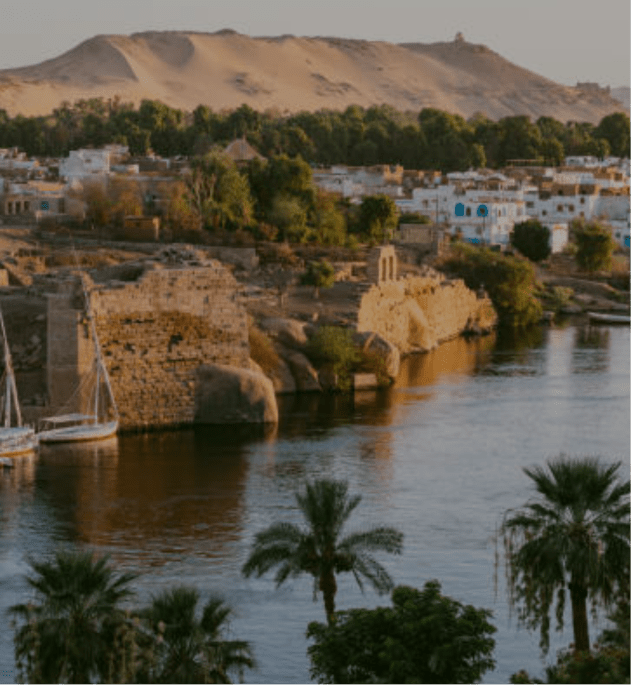
How much Aswan sightseeing fits on Day 3 depends on the arrival time and the cruise’s actual embarkation schedule. If there is enough time without rushing the day, Philae Temple is one possible choice; reaching the island by boat also makes the visit physically different from the sites the family has already seen in Cairo.
Once you board the Nile cruise, the main family advantage becomes logistical: you remain in the same cabin while traveling between several Upper Egypt stops rather than packing and changing hotels repeatedly.
That does not mean every cruise day is a rest day. Excursions may begin early, and much of the route still revolves around archaeological sites. The actual vessel, cabin arrangement, facilities and inclusions also vary.
Our Nile Cruise With Kids guide explains what families should consider before choosing this style of travel.
Cruise departure schedules also affect the route. Confirm the actual embarkation day and time before building flights or additional Aswan sightseeing around it.

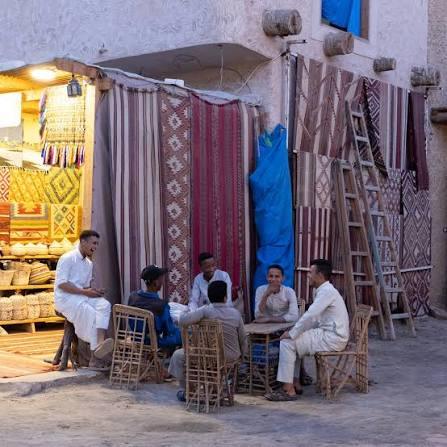
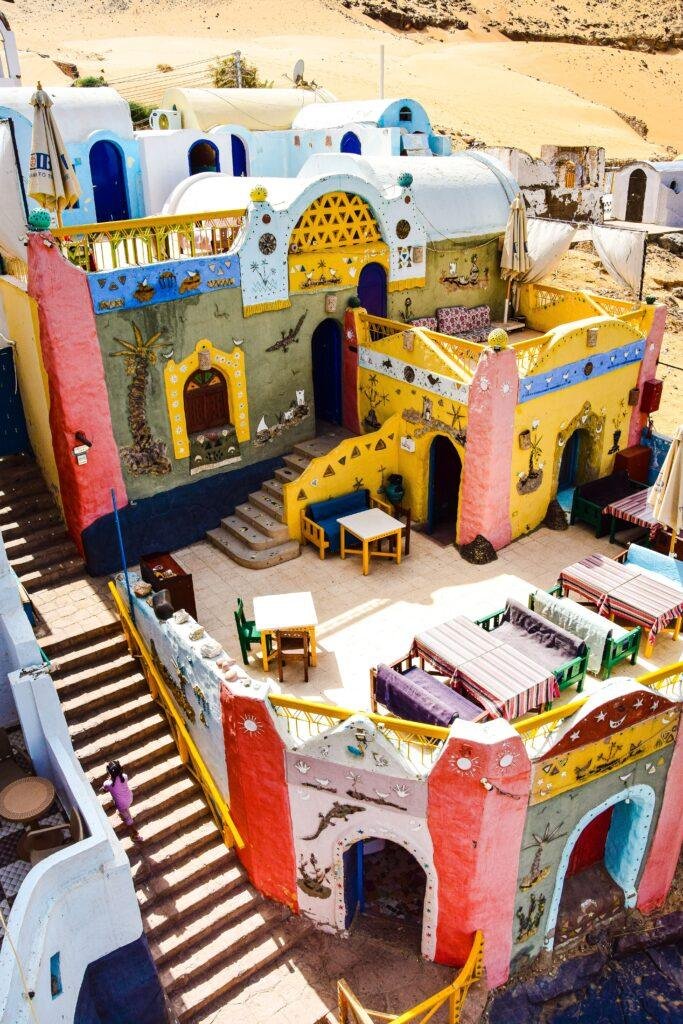
What If Your Family Wants to Visit a Nubian Village?
A Nubian Village experience can fit into a ten-day route.
If it is an important part of your family’s trip, the Cairo-to-Aswan timing may need to change so you arrive in Aswan earlier. That can mean giving up some time in Cairo.
Treat it as a route decision.
Day 4: Kom Ombo (A Temple With Two Stories)
Kom Ombo gives children something relatively easy to notice: the temple is unusual because it was designed around two sets of sanctuaries, including areas associated with Sobek and Haroeris.
That symmetry gives a guide a clear way to explain what makes this temple different without turning the visit into a long lecture.
Keep the visit focused. Kom Ombo is one part of a multi-day archaeological route, and children do not need every relief explained for the temple to be worthwhile.
After the visit, return to the cruise as the vessel continues along the Nile.
Day 5: Edfu (One of the Best-Preserved Temples in Egypt)
Edfu gives families another useful contrast. It was built much later than the pyramids at Giza, during the Ptolemaic period, yet its architecture and inscriptions still draw heavily on much older Egyptian religious traditions.
Children do not need to remember dynasties or dates to understand that Egyptian history did not happen during one single period. A guide can use the temple to show how traditions continued and changed across thousands of years.
As with Kom Ombo, keep the explanation selective. The aim is to give the family enough context to understand what makes Edfu different without exhausting everyone before the Luxor portion of the trip.
Day 6: Luxor West Bank + Karnak (Peak Ancient Egypt)
By the time the family reaches Luxor, several of the preceding days have already included archaeological sightseeing, so selection matters more than trying to maximize the number of sites.
Start on the West Bank with the Valley of the Kings. Choose a small number of tombs rather than treating the visit as a challenge to enter as many as possible. Walking into the painted corridors gives children an experience very different from the temples they have seen earlier in the trip.
Hatshepsut’s Temple adds another contrast, with its terraces set directly against the desert cliffs. The Colossi of Memnon can remain a short stop rather than becoming another extended visit.
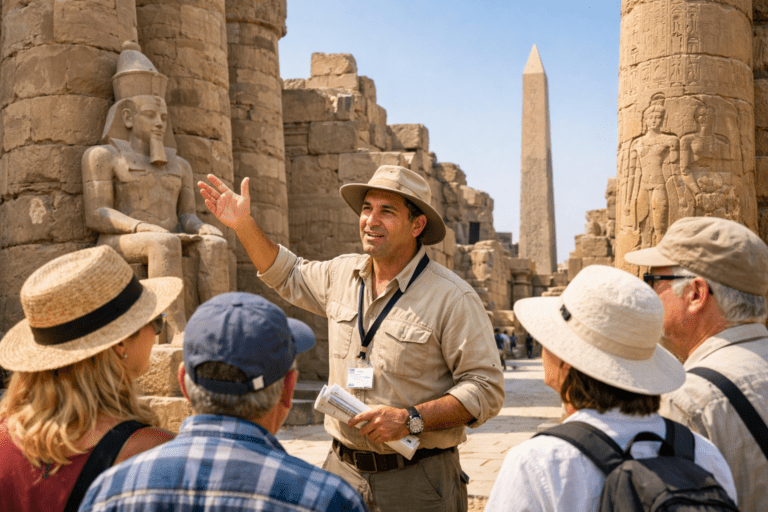
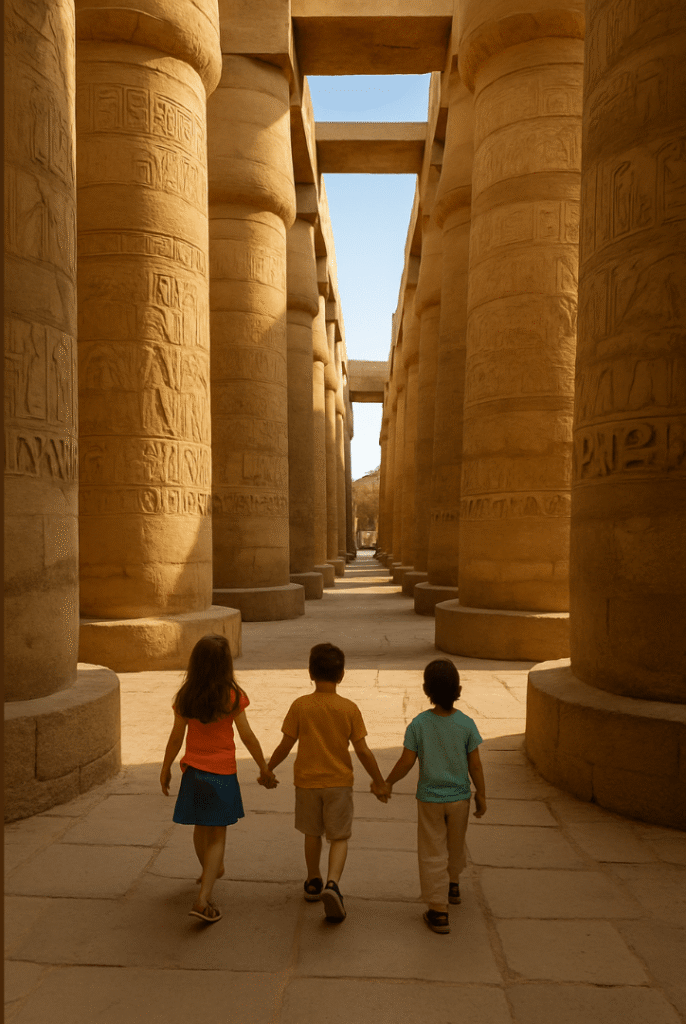
At Karnak, families do not need to explore every part of the enormous complex. The Hypostyle Hall alone gives children an immediate sense of its scale.
By this point in the trip, pay attention to cumulative fatigue. If the children have reached their limit, shortening one site is usually better than pushing through simply because it appeared on the itinerary.
Our Luxor Travel Guide covers the area’s major sites in more detail if you are deciding where to spend your limited sightseeing time.
Day 7: Drive to Hurghada (The Shift From Stone to Sea)
Travel east from Luxor to Hurghada for the Red Sea portion of the trip.
The value of putting Hurghada here is the change of pace. After several days built around archaeological sites and scheduled excursions, the family reaches a part of the itinerary where there does not need to be another major historical visit waiting the next morning.
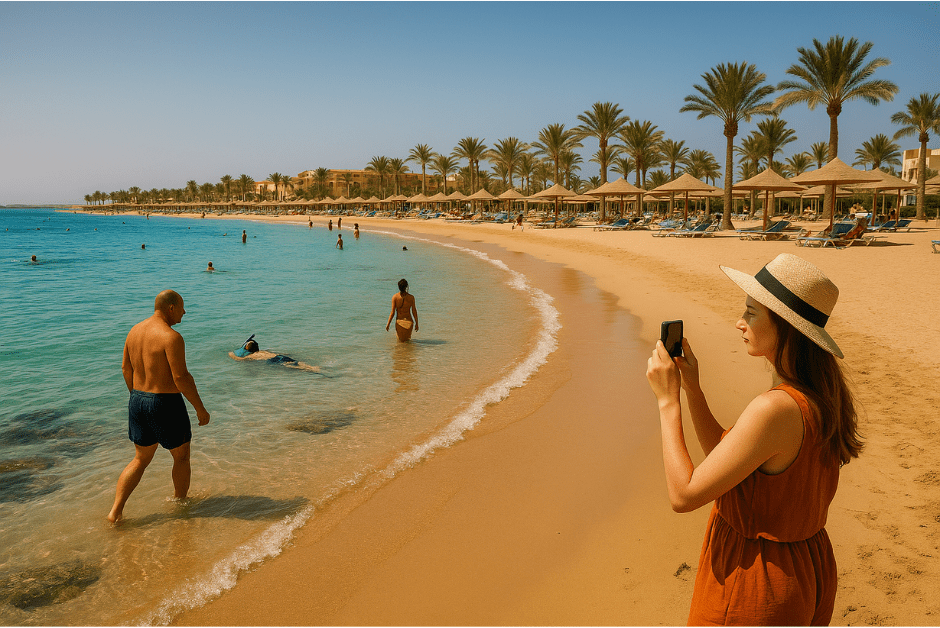
Once you arrive, keep the rest of the day open. Depending on the hotel and what your family actually wants, that may mean swimming, beach time or simply doing very little.
The Red Sea is what most clearly separates this ten-day route from the more concentrated seven-day family itinerary.
Day 8: Red Sea Day
Keep this as a Red Sea day rather than assuming every family should follow the same excursion plan.
Families who want to snorkel can choose an appropriate boat or shore-based experience, but suitability depends on the child’s swimming ability, age, the day’s water conditions and the operator’s participation requirements.
Families who want to see the range of coastal activities currently promoted for families can also check Experience Egypt’s Family Fun guide.
The important part is that this day does not need to reproduce the pace of Cairo or Luxor. Choose the water activity—or lack of one—that actually works for your family.
Not logistics.
Day 9: A Second Flexible Red Sea Day
Use the second full Red Sea day according to what the family still wants from the trip.
That might mean another beach or water day, a boat excursion, more time at the hotel or an age-appropriate desert experience. It can also mean deliberately leaving much of the day unscheduled.
If you choose a desert excursion, check the actual activities involved rather than treating every “desert safari” as the same experience. Participation rules, vehicle activities, equipment and suitability for children can vary considerably.
Our Hurghada Travel Guide covers the destination and excursion choices in more detail.
Day 10: Fly Back to Cairo + Depart
Fly from Hurghada back to Cairo for the international journey home.
If a domestic flight back to Cairo precedes the international departure, allow enough margin for schedule changes and baggage transfer rather than treating the connection as guaranteed.
Depending on the international departure time, an additional night in Cairo may be the more comfortable option for some families.
Who Should Choose Ten Days Instead of Seven?
Choose ten days when your family wants to include Red Sea time without squeezing it into an already active Cairo and Upper Egypt itinerary.
The extra three days are also useful for families who want more room between the history-heavy portion of the trip and the journey home.
If the Red Sea is not a priority and seven days is the time you have available, the 7 Day Egypt Itinerary With Kids keeps the route focused on Cairo, Giza and Upper Egypt.
If Red Sea time matters, ten days makes the Cairo + Nile + Hurghada combination much more workable. If the trip is limited to seven days, keeping the route to Cairo and Upper Egypt avoids using scarce time on another regional transition.
Frequently Asked Questions About a 10 Day Egypt Itinerary With Kids
Is 10 days enough for Egypt with kids?
Ten days is enough for this Cairo + Nile + Hurghada route when the transfers are sequenced carefully. It is not enough to keep adding other regions without making the trip substantially more demanding.
Is a Nile cruise suitable for children?
It can work very well for some families because it reduces repeated hotel changes while moving between several Upper Egypt stops. Suitability still depends on the individual vessel, cabin arrangement, physical layout, excursion schedule and how much the children enjoy archaeological sightseeing. Check the actual cruise rather than assuming all Nile vessels provide the same facilities.
Is ten days better than seven days for a family trip?
Not automatically. Seven days works for a focused Cairo and Upper Egypt trip. Ten days becomes particularly useful when the family also wants Red Sea time or prefers more space between the history-heavy portion of the trip and the journey home.
Should we include Hurghada?
Include Hurghada if beach, swimming or Red Sea time matters to your family. Its biggest advantage in this itinerary is that it changes the pace after Cairo and Upper Egypt. If the Red Sea is not important to your family, those days can be used differently rather than treating Hurghada as compulsory.
Can we include a Nubian Village in Aswan?
Yes, but the timing needs to work around the Nile cruise embarkation schedule. If the experience is important to your family, you may need to arrive in Aswan earlier.
What age works best for this itinerary?
There is no single best age. What matters more is how well the child manages early starts, historical sightseeing, transfers and several consecutive travel days. Younger children may need shorter site visits and protected rest time, while older children may manage longer days but still vary considerably in their interest in archaeology.
What practical issues should parents prepare for?
Heat, hydration, Cairo traffic, walking at archaeological sites, uneven terrain and the overall pace of the trip are more useful to plan for than treating family travel in Egypt as one general safety question. Our Is Egypt Safe for Kids? guide covers those practical considerations in more detail.
Is This Ten-Day Route Right for Your Family?
Ten days gives families enough room to experience very different parts of Egypt without making every additional day another archaeological stop.
Cairo and Giza provide the major first-trip landmarks. The Nile route connects Aswan and Luxor without repeated hotel changes. Hurghada then gives the family several days when sightseeing can become optional rather than scheduled.
If that sounds like more downtime than your family needs, compare it with the 7 Day Egypt Itinerary With Kids.
Want This Ten-Day Route Arranged for Your Family?
If this Cairo + Nile cruise + Hurghada structure fits the trip your family wants, see the 10 Day Egypt Family Tour – Cairo, Nile Cruise & Hurghada Beach for the current itinerary, inclusions, pricing and availability.
If your family needs a different pace, room arrangement or combination of experiences, contact Explore ENA to discuss adapting the route around your family.