Siwa Oasis Egypt: The Complete Travel Guide to Egypt’s Most Remote Oasis
Siwa Oasis feels far removed from the Egypt most first-time visitors imagine. There is no Nile cutting through the landscape, no skyline of monumental temples, and no quick flight that turns the oasis into an easy weekend add-on. Reaching Siwa means committing to a long overland journey into Egypt’s Western Desert, close to the Libyan border, where date palms, olive groves, salt lakes, mud-brick settlements and enormous dune fields replace the traffic and monument-heavy rhythm of Cairo and the Nile Valley.
That distance is not a flaw in the destination. It is the reason Siwa still feels distinct.
The oasis has its own Amazigh cultural traditions, a local Siwi language, characteristic kershef architecture made from salt-rich mud and clay, and a landscape sustained by natural springs and groundwater. Ancient history is part of the experience too: the Temple of the Oracle of Amun at Aghurmi is traditionally associated with Alexander the Great’s visit in 331 BCE, while Gebel Al-Mawta preserves rock-cut tombs from later ancient periods. Experience Egypt’s official Siwa Oasis overview is a useful official reference for the destination’s salt lakes, springs, archaeological sites and Great Sand Sea.
A successful Siwa trip is less about collecting attractions and more about giving the oasis enough time. The long journey is part of the decision, so compare the road time with the number of full sightseeing days you will actually have before adding Siwa to a wider Egypt route.
Why Siwa Feels So Different
Siwa’s remoteness shaped almost everything travelers notice today. Palm groves and olive orchards spread through a desert depression surrounded by open Western Desert landscapes. The old settlement of Shali rises from the center of the oasis in weathered and restored kershef walls. Brilliant salt pools sit beside cultivated land, while the Great Sand Sea begins beyond the oasis and stretches toward the Libyan frontier.
The atmosphere is also different. Days can move from archaeological sites to freshwater springs, a slow lunch, local markets and sunset beneath palms rather than from one monumental site to another. That slower rhythm is one of the main reasons travelers who love Siwa often remember it as a highlight rather than simply another stop.
How Many Days Do You Need in Siwa?
The biggest planning mistake is counting only hotel nights and forgetting the road.
From Cairo, the journey occupies most of a day in each direction once traffic, stops and normal road conditions are included. That means a three-day trip may contain only one useful sightseeing day in Siwa. Four days gives two sightseeing days but still feels compressed.
For most first-time visitors, five days and four nights is the strongest minimum: one day to reach Siwa, three full days in the oasis, and one day to return. Travelers who want a slower pace, photography time or deeper cultural exploration can stay longer.
See How Many Days Do You Need in Siwa Oasis? for the full 3-, 4-, 5- and 6-day comparison and realistic route options.
How to Get to Siwa
Siwa is reached primarily by road. Private transfers and organized tours offer the easiest logistics because the driver, route, stops and arrival are coordinated in advance. Public bus travel can be possible, but schedules and operating details can change and should be checked close to travel rather than copied from an old timetable.
Self-driving deserves more caution than a normal city-to-city rental-car journey. Siwa sits near an international border and within a protected desert region; rental terms, local access and desert excursions are separate issues. A paved road to Siwa does not mean visitors should treat the surrounding desert as unrestricted self-drive territory.
Treat the Cairo–Siwa transfer as a dedicated travel day rather than a sightseeing day. The two road days need to be counted separately from time in the oasis.
The Best Things to Do in Siwa
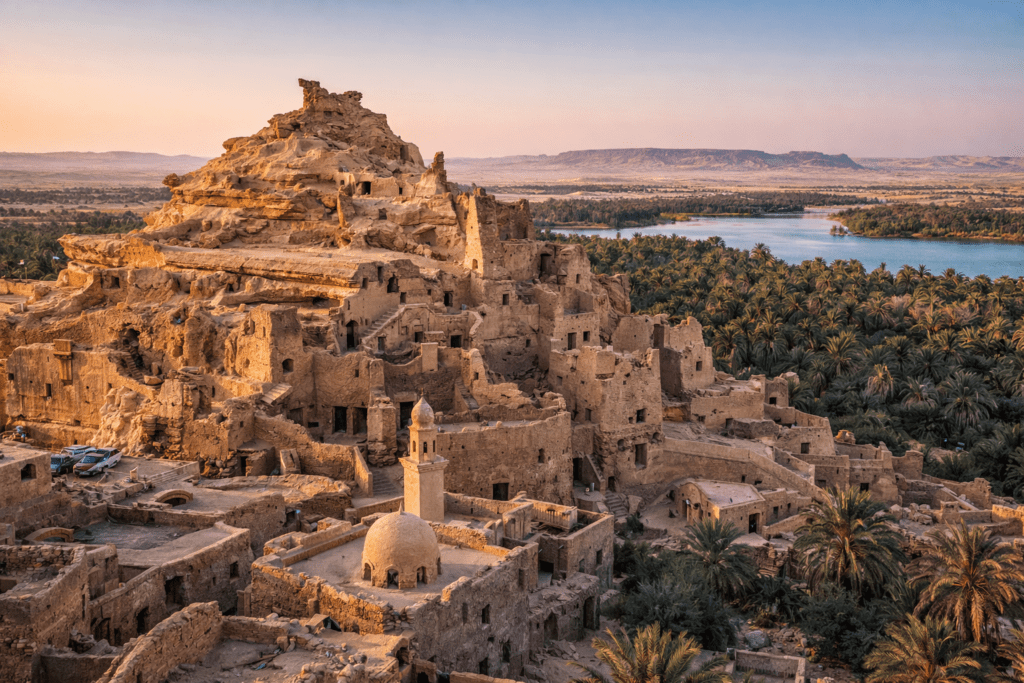
Shali Fortress preserves Siwa’s traditional salt-and-mud building heritage.
Siwa works because its experiences are varied rather than because any one site is enormous.
Shali Fortress is the architectural and historical heart of the oasis. Restored walkways wind through the remains of the old fortified settlement, opening onto views over palms, rooftops and saltwater landscapes. The dedicated Shali Fortress Guide explains the kershef building tradition, the fortress’s decline after heavy rain and what the site is like to walk today.
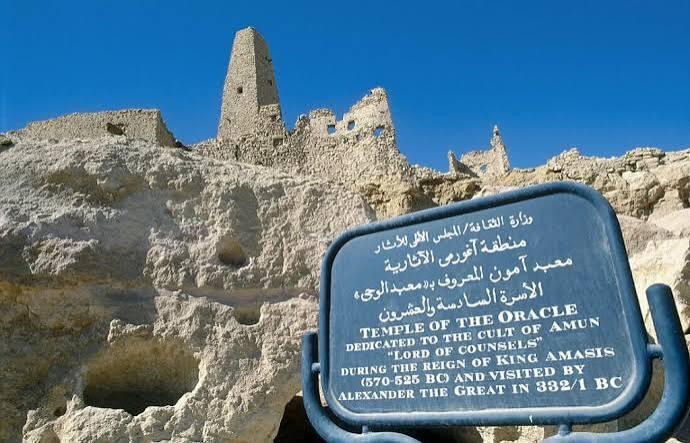
The Temple of the Oracle of Amun at Aghurmi gives Siwa its strongest connection to the ancient Mediterranean world. Alexander the Great is traditionally believed to have traveled here after entering Egypt, seeking confirmation from the oracle. The ruins are modest compared with Luxor’s temples, so context matters more than scale.
The surviving Oracle of Amun complex stands at Aghurmi in Siwa.
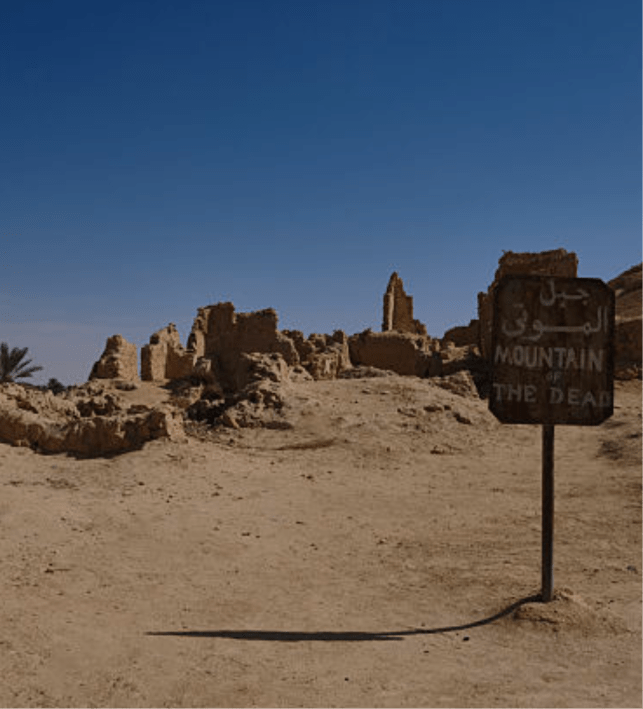
Gebel Al-Mawta, the Mountain of the Dead, contains rock-cut tombs carved into a limestone hill overlooking the oasis. It is smaller and quieter than Egypt’s famous royal cemeteries, but the setting and preserved decoration make it one of Siwa’s most worthwhile archaeological stops. See the Mountain of the Dead Guide before visiting.
Gebel Al-Mawta rises close to Siwa town and contains rock-cut tombs.
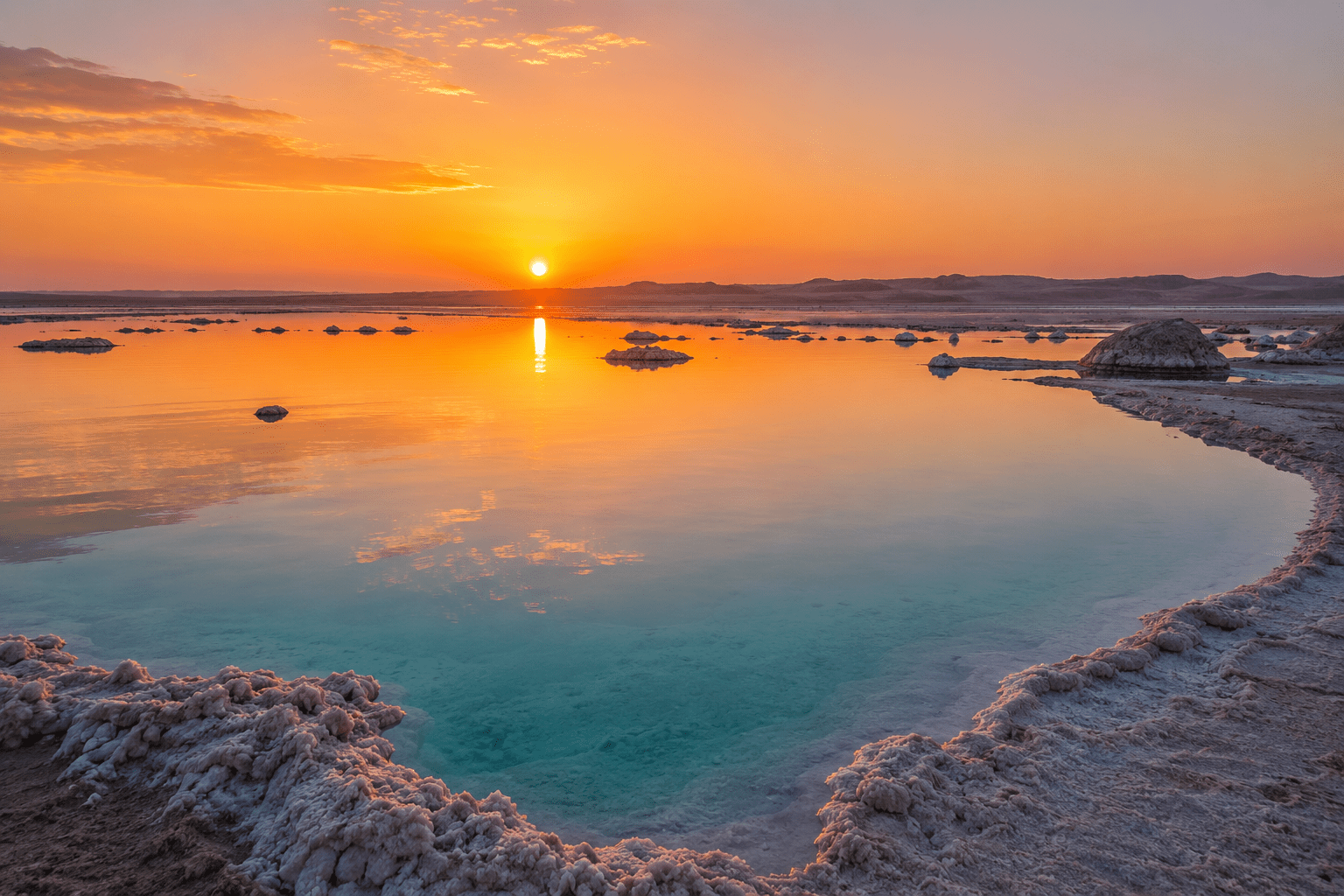
Siwa’s Salt Lakes are among the oasis’s most photographed natural attractions. The water’s extreme salinity creates remarkable buoyancy, but the practical experience matters: sharp salt edges, eye protection, small cuts and the need to rinse afterward are more useful to know than exaggerated health claims. Use the Siwa Salt Lakes Guide for the full visitor guide.
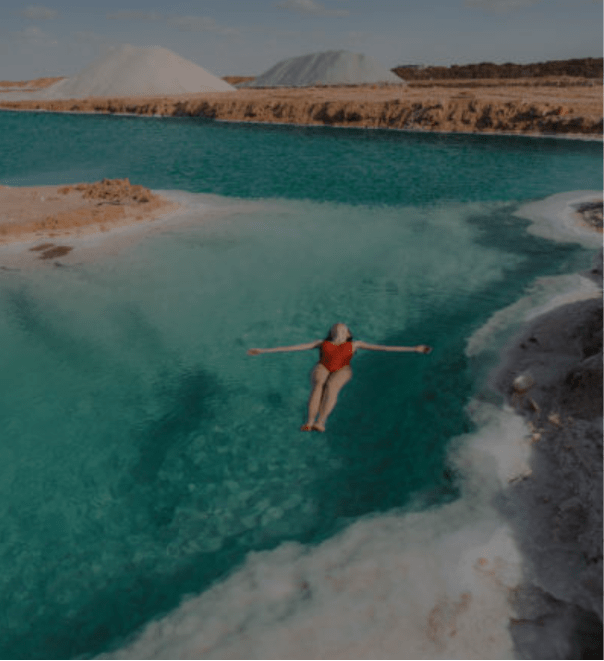
Siwa’s highly saline pools are a distinctive part of the oasis landscape.
Cleopatra Spring is a cool freshwater spring surrounded by palms and cafés. The name is famous, but there is no archaeological proof that Cleopatra bathed there. The Cleopatra Spring Guide explains the legend and what visitors actually find.
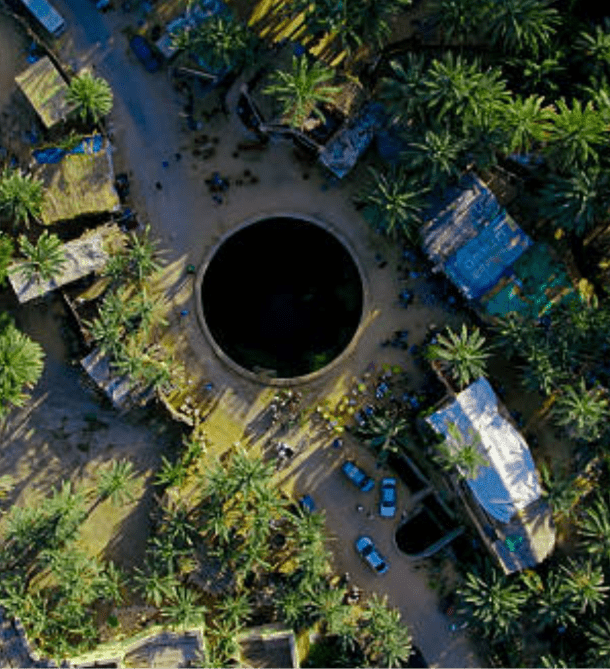
Cleopatra’s Spring is one of Siwa’s best-known freshwater springs.
The Great Sand Sea changes the scale of the trip completely. A proper excursion by suitable 4×4 vehicle can include enormous dunes, sandboarding, desert springs, tea or lunch and sunset. It deserves more than being squeezed into the final hour of a sightseeing day.

The Great Sand Sea adds a very different desert scale to a Siwa itinerary.
Fatnas Island is one of the easiest places to slow down. Many visitors come in late afternoon for tea, juice and sunset across the palms and water. It works best as a gentle ending to an Ancient Siwa day rather than as a rushed checklist stop.
For the complete attraction overview and suggested order, see Best Things to Do in Siwa.
Best Time to Visit Siwa
For most travelers, the cooler part of the year is easiest. Autumn through spring gives more comfortable conditions for archaeological sites, walking and desert excursions. Winter evenings can become surprisingly cool, especially in open desert areas, while late spring and summer require much more aggressive heat management.
Summer does not make Siwa impossible, but it changes the trip. Outdoor archaeology should move earlier, long desert exposure needs careful timing, and shaded or water-based breaks become more important. Do not plan from a generic Egypt temperature chart alone; Siwa combines hot daytime desert conditions with cooler nights and activities that expose travelers to sun for long periods.
Season matters because Siwa combines exposed archaeological sites, salt-water stops and desert excursions. Cooler months make it easier to spend longer outside; summer requires earlier starts, more shade and a deliberately lighter daytime schedule.
Where to Stay in Siwa
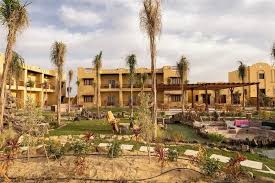
Most travelers base themselves in or near Siwa town, where restaurants, markets and the main road network are easiest to access. Traditional-style lodges and eco-lodges can offer more atmosphere, while properties farther into palm groves or near springs trade convenience for quiet surroundings.
The best choice depends less on star rating than on how you want the day to work. Ask about reliable hot water, air conditioning or heating as appropriate, room configuration, meal arrangements, electricity, Wi-Fi expectations, road access and how transfers to town or excursions are handled.
Choose accommodation by location and logistics rather than by a generic hotel ranking: town stays maximize convenience, palm-grove lodges emphasize atmosphere, and desert-style properties can require more transportation for meals and evening movement.
Food and Siwan Culture
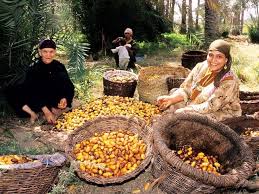
Dates and olives are central to Siwa’s agricultural identity, and local markets sell both alongside olive oil, preserved foods, woven crafts, embroidery and other products associated with the oasis. Meals may include familiar Egyptian staples as well as dishes and preparations shaped by Siwan traditions.
Travelers should avoid treating Siwa’s Amazigh culture as a performance staged for visitors. The oasis is a living community with its own language, customs and social expectations. Respectful photography, modest clothing in town and a willingness to ask rather than assume go a long way.
Siwan food and culture deserve more than a quick market stop. Local dates, olives, traditional cooking, Amazigh identity, the Siwi language and kershef architecture are part of understanding the oasis as a living community rather than only a sightseeing destination.
What to Pack
Siwa needs a slightly different bag from Cairo or Luxor. Sun protection and comfortable walking shoes matter, but so do swimwear, a towel and sandals for salt lakes and springs; a warm layer for cooler desert evenings; protection for electronics from dust; and enough medication or personal essentials that you do not want to search for in a remote destination.
Pack for the conditions you will actually meet in Siwa—sun, dust, salt water, springs and cooler desert evenings. For the countrywide foundation, use What to Pack for Egypt.
Can Families Visit Siwa?
Yes, but the road journey is the deciding factor more often than the attractions. Children who enjoy swimming, dunes, sandboarding, animals, open landscapes and short archaeological visits may find Siwa exciting. Families with very young children should think carefully about two long transfer days, heat, limited services outside town and the logistics of desert excursions.
Is Siwa Safe to Visit Independently?
Siwa town itself is not an attraction that requires a guided group at every moment. Travelers can walk through Shali, visit cafés and markets and arrange local transport. But independent travel does not mean every desert area can be entered casually.
Siwa lies near the Libyan border and Siwa Protected Area covers a large desert region. Great Sand Sea excursions should be arranged locally with experienced drivers/operators who understand current access, routes, protected-area requirements and security conditions. Access and permit conditions can change, so advice copied from an old travel forum is not a substitute for current local information.
Independent travel is straightforward for many town attractions, while local arrangements make more sense for desert access and some logistics.
A Realistic First Siwa Itinerary
The strongest first trip separates the oasis into three different days rather than trying to mix everything together.
Day 1 is the Cairo-to-Siwa transfer. Arrive, eat and rest rather than planning major sightseeing.
Day 2 focuses on Ancient Siwa: Shali Fortress, the Temple of the Oracle, Gebel Al-Mawta and sunset at Fatnas Island.
Day 3 focuses on water and oasis life: salt lakes, Cleopatra Spring, palm-grove scenery, markets and a deliberately slower afternoon.
Day 4 is the Great Sand Sea: a proper 4×4 desert excursion, dunes, sandboarding where appropriate, desert stops and sunset.
Day 5 is the return to Cairo.
That structure protects three full Siwa days and prevents the long road journey from swallowing the destination. Shorter versions are possible, but they require more compromises.
Is Siwa Worth Adding to an Egypt Trip?
Siwa is not the right addition for everyone. Travelers with five or six total days in Egypt should usually prioritize Cairo and Luxor rather than spending two of those days driving to and from an oasis. Travelers with ten days or more can consider Siwa when the Western Desert, culture and landscape are a genuine priority rather than an item added because it looks interesting on a map.
If you dislike long road journeys, prefer dense archaeology, need highly predictable luxury services or want to minimize time in transit, Siwa may not be the strongest use of your trip. If you value remote landscapes, slower travel, desert adventure and a destination that feels fundamentally different from the Nile Valley, the long journey can be exactly what makes Siwa worthwhile.
Frequently Asked Questions
How far is Siwa from Cairo?
The road journey takes most of a day once normal travel conditions and breaks are included. Treat it as a dedicated transfer day rather than combining it with a full sightseeing program.
How many days should I spend in Siwa?
Five days / four nights from Cairo is the strongest minimum for most first-time visitors because it protects three complete sightseeing days between the two transfer days.
Can Siwa be a day trip from Cairo?
No. The distance makes a same-day return unrealistic and would miss the point of visiting the oasis.
Do I need a guide in Siwa?
Not for every moment. Town attractions can be explored independently, but historical interpretation can add value and Great Sand Sea excursions should be arranged with experienced local operators/drivers who understand current access.
Can you swim in the salt lakes?
Yes. Floating is one of Siwa’s signature experiences. Protect your eyes, enter carefully around sharp salt formations and rinse with fresh water afterward.
What is the best time to visit Siwa?
For most travelers, the cooler months from autumn through spring are easiest for outdoor sightseeing and desert excursions.
Is Siwa worth the drive?
For travelers who value oasis culture, desert landscapes and experiences very different from Cairo and the Nile Valley, often yes. For travelers on a short Egypt itinerary, the time commitment may be too high.
Plan Siwa as a Destination, Not an Add-On
The long road to Siwa only makes sense when the itinerary protects enough time to experience what is waiting at the end of it. Give the oasis three real days, separate archaeology from water landscapes and the Great Sand Sea, and leave room for the slower rhythm that makes Siwa different.
Ready to Experience Siwa Without Piecing the Logistics Together?
Explore ENA’s five-day Siwa: Egypt’s Hidden Oasis private itinerary, built around the same two transfer days and three full Siwa days recommended in this guide.