
How Many Days Do You Need in Siwa Oasis?
Siwa is not a destination to squeeze into two or three days. The journey from Cairo takes most of a day in each direction, so any realistic Siwa itinerary must separate travel time from sightseeing time. A trip described as “three days in Siwa” may leave only one useful day in the oasis once the outward and return drives are counted.
The stronger plan is five days and four nights. Day one is the journey from Cairo to Siwa, days two through four are devoted to the oasis, and day five is the return to Cairo. This gives you three proper sightseeing days for Siwa’s ancient sites, salt lakes, springs, palm groves, and the Great Sand Sea without forcing several distinct experiences into one exhausting schedule.
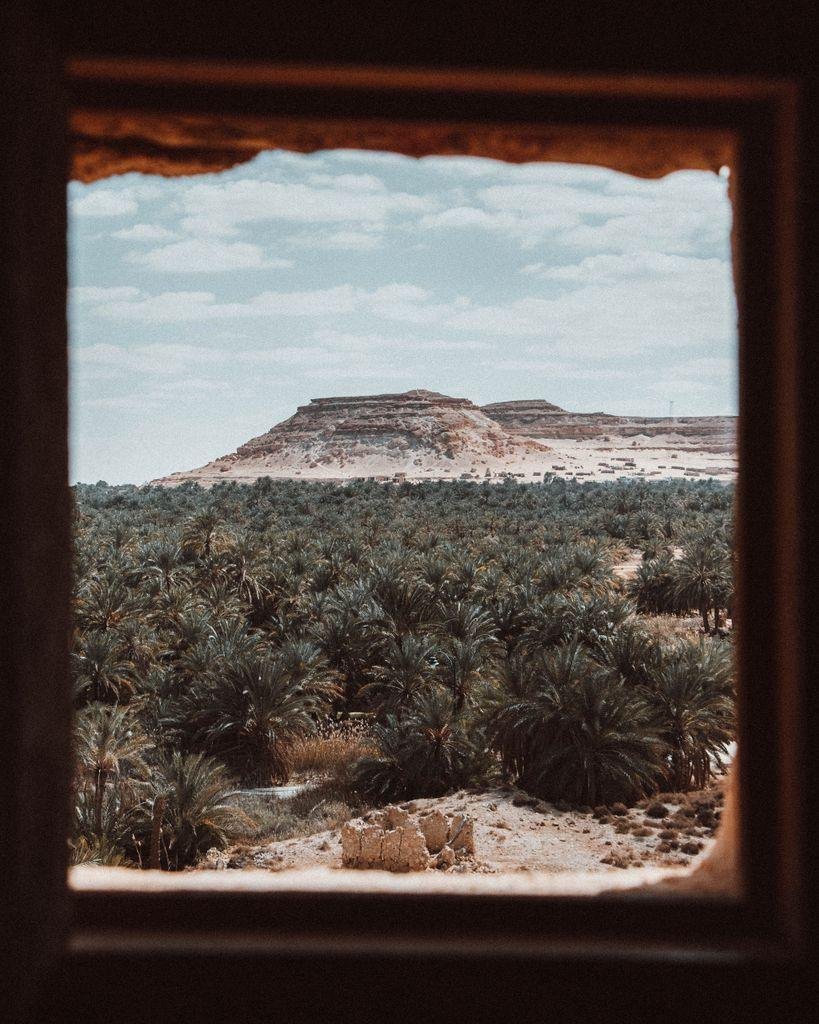
Siwa’s distance is part of its appeal. The oasis feels removed from the Nile Valley because it is. Once you have crossed the Western Desert and reached its mud-brick settlements and date-palm groves, rushing through the experience defeats the purpose of making the journey.
If you’re still deciding how Siwa fits into your overall vacation, our How Many Days Do You Need in Egypt? guide compares itinerary lengths across the country.
Expert Insight: Don’t judge Siwa by the number of attractions. Judge it by the amount of travel required to reach it. Because getting there takes so long, most visitors find that staying longer delivers far better value than rushing in and out.
Quick Answer
| Total Time | Best For | What You Will Actually Experience |
|---|---|---|
| 3 days | Not recommended | Two long driving days and only one sightseeing day |
| 4 days | Very tight itineraries | Two travel days and two compressed sightseeing days |
| 5 days | Most first-time visitors | Two travel days and three complete days in Siwa |
| 6 days | Slower travel | Three sightseeing days plus a flexible day for rest, photography, or deeper exploration |
For the full destination overview, start with the Siwa Oasis Egypt Travel Guide.
Expert Insight: Count Siwa by complete trip length, not by nights at the hotel. A five-day itinerary does not mean five days of sightseeing. It means one day driving from Cairo, three days exploring the oasis, and one day returning. That is the minimum structure that gives Siwa enough time to feel worthwhile.
Why Five Days Is the Right Amount of Time
A five-day Siwa itinerary creates a clean division between travel and experience. You arrive in the evening after the long drive from Cairo, sleep in the oasis, and begin sightseeing the following morning without losing half the day to the road.
Three full days also reflect the way Siwa’s attractions are spread across the oasis. The historical sites around Shali and Aghurmi belong together, while the salt lakes and natural springs deserve a separate day. The Great Sand Sea is another complete experience, best approached in a properly equipped four-wheel-drive vehicle and timed so that the desert safari reaches the dunes during the softer late-afternoon light.
Trying to combine all three into two days means moving directly from ancient ruins to salt water, changing clothes quickly, and then entering the desert with little room for delays or rest. It may be technically possible, but it is not the best way to experience Siwa.
What Happens on a Three-Day Siwa Trip?
A three-day trip gives you only one full day in the oasis.
The first day is spent driving west from Cairo, with arrival usually in the evening. The second day must carry almost the entire Siwa experience. You would have to choose between the historical sites, salt lakes, springs, and a desert safari—or rush through shortened versions of several. The third day is the return journey to Cairo.
This structure makes poor use of the distance. You spend two days in a vehicle for one day of sightseeing and leave without experiencing the contrast between Siwa’s archaeological heritage, natural landscapes, and desert environment.
Three days should only be considered when the oasis is part of a highly restricted schedule and the traveler understands that it will be a brief introduction rather than a complete visit.
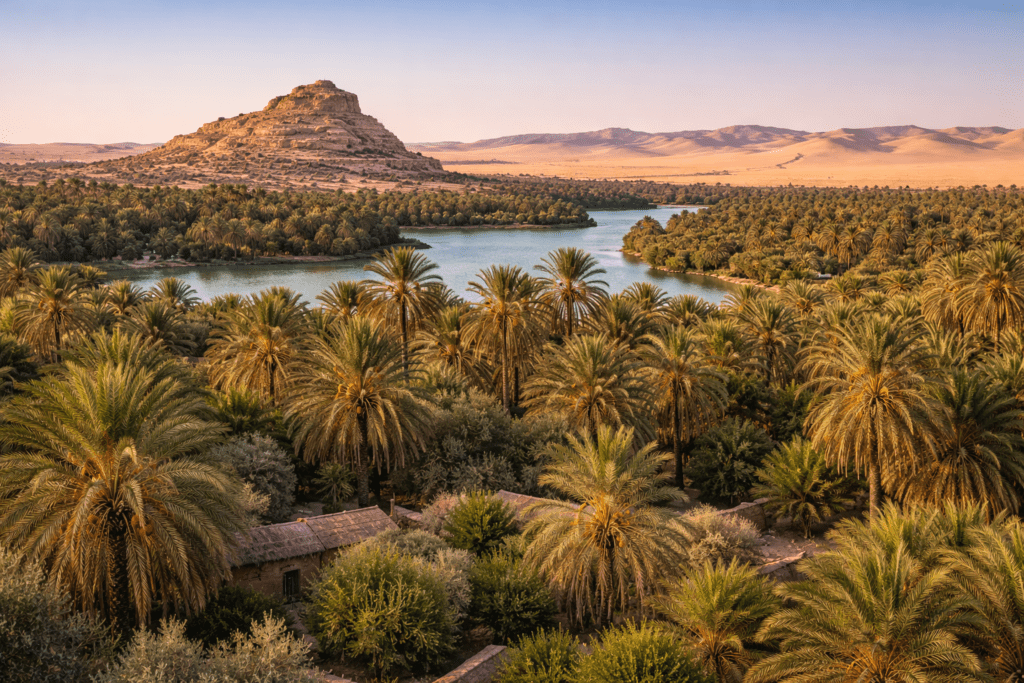
Can You Visit Siwa in Four Days?
Four days gives you two sightseeing days between the drives from and back to Cairo. That is the shortest workable version, but it remains compressed.
One day could cover Shali Fortress, the Temple of the Oracle, Gebel Al Mawta, Cleopatra’s Spring, and sunset at Fatnas Island. The second could combine the salt lakes with an afternoon Great Sand Sea safari.
The weakness is not the number of attractions—it is the pace. Swimming in the salt lakes requires time to change, rinse off the concentrated salt, and travel between pools. A desert safari is not a short stop either; the drive into the dunes, sandboarding, desert springs, lunch or tea, and sunset can fill much of the day.
A four-day trip works when time is genuinely limited. It should not be presented as the ideal arrangement.
What Can You See in Five Days?
Five days gives you the correct balance: two travel days and three full days of exploration.
Day 1: Cairo to Siwa Oasis
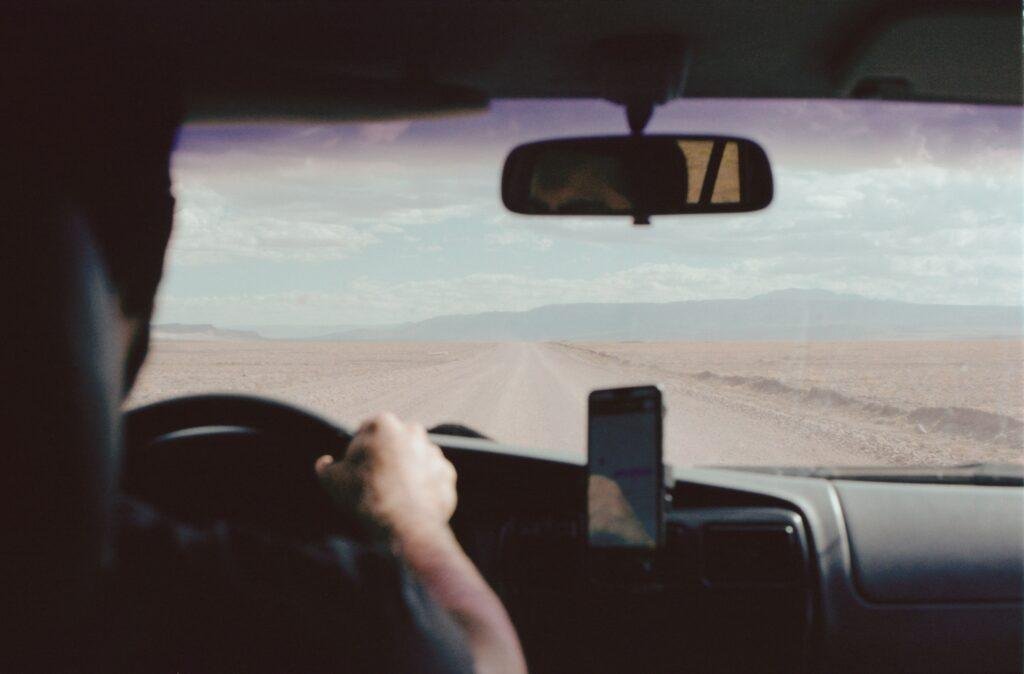
Leave Cairo early and travel west across Egypt’s desert landscapes. The drive occupies most of the day, so no serious sightseeing should be scheduled after arrival. Check into your hotel, eat, and rest before beginning the oasis itinerary the following morning.
This arrival day matters. Building major attractions into the evening creates unnecessary pressure if traffic, road stops, or the pace of the journey changes.
For private transfer, bus, self-drive considerations and what the road day is actually like, see Cairo to Siwa.
Day 2: Ancient Siwa
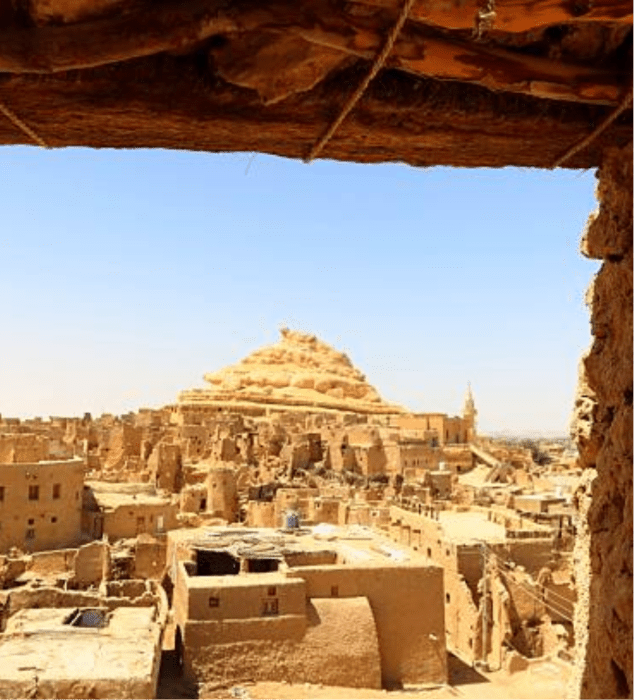
Begin with Shali Fortress, the historic mud-brick settlement that rises above the center of the oasis. From its higher sections, you can see palm groves, rooftops, and the surrounding desert landscape.
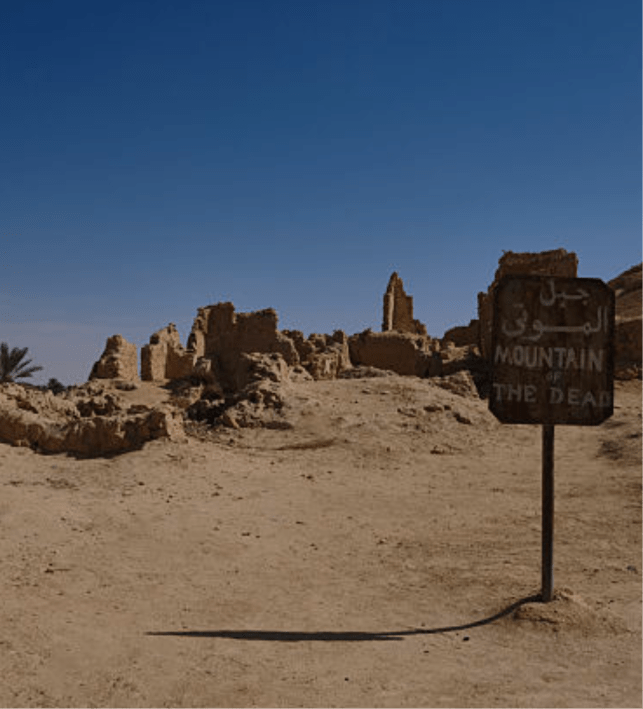
Continue to the Temple of the Oracle at Aghurmi, traditionally associated with Alexander the Great’s visit to the oasis, before exploring Gebel Al Mawta, the Mountain of the Dead, where rock-cut tombs preserve evidence of Siwa’s ancient past.
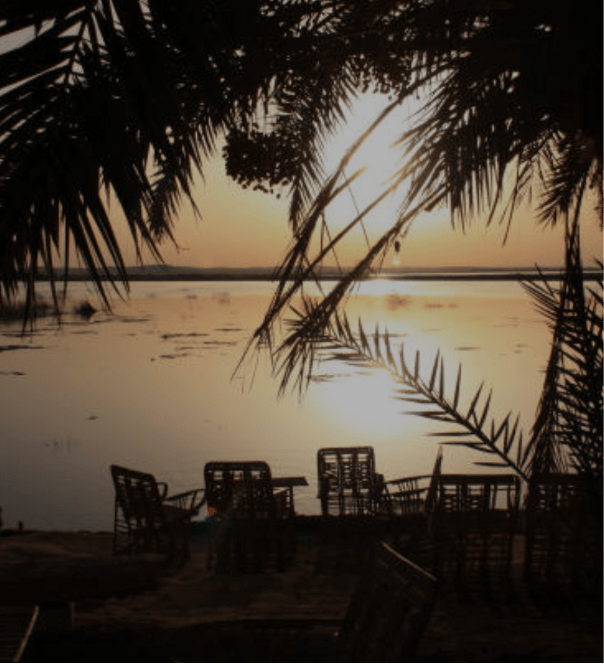
End at Fatnas Island as the sun drops behind the palms and saltwater lake. The evening light is central to the experience; this is not a stop that benefits from being rushed between daytime attractions.
Guide’s Note: Siwa’s archaeological sites are smaller than the monumental temples of Luxor, but they require more interpretation. A local guide connects the ruins to the oasis’s geography, trade routes, religious significance, and distinct cultural history.
Day 3: Salt Lakes and Natural Springs
Dedicate the next day to Siwa’s water landscapes.
The salt lakes are famous for their bright color and extreme buoyancy. Floating is effortless, but the experience requires practical preparation. Small cuts can sting sharply in the concentrated water, and you will need fresh water afterward to remove the salt from your skin.
Continue to Cleopatra’s Spring and other freshwater springs that have supported life in the oasis for generations. The contrast between hypersaline pools, cool spring water, date palms, and open desert is one of Siwa’s defining physical experiences.
The afternoon can remain deliberately lighter, leaving time for local markets, traditional crafts, a café, or a slow return through the palm groves. This is the breathing room lost in a four-day itinerary.

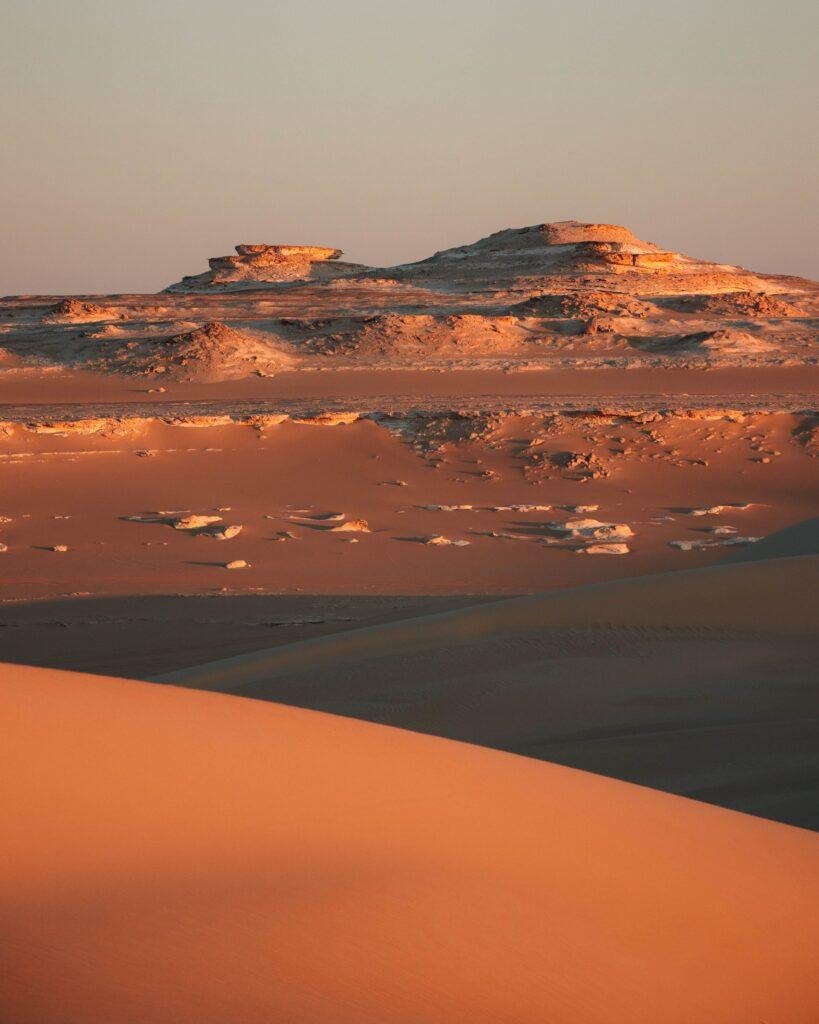
Day 4: The Great Sand Sea
Reserve a full day for the Great Sand Sea.
Travel by four-wheel drive across high dunes, try sandboarding, stop at desert springs, and experience the scale of the landscape beyond Siwa’s cultivated areas. The terrain is not suitable for independent driving; routes shift, distances are deceptive, and experienced local drivers are essential.
The day should build toward sunset rather than begin and end too early. As the heat eases, the sand changes color and the desert becomes more comfortable. Returning to Siwa after sunset completes the experience without forcing another major attraction into the same day.
For the full 4×4 safari and sandboarding guide, see Great Sand Sea From Siwa.
Day 5: Return to Cairo
Leave after breakfast and begin the full-day journey back to Cairo. Do not schedule an international flight or a tightly timed connection for the same evening. Road travel can vary, and the sensible plan is to return to Cairo with enough margin before the next stage of your Egypt itinerary.
Is Six Days Too Long in Siwa?
Six days is a strong choice for travelers who value slower travel, photography, or additional time in the desert.
The extra day should not be filled simply for the sake of adding attractions. It can be used to revisit the salt lakes in better light, spend longer in the palm groves, explore local crafts, enjoy an eco-lodge, or recover after the Great Sand Sea excursion.
Photographers benefit most from this flexibility. Harsh midday light changes the appearance of the salt lakes, while early morning and late afternoon produce cleaner reflections and more depth across the desert. A flexible day also protects the itinerary if wind, visibility, or local conditions affect the preferred timing of an outdoor experience.

Who Should Allow More Than Five Days?
Travelers seeking a slower desert retreat should consider five nights rather than four. Siwa works particularly well after Cairo because its quiet roads, low-rise settlements, and palm-covered landscape provide a complete physical contrast to the capital’s traffic and dense urban movement.
Photographers, cultural travelers, and repeat visitors also gain from an extra day. Siwa’s value does not come from the number of landmarks collected. It comes from seeing how ancient sites, Amazigh heritage, oasis agriculture, springs, saltwater, and desert geography fit together.
Families may also prefer six days. Shorter sightseeing periods, a relaxed afternoon after the salt lakes, and more recovery time around the desert safari make the trip easier for children than three consecutive full days of activity.
Can You Visit Siwa Independently?
Independent travel inside Siwa is possible, but the complete trip requires more planning than a city stay.
Tuk-tuks, bicycles, and local transport can work for attractions near the town and surrounding palm groves. The historical sites and springs are also accessible with a driver. The Great Sand Sea, however, requires an experienced local team, a four-wheel-drive vehicle, and knowledge of the desert routes.
A guided itinerary also solves the larger logistical problem: coordinating the long road transfers from Cairo with hotels, local sightseeing, salt-lake access, and the desert safari. Without that coordination, travelers often lose useful time arranging each stage after arrival.
How Siwa Fits Into a Larger Egypt Itinerary
Siwa should be treated as a five-day component of the wider trip, not as a two-day excursion from Cairo.
A seven-day Egypt itinerary is generally too short unless the entire journey is focused on Cairo and Siwa. Combining the oasis with Cairo, Luxor, Aswan, and a Nile cruise in one week would create an unrealistic amount of travel.
A ten-day itinerary can combine Cairo, Alexandria, and Siwa effectively. Alexandria can break the northern route, but travelers should still preserve two dedicated road days and three full days inside the oasis.
With fourteen days, Siwa works well for travelers who want Egypt beyond the classic Nile Valley. It can follow Cairo and Alexandria before the journey continues to another region, or form the final major experience for returning visitors who have already explored the pyramids, Luxor, and Aswan.
Before adding Siwa, compare the complete route using ENA’s Planning a Trip to Egypt guidance and the broader How Many Days Do You Need in Egypt? hub. The question is not merely whether five calendar days are available, but whether the itinerary can absorb two long overland journeys without weakening the rest of the trip.
Once you have chosen the trip length, use How Many Days Do You Need in Siwa Oasis? to compare the actual day-by-day routes.

Common Siwa Planning Mistakes
The most damaging mistake is counting the driving days as sightseeing days. A five-day Siwa tour contains three exploration days, not five. Any comparison between itineraries should separate time on the road from time in the oasis.
Travelers also underestimate how different the main experiences are. Ancient Siwa, the salt lakes, and the Great Sand Sea should not be treated as interchangeable half-day stops. Each has its own route, physical demands, clothing needs, and ideal time of day.
Another error is scheduling the return to Cairo immediately before an international departure. The drive is long, and a delayed arrival can put the flight at risk. A Cairo overnight after returning creates a safer itinerary.
The salt lakes also require more preparation than their photographs suggest. Bring footwear that can tolerate salt, avoid shaving immediately beforehand, protect cuts, keep fresh water nearby, and rinse thoroughly after floating.
Finally, do not attempt to save time by shortening the desert safari into a rushed midday visit. The heat is stronger, the light is flatter, and the experience loses the sunset that makes the Great Sand Sea memorable.
Frequently Asked Questions
How many days do you really need in Siwa?
Five days is the correct recommendation when traveling from Cairo. Two days are required for the outward and return journeys, leaving three full days for ancient Siwa, the salt lakes and springs, and the Great Sand Sea.
Are three days enough for Siwa Oasis?
Three days are only enough if you count the time spent at the destination and exclude the travel days. From Cairo, a three-day total trip leaves just one full sightseeing day, which is not enough for a proper Siwa experience.
Is four days enough for Siwa?
Four days is workable but tight. It provides two full sightseeing days between the drives, forcing the historical sites and natural attractions into compressed schedules. Five days gives each major part of Siwa its proper place.
How many nights should you stay in Siwa?
Four nights supports the recommended five-day itinerary. You arrive on the first evening, spend three complete days exploring, and depart on the fifth morning.
How long does it take to reach Siwa from Cairo?
The road journey occupies most of the day once traffic, stops, and travel conditions are included. It should be planned as a dedicated transfer day rather than combined with a full sightseeing program.
Can Siwa be a day trip from Cairo?
The distance makes a day trip unrealistic. The journey requires a multi-day itinerary, and the strongest version includes three complete days in the oasis between the two road transfers.
Is the Great Sand Sea worth a full day?
A proper Great Sand Sea excursion deserves its own day. Driving across the dunes, sandboarding, stopping at desert springs, eating in the desert, and staying for sunset cannot be experienced well as a hurried addition to another sightseeing route.
The mistake travelers make is booking Siwa by the number of hotel nights without accounting for the two days consumed by the road. That produces a trip with too much driving and too little oasis. Explore Egyptian Nile Adventures prevents that imbalance with a five-day route that protects three complete sightseeing days for Ancient Siwa, the salt lakes and springs, and the Great Sand Sea. Choose the Siwa: Egypt’s Hidden Oasis itinerary rather than sacrificing the experience to a schedule that looks efficient but leaves no time to experience the destination properly.