What to Pack for Egypt: Essential Items That Actually Matter
Most travelers pack for Egypt as if they are preparing for a normal warm-weather vacation. What catches many people off guard is how physically specific the country feels once the trip actually begins.
Egypt is not just hot. It is dry, bright, dusty in certain areas, and heavily built around long sightseeing days outdoors. Temple complexes involve far more walking than most travelers expect, Nile cruise mornings often start early, and moving between airports, hotels, and archaeological sites becomes much easier when luggage stays manageable.
The best packing strategy for Egypt is not bringing more things. It is bringing the right things for the conditions you will actually experience on the ground.
Expert Insight: Travelers who pack for comfort and heat management almost always enjoy Egypt more than travelers who pack for style or “just in case” scenarios.
Lightweight Clothing Matters More Than Quantity
One of the biggest packing mistakes for Egypt is bringing too many heavy or bulky clothes.
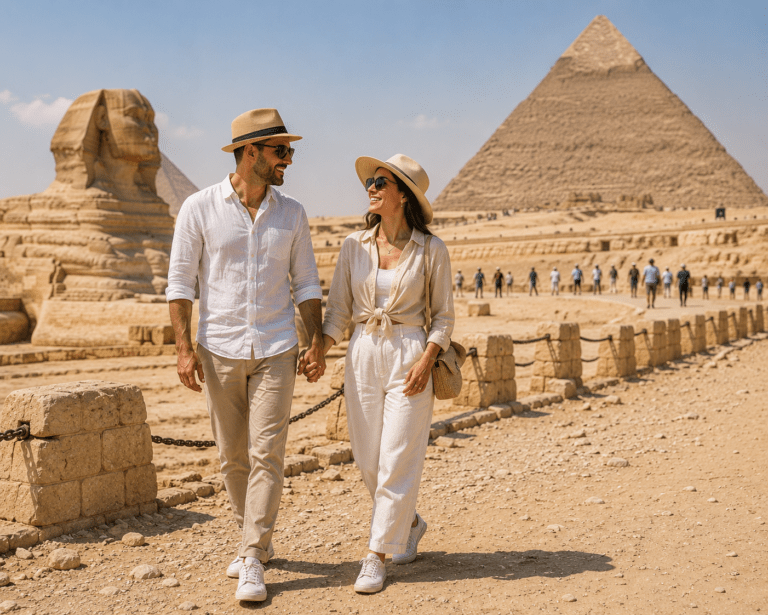
Most sightseeing days involve direct sun exposure, long periods outdoors, and temperatures that rise quickly by late morning, especially in Luxor and Aswan. Breathable fabrics become far more important than having multiple outfit options.
Lightweight long sleeves, linen shirts, loose trousers, and moisture-wicking clothing usually work much better than thick cotton or heavy travel outfits once temperatures climb during the day.
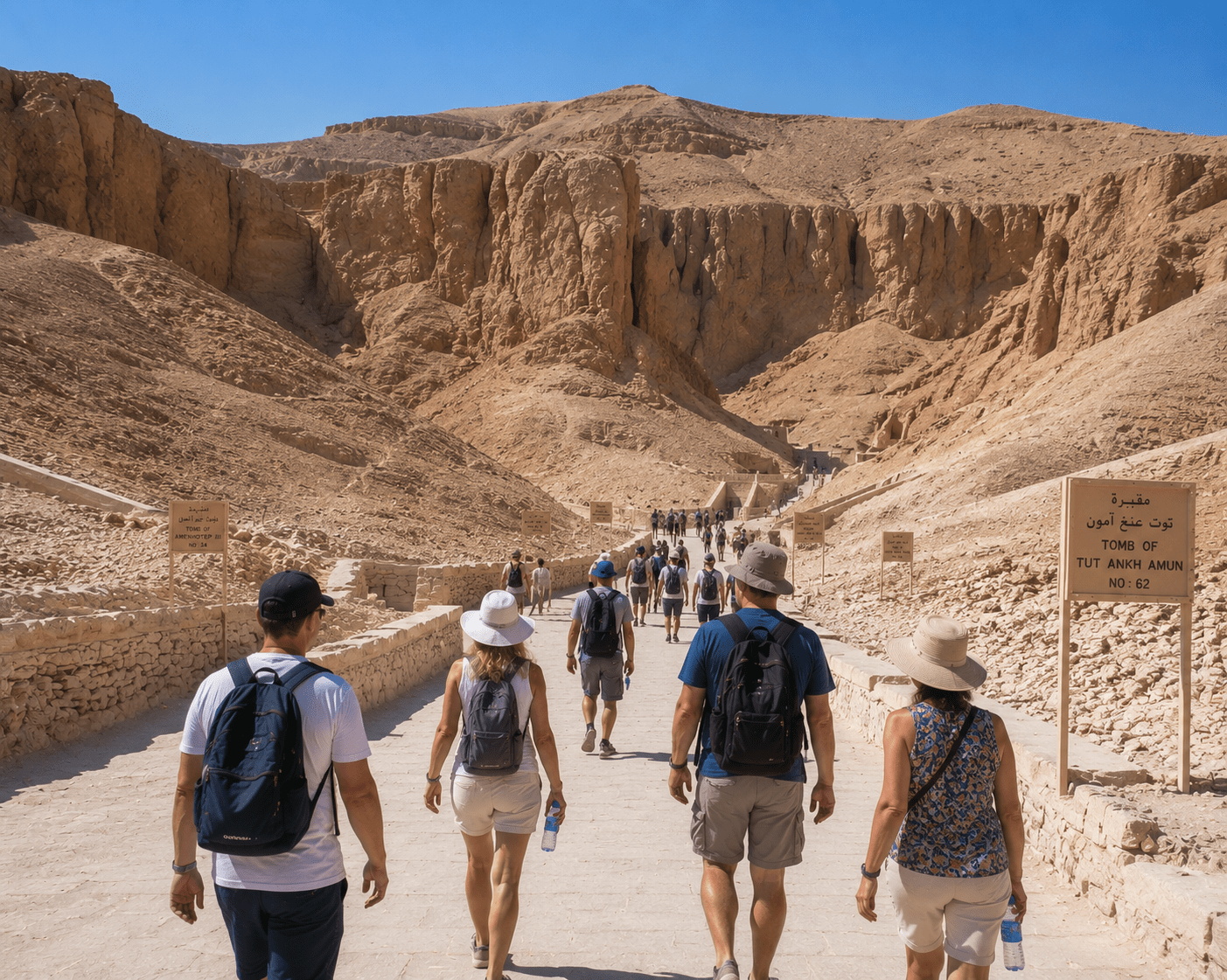
This becomes especially important at sites like Karnak Temple, the Valley of the Kings, Abu Simbel, and the Pyramids of Giza where shade is limited and the reflected heat from stone surfaces becomes intense by midday.
Travelers visiting Egypt during winter still experience warm daytime conditions most of the time, but cooler mornings and evenings make light layering useful, particularly on Nile cruises.
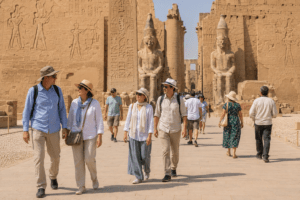
Comfortable Shoes Become Essential Very Quickly
Egypt involves much more walking than many travelers expect before arriving.
Temple flooring is uneven, tomb entrances include stairs and inclines, and archaeological sites often stretch across much larger areas than photographs suggest. Even museum visits can involve hours on foot across stone surfaces and open courtyards.
Comfort matters far more than appearance here.
Supportive walking shoes, breathable sneakers, or sturdy sandals usually work best throughout the trip. Travelers who pack fashion-focused footwear often regret it by the second or third sightseeing day, especially in Upper Egypt where temple-heavy itineraries become physically demanding quickly.
Guide’s Note: The Valley of the Kings and the Giza Plateau are where poor footwear usually becomes obvious fastest. Heat and uneven terrain amplify discomfort quickly.
Sun Protection Is Not Optional in Upper Egypt
Many travelers underestimate how intense Egypt’s sunlight feels during full sightseeing days.
A hat, sunglasses, sunscreen, and reusable water bottle become daily essentials once you begin visiting temples and archaeological sites. The dry air can feel deceptively comfortable early in the morning before the heat intensifies later in the day.
This is especially noticeable in Luxor and Aswan where shade is limited across many major sites. Travelers preparing for Egypt’s climate and sightseeing conditions can also review Egypt’s official travel tips before packing.
A lightweight scarf or shawl also becomes surprisingly useful throughout the trip. It helps with sun protection, cooler evenings, mosque visits, dust during desert drives, and strong air conditioning inside airports or vehicles.
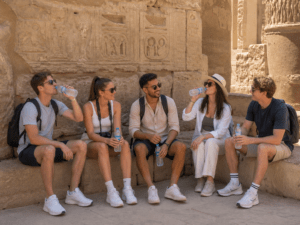
Packing Light Makes Transportation Much Easier
Egypt trips often involve more movement than travelers initially expect.
Domestic flights, hotel transfers, Nile cruise boarding, train stations, and city-to-city transportation all become noticeably easier with manageable luggage. Large hard-shell suitcases quickly become frustrating once repeated transfers begin stacking together across the itinerary.
Most travelers wear the same core clothing combinations repeatedly throughout the trip because Egypt’s climate and sightseeing rhythm stay relatively consistent day to day.
Packing lighter almost always improves the experience.
Articles like How to Get Around Egypt and What to Wear in Egypt become especially useful once travelers understand how movement and climate shape everyday travel conditions throughout the country.
Small Practical Items Make a Bigger Difference Than Expensive Gear
The items travelers appreciate most in Egypt are usually simple practical essentials rather than specialized travel gadgets.
Portable battery packs become useful during long sightseeing days. Lip balm and moisturizer help with Egypt’s dry climate. Tissues and hand sanitizer are worth carrying throughout the day, especially at archaeological sites or during road travel in Upper Egypt.
A universal adapter is important as well, particularly for travelers moving frequently between hotels, cruises, and airports.
None of these items are difficult to find in Egypt, but having them already packed makes the first days of the trip significantly smoother.
Evenings Feel Different From Daytime Conditions
Many travelers pack only for daytime heat and forget that Egypt changes noticeably after sunset.
Winter evenings in Cairo, early mornings before excursions, desert areas, and open Nile cruise decks can feel much cooler than travelers expect once the sun disappears. A light overshirt, sweater, or thin jacket is usually enough, but having one layer for cooler moments makes the trip much more comfortable overall.
This temperature contrast feels strongest between December and February.
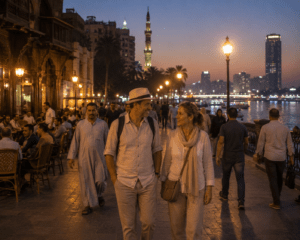
You Do Not Need Specialized “Egypt Clothing”
Travelers sometimes overcomplicate packing for Egypt because they assume the country requires highly specific travel gear or strict cultural clothing rules.
In reality, Egypt usually rewards practical simplicity.
Breathable clothing, comfortable shoes, light layers, and sun protection solve most packing challenges far more effectively than over-packing or buying specialized outfits beforehand.
The travelers who feel most comfortable in Egypt are usually the ones who stop thinking about their clothing entirely once the trip begins.
FAQ: What to Pack for Egypt
What clothes should you pack for Egypt?
Lightweight breathable clothing works best for most of the country, especially during sightseeing days in Cairo, Luxor, and Aswan where heat and sun exposure become intense quickly.
Do you need warm clothes in Egypt?
A light layer is useful for winter evenings, early mornings, desert areas, and Nile cruise decks after sunset, particularly between December and February.
What shoes are best for Egypt?
Comfortable walking shoes or supportive sandals work best because most archaeological sites involve uneven terrain and long walking distances.
Is sunscreen necessary in Egypt?
Strong sun exposure is one of the biggest physical factors travelers experience in Egypt, especially in Upper Egypt where shade is limited at many temples and tombs.
Should you pack a lot for Egypt?
Most travelers enjoy Egypt more when packing lighter. Repeated transfers between airports, hotels, cruises, and sightseeing destinations make oversized luggage unnecessarily frustrating.
Many travelers become uncomfortable in Egypt not because they forgot something critical, but because they packed for the wrong version of the trip—too much luggage, heavy clothing, or unrealistic expectations about daily conditions.
Explore Egyptian Nile Adventures helps travelers prepare around how Egypt actually feels on the ground, from Upper Egypt heat and temple pacing to realistic transportation flow between destinations.
See Egypt itineraries designed around real travel conditions so the trip feels smooth, comfortable, and manageable from the moment you arrive.