Cleopatra Spring Guide
Few places in Egypt blend history, legend, and everyday local life quite like Cleopatra Spring in Siwa Oasis. Travelers often arrive expecting an isolated ancient pool hidden among palm trees, only to discover something quite different. The spring is real, the water is refreshing, and the setting is beautiful—but its popularity means it functions as both a historic attraction and a gathering place for locals and visitors alike.
Understanding what Cleopatra Spring is actually like helps set realistic expectations. Rather than searching for untouched ruins, you’ll experience one of Siwa’s most famous natural springs, where clear groundwater has flowed for centuries and continues to provide relief from the desert heat.
Expert Insight: Cleopatra Spring is best appreciated as part of a full day exploring Siwa rather than as a destination on its own. Most visitors spend 30 to 60 minutes here before continuing to nearby historical sites, palm groves, or the Great Sand Sea.
For the complete Siwa planning framework, see the Siwa Oasis Egypt Travel Guide.
The Legend of Cleopatra
According to local tradition, Queen Cleopatra VII bathed in this spring during her visit to the Siwa Oasis. The story has endured for generations and is one of the reasons the spring became internationally known.
Despite the legend, historians have found no archaeological evidence confirming that Cleopatra ever visited or swam here. Like many famous stories associated with ancient Egypt, the tale has become part of local folklore rather than documented history.
That doesn’t diminish the experience. Standing beside the spring beneath towering date palms, it is easy to understand why the story continues to capture visitors’ imaginations.
What Cleopatra Spring Is Really Like
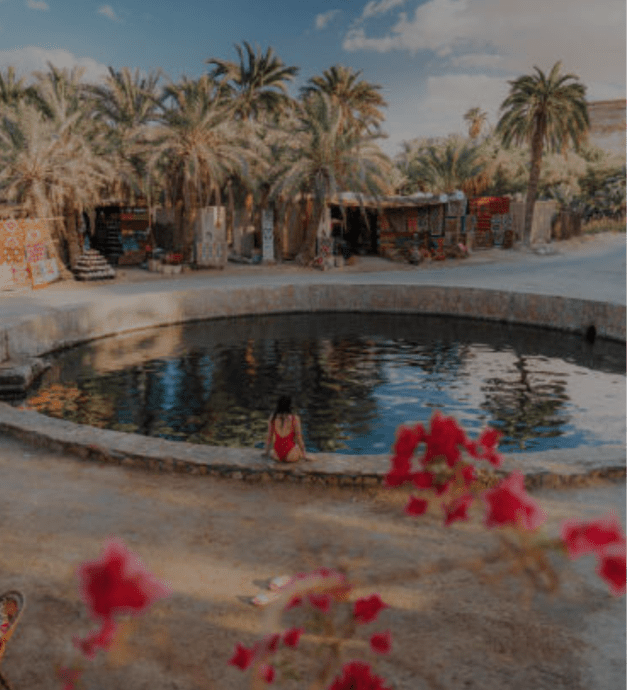
The spring is a naturally flowing freshwater pool fed by underground aquifers beneath the Siwa Oasis. Unlike many thermal springs around the world, the water remains pleasantly cool throughout much of the year, making it especially inviting after exploring Siwa’s archaeological sites under the desert sun.
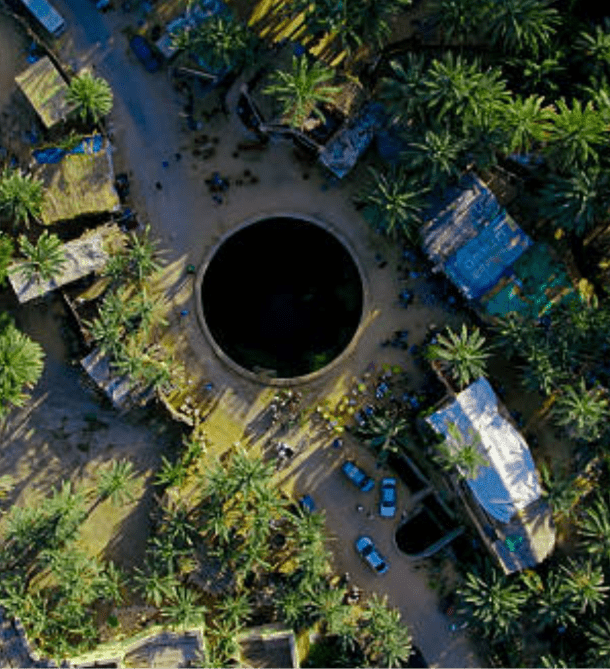
The spring itself has been developed with stone edges and surrounding cafés, creating a relaxed atmosphere rather than a remote wilderness experience. Local families, guides, and travelers often gather here throughout the day, particularly during weekends and Egyptian holidays.
Visitors looking for complete solitude may be surprised by the number of people, especially in the afternoon. Arriving early in the morning or later in the day usually provides a quieter experience.
The Swimming Experience
Swimming is one of the main reasons travelers visit Cleopatra Spring.
The water is remarkably clear, and stepping into the cool spring after walking through Siwa’s dusty streets feels incredibly refreshing. Many visitors spend time floating in the pool before relaxing under shaded seating areas with fresh fruit juice or traditional Siwan tea.
While swimming is permitted, modest swimwear is appreciated out of respect for local customs. Many international visitors choose to wear a T-shirt or lightweight cover-up when entering or leaving the water, particularly if local families are nearby.
The changing facilities are basic, so bringing a towel, sandals, and a dry change of clothes makes the visit much more comfortable.
Guide’s Note: Midday temperatures in Siwa can exceed 40°C (104°F) during summer. A swim at Cleopatra Spring often feels most rewarding after visiting nearby historical sites earlier in the morning.
Nearby Attractions
Cleopatra Spring is rarely visited in isolation because several of Siwa’s best attractions are only a short drive away.
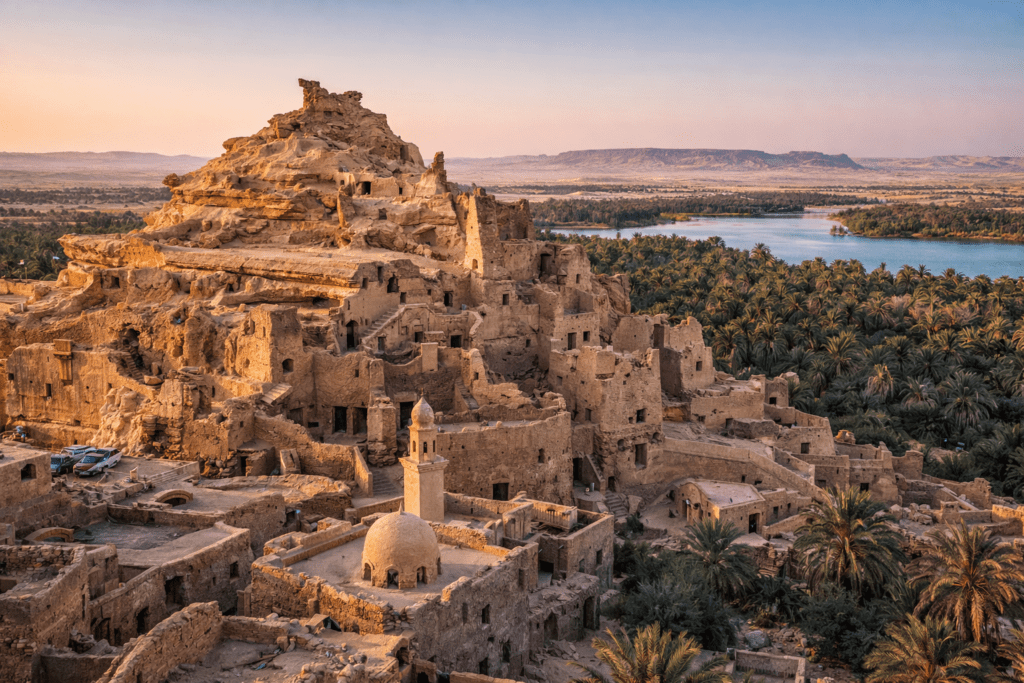
The nearby Temple of the Oracle of Amun remains one of Egypt’s most historically significant sites, where Alexander the Great is believed to have consulted the famous oracle before declaring himself the son of Zeus-Ammon. The restored streets of Shali Fortress provide panoramic views across the oasis, while the Mountain of the Dead (Gebel Al-Mawta) offers beautifully decorated rock-cut tombs dating to the Late Period, Greek, and Roman eras.
Many tours continue into the afternoon with a visit to the Great Sand Sea, where travelers experience dune driving, sandboarding, and sunset over the Sahara before returning to Siwa.
Best Time to Visit
The most comfortable months to visit Cleopatra Spring are from October through April, when daytime temperatures are ideal for sightseeing and evenings remain pleasantly cool.
Morning visits usually offer the calmest atmosphere and softer light for photography. During winter, the lower sun creates beautiful reflections across the water while keeping temperatures comfortable for walking around the oasis.
Summer visits are still possible, but sightseeing is best completed early in the day before returning to the spring for a refreshing swim during the hottest hours.
For month-by-month and seasonal planning across the entire oasis, see Best Time to Visit Siwa.
Practical Tips
Bring swimwear, a towel, sandals, sunscreen, and plenty of drinking water. Although cafés around the spring sell refreshments, carrying your own water is advisable during warmer months.
Cash is useful for purchasing drinks and snacks, as small vendors may not accept credit cards.
Photography is welcomed, but be respectful when local families are swimming or relaxing around the spring. Asking permission before photographing people is always appreciated.
If you are combining the spring with the salt lakes, the Siwa Salt Lakes Guide explains why freshwater rinsing, eye protection and footwear matter.
Cleopatra Spring FAQ
Did Cleopatra really swim here?
The story is part of local tradition rather than confirmed historical fact. While the legend has become closely associated with the spring, there is no archaeological evidence proving Cleopatra visited this location.
Can you swim in Cleopatra Spring?
Swimming is one of the main attractions. The clear freshwater remains pleasantly cool and provides welcome relief after exploring Siwa’s desert landscapes.
How long should I spend at Cleopatra Spring?
Most visitors spend between 30 minutes and one hour enjoying the spring before continuing to nearby attractions such as Shali Fortress or the Temple of the Oracle.
Is Cleopatra Spring suitable for children?
Families often enjoy visiting the spring because the calm water provides a relaxing break from sightseeing. Children should always be supervised while swimming.
Is there an entrance fee?
Entry policies can occasionally change as local management evolves, so checking with your guide or accommodation before visiting is recommended.
Many travelers visit Cleopatra Spring expecting an isolated archaeological site and leave disappointed because they misunderstood what the experience offers. Explore Egyptian Nile Adventures helps you experience Siwa the way it is meant to be explored—combining Cleopatra Spring with the oasis’s ancient temples, historic fortress, desert landscapes, and local culture in a thoughtfully planned journey. Instead of visiting one attraction in isolation, discover how these remarkable places connect to create one of Egypt’s most unforgettable destinations.