Crystal Mountain Guide
Crystal Mountain is one of the most unusual stops in Egypt’s Western Desert.
Unlike the towering temples of Luxor or the dramatic landscapes of the White Desert, Crystal Mountain is not impressive because of its size. Instead, it stands out because of what it is made of. Rising from the desert landscape near Bahariya Oasis, this rocky ridge contains sparkling crystal formations that catch the sunlight and create an appearance unlike anywhere else in Egypt.
Most travelers encounter Crystal Mountain while traveling between the Black Desert and the White Desert. It is often a relatively short stop, but one that leaves a lasting impression because it feels so unexpected in such a remote environment.
For visitors exploring Egypt’s Western Desert, Crystal Mountain provides a fascinating contrast to the surrounding landscapes and offers insight into the geological forces that shaped the region over millions of years.
Expert Insight: Many travelers arrive expecting an actual mountain. In reality, Crystal Mountain is a low rocky ridge, but its unusual crystal formations make it one of the most distinctive geological sites in Egypt’s desert landscapes.
What Is Crystal Mountain?
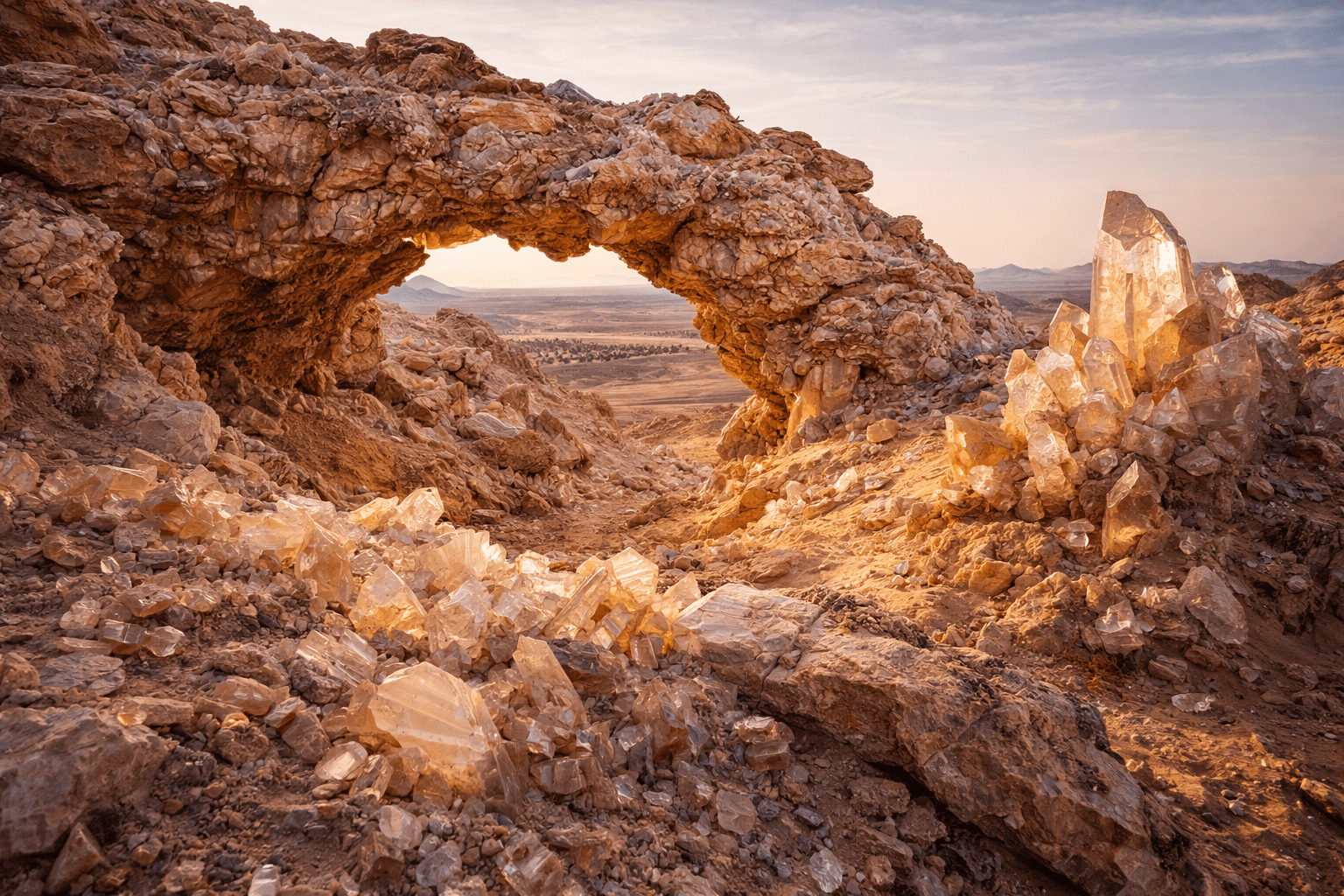
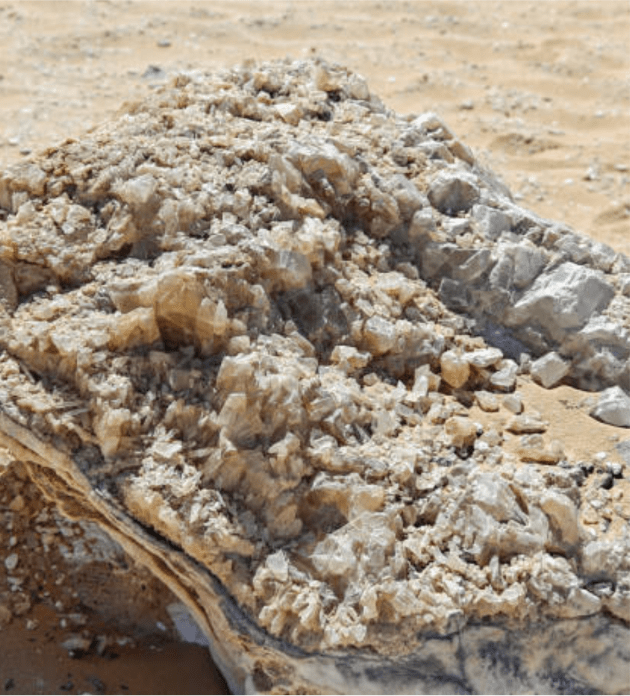
Crystal Mountain is a natural rock formation composed largely of quartz crystal deposits embedded within the surrounding stone.
Located between Bahariya Oasis and the White Desert, the site appears as a glittering outcrop emerging from the desert floor. When sunlight strikes the exposed crystals, portions of the ridge sparkle against the surrounding sands and rocky terrain.
Although relatively small compared to many natural landmarks, Crystal Mountain attracts visitors because of its rarity. Few places in Egypt allow travelers to see such visible crystal formations in an open desert setting.
The site is easily accessible by vehicle and has become a standard stop on most Western Desert excursions.
Geological Background
The story of Crystal Mountain begins thousands of years ago.
Geological processes beneath the Earth’s surface created mineral-rich formations that eventually became exposed through erosion. Over long periods of time, wind and weather gradually removed softer surrounding materials, revealing veins and deposits of quartz crystals within the rock.
The crystals visible today are part of a much larger geological history that shaped the deserts west of the Nile Valley.
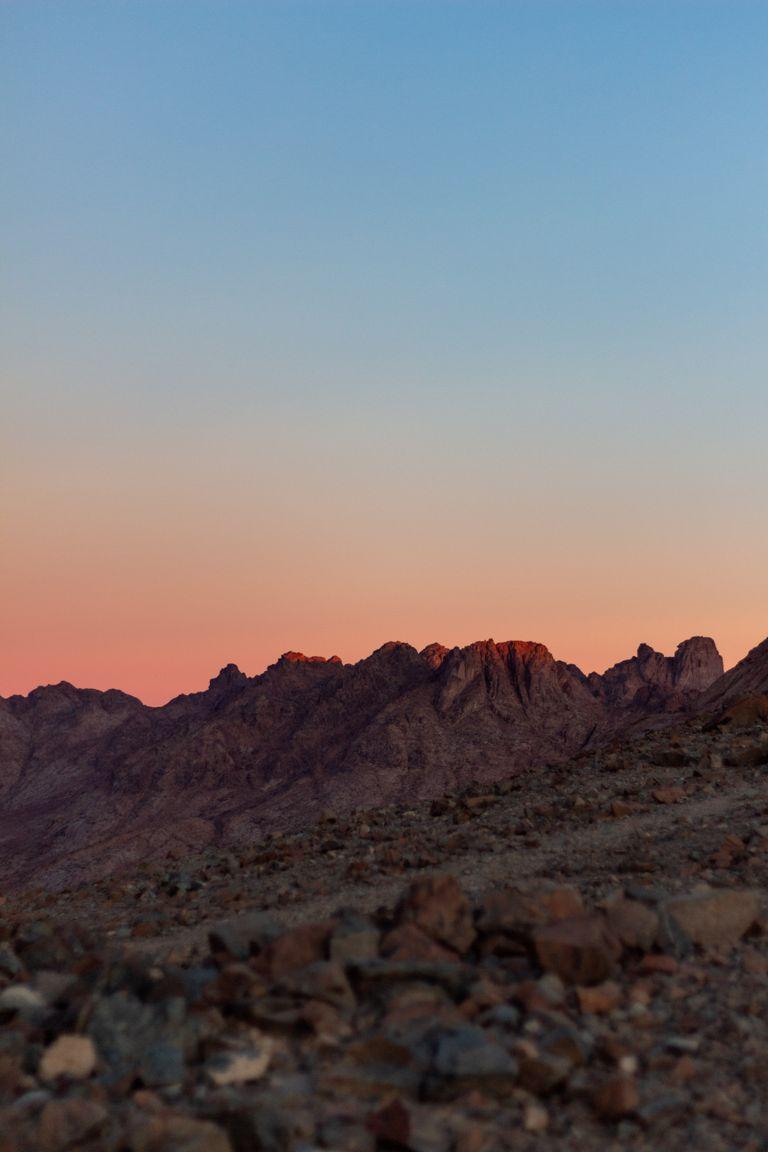
While the surrounding White Desert is famous for chalk formations and the Black Desert is known for volcanic material, Crystal Mountain highlights another side of the region’s geological diversity.
Together, these three locations create one of Egypt’s most fascinating natural landscapes.
What You’ll See
Most visitors spend between fifteen and thirty minutes exploring Crystal Mountain.
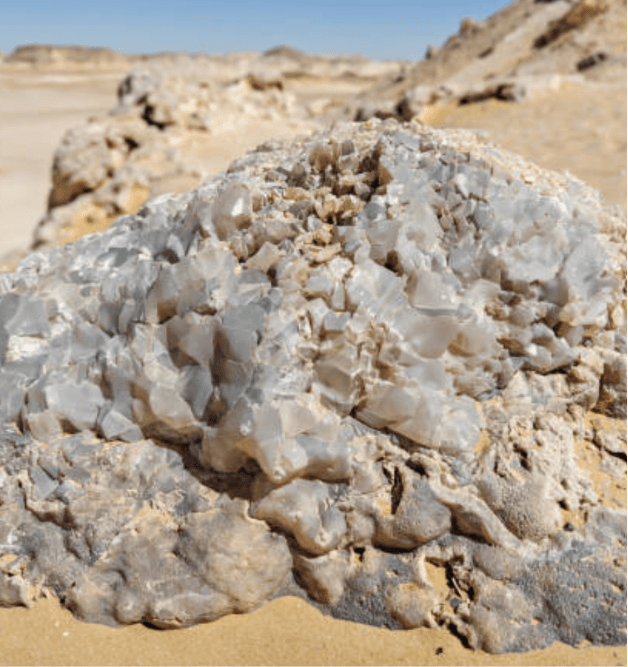
The attraction is not a large complex or hiking destination. Instead, visitors walk around the ridge, examine the exposed crystal formations, and appreciate how dramatically the site contrasts with the surrounding desert.
The crystals vary in size and visibility depending on location and lighting conditions. Some sections appear as sparkling veins running through the rock, while others contain larger clusters that reflect sunlight more intensely.
Because the site sits within a broader desert environment, visitors also enjoy wide views across the surrounding landscape.
The stop works best when viewed as part of the overall Western Desert experience rather than as a destination requiring several hours on its own.
Photography Opportunities
Crystal Mountain is particularly popular with photographers.
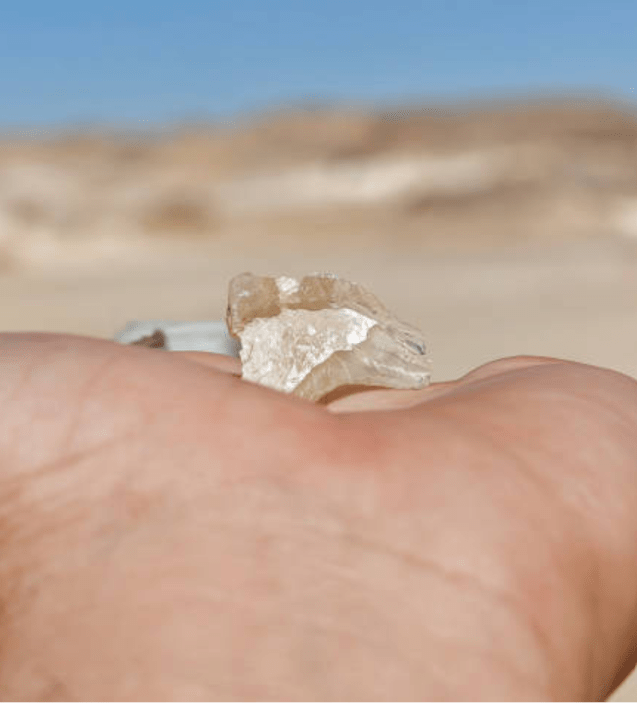
The sparkling quartz formations create unique textures and reflections that differ significantly from the sweeping landscapes of the White Desert or the dark volcanic hills of the Black Desert.
Morning and late afternoon generally provide the best lighting because lower sun angles enhance the crystals’ reflective qualities while creating more depth within the surrounding terrain.
Close-up photography works especially well here. Many visitors focus on wide desert landscapes throughout the Western Desert, but Crystal Mountain rewards attention to detail.
The contrast between crystal surfaces and rugged desert rock often produces some of the most distinctive images from the entire journey.
Guide’s Note: Midday sunlight can be extremely harsh in the Western Desert. Photographers who arrive early or later in the day usually achieve much better results.
Visiting as Part of a White Desert Tour
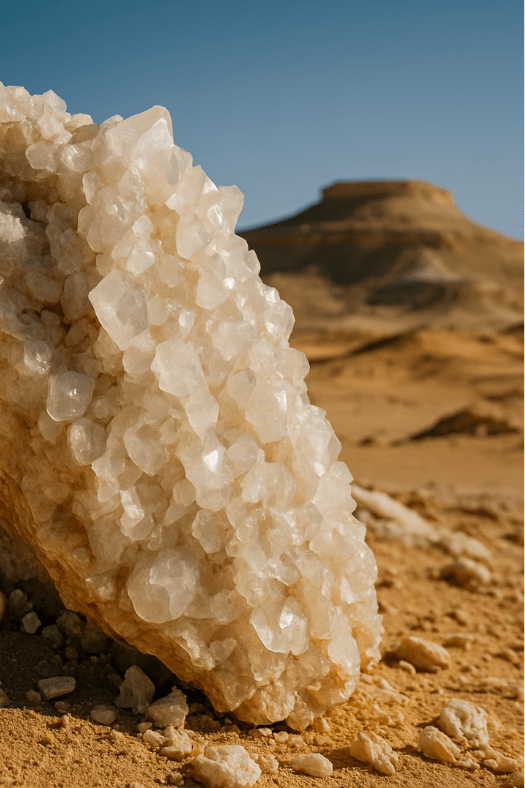
Most travelers visit Crystal Mountain as part of a broader White Desert itinerary.
The site is typically included alongside the Black Desert, Bahariya Oasis, and the White Desert itself. Because the attraction requires relatively little time to explore, it fits naturally into larger desert excursions without significantly extending the itinerary.
The combination works well because each stop showcases a completely different landscape. Visitors move from volcanic terrain in the Black Desert to crystal-rich formations at Crystal Mountain before arriving at the famous chalk sculptures of the White Desert.
Together, these locations create one of the most visually diverse travel experiences in Egypt.
Articles like White Desert Guide and Black Desert Guide provide useful context before visiting because they help travelers understand how each destination contributes to the overall Western Desert experience.
Crystal Mountain FAQ
Is Crystal Mountain worth visiting?
Crystal Mountain is worth visiting as part of a Western Desert itinerary because of its unusual crystal formations and geological significance. While it is not a destination that requires a full day on its own, it adds variety and interest to desert tours.
How long does a visit to Crystal Mountain take?
Most travelers spend between fifteen and thirty minutes at the site, depending on photography interests and overall tour schedules.
Can you collect crystals from Crystal Mountain?
Visitors should leave all crystal formations in place. The site is a protected natural attraction, and removing material contributes to long-term damage.
When is the best time to visit Crystal Mountain?
Morning and late afternoon generally provide the most comfortable temperatures and the best lighting for photography.
Is Crystal Mountain included in White Desert tours?
Most organized Western Desert tours include Crystal Mountain as a stop between Bahariya Oasis and the White Desert.
Many travelers rush through Egypt’s Western Desert focused only on reaching the White Desert, then overlook the geological diversity that makes the journey so memorable. Explore Egyptian Nile Adventures builds desert itineraries around the full experience, allowing travelers to appreciate destinations like Crystal Mountain, the Black Desert, and the White Desert as interconnected parts of a remarkable landscape rather than isolated photo stops. Before choosing a desert excursion, compare itineraries that give each destination the time and context it deserves.