The Holy Family Trail in Egypt: Christian Sites You Can Visit Today
The Bible tells us that Mary, Joseph and the young Jesus fled to Egypt to escape Herod. What it does not tell us is where they went once they arrived.
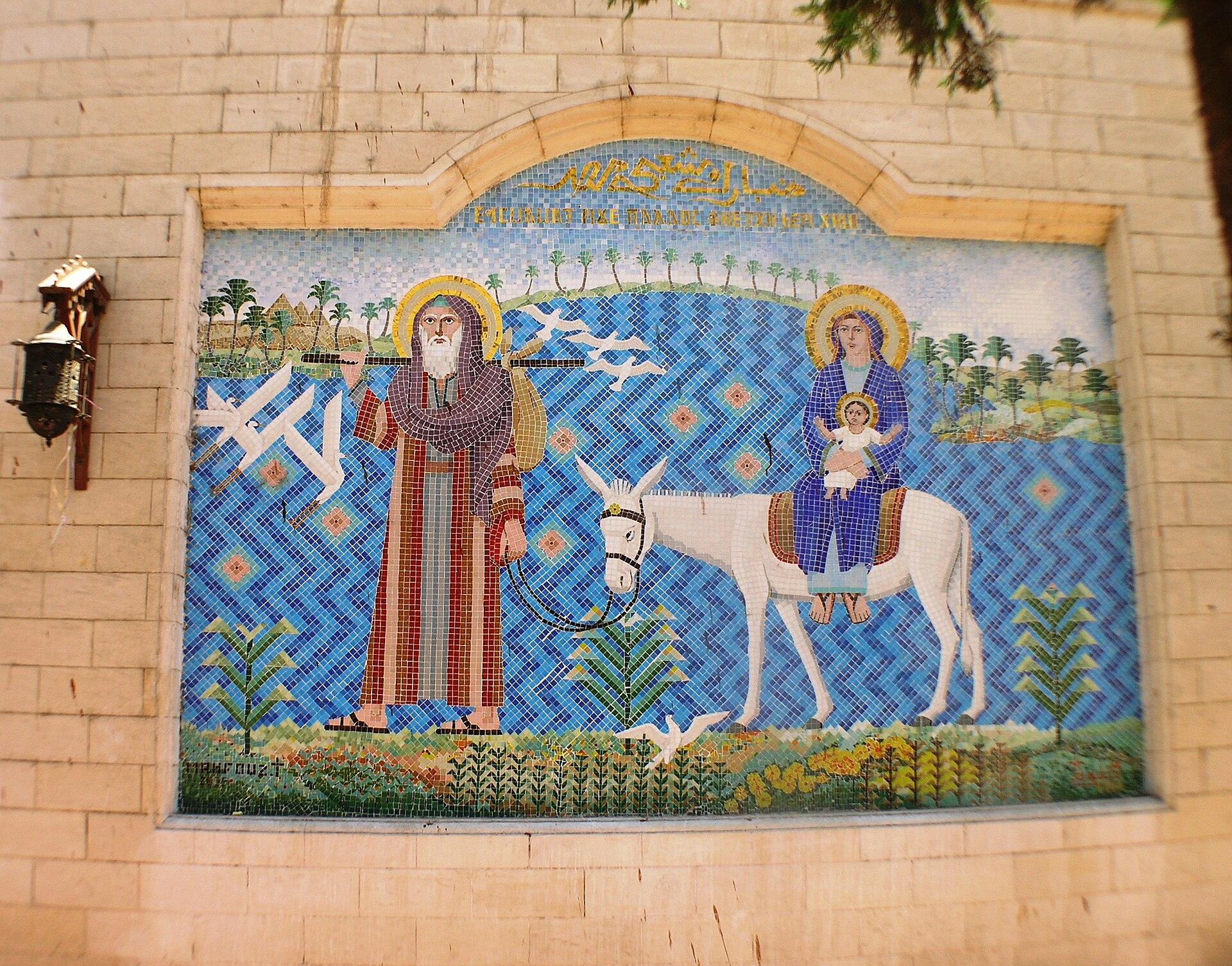
That part of the story comes from Coptic Christian tradition. Across Egypt, churches, monasteries, wells, caves and other sacred places are associated with the family’s journey, from the northeastern edge of the country and the Nile Delta through Cairo and as far south as Asyut. Many can still be visited today.
Following the Holy Family Trail, however, is not like following a compact pilgrimage route between neighboring churches. The traditional journey crosses several regions of Egypt, and the sites themselves are very different. At some, you will find an important church or active monastery. Elsewhere, the connection survives through a well, cave, tree or local tradition. Some locations also have archaeological histories that can be documented independently of their later association with the Holy Family.
For travelers, those differences matter because some stops justify substantial time while others are more meaningful as part of a pilgrimage following the traditional route.
What Does the Bible Say About the Holy Family in Egypt?
The biblical account appears in Matthew 2.
After the visit of the Magi, Joseph is warned in a dream that Herod intends to kill the child Jesus. He takes Mary and Jesus and flees to Egypt. After Herod’s death, Joseph is told that it is safe to leave, and the family eventually returns to the land of Israel.
Matthew does not identify the Egyptian towns they visited, describe their route through the country or tell us how long they remained at individual places.
The Bible establishes the Flight into Egypt; the detailed itinerary followed by pilgrims today comes from Coptic Christian tradition.
That distinction matters when visiting the sites. A church associated with the Holy Family should not automatically be understood as a building that stood when Jesus was in Egypt. Many churches and monasteries developed centuries later at places remembered by Christian tradition.
The Coptic Orthodox Church’s account of the Holy Family’s journey through Egypt traces that tradition across the country and explains the associations that continue to make these places important pilgrimage sites.
Where Does the Holy Family Trail Go?
The traditional journey begins in northeastern Egypt and crosses parts of the Nile Delta before reaching Wadi El Natrun and the Cairo area. From there, it continues south along the Nile through Middle Egypt toward Asyut.
For trip planning, it is easier to think of the trail in sections: northeastern Egypt and the Nile Delta, Wadi El Natrun, Greater Cairo, then the long southern stretch through Minya toward Asyut.
Egypt has also been developing a modern pilgrimage and tourism route around many of the places associated with the journey. That does not mean every traditional station offers the same visitor experience today. The significance of a place may be religious, historical, archaeological—or a combination of all three.
Can You Visit the Entire Holy Family Trail?
It is possible to build a trip around much of the traditional route, but this is a substantial journey rather than a single excursion.
The geography alone makes a difference. Delta sites lie outside the route followed by most first-time visitors. Wadi El Natrun requires leaving the Nile Valley for the Western Desert. Cairo has several sites spread across the metropolitan area, while the southern route continues for hundreds of kilometers through Middle Egypt toward Asyut.
There is also a difference between following the route as a pilgrimage and exploring it as part of a wider interest in Christian history. A pilgrim may deliberately seek out a small traditional station even when relatively little remains to see there. Someone primarily interested in Christian heritage may spend more time at locations with substantial churches, monasteries or archaeological remains.
You can therefore visit one part of the Holy Family Trail without attempting to reproduce the entire traditional journey.
The Holy Family Trail Through the Nile Delta
Coptic tradition connects a series of places in northern Egypt with the Holy Family’s journey, including Al-Farma, Tell Basta, Belbeis, Samanoud and Sakha.
This is one of the parts of the route that takes travelers furthest from Egypt’s familiar international tourism circuit.
The sites are not interchangeable. Tell Basta occupies part of ancient Bubastis, an important city long before the Christian period. Other Delta locations preserve churches, wells or local traditions associated with the family’s passage.
You are not moving through a collection of monuments constructed around the same event. You are visiting towns and archaeological landscapes with their own histories, onto which centuries of Christian tradition have added another layer.
The Delta is best treated as its own section of the journey rather than as a series of quick detours from Cairo. For the individual northern stations and what survives at each one, see our Holy Family Sites in the Nile Delta guide.
Wadi El Natrun: Two Layers of Christian History
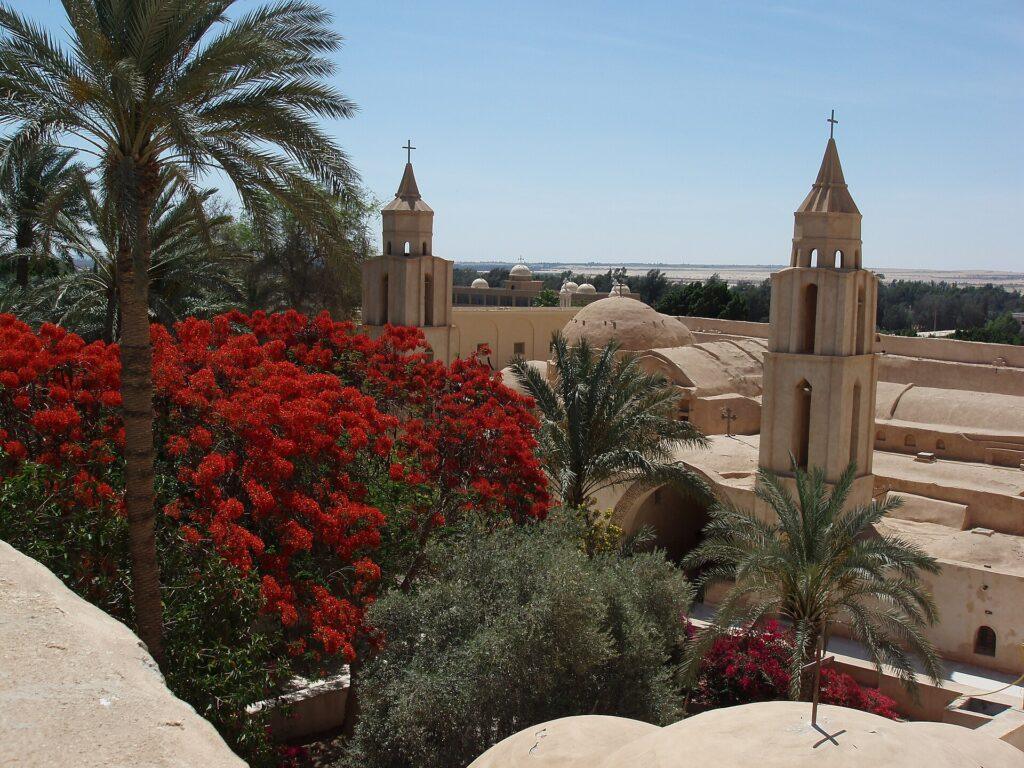
The traditional route next takes the Holy Family into Wadi El Natrun.
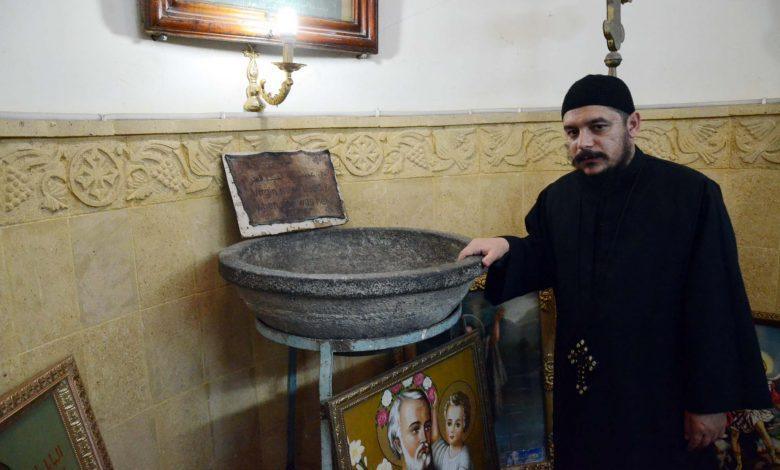
For Christian travelers, the valley is particularly interesting because its importance did not end with the Holy Family tradition. Centuries later, the desert became one of Egypt’s great centers of Christian monasticism.
Four active Coptic monasteries survive in Wadi El Natrun today. They belong to a much later chapter of Christian history than the Flight into Egypt, so the two should not be blurred together. The Holy Family tradition explains the valley’s place on this particular route; the monasteries tell the story of the desert monastic communities that developed there later.
If you want to spend time exploring that history, our Wadi El Natrun Monasteries guide looks at the surviving monasteries and what makes the valley worth visiting in its own right.
Holy Family Sites Around Cairo
Several important Holy Family traditions are concentrated in and around Cairo.
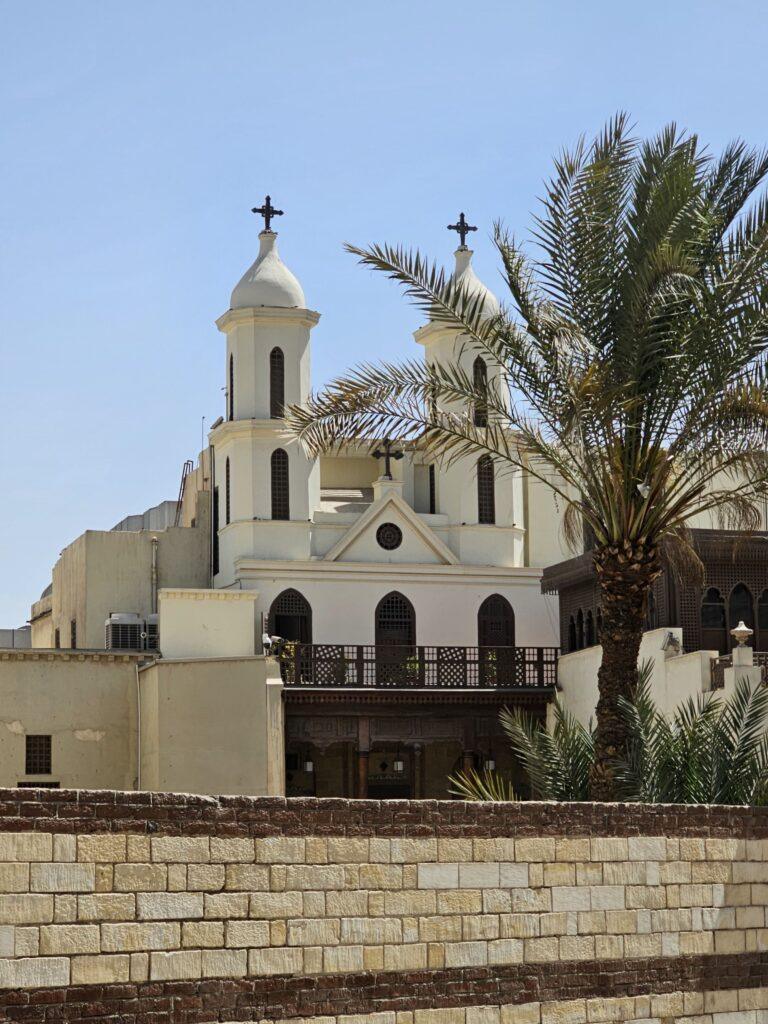
At Musturud, the tradition is associated with the Church of the Virgin Mary and a sacred well. In Matariya, Mary’s Tree marks another longstanding Holy Family tradition. The significance of the site should not be confused with a claim that the tree standing there today can be demonstrated to be the same tree that existed in the first century.
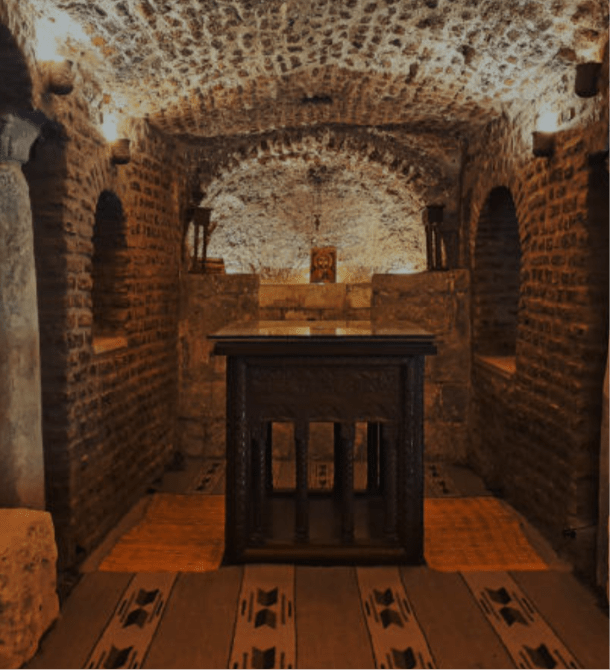
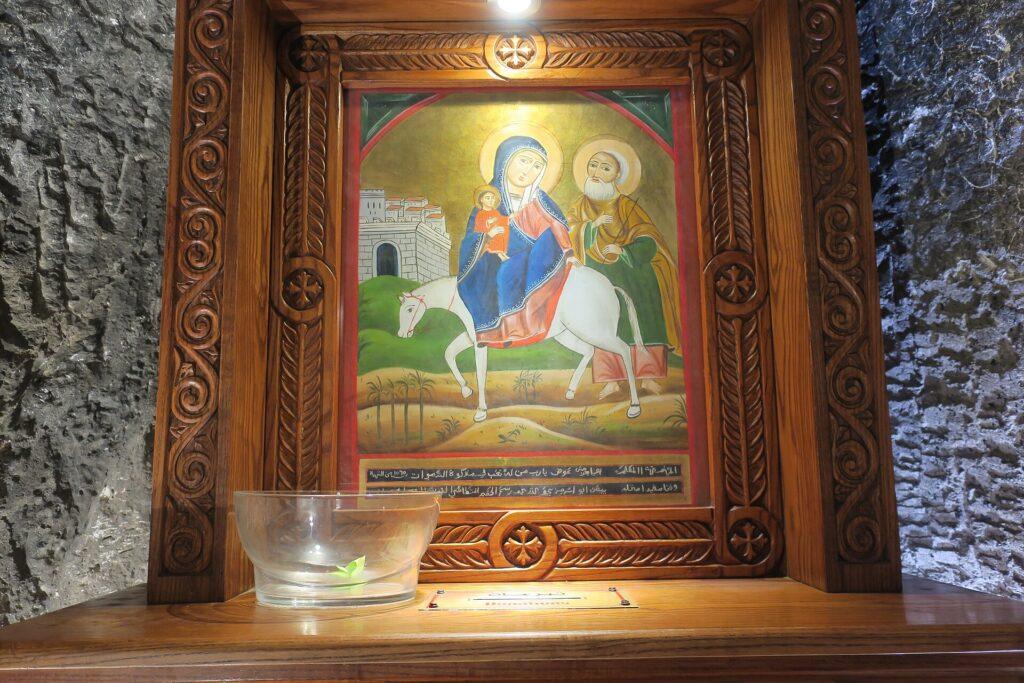
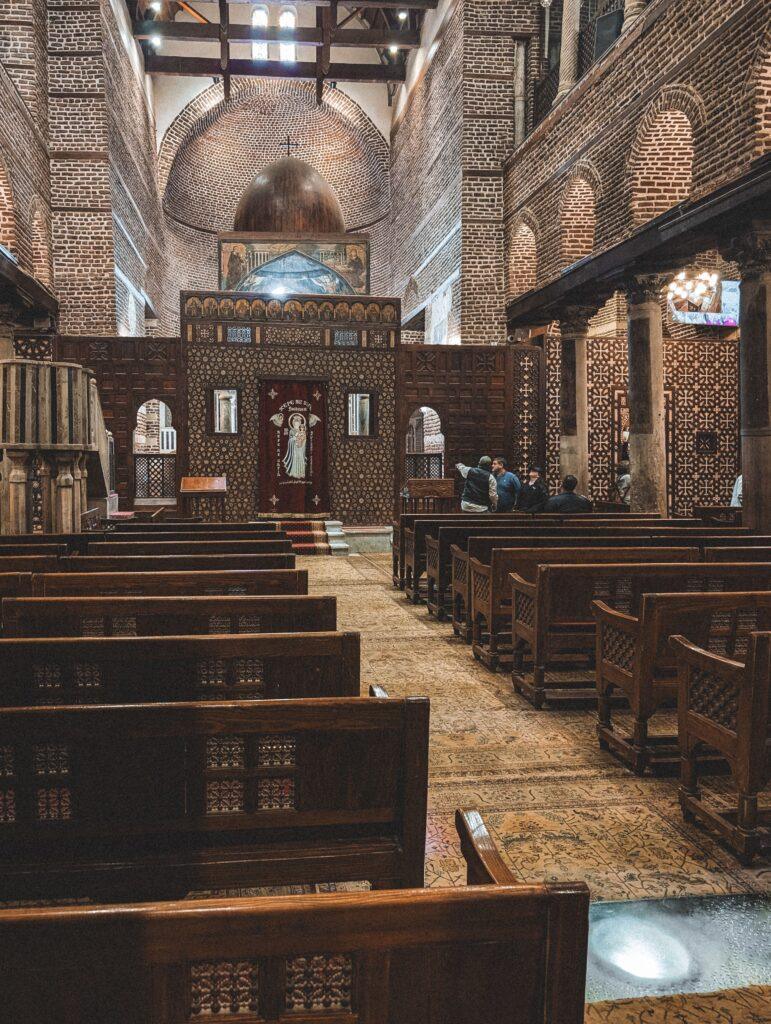
In Coptic Cairo, Abu Serga is one of the city’s best-known Holy Family sites, with its crypt traditionally associated with the family’s stay. Our Coptic Cairo guide explores the church and the surrounding Christian district in greater depth.
At Maadi, the tradition places the family beside the Nile before the journey continued into Middle Egypt.
Because these places are relatively close to Egypt’s main international gateway, Cairo is the easiest place for many visitors to encounter the Holy Family tradition without committing to the much longer national route.
Following the Route Through Minya and Asyut
South of Cairo, the traditional route follows the Nile into Middle Egypt and continues toward Asyut.
Traditional stations include Deir al-Garnus, Bahnasa, Gabal al-Tair, Al-Ashmunein, Al-Muharraq and Dronka.
This is one of the longest sections of the trail, and the sites are very different from one another. Some are important primarily within the pilgrimage tradition; others combine that tradition with significant churches, monasteries or archaeological remains.
The distances between these sites make the southern section difficult to do well as a rushed extension from Cairo.
If you are considering this part of the trail, our Holy Family Sites in Middle & Upper Egypt: Minya to Asyut guide looks at the individual locations and what there is to see at each one.
Pilgrimage or Christian-Heritage Journey?
There is a practical difference between following the Holy Family Trail as a pilgrimage and including Holy Family sites within a broader Christian trip.
For a pilgrim, a small traditional station may be important precisely because it forms part of the journey. A traveler interested primarily in Christian history may instead concentrate on places where the tradition overlaps with significant churches, monasteries or archaeology.
Decide which journey you are making before building the route. It can change both the places worth including and the amount of time you need.
How Long Do You Need for the Holy Family Trail?
There is no standard Holy Family Trail itinerary because the sites stretch across several regions of Egypt.
If you are already staying in Cairo, Coptic Cairo and selected Holy Family sites around the city can be incorporated into that part of the trip.
Wadi El Natrun is better treated as its own excursion. The Delta also requires deliberate routing rather than assuming its sites can simply be added to a normal Cairo sightseeing day.
Traveling through Minya toward Asyut is a much larger commitment. If the southern section is important to you, it is better to allow it a proper place in the itinerary from the beginning than to add it after Cairo, a Nile cruise and the rest of the trip have already been scheduled.
For someone specifically coming to Egypt to follow the Holy Family tradition, the route itself may determine the itinerary rather than being added to a conventional Egypt trip.
Remember That These Are Living Religious Sites
Many places along the Holy Family Trail are active churches, monasteries and pilgrimage sites rather than monuments maintained primarily for tourism.
Dress modestly, keep voices low around worshippers and services, and follow local instructions about photography and access. A crypt, church or monastery may have areas that are not open to casual visitors even when the larger site is accessible.
Feast days and pilgrimage periods can also change the character of a visit considerably. A quiet church on an ordinary day may receive large numbers of worshippers during an important religious observance.
If access to a particular church, crypt, monastery or sacred space is essential to your trip, confirm the current situation before making a long journey specifically to see it.
Frequently Asked Questions About the Holy Family Trail in Egypt
Is the Holy Family Trail in Egypt a pilgrimage route?
Yes. The traditional route connects places associated in Coptic Christianity with the Holy Family’s journey through Egypt. Many remain active churches, monasteries and pilgrimage sites.
You do not have to follow the entire route to visit them. Travelers can concentrate on one region, such as Cairo or the Nile Delta, or build a longer pilgrimage through several parts of Egypt.
Where can you visit Holy Family sites in Egypt?
Holy Family traditions are found across a large part of the country. The principal sections of the route run through northeastern Egypt and the Nile Delta, Wadi El Natrun, Greater Cairo, Middle Egypt and the area around Asyut.
Among the better-known locations are Tell Basta, Samanoud, Wadi El Natrun, Matariya, Abu Serga in Coptic Cairo, Maadi, Gabal al-Tair and Al-Muharraq Monastery.
What is the easiest Holy Family site to visit from Cairo?
Abu Serga in Coptic Cairo is one of the easiest starting points for most visitors. Its crypt is traditionally associated with the Holy Family’s stay, and the church can be visited as part of a wider visit to Coptic Cairo.
Other Holy Family traditions around Greater Cairo include Matariya, Musturud and Maadi, but visiting several of them requires more deliberate routing across the city.
Can you follow the Holy Family Trail from Cairo?
Yes, but Cairo is only one section of a much larger route. From Cairo, travelers can visit the city’s Holy Family sites, make a separate journey to Wadi El Natrun, explore Delta stations to the north, or continue south through Minya toward Asyut.
A trip following several regions needs to be planned as a route rather than treated as a series of excursions from central Cairo.
How long does it take to follow the Holy Family Trail in Egypt?
There is no standard duration because “following the Holy Family Trail” can mean very different things. Visiting several Cairo-area sites is quite different from including the Delta, Wadi El Natrun, Minya and Asyut.
If the Holy Family journey is a major reason for visiting Egypt, decide which sections you want to follow before fixing the rest of the itinerary. The geography makes that more practical than trying to add the sites later.
Are the churches on the Holy Family Trail from the time of Jesus?
Generally, no. The Holy Family tradition concerns the places associated with the family’s journey, not a claim that the churches standing there today existed in the first century.
Many churches and monasteries were established much later. At some locations, the Holy Family tradition is associated instead with a cave, well, tree or other feature connected with the remembered site.
Planning a Holy Family Journey Through Egypt
Following the Holy Family Trail takes you into parts of Egypt that many conventional itineraries never reach. The route moves through Delta towns, the desert of Wadi El Natrun, Cairo and the Nile Valley before reaching Asyut.
What you encounter along the way is not one kind of evidence. Matthew gives us the Flight into Egypt. Coptic tradition preserves the detailed journey. Archaeology and surviving historic structures tell us something different about the places that later became associated with that tradition. Keeping those strands separate makes the route more interesting, not less.
If the Holy Family Trail is one of the reasons you are coming to Egypt, contact Explore ENA about a custom Christian Egypt itinerary. The route can be built around the Holy Family sites and regions you actually want to experience rather than trying to force the entire trail into a standard Egypt itinerary.