Temple of the Oracle of Amun in Siwa: Alexander the Great & Visitor Guide
The Temple of the Oracle is one of the reasons Siwa appears in ancient-history books far beyond Egypt.
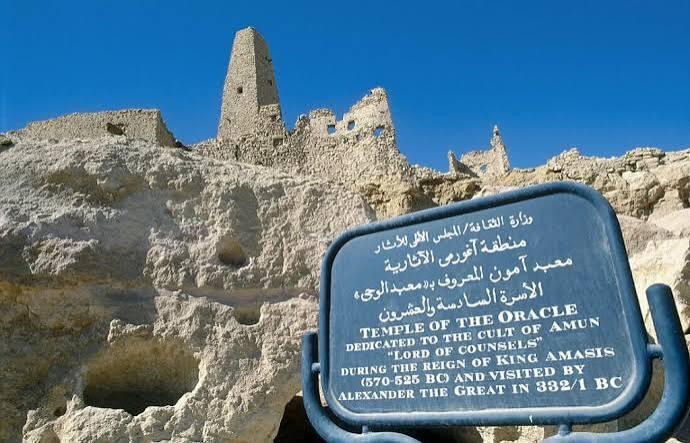
The ruins themselves are modest compared with Karnak or Abu Simbel. What makes the site extraordinary is the story attached to it: in 331 BCE, after taking control of Egypt, Alexander the Great traveled across the desert to consult the famous oracle of Amun at Siwa.
That journey helped connect a remote Western Desert oasis to one of the most influential political figures of the ancient Mediterranean world.
For the complete destination plan, start with the Siwa Oasis Egypt Travel Guide. For the attraction overview, see Best Things to Do in Siwa.
Where Is the Temple of the Oracle?
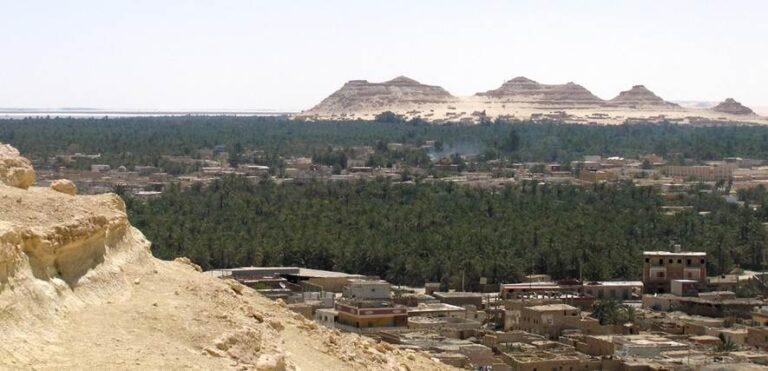
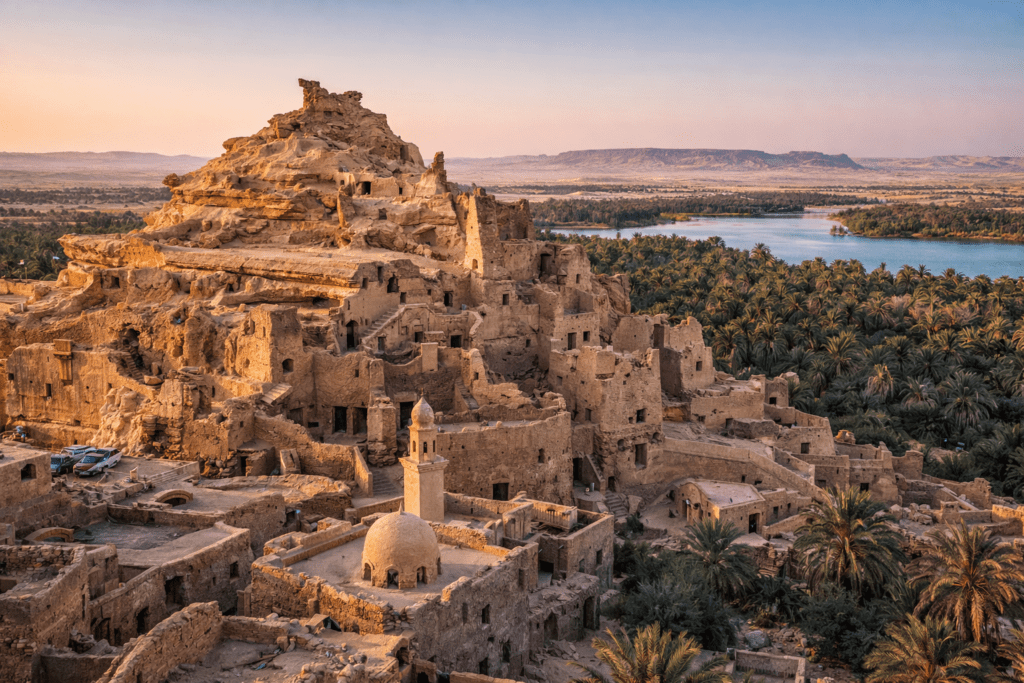
The temple stands at Aghurmi, on a rocky elevation near Siwa town.
The raised position matters. Before modern roads and buildings, a sanctuary above the oasis would have commanded views across palm groves, cultivated land and desert approaches.
Today, visitors climb through the settlement area toward the temple ruins and viewpoints.
Who Was Amun?
Amun was one of ancient Egypt’s most important deities, especially from the New Kingdom onward.
In Greek religious interpretation, Amun became associated with Zeus, producing the combined concept often described as Zeus-Ammon. That cultural bridge helps explain why an oracle deep in Egypt’s Western Desert could hold meaning for a Macedonian ruler operating in a Greek political world.
Why Did Alexander the Great Come to Siwa?
Ancient sources describe Alexander making the difficult desert journey after entering Egypt. UNESCO’s Siwa archaeological-area tentative-list entry identifies the Oracle temple and the nearby Temple of Amun at Umm Ubayd among the principal archaeological components of the oasis.
The exact words exchanged at the oracle are not securely known, and later accounts differ. What matters historically is that the visit became tied to Alexander’s claims of divine favor and legitimacy.
Travel writing often simplifies the story into ‘the oracle declared Alexander the son of a god.’ The reality is more complicated because surviving accounts were written later and shaped by political storytelling.
A good visit separates the significance of the event from the temptation to present every legend as a documented transcript.
What Survives Today?
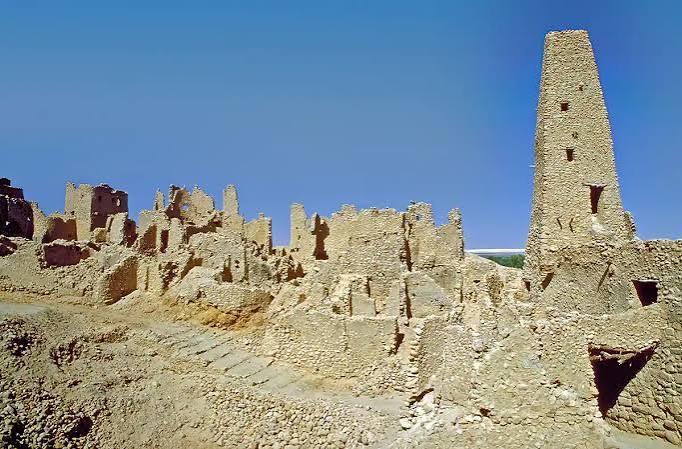
The surviving Oracle of Amun complex stands at Aghurmi in Siwa.
Visitors see stone walls, chambers, passageways and the surviving structure of the sanctuary rather than a fully preserved temple complex.
The scale can surprise travelers who arrive after seeing huge Nile Valley monuments. This is not a site where colossal columns create the experience. Context is the experience.
Spend time looking at the temple’s position and imagining what reaching this sanctuary meant when Siwa was far more isolated.
How Long Should You Spend?
Many visitors spend around one hour at the temple and Aghurmi area, longer if they are interested in history, photography or the surrounding views.
The site works well within a half-day Ancient Siwa route rather than as a standalone all-day attraction.
Best Time of Day
Morning is comfortable in warmer months. Late-afternoon light can be beautiful, but most visitors reserve sunset for Fatnas Island or the Great Sand Sea.
Avoid the strongest midday heat when possible because parts of the visit are exposed.
Season and time of day matter because the temple is exposed; cooler mornings and late afternoons are generally more comfortable than the middle of a hot day.
Do You Need a Guide?
This is one of the Siwa sites where a guide can add the most value.
Without context, visitors may see a small ruined sanctuary and leave quickly. With historical explanation, the site becomes a link between Egyptian religion, Greek political culture, desert geography and Alexander’s image as a ruler.
Independent travelers can still enjoy it, but read about the oracle beforehand.
What to Wear and Bring
Comfortable walking shoes
Water
Hat
Sunscreen
Modest everyday clothing appropriate for a conservative oasis community
The paths and steps are more important than specialized hiking equipment.
For the broader trip, use What to Pack for Egypt and add sun protection, water and shoes suitable for uneven stone.
Combine With Mountain of the Dead
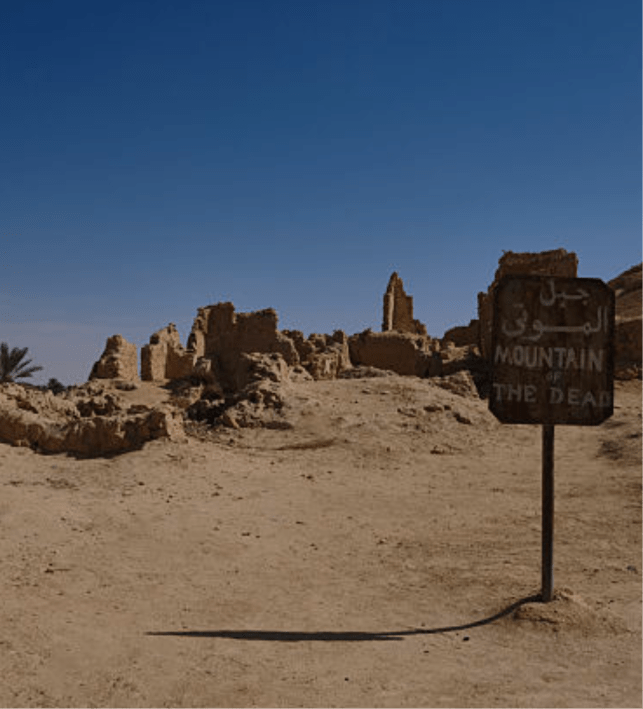
Gebel Al-Mawta rises close to Siwa town and contains rock-cut tombs.
Gebel Al-Mawta lies naturally within the same historical sightseeing day.
The Oracle explains Siwa’s religious reputation. The Mountain of the Dead adds burial evidence and decorated tombs from later ancient periods.
Read the Mountain of the Dead Guide before visiting both.
Combine With Shali Fortress
Shali tells a much later story of Siwan community life and defensive architecture.
Putting the Oracle and Shali on the same day helps visitors understand that Siwa’s importance did not begin and end with Alexander the Great.
See the Shali Fortress Guide for the fortress history.
What About the Temple of Umm Ubayd?
Other remains associated with Amun worship survive around Siwa, including the ruined temple commonly called Umm Ubayd.
Its condition and visitor experience differ from Aghurmi. If your guide includes it, treat it as additional religious context rather than a substitute for the Oracle temple.
Alexander the Great: What We Know vs What We Repeat
It is reasonable to say Alexander visited the oracle at Siwa. It is also reasonable to say the event became central to later stories about his divine legitimacy.
It is not responsible to present a precise dramatic conversation as fact when ancient accounts differ and were written after the event.
This distinction actually makes the site more interesting. The uncertainty shows how political memory and religious symbolism developed around Alexander almost immediately.
Frequently Asked Questions
Did Alexander the Great really visit Siwa?
Ancient historical traditions strongly associate his Egyptian campaign with a journey to the Oracle of Amun at Siwa in 331 BCE.
Did the oracle call Alexander the son of a god?
Later accounts connect the visit with divine sonship and legitimacy, but the exact words are uncertain and should not be treated as a verbatim historical record.
How long should I spend at the temple?
Around one hour is enough for many visitors, longer with a guide or strong historical interest.
Is the temple well preserved?
It is a surviving ruin, not a monumental complex preserved like some Nile Valley temples. Context matters more than scale.
Can I visit without a guide?
Yes, but reading the history beforehand makes the experience much richer.
Is it near other Siwa attractions?
Yes. It fits naturally with Mountain of the Dead, Shali Fortress and other Ancient Siwa stops.
The Story Is Bigger Than the Ruins
The Temple of the Oracle rewards travelers who understand why people crossed the desert to reach it.
Do not judge it by column height. Judge it by the influence a remote sanctuary held in the ancient Mediterranean imagination and by the extraordinary fact that Alexander considered the journey important enough to make.
Use How Many Days Do You Need in Siwa Oasis? to place the Oracle in a realistic Ancient Siwa day.
See the Oracle as Part of Ancient Siwa
Explore ENA’s private itineraries to combine the Temple of the Oracle with the Mountain of the Dead, Shali Fortress and the oasis’s natural landscapes.