
What Is Worth Paying Extra for in Egypt—and What Isn’t?
Some upgrades in Egypt can noticeably improve your trip. Others mostly make the price higher.
For most travelers, the strongest places to spend more are the ones where the difference affects several hours or several days: a knowledgeable licensed guide at major historical sites, transportation or timing that protects valuable sightseeing time, a Nile cruise standard you will be comfortable with for several nights, or accommodation that solves a real location or room problem.
You do not need the highest hotel category, private transportation for every short journey, premium meals throughout the trip or every optional excursion offered to you.
A useful way to judge any upgrade is to ask what will actually be different because you paid more for it.
If the answer involves better understanding, meaningful time saved, easier logistics or greater comfort that you will benefit from repeatedly, the extra cost may be worthwhile. If the difference is mainly a label, décor or something you will barely use, the simpler option may be enough.
If you are still establishing your overall budget, start with our Egypt Travel Costs guide. This guide answers the next question: once you know roughly what the trip may cost, where is it actually worth spending more?
Pay More for a Guide Where Understanding Matters
A good guide can be one of the most worthwhile places to spend more in Egypt, particularly at major archaeological sites.
You do not need someone beside you every hour of the trip. A free evening, beach day, shopping time or relaxed afternoon may be better left unscheduled.
The calculation changes at places such as Giza, Karnak and the Valley of the Kings.
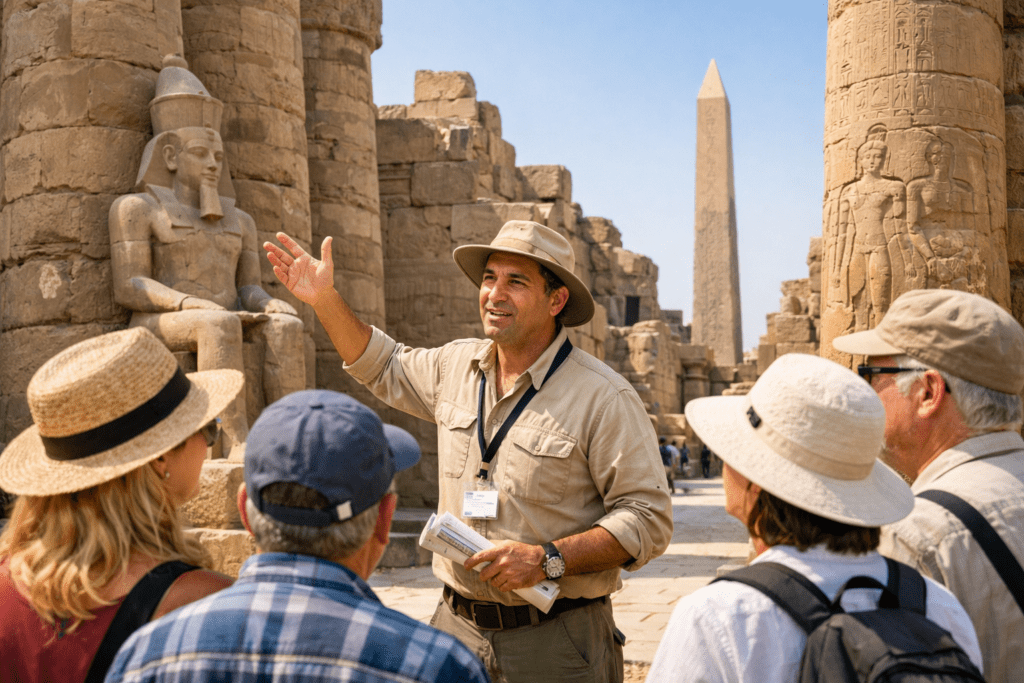
The size of Karnak is obvious the moment you enter. Its development over many centuries is much harder to understand from the monuments alone. Without context, it is easy to move from one enormous structure to another without knowing why different rulers altered the complex or how its different spaces fit together.
At the Valley of the Kings, walking into a decorated royal tomb is memorable on its own. Knowing who was buried there, where that ruler fits into the New Kingdom and why the decoration differs from another tomb adds another layer to the visit.
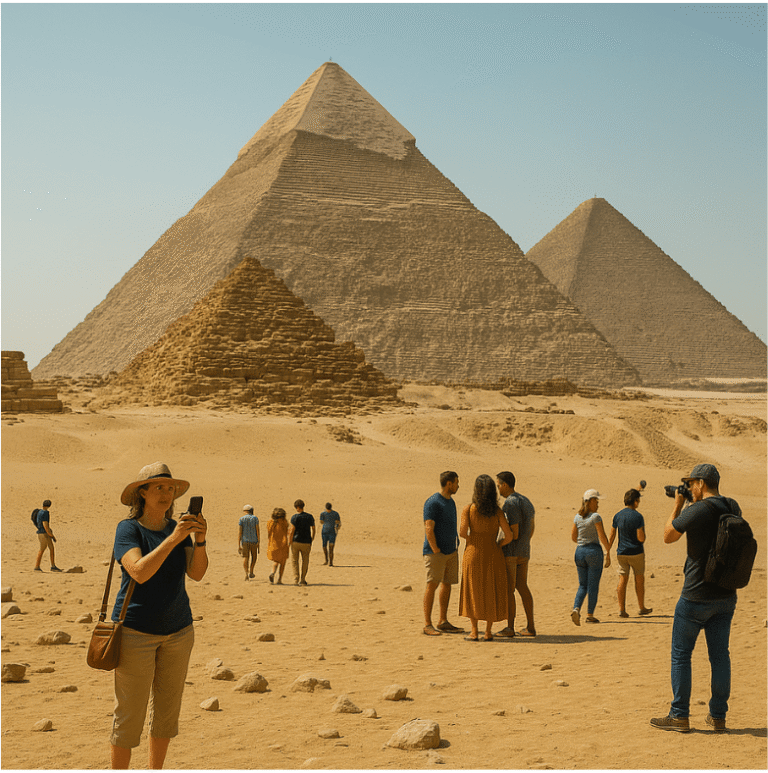
Giza presents the same opportunity. The pyramids need no introduction, but there is much more to understand about the plateau, its monuments and the funerary complexes surrounding them.
For professional historical guiding, look for a knowledgeable licensed Egyptian guide with strong communication skills and the ability to adapt the visit to your interests.
That adaptability matters. Someone fascinated by archaeology may want to ask more questions and spend longer with particular details. A family may need shorter explanations and more movement. Another traveler may want enough context to understand the site without turning the visit into a lecture.
This is where the additional spending has a clear purpose: you are getting more from places you may have traveled thousands of miles to see.
Pay More When It Protects Valuable Time
Transportation is more complicated because the more expensive option is not always the one you need.
For a straightforward journey from a Cairo hotel to dinner, an app-based ride may be perfectly adequate. Egypt’s official tourism site confirms that ride-hailing apps are widely used in Greater Cairo and Alexandria and also outlines the country’s domestic air, rail and bus options in its Useful Information guide.
A full sightseeing day can be different.
If you are moving between several sites, arranging a new ride each time can mean repeated pickups, waiting and coordinating meeting points. On a day when the vehicle needs to remain part of the itinerary, dedicated transportation can make the route considerably easier.
It can also become more useful when you have several travelers, children, luggage, an airport connection or mobility considerations that make repeated transportation arrangements unnecessarily cumbersome.
Sometimes the more worthwhile upgrade is simply a better time.
A domestic flight at a useful hour may cost more than another departure but protect a large part of a sightseeing day. An extra hotel night may occasionally make more sense than creating an awkward connection solely to eliminate the room cost.
These are easy upgrades to overlook because there is nothing glamorous about them. Once the trip begins, however, having usable time in Luxor or Aswan may matter much more than a decorative hotel upgrade somewhere else.
When comparing transportation options, calculate what they cost in time as well as money.
A Nile Cruise Is Worth Comparing Beyond the Price
A Nile cruise deserves more scrutiny because you will live with the decision for several nights.
For the 3- and 4-night Nile sailings Explore ENA offers between Luxor and Aswan, the vessel becomes your accommodation and your base between sightseeing stops. If the ship does not meet the level of comfort you expected, that affects several consecutive days rather than a single night.
There is still no reason to assume the most expensive vessel is automatically the right choice.
Broad descriptions such as five-star, deluxe and luxury do not provide enough information by themselves. Look at the actual vessel being offered. Consider the cabin, the public areas, the overall condition of the ship and the features that matter to you.
A traveler who sees the cruise primarily as a comfortable way to move through Upper Egypt may be perfectly happy once the vessel meets a solid standard of comfort.
Another traveler may consider time onboard an important part of the vacation and care much more about the cabin or overall onboard environment. Spending more can make sense in that case because the traveler can identify exactly what the additional money is buying.
Pay for the standard that matters to you rather than upgrading because the category name sounds better.
Our Nile Cruise Egypt Guide looks more closely at the cruise experience and how these sailings fit into a wider Egypt itinerary.

With Hotels, Pay for What You Will Actually Use
Hotel spending becomes easier to judge once you stop treating every stay the same.
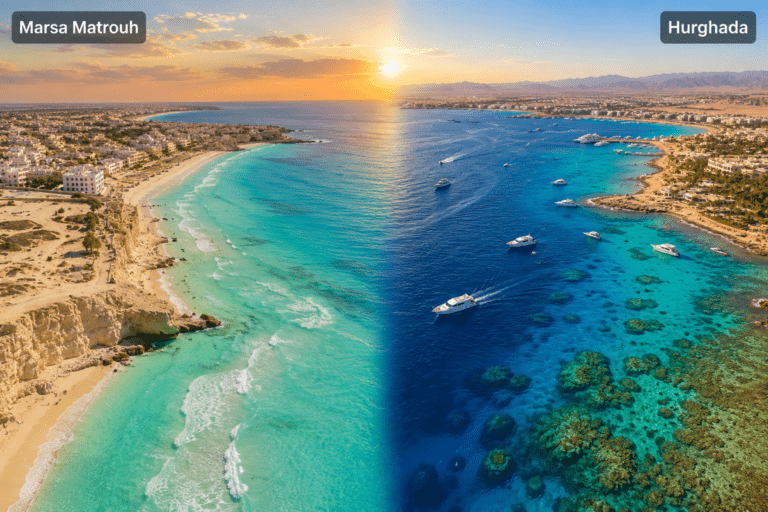
A Cairo hotel where you will spend four nights deserves different consideration from a room you need for one short night before an early departure. A Red Sea resort where you expect to spend much of the day at the property is different again.
In Cairo, paying more for a location that works well with your particular itinerary can be worthwhile. The city is large, and traffic affects how much time you spend moving between places. There is no single neighborhood that is best for every visitor; the useful location is the one that fits what you plan to do during that stay.
For families and groups, room configuration can matter even more.
A higher hotel category does not solve the problem if the sleeping arrangement does not work. A proper triple, connecting rooms or several rooms that meet the group’s needs can be more valuable than moving to a more luxurious property with an inconvenient setup.
Confirm those arrangements before arrival rather than assuming the hotel will be able to change the room configuration once you get there.
Views are more personal.
A Nile-view room can be worth paying for if you expect to enjoy it in the morning, return during the afternoon or sit and watch the river in the evening. If you will leave early every day and return after dark, the same premium may buy something you barely see.
Pools, spas, lounges and other hotel upgrades deserve the same test: will you actually have time to use them?
If the hotel itself is part of the experience, those features may be worth the money. If the property is primarily somewhere comfortable to sleep between long sightseeing days, your priorities may be different.
Optional Experiences Should Earn Their Place in the Itinerary
Egypt makes it easy to keep adding optional experiences, but the fact that something is available does not mean it deserves time in your itinerary.
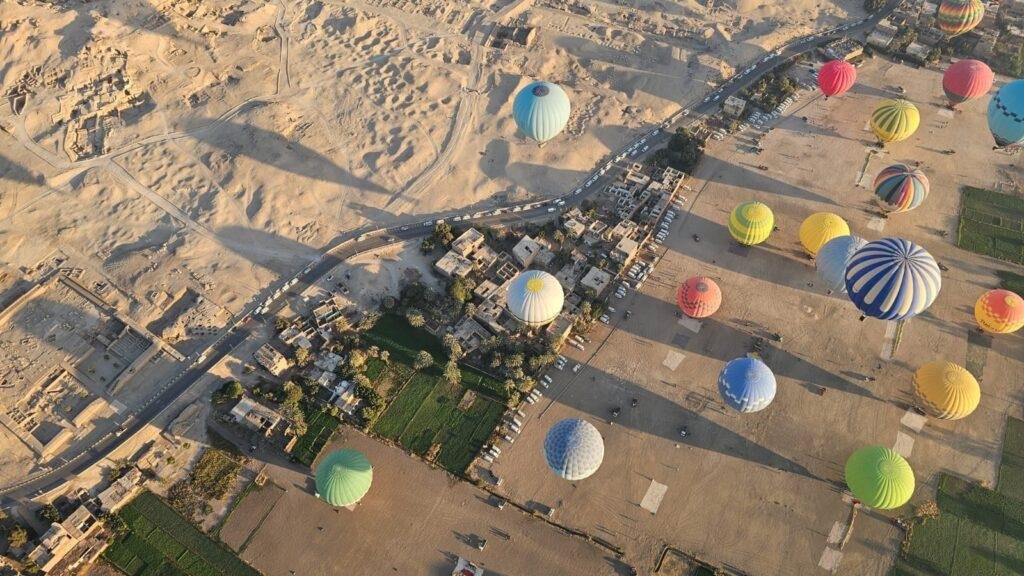
A hot-air balloon ride in Luxor may be completely worthwhile for someone who has imagined seeing the Nile and West Bank from the air at sunrise. Someone who feels indifferent about it should not add the experience simply because it appears on a list of things visitors are expected to do.
The same applies to special-entry tickets, boat trips, shows and additional excursions.
Some can become highlights of the entire journey. Others take money and time from an itinerary that was already full.
Before adding one, ask yourself:
Would I be genuinely disappointed to visit Egypt without doing this?
If the answer is yes, find room for it in both the budget and the itinerary.
If you are indifferent, there is no reason to turn every available experience into a reservation.
This is particularly important on a multi-city Egypt trip because an extra activity has two costs: what you pay for it and the time and energy it takes from everything around it.
Where You Can Usually Keep the Simpler Option
Egypt does not require a premium version of everything.
Every sightseeing day does not need an elaborate lunch. Sometimes a special restaurant is part of the experience you want. On another day, a straightforward meal and a little time to sit before continuing may fit the itinerary much better.
Short point-to-point journeys do not automatically need a dedicated vehicle waiting for you when an app-based ride solves the same problem.
A hotel does not need to move up another category when its location, room and level of comfort already meet what you need from that particular stay.
And an upgrade described mainly as premium or luxury deserves a closer look before you pay for it.
Ask what changes.
Perhaps you get more space, a room arrangement your family needs, a much more useful location, a cruise vessel you prefer or a service you know you will use. Those are concrete differences that can be compared with the additional cost.
If it is difficult to identify what improves, the higher price alone is not a strong reason to upgrade.
If You Cannot Upgrade Everything, Prioritize
When the budget does not accommodate every upgrade, concentrate the additional spending where it will have the widest effect:
- Strong historical interpretation at sites where a knowledgeable licensed guide materially improves what you understand.
- Time and logistics when spending more prevents a poor connection, repeated transportation problems or the loss of a meaningful part of a day.
- A Nile cruise standard you are comfortable with, because the choice affects several consecutive nights.
- Hotel location and room configuration when they solve a problem you would otherwise deal with repeatedly.
Once those pieces are right, decide which optional experiences and comfort upgrades matter enough to you personally.
You may prefer one experience you have wanted for years over making every hotel slightly more expensive. Another traveler may care far more about the accommodation.
Neither budget has to look the same.
Frequently Asked Questions
Is it worth paying for a private guide in Egypt?
At major historical sites, it often is. A knowledgeable licensed guide can explain history and context that are difficult to understand simply by walking through the site. You do not need guided time throughout the entire trip, so concentrate the spending where interpretation adds the most—places such as Giza, Karnak and the Valley of the Kings.
Is private transportation worth paying for in Egypt?
It depends on how you are using it. For a simple point-to-point journey in Cairo or Alexandria, an app-based ride may be enough. Dedicated transportation becomes more useful on multi-stop sightseeing days, with larger groups, when traveling with luggage, around airport connections, or when mobility considerations make repeated ride arrangements inconvenient.
Is it worth paying more for a Nile cruise in Egypt?
It can be because the vessel is your accommodation and base for several nights. Compare the actual ship, cabin and overall standard rather than relying only on descriptions such as deluxe or luxury. Once the vessel meets the level of comfort you want, paying more makes sense only when the additional features matter to you.
Is it worth paying more for a better hotel in Egypt?
Sometimes, but the hotel category itself should not make the decision for you. Paying more can be worthwhile when it gives you a location that works substantially better for your itinerary, the room configuration your family or group needs, or facilities you genuinely plan to use. If a less expensive property already meets those needs, moving up another category may add relatively little.
What Egypt travel upgrades are usually not worth the extra money?
Upgrades are harder to justify when you cannot identify what they will change. You generally do not need premium transportation for every short ride, the highest hotel category in every destination, an expensive meal at every opportunity or every optional excursion available. Keep the simpler option where it already meets your needs and put more of the budget into the parts of the trip where you will notice the difference.
Spend More Where You Will Feel the Difference
An upgrade earns its place when you can explain how it improves the trip. If the difference is vague or involves something you are unlikely to use, keeping the simpler option leaves more of the budget for the experiences that actually matter to you.
If you want help deciding where your own budget will make the biggest difference, tell Explore ENA your travel dates, route, priorities and preferred comfort level. We can put more of the budget into the parts that meaningfully improve your trip and keep the simpler option where spending extra adds little.