Minya Egypt Travel Guide: What to See, Where to Stay & How to Plan Your Visit
Minya rarely makes it onto a first-time visitor’s Egypt itinerary. Most travelers head from Cairo to Luxor without considering the archaeological sites scattered along the Nile Valley between them.
The tombs at Beni Hasan contain extraordinary paintings, including wrestling scenes and detailed depictions of everyday life. Farther south, you can explore the remains of Akhenaten’s capital at Amarna and the Greco-Roman tombs and sacred-animal galleries at Tuna el-Gebel.
Minya also has ancient city remains, museums and important Christian monasteries. There’s enough here to justify several days, but the attractions are spread across a large area. Choosing where to stay and organizing the sites into a sensible route will make your visit much easier.
Where Is Minya in Egypt?
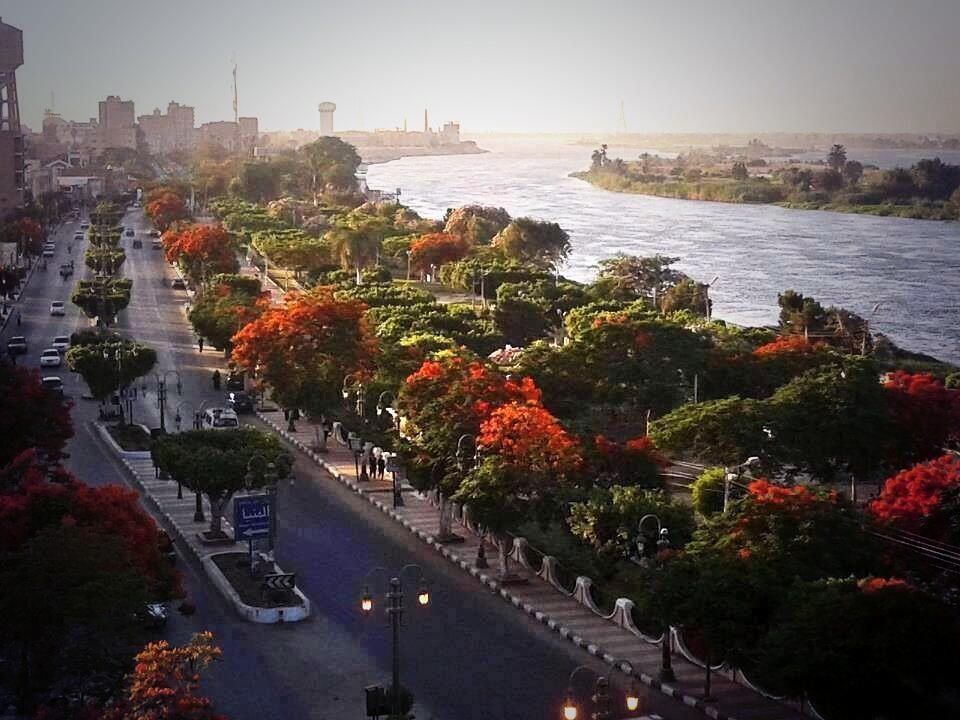
Minya is a city on the Nile in Middle Egypt, roughly 250 km south of Cairo. It’s also the capital of Minya Governorate, which stretches along the river through several towns and archaeological districts.
Many attractions described as being “in Minya” are actually some distance from the city. Beni Hasan lies to the south on the eastern side of the Nile. Amarna is farther south, also east of the river, while Tuna el-Gebel is near Mallawi on the western side.
The landscape is typical of this part of the Nile Valley. Farmland and villages follow the river, with desert cliffs rising beyond the cultivated land. Some of the region’s most important tombs were cut directly into those cliffs.
You can reach Minya from Cairo by road or train, although you’ll need separate transportation to explore the archaeological sites.
Egypt’s official Minya destination guide provides an introduction to the region’s principal attractions.
Why Visit Minya?
Minya is worth considering if you’re interested in Egyptian history beyond the famous royal tombs and temples.
At Beni Hasan, the paintings reveal the lives of provincial officials during the Middle Kingdom. Amarna shows what remains of a royal capital built during Akhenaten’s religious changes. Tuna el-Gebel takes you into the burial traditions and priestly culture of later Egyptian history.
You won’t find the enormous temple complexes of Luxor here. Some monuments are relatively small, and others survive mainly as foundations or scattered architectural remains.
At Amarna especially, an Egyptologist can help you make sense of ruined buildings and foundations that reveal little without an explanation of what once stood there.
If you have only a week in Egypt and haven’t visited Giza, Luxor or Aswan, those destinations will probably take priority. But if you’re returning to Egypt, have more time or are especially interested in archaeology, Minya deserves serious consideration.
Best Places to Visit in Minya
Beni Hasan — Middle Kingdom Tombs
Beni Hasan is one of Egypt’s most important Middle Kingdom cemeteries.
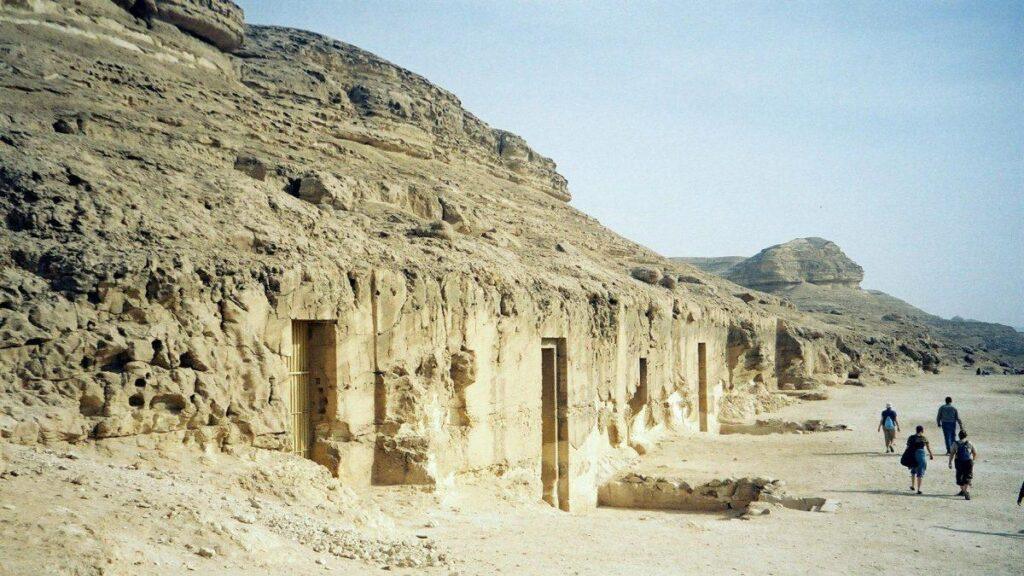
The tombs were cut into cliffs overlooking the Nile Valley for provincial governors and officials. Several preserve detailed paintings of hunting, wrestling, agriculture, crafts and visitors arriving from foreign lands.
One of the best-known scenes shows wrestlers demonstrating different holds and movements. Other paintings reveal the work, wealth and responsibilities of the officials buried here.
The tombs are reached by climbing from the valley floor to the cliffside entrances. It’s an exposed approach, so visiting earlier in the day is more comfortable during warmer months.
Beni Hasan is particularly interesting if you enjoy studying ancient Egyptian wall decoration. The paintings are quite different from the religious scenes most visitors associate with the royal tombs in Luxor.
Our Beni Hasan tombs guide covers the individual tombs, their decoration and what to expect during a visit.
Amarna — Akhenaten’s Ancient Capital
Amarna is the site of Akhetaten, the capital established by Pharaoh Akhenaten during the 18th Dynasty.
Akhenaten moved his royal court here and promoted the worship of the Aten, represented by the sun disk. After his reign, the city was largely abandoned.
Today, much of Amarna survives as foundations and archaeological remains spread across a wide desert landscape.
The main areas include the ancient city, the North and South Tombs, and the Royal Wadi, where Akhenaten’s royal tomb was constructed.
The officials’ tombs contain distinctive scenes of the royal family and worship of the Aten. The ancient city helps explain how the capital was organized, although much of what once stood there is no longer visible above ground.
Visiting the Royal Tomb requires additional travel into the desert, so decide whether it’s a priority before planning the rest of your day.
Our Amarna visiting guide explains the different archaeological areas and how to organize your visit.
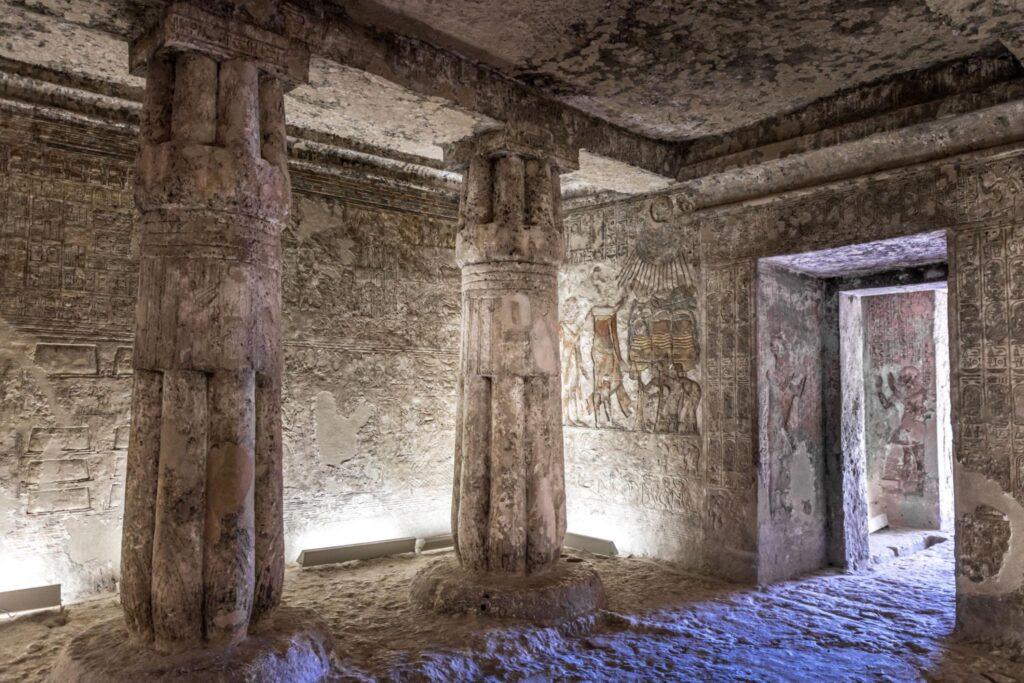
Tuna el-Gebel — Tombs and Sacred-Animal Galleries
Tuna el-Gebel is an ancient necropolis near Mallawi, on the western side of the Nile.
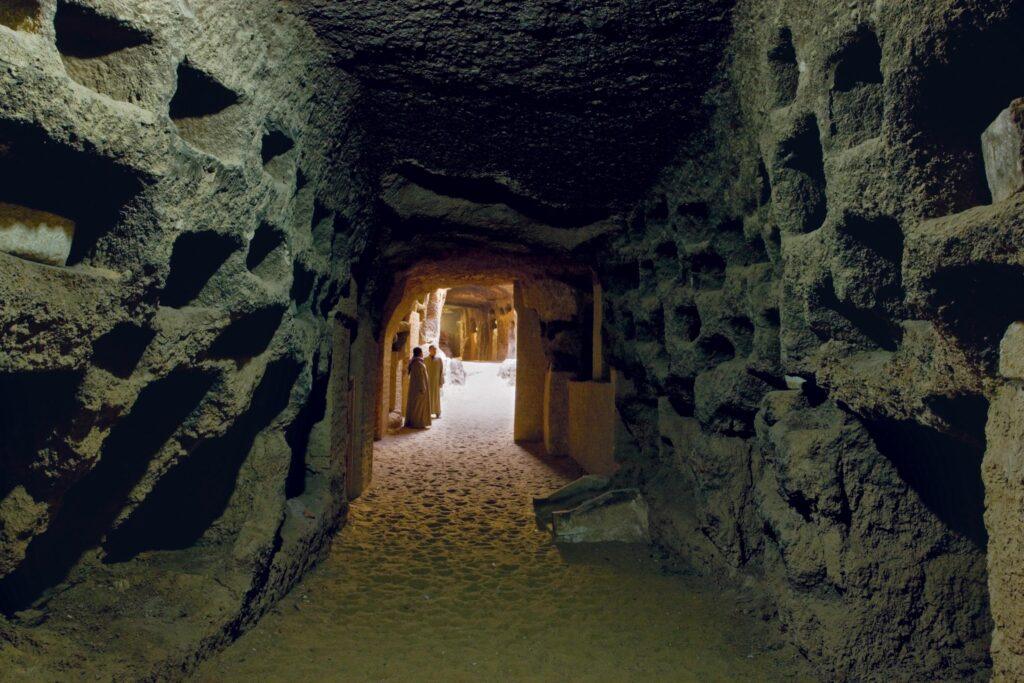
It served as the cemetery for ancient Hermopolis, an important religious center associated with Thoth, the Egyptian deity of writing and wisdom.
The Tomb of Petosiris is known for its decoration, which combines traditional Egyptian subjects with Greek artistic influences.
The Tomb of Isadora belongs to a young woman from Roman-period Egypt whose death became associated with a romantic legend.
Underground galleries were used for the burial of sacred ibises and baboons connected with the worship of Thoth.
Tuna el-Gebel also contains Akhenaten’s Boundary Stela A, carved into the western escarpment to mark part of the territory of his capital.
Our Tuna el-Gebel guide covers the individual monuments, the sacred-animal galleries and practical visiting information.
Hermopolis — Ancient City of Thoth
The archaeological site of el-Ashmunein, near Mallawi, preserves remains of ancient Hermopolis.
Hermopolis was an important religious center dedicated to Thoth and was closely connected with the necropolis at Tuna el-Gebel.
The surviving remains are fragmentary. This isn’t a complete temple complex like Karnak, but visiting can help you understand the relationship between the ancient city and its cemetery.
Hermopolis fits naturally into a day focused on Tuna el-Gebel, provided the site is accessible.
Mallawi Museum
Mallawi Museum contains archaeological objects from southern Minya and the surrounding region.
Its collections help connect the monuments at Amarna, Tuna el-Gebel and other nearby sites with the wider history of Middle Egypt.
The museum is best considered as part of a day exploring the southern area of the governorate, rather than as a separate journey from Minya city.
If your day at Tuna el-Gebel runs longer than expected, you may need to choose between Mallawi Museum and Hermopolis.
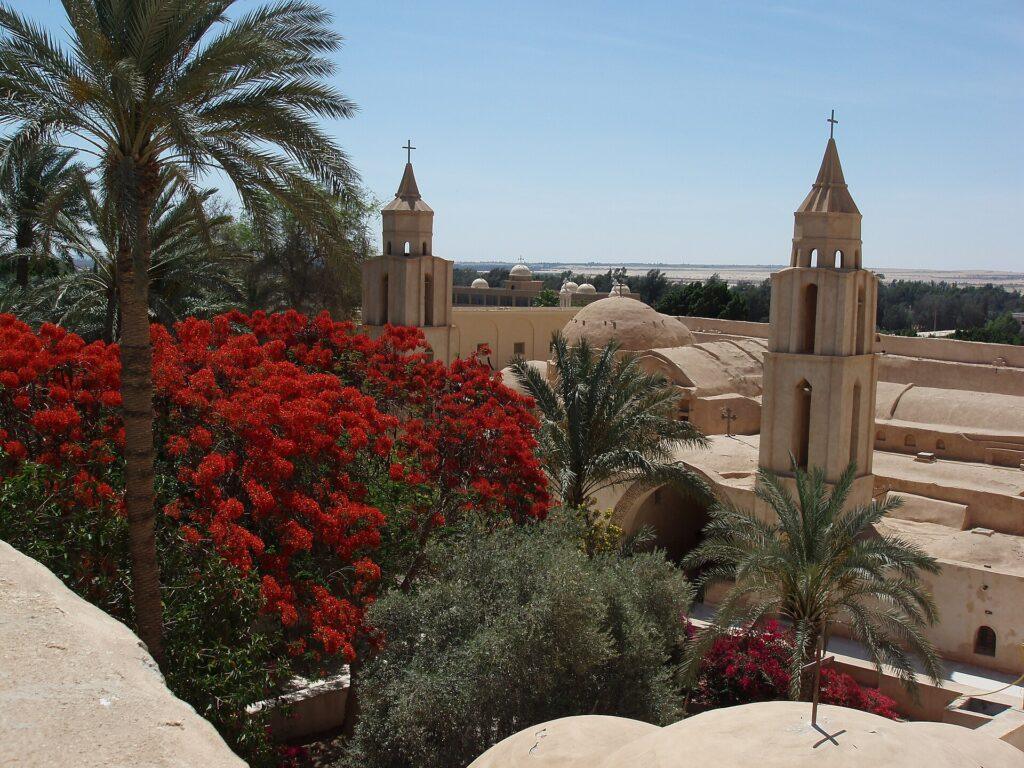
Christian Sites and Monasteries of Minya
Minya also has an important place in Egypt’s Christian history.
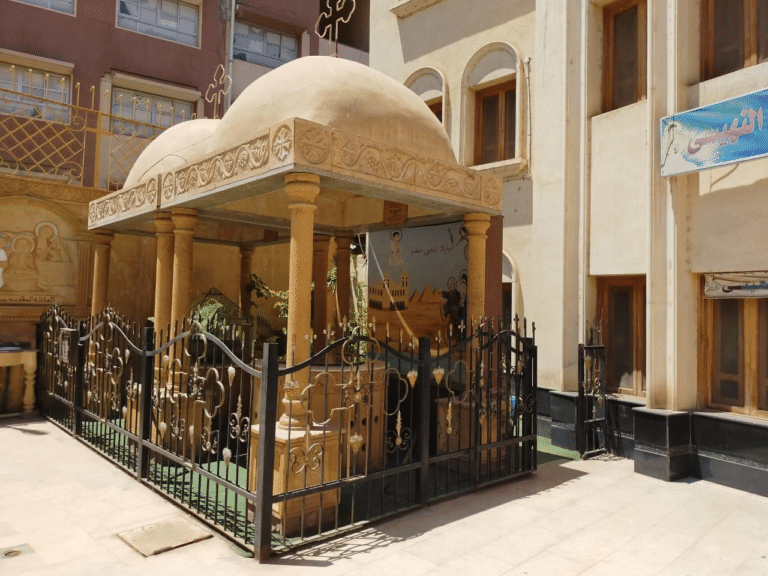
The governorate contains churches and monasteries associated with early Christianity, longstanding monastic communities and traditions surrounding the Holy Family’s journey through Egypt.
One of the best-known places is the Monastery of the Virgin Mary at Gabal el-Tayr, near Samalut.
Other places of interest include Deir Abu Hinnis and the Christian heritage of the Deir el-Bersha area.
These are living religious places, and visits should respect services, community activities and local arrangements.
Our Christian Minya guide explores the churches, monasteries and historical traditions in more detail.
You can also follow the wider journey in our Holy Family Sites in Middle and Upper Egypt guide.
Other Archaeological Sites Around Minya
Minya Governorate has several additional archaeological sites that may interest travelers with a particular focus on ancient Egypt.
Deir el-Bersha is associated with Middle Kingdom tombs, including that of Djehutihotep, whose decoration famously depicts the transportation of a colossal statue.
Tihna el-Gebel is known for the Fraser Tombs, a group of Old Kingdom rock-cut tombs.
Sheikh Abada preserves remains associated with Antinopolis, the Roman city established under Emperor Hadrian.
These aren’t necessarily places with routine tourist access. Some areas may have restrictions or require arrangements with archaeological staff or local authorities. Confirm access before making them part of your itinerary.
How Many Days Should You Spend in Minya?
Three full sightseeing days is a good starting point if you want to visit Beni Hasan, Amarna and Tuna el-Gebel.
With only one day, choose a single principal archaeological area. Beni Hasan is a good option if you’re interested in Middle Kingdom tomb paintings, while Tuna el-Gebel offers a combination of decorated tombs and unusual burial traditions.
Two days allows you to explore two major sites without rushing.
With three full sightseeing days, you can give Beni Hasan, Amarna and Tuna el-Gebel a day each. That also leaves some room for Hermopolis or Mallawi Museum, depending on your interests and the current visiting arrangements.
If you’re arriving from Cairo on the first day or continuing south after your visit, allow for those journeys when deciding how many nights to book. Three full sightseeing days are different from a three-day trip that includes arrival and departure.
If Christian heritage is one of your main interests, consider adding another day rather than squeezing several monasteries into an already full archaeological itinerary.
Suggested Three-Day Minya Itinerary
This itinerary assumes you’re staying in Minya city and have a private vehicle and guide for the archaeological visits.
Day 1 — Beni Hasan
Begin with Beni Hasan, allowing time to climb to the cliffside tombs and study the painted scenes.
During warmer months, visit earlier in the day to avoid the worst of the heat on the exposed approach.
If you’ve arrived from Cairo that morning, Beni Hasan may be enough sightseeing for your first day. Head back to Minya afterward rather than adding another distant archaeological site.
Day 2 — Amarna
Set aside the day for Amarna.
Decide which areas matter most to you before leaving your hotel. The North and South Tombs, ancient city and Royal Tomb aren’t all close together.
If you want to visit the Royal Tomb, allow for the additional journey into the Royal Wadi. Trying to fit every part of Amarna into a short visit usually means rushing through the places you’ve come to see.
Day 3 — Tuna el-Gebel and Southern Minya
Spend the morning exploring Tuna el-Gebel, including the Tomb of Petosiris, Tomb of Isadora and sacred-animal galleries where accessible.
If Boundary Stela A is on your list, allow extra time for the climb and confirm that access is possible.
If you finish Tuna el-Gebel with enough time remaining, choose either Hermopolis or Mallawi Museum. Both are worth considering, but neither needs to be squeezed into an already full day.
Where to Stay in Minya
Minya city is a practical base if you’re exploring several parts of the governorate, particularly if you want a wider choice of accommodation and services.
However, it’s worth comparing the driving routes before booking, especially if Amarna and Tuna el-Gebel are your main priorities.
Staying near the Nile can make the evenings more pleasant after spending the day at desert archaeological sites.
Mallawi may be worth considering if most of your itinerary focuses on Tuna el-Gebel, Hermopolis and southern Minya.
Choose your accommodation after deciding which sites you want to visit, and check the hotel’s actual location before booking.
How to Get to Minya From Cairo
By Train
Minya is connected to Cairo by Egypt’s railway network.
Suitable southbound trains stop at Minya, although schedules, service types and journey times vary.
Train travel works well if you’re staying in Minya city and have arranged transportation for archaeological sightseeing separately.
Check the current timetable and booking arrangements before traveling.
By Private Vehicle
A private vehicle allows you to travel directly to the archaeological sites without arranging separate transfers.
It can also be useful if Minya is part of a longer journey through Middle Egypt.
The drive from Cairo takes several hours, depending on your starting point, route and traffic.
Can You Visit Minya as a Day Trip From Cairo?
It’s possible, but not ideal if you want to explore the region properly.
After reaching Minya, you still need to travel to the archaeological sites, some of which are far from the city.
A day trip can work if you’re visiting one specific attraction with transportation arranged in advance.
For Beni Hasan, Amarna and Tuna el-Gebel, an overnight stay is much more practical.
Getting Around Minya
For archaeological sightseeing, I recommend a private vehicle with a driver familiar with the region.
The main attractions are spread across the governorate, and transportation may not be readily available when you’re ready to leave a remote site.
Beni Hasan and Amarna are east of the Nile, while Tuna el-Gebel is west of it. Traveling between them means following the available road crossings, which can make the journey considerably longer than the distance on a map suggests.
A knowledgeable driver can organize the route and help avoid unnecessary backtracking.
When Is the Best Time to Visit Minya?
October through April is generally the most comfortable period for archaeological sightseeing in Minya.
Many monuments are in exposed desert locations, and some involve walking or climbing without much shade.
Winter is particularly suitable for travelers who want to spend extended periods outdoors.
Summer visits are possible, but the heat can make archaeological sightseeing demanding. During warmer months, visit exposed sites earlier in the day rather than planning long walks around midday.
Is Minya Safe for Tourists?
Minya is a destination international travelers can visit, but it requires more preparation than Egypt’s main tourist centers.
Some archaeological sites are remote, and arrangements for foreign visitors may involve local security procedures or coordination.
These requirements can change, so information from older travel reports may not reflect current conditions.
For travelers unfamiliar with the region, organizing transportation and archaeological visits before arrival is more practical than trying to arrange everything independently at remote sites.
Practical Tips for Visiting Minya
Site Access and Opening Hours
Not every archaeological site in Minya operates with the same visitor arrangements.
Conservation work, staffing and operational restrictions can affect access to individual tombs or archaeological areas.
Check current opening hours and ticketing procedures for the specific places you want to visit. Some less frequently visited sites may require additional coordination.
Physical Demands
Beni Hasan requires an ascent to reach the cliffside tombs.
Amarna involves travel between widely separated archaeological areas, with some walking over uneven ground.
Tuna el-Gebel includes enclosed tombs and underground galleries, while reaching Boundary Stela A involves climbing.
If mobility is a concern, discuss the specific sites before finalizing your itinerary.
Photography
Photography rules can vary between archaeological sites, decorated tomb interiors and museums.
Check current permissions before taking photographs, particularly inside tombs or when using additional equipment.
What to Bring
Wear comfortable shoes suitable for uneven ground and bring water and sun protection.
Carry your passport, as identification may be required at archaeological sites.
Frequently Asked Questions About Minya
Is Minya worth visiting in Egypt?
Yes, particularly for travelers interested in archaeology, ancient Egyptian history and destinations beyond the usual Cairo–Luxor–Aswan route. Its best-known attractions include Beni Hasan, Amarna and Tuna el-Gebel.
How far is Minya from Cairo?
Minya city is approximately 250 km south of Cairo, although the actual road distance depends on your starting point and route. The journey generally takes several hours by road or train.
How many days should I spend in Minya?
Allow three full sightseeing days for Beni Hasan, Amarna and Tuna el-Gebel. You may need additional time for arrival, departure, Christian heritage sites or lesser-known archaeological areas.
Can I visit Amarna and Tuna el-Gebel in one day?
It may be possible with a limited itinerary, but the sites are on opposite sides of the Nile, and Amarna covers a large area. Separate days are preferable if you want to explore both properly.
Can I visit Minya without a tour?
You can travel to Minya independently, including by train. However, visiting remote archaeological sites is easier with prearranged transportation and a knowledgeable local guide.
Is Minya suitable for families?
It can be, particularly for families with older children who enjoy history. Some archaeological sites involve long drives, exposed areas or climbing, so the itinerary should reflect the children’s ages and interests.
What is Minya famous for?
Minya is known for its archaeological heritage, including the Middle Kingdom tombs at Beni Hasan, Akhenaten’s capital at Amarna and the ancient necropolis at Tuna el-Gebel. The governorate also contains important Christian historical sites.
Is Minya better as a day trip or an overnight visit?
An overnight visit is generally better. The journey from Cairo takes several hours, and Minya’s attractions are spread across a large area. Staying several nights makes it easier to explore the main sites without rushing.
Plan Your Visit to Minya
Minya is worth more than a quick stop between Cairo and Luxor, particularly if you want to see Beni Hasan, Amarna and Tuna el-Gebel.
The challenge is arranging the sites into a practical route while allowing enough time to explore them properly.
If you’d like to include Minya in your Egypt trip, contact Explore ENA about a private Middle Egypt itinerary. We can help arrange transportation, an Egyptologist guide and a route built around the places you want to visit.