Beni Hasan Tombs: Egypt’s Middle Kingdom Tombs Near Minya
The tombs at Beni Hasan are easy to overlook when planning Egypt.
They aren’t in Cairo or Luxor, they don’t belong to a famous royal necropolis, and the people buried here weren’t pharaohs. Yet inside these rock-cut tombs are some of Egypt’s most remarkable surviving scenes from the Middle Kingdom: wrestlers shown in hundreds of grappling scenes, craftspeople at work, hunters, acrobats, musicians, soldiers attacking fortresses and a delegation of men, women and children arriving from outside Egypt.
Beni Hasan is also one of the places where Middle Egypt starts to become more than the stretch of country between Cairo and Luxor.
Where Is Beni Hasan?
Beni Hasan is in Minya Governorate on the east side of the Nile, roughly 20 km south of Minya.
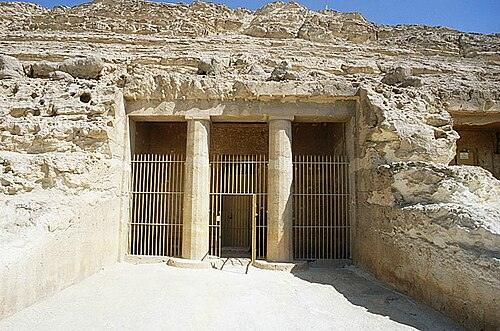
The tombs are cut high into the limestone cliffs overlooking the cultivated Nile Valley. From the upper cemetery, you have desert cliffs behind you and a broad sweep of green farmland below.
What Are the Beni Hasan Tombs?
Beni Hasan was the cemetery for important officials connected with the 16th Upper Egyptian province, or Oryx nome.
The site is divided into upper and lower cemeteries.
The lower cemetery contains around 800 tombs, many of them shaft burials, spanning several periods of ancient Egyptian history.
The part most visitors come to see is the upper cemetery, where 39 tombs were cut horizontally into the cliffs. The walls of 12 are decorated with painted scenes.
Most of these upper tombs belong to provincial governors and senior officials of Egypt’s 11th and 12th Dynasties, during the Middle Kingdom. These were powerful regional officials rather than minor local administrators, and their elaborate tombs reflect that status.
How Many Tombs Can You Visit at Beni Hasan?
Although there are 39 rock-cut tombs in the upper cemetery, four are currently open to visitors:
- Baqet III
- Khety
- Amenemhat
- Khnumhotep II
The Tomb of Baqet III
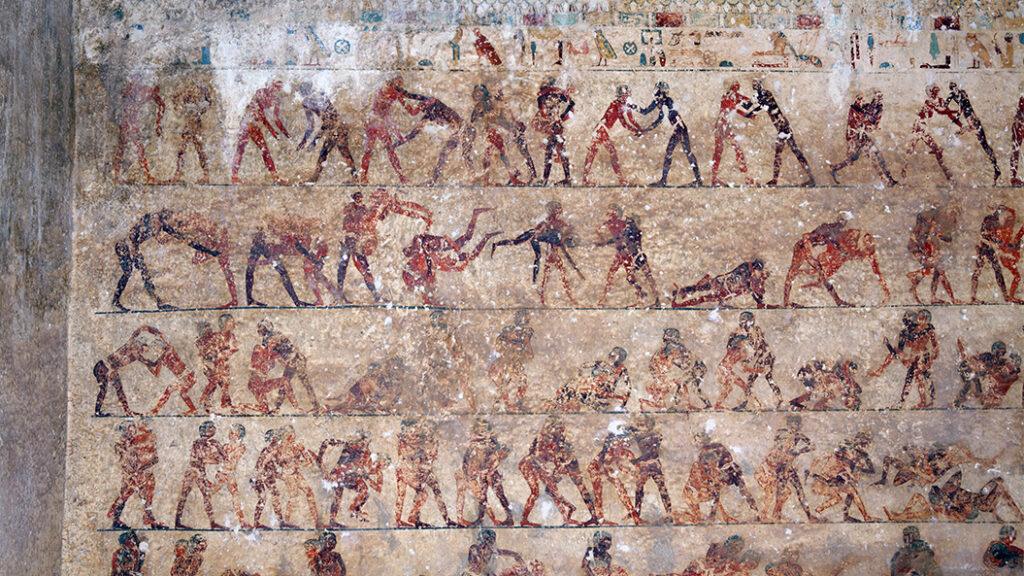
If you’ve seen photographs of the famous Beni Hasan wrestling scenes, there is a good chance some came from the Tomb of Baqet III.
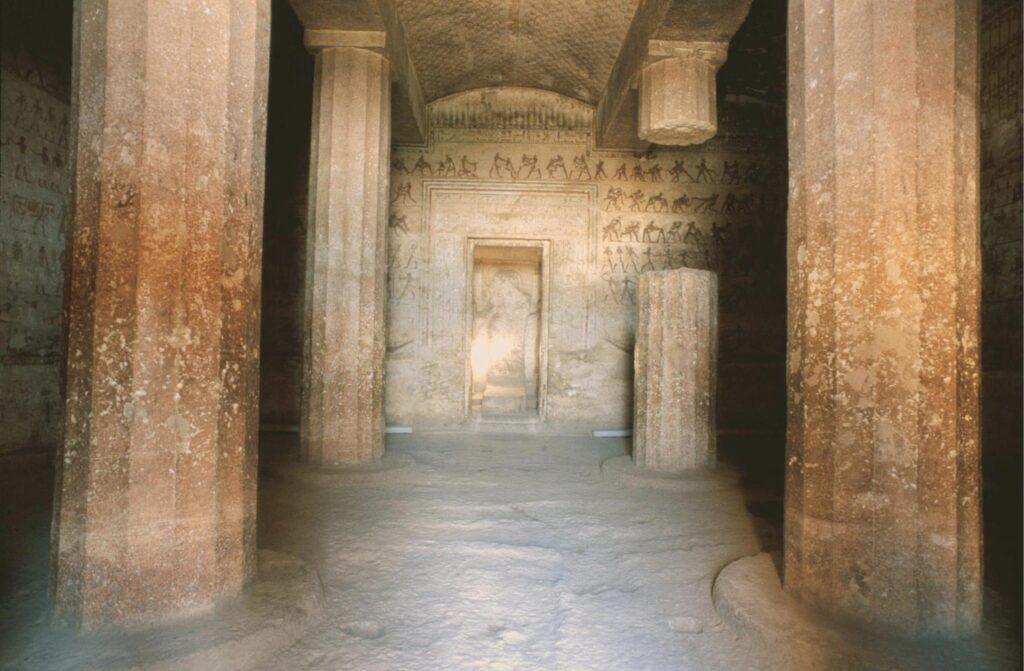
Baqet III was a governor of the Oryx nome. His tomb contains an extraordinary display of 220 pairs of wrestlers, shown in different holds and positions.
But don’t spend the entire visit looking at the wrestlers.
Elsewhere are barbers, sandal makers, goldsmiths, spinners and weavers. There are fishing scenes, birds and other animals, tax collection and a battle involving a fortified settlement.
Look closely and some of the details become surprisingly specific. Among the animals are monkeys and baboons, while one small scene shows a cat facing a mouse.
The Tomb of Khety
Khety was another governor of the Oryx nome, and his tomb is filled with movement.
The east wall includes 122 pairs of wrestlers, with the figures arranged in a remarkable variety of positions. Nearby are military-training scenes and an attack on a fortified site.
Elsewhere, the subject changes completely.
There are carpenters and barbers, spinning and weaving, board games, music and winemaking. Young women juggle and perform acrobatics.
The tomb originally had two rows of three columns with lotus capitals. Only one column from each row remains intact, but you can still see how different the chamber would have looked when all six were standing.
The Tomb of Amenemhat
The Tomb of Amenemhat is particularly worth slowing down for.
Amenemhat governed the Oryx nome during the reign of Senusret I and was the last person to hold the title of nomarch here.
His tomb includes scenes of agriculture, fishing, bird hunting and crafts such as carpentry, pottery, sandal making and the production of bows and arrows.
Then look up.
The ceiling is one of the tomb’s most memorable features. Painted patterns imitate architectural materials including wooden beams and matting, using strong reds and yellows.
The Tomb of Khnumhotep II
If you recognize one Beni Hasan image before arriving, it may come from the Tomb of Khnumhotep II.
Khnumhotep II served during the reign of Senusret II and held several important titles, including Overseer of the Eastern Desert.
His tomb has a columned portico, a chapel that once contained additional columns and a statue shrine, and a long biographical inscription.
But its most famous scene is a procession.
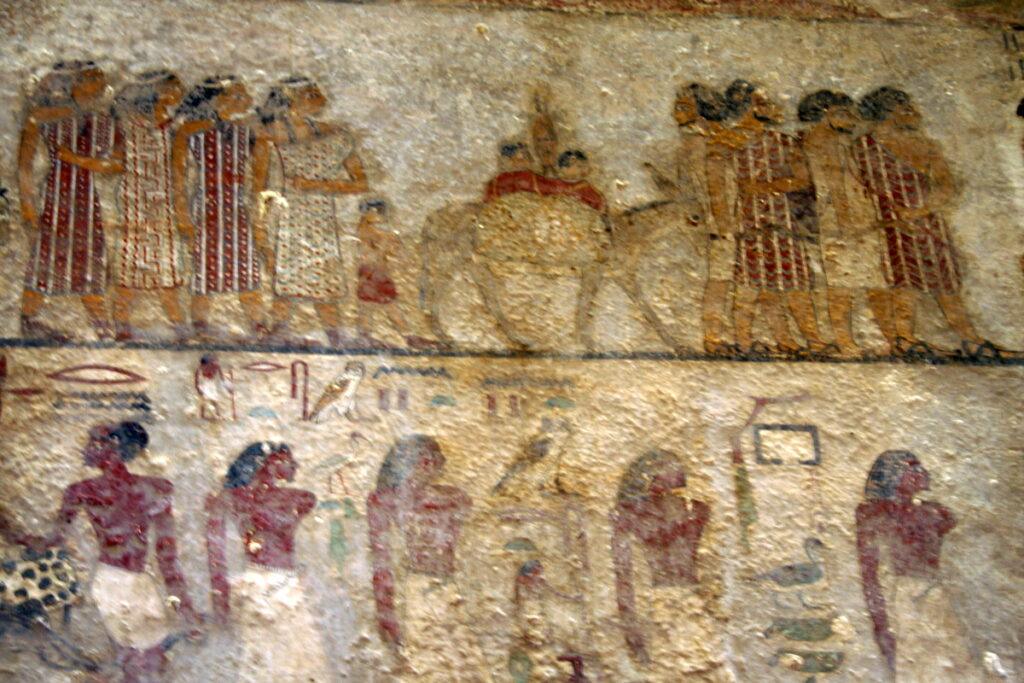
It shows 37 people identified by the Egyptians as Aamu, a term used for people from regions east and northeast of Egypt. Men, women and children appear in distinctive colorful clothing as they bring eye-paint to Khnumhotep.
Their leader is named Abishai and is given the title heqa khaset, meaning ruler of a foreign land. This is an early occurrence of the term that later became familiar in its Greek form: Hyksos.
That does not mean the scene shows the later Hyksos takeover of Egypt. Khnumhotep II lived well before that period. What you’re seeing is evidence of people and goods moving between Egypt and neighboring regions during the Middle Kingdom.
And then, in the same tomb, there are three monkeys helping people gather figs.
Beni Hasan is full of details like that.
Why Is There So Much Daily Life on the Walls?
A pyramid tells you something about kingship, religion and state organization. A Beni Hasan wall can show you someone making sandals.
These were tombs of powerful provincial officials rather than pharaohs, and their decoration gives you a very different window into ancient Egypt.
What Is Visiting Beni Hasan Actually Like?
The setting is very different from the Valley of the Kings.
The tombs are above the valley, so reaching the upper cemetery involves an uphill approach.
Once you’re there, take some time to look back across the cultivated land below. The view is part of what makes the location memorable.
Inside, don’t rush from one tomb to the next. Many of the best details aren’t the largest scenes.
A knowledgeable guide is useful here. It’s easy to notice the wrestling scenes and walk straight past many of the smaller details.
What Should Travelers With Limited Mobility Know?
The main issue is getting up to the tombs.
The four decorated tombs open to visitors are above the Nile Valley in the limestone cliffs, so reaching them requires an uphill approach rather than stepping directly from a vehicle into the tombs.
If climbing is difficult for you, this is one site I’d check carefully before going. Reliable current details about handrails, seating and assistance along the visitor route aren’t well published.
Confirm the current approach and what assistance is available shortly before visiting rather than assuming the tombs will be easy to reach.
How Long Do You Need at Beni Hasan?
For most travelers, a few hours is enough for Beni Hasan itself.
There are only four principal tombs open to visitors, but rushing through them defeats the point. The walls reward close looking, particularly in the tombs of Baqet III, Khety and Khnumhotep II.
Allow time for the uphill approach and the view from the upper cemetery rather than calculating the visit purely by the number of tomb chambers.
When Is Beni Hasan Open?
Beni Hasan is open daily from 8:00 a.m. to 5:00 p.m.
Because archaeological-site hours and access can change, check again shortly before your visit, particularly if Beni Hasan is essential to that day’s itinerary.
The Ministry’s official Beni Hasan archaeological-site page is the best place to recheck the published hours and visitor information.
What Should You Bring?
Wear comfortable shoes with good grip for the uphill approach and archaeological ground rather than smooth-soled sandals.
Bring water and sun protection. Part of the visit is outdoors in an exposed cliff setting rather than entirely inside the tombs.
Carry your passport with you as well. Identification requirements can be enforced at Egyptian archaeological sites, particularly where entry categories depend on nationality or residency status.
Planning Your Beni Hasan Visit From Minya
If you’re staying in Minya, Beni Hasan is one of the easier archaeological sites in the area to build into your itinerary. The tombs are roughly 20 km south of the city, but don’t plan the visit by distance alone. Beni Hasan is on the east side of the Nile, and where you’re staying affects the route and driving time.
For most travelers, the simplest option is to arrange a private car and driver for the visit rather than trying to piece together local transportation. Keep the vehicle with you while you’re at the site so you’re not depending on finding transportation when you’re ready to leave.
A guide is also particularly worthwhile at Beni Hasan. There are no enormous temples or towering monuments to explain themselves from a distance. Much of what makes the site exceptional is painted on the tomb walls: individual wrestling positions, craftsmen at work, military scenes, animals and small details that are easy to miss without knowing where to look.
Should You Stay in Minya?
Minya is the most practical base if Beni Hasan is part of a wider Middle Egypt itinerary.
Staying locally gives you much more flexibility than trying to visit the region as a long day trip from Cairo. It also makes it easier to give Beni Hasan the time it deserves while using another day for Amarna or other sites around Minya.
Don’t assume, however, that staying in Minya puts every attraction within a few minutes of your hotel. Archaeological and Christian sites are spread across the governorate, and some routes involve crossing the Nile before continuing north or south.
Can You Combine Beni Hasan With Amarna?
You can include Beni Hasan and Amarna in the same Middle Egypt itinerary, but I would not treat them as two quick stops simply because both are associated with Minya.
Beni Hasan itself only requires a few hours. Amarna is a much larger archaeological landscape, with its principal sites spread between the ancient city, desert cliffs and Royal Wadi. If you want to see Amarna properly rather than rush through it, it deserves substantially more time.
For a trip that includes both, it makes more sense to think in terms of days in Middle Egypt rather than attractions per day.
Our guide to visiting Amarna explains how much time to allow there and which parts of Akhenaten’s former capital are most important to see.
What Else Should You Plan Before Going?
Beni Hasan is not a site where you need an elaborate packing list, but a few practical choices matter.
Start early enough that you’re not making the uphill approach during the hottest part of the day when temperatures are high. Wear shoes suitable for uneven archaeological ground, bring water and sun protection, and carry your passport.
If Beni Hasan is one stop in a longer day, plan the route before leaving Minya rather than deciding what to add after you finish at the tombs. Distances that look short on a map can become much less convenient once Nile crossings and the actual location of the next site are taken into account.
What Else Can You Visit Around Minya?
Beni Hasan is only one reason to spend time in Middle Egypt.
Amarna is the obvious archaeological companion, but it is a very different visit. Akhenaten’s former capital covers a much larger landscape, with sites spread between the ancient city, cliffs and Royal Wadi. Our guide to visiting Amarna explains what you can see there and how much time to allow.
Minya Governorate also has an important Christian heritage landscape. Our Christian Minya guide covers those churches, monasteries and related sites separately.
The mistake is assuming everything with “Minya” attached to its name must fit conveniently into the same sightseeing day. It doesn’t. Distances, Nile crossings and where you’re staying all affect what combines well.
If you’re planning several Middle Egypt sites, Explore ENA can help arrange a custom itinerary around the actual locations rather than trying to maximize the number of stops in a single day.
Is Beni Hasan Worth Visiting?
If your Egypt trip is focused entirely on the country’s most famous monuments, Beni Hasan is easy to skip.
But if you’ve already seen pyramids, royal temples and New Kingdom tombs, this is exactly the kind of site that can broaden the picture.
Beni Hasan gives you the Middle Kingdom and provincial Egypt rather than another royal capital. After days of monumental temples and royal tombs, that change of perspective can be reason enough to come.
The tombs aren’t impressive because they’re enormous.
They’re impressive because there is so much life on the walls.
Frequently Asked Questions About Beni Hasan
Where are the Beni Hasan tombs?
Beni Hasan is in Minya Governorate on the east side of the Nile, approximately 20 km south of Minya.
How many tombs are at Beni Hasan?
The upper cemetery contains 39 rock-cut tombs, and the walls of 12 are decorated with painted scenes. The lower cemetery contains around 800 tombs and shaft burials from several periods.
How many Beni Hasan tombs can tourists visit?
Four tombs are currently open to visitors: those of Baqet III, Khety, Amenemhat and Khnumhotep II.
Which Beni Hasan tomb has the wrestling scenes?
Both Baqet III and Khety have extensive wrestling scenes. Baqet III’s tomb depicts 220 pairs of wrestlers, while Khety’s includes 122 pairs.
Which tomb has the foreign delegation?
The Tomb of Khnumhotep II contains the famous scene of 37 Aamu—men, women and children from regions east and northeast of Egypt—bringing eye-paint. Their leader is identified as Abishai.
Are the Beni Hasan tombs from the Middle Kingdom?
The best-known decorated tombs of the upper cemetery belong primarily to officials of the 11th and 12th Dynasties during the Middle Kingdom, although the wider cemetery contains burials from other periods.
Planning a Visit to Beni Hasan
If Beni Hasan is part of a larger Minya or Middle Egypt trip, Explore ENA can build it into a custom itinerary with Amarna and other regional sites arranged around realistic driving times and enough time at each place to actually understand what you’re seeing.