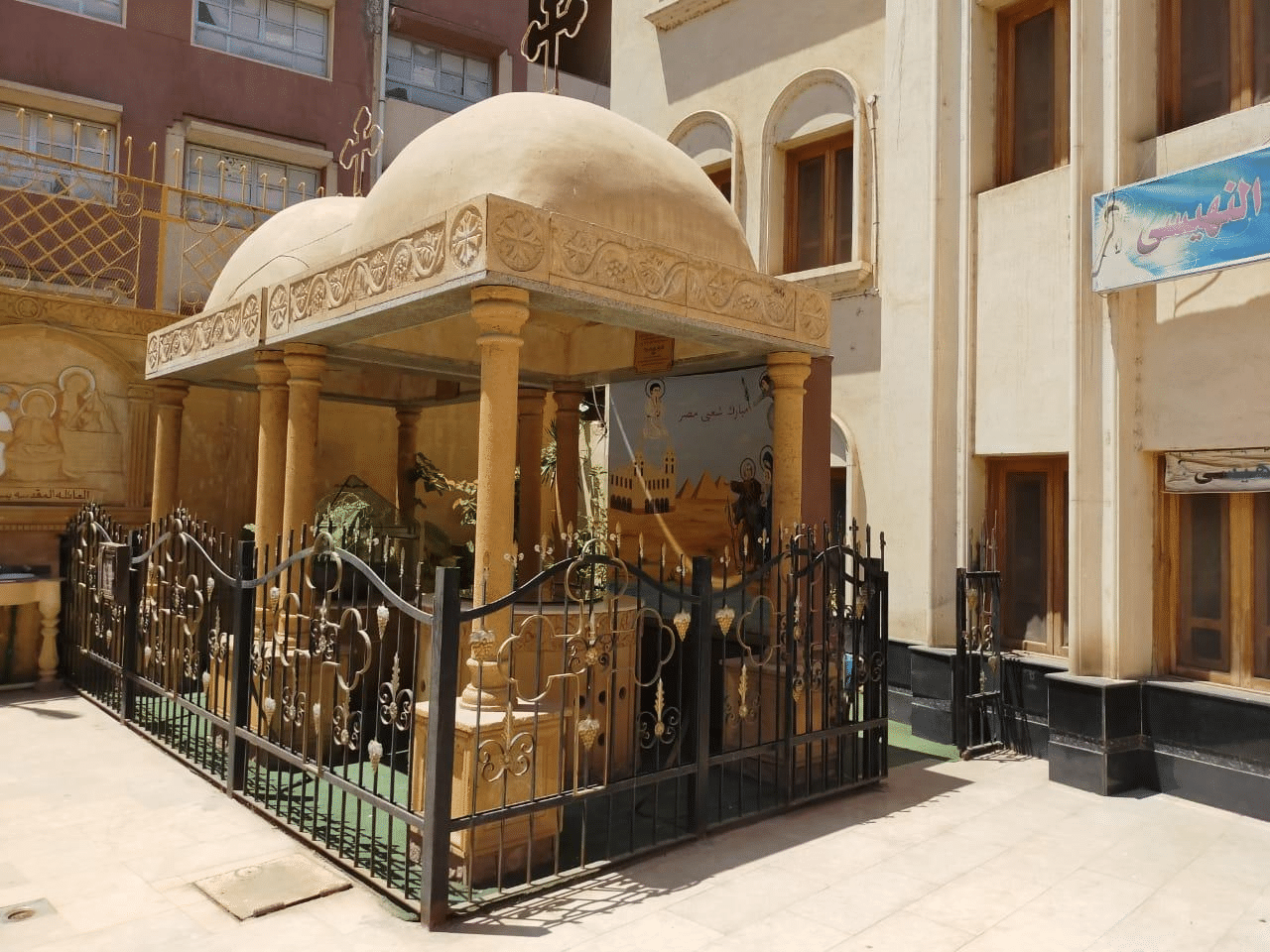
Holy Family Sites in the Nile Delta: Churches & Places You Can Visit
The Nile Delta is one of the most overlooked parts of Egypt’s Holy Family tradition.
Most travelers interested in Christian Egypt begin with Coptic Cairo. Some continue south into Minya and Asyut. Far fewer realize that several important places associated with the Holy Family’s journey are scattered through the towns and farmland north of Cairo.
According to Coptic tradition, Mary, Joseph and the young Jesus traveled through places that today include Tell Basta near Zagazig, Mostorod, Belbeis, Samanoud and Sakha. Churches, wells, archaeological remains and objects preserved by local Christian communities continue to mark that tradition.
These are not attractions gathered into one convenient historic district.
They are spread across several governorates and connected by busy towns and agricultural roads. That makes the Delta portion of the Holy Family route more complicated to visit than Coptic Cairo, but it also gives it a completely different character.
You are not simply visiting old churches. You are following a Christian pilgrimage tradition through the living landscape of the Nile Delta.
What Does the Bible Say About the Holy Family in Egypt?
The Gospel of Matthew records that Joseph was warned in a dream to take Mary and Jesus to Egypt to escape King Herod.
It does not tell us where they traveled within Egypt.
The individual Egyptian stops associated with the Holy Family today come from later Christian tradition, particularly traditions preserved by Egypt’s Coptic Church.
That distinction matters when exploring the route.
The Flight into Egypt is recorded in Scripture. The identification of individual Egyptian towns, wells, trees, caves and other stopping places belongs to later Christian tradition.
Egypt today recognizes and develops many of these traditional locations as part of the country’s Holy Family pilgrimage route.
Where Are the Holy Family Sites in the Nile Delta?
The traditional route through northern Egypt is more complicated than a straight line across the Delta.
One detailed account published by Egypt’s State Information Service places the Holy Family at Tell Basta, then Mostorod, Belbeis, Samanoud and Sakha before continuing toward Wadi El Natrun.
For travelers, however, those places do not form one convenient sightseeing circuit.
This guide therefore focuses primarily on four Delta destinations:
- Tell Basta, near Zagazig in Sharqia Governorate
- Belbeis, also in Sharqia
- Samanoud, in Gharbia Governorate
- Sakha, in Kafr El Sheikh Governorate
Mostorod is included because of its importance within the tradition, but its location on the edge of Greater Cairo makes it more practical to treat alongside the Cairo-area Holy Family sites.
Tell Basta and Belbeis can make sense together geographically. Samanoud and Sakha form another logical pairing farther northwest.
Trying to connect everything in one rushed day misses the point of visiting them.
ENA Tip: Plan the Holy Family sites by geography, not by the number of places you can fit onto a list. Delta driving can be slow, and a route that looks simple on a map can involve busy towns, agricultural roads and considerable travel between stops.
Tell Basta: The Holy Family Tradition at Ancient Bubastis
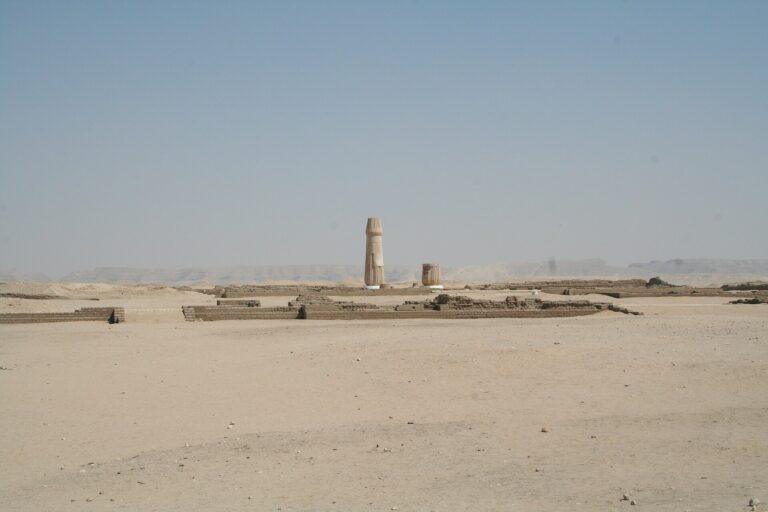
Tell Basta, on the edge of modern Zagazig, is unusual because its Christian pilgrimage tradition exists within a much older archaeological landscape.
This was ancient Bubastis, known in ancient Egypt as Per-Bastet. It became an important center of worship for the goddess Bastet and at one point served as a royal capital.
The archaeological site preserves remains from several periods of ancient Egyptian history.
But Tell Basta also became part of a completely different religious story.
According to Coptic tradition, the Holy Family stopped here during its journey through Egypt. The Egyptian Ministry of Tourism & Antiquities recognizes Tell Basta as one of the eastern points on Egypt’s Holy Family Path.
That overlap is what makes Tell Basta particularly interesting.
You are not visiting a Christian church built in isolation. You are entering the remains of an ancient Egyptian city that later became incorporated into one of Egypt’s most important Christian pilgrimage traditions.
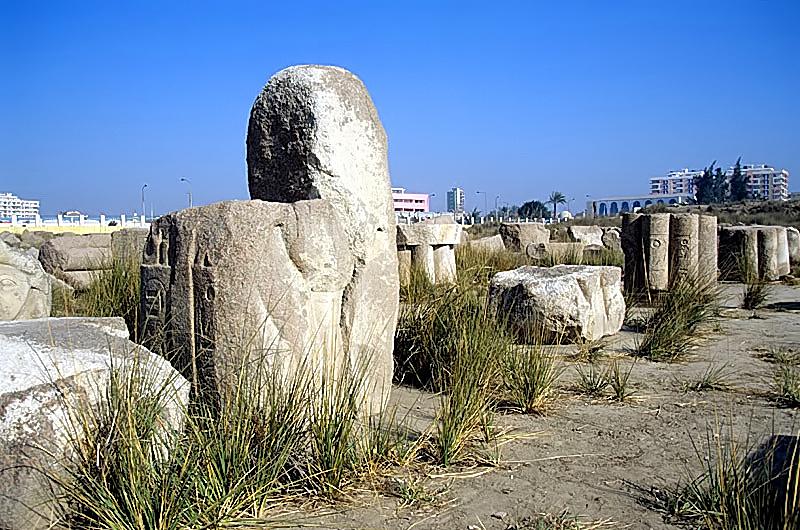
What Is the Holy Family Well at Tell Basta?
A well at Tell Basta is traditionally associated with the Holy Family’s stay.
The Ministry of Tourism & Antiquities identifies the well as one of the reasons Tell Basta forms part of the developed Holy Family Path. Archaeologically, a Roman-period well survives within the Tell Basta site.
The religious tradition surrounding the water goes further than archaeology can establish.
Accounts differ in some of the details surrounding the family’s need for water and how the water appeared. Rather than choosing one version and presenting it as established history, it is more accurate to understand this as the well traditionally connected with the Holy Family’s visit.
That distinction does not make the site less significant.
It explains why Tell Basta can be both an archaeological site and a Christian pilgrimage destination without confusing the evidence for one with the tradition of the other.
Where Does Mostorod Fit Into the Route?
Mostorod, traditionally called Al-Mahamma, is an important part of the Holy Family tradition even though it does not fit neatly into a modern Delta sightseeing itinerary.
The detailed route published by Egypt’s State Information Service places the family here after Tell Basta.
Coptic tradition associates the name Al-Mahamma, or “the bathing place,” with the Virgin Mary bathing the young Jesus there and washing his clothes. A well is also associated with the family’s stay.
Mostorod today sits on the northern edge of Greater Cairo.
For that reason, I would not build a Delta sightseeing day around it. It works better for travelers as part of the transition between the Cairo-area Holy Family sites and the route farther into the Delta.
Its position still matters when trying to understand the traditional journey rather than simply collecting individual churches.
Belbeis: The Traditional Site of the Virgin Mary’s Tree
The detailed Holy Family tradition continues from Mostorod to Belbeis in Sharqia Governorate.
Belbeis is associated with a tree beneath which the Holy Family is traditionally said to have rested.
The historic tree itself does not survive today.
Travelers therefore should not arrive expecting to find an ancient tree still standing exactly as it did in the traditional story.
What survives is the Christian memory attached to the place and the religious heritage that developed around it.
There are churches in Belbeis, including a church dedicated to the Virgin Mary, but the importance of this stop comes primarily from its place within the Holy Family tradition rather than from the age of the present church building.
Belbeis is a good example of why the Delta route feels very different from visiting a major monastery or archaeological complex.
Christian memory became attached to a place within an inhabited Delta town and continued even as the physical landscape changed.
Planning Note: Do not judge the importance of a Holy Family site by how visually dramatic it is. Some of the route’s traditions are attached to wells, trees, caves or churches built and rebuilt long after the period they commemorate.
Samanoud: A Church, a Well and a Granite Trough
Samanoud is one of the most interesting Holy Family stops in the Delta because several elements of the local tradition remain associated with the family’s visit.
According to Coptic tradition, the Holy Family reached Samanoud during its journey through the Delta and was welcomed by the local population.
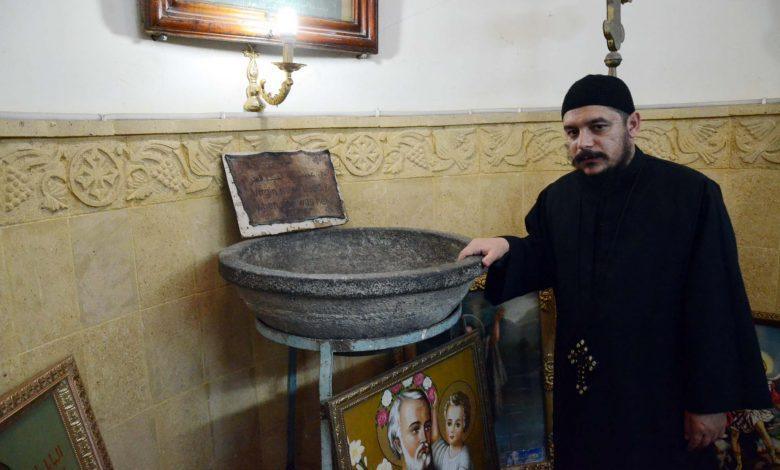
The tradition preserved here includes a well associated with the family’s stay and a granite trough traditionally connected with the Virgin Mary kneading dough.
The principal Christian site for visitors is the Church of the Virgin Mary and St. Abanoub.
St. Abanoub belongs to a completely different chapter of Egyptian Christian history. He is remembered in Coptic tradition as a young martyr from the period of Roman persecution, centuries after the time associated with the Holy Family.
That distinction is useful because Samanoud illustrates how one Egyptian church can preserve several layers of Christian history.
The site is not important only because of the Holy Family tradition. It is also part of the continuing religious life of the local Coptic community.
The Granite Trough at Samanoud
The granite trough preserved in connection with the Holy Family is traditionally identified as a vessel used by the Virgin Mary while preparing bread.
That association belongs to religious tradition rather than an archaeological identification capable of establishing who used the object two thousand years ago.
For pilgrims, however, the trough is one of the tangible objects through which Samanoud’s Holy Family tradition has been preserved.
Combined with the well and the church, it gives visitors more physical context than some of the other traditional stopping places in the Delta.
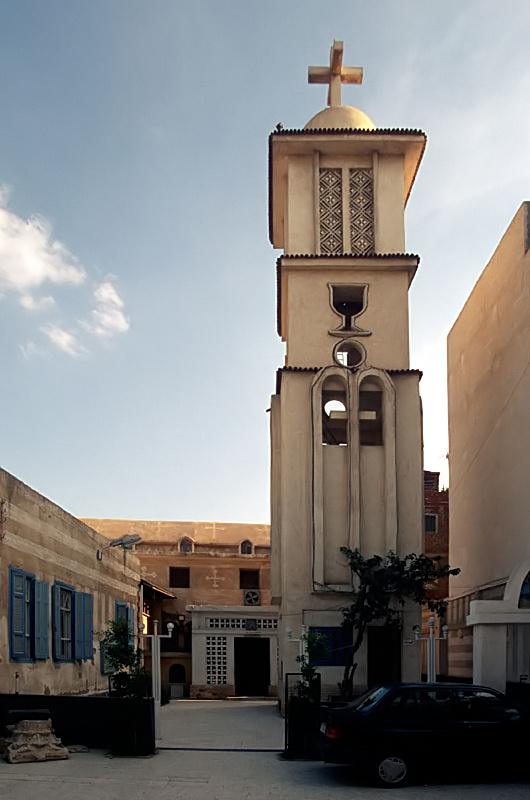
Sakha: The Stone Associated With the Footprint of Jesus
Sakha, in Kafr El Sheikh Governorate, preserves one of the Delta route’s most distinctive traditions.
Coptic tradition associates the town with a stone bearing what is believed to be the footprint of the young Jesus.
The stone is preserved at the Church of the Virgin Mary in Sakha.
Egypt’s Ministry of Tourism & Antiquities identifies Sakha as one of the developed points on the Holy Family Path and specifically records the tradition of the footprint stone.
The stone was hidden for a long period before being rediscovered during the twentieth century.
Its significance does not depend on treating the footprint as archaeological proof that Jesus stood there. It is important because of its place within the Coptic tradition of the Holy Family’s journey and the religious meaning the site continues to hold for Egyptian Christians.
That is the appropriate way to approach many physical objects associated with the route.
They are objects of tradition and devotion, not archaeological evidence capable of reconstructing the family’s exact itinerary.
For travelers specifically following the pilgrimage route, Sakha is also one of the Delta sites where Egypt has invested in improving the surrounding visitor infrastructure.
What About Wadi El Natrun?
The Holy Family tradition continues from the Delta toward Wadi El Natrun in the Western Desert.
Wadi El Natrun deserves separate treatment.
Its importance today comes not only from Holy Family tradition but also from the extraordinary monastic communities that later developed there. Four ancient monasteries remain active, making the region one of the most important centers of Coptic monasticism in Egypt.
For that reason, I would not squeeze Wadi El Natrun into the end of a Delta sightseeing day.
It is a destination in its own right.
Which Nile Delta Holy Family Sites Should You Prioritize?
The answer depends on what interests you most.
If the Holy Family tradition itself is your priority, Samanoud and Sakha offer two of the Delta’s most distinctive pilgrimage experiences. Samanoud preserves traditions surrounding the granite trough and well, while Sakha preserves the footprint-stone tradition.
If you are interested in the overlap between Christian pilgrimage and ancient Egyptian archaeology, Tell Basta is particularly worthwhile because the Holy Family tradition sits within the archaeological landscape of ancient Bubastis.
Belbeis helps fill in the eastern Delta portion of the traditional journey and makes geographical sense when combined with Tell Basta.
You do not need to visit every traditional stop to understand this part of Christian Egypt.
A smaller number of properly planned sites will usually give you a better experience than spending the entire day driving across the Delta simply to say you reached all of them.
Can You Visit the Holy Family Sites in the Delta From Cairo?
Yes, but the route needs to be planned realistically.
The Delta begins immediately north of Cairo, but that does not mean its pilgrimage sites are close together.
Zagazig, Belbeis, Samanoud and Sakha lie in different parts of the Delta. Road conditions, traffic through towns and the final approach to individual churches can make travel times less predictable than the distances suggest.
A focused eastern Delta day can concentrate on Tell Basta and Belbeis.
A separate route can concentrate on Samanoud and Sakha.
That structure makes considerably more sense than attempting to connect all four with Cairo in a single sightseeing day.
If the Holy Family route is a major reason for your trip to Egypt, allowing more than one day for the Delta gives you far more flexibility.
Are These Regular Tourist Attractions?
Not in the same way as the Pyramids, Karnak or the Grand Egyptian Museum.
Some sites are active churches. Others combine archaeological remains with places of pilgrimage.
Visitor infrastructure can vary considerably.
That is one reason advance planning matters here more than it does in Egypt’s major tourist centers. A church may function primarily around worship and local religious life rather than operating according to the standardized schedule international travelers expect from an archaeological attraction.
If a particular church, relic or traditional site is essential to your trip, verify current access before building the entire day around it.
What Should You Wear?
Dress modestly when visiting churches and pilgrimage sites.
For both men and women, clothing that covers the shoulders and knees is appropriate. Comfortable shoes are useful because a Delta Holy Family day may combine church visits, archaeological areas and walking through uneven outdoor spaces.
These are active religious sites.
If a service is taking place, avoid walking through worshippers simply to reach a particular architectural feature or photograph.
Can You Take Photos?
Photography rules can differ from one church to another.
Ask before photographing inside active churches, particularly around sanctuaries, relics or during services.
You should also ask before taking close photographs of clergy, worshippers or local residents.
The Delta portion of the Holy Family route passes through communities where international tourists are much less common than they are in central Cairo or Luxor.
Photograph the site. Treat the people living and worshipping there with the same courtesy you would expect anywhere else.
Do You Need a Guide?
For this particular part of Christian Egypt, I would strongly favor traveling with a knowledgeable licensed Egyptologist guide and arranged transportation.
The issue is not simply historical interpretation.
The sites are geographically dispersed, some are embedded inside working Delta towns, and the significance of individual wells, relics or church spaces may not be obvious without explanation.
A guide also helps separate the different kinds of history you are encountering.
Ancient Bubastis is archaeology.
The Flight into Egypt is recorded in the Gospel of Matthew. The identification of individual Egyptian stops comes from later Christian tradition.
The churches standing at those locations may date from much later periods and may have been rebuilt repeatedly.
Understanding those distinctions makes the route more interesting, not less.
Holy Family Sites in the Delta or Coptic Cairo?
If you have limited time on a first trip to Egypt, Coptic Cairo is much easier.
Its major churches and historic sites are concentrated within a relatively compact area, and it fits naturally into a Cairo itinerary.
The Delta is different.
The sites are spread through communities that rarely appear on standard Egypt itineraries. You spend more time traveling between them, and individual locations may appear modest compared with Cairo’s famous churches.
But that is also the reason to go.
The Delta lets you experience the Holy Family tradition as a route through Egypt, rather than as a collection of monuments inside one historic district.
If you have not yet explored Cairo’s Christian heritage, Explore ENA’s Coptic Cairo: Egypt’s Christian Heritage Trail explains the churches and historic sites that can be visited within Cairo.
How Does the Delta Fit Into the Wider Holy Family Route?
The Delta is only one part of a much larger Christian pilgrimage tradition.
The route extends from northeastern Egypt through the Delta and Greater Cairo, then connects with Wadi El Natrun and sites farther south in Middle and Upper Egypt.
That geographical scale is easy to underestimate.
The Holy Family route is not one pilgrimage complex. It is a network of places extending through a large part of Egypt.
For most travelers, the sensible approach is to explore it in regional sections rather than attempting to reproduce the entire traditional journey in one continuous trip.
That also gives individual destinations enough time to make sense. Coptic Cairo, Wadi El Natrun and the Christian sites of Minya and Asyut each have histories that extend far beyond their association with the Holy Family.
Are the Nile Delta Holy Family Sites Worth Visiting?
They are not essential for every Egypt itinerary.
If you have a week in Egypt and your priorities are the Pyramids, Grand Egyptian Museum, Luxor and a Nile cruise, I would not divert several days into the Delta simply because these places appear on the Holy Family route.
But if Christian Egypt is one of the reasons you are traveling, the calculation changes.
The Delta shows a side of the Holy Family tradition that you do not get from Coptic Cairo alone.
Tell Basta connects Christian pilgrimage tradition with the ruins of ancient Bubastis. Belbeis preserves the memory of a traditional resting place even though the historic tree itself is gone. Samanoud preserves traditions associated with a well and granite trough. Sakha preserves one of the route’s most distinctive relic traditions.
More importantly, these places show how the story of the Holy Family became embedded in communities far beyond Egypt’s best-known Christian monuments.
Understanding which parts of that story come from Scripture, which come from later Christian tradition and what you can actually see today makes the Delta route considerably more meaningful.
Frequently Asked Questions
What are the main Holy Family sites in the Nile Delta?
For travelers exploring this section of the route, Tell Basta, Belbeis, Samanoud and Sakha are among the principal places to consider. Mostorod is also important within the traditional journey, but its location on the edge of Greater Cairo makes it more practical to visit with the Cairo-area sites.
Does the Bible say the Holy Family visited these places?
No. The Gospel of Matthew records the Holy Family’s flight into Egypt but does not identify their route or individual stops within the country. The specific locations come from later Christian tradition.
Can you visit Tell Basta and Belbeis in one day?
They make one of the more logical geographical combinations for a focused eastern Delta trip from Cairo. Current access and driving conditions should still be checked when planning the day.
Can you visit Samanoud and Sakha together?
Yes. They make a more sensible geographical pairing than attempting to combine every Delta Holy Family site in a single day.
Is the Virgin Mary’s Tree still standing in Belbeis?
No. The historic tree associated with the local Holy Family tradition no longer survives. The importance of Belbeis today comes from the tradition connected with the place and its continuing Christian heritage.
Is Wadi El Natrun part of the Holy Family route?
Coptic tradition includes Wadi El Natrun within the Holy Family journey. For travelers, however, its four surviving ancient monasteries make it substantial enough to plan as a separate destination rather than treating it as another quick Delta stop.
Add the Nile Delta Holy Family Sites to Your Egypt Itinerary
The Holy Family sites of the Nile Delta are unlikely to fit neatly into a standard first-time Egypt itinerary, but you do not need to build an entire trip around them.
If an existing Explore ENA itinerary is already close to the trip you want, browse Explore ENA’s tours and packages and use it as the starting point. A Delta Holy Family day or a longer Christian heritage route can be discussed as an addition when the geography and available time make sense.
If you are specifically planning a Christian Egypt journey, contact Explore ENA to plan a custom Egypt tour. Tell us which Holy Family sites are important to you, how many days you have and what else you want to experience in Egypt, and we can build the route around those priorities.