Christian Minya: Ancient Churches, Monasteries & Coptic Sites to Visit
Minya rarely appears near the top of a first-time Egypt itinerary. For travelers interested in Christian Egypt, however, the governorate holds a remarkable mix of pilgrimage sites, early Christian archaeology and active monasteries.
This is where you can visit Gabal al-Tair, one of the best-known stops on Egypt’s Holy Family route; explore the Christian layers of ancient Al-Ashmunein and Ansena; see churches and Christian remains around the limestone landscape of Deir Abu Hinnis; and visit monasteries whose communities are still active today.
These sites are not gathered into one compact district like Coptic Cairo. They are spread along different sections of the Nile Valley, on both sides of the river and, in some cases, well into the desert. Trying to cover Christian Minya from a checklist is one of the easiest ways to spend too much of the day driving and too little time actually seeing anything.
A better approach is to understand what each area offers and choose the sites that fit both your interests and your route.
Why Is Minya Important to Christian Egypt?
Several different parts of Egypt’s Christian history overlap in Minya.
The Holy Family tradition connects particular places with the journey of Mary, Joseph and Jesus through Egypt. Those traditions remain an important part of Coptic pilgrimage today.
There is also a substantial archaeological record from the centuries when Christianity spread through Egypt under Roman and Byzantine rule. Ancient cities acquired churches and bishops, while settlements around the limestone cliffs and desert margins developed their own Christian communities.
Monasticism added another layer. Some of Minya’s monasteries trace their histories deep into Late Antiquity, and several remain active religious communities.
These stories need to be kept separate rather than blended into one vague idea of “ancient Christian Egypt.” A site associated by Coptic tradition with the Holy Family is not the same thing as an excavated Late Antique basilica, and neither is the same as an ancient monastery where monks still live today.
Minya gives you all three.
Expert Insight: “Coptic” does not describe one historical period. In Minya, you may encounter Late Antique archaeological remains, medieval churches, ancient monasteries that have been rebuilt many times, modern religious buildings and active Coptic communities. Knowing which period you are looking at makes the sites much easier to understand.
Gabal al-Tair and the Church of the Virgin Mary
For travelers following Christian heritage through Minya, Gabal al-Tair is one of the major sites to know.
The limestone escarpment rises above the eastern side of the Nile near Samalut. At the top is the Church of the Virgin Mary, and the area is included on Egypt’s official Holy Family route.
Coptic tradition identifies Gabal al-Tair as one of the places where the Holy Family stopped during its journey through Egypt, with a cave at the site associated with their stay.
Egypt’s Ministry of Tourism and Antiquities has incorporated Gabal al-Tair into the national project to develop the Holy Family route, including work intended to improve the pilgrimage area for visitors. You can read the Ministry’s information about the Holy Family route development at Gabal al-Tair.
The official route designation and the underlying tradition should not be confused. The government recognizes and develops the site as part of Egypt’s Christian pilgrimage route; the identification of Gabal al-Tair with the Holy Family comes from Coptic tradition rather than archaeological evidence proving that the family stopped at this particular place.
The church and pilgrimage complex have also changed considerably over the centuries. Visitors should not imagine the building standing today as an untouched structure surviving from Christianity’s earliest years.
What has endured is the religious importance of the place.
Its setting above the Nile also gives Gabal al-Tair a character that is difficult to compare with a historic urban church. Here, the mountain, river and pilgrimage tradition are all part of the experience.
Planning Note: If the Holy Family tradition is one of the reasons you are exploring Christian Egypt, don’t reduce Gabal al-Tair to a quick church stop. Its importance comes partly from understanding why this particular landscape became a place of pilgrimage.
The Holy Family Tradition in Minya
Gabal al-Tair is the best-known Holy Family site in Minya, but it belongs to a much larger Christian pilgrimage tradition.
Coptic tradition also associates Al-Ashmunein with the family’s journey through Middle Egypt. From Minya, the traditional route continues south toward sites in Asyut Governorate, while other sections extend north through Cairo and the Nile Delta.
This article does not attempt to reconstruct that entire journey.
For travelers specifically following the Holy Family route, Minya is one section of a much longer pilgrimage itinerary. Christian Minya also contains sites that have nothing to do with the Holy Family tradition, and some of those are just as important for understanding how Christianity developed in Middle Egypt.
Al-Ashmunein: Christianity in an Ancient City
Al-Ashmunein, known in antiquity as Hermopolis Magna, had already been an important city for centuries before Christianity arrived.
The ancient Egyptian city was associated with Thoth and remained a significant regional center under Greek and Roman rule. As Christianity spread through Egypt, Hermopolis became an important Christian city and episcopal center.
Among the surviving evidence of that period are the remains of a substantial Christian basilica that has been the subject of archaeological study and conservation.
Al-Ashmunein is especially useful for understanding something that can easily disappear from an Egypt itinerary divided into categories such as “pharaonic,” “Greco-Roman” and “Coptic.”
The people who became Christians did not move into an empty landscape.
They lived in cities that already had temples, streets, monuments and centuries of history. Christian churches appeared within those older places, and the physical landscape was reused again and again.
This makes Al-Ashmunein particularly interesting if you are already exploring the archaeological sites around Mallawi. The Christian remains are another chapter of the same city rather than an unrelated attraction sitting beside it.
Ansena: From Antinoopolis to a Christian Center
Farther south is another ancient city whose history continued into Christian Egypt.
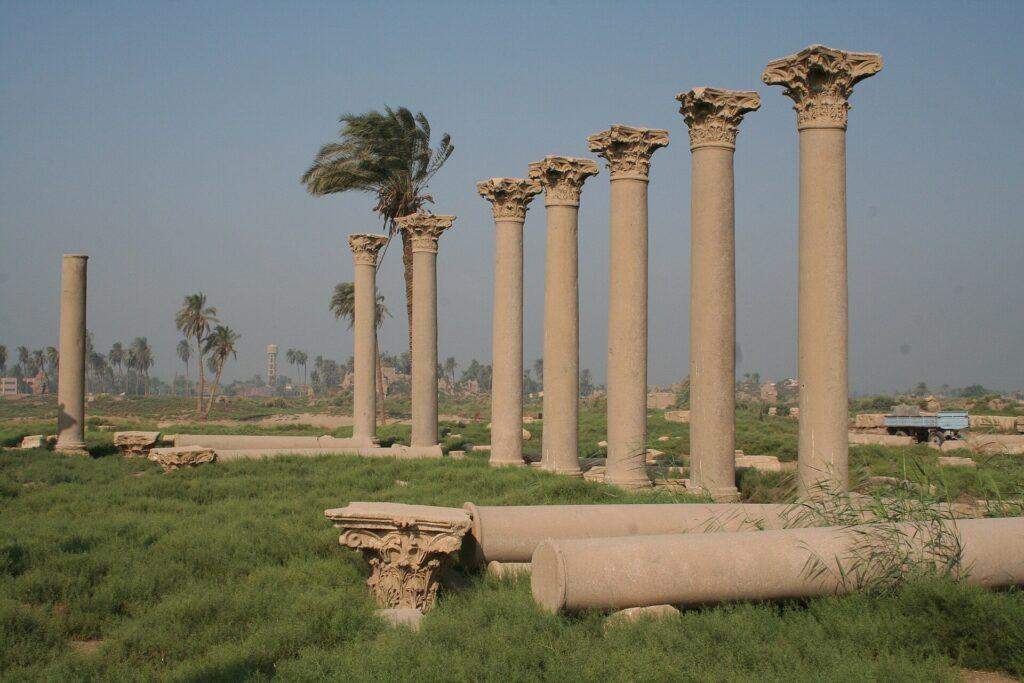
The Roman emperor Hadrian founded Antinoopolis in the second century CE. In the Christian period, the city became an important center known as Ansena.
Ansena became closely associated in Coptic tradition with Christian martyrs from periods of Roman persecution. Churches and monastic communities also developed within the wider landscape around the ancient city as Christianity became established in the region.
This is not a site where most visitors arrive and find an intact ancient city laid out in front of them. Much has disappeared over time, so understanding the wider landscape is important.
One of the most interesting places connected with that landscape is nearby Deir Abu Hinnis.
Deir Abu Hinnis: Churches, Quarries and Christian Art
Deir Abu Hinnis is one of the places where Christian Minya begins to look very different from the better-known church districts of Cairo.
The village lies in a limestone landscape near ancient Ansena, where quarries, caves and rock-cut spaces became part of Christian life.
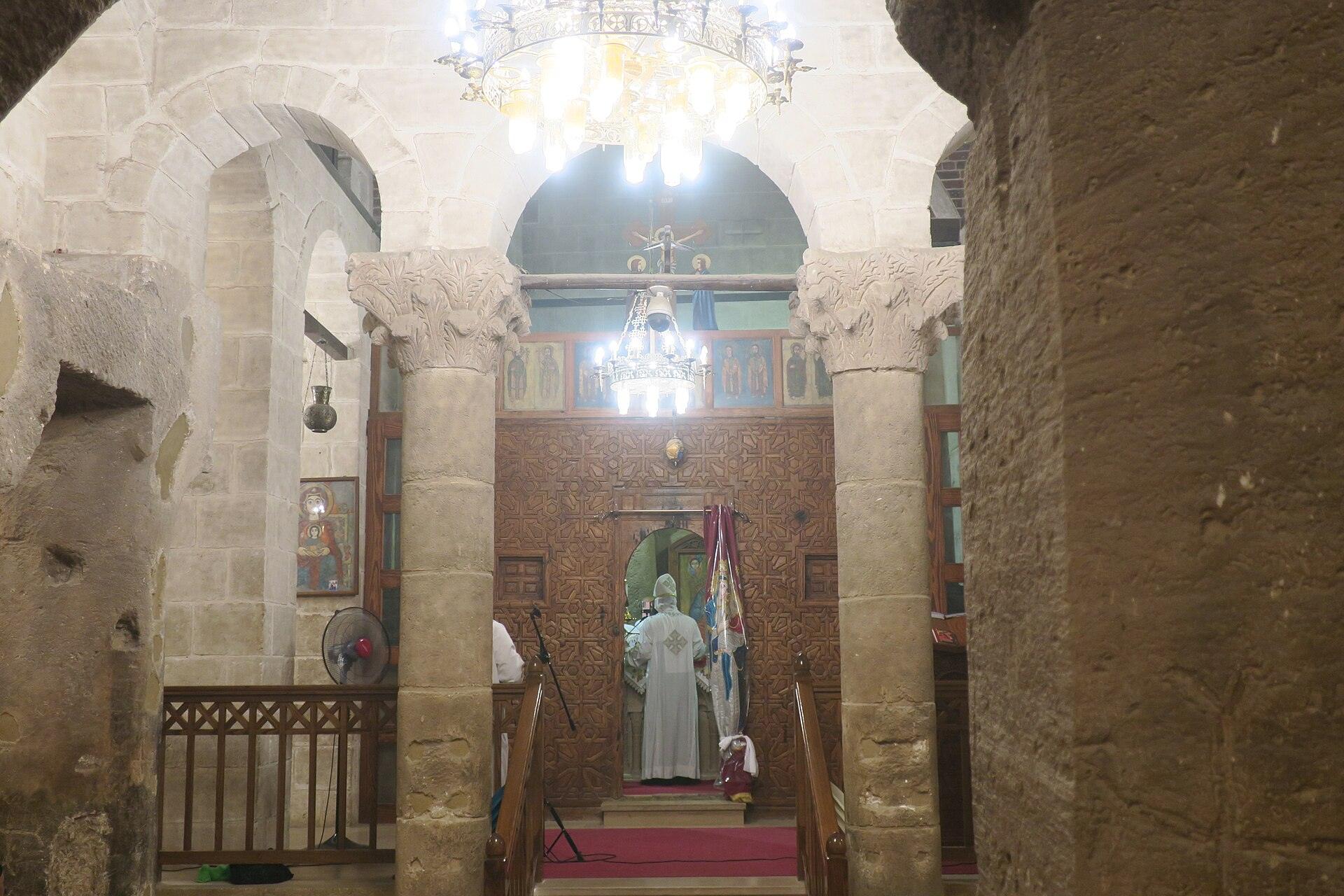
The historic Church of St. John the Short remains in use in the village and is currently the subject of archaeological and architectural research. The surrounding limestone landscape preserves another side of the area’s Christian history, including quarry and cave spaces where paintings, inscriptions and other evidence of Christian use have been documented.
The setting helps explain why Deir Abu Hinnis deserves more than a passing mention.
Christianity here was not confined to a monumental church standing in the center of a city. Religious spaces developed within a landscape already being used for quarrying, settlement and daily life. Caves and cut-rock spaces could acquire new purposes as Christian communities became established around Ansena.
Deir Abu Hinnis therefore combines something Minya repeatedly does well: Christian archaeology and a living Christian community occupying the same landscape.
For travelers particularly interested in early Christianity or archaeology, this can be one of the more revealing parts of Christian Minya.
It is also a place where local conditions matter. Do not assume every historic church, cave or archaeological space operates with standardized tourist access. A knowledgeable local guide and sensible advance planning are considerably more useful here than simply arriving with a list of coordinates.
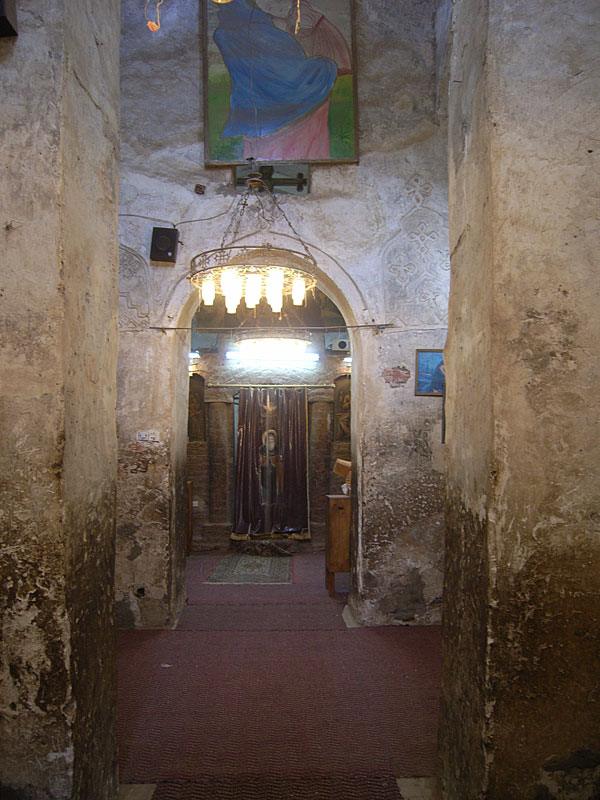
Abu Fana Monastery
West of Mallawi is the ancient Abu Fana Monastery, another important part of Minya’s Christian landscape.
The monastery is commonly known as Abu Fana Monastery. In English-language material, the saint’s name may also appear as St. Fana, while current Coptic Orthodox Church English publications use St. Ava Veni the Hermit.
The saint was an Egyptian ascetic associated with the desert west of the Nile, and a monastic community developed around the place connected with him.
The monastery’s history reaches back into Late Antiquity, but, as with Egypt’s other ancient monasteries, its age should not be interpreted to mean that every building standing today survives unchanged from the monastery’s earliest years.
Churches were repaired and rebuilt. Communities expanded and contracted. Structures disappeared, while later generations restored or replaced them.
That process continues today.
In September 2026, Pope Tawadros II inaugurated the monastery’s restored historic church following conservation work. It is a useful reminder that an ancient monastery can be both a historic site and a living religious community whose buildings continue to be used and cared for.
For someone exploring Christian Minya, Abu Fana tells a different story from Gabal al-Tair. The reason to come here is not primarily the Holy Family tradition. It is the monastic history of Middle Egypt and the survival of that tradition into the present.
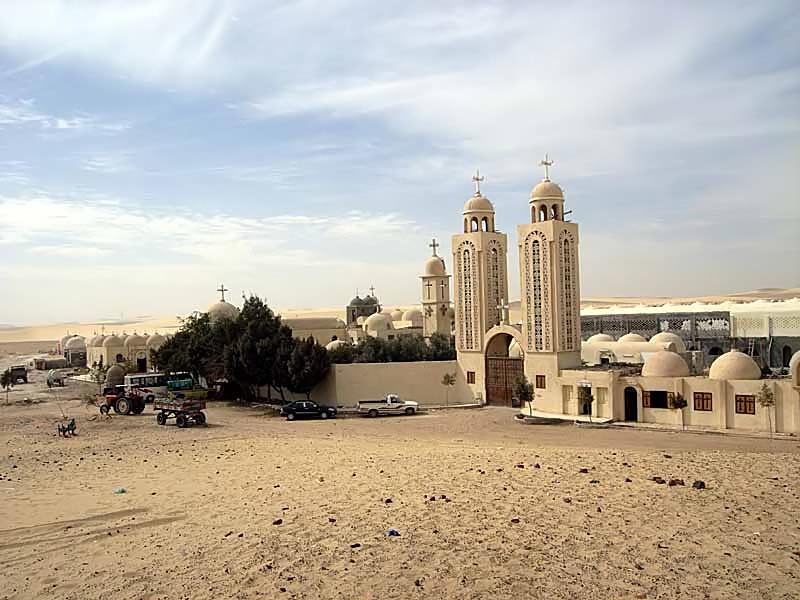
Al-Bahnasa: Ancient Oxyrhynchus and a Living Christian Community
Al-Bahnasa occupies the area of ancient Oxyrhynchus, a city famous among historians for the enormous collection of papyri discovered there.
Those documents have transformed what scholars know about everyday life in Greco-Roman and Late Antique Egypt. They include literature, letters, administrative records and Christian texts.
Christianity also became deeply established in the region, and Al-Bahnasa remains part of Minya’s living Coptic landscape today.
The Monastery of St. Mary and Archangel Michael is an active monastic community northwest of Minya. Recent expansion has included new facilities for visitors and the monastic community.
At Al-Bahnasa, Christian history is not limited to the remains of a community that disappeared centuries ago. The religious life of the area continues.
St. Samuel the Confessor: A Separate Desert Excursion
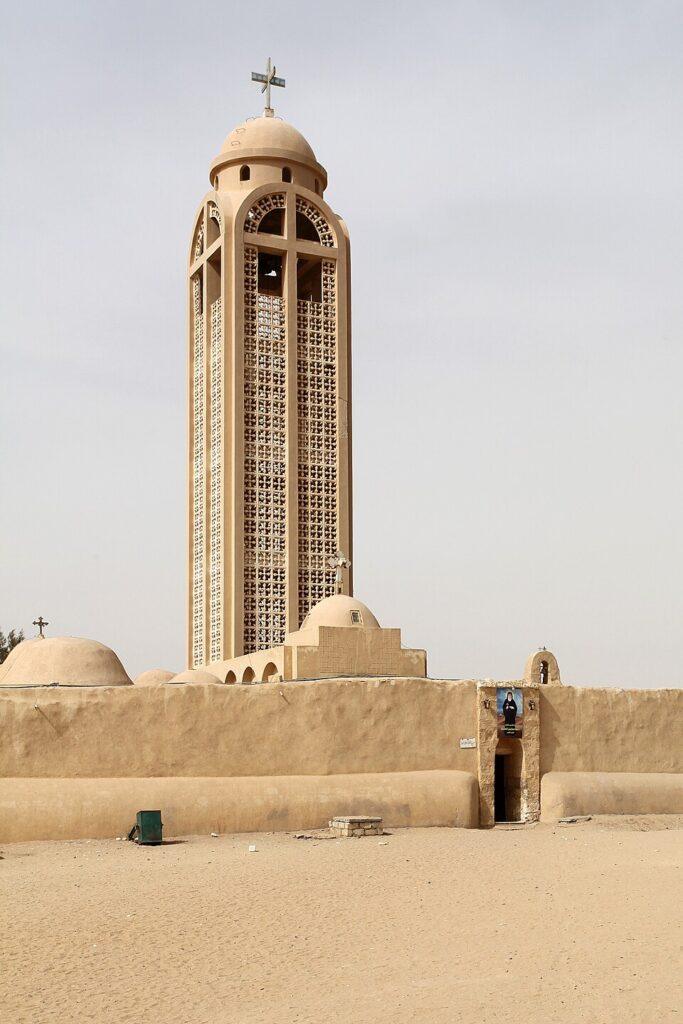
The Monastery of St. Samuel the Confessor belongs in a Christian Minya guide, but it should not be planned like the sites along the Nile Valley.
The monastery lies at Mount Qalamoun, deep in the desert northwest of Minya and well away from the usual Nile Valley sightseeing route.
Before its association with St. Samuel, the site was known as the Monastery of the Virgin at Mount Qalamoun. The Coptic Orthodox Church lists St. Samuel among Egypt’s ancient monasteries.
The complex includes several religious spaces associated with its long monastic history, including the Church of St. Samuel within the fort, the Church of the Virgin Mary and the cave and church associated with St. Samuel.
The monastery remains active. In September 2026, Pope Tawadros II visited Mount Qalamoun and consecrated a new cathedral dedicated to St. Mary and St. Samuel.
For trip planning, however, the most important point is its location.
St. Samuel is not somewhere I would casually add to a day because it appears under Minya when researching the region. Reaching a remote desert monastery requires a different commitment from visiting Al-Ashmunein or other sites close to the Nile Valley route.
If St. Samuel is important to you, plan it as a dedicated desert excursion and confirm current access and transportation arrangements before going.
ENA Tip: Minya is one of those places where a map can make an itinerary look much easier than it is. A site on the opposite side of the Nile or deep in the desert may change the entire structure of the day. Plan by geography first, then decide how many sites actually fit.
Which Christian Sites Should You Prioritize in Minya?
The answer depends on why you are interested in Christian Egypt.
If your main interest is the Holy Family tradition, start with Gabal al-Tair.
If you are drawn to early Christianity and archaeology, concentrate on the landscape around Al-Ashmunein, Ansena and Deir Abu Hinnis.
For living monasticism, Abu Fana gives you an ancient monastery that remains part of Coptic religious life, while Al-Bahnasa adds another active monastic community to the wider picture.
If St. Samuel the Confessor is one of your priorities, plan around it rather than trying to squeeze it between Nile Valley sites. Its desert location makes it a separate excursion.
You do not need to see all of these places to make a Christian Minya visit worthwhile. A route built around two or three sites that genuinely interest you will usually be better than a day spent trying to collect every Christian landmark in the governorate.
Can You See Christian Minya in One Day?
You can see part of it in one day.
You cannot see the Christian landscape described in this article properly in one day.
A day focused on Gabal al-Tair is geographically different from one built around Mallawi, Al-Ashmunein, Ansena and Deir Abu Hinnis. St. Samuel requires a different plan again.
If Christian heritage is a major reason for visiting Minya, plan more than one day if your itinerary allows it. That gives you much more flexibility to explore different parts of the governorate without turning the visit into a series of long transfers and short stops.
It also leaves room to combine Christian sites with the pharaonic and Greco-Roman archaeology that makes this part of Middle Egypt so interesting.
Can You Combine Christian Sites With Tuna el-Gebel or Amarna?
Yes, but choose the combination carefully.
Tuna el-Gebel and Al-Ashmunein fit naturally into the same broader Mallawi-area planning because of their geography and historical connections.
Amarna requires more deliberate routing.
What I would avoid is trying to combine several archaeological sites, multiple churches and a monastery simply because they all appear under “Minya” in a search.
Driving time, Nile crossings and the location of individual sites can consume much more of the day than the map initially suggests.
Choose the part of Minya you want to understand rather than the maximum number of places you can theoretically reach.
What Should You Wear at Christian Sites in Minya?
Dress modestly when visiting active churches and monasteries.
Clothing that covers the shoulders and knees is appropriate for both men and women. Comfortable shoes are also useful, particularly at larger monastery complexes and archaeological areas with uneven ground.
An old church may still be an active place of worship. Its historical importance does not turn it into a museum, so pay attention to services and follow any instructions given locally.
Can You Take Photos?
Photography rules vary between archaeological areas, monastery grounds and church interiors.
If the rule is not clear, ask before photographing inside an active church or monastery. Photography may also be restricted during services or around particular religious spaces.
Always ask before taking close photographs of monks, clergy or worshippers.
The buildings may be part of your sightseeing day. The people using them are not part of the attraction.
Do You Need a Guide for Christian Minya?
For the better-known sites, transportation is already an important part of the planning. At the less obvious sites, interpretation becomes just as important.
Minya’s Christian history overlaps with ancient Egyptian archaeology, Roman cities, Late Antique Christianity, monastic history, church tradition and modern Coptic life. Stories from completely different centuries can easily get blended together when the distinctions are not explained.
A knowledgeable licensed Egyptologist guide can provide that context and help build a route that makes geographical sense.
This is particularly useful at archaeological landscapes such as Al-Ashmunein, Ansena and Deir Abu Hinnis, where the significance of what remains is not always obvious simply by looking at it.
Christian Minya or Coptic Cairo?
They offer very different experiences.
Coptic Cairo is compact and relatively easy to fit into a Cairo itinerary. Several important historic churches and other religious sites are concentrated within a small area.
Minya requires more time and considerably more transportation.
In return, you encounter a much broader Christian landscape: pilgrimage churches overlooking the Nile, ancient cities with Christian archaeological remains, active monasteries and communities that developed beyond Egypt’s major urban centers.
For a first trip with limited time, Coptic Cairo is easier. If you specifically want to explore Christian Egypt beyond Cairo, Minya offers a very different experience.
Christian Minya and the Rest of Upper Egypt
Minya is one part of a much larger Christian landscape along the Nile.
Continue south and Christian traditions and monastic sites extend into Asyut Governorate. Farther south, Sohag preserves another major concentration of monastic heritage, including the Red and White Monasteries.
Christian evidence also survives in places that most travelers initially associate only with ancient Egyptian religion. Crosses, inscriptions and reused spaces inside older monuments preserve traces of Egypt’s later Christian centuries. If you begin noticing them while traveling through Upper Egypt, our guide to Christian crosses inside ancient Egyptian temples explains why they are there and what they tell us.
Minya works particularly well for travelers interested in Egypt as a continuous history rather than a collection of separate eras.
Ancient cities did not stop existing when the pharaonic period ended. Communities changed, religions changed and buildings acquired new uses. Christian Minya lets you see some of those transitions on the ground.
Is Christian Minya Worth Adding to an Egypt Itinerary?
If Christian history is only a passing interest and your first Egypt trip is already tightly scheduled around Cairo, Luxor and Aswan, Minya may be difficult to justify.
If you specifically want to understand Christian Egypt beyond Cairo, it is a different calculation.
Minya gives you something a single historic district cannot: Christian history spread across an entire landscape. Ancient cities acquired churches. Monastic communities developed along the desert margins. Pilgrimage traditions became attached to particular places, while active monasteries continued to change and grow.
You do not need to see every Christian site in the governorate. Choose the part of that history that interests you and give it enough time to make the journey worthwhile.
Frequently Asked Questions
Which Christian site should you prioritize in Minya?
It depends on your interests. Choose Gabal al-Tair for the Holy Family pilgrimage tradition; Al-Ashmunein, Ansena and Deir Abu Hinnis for Christian archaeology; Abu Fana for living monastic history; or St. Samuel the Confessor if you specifically want to make a dedicated desert monastery excursion.
Is Gabal al-Tair part of the Holy Family route?
Yes. Gabal al-Tair is included on Egypt’s official Holy Family route. Coptic tradition associates the site with the Holy Family’s journey through Egypt. The official route designation should not be confused with archaeological proof that the family stopped at this particular location.
Can you visit Christian Minya from Cairo in one day?
You can reach selected sites on a long day from Cairo, but I would not plan Christian Minya that way if the region itself is important to you. The sites are dispersed, and staying in or around Minya gives you much more flexibility.
How many days do you need for Christian Minya?
One day is enough for a focused part of the region, but plan more than one day if you want to explore Christian sites in different parts of Minya without rushing. St. Samuel the Confessor requires separate consideration because of its remote desert location.
Are Minya’s monasteries still active?
Yes. Minya includes active Coptic monasteries as well as archaeological Christian sites. Because functioning monasteries control their own visitor arrangements, current access should be checked if a particular monastery is essential to your itinerary.
Add Christian Minya to Your Egypt Itinerary
You do not need to build an entire trip around Minya to include its Christian heritage.
If you already see an Egypt itinerary that is close to the trip you want, browse Explore ENA’s tours and packages and use one as the starting point. Minya or other Christian heritage sites can be discussed as additions when the route and available time make sense.
If none of the existing itineraries matches what you want to see, contact Explore ENA to plan a custom Egypt tour. Tell us which Christian sites are important to you, how many days you have and what else you want to experience in Egypt, and we can help build the route around those priorities.