How Exhausting Is an Egypt Trip? How to Plan Without Burning Out
Egypt can be an exhausting trip if the itinerary is too aggressive, but it does not need to be.
A classic first trip may combine Cairo, Luxor, Aswan and a Nile cruise with early mornings, archaeological sites, domestic flights and several changes of location. None of those is necessarily difficult on its own. The fatigue comes when they are stacked together without enough change of pace.
The answer is not simply to see less. It is to decide which experiences deserve a demanding day, avoid putting too many of those days together, and leave enough room to actually enjoy what you came to Egypt to see.
A good Egypt itinerary can be busy. It should not feel relentless.
Why Egypt Can Be More Tiring Than It Looks on Paper
An itinerary rarely shows how much energy a day will require.
“Visit the Pyramids and Grand Egyptian Museum” looks like two activities. “Explore Luxor’s West Bank” may appear as a single morning. A domestic flight from Cairo to Luxor looks short when you see only the scheduled flight time.
The actual days are different.
At Giza, you are moving around a large archaeological landscape. In Luxor, major West Bank sites involve time outdoors, walking through tombs and temples, and driving between locations. A flight also means packing, checking out, traveling to the airport, waiting, collecting luggage and transferring again at the other end.
The effect is cumulative. A full sightseeing day can be enjoyable. An early morning can be worthwhile. A travel day can be easy enough. Several days combining those demands are where fatigue begins to catch up with people.
That is why the pace of the whole itinerary matters more than whether any single day looks reasonable.
Where Egypt Itineraries Usually Become Too Ambitious
The easiest way to make Egypt exhausting is to treat every available hour as time that should be used.
It often starts on arrival. A traveler lands after a long international flight and adds an evening activity because the night appears empty on the itinerary. The next morning begins early at Giza, followed by another full Cairo day. Then comes a domestic flight, sightseeing after arrival, and several consecutive days in Upper Egypt.
Nothing on that schedule necessarily looks excessive by itself.
The problem is that there is no recovery built between the demanding parts.
Arrival days are particularly useful as a buffer. Immigration, baggage, the airport transfer and Cairo traffic already introduce variables before jet lag is considered. Unless the flight timing makes sightseeing genuinely comfortable, avoid putting something important on that first day. If everyone feels good, an easy dinner or short outing can always be added.
The same judgment helps later in the trip. A free afternoon after a major sightseeing day is not a scheduling failure. It may be what keeps the next day’s experience from feeling like another obligation.

Luxor Is Easy to Overplan
Luxor is where ambitious itineraries often catch up with travelers because so many major sites are concentrated in one destination.
Karnak and Luxor Temple lie on the East Bank. Across the Nile, the West Bank contains the Valley of the Kings, Hatshepsut’s temple and numerous additional tombs and monuments. The temptation is obvious: everything is in Luxor, so why not fit as much as possible into the day?
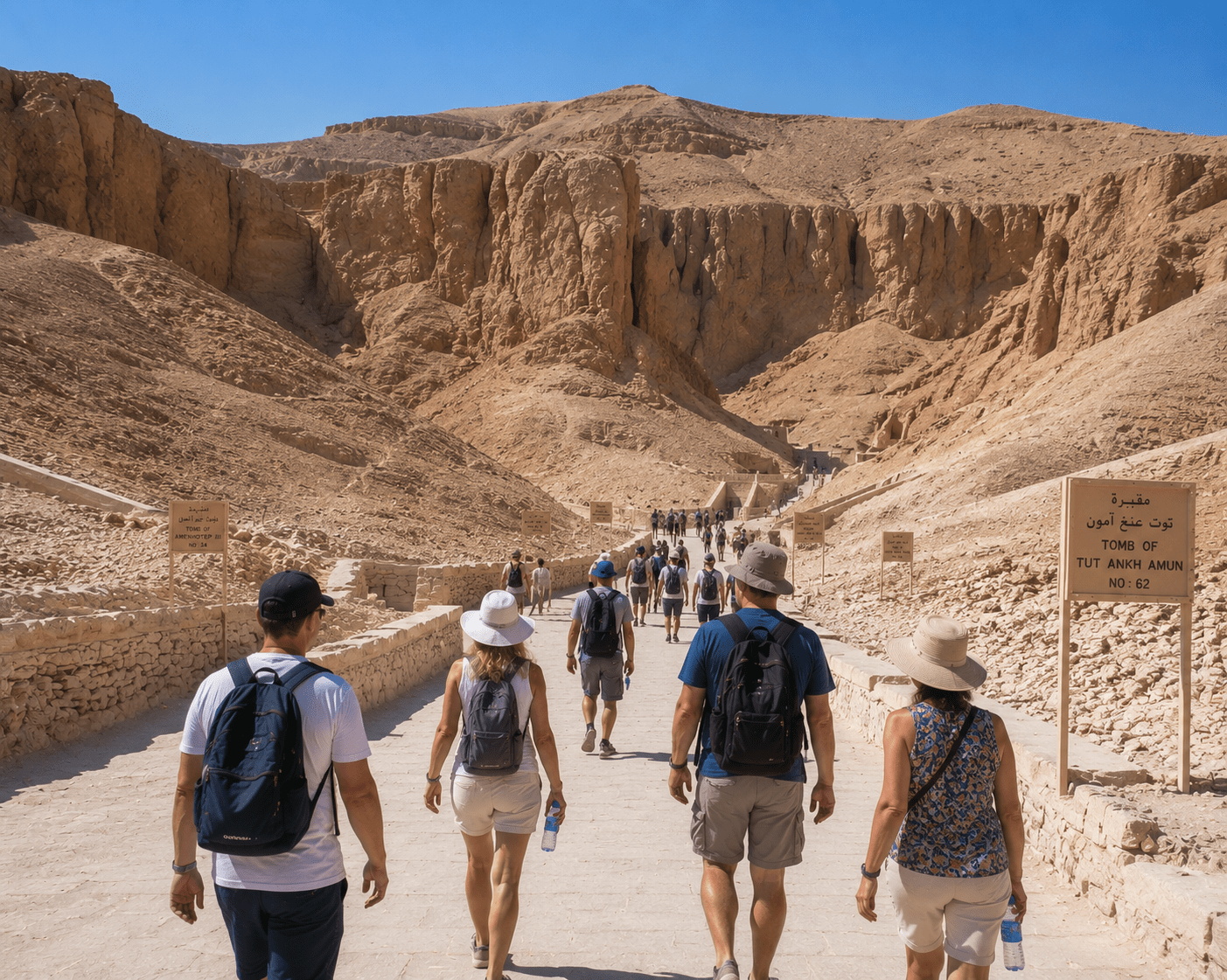
Our Luxor Travel Guide recommends at least two days for the major sites, allowing the East and West Banks to be treated as separate sightseeing periods. The current guide specifically warns that compressing Luxor into one day can become exhausting, particularly under the desert sun.
There is a mental limit as well as a physical one. After hours of temples, tombs and historical explanation, another extraordinary monument can start to feel like simply another stop.
Giving Luxor enough time is partly about walking and heat. It is also about still caring about what you are seeing by the end of the day.
A Nile Cruise Changes the Pace, but It Is Not Several Rest Days
A Nile cruise can make Upper Egypt considerably easier because the vessel becomes your base while you travel between Luxor and Aswan. You are no longer repeatedly packing, checking out and moving into another hotel.
That does not make the cruise several consecutive days of doing nothing.
Explore ENA’s 3- and 4-night cruise patterns still combine sailing with archaeological visits, and the 3-night route has a noticeably faster pace.
What the cruise provides is a different rhythm. You can return from a temple visit, have lunch and watch the Nile landscape pass instead of spending the afternoon relocating to another city.
That quieter time has value. Filling every available sailing period with another optional activity removes part of the reason the cruise works so well in a longer Egypt itinerary.
If you are deciding how the cruise should fit into the rest of the trip, our Nile Cruise Egypt Guide explains the current 3- and 4-night patterns between Luxor and Aswan.

Choose Your Early Mornings Carefully
Egypt has experiences that genuinely justify getting up very early. The problem is not the alarm itself. It is pretending afterward that you still have an ordinary sightseeing day ahead of you.
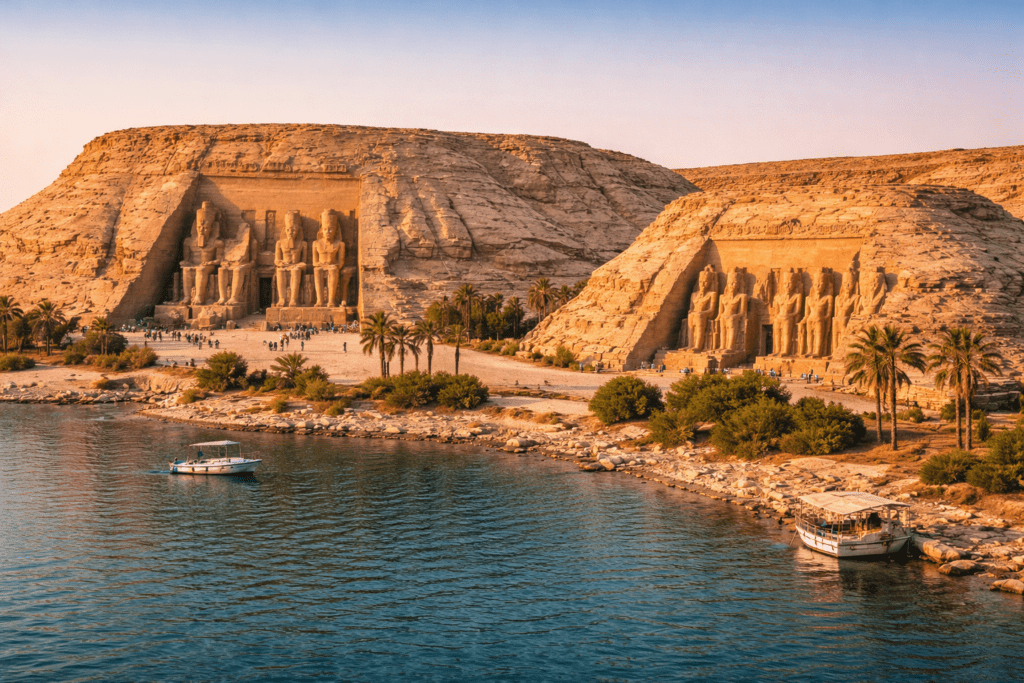
Abu Simbel is a good example. The temples are approximately 280 kilometers south of Aswan, and the road journey typically takes around three to three and a half hours each way. Road trips commonly leave Aswan early in the morning.
If Abu Simbel matters to you, that effort can be entirely worthwhile. Just account for it when planning the rest of the day and the mornings around it.
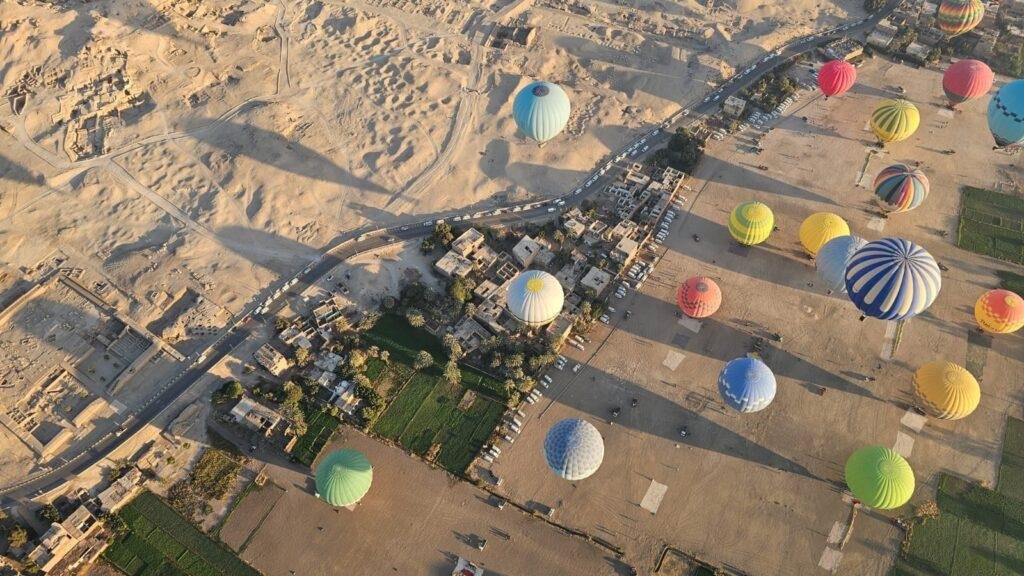
The same thinking applies to a sunrise hot-air balloon ride in Luxor or any other experience that shortens the night’s sleep. One early start can be memorable. A succession of 4 or 5 a.m. alarms followed by full sightseeing days feels very different.
This is one of the places where an itinerary can look efficient while the actual trip feels exhausting.
Heat Should Change the Pace
A January itinerary and a July itinerary should not have the same daily rhythm.
Egypt’s official tourism guidance describes summer as hot and dry, with southern regions remaining warmer, and specifically recommends sun protection and comfortable shoes for archaeological sightseeing. See the current guidance from Experience Egypt.
That matters because much of the sightseeing in Luxor and Aswan happens outdoors. Walking the same distance requires more effort when temperatures are high, and exposed archaeological sites offer a very different experience from an air-conditioned museum.
During hotter months, earlier sightseeing and a genuine break during the harshest part of the day can make more sense than trying to maintain the schedule you would use in winter.
Heat does not necessarily mean removing the major sites. It means asking less of the same day.
Our Best Time to Visit Egypt guide can help if you are still deciding which season best fits the type of trip you want.
Travel Days Are Still Travel Days
A one-hour domestic flight is not a one-hour interruption to the itinerary.
There is the hotel checkout, airport transfer, check-in, security, boarding, the flight itself, baggage collection and another transfer at the destination. Depending on the timing, a short flight can occupy a meaningful part of the day.
Domestic flights are often the practical way to connect Cairo with Upper Egypt. The mistake is scheduling them as though only the time in the air counts.
The same problem appears when travelers add days to an itinerary but use every extra day to add another destination. A longer trip is only slower if some of that additional time actually reduces the pace.
Seven or eight days can cover a classic Cairo and Upper Egypt route, but it will naturally be more active. Ten to twelve days creates more room to slow the journey or add the Red Sea without compressing the historical sightseeing into such a short period. Two weeks allows even more flexibility if you want to include destinations beyond the classic route. Explore ENA’s current How Many Days in Egypt? guide compares those trip lengths in more detail.
The important distinction is what you do with the extra time. Adding two days and two destinations gives you more Egypt, but it does not necessarily give you more breathing room.
Changing the Type of Experience Can Be Better Than Adding a Rest Day
Preventing travel fatigue does not necessarily require scheduling entire days in the hotel.
Often, the more useful change is variety.
Several consecutive days of major archaeological sites ask for the same kind of attention. Even when every site is extraordinary, the experience can begin to blur. A slower Aswan afternoon, time sailing on the Nile, desert scenery or a few days at the Red Sea changes what the trip asks of you.
When looking at a longer itinerary, pay particular attention to the middle of it. Five demanding days may each look perfectly reasonable in isolation. By day six or seven, another temple, museum or very early alarm can feel different.
This is one reason adding the Red Sea after Cairo and Upper Egypt works well for travelers with enough time. It is not simply an extra destination. It changes the rhythm of the journey.
You do not need that exact combination to achieve the same effect. The principle is to avoid making every day feel like a variation of the one before it.

The Right Pace Depends on the Traveler
There is no universal definition of an easy Egypt itinerary, and age alone does not tell you how someone will handle the trip.
Children may become mentally tired of historical sightseeing before the adults do. Some older travelers comfortably handle long walking days; others prefer more recovery between major sites. Heat tolerance, mobility, sleep, fitness and the amount of walking someone normally does can matter more than age.
The useful question is not simply whether someone can visit a particular site. It is what else the itinerary expects from them before and after it.
For families, that often means varying the type of experience rather than removing Egypt’s major historical sites. Our Egypt With Kids guide looks specifically at family pacing, route design and what changes when children are part of the trip.
Travelers with mobility concerns should look beyond the number of attractions scheduled for the day as well. Uneven ground, steps, distances between vehicle access and entrances, heat exposure and the amount of standing can all affect how demanding a site feels.
If you already know that long sightseeing days, heat or repeated early mornings are difficult for you, build around that before the trip rather than trying to recover from an overloaded itinerary halfway through it.
How to Tell Whether Your Egypt Itinerary Is Too Fast
Look at the trip as a sequence rather than reviewing each day separately.
A full Cairo sightseeing day followed by another full day may be perfectly reasonable. A 4 a.m. start may be worth it for an experience you particularly want. A domestic flight followed by some sightseeing may also work.
Concern should start when those days form most of the itinerary.
If the schedule repeatedly depends on early alarms, immediate sightseeing after flights, late evenings followed by early departures, or several major archaeological days without a meaningful change of pace, there is very little margin when someone becomes tired, a flight changes, traffic takes longer than expected or you simply want more time somewhere.
That margin is not wasted vacation time. It is what allows the itinerary to absorb real travel without every small delay becoming a problem.
Frequently Asked Questions
Is Egypt a physically demanding trip?
It can be an active trip, particularly when Cairo, Luxor and Aswan are combined in a short period. Major archaeological sites can involve walking, steps, uneven ground, heat and time outdoors. How demanding the trip feels depends heavily on the season, itinerary pace and the traveler’s own mobility and stamina.
How many days do you need in Egypt without rushing?
There is no single number because the route matters. Seven or eight days can combine Cairo with Upper Egypt, but the pace will be active. Ten to twelve days gives more room to slow the journey or add a contrasting destination such as the Red Sea. If you have two weeks, you can broaden the route without necessarily turning every extra day into another transfer. See How Many Days in Egypt? for the full comparison.
Is a Nile cruise relaxing or tiring?
It is usually a change of pace rather than a complete break from sightseeing. The cruise reduces repeated hotel changes and provides sailing time between destinations, but archaeological excursions remain an important part of the journey. A 3-night cruise generally has a faster rhythm than a 4-night sailing.
Plan the Pace Before You Fill the Days
Egypt rewards travelers who still have enough energy to pay attention several days into the trip.
Decide which experiences deserve the longest days and earliest starts. Then leave enough room around them that a flight, the heat, a late night or an unexpectedly tiring morning does not make the rest of the itinerary feel like something you have to get through.
If you want an Egypt itinerary designed around your travel dates, priorities and preferred pace, tell Explore ENA what you want to experience. We can build the route around the places that matter most without treating every available hour as another space that needs filling.