Wadi El Natrun Monasteries: How to Visit From Cairo
Wadi El Natrun is easy to overlook when planning a trip to Egypt.
The desert valley sits between Cairo and Alexandria, away from the archaeological sites that dominate most first-time itineraries. Yet for travelers interested in Christian Egypt, it preserves something very different: an active monastic landscape whose history stretches back to the beginnings of organized Christian monasticism in the Egyptian desert.
Four ancient Coptic Orthodox monasteries remain active here today: Al-Baramus Monastery, the Monastery of St. Macarius the Great, the Monastery of St. Bishoy and the Monastery of the Syrians.
They are not abandoned ruins or archaeological sites reconstructed for visitors. Monks still live and worship here. Churches remain in religious use, while fortified walls, keeps, historic churches, monastic cells and religious art preserve different periods of the valley’s long history.
That changes the way you should plan a visit.
Wadi El Natrun works well as a day trip from Cairo, but it should not be approached as four attractions to race through. These are functioning monasteries, and what visitors can see may depend on services, religious observances and the rules of the individual monastery.
What Is Wadi El Natrun?
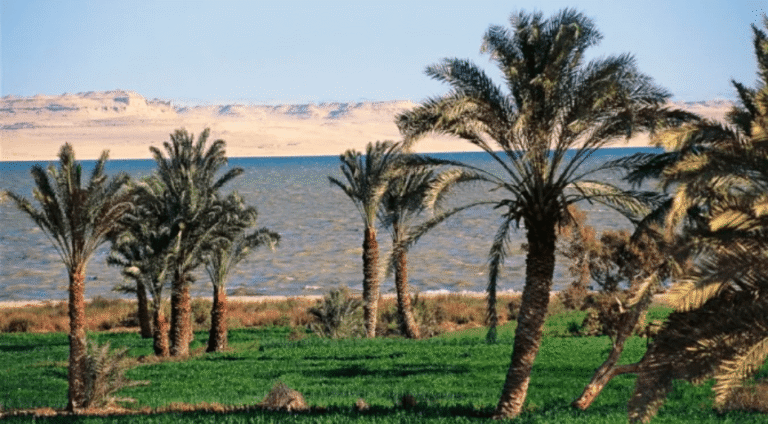
Wadi El Natrun is a desert depression northwest of Cairo, roughly halfway between Cairo and Alexandria.
Its name comes from the naturally occurring natron salts found in the area’s lakes. Ancient Egyptians collected natron for several purposes, including its use during mummification.
Christian history gave the valley another identity.
Known historically as Scetis, or the Wilderness of Scetis, the area became one of the major centers of early Christian monasticism. St. Macarius settled in the wilderness during the fourth century, and other ascetics followed. Communities gradually formed around monks who had originally come to the desert seeking isolation.
Those communities did not all develop at exactly the same time. Al-Baramus had developed as a monastic community by the middle of the fourth century, while the Monastery of St. Macarius and the Monastery of St. Bishoy developed later in that century. The Monastery of the Syrians belongs to a later stage in Wadi El Natrun’s monastic history.
Many monasteries and monastic settlements existed in the region over the centuries. Four ancient monasteries remain active today.
Experience Egypt’s official guide to the four monasteries of Wadi El Natrun provides an overview of the surviving communities and some of the historic features within them.
Why Is Wadi El Natrun Important to Christian History?
Egypt’s role in the development of Christian monasticism is much larger than any one monastery.
Early Christians seeking an ascetic life withdrew into several parts of Egypt’s deserts. Some lived as hermits, while others gradually formed communities. Wadi El Natrun became one of the places where those communities took root and developed into a lasting monastic tradition.
St. Macarius is central to that history. The Coptic Orthodox Church places his arrival in the Wilderness of Scetis around 330 CE and identifies him with the establishment of an early monastic group there.
The desert setting was part of the purpose.
The monks had deliberately left cities and settled communities to pursue lives centered on prayer, fasting, work and spiritual discipline. As communities became more permanent, however, they also had to survive periods of insecurity and attack.
That history helps explain the architecture visitors see today.
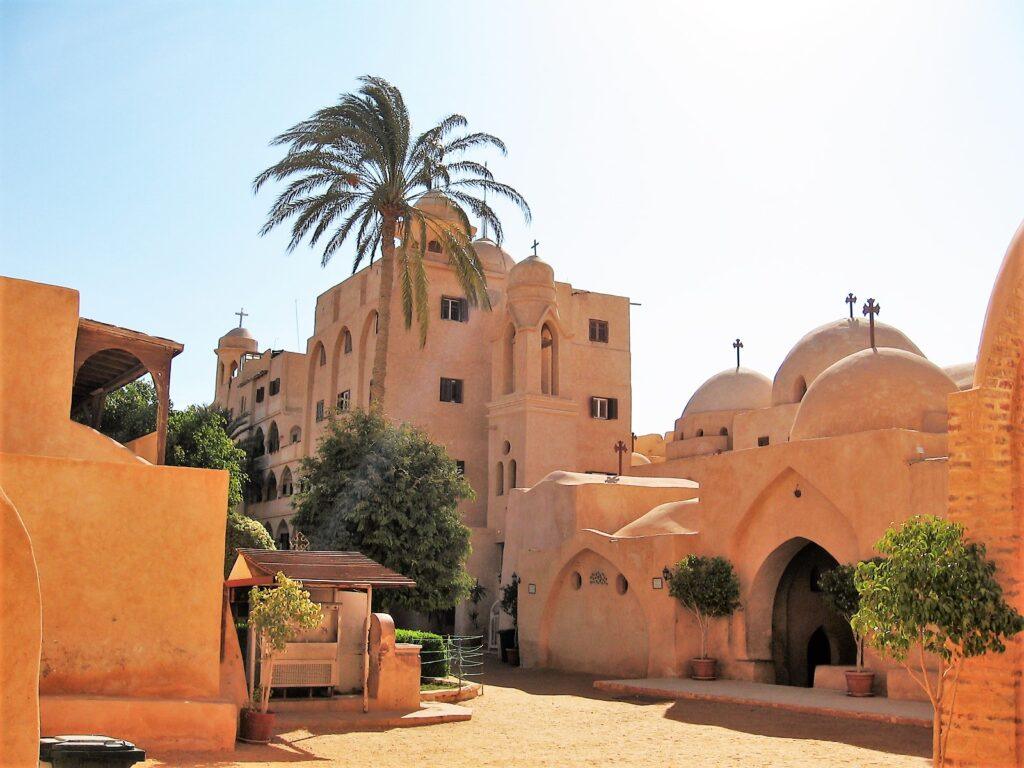
High walls surround the monasteries, and fortified keeps provided places of refuge during periods of danger. Within the walls are churches, cells, wells, gardens and other spaces needed by communities that were intended to function in an isolated desert environment.
From outside, parts of Wadi El Natrun can look almost like a collection of desert fortresses. Inside those walls is a very different world.
Expert Insight: A monastery with fourth-century origins should not be mistaken for a collection of buildings that have survived unchanged since the fourth century. Wadi El Natrun’s monasteries were damaged, rebuilt, expanded and restored repeatedly. Their importance comes from the continuity of the monastic communities and the layers of Christian history preserved within them.
The Four Monasteries of Wadi El Natrun
The four monasteries belong to the same broader monastic landscape, but they do not tell exactly the same story.
If you visit more than one, the differences become part of the experience.
Al-Baramus Monastery
Al-Baramus Monastery, also known as the Monastery of the Virgin Mary or Paromeos Monastery, is the earliest of the four surviving monastic communities according to the chronology used by the Coptic Orthodox Church.
St. Macarius had begun the monastic movement in Scetis around 330 CE, and the community that developed at Al-Baramus was established by approximately 356.
The monastery is associated with the Roman saints Maximus and Domadius, whose stories became part of its early tradition. Within the monastery, the Church of the Virgin Mary also contains relics associated with St. Moses the Black, one of the best-known figures in early Egyptian monasticism.
For visitors, Al-Baramus is particularly useful for understanding how the earliest communities here developed.
The first monks were not living inside the kind of enclosed monastery you see today. They occupied monastic caves and cells around a church. Walls, fortifications and other structures came as the community changed over the centuries.
That difference between the age of the monastic community and the age of the buildings standing today is important throughout Wadi El Natrun.
Monastery of St. Macarius the Great
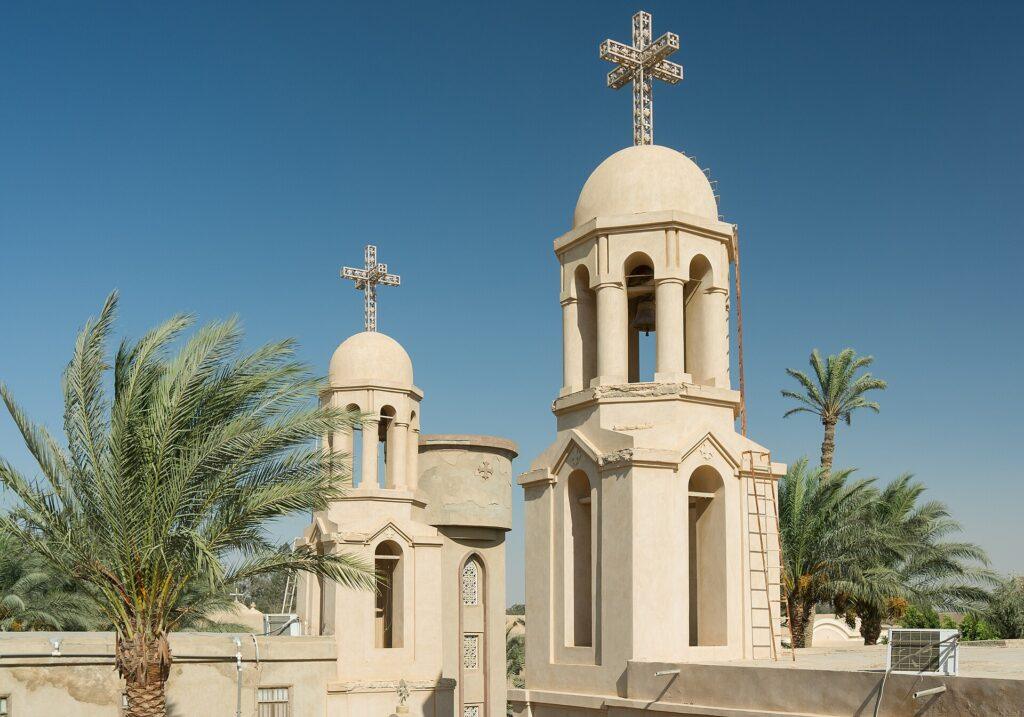
The Monastery of St. Macarius the Great, often called Deir Abu Maqar, is closely connected with the early development of monastic life in Scetis.
The Coptic Orthodox Church identifies St. Macarius as the first ascetic to settle in the wilderness here, around 330 CE. The monastery itself developed later, appearing in its early form around 385.
It began with the cell of St. Macarius. As disciples gathered around him, they built their own cells at a distance. A church followed, along with storage areas, a well and rooms for the sick and for visitors.
That gradual development is worth remembering when walking through Wadi El Natrun. The monasteries did not suddenly appear as the large walled compounds you see now. They grew from communities of people who had originally come to the desert precisely because they were seeking isolation.
The monastery remains an active religious community rather than a historical site operated around tourism.
If St. Macarius is particularly important to your visit, confirm current visitor arrangements before leaving Cairo rather than relying on an old opening-hours listing online.
Monastery of St. Bishoy
The Monastery of St. Bishoy, or Deir Anba Bishoy, dates to the end of the fourth century and was established by St. Bishoy.
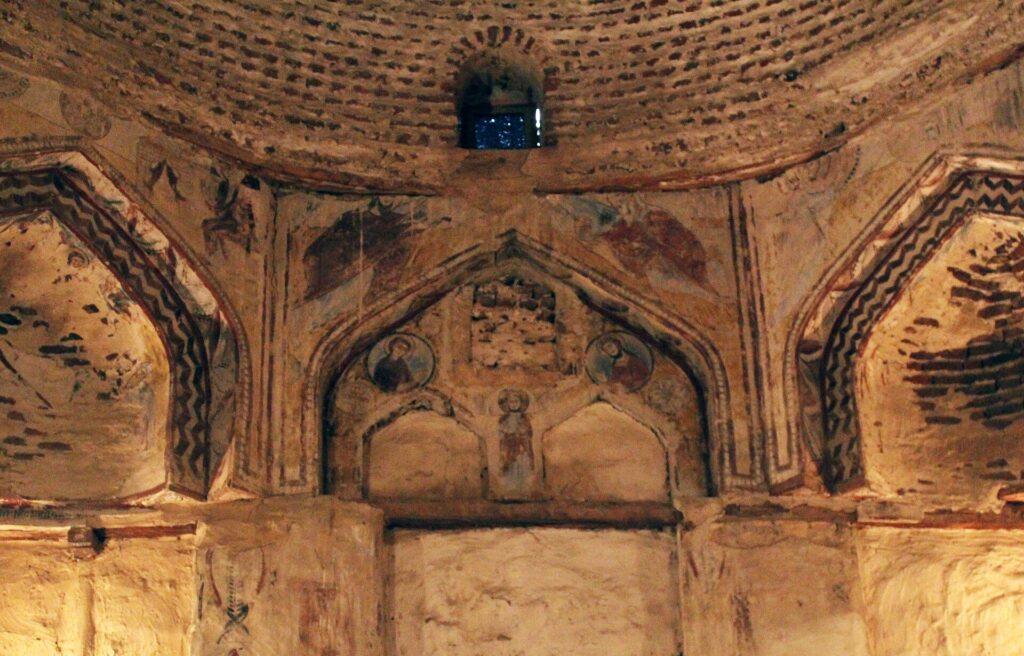
Its historic compound contains several features that help make sense of life inside a fortified desert monastery. These include the ancient Church of St. Bishoy, monastic cells, an old mill, a fortified keep and the Well of the Martyrs.
The monastery also preserves the relics of St. Bishoy. They remain part of the religious life of the monastery rather than simply being displayed as historical objects.
There is also a much more recent connection with Coptic history. Pope Shenouda III, who served as Pope of Alexandria from 1971 until 2012, maintained a residence here, and his shrine is within the monastery complex.
That combination of early monastic history and modern Coptic life is one of the reasons St. Bishoy is useful for understanding Wadi El Natrun.
The story did not end in Late Antiquity.
Monastery of the Syrians
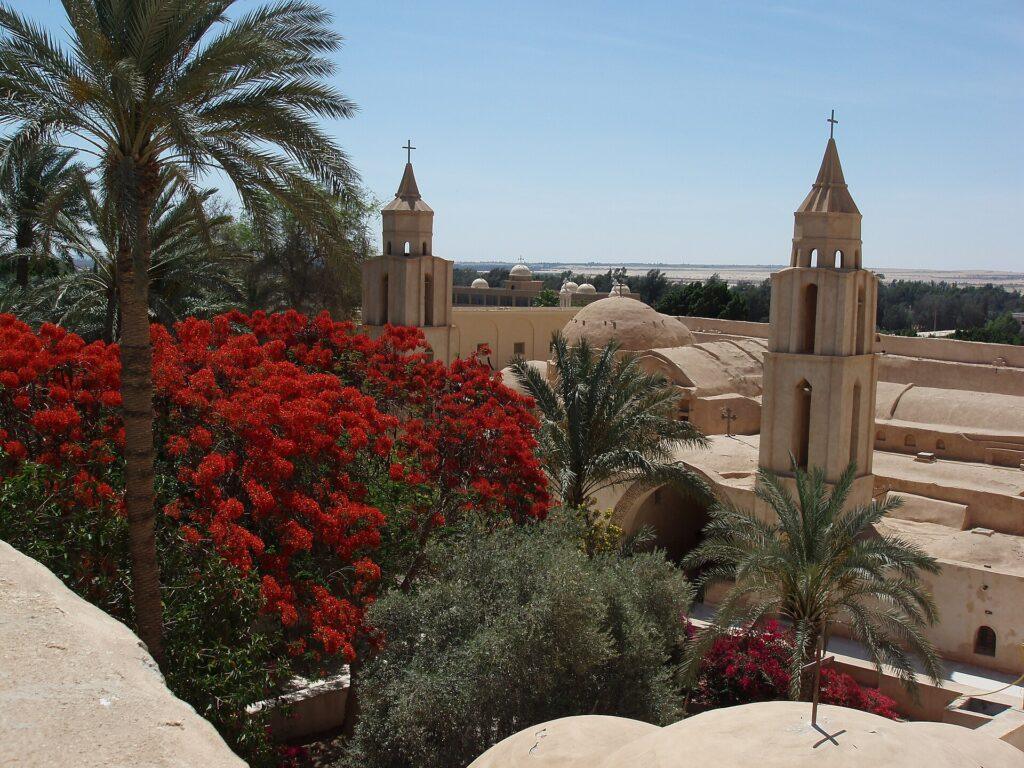
The Monastery of the Syrians, also known as Deir El-Surian, developed later than the other surviving monastic communities.
Despite its name, it is an Egyptian Coptic Orthodox monastery today.
The name reflects a period when Syrian monks lived here. The monastery eventually returned to Coptic monks but retained the name by which it had become known.
It is particularly interesting for travelers drawn to Christian art and the connections that once existed between Egyptian monasticism and Christian communities elsewhere in the region.
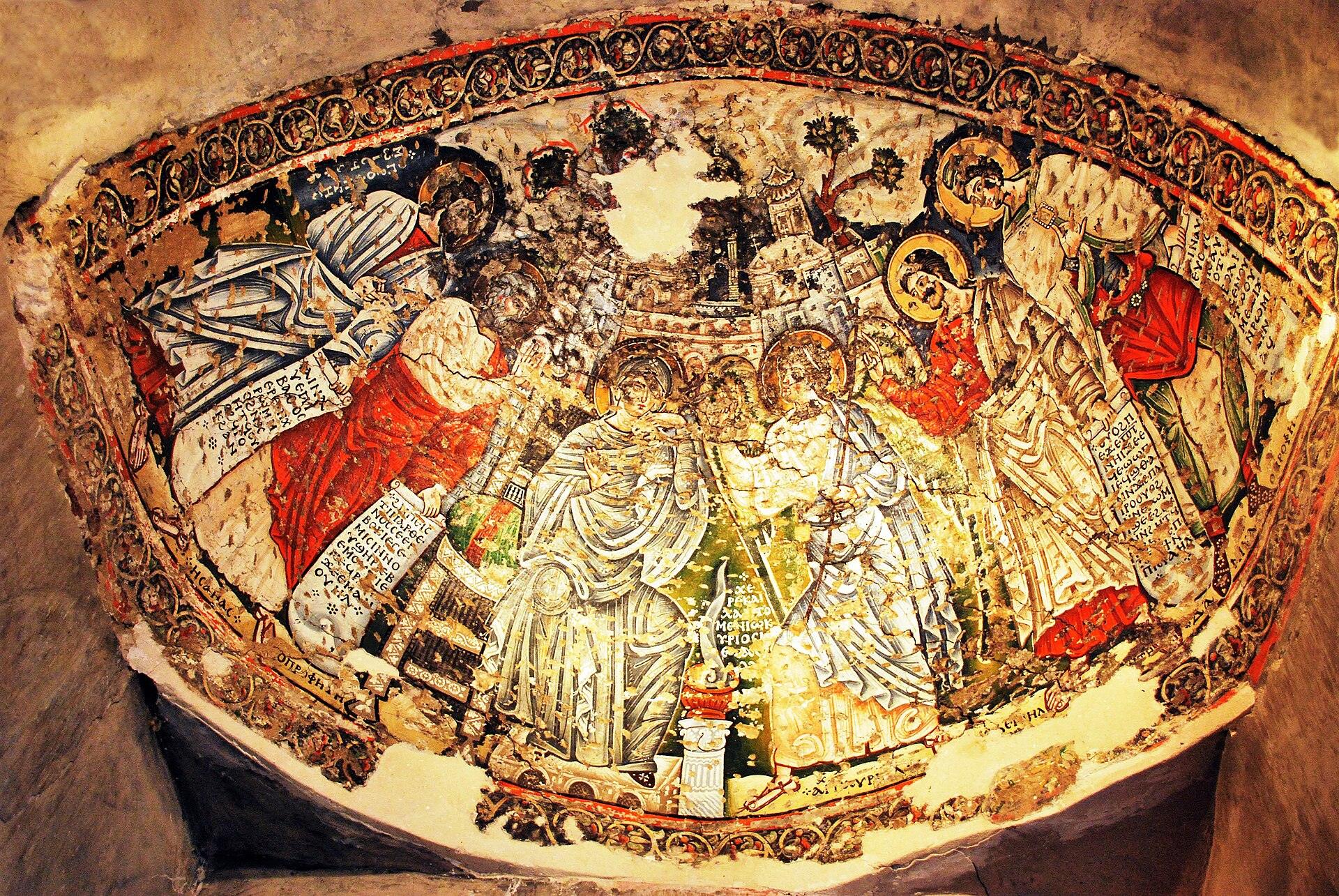
The Church of the Virgin Mary preserves important medieval wall paintings. Another of the monastery’s best-known features is the Door of Prophecies, a medieval wooden screen decorated with symbolic Christian imagery.
The complex also contains an ancient fort, monastic cells and several churches.
The Monastery of the Syrians is a useful reminder that Wadi El Natrun was isolated geographically without being cut off intellectually or spiritually from the wider Christian world. Monks, manuscripts, artistic traditions and theological ideas moved across regions and languages even within communities built deep in the desert.
Do You Need to Visit All Four Monasteries?
No.
If Wadi El Natrun is one of the main reasons for your trip and all four monasteries are accessible, seeing the complete group can make sense.
For most travelers coming from Cairo, however, I would rather plan around two or three monasteries with enough time to understand them than insist on rushing through all four.
These are not four branches of the same museum.
The churches, history and character differ, and access on the day can affect what makes sense. A service, religious observance or monastery requirement may also change which areas visitors can enter.
Leave some flexibility in the route rather than treating four monastery names as a checklist that has to be completed.
ENA Tip: Decide before leaving Cairo what interests you most: early Christian history, pilgrimage, monastic architecture, religious art or simply experiencing Wadi El Natrun as part of a broader Egypt trip. If time or access changes during the day, that priority will help determine where you spend it.
Can Non-Christians Visit the Wadi El Natrun Monasteries?
Visitors come to Wadi El Natrun for both pilgrimage and historical interest, but access is determined by the individual monasteries.
These are active religious communities rather than archaeological attractions. Some churches and visitor areas may be accessible while monastic living quarters or other spaces are not.
If you are visiting because you are interested in history rather than religion, approach the monasteries in the same way you would any functioning place of worship.
Keep voices low inside churches, follow local instructions and understand that worship and monastery life take priority over sightseeing.
What Should You Wear?
Dress modestly.
For both men and women, clothing that covers the shoulders and knees is the safest choice when entering active monasteries and churches.
Comfortable shoes are also useful. A Wadi El Natrun visit involves moving through monastery compounds and between different buildings rather than simply entering one church and leaving again.
The important thing is to remember where you are.
These are places where monks live and people come to worship, not historical attractions that happen to contain old churches.
Can You Take Photos?
Photography rules can differ between monasteries and between areas within the same monastery.
Check before photographing inside churches, around relics or during services, and ask before photographing monks.
If you are told that photography is not permitted in a particular space, put the camera away.
You may be visiting because of the history, architecture or art, but the people around you are living and worshipping there.
How Do You Get to Wadi El Natrun From Cairo?
For most international visitors, a private vehicle with a driver is the practical way to visit.
Wadi El Natrun lies northwest of Cairo along the Cairo–Alexandria Desert Road. From many parts of Cairo, the drive is roughly 1½ to 2 hours, but your starting point and Cairo traffic can change that considerably.
Reaching Wadi El Natrun is only part of the transportation problem.
The monasteries are separate sites within the wider area, so you also need transportation between them. That makes trying to build a monastery day around public transportation unnecessarily complicated.
A private vehicle gives you another advantage: flexibility.
If access at one monastery changes or you decide that one deserves more time, the order of the day can be adjusted without having to rebuild the entire plan around transportation.
Planning Note: Wadi El Natrun’s position between Cairo and Alexandria can make the monasteries look like convenient roadside stops. If they are important to you, don’t treat them that way. Give the valley enough time to justify leaving the main road and entering the individual monastery complexes.
Do You Need a Guide?
You can visit Wadi El Natrun without turning the day into a formal guided tour.
The question is how much you want to understand.
The history here involves early Christian monasticism, Coptic religious history, medieval art, saints’ traditions and centuries of destruction, rebuilding and restoration. Without context, it is easy to walk through an old church or fortified keep without understanding why it is there or which period of the monastery’s history you are actually seeing.
A knowledgeable guide can provide that context and help plan a sensible sequence for the day.
The monasteries themselves still control access within their complexes. Having a guide does not mean every church, monastic area or religious space will automatically be available.
How Much Time Do You Need?
If the monasteries are the reason you are going, treat Wadi El Natrun as a full-day excursion from Cairo.
The round-trip drive can take several hours once Cairo traffic is included, and there is additional travel between monasteries.
You also need time inside them.
Trying to cover all four as quickly as possible misses much of the reason to come here in the first place. If your available time becomes limited, see fewer monasteries rather than turning each one into a short photo stop.
When Is the Best Time to Visit?
For weather, October through April is generally more comfortable for a Wadi El Natrun day than the hottest summer months.
Visitor access is a separate issue.
These are active monasteries, so services, feast days, fasting periods and internal monastery requirements can affect what visitors are able to see.
Do not assume that good weather means every church or historic area will be accessible. If a particular monastery is important to you, verify its current visitor arrangements shortly before traveling.
Is Wadi El Natrun Part of the Holy Family Route?
Wadi El Natrun is included within Egypt’s Holy Family pilgrimage tradition and is identified as one of the places associated with the family’s journey through Egypt.
That tradition needs to be kept separate from the documented history of the monasteries.
The four surviving monasteries developed centuries after the time of Jesus. Visiting them therefore brings together two different parts of Christian Egypt’s story: the tradition connecting the valley with the Holy Family and the later rise of Wadi El Natrun as one of Egypt’s great centers of monasticism.
One should not be used as evidence for the other.
Wadi El Natrun or Coptic Cairo?
They offer completely different experiences.
Coptic Cairo is the easier choice if you want to explore Christian history without leaving Cairo. The Hanging Church, Abu Serga, the Roman Fortress of Babylon and other sites are concentrated within a relatively compact historic district.
Wadi El Natrun requires a substantial drive and deserves most of a day. In return, you experience something Coptic Cairo cannot provide: active desert monasteries rooted in the early monastic tradition of Scetis.
If you have limited time in Cairo on a first trip to Egypt, Coptic Cairo is much easier to fit around the city’s other major sites.
If Christian history or monasticism is a significant interest, Wadi El Natrun deserves its own day.
On a Christian-focused Egypt itinerary, I would not choose between them. They tell different parts of the story.
Wadi El Natrun or the Monasteries of St. Anthony and St. Paul?
These should not be treated as interchangeable monastery excursions.
Wadi El Natrun gives you a concentration of four active monasteries within one historic monastic landscape. Its history is closely connected with Scetis and the communities that developed in the Western Desert.
The monasteries of St. Anthony and St. Paul lie in the Eastern Desert near the Red Sea and belong to a different geographical and monastic setting.
For travelers particularly interested in the beginnings and development of Christian monasticism in Egypt, both regions matter.
On a normal Egypt itinerary, however, they require separate planning. They are not competing attractions that you simply swap in and out of the same Cairo day.
Is Wadi El Natrun Worth a Day From Cairo?
Yes, if Christian history, Coptic heritage or monasticism is an important part of your Egypt trip.
I would not put it ahead of the pyramids, the Grand Egyptian Museum or the major Cairo sites for a first-time visitor with only a couple of days in the city.
But that is not really the trip Wadi El Natrun is for.
The valley becomes much more compelling when you want to understand Christian Egypt beyond the historic churches of Cairo. Here, the subject is not simply old architecture. It is the survival of a monastic tradition in the same desert landscape where communities of monks began forming more than sixteen centuries ago.
Buildings have been rebuilt. Churches have changed. Communities have passed through periods of danger, decline, restoration and revival.
The monastic life continued.
That continuity is what makes Wadi El Natrun worth leaving Cairo for.
Frequently Asked Questions
How many monasteries are there in Wadi El Natrun?
Four ancient active monasteries remain: Al-Baramus Monastery, the Monastery of St. Macarius the Great, the Monastery of St. Bishoy and the Monastery of the Syrians.
Can you visit Wadi El Natrun as a day trip from Cairo?
Yes. If the monasteries are the purpose of the trip, plan Wadi El Natrun as a full-day excursion. From many parts of Cairo, allow roughly 1½ to 2 hours for the drive each way, depending on your starting point and traffic, plus travel between the individual monasteries.
Do you need to visit all four monasteries?
No. Visiting two or three with enough time to understand what you are seeing is better than rushing through all four simply to complete the list.
Are the monasteries always open to visitors?
Do not assume that every monastery or every church within a monastery will be accessible whenever you arrive. These are active religious communities, and services, feast days, fasting periods or internal monastery requirements can affect visitor access. If seeing a particular monastery is important to your trip, verify current arrangements shortly before traveling.
Can non-Christians visit Wadi El Natrun?
People visit Wadi El Natrun for pilgrimage, history, architecture and religious heritage. Visitor access is determined by the individual monasteries, and everyone entering should dress modestly and respect the rules of the religious community.
Build Wadi El Natrun Into the Right Egypt Itinerary
Wadi El Natrun is not somewhere I would add simply because there appears to be an empty space in a Cairo itinerary.
It makes sense when Christian history, Coptic heritage or early monasticism is genuinely part of what you want to understand about Egypt. In that kind of trip, the valley deserves enough time for the monasteries to be experienced as living religious communities rather than four names on a checklist.
Explore ENA’s private and customizable Egypt tours can be shaped around particular interests and the amount of time you have in Egypt. If Christian heritage is a priority, Wadi El Natrun can be considered alongside Cairo’s Christian sites and other parts of the country that fit the route, rather than being forced into a standard sightseeing schedule.