What Surprises First-Time Travelers to Egypt
What Surprises First-Time Travelers to Egypt
This guide is for first-time travelers to Egypt who want to understand what the experience is really like—not just what you see in photos. If you’re planning your first trip, these are the realities that will shape your experience on the ground.
Egypt is one of the world’s most iconic destinations—but the on-the-ground experience often differs sharply from expectations shaped by social media and documentaries.
For first-time visitors, the biggest surprise is not the monuments—it’s the environment around them.
Egypt operates on a different rhythm. Cities are louder, more energetic, and more densely layered than many travelers anticipate. Daily life unfolds in close proximity to ancient sites, creating a constant contrast between modern intensity and historical grandeur. This can feel overwhelming at first, especially for those expecting a slower, resort-style pace.
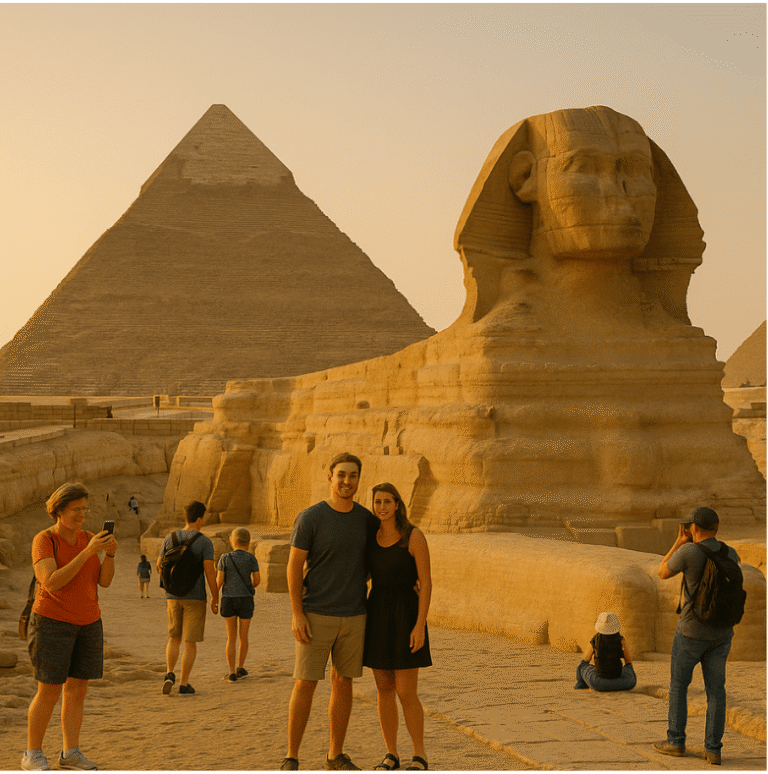
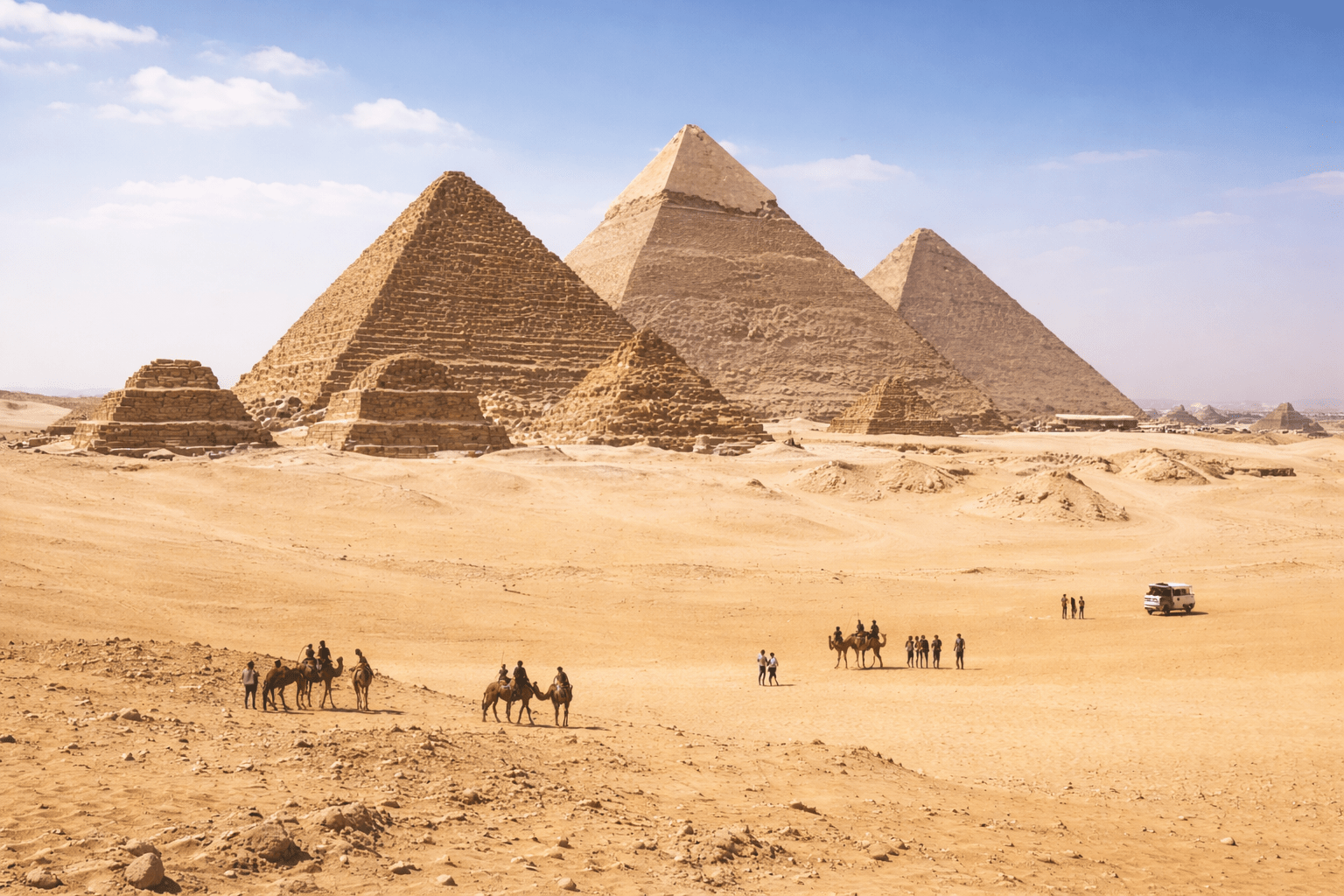
The scale is another factor. Landmarks like the Pyramids of Giza, Karnak Temple, and Abu Simbel are far larger and more complex than they appear in photos. Distances between sites—particularly when traveling between Cairo, Luxor, and Aswan—also surprise many visitors who underestimate travel times.
Additionally, the way tourism functions in Egypt is more interactive than in many Western destinations. Vendors, guides, and service providers are often proactive, engaging directly with travelers. This is part of the local culture, not a disruption—but it requires a mindset shift for those unfamiliar with it.
None of these realities are negative—they are simply different. Travelers who arrive prepared for Egypt’s pace, scale, and social dynamics adapt quickly and tend to have a far more rewarding experience.
Egypt welcomes millions of visitors each year, yet first-time expectations often don’t fully match the on-the-ground reality. First time travel Egypt experiences are often very different from what most travelers expect.
Key Takeaways for First-Time Travelers to Egypt
- Egypt feels more intense at first—but most travelers adapt within 1–2 days
- Major sites are far larger and more time-consuming than they appear
- Travel between destinations requires advance planning
- Local interaction is frequent and part of the cultural experience
- Flexibility improves your overall trip significantly
It Feels More Intense Than Expected (At First)
One of the most immediate adjustments for first-time travelers to Egypt is the level of intensity in everyday environments.
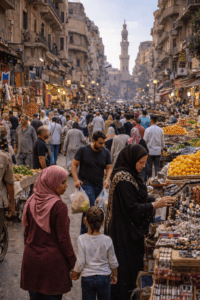
Many arrive expecting a relaxed, sightseeing-focused experience—but destinations like Cairo operate at a much higher pace. The city is densely populated, constantly in motion, and full of sensory input. Traffic flows continuously, streets are active at nearly all hours, and public spaces are highly interactive.
Simple activities—crossing the street, walking through a السوق (local market), or navigating a busy intersection—require more awareness and engagement than travelers may be used to. There is less separation between pedestrian, vehicle, and commercial activity, which creates a more immersive (and initially demanding) environment.
This intensity is not disorganization—it is a different system with its own logic and flow.
What consistently surprises visitors is how quickly adaptation happens. Within a day or two, most travelers begin to read the rhythm: when to move, how to engage, and how to filter the noise. What initially feels overwhelming often becomes energizing, offering a more authentic connection to daily life in Egypt.
Understanding this upfront helps travelers approach their first days with the right expectations—reducing stress and allowing them to settle in faster.
The Monuments Are Larger Than You Imagine
No amount of photos or videos fully prepares you for the physical scale of Egypt’s ancient sites. Many of Egypt’s sites, including Luxor and the pyramids, are recognized as UNESCO World Heritage Sites, reflecting their global historical significance.
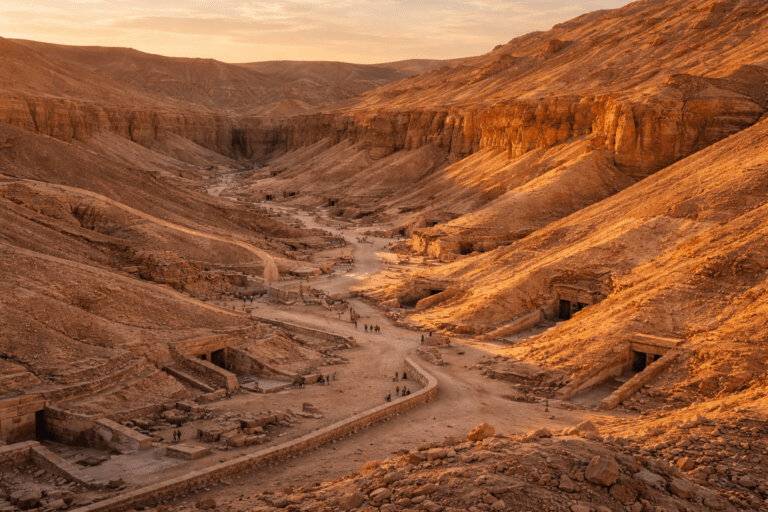
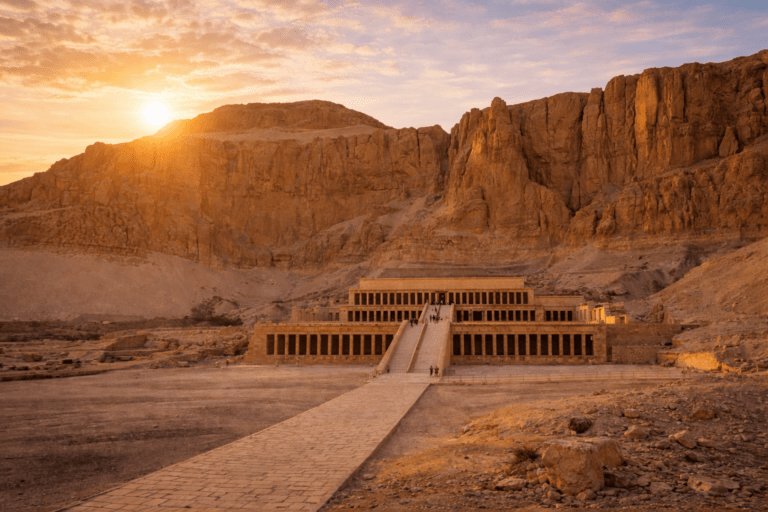
The pyramids of Giza, the vast temple complexes of Luxor, and the tombs carved into the Valley of the Kings are not single attractions—they are expansive, multi-layered environments. Structures that appear isolated in images are, in reality, part of much larger archaeological landscapes that require time and movement to navigate.
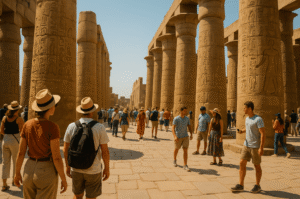
Karnak Temple, for example, is not one temple but a massive complex built over centuries, covering more than 100 hectares. The same applies to sites like Saqqara or Abu Simbel, where scale is matched by depth of history and architectural detail.
This often catches first-time visitors off guard. Visiting these sites involves significant walking, exposure to heat, and sustained attention. They are not quick photo stops—they are immersive experiences that can easily take several hours.
Scale also amplifies the importance of context. Without a clear understanding of what you’re looking at—the purpose of a hall, the symbolism in carvings, or the historical timeline—it’s easy to move through extraordinary spaces without fully grasping their significance.
Travelers who approach these sites with guidance or preparation consistently get more value from the experience, turning what could feel overwhelming into something structured, meaningful, and memorable.
Travel Takes More Coordination Than Expected
On a map, Egypt can appear relatively compact—but in practice, traveling between major destinations requires structured planning.
Key routes such as Cairo to Luxor, Luxor to Aswan, or Upper Egypt to the Red Sea involve a combination of domestic flights, long-distance drives, or rail journeys. These connections are reliable, but they operate on fixed schedules that need to be aligned carefully to avoid unnecessary delays or gaps in your itinerary.
Transfers are another factor. Moving between airports, hotels, and archaeological sites often requires pre-arranged transportation, especially in cities where navigation can be complex for first-time visitors.
This is where many travelers are caught off guard. Egypt is not a destination where most people can rely on spontaneous, last-minute planning—particularly when trying to maximize limited time.
The difference is immediately noticeable when logistics are handled in advance. Pre-arranged flights, coordinated transfers, and structured day plans remove friction from the experience, allowing travelers to focus on the sites themselves rather than the process of getting to them.
For first-time visitors, this level of coordination isn’t about rigidity—it’s what makes the overall journey feel seamless instead of fragmented.
The Experience Is More Personal Than You Expect
Egypt is not a passive, observation-only destination—it is inherently interactive.
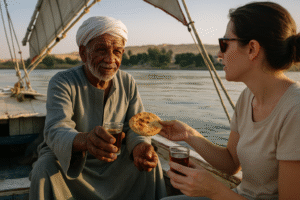
From the moment you arrive, engagement is part of the experience. Locals will initiate conversation, offer directions, share recommendations, and, in many cases, take a genuine interest in where you’re from and how you’re experiencing their country. This happens in markets, at historical sites, in cafés, and during everyday interactions.
For travelers accustomed to more transactional or private travel environments, this can feel unexpected. The level of direct communication is higher, and social boundaries operate differently than in many Western contexts.
Importantly, this interaction is rooted in culture, not pressure. Hospitality and curiosity are deeply embedded in Egyptian society, and engaging with visitors is a natural extension of that.
What often shifts for travelers is perspective. Once they understand how to navigate these interactions—when to engage, when to politely decline, and how to respond—they begin to see the value in it.
For many, these moments become the most memorable part of the trip. Beyond the monuments and landscapes, it’s the human connection that defines the experience and leaves a lasting impression.
Things Don’t Always Go Exactly as Planned
Another key adjustment for first-time travelers to Egypt is understanding that not everything operates on strict, predictable schedules.
Delays and last-minute adjustments are part of the travel landscape—whether due to Cairo’s traffic patterns, site access timing, domestic travel coordination, or operational changes on the ground. These are not exceptions; they are normal variables within the system.
For travelers coming from highly structured environments, this can initially feel inefficient or frustrating. Expectations around exact timing and rigid planning don’t always align with how things function locally.
However, experienced travelers quickly recognize that flexibility is a critical advantage in Egypt. Building buffer time into your itinerary and approaching the day with a degree of adaptability significantly improves the overall experience.
In practice, these small shifts rarely impact the quality of the trip—they simply change the pace. Travelers who adjust their expectations tend to move through Egypt more smoothly, turning potential friction into a more fluid and enjoyable journey.
You Don’t Need to See Everything
A common mistake first-time travelers make in Egypt is trying to cover too much in a single trip.
With so many globally recognized sites—Giza, Luxor, Aswan, Abu Simbel, the Red Sea—it’s easy to build an itinerary that prioritizes quantity over experience. On paper, it looks efficient. In reality, it often leads to physical fatigue and reduced engagement at each location.
Egypt is not a destination that rewards speed. Its sites are dense, historically layered, and physically expansive. Moving quickly from one landmark to another limits your ability to absorb context, understand significance, and fully experience the environment.
Travelers who take a more focused approach—spending more time in fewer locations—consistently report a higher-quality experience. They retain more, enjoy more, and feel less rushed.
This shift in mindset is important: Egypt is not about “checking off” landmarks. It’s about engaging with a small number of extraordinary places in a meaningful way.
For most first-time visitors, a well-paced itinerary delivers far more value than an overloaded one.
Tipping and Small Interactions Are Part of Daily Life
One of the most practical adjustments for first-time travelers to Egypt is understanding how tipping—known locally as baksheesh—fits into everyday interactions.
Unlike in many countries where tipping is occasional or tied to specific services, in Egypt it is more integrated into daily life. Small tips are commonly expected for a wide range of services, from hotel staff and drivers to restroom attendants and site assistants.
This often catches travelers off guard, particularly those from regions where tipping is minimal or strictly defined. Without context, these frequent micro-interactions can feel unclear or excessive.
In reality, the system is consistent and predictable once understood. Tipping is not arbitrary—it reflects a service-based culture where many roles are supported through small, direct contributions from travelers.
The key is preparation. Carrying small denominations of Egyptian pounds and recognizing when a tip is customary removes uncertainty and makes these interactions straightforward.
Once travelers adjust, these exchanges become a normal part of the experience rather than a source of confusion, allowing them to move through Egypt with greater ease and confidence.
The Experience Stays With You Longer Than Expected
One of the most consistent patterns among first-time visitors to Egypt is not what they experience during the trip—but what stays with them afterward.
Egypt leaves a lasting impression.
It’s not limited to iconic landmarks like the pyramids or temples. What lingers is the combination of scale, atmosphere, human interaction, and the constant contrast between ancient history and modern life. Few destinations offer that level of intensity and depth in a single journey.
Travelers often describe a delayed appreciation. Moments that felt overwhelming or unfamiliar at the time become clearer—and more meaningful—once they’ve returned home. The experience continues to process long after the trip ends.
Importantly, Egypt is not a polished, frictionless destination. It requires adjustment, awareness, and engagement. But that is precisely what makes it impactful.
For many, Egypt is not just a place they visited—it becomes a reference point. A destination they compare others to, revisit mentally, and often feel drawn back to.
That lasting effect is one of Egypt’s most defining characteristics—and one of the reasons it remains one of the most talked-about travel experiences in the world.

What Helps You Adjust Faster
Travelers who have the smoothest experience in Egypt tend to approach the trip with a few practical strategies in place.
Arriving with realistic expectations is the most important step. Egypt is not a passive destination, and understanding that from the start reduces initial friction.
Planning logistics in advance—especially flights, transfers, and major site visits—removes unnecessary stress during the trip. This is particularly important when moving between cities like Cairo, Luxor, and Aswan.
Using a guide or a structured itinerary also makes a significant difference. Many historical sites require context to fully appreciate, and having that guidance turns the experience from visual to meaningful.
It also helps to carry small denominations of Egyptian pounds for tipping and daily interactions, which are part of the normal travel flow.
Finally, pacing matters. Leaving room in your itinerary allows you to adjust naturally to the environment rather than rushing through it.
These small adjustments significantly improve how quickly travelers feel comfortable—and how much they ultimately enjoy the experience.
What Real Travelers Say
Understanding Egypt in theory is useful—but seeing how these realities play out through actual traveler experiences provides a clearer, more practical perspective.
First-time visitors consistently describe similar patterns: initial overwhelm, rapid adjustment, and ultimately, a deeper appreciation for the experience than they expected. These firsthand accounts highlight not just what travelers see, but how their expectations shift once they are on the ground.
Confessions of Egypt Travelers
These reflections offer unfiltered insight into the real experience of visiting Egypt—covering everything from first impressions to the moments that leave a lasting impact. They also reinforce a key point: while every trip is different, the underlying themes are remarkably consistent.
Frequently Asked Questions About Traveling to Egypt
Is Egypt overwhelming for first-time travelers?
It can feel intense during the first 1–2 days, especially in cities like Cairo. However, most travelers adapt quickly once they understand the pace and environment.
How many days do you need in Egypt?
For a well-paced first trip, 7–10 days is ideal. This allows time to experience Cairo, Luxor, and Aswan without rushing.
Is Egypt easy to travel independently?
Independent travel is possible, but it requires planning. Many first-time visitors find that guided or structured itineraries make the experience smoother and more efficient.
Do you need a guide in Egypt?
While not mandatory, having a guide significantly enhances the experience—especially at historical sites where context is essential.
Is Egypt safe for tourists?
Egypt’s main tourist areas are generally safe, especially when traveling with reputable operators and following standard travel precautions.
Final Thoughts: Expect the Unexpected (In a Good Way)
Egypt rarely matches the version people build in their minds before arrival—and that difference is exactly where its value lies.
This is not a controlled, predictable destination. It is dynamic, layered, and at times demanding. The same factors that initially feel unfamiliar—intensity, scale, interaction, and flexibility—are what ultimately make the experience distinctive.
For first-time travelers, the key is expectation management. Egypt is best approached as an active experience, not a passive one. It requires attention, adaptability, and a willingness to engage with the environment as it is—not as imagined.
When that shift happens, the experience changes completely.
What may feel overwhelming in the first 24–48 hours becomes navigable. What feels chaotic begins to reveal structure. And what starts as unfamiliar often becomes the most memorable part of the journey.
Egypt is not about perfect execution—it’s about depth of experience. Travelers who arrive open, stay flexible, and allow time to adjust consistently leave with a far more meaningful and lasting impression.
It’s not just about what you see—it’s about how the experience reshapes your expectations of travel itself.
Planning Your Trip to Egypt?
Preparing for Egypt properly makes a measurable difference in how the experience unfolds.
At Explore Egyptian Nile Adventures, the focus is not just on where you go—but how you experience it. Our itineraries are built around realistic pacing, coordinated logistics, and on-the-ground insight, so you can navigate Egypt with clarity instead of uncertainty.
This means fewer friction points, better use of your time, and a more structured yet flexible journey that adapts to real conditions.
Explore our Egypt travel experiences and start planning your trip