St. Anthony and St. Paul Monasteries: Visiting Egypt’s Ancient Desert Monasteries
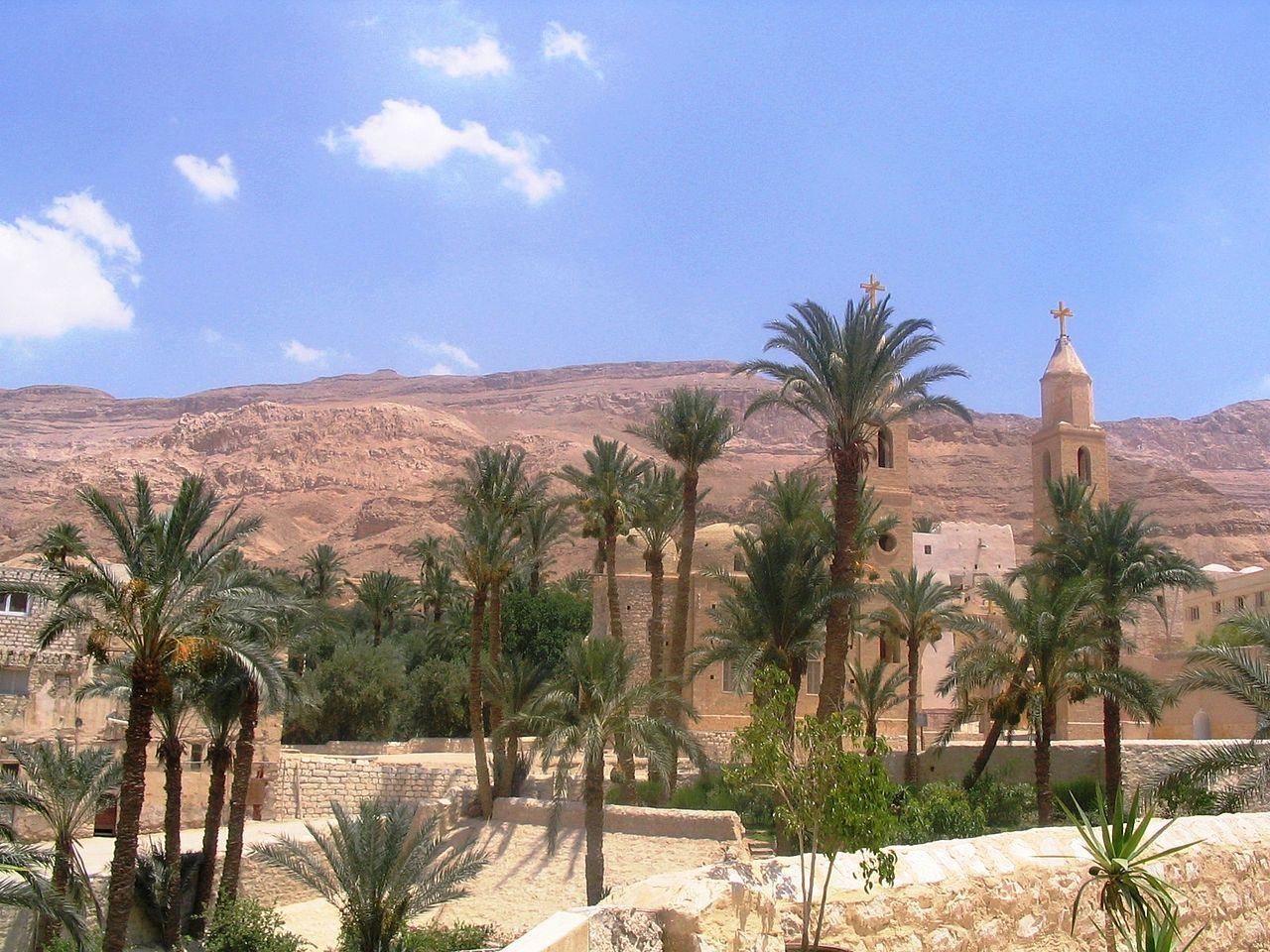
Deep in Egypt’s Eastern Desert, the Monastery of St. Anthony and the Monastery of St. Paul preserve one of the country’s most important Christian landscapes.
These are not abandoned monasteries or archaeological ruins. Monks still live and worship here. Historic churches stand within fortified compounds, medieval Coptic paintings survive inside their walls, and the surrounding mountains remain inseparable from traditions about two of Christianity’s most influential early desert ascetics.
The monasteries are also remote enough that visiting them requires some planning.
Most travelers interested in both sites combine them in the same journey. At St. Anthony’s, however, there is another decision to make: whether to visit only the monastery below or also make the long climb to the cave associated with Anthony’s years as a hermit.
For travelers interested in early Christianity, Coptic history or the development of Christian monasticism, St. Anthony and St. Paul offer something very different from Egypt’s better-known Christian sites in Cairo, Alexandria or the Nile Valley.
Why Are St. Anthony and St. Paul Important?
Christian monasticism did not begin with one person on one particular day. Ascetic Christians existed before Anthony, and the development of monastic life in Egypt was more complicated than the familiar claim that a single man simply “invented” it.
Anthony’s influence, however, was enormous.
Born in Egypt in the third century, Anthony gradually withdrew from ordinary community life and eventually lived in the Eastern Desert. After his death, the Life of Anthony, traditionally attributed to Athanasius of Alexandria, helped spread the story of his ascetic life throughout the Christian world.
Anthony became one of the great models of Christian monasticism, and communities of monks developed in the desert associated with him.
Paul requires a little more explanation.
The St. Paul commemorated here is Paul of Thebes, also known as St. Paul the Hermit or St. Paul the Anchorite. He is not Paul the Apostle.
Our principal ancient literary account of Paul the Hermit comes from Jerome’s Life of Paul, written in the late fourth century. Jerome describes Paul as a Christian who withdrew into the Egyptian desert and spent decades living in isolation.
His story eventually intersects with Anthony’s.
According to Jerome’s account, Anthony learns that an older hermit has been living much deeper in the desert and sets out to find him. He eventually meets Paul, and the encounter between the two ascetics became one of the enduring stories of early Christian monastic tradition.
The account belongs to early Christian hagiography rather than modern biography, so not every episode can be independently verified. But it explains why Anthony and Paul have remained so closely associated in Christian tradition—and why visiting their monasteries together makes sense historically as well as geographically.
The Monastery of St. Anthony
The Monastery of St. Anthony is the larger of the two complexes.
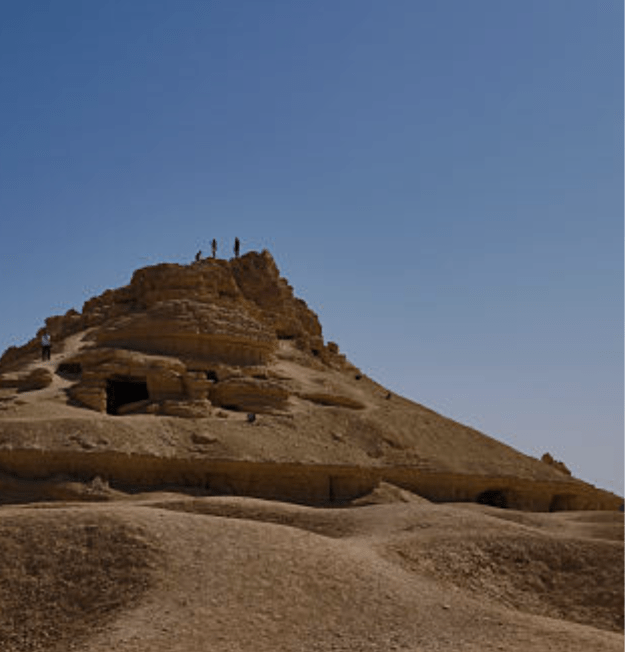
It stands at the foot of the mountains in Wadi Araba, while the cave traditionally associated with Anthony’s later years lies much higher above the monastery.
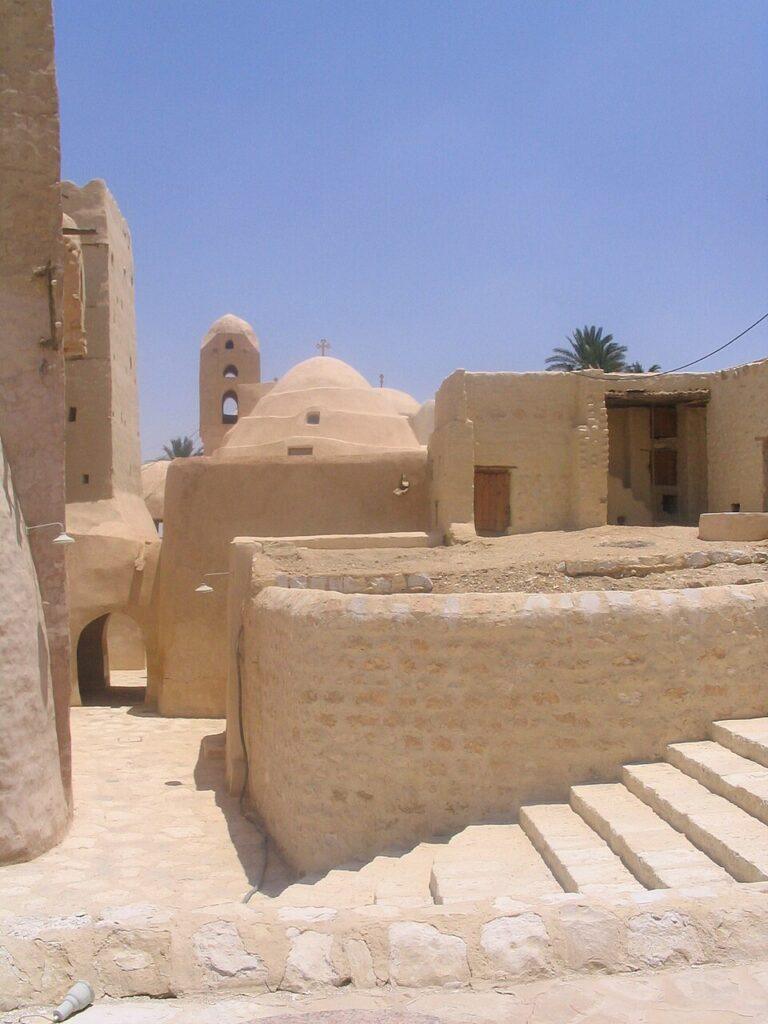
Within the walls are churches, monastic cells, gardens, historic working areas and structures developed during centuries of life in an isolated desert environment.
The complex visitors see today should not be imagined as a fourth-century monastery preserved unchanged.
St. Anthony’s has experienced destruction, rebuilding, expansion and restoration over many centuries. Its walls, churches and other buildings therefore preserve different periods of its history.
One of the most important places for visitors is the historic Church of St. Anthony.
The Church of St. Anthony and Its Medieval Paintings
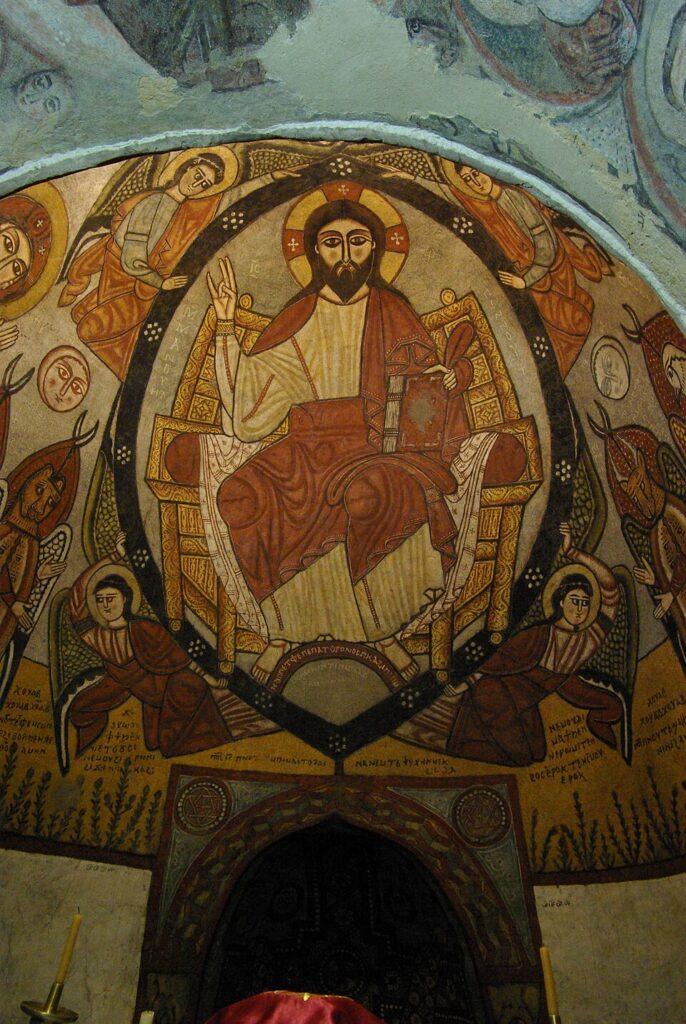
Inside the old church is an extraordinary collection of Coptic wall paintings.
A major conservation project beginning in the 1990s removed layers of accumulated material that had obscured much of the medieval decoration. The work revealed an extensive painted program, including important thirteenth-century paintings.
Saints, biblical figures and other religious imagery appear across the church.
The setting makes them particularly interesting.
You are not looking at Coptic paintings removed from their original surroundings and displayed in a museum. They remain within an active monastery and within the church for which much of the decoration was created.
For travelers who have already visited the Red and White Monasteries of Sohag, the comparison is especially worthwhile. Both journeys reveal important parts of Egypt’s Coptic artistic and monastic history, but the architecture, landscapes and surviving decoration are very different.
Should You Climb to St. Anthony’s Cave?
You do not have to climb to the cave to visit St. Anthony’s Monastery.
The monastery stands below the mountain. The cave traditionally associated with Anthony is reached separately by a long, steep staircase into the cliffs.
The monastery’s current guidance for foreign visitors specifically describes the cave visit as optional and advises allowing about two hours for it.
Visitor accounts commonly describe the ascent as roughly 1,000–1,200 steps. Whatever the exact count encountered on the route, this is not a quick flight of stairs added to the end of a monastery tour.
It is a sustained climb.
Heat and sun exposure can make it considerably harder, and the extra time affects a day in which you may also be visiting St. Paul’s Monastery.
If you have mobility limitations, difficulty with prolonged stair climbing or simply no interest in making the ascent, stay below and visit the monastery.
You have not somehow failed to visit St. Anthony’s because you did not climb to the cave.
If the cave is one of the principal reasons you are making the journey, allow enough time to experience it without rushing the rest of the day.
ENA Tip: Decide About the Cave Before You Leave
Treat St. Anthony’s cave as a separate part of the day’s plan.
If everyone in your party wants to climb, allow for it from the beginning. If some travelers want to climb and others do not, decide beforehand how the time will work for both groups.
The monastery’s current visitor guidance gives the cave excursion roughly two hours. That is enough time to change the structure of a day involving both monasteries.
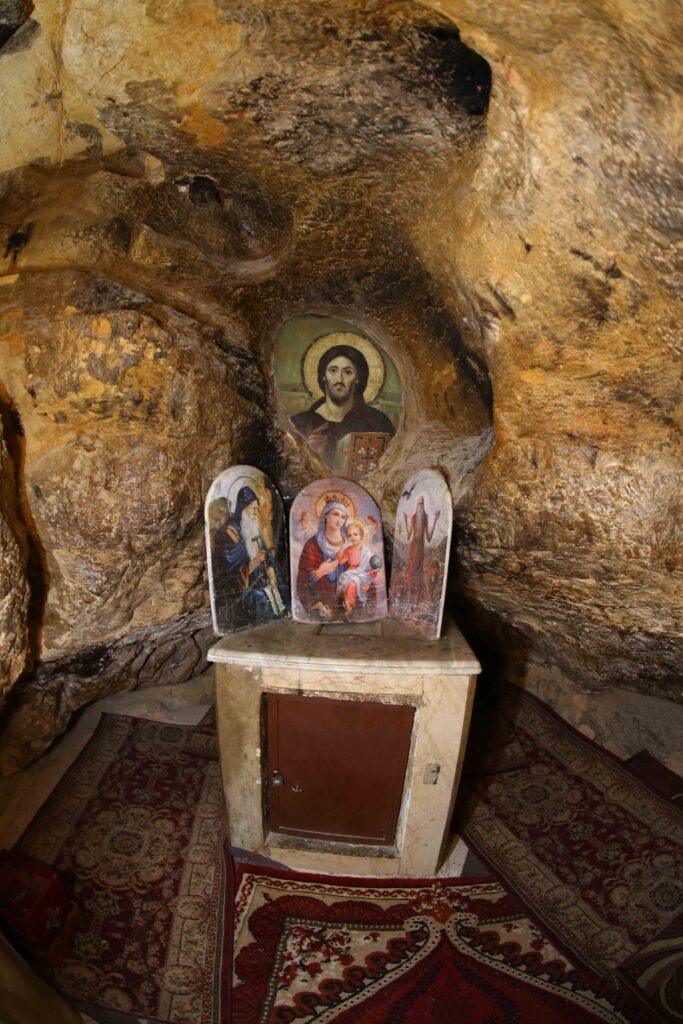
The Monastery of St. Paul the Hermit
St. Paul’s Monastery is associated with Paul of Thebes and the cave where Christian tradition places his long period of desert solitude.
The complex is smaller than St. Anthony’s, and its most important historic space draws you into the mountain rather than high above the monastery.
At its center is the Cave Church of St. Paul.
Christian tradition places the beginnings of the monastery in late antiquity around the place associated with Paul’s hermitage. The buildings visitors encounter today, however, are the result of centuries of construction, destruction, rebuilding and restoration.
The cave provides the sacred focus of the site, but the monastery surrounding it should not be imagined as an untouched fourth-century complex.
Later generations of monks built, rebuilt, painted and restored the spaces around the traditional hermitage.
That layered history is especially visible inside the Cave Church.
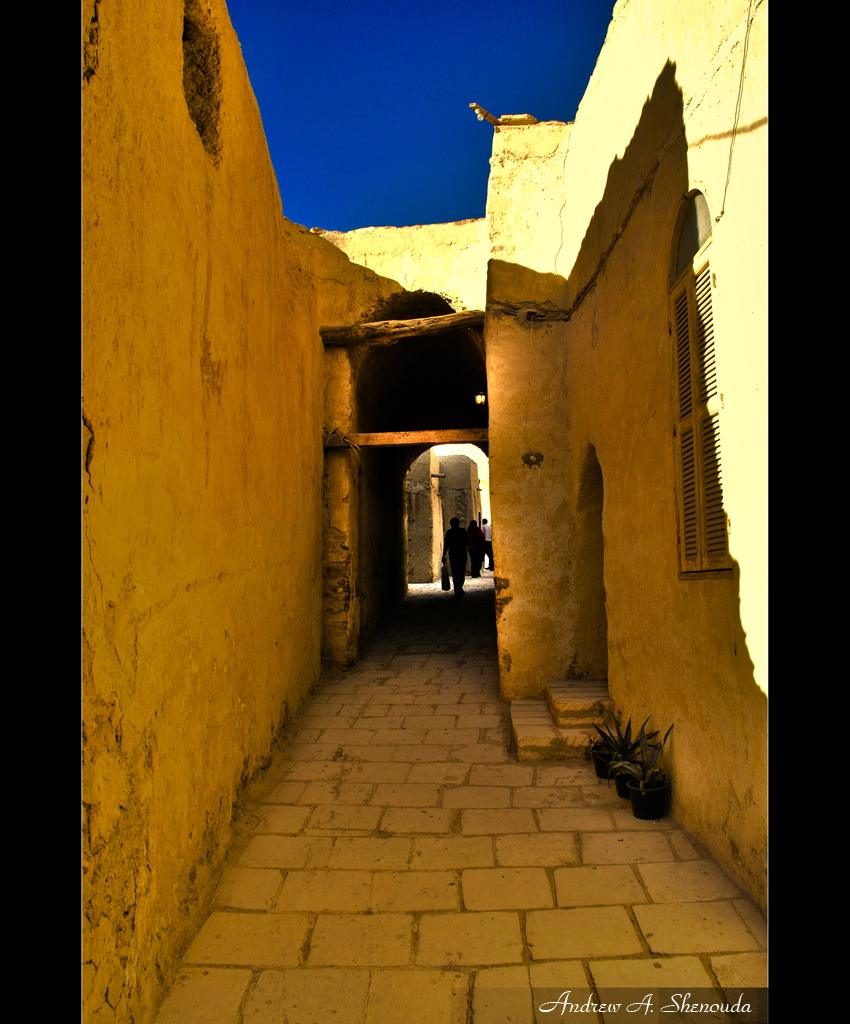
Inside the Cave Church of St. Paul
The Cave Church is one of the strongest reasons to visit St. Paul’s.
You descend into a church that does not feel as though it was designed according to one clean architectural plan. Natural rock, built walls, passages, domed spaces and painted surfaces come together around the cave traditionally associated with Paul.
Images of saints, archangels and biblical scenes survive in different parts of the church.
The paintings do not all belong to a single moment.
Art-historical and conservation work has identified multiple periods of decoration, including important medieval paintings and later restoration and repainting. The church therefore records several generations of Coptic worship rather than presenting visitors with an interior frozen in the age of Paul.
The significance of a sacred place can reach back much farther than the particular wall, dome or painting you are standing in front of.
At St. Paul’s, the cave anchors the tradition while the church around it preserves the work of later monastic communities.
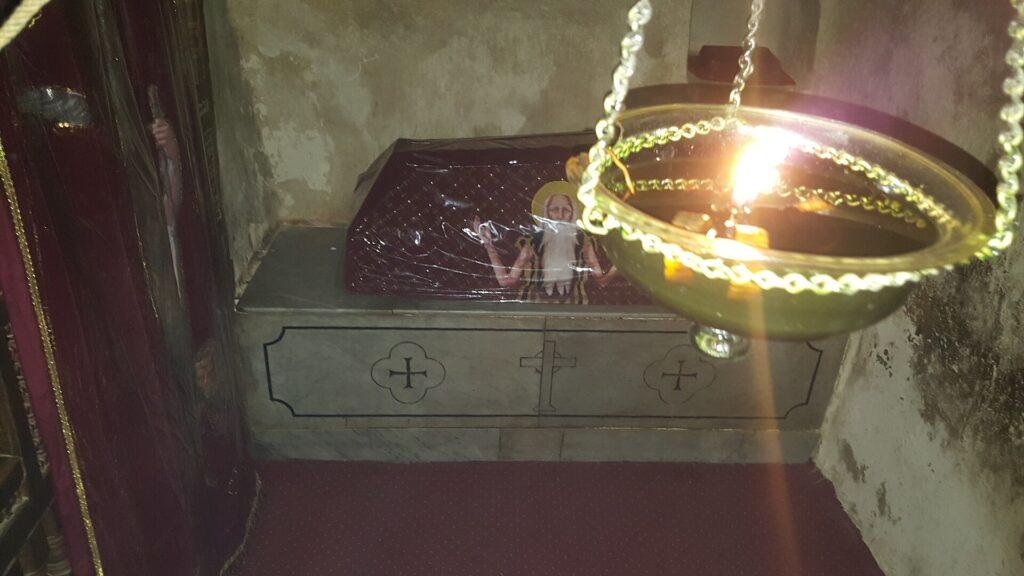
Why Do the Monasteries Look Like Fortresses?
The high walls are difficult to miss.
Remote monasteries were not only spiritual communities. They also had to protect the monks, food, water, manuscripts, churches and other resources needed to sustain life far from major settlements.
Defensive architecture therefore became part of the physical character of many Egyptian monasteries.
St. Anthony’s provides a particularly good example.
The monastery preserves an ancient pulley system among its historic features. Before ordinary ground-level access became part of the complex, pulley and lifting systems allowed people and supplies to be brought inside while maintaining the protection of the walls.
The practical features of the monasteries are worth noticing for the same reason.
Gardens, water sources, storage areas and working spaces help explain how a monastic community could survive in an environment that initially looks almost impossible for permanent settlement.
These Are Active Monasteries, Not Museums
Monks still live at St. Anthony and St. Paul.
That changes how you should approach the visit.
Dress modestly. Keep voices low around churches and worshippers. Follow instructions from monks and monastery staff about where visitors may enter and where photography is permitted.
Access can also vary.
A church may be in use. Religious observances can affect normal visiting arrangements, and a space that is usually accessible may occasionally be unavailable.
Those are current published arrangements, not permanent guarantees.
Check shortly before your visit, particularly before making a long drive into the Eastern Desert.
Can You Visit Both Monasteries in One Day?
Yes.
For most travelers making the journey specifically to see St. Anthony and St. Paul, combining them makes sense.
The monasteries are relatively close to one another compared with the much longer journey required to reach this part of the Eastern Desert.
The question is how much you intend to do once you arrive.
Visiting both monastery compounds is one version of the day.
Visiting both monasteries and climbing to St. Anthony’s cave is a longer and more physically demanding version.
Allow for time inside active churches, the journey between the monasteries, breaks and the cave climb if you choose it. An early start also gives you more room to work with the monasteries’ visiting arrangements instead of arriving late in the day with several things still to see.
Where Do St. Anthony and St. Paul Fit Into an Egypt Itinerary?
These monasteries do not sit naturally on the standard Cairo–Luxor–Aswan sightseeing route.
They are in the Eastern Desert, inland from the Gulf of Suez/Red Sea corridor.
A visit from Cairo is possible, but it creates a long road day. Travelers staying around Ain Sokhna or traveling through the northern Red Sea/Gulf of Suez corridor may be able to incorporate the monasteries more naturally, depending on the rest of the itinerary.
Be careful with descriptions that simply call them a “Red Sea excursion.”
Egypt’s Red Sea coast is long. A traveler in Ain Sokhna and a traveler much farther south in Hurghada are not starting from the same place, and the driving commitment is not comparable.
For some itineraries, the monasteries may work better as part of an overland transition between regions than as an out-and-back excursion.
For most international visitors trying to see both monasteries in one day, pre-arranged road transport is the simplest way to coordinate the remote locations, the journey between them and the monastery visiting hours.
What Should You Wear?
St. Anthony and St. Paul are active Coptic Orthodox monasteries.
Wear clothing that covers shoulders and knees and is appropriate for entering churches and a functioning religious community.
Comfortable shoes are useful within the monastery grounds and become particularly important if you intend to climb to St. Anthony’s cave.
The cave ascent also requires thinking about the desert rather than only the monastery dress code. A long, exposed stair climb can feel very different in strong sun and heat.
Carry water for the road journey and follow current monastery instructions about what may be taken into individual sacred spaces.
When Is the Best Time to Visit?
The monastery compounds can be visited at different times of year, but the cave climb changes the calculation.
A long stair ascent into the mountain becomes substantially more demanding in high temperatures. If Anthony’s cave is important to you, cooler weather makes the physical side of the visit easier.
Winter mornings can be cool before the desert warms, so layers are useful.
The religious calendar matters as well.
St. Anthony’s currently states that foreign visitors cannot visit during Holy Week according to the Coptic calendar. Services, feasts and other religious observances can also affect normal access.
Because reaching the monasteries requires a significant road journey, verify current arrangements shortly before departure rather than relying on an old timetable saved months earlier.
Are St. Anthony and St. Paul Worth the Journey?
Not every first-time visitor to Egypt needs to include them.
If you have a short trip and are already trying to fit Cairo, Luxor, Aswan and a Nile cruise into a week, adding a long Eastern Desert monastery day can make an intensive itinerary even more exhausting.
The decision looks different when Christian history is one of the reasons you are visiting Egypt.
St. Anthony and St. Paul take you into the desert landscape associated with the development of early Christian asceticism. Their churches preserve important Coptic paintings, while the mountains help put the lives and traditions of the desert hermits into a physical setting that is impossible to understand in quite the same way from a museum display.
They also complement rather than duplicate Egypt’s other major Christian sites.
Coptic Cairo places you within an urban Christian landscape of historic churches, Roman remains and later Cairo.
The Wadi El Natrun monasteries preserve another of Egypt’s great monastic landscapes, with four active monasteries rooted in the early development of Egyptian monasticism.
The Red and White Monasteries of Sohag introduce the monastic world associated with Shenoute in Upper Egypt.
And Mount Sinai and St. Catherine’s Monastery combine a living monastery with one of Egypt’s most important biblical and pilgrimage landscapes.
St. Anthony and St. Paul add the Eastern Desert and the traditions surrounding two of early Christianity’s best-known hermits.
For a traveler deliberately following Egypt’s Christian history, they fill an important gap between the urban churches, Nile Valley monasteries and Sinai.
Frequently Asked Questions About St. Anthony and St. Paul Monasteries
Is St. Paul Monastery named after Paul the Apostle?
No. The monastery is associated with Paul of Thebes, also known as St. Paul the Hermit or St. Paul the Anchorite.
Christian tradition describes him as an early desert hermit and links his story closely with St. Anthony. He should not be confused with Paul the Apostle of the New Testament.
Are St. Anthony and St. Paul the oldest monasteries in the world?
They belong to the landscape in which Christian monasticism developed in late antiquity, and both are routinely described among the world’s oldest Christian monasteries.
Claims about a single “oldest monastery,” however, need some caution.
Neither complex has remained physically unchanged since the fourth century. Churches, walls and monastic buildings were rebuilt, expanded and restored over many centuries.
Their importance lies in the extraordinary continuity of monastic tradition associated with these desert sites rather than every surviving structure dating to the lives of Anthony and Paul.
Do you have to climb to St. Anthony’s cave?
No.
The cave is above the monastery and the climb is optional. You can visit St. Anthony’s Monastery, its churches and historic complex without making the ascent.
How difficult is the climb to St. Anthony’s cave?
It is a substantial stair climb rather than a short walk from the monastery.
St. Anthony’s current visitor guidance advises allowing about two hours for the optional cave excursion. Visitor accounts commonly describe roughly 1,000–1,200 steps.
Heat, sun exposure and individual fitness can make a significant difference.
Can you visit both monasteries on the same day?
Yes. Visiting St. Anthony and St. Paul together is practical and makes sense for travelers making the journey into the Eastern Desert specifically for these sites.
Adding the climb to St. Anthony’s cave makes the day longer and more physically demanding, so decide whether you want the cave before planning the day’s timing.
Are St. Anthony and St. Paul still active monasteries?
Yes.
Both are living Coptic Orthodox monastic communities rather than abandoned archaeological monuments. Visitors are entering religious communities as well as historic sites.
Can non-Christians visit the monasteries?
The monasteries receive visitors interested in their history and heritage as well as Christian pilgrims.
Visitors should dress appropriately, respect worship and monastic life, and follow current instructions from the monastery.
Visiting St. Anthony and St. Paul as Part of a Christian Egypt Journey
St. Anthony and St. Paul make the most sense when the journey is planned around their Eastern Desert location rather than squeezed into an already crowded sightseeing schedule.
They can form a dedicated Christian heritage day or become part of a wider journey connecting Egypt’s historic churches and monasteries.
If you want to include St. Anthony and St. Paul alongside the Christian sites of Upper Egypt or another part of your journey, contact Explore ENA about a custom Christian Egypt itinerary. The route can then be built around the places you actually want to visit and the time those sites require.