Mount Sinai & St. Catherine’s Monastery
Mount Sinai & St. Catherine’s Monastery: Complete Visitor Guide
Mount Sinai and St. Catherine’s Monastery are often treated as a single excursion from Sharm El Sheikh, but they are really two very different experiences.
One is a mountain climb, usually undertaken at night so travelers can reach the summit around sunrise. The other is a sixth-century Christian monastery that has remained in continuous religious use for roughly 1,500 years.
Together, they form one of Egypt’s most significant religious landscapes.
The Bible records Moses encountering God at the burning bush at Horeb, the mountain of God, and later receiving the covenant at Mount Sinai. Jebel Musa in South Sinai is traditionally identified with that biblical mountain, although Scripture does not provide enough geographical detail to establish the modern location with certainty.
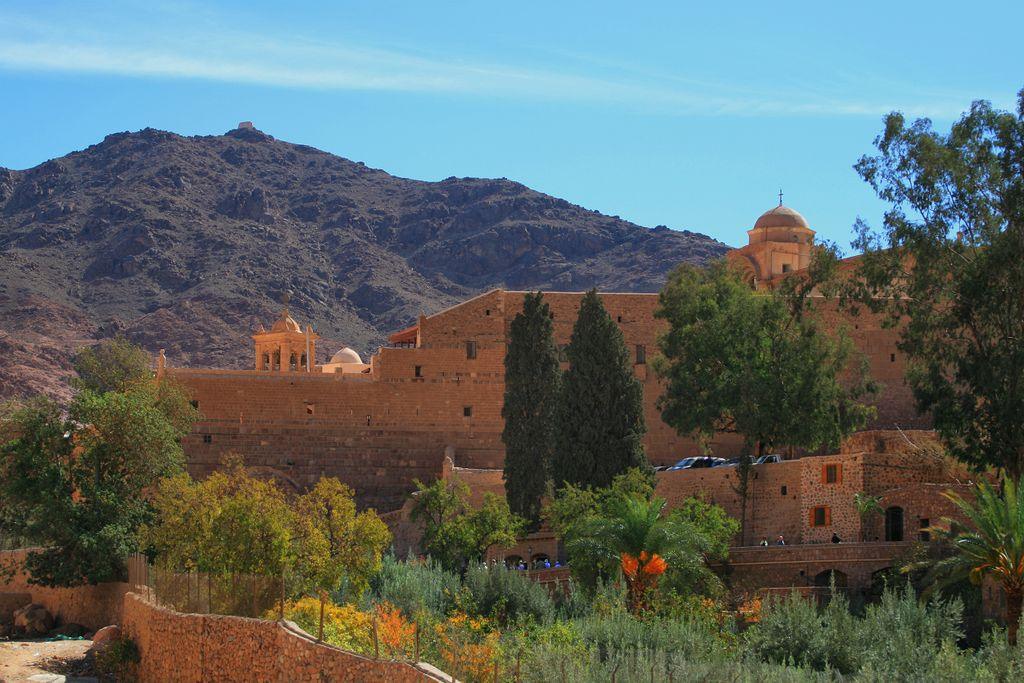
At its foot stands St. Catherine’s Monastery, built during the reign of Byzantine Emperor Justinian I in the sixth century. Its fortified walls protect an active Greek Orthodox monastery, the Church of the Transfiguration, an extraordinary collection of early Christian icons and manuscripts, and the site traditionally associated with the burning bush.
This is therefore not simply another sightseeing stop in Egypt.
It is part mountain experience, part pilgrimage destination and part living monastery—and understanding those differences makes the visit considerably more rewarding.
Is This the Mount Sinai in the Bible?
The Bible records Moses at Mount Sinai, where Israel entered into covenant with God and Moses received the tablets of the law. Exodus 3 earlier places Moses’ encounter with the burning bush at Horeb, the mountain of God.
Jebel Musa, or Mountain of Moses, is traditionally identified with biblical Mount Sinai. Christians have revered this landscape for centuries, and St. Catherine’s Monastery developed at its foot within that tradition.
Scripture does not provide enough geographical detail to establish Jebel Musa as the biblical mountain with certainty, so the identification is best understood as longstanding tradition rather than proven geography.
Where Are Mount Sinai and St. Catherine’s Monastery?
Mount Sinai and St. Catherine’s Monastery lie in the mountainous interior of South Sinai, far from the Red Sea resort atmosphere most travelers associate with the peninsula.
The monastery sits in a narrow valley beneath Jebel Musa. Mount Sinai rises to approximately 2,285 meters above sea level, surrounded by the stark granite peaks of the South Sinai mountains.
The nearest town is Saint Catherine.
Many international travelers visit from Sharm El Sheikh or Dahab rather than staying locally. From Sharm, the familiar excursion usually involves a long road transfer into the mountains, a nighttime ascent of Mount Sinai, sunrise at the summit, the descent, and then a morning visit to the monastery.
That is possible, but it creates a much more demanding day than the phrase “Mount Sinai excursion” sometimes suggests.
If you’re adding South Sinai to a larger Egypt trip, the Sharm El Sheikh Travel Guide explains how the mountain excursion fits with the Red Sea portion of an itinerary.
St. Catherine’s Monastery: Nearly 1,500 Years of Christian History
Christian settlement in these mountains predates the monastery buildings travelers see today.
Hermits and monks were already living in the Sinai region by Late Antiquity. In the sixth century, Byzantine Emperor Justinian I ordered the construction of the fortified monastery complex, with the main work dating to approximately 548–565 CE.
The surrounding Saint Catherine Area is recognized by UNESCO as a World Heritage Site. UNESCO identifies St. Catherine’s as the oldest Christian monastery still serving its original monastic function continuously from its sixth-century foundation. Exploreena
That continuity is one of the most important things to understand before visiting.
St. Catherine’s is not a ruined Byzantine monastery preserved for tourists.
It is still a monastery.
The monks live and worship here, and only part of the complex is open to ordinary visitors. Religious life takes priority over sightseeing.
One unexpected feature within the monastery is a medieval mosque, another layer in St. Catherine’s long history. The wider Saint Catherine landscape is sacred within Christianity, Judaism and Islam, and UNESCO recognizes that shared religious significance as part of the World Heritage property’s importance.
Why Is It Called St. Catherine’s Monastery?
The monastery was not originally named for St. Catherine of Alexandria.
According to later Christian tradition, Catherine was martyred in Alexandria, and monastery tradition holds that her remains were eventually discovered on a nearby mountain and brought to the monastery. The monastery subsequently became widely known by her name.
The nearby peak is now known as Mount Catherine, or Jebel Katerina.
Do not confuse it with Mount Sinai.
Mount Catherine is Egypt’s highest mountain. Jebel Musa is the neighboring peak traditionally identified with biblical Mount Sinai and the mountain most visitors climb during the familiar pilgrimage and sunrise excursion.
The Church of the Transfiguration
At the heart of the monastery is the Church of the Transfiguration.
It dates to the original Justinian-era construction and remains the monastery’s principal church.
From outside, it can be easy to underestimate. The massive granite fortifications surrounding St. Catherine’s tend to dominate the first impression.
Inside is one of the great surviving early Christian interiors of the region.
The church preserves ancient columns, lamps, icons and religious furnishings accumulated across centuries of worship. Among its most important early works is the sixth-century mosaic of the Transfiguration in the apse.
The monastery also preserves exceptionally early icons, including works that survived periods of Byzantine Iconoclasm during which religious images were destroyed elsewhere.
Its isolation helped preserve material that disappeared from many other early Christian centers.
Visitors should not expect unrestricted access throughout the church or monastery. This remains a functioning religious community, and access can vary according to services and monastery requirements.
The Burning Bush and Its Chapel
Exodus 3 records Moses tending the flock of Jethro when he came to Horeb, the mountain of God, where God appeared to him from the midst of a burning bush.
St. Catherine’s Monastery was built around the place traditionally associated with that encounter.
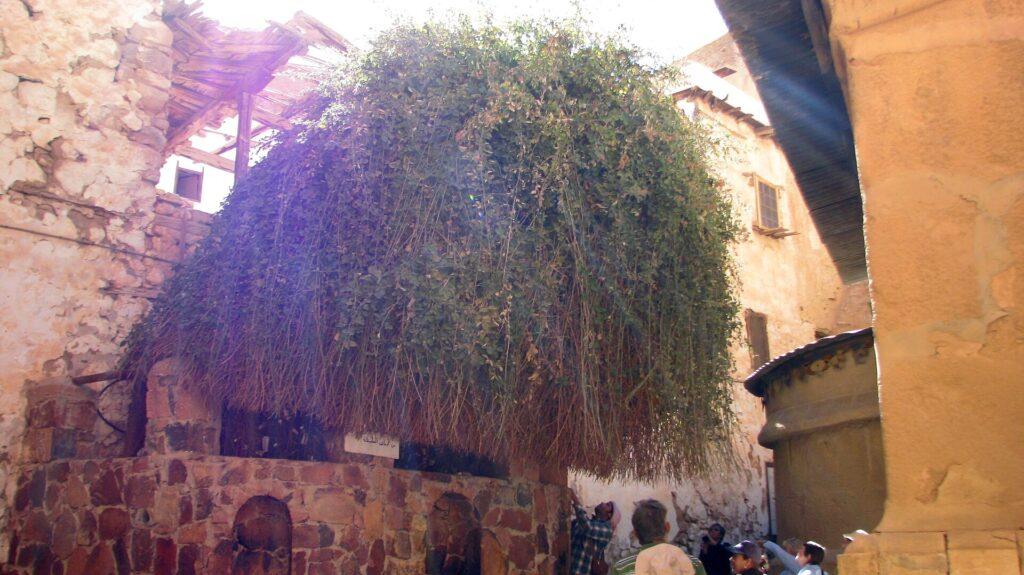
A living bush within the complex is traditionally identified with the biblical burning bush, while the Chapel of the Burning Bush marks the sacred location within the monastery’s tradition.
The connection is traditional rather than something that can be established botanically or archaeologically, but it has shaped the religious importance of this site for centuries.
The bush is protected from visitors, so do not touch it or attempt to remove leaves or branches.
Access to the chapel itself should not be assumed. St. Catherine’s remains an active monastery, and areas open to visitors can vary.
The Monastery’s Icons and Manuscripts
St. Catherine’s importance extends well beyond its connection with Moses.
The monastery holds one of the world’s most important collections of Christian manuscripts and early icons.
Its library contains thousands of manuscripts in languages including Greek, Arabic, Syriac and Georgian.
Among the manuscripts historically associated with St. Catherine’s is the Codex Sinaiticus, one of the most important surviving early manuscripts of the Christian Bible.
Most of the Codex is no longer at the monastery. Surviving portions are divided among several institutions, while St. Catherine’s retains part of the manuscript.
That is useful to know before arriving.
Reading that St. Catherine’s possesses an extraordinary manuscript library can create the expectation that visitors will simply walk through rows of ancient books.
They won’t.
The working manuscript library is not a normal tourist room, and access to the monastery’s treasures is limited. What visitors can see may vary.
Expert Insight: St. Catherine’s importance is not simply that it has old manuscripts and icons. Its remote location and continuous monastic life helped preserve early Christian material that disappeared elsewhere, including exceptionally early icons that survived periods when religious images were destroyed in parts of the Byzantine world. That makes the collection important for understanding early Christian art as well as the history of the monastery itself.
Climbing Mount Sinai
For many travelers, climbing Mount Sinai is the physically demanding half of the experience.
The familiar excursion begins at night.
Travelers arrive near the monastery, meet a local Bedouin guide and begin ascending in darkness. The goal is usually to reach the summit shortly before sunrise.
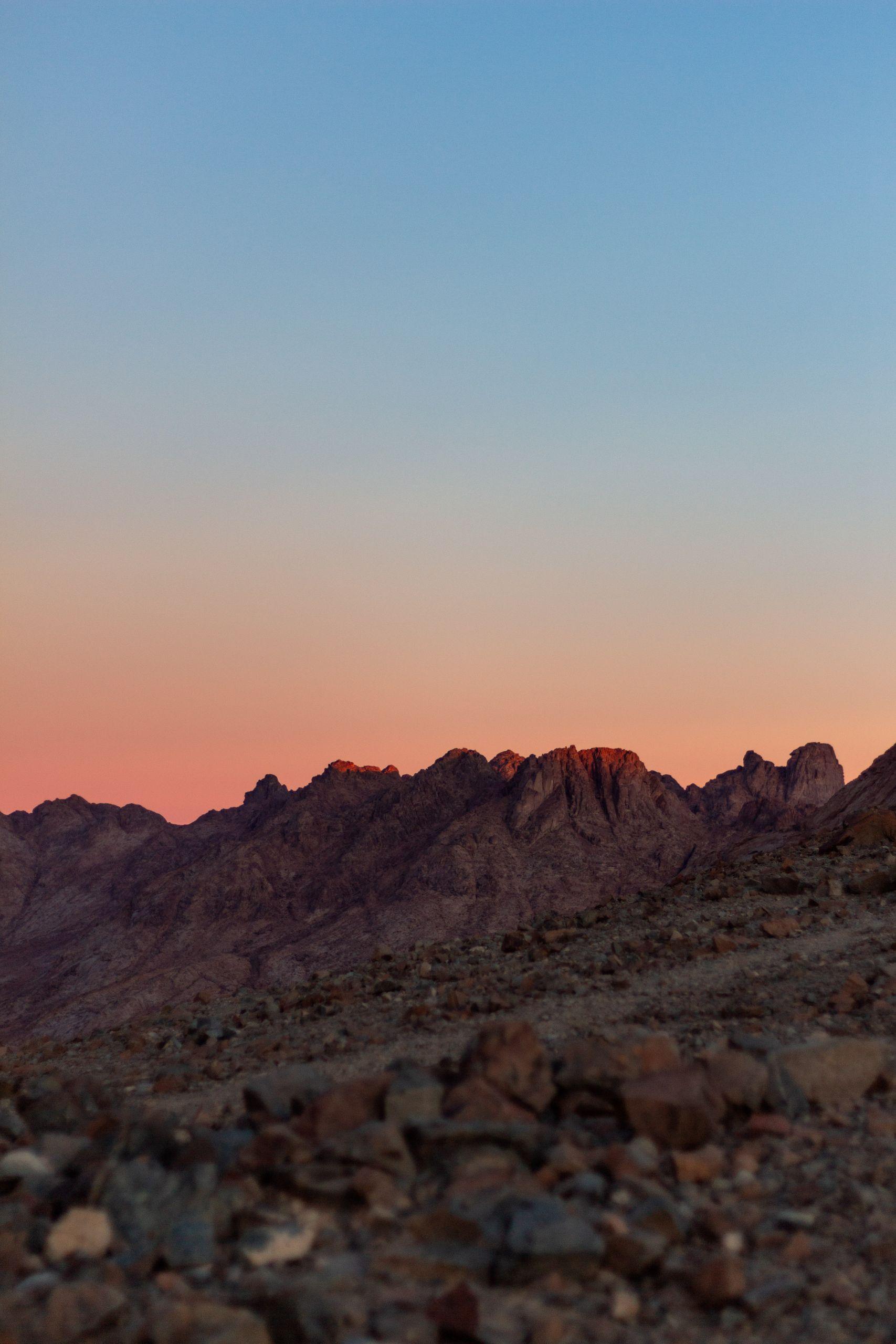
That timing creates the well-known view of daylight spreading across the jagged mountains of South Sinai.
But the hike should not be underestimated simply because large numbers of travelers do it.
You are climbing to approximately 2,285 meters. Much of the ascent may take place in darkness. The ground is uneven, temperatures can be dramatically colder than at the Red Sea coast, and after reaching the summit you still have the entire descent ahead of you.
ENA Tip: If you’re coming from Sharm El Sheikh for sunrise, treat Mount Sinai as an overnight excursion rather than an ordinary morning tour. Between the road transfer, nighttime climb, sunrise, descent and monastery visit, you may have been awake and moving for most of the night. Avoid scheduling a demanding Red Sea excursion for later that same day.
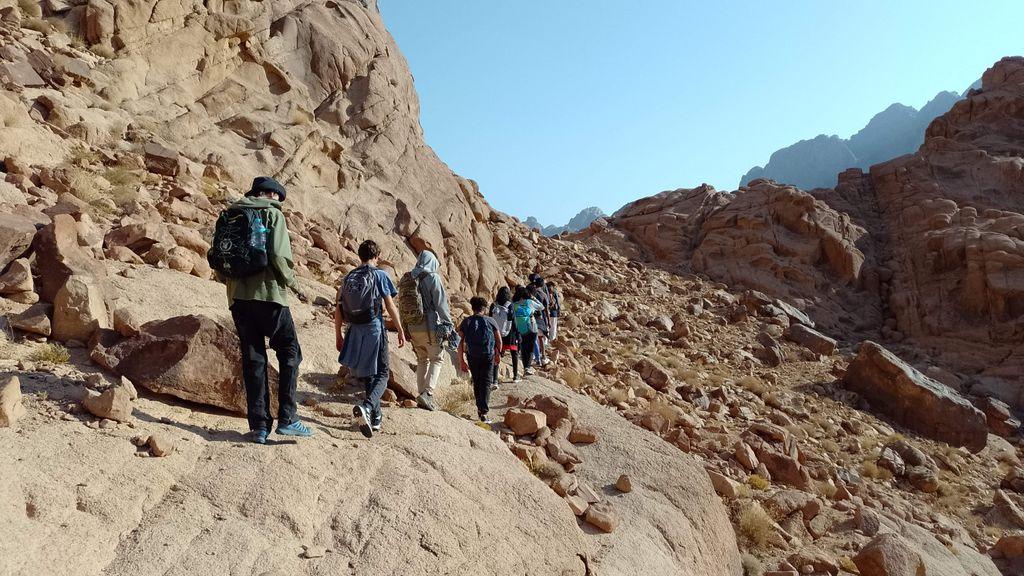
The Two Routes Up Mount Sinai
There are two traditional routes associated with the climb.
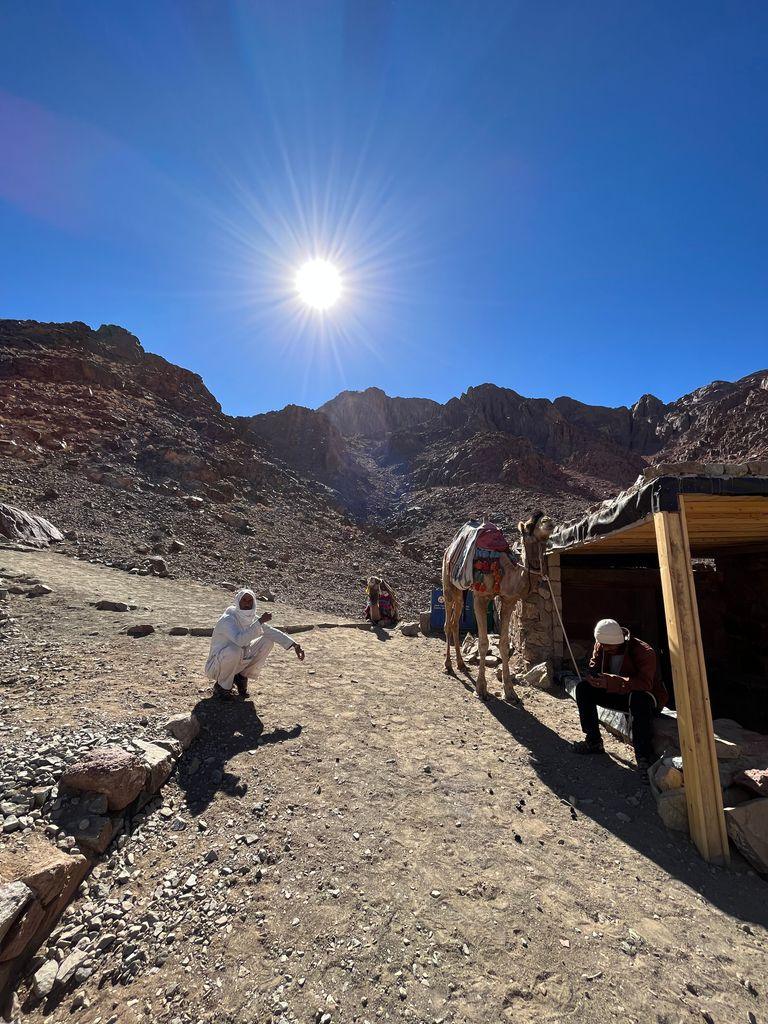
The Camel Path
The broader, more gradual route is commonly called the Camel Path.
This is the route most visitors use for the nighttime ascent. Its gradient is generally easier than the direct steps, and camels can carry travelers along part of the route.
But a camel does not take you to the summit.
Near the summit, the camel route ends and the final steep section must be completed on foot over uneven stone steps.
ENA Tip: Don’t interpret “camels are available” to mean you can avoid the climb entirely. A camel can reduce part of the uphill walking, but the final steep section to the summit still has to be completed on foot. If steps, balance or knee problems are the concern, decide whether the summit is realistic based on that final section—not on the availability of a camel.
The Steps of Repentance
The alternative route is the much steeper Steps of Repentance, traditionally associated with the monastic community.
It involves a long sequence of rough stone steps and is considerably more demanding on the legs and knees.
This route is better treated as a hiking option to discuss with the local guide rather than something to assume will be appropriate or available on every visit.
What Is at the Summit of Mount Sinai?
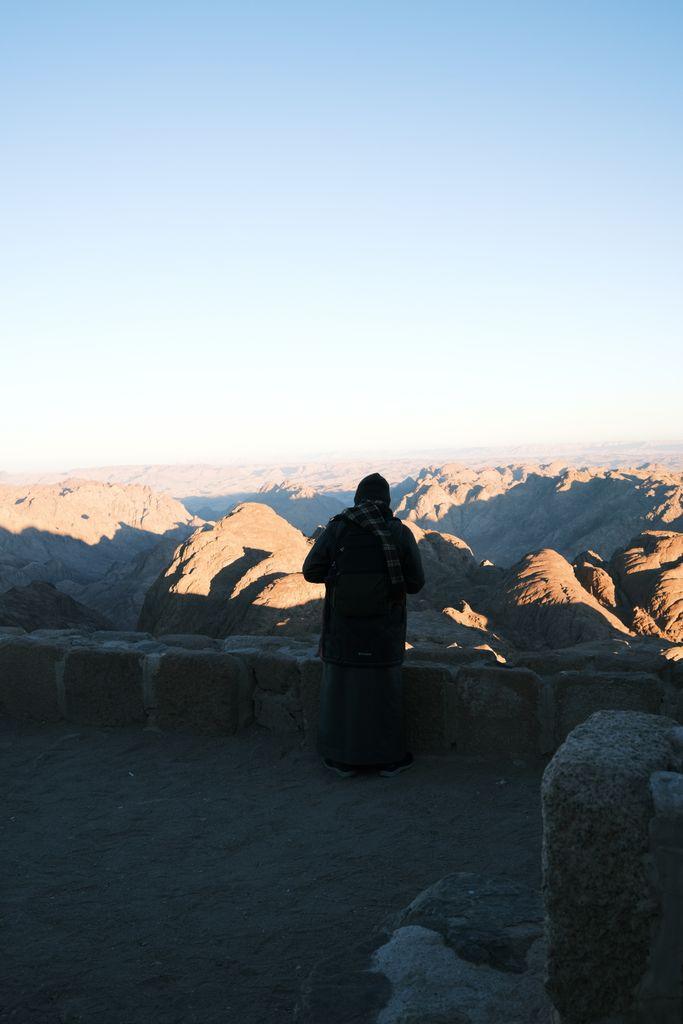
At the summit are a small chapel and a mosque, reflecting the mountain’s long religious significance.
Most visitors, however, remember the landscape.
The summit looks across a succession of bare granite peaks and valleys. Before sunrise, the surrounding mountains can be almost indistinguishable in the darkness. As the light rises, their shapes gradually emerge.
That experience attracts people who have no particular religious motivation as well as Christian pilgrims.
Sunrise, however, is not guaranteed.
Cloud, haze, wind and changing weather are still part of a mountain environment. The climb is better understood as a journey through an important religious landscape than as a guaranteed sunrise photograph.
How Difficult Is the Mount Sinai Hike?
For a reasonably active traveler, the standard route is manageable, but it is not an easy sightseeing walk.
The challenge comes from several things at once.
You are climbing at night. You are gaining elevation. The terrain is uneven. The final section becomes steeper. It can be very cold near the summit. And after watching sunrise, you still have to walk back down.
Travelers who struggle with knees, balance, uneven surfaces or sustained uphill walking should think carefully before committing to the summit.
The camel option can reduce part of the physical effort, but it does not eliminate the final climb or the descent.
Planning Note: Treat St. Catherine’s Monastery and the Mount Sinai summit as two separate decisions. They are usually combined because they are beside one another, not because visiting one requires doing the other. If the monastery and its Christian history are your main interest, you can have a worthwhile visit without undertaking the nighttime summit climb.
Sunrise or Daytime: When Should You Climb?
Sunrise is the best-known way to climb Mount Sinai.
It also creates the most tiring schedule.
From Sharm El Sheikh, travelers generally leave late in the evening, travel inland, begin hiking during the night, reach the summit before dawn, descend and then coordinate the monastery visit during its limited morning visitor period.
That can mean spending most of the night awake before beginning the monastery portion of the excursion.
For some travelers, that experience is absolutely worth it.
Others may prefer seeing more of the mountain landscape in daylight.
Travelers interested in a daylight hike should arrange it specifically with a local guide or operator rather than assuming the standard sunrise excursion can simply be shifted to another time.
When Is the Best Time to Visit?
For the mountain portion, Egypt’s cooler months are generally the most comfortable.
But the South Sinai mountains behave very differently from Sharm El Sheikh’s beaches.
Winter nights at elevation can be very cold, and the Saint Catherine region can experience frost and occasional snow. A warm afternoon beside the Red Sea is not a reliable indication of what the summit will feel like several hours later.
In warmer months, daytime hiking becomes more physically demanding because of sun and heat.
For a sunrise ascent, layers are useful in almost every season.
Bring clothing you can add as you climb and remove as the morning warms.
What Should You Wear and Bring?
For Mount Sinai, dress for the mountain rather than for photographs.
Wear sturdy closed shoes with reliable grip. Bring layers for a nighttime or sunrise ascent, and carry water and a small flashlight or headlamp.
For St. Catherine’s Monastery, dress for an active religious site.
Shoulders and knees should be covered, and clothing should be respectful rather than resort or beachwear carried inland from Sharm.
A small daypack is more practical than carrying loose items during the climb.
Photography restrictions can also apply within parts of the monastery. Follow posted rules and instructions rather than assuming every interior, icon or religious object can be photographed.
Can Children Climb Mount Sinai?
For families, age matters less than stamina.
A child needs to manage several hours of uneven uphill and downhill walking, colder temperatures at elevation and, on the standard sunrise excursion, an overnight schedule.
An active older child or teenager accustomed to hiking may handle the route well.
A younger child who becomes exhausted partway through creates a much harder situation because the mountain is not an attraction where you can simply walk back to a nearby parking lot.
Families interested mainly in the biblical and Christian significance can visit St. Catherine’s Monastery without making the summit climb the center of the day.
What About Older Travelers?
Older travelers should consider the monastery visit and the summit climb as two separate decisions.
St. Catherine’s can still be worthwhile for someone who has no intention of climbing Mount Sinai.
The summit is a different question.
Knee problems may become particularly noticeable during the descent, and the final stone section is uneven. Riding a camel for part of the ascent does not remove those demands.
If Mount Sinai is personally important, assess the physical requirements realistically rather than assuming that its popularity makes it easy.
Visiting St. Catherine’s Monastery: Timing Matters
This is one part of the trip you should not improvise.
St. Catherine’s has a limited visitor window, and access can change for Sundays, religious observances and monastery requirements.
ENA Tip: Recheck the monastery’s visitor schedule shortly before your trip, especially if you’re combining it with a sunrise climb. Opening periods are limited and can be affected by religious observances or monastery requirements. Finishing the Mount Sinai descent in the morning does not automatically mean the monastery will be open when you reach it.
It remains an active religious community, not an attraction operating around tour-bus schedules.
How Long Do You Need?
If you’re only visiting the monastery, the public portion of the visit is relatively compact.
Mount Sinai changes the calculation completely.
A sunrise excursion from Sharm effectively consumes the night and much of the following morning. If Mount Sinai is important to you, allow enough time in Sharm that the excursion doesn’t force every other activity into the remaining days.
The guide to how many days you need in Sharm El Sheikh explains how to leave enough room for major excursions without sacrificing every beach or Red Sea day.
Should You Stay in Saint Catherine or Visit From Sharm?
For many first-time Egypt itineraries, Sharm El Sheikh is the more convenient base because it combines Sinai with the Red Sea.
But staying near Saint Catherine changes the experience.
You remove the overnight road transfer from Sharm, gain more flexibility around the mountain and spend more time in the high-Sinai landscape itself.
That can be particularly worthwhile for travelers whose main interest is pilgrimage, hiking, biblical history or the mountains.
If Mount Sinai is simply one major excursion within a broader Red Sea stay, visiting from Sharm is usually more practical.
They are two different trip styles rather than one universally better choice.
How Mount Sinai Fits Into a Christian Egypt Journey
Mount Sinai and St. Catherine’s Monastery are unlike the Christian sites travelers encounter elsewhere in Egypt.
In Coptic Cairo, you are walking through a historic Christian district whose churches preserve layers of Cairo’s Christian history.
In Alexandria, the story centers on the early Church of Alexandria, the St. Mark tradition and one of early Christianity’s major intellectual centers.
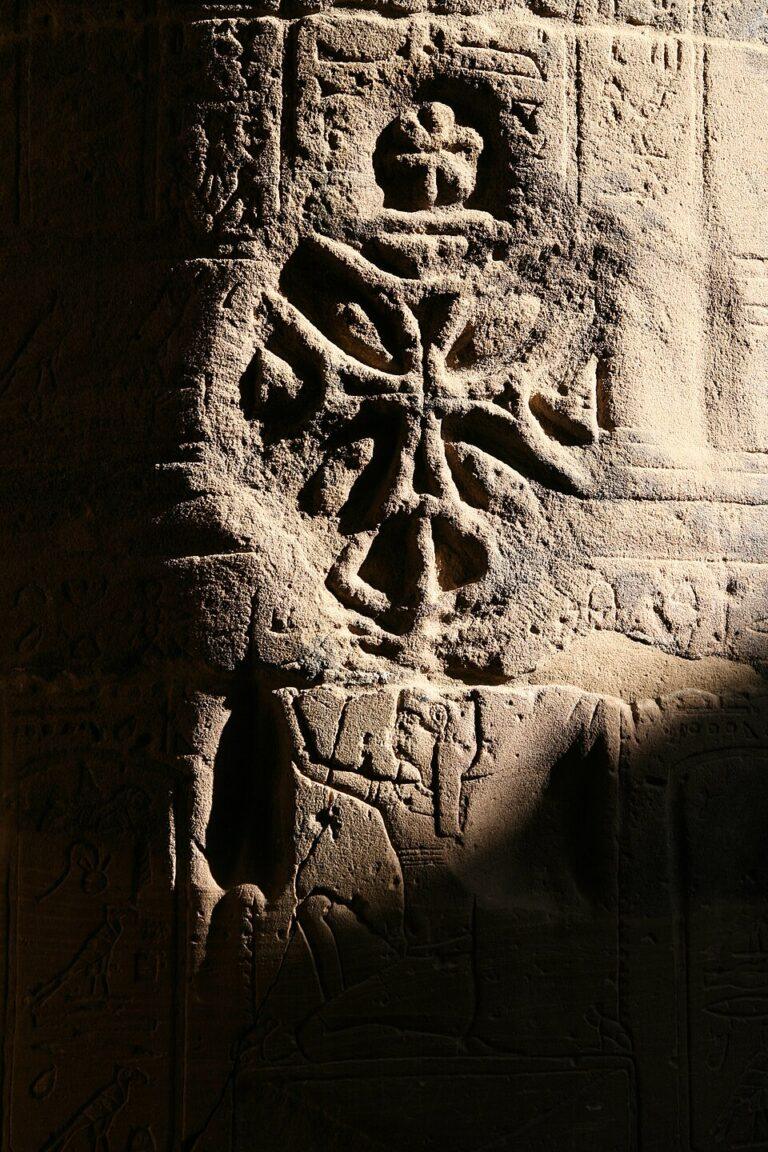
Across Upper Egypt, you can find another layer again: Christian crosses, churches and graffiti incorporated into or left within monuments that began as ancient Egyptian temples and tombs.
Sinai stands apart from all of them.
Here, the landscape itself is central to the experience.
The monastery exists where it does because generations of Christians regarded these mountains as the landscape of Moses, the burning bush and Mount Sinai. The remoteness that made the region suitable for early monastic life also helped preserve one of Christianity’s most remarkable collections of art and manuscripts.
That makes St. Catherine’s much more than another monastery to add to a list.
It is one of the places where biblical tradition, early Christian monasticism and the physical landscape of Egypt become almost impossible to separate.
Frequently Asked Questions
Is Mount Sinai mentioned in the Bible?
Yes. Mount Sinai plays a central role in Exodus, including Israel’s covenant with God and Moses receiving the tablets of the law. Jebel Musa in Egypt is traditionally identified with biblical Mount Sinai, but Scripture does not provide enough geographical information to establish that modern identification conclusively.
Is St. Catherine’s Monastery the oldest monastery in the world?
UNESCO identifies St. Catherine’s as the oldest Christian monastery still serving its original monastic function continuously from its sixth-century foundation.
Do you have to climb Mount Sinai to visit St. Catherine’s Monastery?
No. The monastery stands near the base of the mountain and can be visited without climbing to the summit. This is an important option for travelers interested in the biblical and Christian history but not the physical demands of the hike.
Can you ride a camel to the top of Mount Sinai?
No. Camels can cover part of the more gradual route, but they do not reach the summit. The final steep section must be completed on foot.
Include Mount Sinai in a Larger Egypt Journey
Mount Sinai is one of the rare Egypt experiences where the journey, landscape and history matter as much as the destination.
For some travelers, the summit at sunrise is the highlight. For others, it is walking into a monastery whose Christian community has endured for roughly fifteen centuries. And for Christian visitors, simply standing within the landscape traditionally associated with Moses can carry significance beyond either the hike or the architecture.
Explore ENA does not currently list a standalone Mount Sinai and St. Catherine’s excursion, but the site offers private and customizable Egypt itineraries that can be shaped around specific interests and destinations. Browse Explore ENA’s tours and packages and use the itinerary that best matches the rest of your trip as a starting point for planning a route that includes South Sinai.