What to Expect When Visiting Ancient Egyptian Temples
Many travelers imagine Egypt’s temples as quiet ruins where they slowly wander from one stone corridor to another. What surprises most people is how physically large, exposed, and immersive these sites actually feel once they arrive.
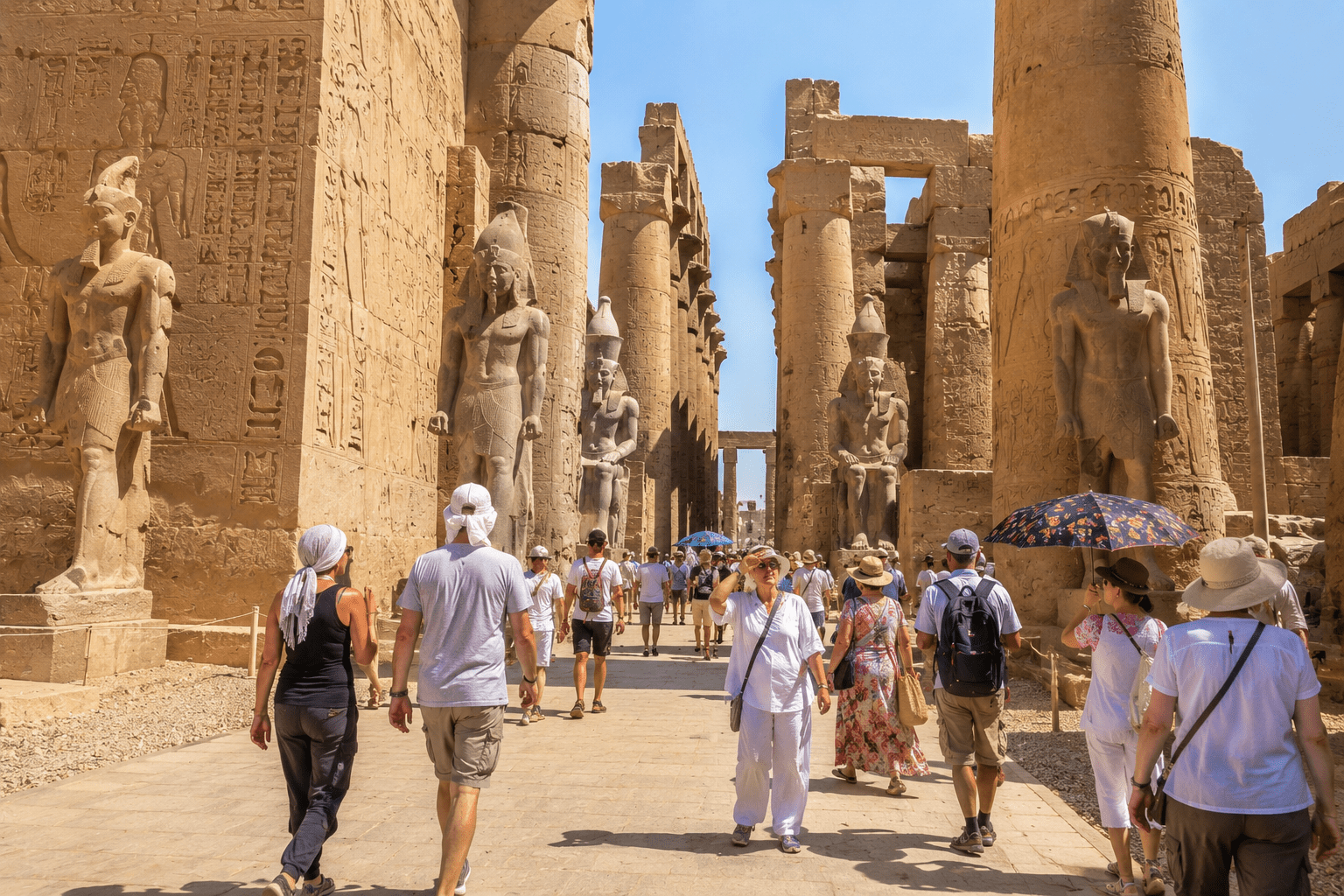
Ancient Egyptian temples are not small archaeological stops scattered casually across the country. Karnak alone covers a massive area filled with columns, gateways, courtyards, and long walking paths that continue far beyond what first-time visitors expect from photographs. Even smaller temples often involve far more sun exposure and movement than travelers anticipate beforehand.
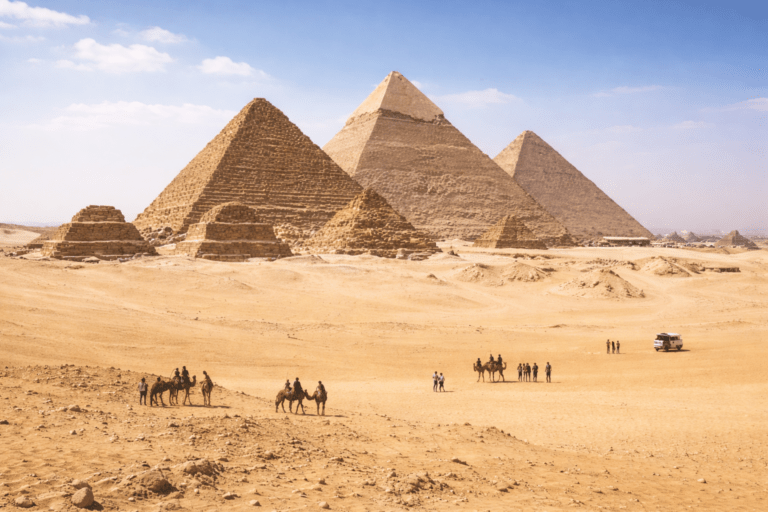
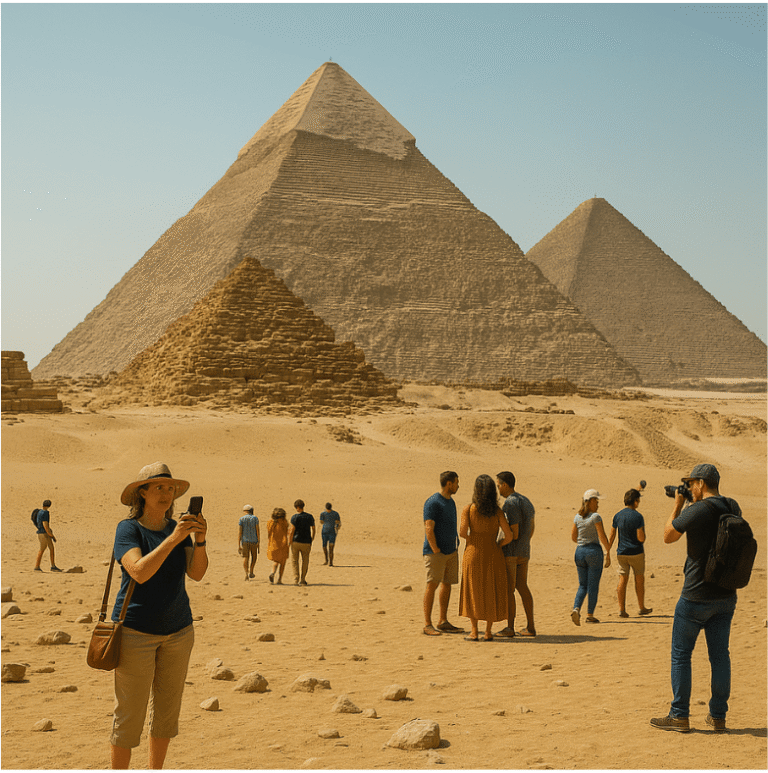
The temples are also where many visitors begin to understand the scale of ancient Egypt itself. The pyramids feel monumental because of their shape. The temples feel monumental because you move through them physically. Walls tower overhead, corridors stretch deep into the complexes, and the heat of Upper Egypt becomes part of the experience very quickly.
Expert Insight: Most travelers do not struggle with understanding the temples historically. They struggle with energy management. Timing, pacing, and heat affect temple visits far more than people expect before arriving in Egypt.
The Temples Feel Much Larger in Person
Photographs flatten Egyptian temples dramatically.
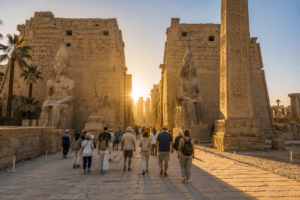
In reality, sites like Karnak, Luxor Temple, Edfu, and Philae unfold gradually as you move through them. One gateway leads into another courtyard, then another hall, then another section entirely. The experience feels less like viewing a monument and more like walking through an ancient ceremonial city.
Karnak especially catches travelers off guard because of its scale. The famous hypostyle hall with its enormous columns is only one section of a much larger complex. Visitors often assume they have nearly finished the site before realizing entire sections still remain ahead.
This physical scale changes how the visits feel emotionally. The temples are not simply places to photograph. They are environments you move through slowly.
Heat Becomes Part of the Experience Very Quickly
Temple visits in Egypt are heavily shaped by climate.
Most major temples in Upper Egypt offer very limited shade once you move deeper into the sites. By late morning, the stone surfaces begin reflecting heat intensely, especially during warmer months when temperatures regularly exceed 40°C (104°F) in Luxor and Aswan.
This is one reason most guided tours begin early.
An early temple visit often feels calm and manageable. The same site by midday can feel physically draining after extended walking under direct sunlight. Travelers who underestimate the heat usually feel it most during temple-heavy days where multiple sites are visited back-to-back.
The strongest Egypt itineraries are built around this reality rather than fighting against it.
Guide’s Note: Many travelers assume they need more time at temples than they actually do. In practice, shorter visits during better conditions are often far more enjoyable than long midday visits in extreme heat.
Temple Fatigue Is Real
One of the least discussed parts of traveling through Upper Egypt is how visually overwhelming repeated temple visits can become.
The temples are extraordinary, but they are also dense with detail. Hieroglyphs, columns, relief carvings, courtyards, sanctuaries, and historical explanations continue throughout nearly every major site.
Travelers who try to absorb every detail at every temple usually become exhausted by the middle of the trip.
The best experiences usually happen when travelers allow the temples to feel different from one another instead of trying to memorize every historical layer. Karnak feels massive and ceremonial. Philae feels softer and more isolated by the water. Edfu feels remarkably preserved and enclosed.
The experience improves when the temples are approached as environments rather than checklists.
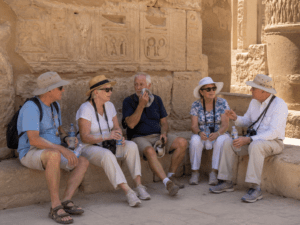
Guides Change the Experience Completely
Ancient Egyptian temples become significantly more meaningful with strong guides.
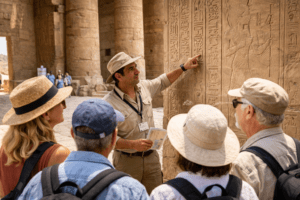
Without context, many first-time visitors simply see repeating stone structures and carvings without understanding how the spaces functioned or why the temples were designed the way they were. Travelers interested in exploring Egypt’s archaeological sites in more depth can also review the official Egyptian monuments and heritage platform before visiting Upper Egypt.
A good guide does more than explain history. They help control pacing, avoid unnecessary standing in the heat, identify the sections that matter most, and prevent the visit from becoming mentally exhausting.
This matters especially at larger sites where travelers can easily become overwhelmed by scale and repetition.
The difference between a rushed temple visit and a memorable one is usually not the temple itself. It is how the visit is structured.
Crowds Depend Heavily on Timing
Temple crowds in Egypt are highly predictable.
The busiest periods usually happen:
- after breakfast tour departures
- late morning
- when multiple Nile cruises dock simultaneously
This is why many itineraries begin temple visits early in the day before the main tour flow arrives.
At temples like Edfu and Kom Ombo, cruise schedules affect crowd density heavily because many ships follow similar sightseeing patterns along the Nile. A site can feel relatively calm one hour and significantly busier shortly afterward.
The difference between visiting early and late is not just comfort. It changes how immersive the temples feel overall.
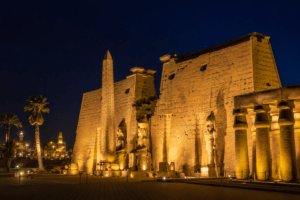
Some Temples Feel More Atmospheric at Night
Luxor Temple is one of the few major sites that changes dramatically after sunset.
During the day, the temple feels heavily connected to the city around it. At night, lighting transforms the columns and statues while temperatures become significantly more comfortable than daytime conditions.
This creates a completely different atmosphere from the bright, exposed temple visits common earlier in the day.
Not every temple in Egypt benefits equally from nighttime visits, but Luxor Temple is one of the strongest examples where evening conditions genuinely improve the experience.
The Best Temple Visits Usually Feel Unhurried
Travelers often assume they should move quickly between temples in order to “see everything” in Upper Egypt.
In reality, the strongest temple experiences usually involve slowing down enough to absorb the scale and atmosphere of the sites themselves.
The temples are not difficult to appreciate historically. What takes time is adjusting to their physical presence.
Standing beneath massive columns at Karnak or walking through the central halls of Edfu feels very different from viewing photographs online. The scale becomes emotional once you are physically inside the spaces.
Articles like What a Nile Cruise Day Is Actually Like and Egypt Travel Tips First-Time Visitors Actually Need become especially useful once travelers understand how much pacing and timing affect temple visits throughout Upper Egypt.
FAQ: Visiting Ancient Egyptian Temples
What is the best time to visit temples in Egypt?
Early morning consistently creates the best experience because temperatures are lower and crowds are lighter before the main tour groups arrive.
Are Egyptian temples physically demanding?
Most travelers can visit comfortably, but the combination of walking distances, direct sun exposure, and heat makes temple-heavy days more tiring than many expect.
Which temple is the most impressive in Egypt?
Karnak Temple is often the most overwhelming because of its enormous scale, while temples like Philae and Edfu create very different atmospheres despite being smaller.
Do you need a guide at Egyptian temples?
Temple visits become significantly more meaningful with a strong guide because the historical context, layout, symbolism, and pacing are difficult to fully understand independently.
How long do temple visits usually last?
Most temple visits last between one and three hours depending on the site, weather conditions, and overall itinerary pacing.
Many travelers leave Upper Egypt feeling more exhausted than inspired because their itinerary treats temple visits like a checklist instead of structuring them around real conditions on the ground.
Explore Egyptian Nile Adventures plans temple visits around timing, pacing, crowd flow, and the physical realities of Upper Egypt so travelers experience these sites with energy and context instead of heat fatigue and rush.
See Egypt itineraries designed around how temple visits actually feel in Luxor and Aswan, not just how they appear on a schedule.