Why Egyptians Choose Marsa Matrouh for Their Summer Vacation
Every summer, when Cairo’s heat settles over the city and schools close for the long holiday, Egyptian families begin moving north. Some head to the gated resorts of Sahel, others fly to the Red Sea, but Marsa Matrouh continues to hold a particular place in Egyptian summer culture. It offers something newer resort developments cannot manufacture: exceptionally beautiful Mediterranean beaches combined with the familiarity of a real Egyptian city built around the idea of the traditional summer vacation.
That distinction explains why Matrouh has survived every shift in North Coast fashion. New Alamein, Sidi Abdel Rahman, and Ras El Hekma may attract the newest resorts and beach clubs, but Matrouh remains what Egypt’s official tourism authority calls the country’s “classic summer getaway.” Experience Egypt traces part of that affection to the seaside films of the 1950s and 1960s, when Matrouh’s beaches became part of the visual language of the Egyptian summer.
Today the attraction is more practical as well as nostalgic. Families can choose between public beaches, city apartments and hotels rather than depending entirely on a private compound; children can spend the morning in shallow turquoise bays; seafood, cafés, markets, and the Corniche fill the evenings; and seasonal rail services connect Cairo directly with the city. Matrouh still feels like a place Egyptians go to spend summer, rather than simply a resort they check into.
Expert Insight: Marsa Matrouh’s enduring appeal is not that it competes with Sahel on luxury or the Red Sea on coral reefs. It combines beautiful water, family life, accessibility, and familiarity in a way that fits the traditional Egyptian masyaf—the summer escape.
The Sea Really Is One of the Main Reasons
Marsa Matrouh would not have earned generations of loyalty if the coastline were ordinary.
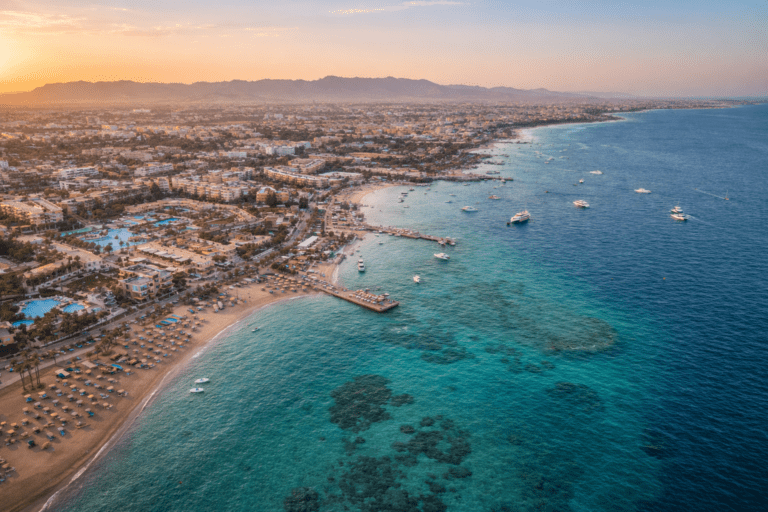
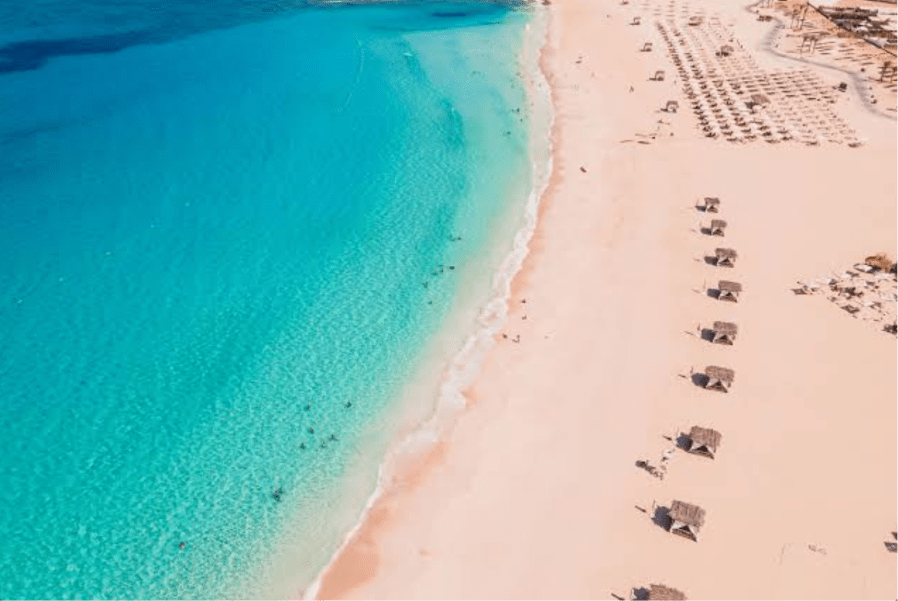
The city sits along a section of Mediterranean shore known for pale sand and intensely turquoise water. Natural rocky formations protect parts of the bay, helping create the gentler water that has long made sections of Matrouh popular with families. An official Egyptian tourism publication describes roughly seven kilometers of soft sand around Matrouh protected by natural rocky breakwaters, with calm turquoise water along the bay.
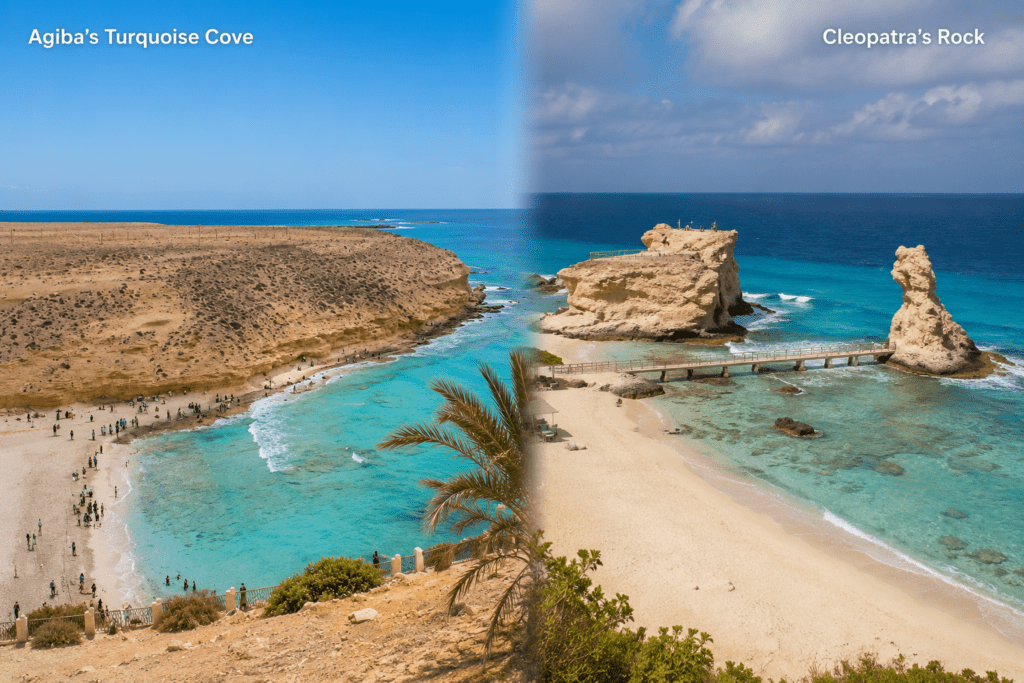
Agiba delivers the most dramatic version of the scenery: a compact cove between pale cliffs. Gharam provides a longer, more traditional beach experience, while Cleopatra is defined by its rock formations and natural pool. Rommel adds another easily recognized local beach to the mix. Egypt’s tourism authority specifically treats these as Matrouh’s “classic beaches,” several of them tied to Egyptian cinema and collective summer memory.
That variety matters. Families staying for a week do not have to repeat precisely the same beach every day.
Our Best Beaches in Marsa Matrouh guide compares the coastline in detail, including water conditions, access, facilities, crowds, and which beaches actually work best for families rather than simply looking best in photographs.
It Feels Egyptian in a Way Many Resorts Do Not
One reason Marsa Matrouh resonates so strongly with domestic travelers is that it remains a functioning city.
Along much of Egypt’s modern North Coast, access revolves around private compounds. Experience Egypt notes that many Sahel beaches are private and require visitors to be residents, renters, or hotel guests inside the relevant development. Matrouh offers a different model.
You can stay in a hotel or apartment, go into town for dinner, walk the Corniche, shop, visit different beaches, and move between ordinary city life and the Mediterranean. The holiday is not necessarily contained behind a resort gate.
That gives Matrouh a social character international travelers sometimes find surprising. Summer evenings can be busier than afternoons. Families walk after sunset, restaurants fill late, children stay out with their parents, cafés remain active, and the city becomes part of the holiday rather than something visitors leave behind when they enter their accommodation.
A recent international traveler specifically noted how different Matrouh felt from heavily internationalized beach destinations, praising the extremely clear water and the chance to experience a more locally Egyptian environment.
That does not make Matrouh “undiscovered.” Egyptians have been discovering it every summer for generations. It simply means much of its tourism remains domestic.
Family Life Fits Naturally Here
Matrouh does not need to manufacture a family-friendly identity. Egyptian summer culture already provides it.
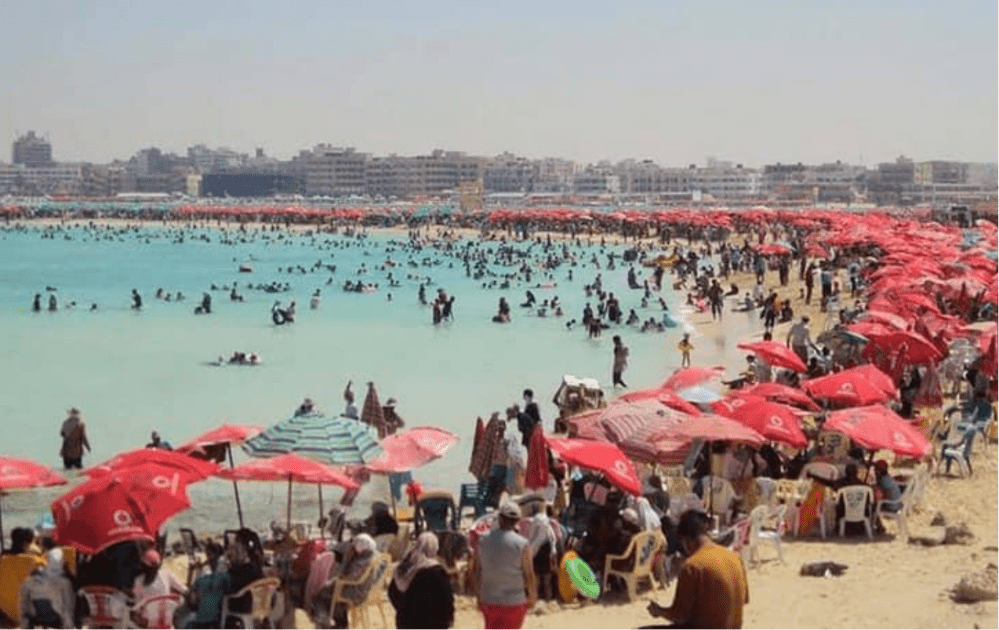
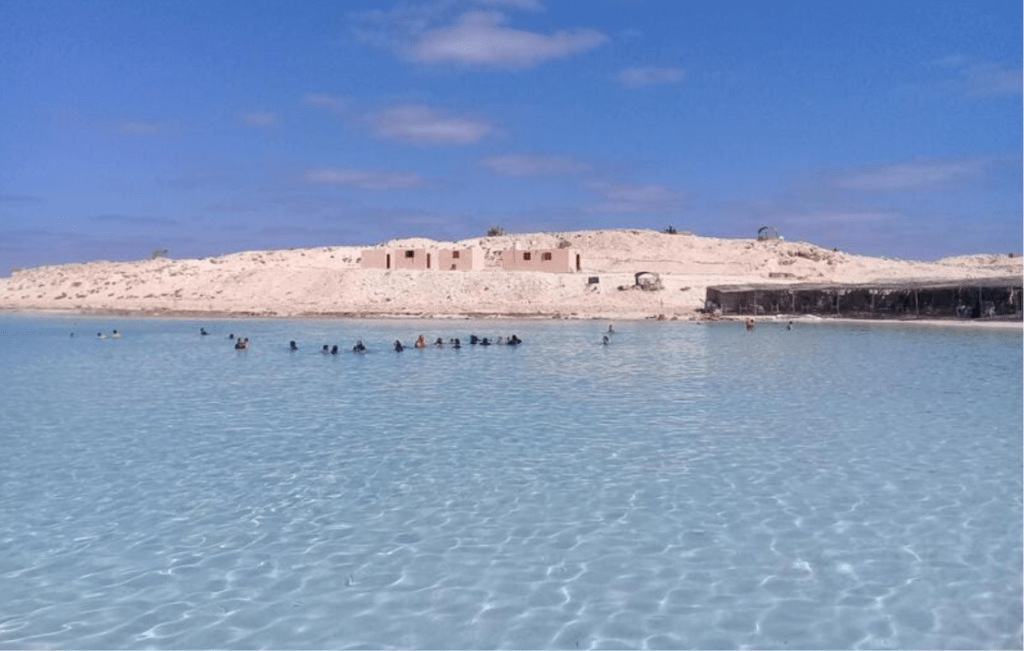
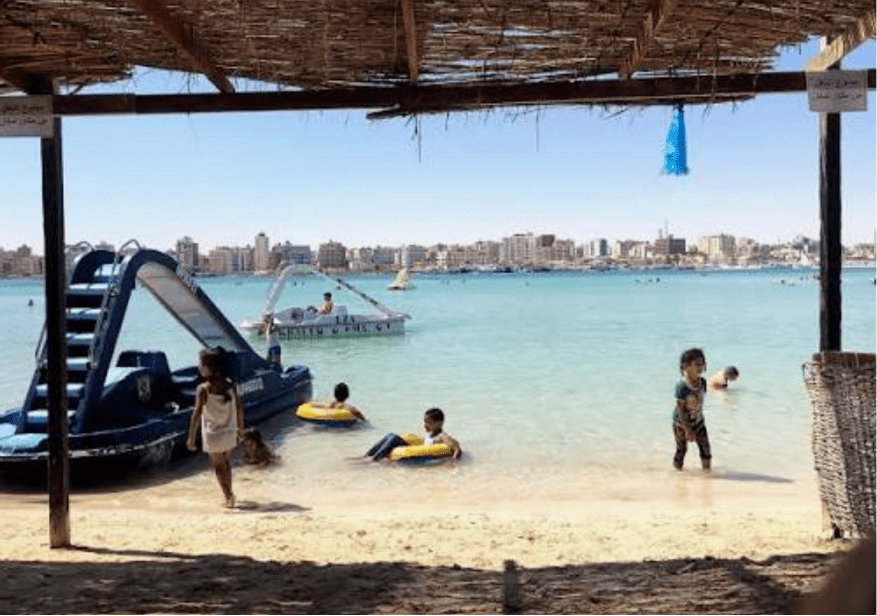
On a typical high-season morning, the water fills with parents, children, inflatables, paddleboats, and groups arriving with enough food and equipment for several hours on the sand. By evening, those same families move into the city for walks and meals. This is a destination where children being awake late is normal rather than exceptional.
The geography helps as well. Several protected stretches provide much more approachable swimming conditions than the open-water image many travelers associate with the Mediterranean, although wind and waves still need to be checked on the day.
Parents should not assume every famous beach is equally practical. Agiba’s compact cove and access make it less convenient with toddlers than a broad managed beach, while Cleopatra’s rocks make it better as a sightseeing stop than a default children’s swimming area.
Our Family Guide to Marsa Matrouh goes deeper into that decision, including accommodation, daily timing, beach access, shade, food, and how to handle July and August crowds with children.
Marsa Matrouh Still Offers More Ways to Control the Budget
Price is another important part of Matrouh’s domestic appeal—but it needs to be explained carefully.
Egypt’s North Coast is no longer universally inexpensive. High-end summer accommodation in destinations such as New Alamein, Sidi Abdel Rahman, and premium coastal developments can reach extraordinary rates during July and August. Recent Egyptian discussions about North Coast pricing show how sharply the luxury end of the market has moved upward.
Matrouh gives families more room to choose how they spend.
Instead of depending solely on an upscale hotel or private villa inside a gated resort, travelers can use city apartments, modest hotels, public beaches, local restaurants, and markets. Egyptian reporting on the 2026 summer season continues to include Marsa Matrouh among coastal cities offering lower-cost apartment options alongside more expensive accommodation.
That flexibility is important for extended families. A household traveling for five or seven nights may care less about a fashionable beach club than having enough bedrooms, a kitchen, food nearby, and several beaches within driving distance.
Matrouh therefore serves more than one Egyptian travel market. Luxury resorts exist, but they do not define the entire destination.
The Journey From Cairo Is Part of an Established Summer Pattern
A destination becomes a national summer favorite partly because people know how to get there.
The Egyptian National Railways specifically expands service to Marsa Matrouh for the summer holiday season. In June 2026, the railway introduced seasonal sleeping and air-conditioned trains between Cairo and Marsa Matrouh to accommodate the increased number of vacationers traveling to the governorate.
One daily 2026 summer service was scheduled to leave Cairo at 11:10 p.m. and reach Marsa Matrouh at 7:00 the following morning, effectively turning the journey into an overnight trip.
Families also drive from Cairo and Alexandria, particularly when they want a vehicle for moving between beaches.
The significance of the rail connection is bigger than convenience. Egypt’s railway does not add seasonal capacity to a place nobody is visiting. Those summer trains reflect how established the Cairo–Matrouh migration has become.
Matrouh Is Cooler in the Season Egyptians Most Want to Escape the City
The timing makes intuitive sense to anyone who has experienced Cairo or Upper Egypt in July.
Egypt’s Mediterranean coast enjoys a moderating sea influence that makes summer days feel different from the country’s interior. Experience Egypt explicitly recommends Matrouh during Egypt’s hottest months, noting that the sea air keeps conditions comparatively comfortable and that summer is also when most businesses are operating.
The broader North Coast season runs primarily from June through September. July and August are the peak domestic vacation months, when summer homes and resorts across the Mediterranean coastline fill most heavily.
For Egyptians constrained by school holidays, that makes perfect sense. For international travelers with more flexibility, it creates an opportunity: September can deliver much of the same warm-water experience with less pressure on the beaches and accommodation.
Our Best Time to Visit Egypt’s Mediterranean Coast breaks down June, July, August, and September so you can decide whether you want the full Egyptian summer atmosphere or a quieter version of Matrouh.
Nostalgia Still Matters
Matrouh’s popularity cannot be explained entirely through weather and hotel prices.
For generations of Egyptians, the city is connected with the idea of el-masif—the summer holiday itself. Some people first visited as children, returned with friends when they were younger, and later brought their own families.
Egyptian cinema helped embed that image nationally. Gharam Beach, whose Arabic name means “Lover’s Beach,” is associated with the 1950 film Shati al-Gharam and Egyptian star Leila Mourad. Experience Egypt specifically highlights that connection when describing the beach today.
This helps explain why newer developments have not simply replaced Matrouh.
A new resort can offer more elaborate pools and newer rooms. It cannot recreate several generations of memories associated with family summers, familiar beaches, particular foods, and evening routines.
There is a difference between somewhere that is fashionable this year and somewhere that people feel belongs to their idea of summer.
The Holiday Does Not End When Everyone Leaves the Beach
One of Matrouh’s underrated strengths is what happens between beach days.
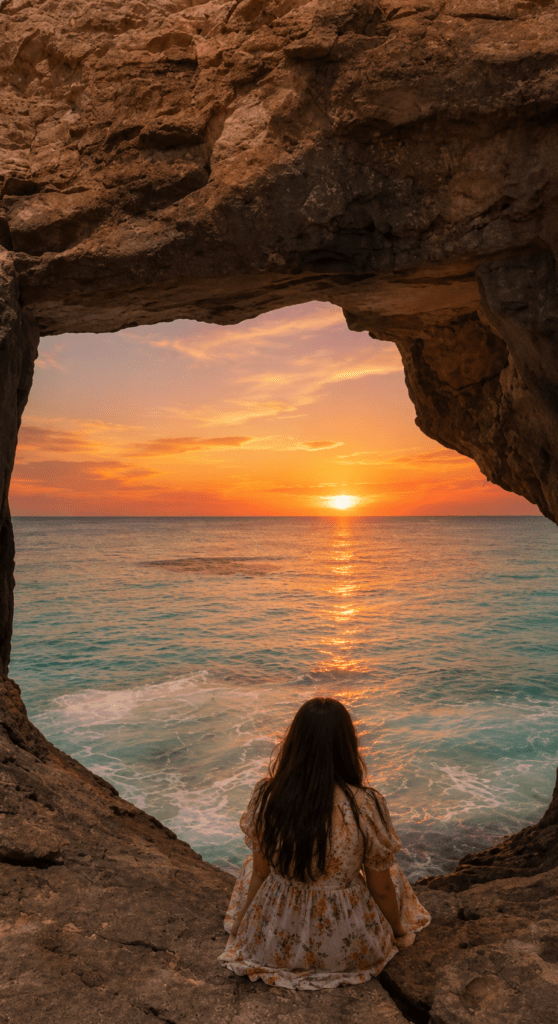
The city has markets, seafood restaurants, the Corniche, the Marsa Matrouh Museum, Rommel’s Cave, and opportunities for Bedouin desert experiences. Experience Egypt specifically highlights specialty museums, markets, water sports, and the Zarda—an organized Bedouin outing into the desert—as alternatives to staying on the sand.
Recent firsthand discussion from a visitor looking for a more local experience produced advice centered on seafood, Bedouin evenings, local cafés, and the Rommel Museum. One local response also made the essential point: Matrouh is mostly about the beaches, so the cultural experiences work best as additions rather than an attempt to turn the destination into another Luxor.
That is exactly the right balance.
If you’re staying several days, our What to Do in Marsa Matrouh Besides the Beach guide shows how to add markets, history, food, and evening experiences without sacrificing the best swimming hours.
Summer Crowds Are Part of the Story—Not a Reason to Pretend Matrouh Is Quiet
An article explaining why Egyptians love Marsa Matrouh would be incomplete without acknowledging the consequence of that popularity.
July and August can be extremely busy.
Famous beaches fill. Parking becomes harder. Restaurants are livelier. Apartments and hotel rooms become more expensive. Families arrive from Cairo, Alexandria, and other parts of Egypt at precisely the same time because the school calendar concentrates demand.
The North Coast broadly becomes a summer home away from home for Egyptians during July and August, according to Egypt’s tourism authority. Recent local conversations about Egypt’s Mediterranean coast echo the same reality: domestic tourism reaches its height during summer and beaches around northern Egypt can become packed.
This does not diminish Matrouh’s appeal. It changes how you should experience it.
Get to famous beaches early. Avoid expecting Agiba to resemble an empty promotional photograph at midday in August. Book summer accommodation ahead rather than improvising after arrival. And if crowds matter more to you than sharing the destination at its liveliest, choose June or September.
Guide’s Note: The crowded beach is not evidence that you chose the wrong destination; it is evidence that you arrived during the same weeks Egyptians have been waiting all year to travel. Change your timing before changing your destination.
It Offers a Different Experience From the Red Sea
Egyptians choosing Marsa Matrouh are not necessarily choosing the “best coast.” They are choosing a particular kind of holiday.
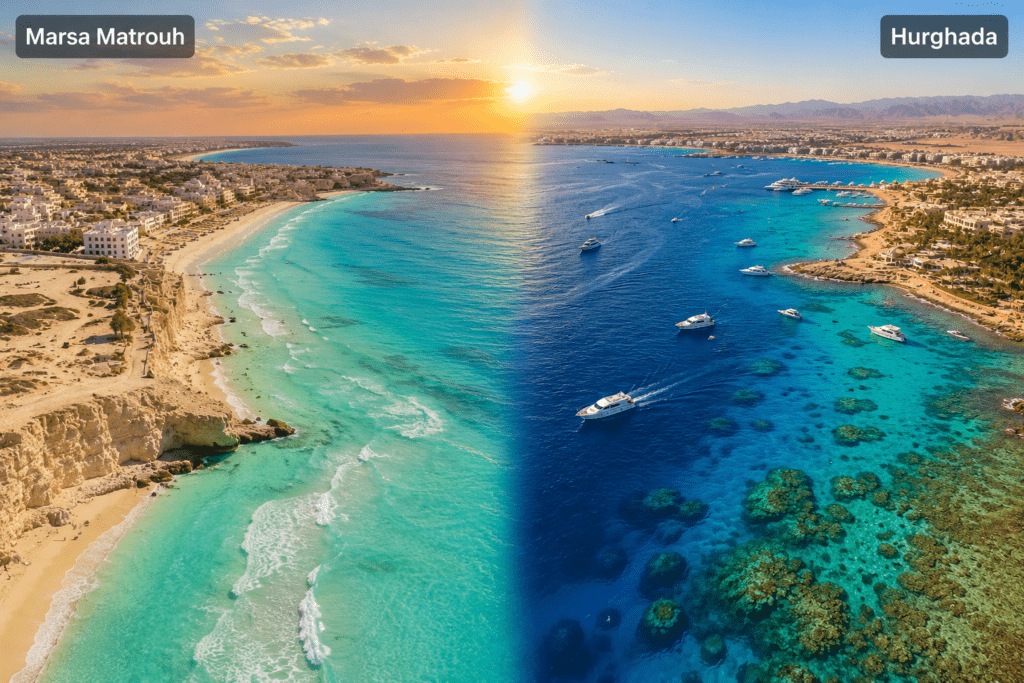
Hurghada, Sharm El Sheikh, Marsa Alam, and El Gouna provide warmer year-round conditions, coral reefs, diving, snorkeling, and a much more internationally oriented resort industry.
Matrouh is about Mediterranean summer.
The sand is whiter, waves are generally more noticeable than on the Red Sea, the season is shorter, and underwater marine life is not the focus. Egypt’s official tourism authority makes the same distinction: the Mediterranean is described around white sand, blue water, and summer vacation culture, while the Red Sea is positioned around coral reefs and year-round water activities.
If your holiday revolves around snorkeling, choose the Red Sea.
If your idea of summer is a sandy beach, family meals, late walks, local cafés, and warm Mediterranean evenings, Matrouh begins to make much more sense.
Our Mediterranean Egypt vs Red Sea Egypt: Which Is Right for You? comparison explains that choice in detail.
Agiba and Cleopatra Are Famous, but They Are Not the Whole Reason People Return
International travelers researching Matrouh often become fixated on Agiba and Cleopatra because those are the places most frequently photographed.
Egyptian summer vacations tend to be less attraction-driven.
A family may visit Agiba once, stop at Cleopatra, and then spend several days returning to whatever beach is easiest from their accommodation. That is the difference between visiting Matrouh as a sightseeing destination and living there temporarily as a summer resort.
Agiba deserves its reputation. The elevated view over the cove is exceptional. Cleopatra’s rocky coastline adds something completely different. But neither needs to dominate the entire trip.
If you only have time for one, our Agiba Beach vs Cleopatra Beach: Which Should You Visit? guide explains why Agiba is the stronger first-time priority and when Cleopatra makes more sense.
Why Marsa Matrouh Has Lasted While Summer Trends Keep Changing
Egypt’s Mediterranean coast constantly reinvents itself.
New developments open. Restaurant scenes move west. Particular resorts become fashionable. New Alamein has changed the profile of the coast again. Yet Matrouh remains.
Its durability comes from something more stable than trend.
The water is genuinely beautiful. Families feel comfortable there. The city gives visitors choices at different budgets. Transport systems expand specifically for the summer season. The evenings feel local. The beaches carry decades of cultural memory. And because it remains a city rather than simply a resort compound, people can build their own version of the holiday.
That is why calling it “Egypt’s Mediterranean paradise” tells only half the story.
The sea gets people there.
The familiarity brings Egyptians back.
Frequently Asked Questions
Why is Marsa Matrouh so popular with Egyptians?
Its appeal combines unusually clear Mediterranean water, white-sand beaches, a strong family atmosphere, different accommodation budgets, and decades of Egyptian summer tradition. Official tourism material describes Matrouh as Egypt’s classic summer getaway and notes its nostalgic association with Egyptian films of the 1950s and 1960s.
Is Marsa Matrouh mostly visited by Egyptians?
Domestic tourism is central to the destination, particularly during the July and August school-holiday period. International travelers do visit, especially at larger coastal resorts, but Matrouh generally feels far more locally Egyptian than major Red Sea resort destinations such as Sharm El Sheikh or Hurghada.
Is Marsa Matrouh cheaper than the North Coast?
Matrouh generally gives travelers more ways to build a lower-cost holiday, particularly through apartments, city hotels, local restaurants, and beaches outside premium gated developments. That does not mean every property is inexpensive; luxury accommodation along the wider Matrouh coast can still command high summer prices.
Is July or August better for Marsa Matrouh?
Both deliver the full Egyptian summer atmosphere, warm swimming conditions, and the largest crowds. Travelers who have flexibility will usually find June or September easier. September is especially attractive because the Mediterranean has retained its summer warmth while the busiest domestic travel period begins to recede.
Is Marsa Matrouh suitable for international visitors?
International travelers who want a more locally rooted Mediterranean experience can find Matrouh particularly rewarding. The important adjustment is to stop expecting the self-contained international resort culture of Sharm El Sheikh or Hurghada. Matrouh’s character comes partly from joining an Egyptian summer destination rather than remaining separated from it.
How many days should you spend in Marsa Matrouh?
Four to five nights works well for travelers combining Matrouh with a broader Egypt itinerary, while a week makes sense for families who genuinely enjoy slow beach holidays. A shorter stay often leads to rushing between Agiba, Cleopatra, and other famous beaches instead of settling into the rhythm that makes Matrouh appealing.
Marsa Matrouh works because Egyptians do not treat it as a collection of attractions to complete. They come to swim early, escape the afternoon heat, eat together, walk late, and repeat the rhythm until it feels like summer. The mistake for an international traveler is copying a packed sightseeing itinerary onto a destination designed around slowing down. Explore ENA’s Egypt itineraries to place Marsa Matrouh at the right point in your journey, with enough time to experience the Mediterranean without sacrificing Cairo, Alexandria, or the historic sites that deserve a different pace.