Egypt Cultural Etiquette Every Traveler Should Know
Most travelers do not have problems in Egypt because they break major cultural rules. The friction usually comes from smaller misunderstandings—how directly people interact, when tipping is expected, what respectful clothing actually looks like, or how different tourist areas feel compared to daily Egyptian life.
Egypt is generally very welcoming to visitors, especially in places built around tourism like Luxor, Aswan, and the Red Sea. At the same time, it is still a socially conservative country in many everyday settings. Travelers who understand that balance tend to move through Egypt much more comfortably and confidently.
Cultural etiquette in Egypt is less about memorizing strict rules and more about reading the environment around you. The expectations inside a beach resort are very different from the expectations inside a mosque or a residential neighborhood in Cairo.
Expert Insight: Travelers who approach Egypt calmly and respectfully rarely experience major cultural friction. Most awkward situations come from misunderstanding social context rather than breaking serious etiquette rules.
Dress Matters More in Some Places Than Others
One of the biggest misconceptions about Egypt is that there is one “correct” way tourists must dress everywhere.
In reality, expectations change depending on location.
In Red Sea resorts like Hurghada or Sharm El Sheikh, international beachwear is completely normal inside hotels and resort areas. In Cairo, Luxor, and Aswan, tourists still wear a wide range of clothing, especially around major archaeological sites.
The biggest difference appears in local neighborhoods, mosques, smaller towns, and non-tourist environments where more modest clothing generally feels more respectful and comfortable. Travelers visiting different regions of Egypt can also review Egypt’s official travel tips and cultural guidance before arrival.
For women, lightweight clothing that covers shoulders and knees usually works best for most sightseeing days, not because tourists are strictly required to dress that way, but because it often reduces unwanted attention and feels more appropriate in conservative areas.
For men, sleeveless shirts are uncommon outside beach settings, and lightweight breathable clothing tends to work far better than heavy casual wear in Egypt’s heat anyway.
Articles like What to Wear in Egypt become much more useful once travelers understand that practicality and context matter more than rigid dress rules.
Tipping Is Deeply Embedded in Daily Life
Tipping in Egypt is not viewed the same way it is in many Western countries.
Small tips are woven into everyday interactions across hotels, cruises, drivers, guides, restaurants, baggage handling, and local services. This practice, often referred to locally as baksheesh, is part of the normal rhythm of service culture throughout the country.
For first-time visitors, the frequency of tipping can feel surprising at first. The key is understanding that most situations do not require large amounts of money. Small, consistent tipping matters more than dramatic gestures.
Having smaller Egyptian Pound notes available throughout the day makes these interactions significantly smoother.
Greetings and Conversation Tend To Feel More Personal
Egyptians are often socially warm and conversational, especially compared to the more reserved communication style travelers may be used to elsewhere.
Questions about where you are from, whether you are enjoying Egypt, or how long you are staying are usually expressions of friendliness rather than intrusion.
At the same time, interactions in tourist areas can become more persistent because tourism plays such a large role in local economies around major sites.
The most effective response is usually calm confidence rather than defensiveness. Travelers who stay relaxed and polite generally navigate interactions much more comfortably than those who become visibly frustrated or argumentative.
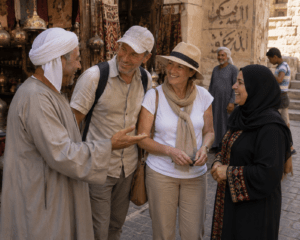
Mosque Etiquette Is Important
Many travelers visit mosques in Cairo or other cities without realizing how different the atmosphere feels compared to archaeological sites.
Mosques are active religious spaces, not tourist attractions first.
Shoes must usually be removed before entering prayer areas, and modest clothing becomes more important inside religious sites than at most tourist attractions elsewhere in the country. Women may need head coverings at certain mosques, especially during active prayer periods.
The atmosphere inside major mosques often feels significantly quieter and more reflective than the streets outside them. Respectful behavior matters far more than perfect cultural knowledge.
Guide’s Note: Visiting mosques outside active prayer times usually creates a calmer and more comfortable experience for both travelers and worshippers.
Photography Has Social Boundaries
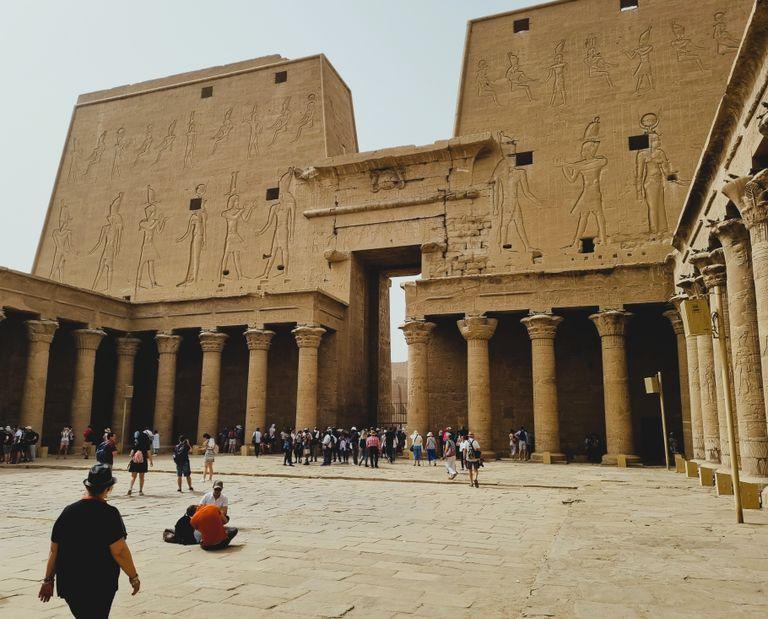
Photography is widely accepted at tourist sites throughout Egypt, but context still matters.
Most travelers photograph temples, tombs, markets, and city streets without issue. The biggest mistakes usually happen when visitors photograph people too casually in non-tourist environments without permission.
This becomes especially important in:
- residential neighborhoods
- smaller villages
- local markets
- religious spaces
Asking first is usually appreciated, especially when photographing individuals directly.
Some museums, tombs, and archaeological areas also maintain separate photography rules or ticket requirements, which can change over time.
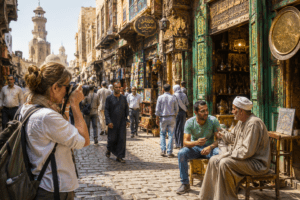
Bargaining Is Expected in Certain Settings
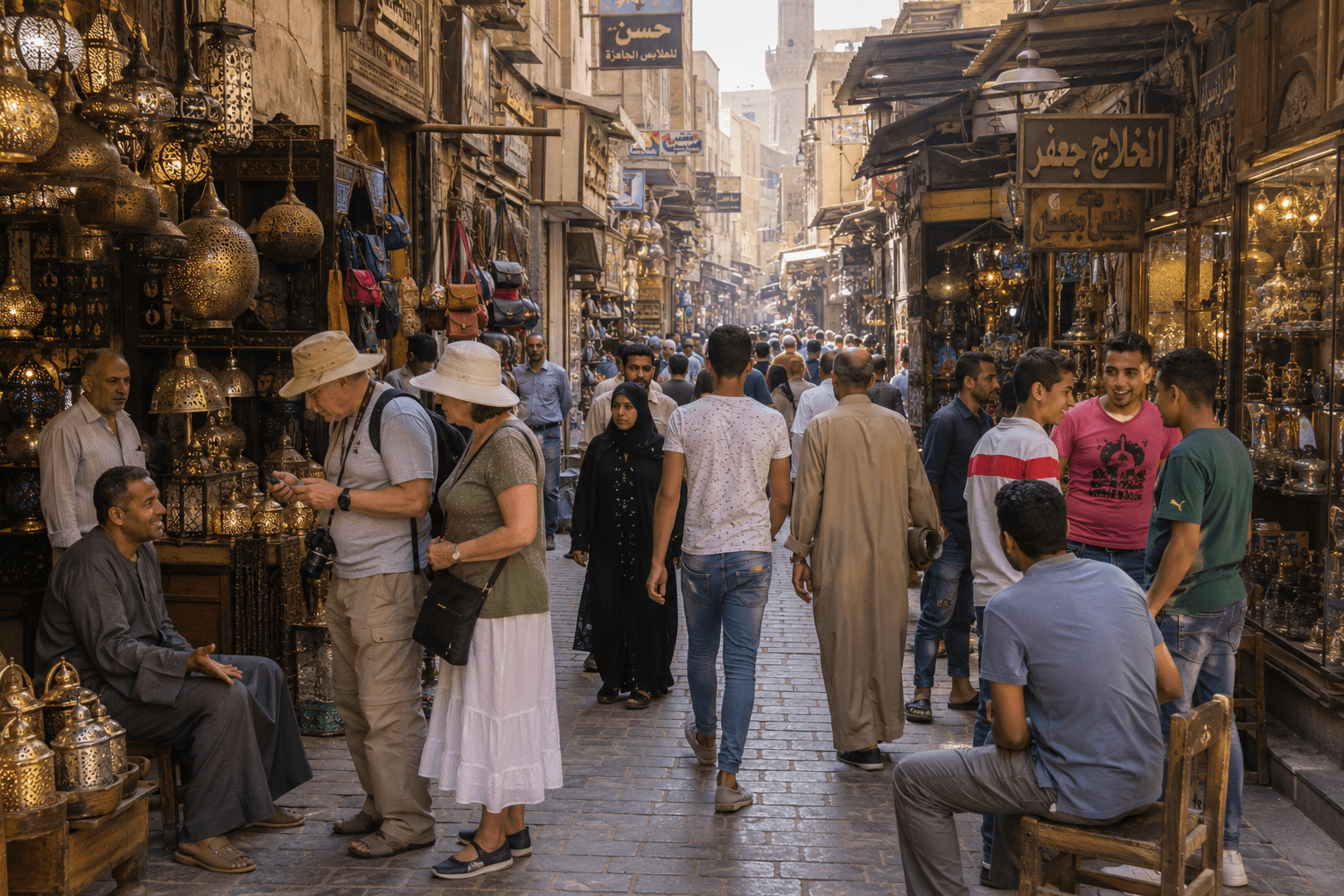
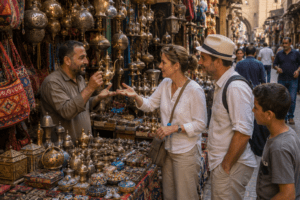
In tourist markets and bazaars, bargaining is part of the normal interaction.
Travelers who approach bargaining too aggressively often create more tension than necessary. In Egypt, bargaining usually works best as a calm social exchange rather than a confrontation.
The goal is not to “win.” The goal is to arrive at a price both sides accept comfortably.
At the same time, not every situation requires negotiation. Restaurants, supermarkets, ticket offices, and most formal businesses operate with fixed pricing.
Understanding where bargaining belongs—and where it does not—makes daily interactions much smoother.
Public Affection and Alcohol Feel Different Outside Tourist Areas
Egypt is socially conservative in many public settings even though major tourist areas can feel highly international.
Public displays of affection tend to remain limited outside resorts and private spaces. Alcohol is available in many hotels, cruise ships, restaurants, and tourist venues, but it is much less visible in ordinary daily Egyptian life than travelers may expect from Mediterranean destinations.
This cultural difference is rarely a problem for visitors unless they assume all environments in Egypt operate like international resort zones.
Respecting the Rhythm of Egypt Matters More Than Perfection
Travelers sometimes become overly anxious about making cultural mistakes in Egypt.
In reality, Egyptians are extremely accustomed to international visitors, especially in tourism-heavy regions. Genuine respect, patience, and awareness usually matter far more than memorizing detailed etiquette rules.
Most positive experiences come from understanding that Egypt moves differently. Conversations may take longer, interactions may feel more direct, and daily life often blends modern tourism with deeply rooted social traditions at the same time.
The travelers who enjoy Egypt most are usually the ones who adapt to that rhythm rather than constantly comparing it to home.
Articles like Egypt Travel Tips First-Time Visitors Actually Need and What Visiting the Pyramids Is Really Like become much more helpful once travelers understand how social atmosphere shapes the overall experience throughout Egypt.
FAQ: Egypt Cultural Etiquette
Do tourists need to dress conservatively in Egypt?
Tourists are not expected to follow strict dress codes everywhere, but modest lightweight clothing usually feels more comfortable and respectful outside resorts and beach areas.
Is tipping expected in Egypt?
Tipping is deeply embedded in everyday service culture throughout Egypt, especially around tourism, transportation, hotels, and guided experiences.
Can you take photos freely in Egypt?
Photography is common at tourist sites, but photographing people directly without permission is considered disrespectful in many situations.
Do women need to cover their hair in Egypt?
Hair covering is generally not required for tourists except inside certain mosques or religious spaces where more modest dress expectations apply.
Is bargaining normal in Egypt?
Bargaining is expected in bazaars and tourist markets, but most formal businesses, restaurants, and ticketed attractions use fixed pricing.
Most uncomfortable moments travelers experience in Egypt do not come from major cultural mistakes. They usually come from misunderstanding how different environments work—from mosques and markets to tipping culture and social interaction.
Explore Egyptian Nile Adventures helps travelers move through Egypt with clear cultural context, realistic expectations, and guides who understand how to bridge local customs with international travel comfortably.
See Egypt itineraries designed around real interactions and local experience—not just sightseeing schedules.