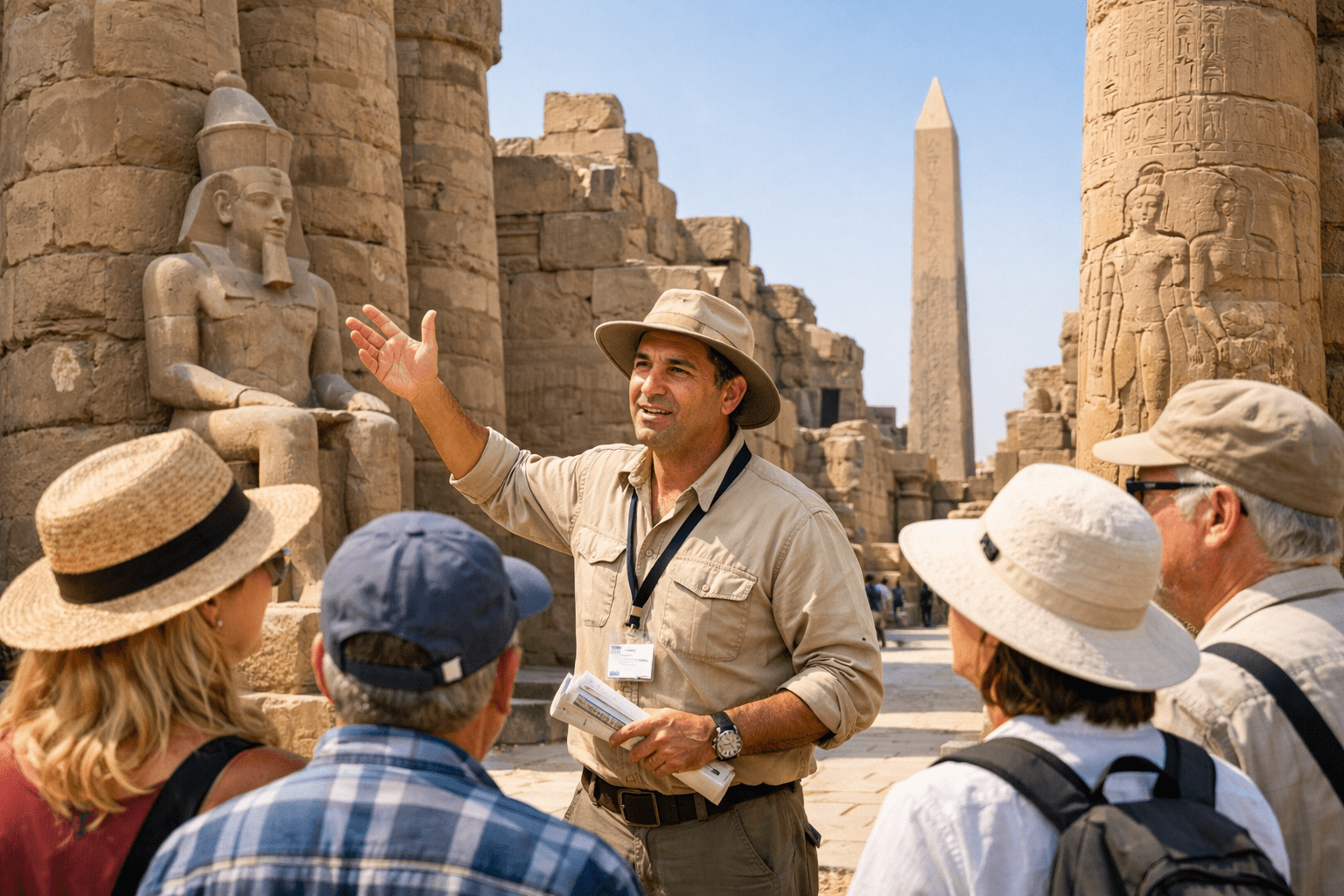
Do You Need a Guide in Egypt? Pros and Cons
One of the most common questions travelers ask when planning a trip is: do you need a guide in Egypt?
The short answer is no — but in most cases, having a guide significantly improves the experience.
Egypt is not a difficult destination to visit, but it is a country where how you travel matters. Understanding how to book an Egypt tour safely can also help you decide whether guided travel is the right approach. Visiting Egypt typically involves navigating large archaeological sites, coordinating transport between multiple cities, and understanding historical locations that are not designed as self-guided experiences.
This is where the difference becomes clear.
Traveling independently is possible, but it often requires more time, planning, and effort to manage logistics and fully understand what you are seeing. Traveling with a guide, on the other hand, adds structure, context, and efficiency — turning the same itinerary into a far more seamless and engaging experience.
The real question is not whether you can visit Egypt without a guide, but how much value a guide adds to your overall trip.
What It’s Like to Visit Egypt Without a Guide
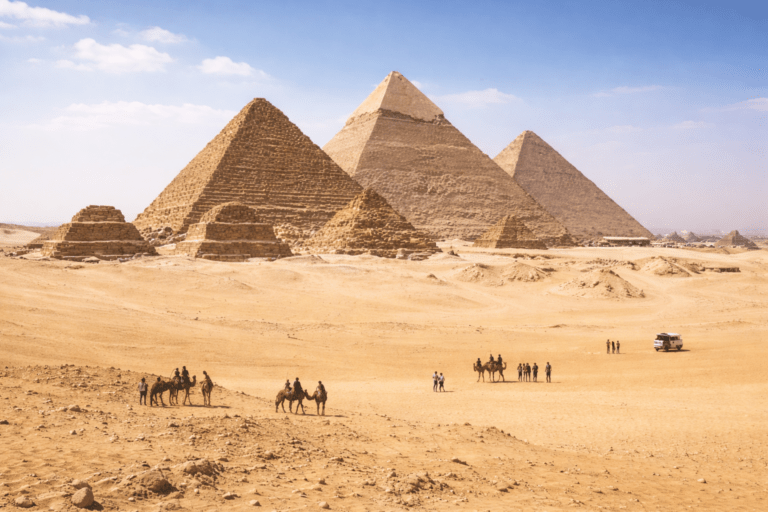
Visiting Egypt without a guide is entirely possible, particularly in major areas such as Cairo or at well-known sites like the Pyramids of Giza.
Independent travelers can arrange transportation, purchase tickets on arrival, and explore at their own pace. This approach offers flexibility and can feel more spontaneous, especially for those who prefer unstructured travel.
However, the experience is often different from what many travelers expect.
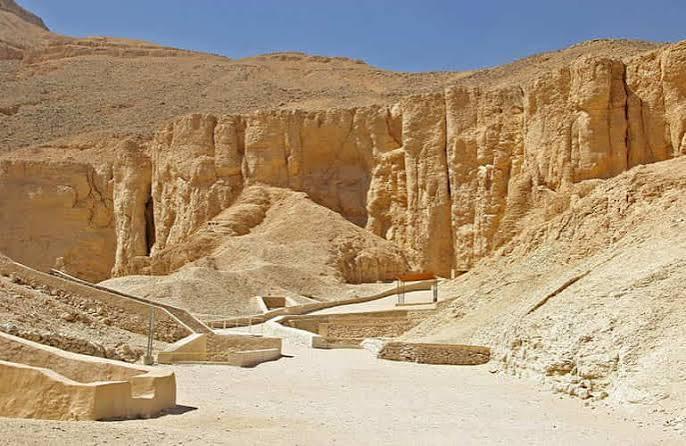
Egypt’s most important historical sites — including Karnak Temple, the Valley of the Kings, and Abu Simbel — are vast, complex, and not designed as self-guided environments. Signage is limited, and without context, it can be difficult to understand what you are seeing or how each site connects to Egypt’s broader history.
Logistics also play a larger role than in many destinations. Coordinating transport, managing travel between cities, and timing visits to avoid crowds all require planning and local awareness. What appears simple on paper can quickly become time-consuming in practice.
For experienced travelers, this approach can work well. For others, it often leads to a slower pace and a more fragmented understanding of the sites.
Planning your route in advance is essential — especially when deciding how many days you need in Egypt.
What a Guide Actually Does in Egypt
Many travelers assume that guides in Egypt are simply there to explain history — but in reality, their role is much more comprehensive.
A licensed Egyptologist guide does not just provide information; they structure the entire experience. From the moment your day begins, they manage timing, coordinate site visits, and ensure that each part of the itinerary flows efficiently. This becomes especially important at major archaeological sites, where scale, layout, and crowd patterns can affect how much you are able to see and understand. Egypt’s historical sites are managed and preserved by official authorities such as the Egyptian Ministry of Tourism and Antiquities.
At locations such as Karnak Temple or the Valley of the Kings, a guide helps prioritize what matters, navigate complex areas, and provide context that connects individual monuments into a larger historical narrative. Without that structure, visits can feel overwhelming or disconnected.
In cities like Cairo, guides also play a logistical role. They help manage traffic patterns, organize entry procedures at busy sites, and maintain a pace that balances sightseeing with rest. In Upper Egypt, particularly during Nile cruises, their role becomes even more critical — coordinating tightly scheduled temple visits where timing directly impacts the quality of the experience.
In practice, a professional Egypt tour guide does more than explain — they reduce uncertainty, improve efficiency, and turn a series of locations into a cohesive journey.
Pros of Having a Guide in Egypt
Having a guide in Egypt offers clear advantages, but the impact goes beyond simple convenience.
The most important benefit is understanding. Egypt’s monuments are not just visually impressive — they are layered with meaning, symbolism, and historical context that is not immediately obvious. A guide connects these elements, turning what might feel like isolated structures into a coherent and engaging narrative.
Efficiency is another major advantage. Many of Egypt’s key sites are large, spread out, and visited on tight schedules. A guide helps organize visits in a logical way, reduces time spent navigating, and ensures that the most important areas are not missed.
There is also a significant difference in how the day flows. With a guide managing timing, transportation, and site access, the experience feels more structured and less fragmented. Travelers are able to focus on the destination itself rather than the logistics behind it.
For first-time visitors in particular, these factors often make a noticeable difference — not just in comfort, but in how much of Egypt they are able to fully experience.
Cons of Having a Guide in Egypt
While having a guide in Egypt offers clear advantages, it is not the right fit for every type of traveler.
One of the main trade-offs is flexibility. Guided experiences follow a structured plan, which can limit the ability to move freely, change direction spontaneously, or spend extended time in one place. For travelers who prefer a more open-ended approach, this structure can feel restrictive.
There is also a difference in travel style. Independent travel allows for a more personal pace and a sense of discovery, particularly in cities like Cairo where certain areas can be explored without guidance. Some travelers value this freedom over the added structure that a guide provides.
Cost is another factor to consider. Traveling without a guide can reduce expenses, especially for those who are comfortable organizing transportation, tickets, and daily logistics on their own.
The key is not choosing one approach over the other, but understanding how each affects the experience. In many cases, the most effective solution is a balance — using guides where they add the most value, and exploring independently where flexibility matters more.
When You Should Definitely Have a Guide in Egypt
There are specific parts of Egypt where having a guide is not just helpful — it makes a significant difference in how much you are able to understand and experience.
In Upper Egypt, particularly in Luxor and Aswan, sites such as Karnak Temple, the Valley of the Kings, and Abu Simbel are large, complex, and historically dense. These locations are not designed for self-guided exploration, and without context, it can be difficult to understand what you are seeing or how the sites connect to one another. These regions are also best visited during certain seasons, so it helps to understand the best time to visit Egypt when planning your itinerary.
Guides are also especially valuable during Nile cruises. These itineraries follow tightly scheduled routes, with multiple temple visits organized across consecutive days. A guide ensures that each visit is structured properly, timed efficiently, and connected into a coherent experience rather than a series of isolated stops.
For first-time visitors, having a guide for at least part of the trip — particularly in Upper Egypt — is often the most effective approach. It provides clarity, reduces uncertainty, and allows you to engage more deeply with the places you are visiting.

When You Can Visit Egypt Without a Guide
There are also situations where visiting Egypt without a guide works well, particularly in areas that are less dependent on historical context or complex logistics.
In Cairo, certain parts of the city — such as modern districts, cafes, and some museum visits — can be explored independently, especially when transportation is arranged in advance. While major sites still benefit from guidance, not every part of the city requires a structured experience.
Red Sea destinations such as Hurghada and Sharm El Sheikh are also easy to navigate without a guide. These areas are built around tourism, with most activities — including snorkeling, diving, and excursions — organized directly through hotels or local operators.

For many travelers, the most effective approach is a combination of both styles. Using a guide for major archaeological sites and multi-day travel, while exploring more relaxed destinations independently, allows for both structure and flexibility within the same trip.
Guided Tours vs Private Guides in Egypt
When deciding whether you need a guide in Egypt, it’s also important to understand the difference between guided tours and private guides.
Private guides offer a more flexible and personalized experience. They allow you to adjust pacing, spend more time at specific sites, and tailor the day around your interests. This approach is especially valuable for travelers who want a deeper, more customized experience while still benefiting from expert guidance.
Guided group tours, on the other hand, follow a fixed structure. They are typically more budget-friendly and include shared transportation and scheduled visits. While this can be efficient, it often comes with less flexibility and a more standardized pace.
The key difference is not just price — it is how much control you have over your time and experience. Private guides prioritize flexibility and depth, while group tours prioritize structure and cost efficiency.
The right choice depends on your priorities, whether that is customization, comfort, or budget.
How Guides Impact the Overall Experience in Egypt
In Egypt, guides do more than add information — they shape how the entire trip feels.
Without a guide, the experience can become slower and more fragmented. Time is often spent navigating logistics, understanding site layouts, and deciding what to prioritize. While this approach offers independence, it can also make the journey feel less cohesive, especially when visiting multiple destinations.
With a guide, the same itinerary often feels more structured and easier to follow. Visits are organized in a logical sequence, timing is managed efficiently, and each site is connected through clear context. Instead of focusing on logistics, travelers are able to focus on the experience itself.
This difference becomes even more noticeable in Egypt, where distances, site complexity, and historical depth all play a role. As a result, many travelers who initially plan to explore independently choose to add guided support during their trip — particularly after experiencing the scale of the major sites.
Is a Guide Worth It in Egypt?
For most travelers, yes — a guide in Egypt is worth it, particularly for historical sites and multi-destination itineraries.
The value of a guide goes beyond explanation. In Egypt, guides simplify the entire experience by managing logistics, improving pacing, and providing context that connects each site into a meaningful journey. This becomes especially important when traveling between cities or visiting large archaeological areas where timing and structure matter.
Without a guide, the same itinerary often requires more effort to navigate and may feel less cohesive. With a guide, it becomes more efficient, more engaging, and easier to follow.
That said, not every part of the trip requires guidance. Many travelers choose a balanced approach — using a guide where it adds the most value, and exploring independently where flexibility matters more.
To help you in deciding, check out our article on how much does an Egypt trip cost.
FAQ: Do You Need a Guide in Egypt?
Do you need a guide for the Pyramids of Giza?
You do not need a guide to visit the Pyramids of Giza, but having one significantly improves the experience. A guide helps explain the history, navigate the large site efficiently, and avoid common confusion around entrances, viewpoints, and pacing.
Can you visit Luxor without a guide?
Yes, it is possible to visit Luxor without a guide, but it is much more difficult to fully understand the sites. Locations like Karnak Temple and the Valley of the Kings are large and complex, with limited signage, making guided visits far more informative and structured.
Are guides in Egypt expensive?
Guides in Egypt are generally affordable compared to many destinations. Considering the level of expertise, organization, and time-saving they provide, most travelers find that hiring a guide offers strong value for the overall experience.
Is it better to have a guide for a Nile cruise?
Yes, having a guide during a Nile cruise is highly recommended. Most cruises include guided visits because the temples along the route are interconnected, and understanding their context is essential to fully appreciate the experience.
Can you mix guided and independent travel in Egypt?
Yes — many travelers choose a hybrid approach. They use guides for major historical sites and multi-day travel, while exploring cities or resort areas independently. This balance allows for both structure and flexibility.
Final Thoughts: Should You Use a Guide in Egypt?
You don’t need a guide to visit Egypt — but for most travelers, using a guide in Egypt makes a significant difference in how the trip unfolds.
Egypt is a destination where history, scale, and logistics all come together. With the right guidance, the experience becomes more structured, more engaging, and far easier to navigate. Without it, the same itinerary often requires more effort and can feel less connected.
The key is not choosing between guided or independent travel, but understanding where each approach adds the most value. For many travelers, a combination of both creates the most balanced and rewarding experience.
Planning Your Trip to Egypt?
At Explore Egyptian Nile Adventures, we design well-structured Egypt tours with experienced Egyptologist guides who help bring each destination to life — while keeping your journey smooth and well-paced.
Whether you prefer a fully guided experience or a flexible, hybrid approach, we help you find the right balance between independence and support.
Explore our Egypt travel experiences and start planning your trip