What to Do in Marsa Matrouh Besides the Beach: History, Markets & Local Experiences
Marsa Matrouh is first and foremost a beach destination, and it would be misleading to pretend otherwise. Travelers come for the white sand and intensely turquoise Mediterranean water, not because the city has the monument density of Cairo or Luxor. But spending every hour inside a resort misses an important part of Matrouh. Its museums, markets, seafood restaurants, Bedouin heritage, wartime history, and busy summer evenings reveal why this city means far more to Egyptians than its beaches alone.
The strongest approach is not to sacrifice a perfect swimming morning for sightseeing. Use the cooler morning or late afternoon for the beach, then explore the city once the Mediterranean sun becomes stronger or after sunset, when Matrouh becomes noticeably more animated. Egypt’s official tourism site makes a similar distinction, specifically highlighting markets, museums, and Bedouin experiences beyond the city’s classic beaches.
This is particularly useful if you’re staying for four or five days. One recent traveler asking locals how to experience Matrouh beyond the resort was told something revealing: the city does not have a huge conventional sightseeing list, but local food, the Rommel Museum, and Bedouin experiences are among the ways to see a different side of it.
Expert Insight: Don’t build a Marsa Matrouh itinerary as though you’re visiting Luxor. Keep the Mediterranean at the center of the trip, then use museums, markets, food, and desert experiences to give the beach days more depth.
Start With the Marsa Matrouh Museum
If you want to understand why this seemingly modern summer city has a much longer history, the Marsa Matrouh Museum is the best place to begin.
The museum occupies two floors inside the Misr Public Library and covers 728 square meters. Its collection traces the region’s history from ancient Egypt through its role as the country’s western gateway, with artifacts connected to border defenses, desert deities, fishing, trade, astronomy, and links with neighboring Mediterranean regions. Marsa Matrouh itself was known as Paraetonium during antiquity, long before it became an Egyptian summer resort.
It is also one of the easiest cultural stops to fit around a beach day. According to the Ministry of Tourism and Antiquities, the museum currently operates from 8:00 a.m. to 3:00 p.m. and again from 5:00 p.m. to 10:00 p.m., with a break between 3:00 and 5:00. The listed foreign admission price is EGP 80 for adults and EGP 40 for students, although ticket prices should always be checked before visiting.
That evening opening is particularly useful in summer. Instead of giving up the cooler hours on the coast, you can visit after the strongest afternoon heat has passed.
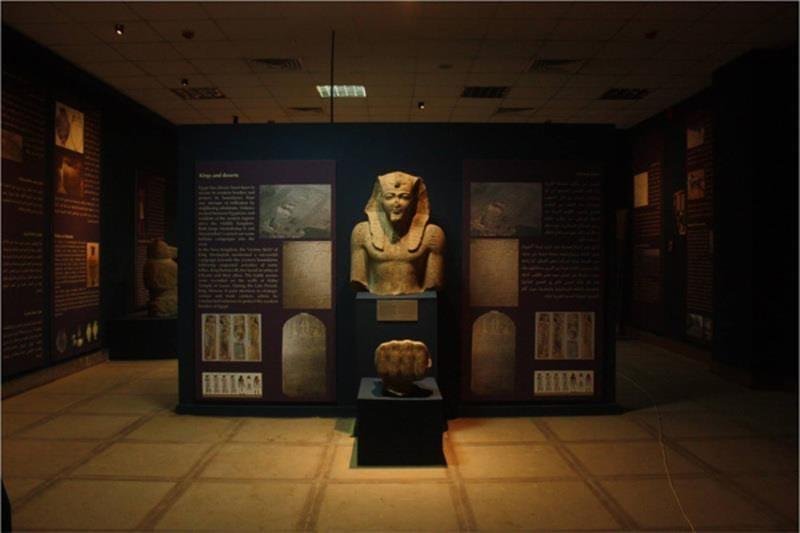
See the Other Side of Matrouh’s World War II History
Marsa Matrouh’s position close to the Western Desert placed it near one of the most important theaters of the North African campaign during the Second World War.
The city’s best-known reminder is Rommel’s Cave, associated with German Field Marshal Erwin Rommel. Egypt’s State Information Service describes the site as a cave cut into the rock that Rommel used while planning military operations and which later became a war museum. Egypt’s official tourism guide also lists Rommel’s Cave Museum among Matrouh’s notable sites.
The attraction is relatively small, so it works better as part of a wider outing than as the centerpiece of an entire day.
Travelers with a serious interest in World War II history should go farther east to El Alamein, where the landscape tells a much larger story. This is the better choice if military history is genuinely one of your interests rather than something you want to fill an hour with between beach visits.
Guide’s Note: Marsa Matrouh and El Alamein may appear close when looking at Egypt as a whole, but the North Coast is long. Don’t add El Alamein casually to an already full beach day; treat it as a dedicated excursion with road time built into the schedule.
Walk the Corniche After Sunset
One of the simplest ways to experience Matrouh beyond the resort is also one of the best: go into the city in the evening.
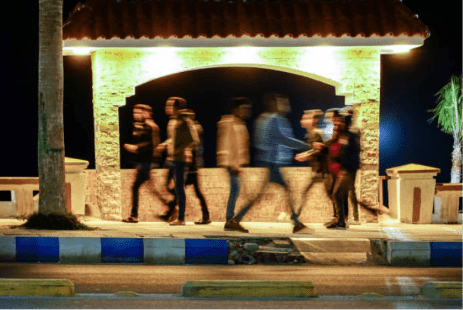
The Corniche is less about conventional sightseeing than seeing how Matrouh actually behaves during summer. Families walk along the waterfront, cafés stay active, restaurants fill, and the city feels considerably more energetic than it does under the midday sun. The Corniche remains one of the city’s most reviewed attractions on Tripadvisor, with travelers repeatedly mentioning the atmosphere, food, and local character alongside the coastline itself.
This is especially worthwhile for international visitors staying in self-contained resorts outside the center. A resort can give you an excellent Mediterranean holiday without showing you very much of Marsa Matrouh itself.
Visit after sunset rather than in the middle of the afternoon. You’ll walk more comfortably, more businesses will be active, and you’ll experience the social rhythm that defines an Egyptian Mediterranean summer.
Shop at Souq Libya
For a more local experience, make time for Souq Libya.
This isn’t a polished tourist market designed around souvenirs. Its identity reflects Matrouh’s position toward Egypt’s western frontier and its long cultural connections with Libya. Travelers still mention the market as a familiar part of the Matrouh experience, and Tripadvisor lists Souq Libya among the city’s shopping attractions.
Come here expecting practical shopping and local commerce rather than a carefully staged bazaar. Browse slowly, ask prices before buying, and carry Egyptian pounds for smaller purchases.
If your only Egyptian market experience has been around major international attractions, Souq Libya provides a very different perspective.

Eat Seafood the Matrouh Way
A beach city should be judged partly by what happens after the fishing boats come back, and seafood deserves at least one evening of your Marsa Matrouh stay.
The more local experience is to choose fish from the display or counter and then specify how you want it prepared. A May 2026 traveler review of Magdy Seafood Restaurant, for example, described choosing directly from fish and shellfish before having it fried or grilled and served with Egyptian mezze and warm bread. Reviews of the restaurant are mixed overall, which is precisely why it’s better to treat this as an example of the local dining style rather than a blanket restaurant endorsement.
Current traveler rankings also include seafood restaurants ranging from simple local establishments to considerably more polished dining at Almaza Bay, illustrating how different the experience can be depending on where you’re staying.
Ask what’s fresh, confirm the price before preparation when seafood is sold by weight, and don’t assume the most expensive waterfront restaurant automatically has the best fish.
Experience a Bedouin Zarda
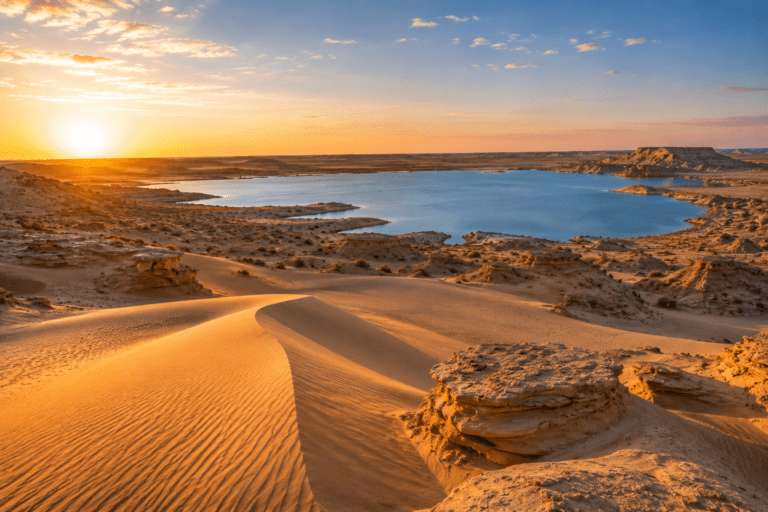
If you want to understand something of the culture beyond Matrouh’s urban coastline, a Bedouin desert experience is a stronger choice than simply adding another viewpoint.
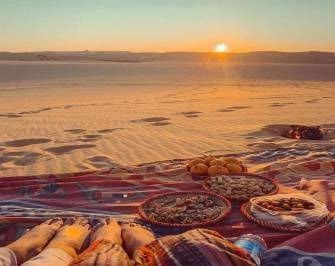
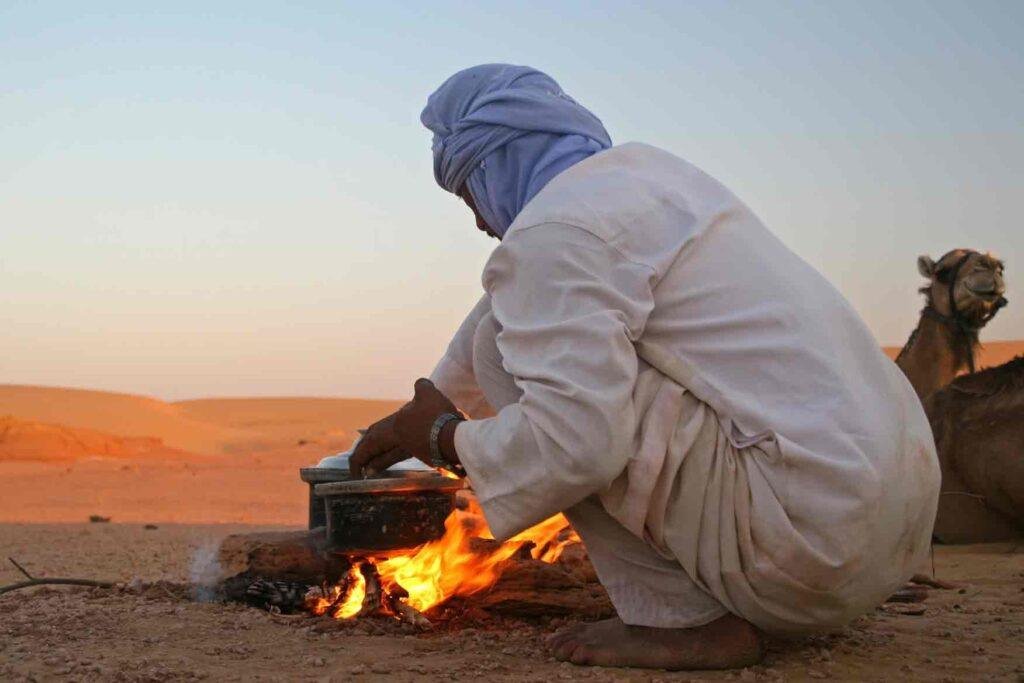
The Ministry of Tourism’s official Experience Egypt site specifically recommends a Zarda, a Bedouin excursion into the desert arranged through a licensed tour agency. The experience can include a traditional meal, with lamb or chicken cooked in a sand pit.
This is one activity where organization matters. Avoid choosing an operator simply because someone approaches you on the waterfront. Ask what transportation is included, where the experience takes place, how long you’ll actually spend in the desert, and exactly what the quoted price covers.
The experience works particularly well in the late afternoon, when the desert heat starts to ease. It also gives families and couples something genuinely different after several days centered around swimming.
Visit the Salt Cave—But Keep Expectations Grounded
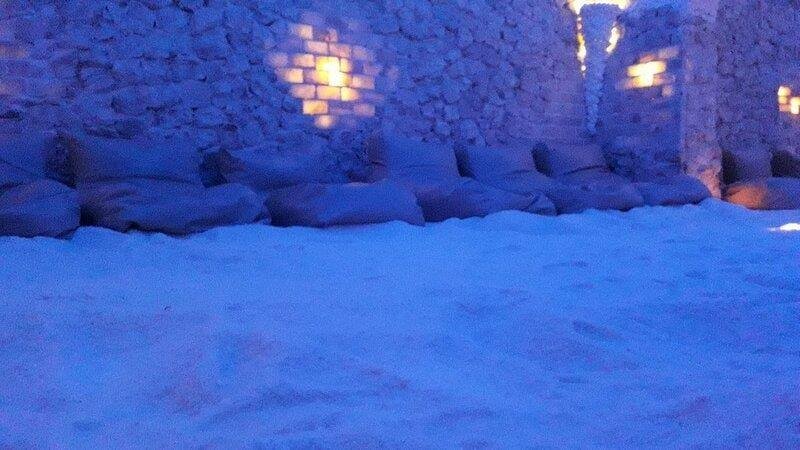
The Salman Salt Cave is another unusual stop west of the city and appears among traveler-listed Matrouh attractions.
You’ll encounter claims locally that spending time inside salt caves provides therapeutic benefits for respiratory or skin conditions. Egyptian government information also repeats some of these health claims. However, travelers should treat the cave as a relaxation or novelty experience rather than relying on it as medical treatment.
The appeal is primarily sensory: the salt-covered interior, cooler environment, and quiet atmosphere offer a break from the heat and bustle outside.
It’s worth visiting if you enjoy unusual local experiences, but it should sit below Matrouh’s museum, food, markets, and desert culture on a first visit.
Look Beyond Cleopatra’s Beach
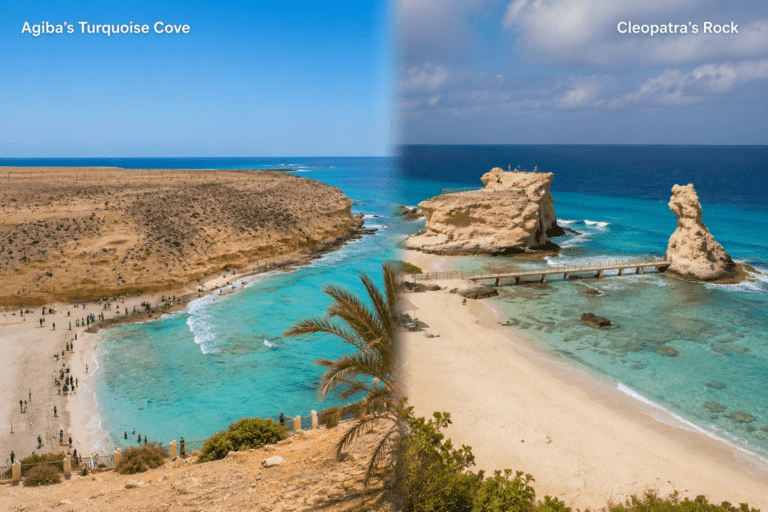
Cleopatra is normally discussed as a beach, but the area has a historical dimension that makes it worth visiting even if you’re not planning to spend hours swimming.
Marsa Matrouh has connections stretching back into the Pharaonic, Ptolemaic, Roman, and early Christian periods. The State Information Service records archaeological remains in the wider region including the Ramses II site, early Coptic remains, and Cleopatra’s Bath area.
The Cleopatra association itself belongs partly to local tradition rather than firmly documented history, so approach it as a combination of landscape and legend rather than expecting a major archaeological complex.
For the coastline itself, our Best Beaches in Marsa Matrouh guide explains how Cleopatra compares with Agiba, Almaza Bay, Rommel, and Gharam for swimming, facilities, crowds, and photography.
See the Ramses II Remains at Umm el-Rakham
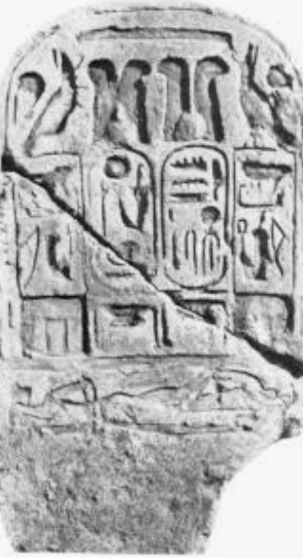
Travelers interested in archaeology can look farther beyond the city center to Umm el-Rakham, associated with remains from the reign of Ramses II.
Government tourism information identifies the site south of Marsa Matrouh and records hieroglyphic inscriptions bearing the king’s name.
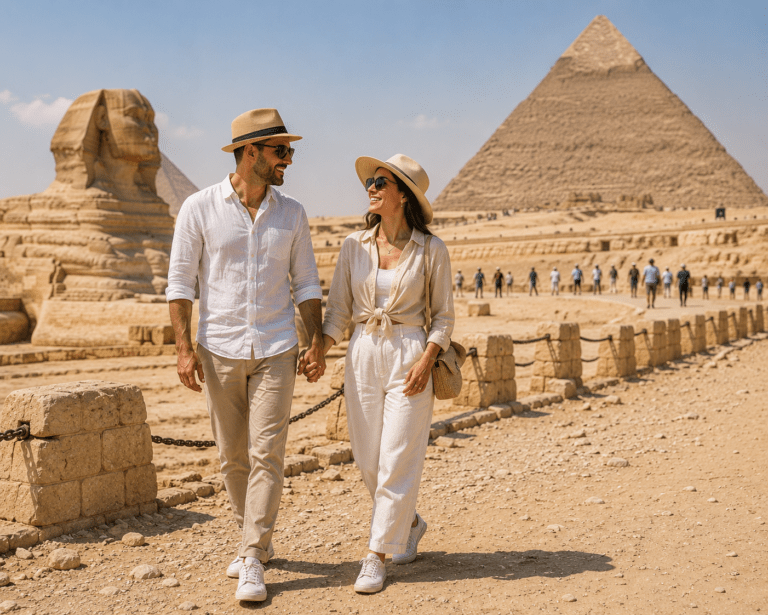
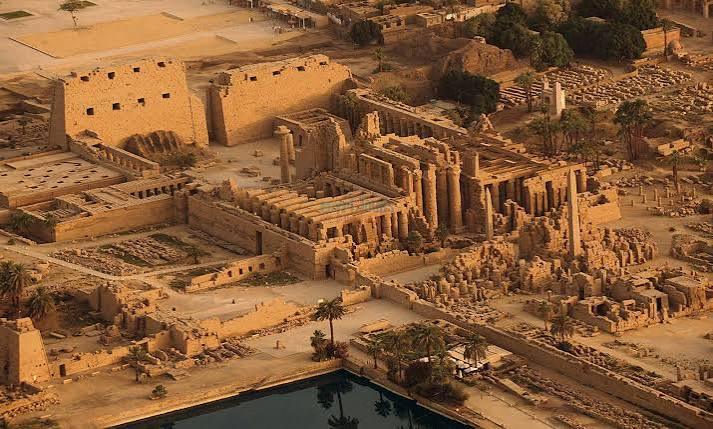
This is not Luxor. Don’t expect monumental pylons, vast colonnades, or a visitor infrastructure built for large tour groups. The attraction is its historical context: this western edge of ancient Egypt mattered strategically, and the remains help explain Matrouh’s long role as a frontier rather than simply a seaside settlement.
For travelers primarily interested in beaches, it is optional. For archaeology enthusiasts trying to understand Egypt beyond its famous Nile Valley monuments, it is considerably more interesting.
Give Yourself an Evening With No Sightseeing Agenda
One of the easiest mistakes in Egypt is believing that every hour needs a named attraction.
In Marsa Matrouh, an evening spent eating grilled fish, drinking tea or coffee, walking through the center, and watching families fill the streets can tell you more about the destination than squeezing another minor attraction into the itinerary.
This is also one reason Why Egyptians Choose Marsa Matrouh for Their Summer Vacation deserves its own story. The appeal isn’t confined to a list of attractions. Matrouh is part of Egypt’s domestic summer culture, and that becomes clearest after the beach umbrellas start coming down.
A recent international visitor described wanting to experience the “real Egypt” outside the resort, while local responses pointed them toward food, Bedouin experiences, and the city itself rather than an endless sightseeing list.
That distinction matters. Marsa Matrouh is better experienced than collected.
Should You Take a Day Trip From Marsa Matrouh?
If you have only three or four days, stay around Matrouh. There’s little value in spending half your short Mediterranean break sitting in a vehicle.
With a longer stay, El Alamein makes sense for travelers interested in Second World War history. Alexandria is possible but involves substantially more road time and works better as a separate stop in a broader northern Egypt itinerary rather than a casual excursion.
Siwa is a different proposition altogether. It deserves several days rather than a rushed out-and-back journey. Trying to “see Siwa” as a quick diversion from Matrouh undermines exactly what makes the oasis worthwhile.
ENA Tip: If your itinerary includes Cairo or Alexandria as well as Marsa Matrouh, place the cultural sightseeing in those cities and protect your Matrouh days for the coast, local evenings, and one or two carefully chosen experiences.
How to Balance Sightseeing With Beach Time
A good Marsa Matrouh day doesn’t need to be complicated.
Use the morning for swimming while the Mediterranean is inviting and the busiest beaches are still manageable. Retreat from the strongest midday sun for lunch and rest, then visit a museum or cultural attraction later in the afternoon. After sunset, head to the Corniche, market, or a local restaurant.
The season matters as well. Experience Egypt specifically notes that summer is when most businesses are operating, while the sea breeze makes Matrouh comparatively comfortable during Egypt’s hottest months. Our Best Time to Visit Egypt’s Mediterranean Coast guide goes deeper into how June, July, August, and September differ for crowds, water temperature, and prices.
Families should be even more selective rather than trying to fill every afternoon. Our Family Guide to Marsa Matrouh covers how to balance beach time with activities that work better for children.
Frequently Asked Questions
Is there much to do in Marsa Matrouh besides beaches?
The strongest alternatives are the Marsa Matrouh Museum, Rommel’s Cave, the Corniche, Souq Libya, local seafood dining, and organized Bedouin desert experiences. The sightseeing inventory is smaller than Cairo or Alexandria, so the destination works best when these experiences complement rather than replace the beach.
Is Marsa Matrouh worth visiting if I don’t like beaches?
Travelers with little interest in swimming will generally get more from Alexandria, Cairo, or Siwa. Matrouh’s cultural attractions are worthwhile, but the Mediterranean remains the main reason to come. If you’re choosing between Egyptian coastlines based on activities rather than sand alone, our Mediterranean Egypt vs Red Sea Egypt: Which Is Right for You? comparison will help clarify the difference.
What can families do in Marsa Matrouh at night?
The Corniche is the easiest evening choice because families can walk, eat, stop at cafés, and enjoy the waterfront after daytime temperatures fall. The Marsa Matrouh Museum’s currently published evening session also makes it unusually convenient for families who don’t want to sacrifice beach hours.
Is Marsa Matrouh good for history?
Matrouh has layers of Pharaonic, Greco-Roman, early Christian, and Second World War history, but the remains are more dispersed and modest than Egypt’s major archaeological destinations. History enthusiasts should prioritize the museum, Umm el-Rakham and Rommel’s Cave, then consider El Alamein as a separate excursion.
The mistake is trying to turn Marsa Matrouh into a conventional sightseeing destination—or doing the opposite and never leaving the resort. The better trip keeps those extraordinary Mediterranean mornings intact while using evenings and selected afternoons to discover the city’s history, markets, food, and Bedouin connections. Explore ENA’s tailor-made Egypt itineraries to fit Marsa Matrouh into a northern Egypt journey without losing days to unnecessary transfers or sacrificing the very beach time that makes the destination worth visiting.