Agiba Beach vs Cleopatra Beach: Which Should You Visit?
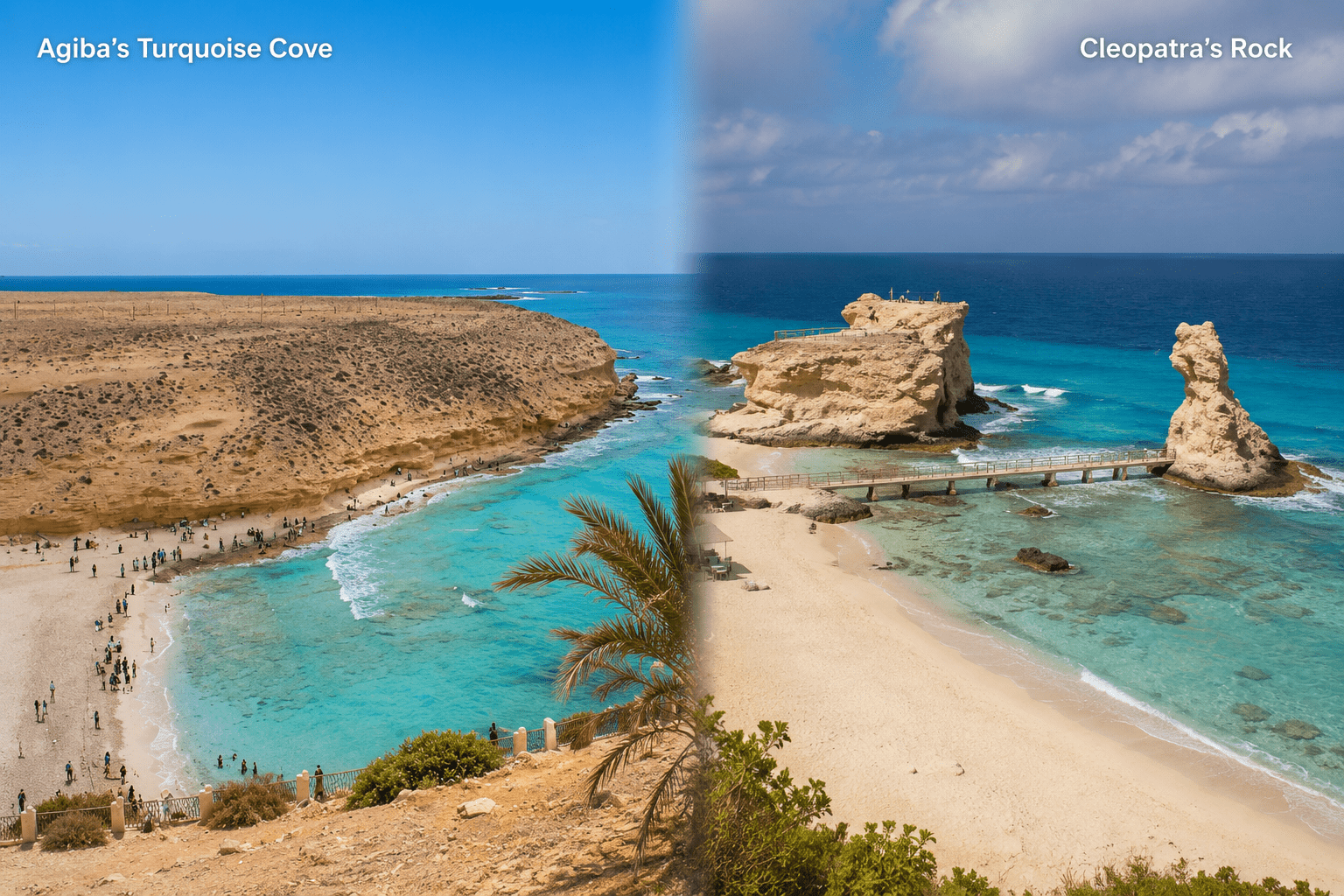
Agiba Beach and Cleopatra Beach are usually the two names travelers encounter first when researching Marsa Matrouh, but they should not be treated as interchangeable beach days. Agiba is the stronger choice for spectacular scenery and the classic turquoise-cove experience. Cleopatra is more compelling for its rock formations, famous bathing pool, and an easy sightseeing stop along Matrouh’s western coastline.
If you have time, visit both. They are close enough to fit naturally into the same western Matrouh outing, and the experiences are different enough to justify it. If you can choose only one, choose Agiba. The white cliffs enclosing intensely blue Mediterranean water create the landscape most travelers imagine when they hear about Marsa Matrouh.
That recommendation comes with an important qualification: conditions on this coast change. Wind can turn clear, inviting Mediterranean water into a much rougher sea, and July and August crowds can transform a small cove surprisingly quickly. Timing matters almost as much as the beach you choose.
Expert Insight: Don’t choose between Agiba and Cleopatra based only on swimming. Agiba works better as a complete beach-and-viewpoint experience, while Cleopatra is best approached as a coastal landmark where the rock formations and Cleopatra’s Bath are as important as the water itself.
Agiba and Cleopatra Feel Completely Different
Agiba’s advantage becomes obvious before you reach the sand. The beach sits inside a compact cove framed by pale cliffs, with the Mediterranean shifting from light turquoise near shore to deeper blue beyond the rocks. Egypt’s official tourism authority describes Agiba as Marsa Matrouh’s most iconic beach and specifically recommends climbing the cliffs for panoramic views over its crystal-clear water.
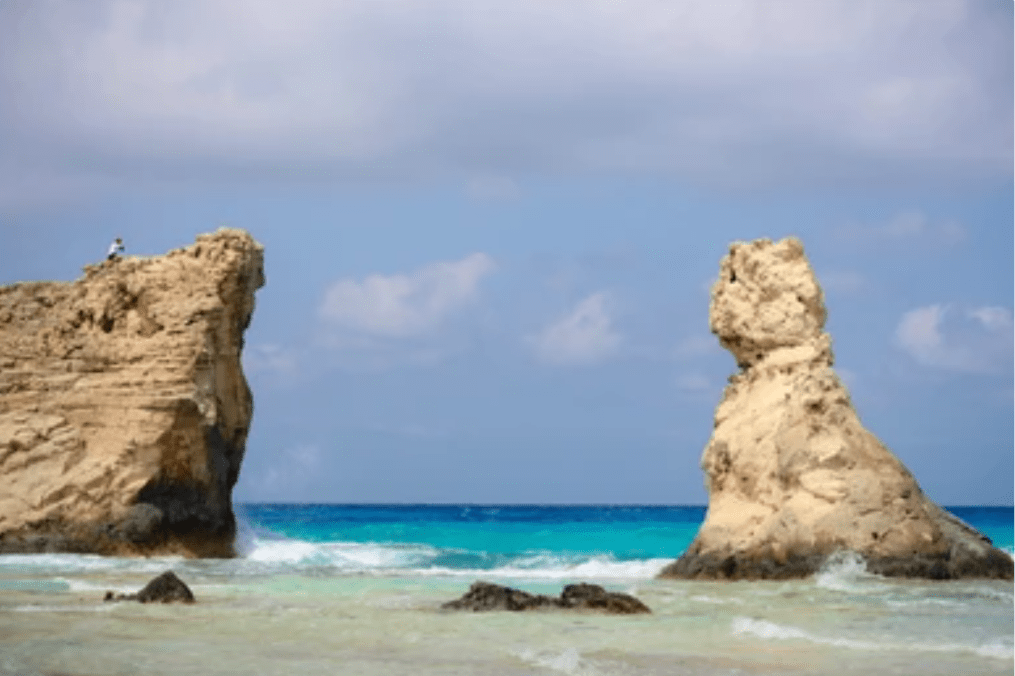
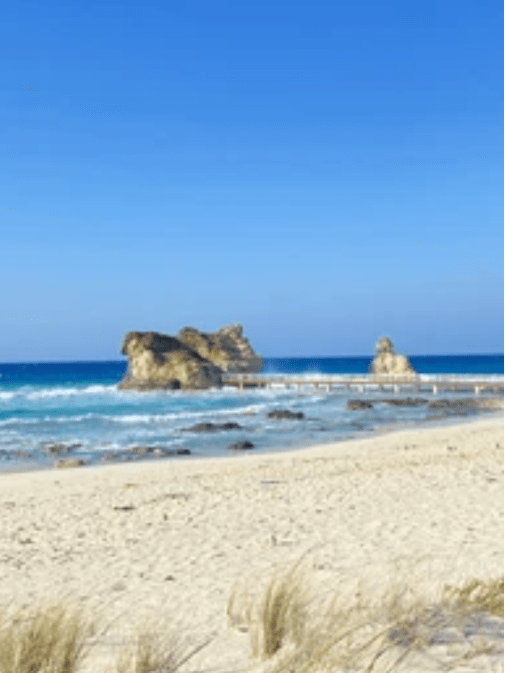
Cleopatra Beach is more exposed and rockier. Its defining feature is the enormous formation known as Cleopatra’s Rock or Cleopatra’s Bath. A glass passage leads across the rocky shoreline toward the formation, where waves enter a naturally sheltered rock basin. Experience Egypt presents this natural pool as the signature experience rather than the beach itself.
That distinction should guide your decision. Go to Agiba primarily for the beach and landscape. Go to Cleopatra primarily for the coastal scenery and rock formation.
If you’re comparing these two with Almaza Bay, Rommel, Gharam, and other stretches of coastline, our Best Beaches in Marsa Matrouh guide gives the broader picture.
Agiba Wins for the Classic Marsa Matrouh Beach Experience
Agiba is the beach I’d prioritize on a first trip.
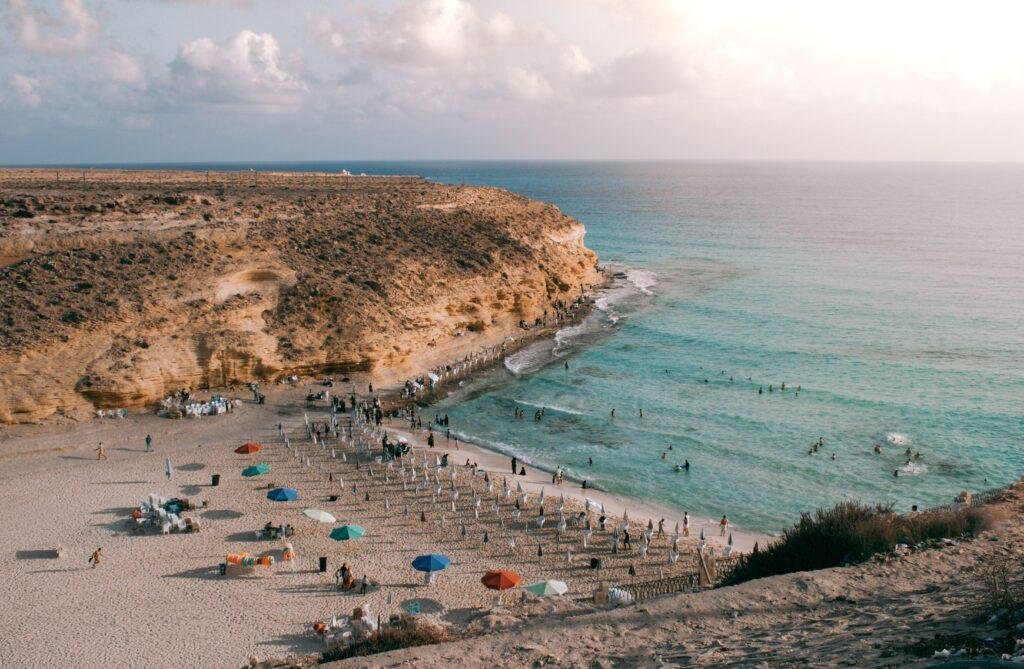
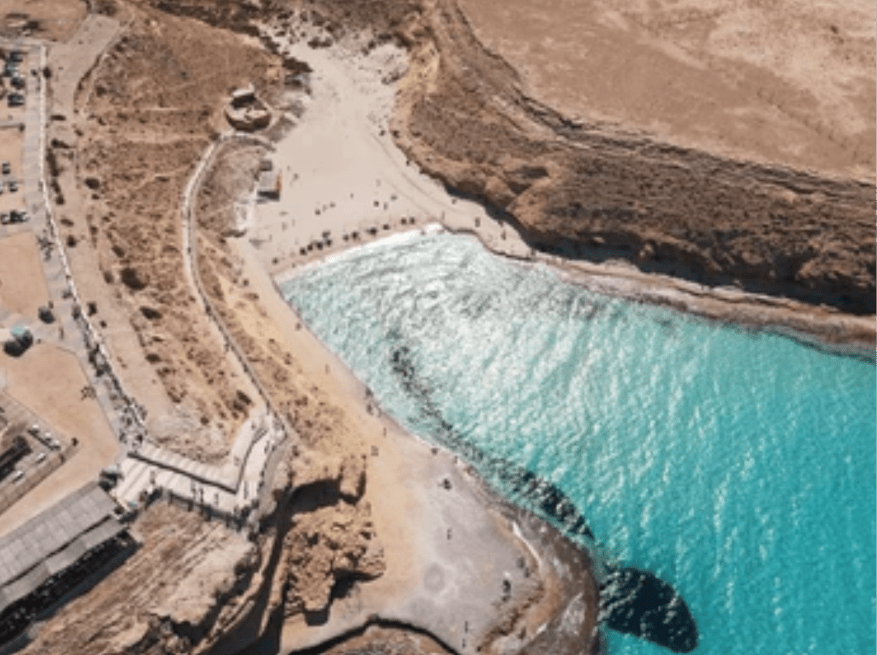
The cove is small enough to feel enclosed by the surrounding cliffs, which gives it a character very different from the long open beaches elsewhere along Egypt’s Mediterranean coast. From above, the contrast between pale limestone, sand, and turquoise water makes this one of the strongest coastal views around Matrouh.
But its size is also the weakness. Once summer visitors arrive, there isn’t much room for them to spread out. Images from peak-season conditions show just how quickly the narrow shoreline and swimming area can fill.
Arrive early if you’re visiting in July or August. A quiet morning gives you clearer views from the cliffs, more space beside the water, and a much better chance of experiencing Agiba as the secluded-looking cove seen in photographs.
Guide’s Note: Agiba’s viewpoint is worth the journey even if sea conditions aren’t suitable for the swim you expected. Don’t arrive, see waves, and immediately leave. The elevated view is one of the reasons to come.
Cleopatra Wins for Rock Formations and Coastal Photography
Cleopatra Beach has a different visual strength.
Instead of Agiba’s enclosed cove, the landscape is defined by sculpted rock and the open Mediterranean. The glass walkway leading toward Cleopatra’s Bath creates one of Matrouh’s most recognizable compositions, particularly when the sea is strongly turquoise.
The famous association with Cleopatra should be treated as tradition rather than established archaeological fact. What you can experience directly is the geology: water moving through openings in the formation and into the natural basin inside. The official Experience Egypt site specifically describes waves filling the sheltered rock bed while sunlight enters through a natural opening overhead.
For photographers, that makes Cleopatra particularly interesting because the subject isn’t simply blue water. Rock, waves, walkway, and coastline give you more compositional possibilities than a conventional sandy beach.
Morning generally gives you a cleaner experience before the summer visitor flow builds. Late afternoon can produce warmer light across the rocks, although the sea and wind conditions matter.
Don’t Assume Cleopatra Is the Better Swimming Beach
This is one of the most important distinctions between the two.
Older firsthand reports describe Cleopatra as a rocky shoreline with limited space for conventional swimming and emphasize the power of water moving through the openings around the famous rock formation. The official tourism description likewise focuses on the rocky shore, glass passage, and natural saltwater pool rather than presenting Cleopatra as a broad sandy swimming beach.
That makes Agiba the better default if your main objective is an actual beach session.
Neither beach, however, should be treated as guaranteed calm water. Egypt’s Mediterranean coast can experience noticeable waves and wind, and conditions vary from day to day. Recent traveler reports from elsewhere along the Matrouh coastline describe periods of substantial waves even when the water remained exceptionally clear.
If lifeguards or local authorities restrict swimming, follow that guidance. A beautiful turquoise sea is not necessarily a calm one.
Which Has Clearer Water?
There isn’t a meaningful winner.
Both can produce exceptionally clear turquoise water, particularly during settled summer weather. Agiba often looks more dramatic because the elevated viewpoint allows you to see the different shades across the entire cove.
Cleopatra’s water can be equally striking, but the rocky seabed and waves around the formations create a different appearance.
A firsthand traveler discussing Marsa Matrouh described it as the best beach experience of their trip and specifically highlighted how unusually clear the water was. That broader observation matches what makes this stretch of Egypt’s Mediterranean coast special: clarity and color can be exceptional when conditions cooperate.
Don’t schedule your entire visit around an Instagram photograph, though. Wind, wave action, light, and the number of swimmers all affect how the water looks on a particular day.
Families Should Choose Based on the Children, Not the Name
For families wanting several hours of sand and swimming, Agiba is generally the more satisfying of these two, provided conditions are suitable and everyone can manage the access.
Cleopatra becomes more complicated with young children because rocks and moving water around the formation demand more attention. It’s better treated as a family sightseeing stop than automatically assumed to be the easiest swimming beach.
Agiba presents its own issue: the beach sits below the cliffs, so reaching the shoreline requires more effort than pulling up beside a flat resort beach. Families carrying bags, towels, inflatables, and equipment should factor that into the decision.
If easy facilities, straightforward access, shade, and child-friendly logistics matter more than iconic scenery, neither may be your best all-day choice. Our Family Guide to Marsa Matrouh compares the coast from a family perspective rather than simply ranking the prettiest beaches.
Agiba Is Better for a Half-Day; Cleopatra Works Well as a Shorter Stop
This is where itinerary planning makes the difference.
Give Agiba enough time to see the viewpoint, descend to the beach, swim if conditions permit, and enjoy the landscape without immediately turning around. Two or three hours can disappear easily when the beach is pleasant.
Cleopatra can work as a shorter visit because the main experience is concentrated around the coastline, walkway, and rock formation. You don’t necessarily need to dedicate half a day to appreciate it.
That makes the two easy to combine: Agiba first in the morning, Cleopatra later as you return toward Marsa Matrouh is the stronger sequence for most travelers. Starting at Agiba also gives you a chance to reach its smaller cove before peak summer crowds.
Summer Crowds Can Change the Decision
Marsa Matrouh is fundamentally an Egyptian summer destination. July and August bring domestic vacationers in large numbers, and famous beaches naturally receive a disproportionate share.
This isn’t unique to Matrouh. Recent local discussions about Egypt’s Mediterranean coast repeatedly describe June through August as the period when domestic beach tourism becomes particularly intense.
Agiba feels that pressure more because its geography limits how far crowds can spread. Cleopatra’s attraction is concentrated around its famous formation, so congestion can instead develop around the walkway and main viewing area.
For July and August, arrive early. For a more relaxed experience, September is the stronger month, when the Mediterranean retains much of its summer warmth but domestic holiday pressure begins to ease.
Our Best Time to Visit Egypt’s Mediterranean Coast explains how June, July, August, and September differ for sea temperature, crowds, and travel costs.
Agiba vs Cleopatra Beach Comparison
| Experience | Agiba Beach | Cleopatra Beach |
|---|---|---|
| Best overall for | Beach scenery and swimming | Rock formations and sightseeing |
| Water clarity | Excellent in settled conditions | Excellent in settled conditions |
| Beach style | Small cliff-backed cove | Rocky, exposed coastline |
| Swimming | Better choice of the two when conditions permit | Secondary to the rock-pool experience |
| Photography | Outstanding panoramic views | Outstanding rock formations |
| Families | Better for a beach session, but access matters | Better as a shorter sightseeing stop |
| Accessibility | Descent to beach requires more effort | Main attraction approached by walkway |
| Shade | Limited natural shade on beach | Limited |
| Summer crowds | Can feel very crowded because the cove is small | Busy around the landmark |
| Time needed | Around 2–3 hours | Around 1–2 hours |
| First-time priority | Yes | Add if time allows |
Can You Visit Agiba and Cleopatra on the Same Day?
Yes, and that’s what I recommend if your Marsa Matrouh itinerary has enough time.
Both sit west of the city, so combining them avoids unnecessary backtracking. Start early at Agiba, where beating the crowds has the greatest impact. Enjoy the viewpoint before descending, then spend time on the beach while conditions are cooler.
Continue toward Cleopatra afterward. By treating Cleopatra as a scenic and historical stop rather than automatically planning another long beach session, you avoid spending the entire day repeating the same activity.
You could then return toward central Matrouh for lunch, rest during the strongest afternoon sun, and head out again after sunset.
For ideas beyond swimming, our guide to What to Do in Marsa Matrouh Besides the Beach covers the museum, Corniche, markets, seafood, Bedouin experiences, and local history.
Frequently Asked Questions
Is Agiba Beach better than Cleopatra Beach?
Choose Agiba if you can visit only one. Its combination of turquoise water, compact sandy cove, cliffs, and elevated viewpoints delivers a more complete Marsa Matrouh beach experience. Cleopatra becomes the stronger choice specifically for travelers interested in unusual rock formations and the famous natural bathing pool.
Which beach is better for photography?
Agiba produces the stronger panoramic photographs, especially from above the cove, while Cleopatra is better for close compositions involving rock formations, moving water, and the walkway. Photographers with enough time should visit both rather than treating them as substitutes.
Is Cleopatra Beach actually connected to Queen Cleopatra?
The association is part of longstanding local tradition, but travelers should not treat the bathing story as firmly established archaeological history. Visit for the remarkable natural formation and cultural legend rather than expecting a documented Ptolemaic bathing complex.
Can you swim inside Cleopatra’s Bath?
The official Egyptian tourism site describes visitors floating in the saltwater pool formed inside the rock as waves enter the sheltered interior. Conditions should determine whether you attempt it on the day, however; moving Mediterranean water around rocks deserves caution rather than assuming photographs represent permanent swimming conditions.
Which is better for children?
Agiba is the stronger choice if the family wants a conventional beach experience, but the descent and summer crowds can make it less convenient with very young children. Cleopatra is more naturally approached as a short coastal sightseeing stop. Families prioritizing easy access and facilities may be happier choosing another Matrouh beach altogether.
Do you need a full day for both beaches?
A well-timed morning and early afternoon are normally enough to experience both without rushing. Give Agiba the larger share of your time and treat Cleopatra as the second stop rather than dividing the day equally.
Agiba and Cleopatra are close enough that travelers often make the wrong decision by choosing one before understanding what each actually offers. Agiba should be your priority for the beach itself; Cleopatra should complement it with a completely different rocky coastal experience. Explore ENA’s itineraries to fit both into the right part of your day, rather than reaching Agiba after the small cove is already crowded or arriving at Cleopatra expecting the same kind of beach.