Why Are There Christian Crosses Inside Ancient Egyptian Temples?
Walk through some of Egypt’s most famous ancient temples and something unexpected begins to happen.
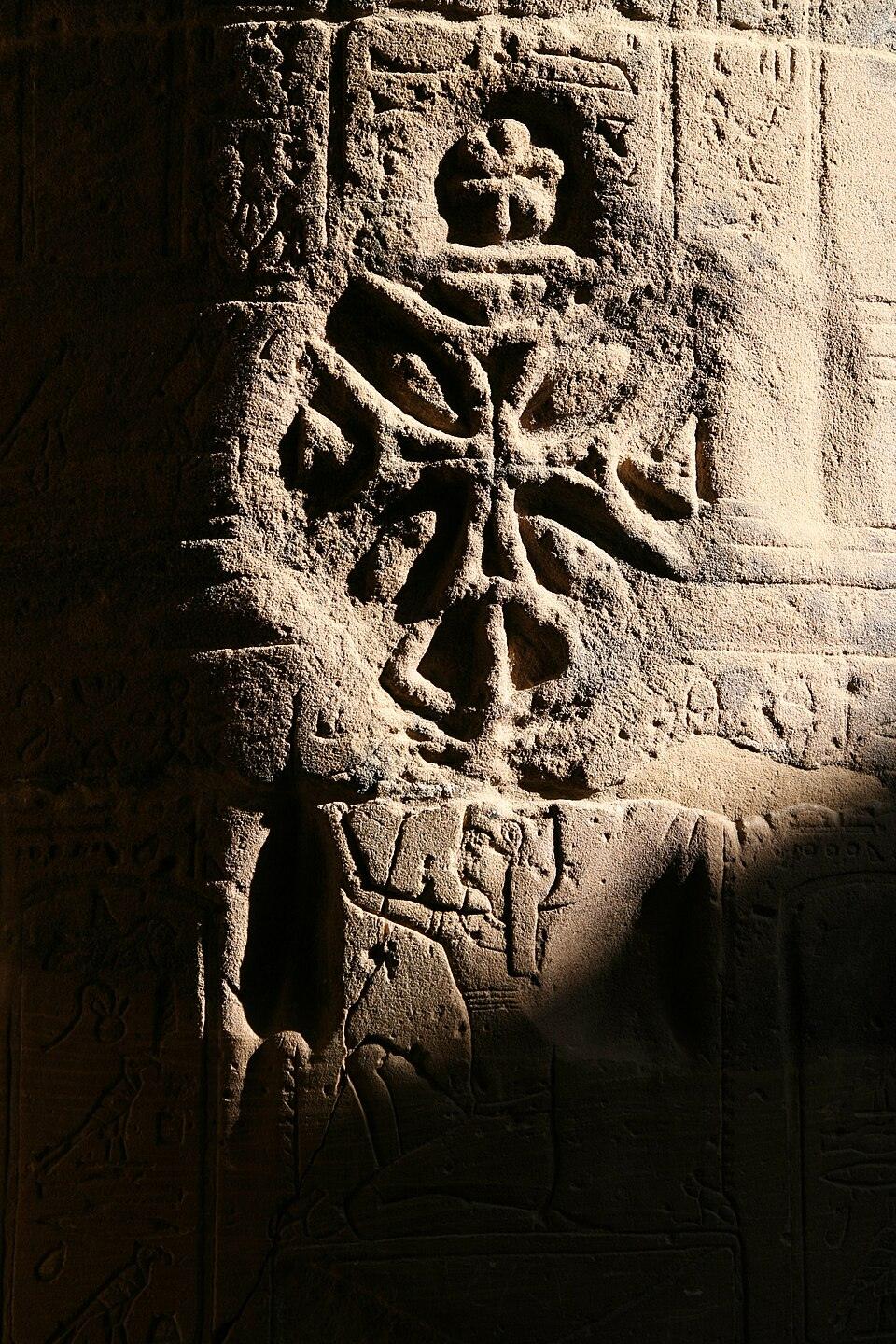
Among hieroglyphs, pharaohs and scenes of ancient Egyptian gods, you may suddenly notice a Christian cross cut into the stone. At Philae, the evidence is difficult to miss. At Karnak, Christian communities reused parts of a complex that had already stood for well over a thousand years. At Medinet Habu, a Christian town eventually developed within and around the ancient temple enclosure. Christian graffiti survive at Edfu and Abydos, while Dendera preserves the remains of an early Christian basilica within its ancient sacred precinct.
You can even find Christian crosses and other Coptic graffiti inside some of the royal tombs in the Valley of the Kings.
These are not modern additions, and they are not all the same kind of evidence.
They belong to another chapter of Egyptian history.
As Christianity spread through Egypt during the Roman and Byzantine periods, the country’s enormous pharaonic monuments did not simply disappear. Some were no longer serving their original religious purpose, but the buildings remained. Later communities lived among them, reused rooms and courtyards, built churches within ancient precincts and left crosses, inscriptions, paintings and graffiti behind.
The result is something travelers can easily overlook: some of Egypt’s ancient monuments preserve Christian history on the same walls that preserve the age of the pharaohs.
Expert Insight: A Christian cross inside an ancient Egyptian monument does not automatically mean the entire temple became a church. At some sites Christians adapted rooms for worship; elsewhere a church was constructed within the larger temple precinct, a Christian community occupied part of the site, or individual visitors and residents left crosses and inscriptions. The archaeological evidence has to be read site by site.
The Temples Didn’t Simply Disappear When Ancient Egyptian Religion Declined
It is easy to imagine Egyptian history as a neat sequence: ancient Egypt ended, Christianity arrived, and one civilization replaced another.
The archaeology is much messier—and much more interesting.
A temple could begin as an ancient Egyptian sacred space, be expanded under Ptolemaic rulers, altered under Roman rule and later used in completely different ways by Christian communities. Still later, towns and neighborhoods continued to develop around some of these same monuments.
That is why a cross carved beside a hieroglyph is more than an oddity.
It tells you that the building had a life after the pharaohs.
Christian use also varied enormously from one site to another. Sometimes a church or Christian shrine was established within an older temple. Elsewhere Christians built new structures inside an ancient temple enclosure. At other sites, the surviving evidence consists mainly of crosses, names, prayers or other graffiti left by Christians who occupied, worshipped in or visited the ancient structure.
So the common explanation that Christians simply “turned the temples into churches” is too broad.
Some temple spaces were converted. Some ancient precincts contained churches. Some became part of Christian settlements or monastic landscapes. Others preserve Christian graffiti without enough evidence to tell us exactly how every room was being used.
You can see those differences as you travel through Egypt.
Karnak: Christianity Inside Egypt’s Largest Temple Complex
Karnak Temple is so enormous that most visitors understandably concentrate on its pharaonic highlights: the Great Hypostyle Hall, obelisks, pylons, the Sacred Lake and the Temple of Amun-Ra.
But Karnak continued to have a history after the ancient cults that created it declined.
Christian communities reused parts of the complex, and archaeological research has identified a Coptic monastery associated with the First Pylon. Christian occupation has also been documented elsewhere within Karnak.
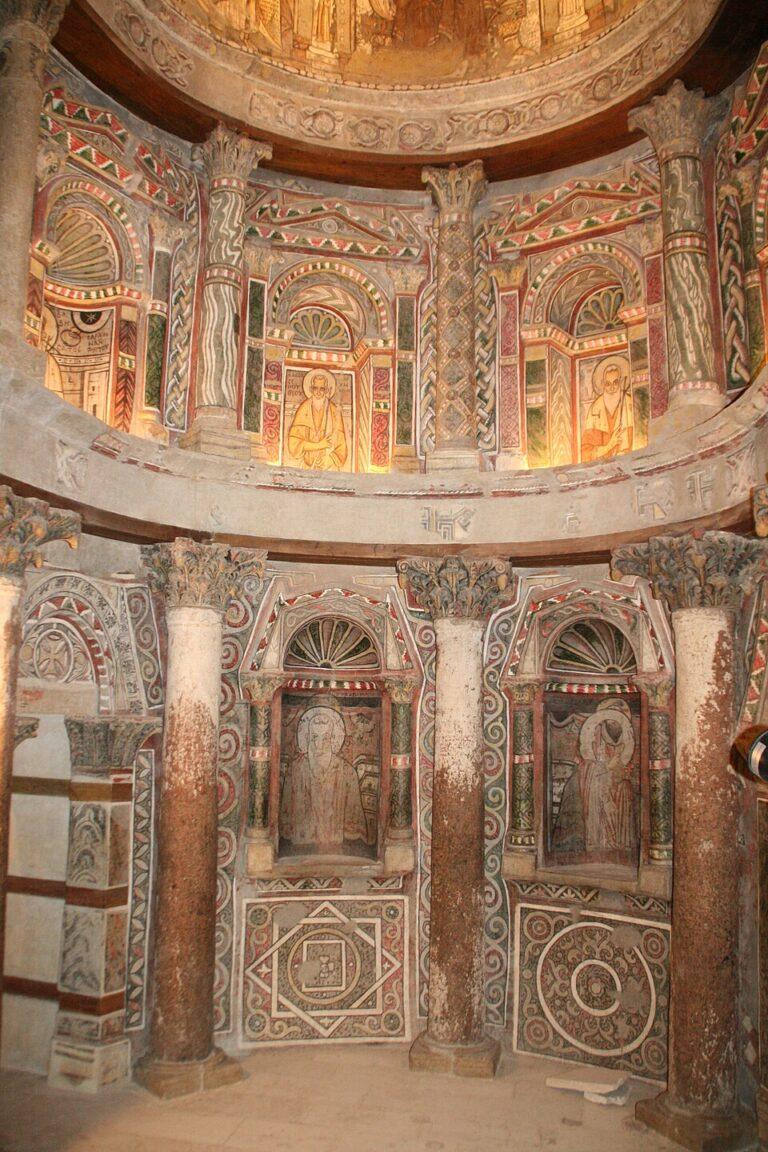
One of the most visually interesting places to look is the Akh-menu, or Festival Hall of Thutmose III. Parts of this ancient building were later used by Christians, and traces of Christian painted figures survive on some of its columns.
That creates an extraordinary overlap.
Thutmose III built the Akh-menu in the 15th century BCE. More than a millennium later, Christians were using parts of that same monumental landscape within an entirely different religious world.
The Christian remains are easy to miss when your attention is pulled toward Karnak’s much larger pharaonic monuments. But once you know they are there, they change the way you read the complex.
Karnak was not frozen in time when the pharaohs disappeared. People continued to occupy and reinterpret it.
Luxor Temple: Ancient Egyptian, Roman, Christian and Islamic History in One Place
Luxor Temple may be an even clearer example of Egypt’s historical layers occupying the same physical space.
The temple developed principally under Amenhotep III and Ramesses II, although its history extends both earlier and later. During the Roman period, part of the temple was incorporated into a military and administrative complex, and an inner chamber was transformed into a Roman imperial cult sanctuary.
Christianity added another layer.
Portions of Luxor Temple were later converted into churches. The official Experience Egypt guide to Luxor Temple specifically notes this Christian reuse after the Roman period.
Archaeologists have also documented the remains of an early Christian basilica in front of the temple’s pylon, part of a much larger Christian presence in and around the ancient complex.
Then came another chapter that is still visible today.
The Mosque of Abu al-Haggag was constructed within the temple complex and remains an active place of worship.
Few archaeological sites make Egypt’s continuity quite this visible.
You can stand in one monument and encounter ancient Egyptian, Roman, Christian and Islamic history without leaving the site.
That is a much more useful way to understand Luxor Temple than treating everything after the pharaohs as an interruption to its “real” history.
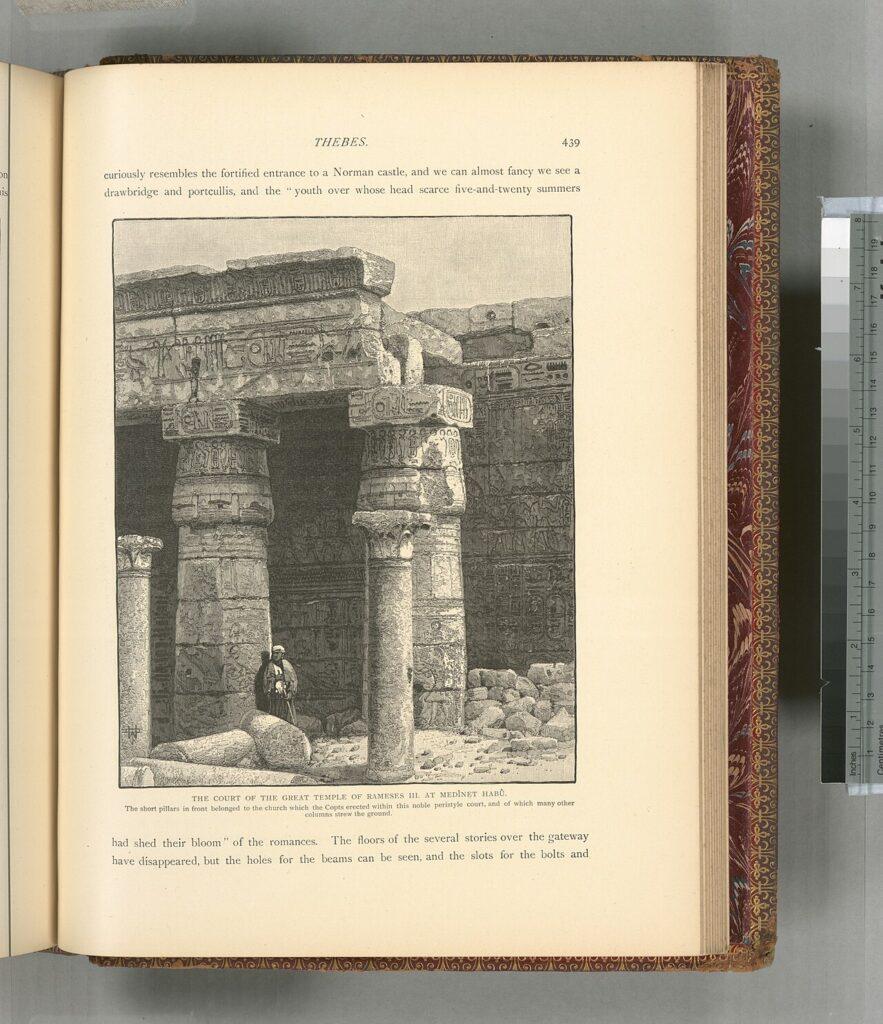
Medinet Habu: When a Pharaoh’s Temple Became Part of a Christian Town
The Christian history of Medinet Habu goes considerably beyond a few crosses scratched into stone.
Long after the reign of Ramesses III, a substantial settlement developed within and around the ancient complex. In the Christian period, this town was known as Jeme.
Houses occupied areas around the temple, and Christian religious buildings became part of the settlement. Archaeological work has documented extensive remains of Coptic houses as well as churches associated with the community.
A church was even established within the second court of Ramesses III’s mortuary temple.
That completely changes the way you can imagine Medinet Habu.
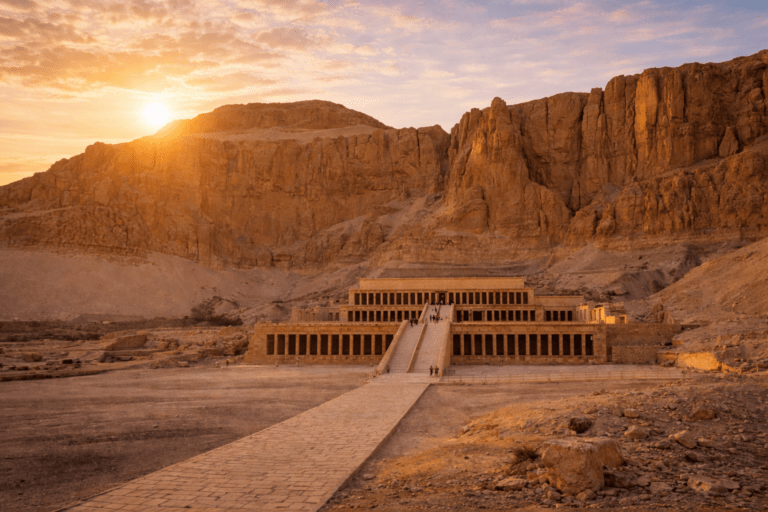
Today, most travelers come to see Ramesses III’s massive pylons, battle reliefs, ritual scenes and extraordinary surviving color.
Centuries later, however, people were not simply walking through these monuments as tourists visiting ancient ruins.
They were living here.
Homes, streets, workshops and places of Christian worship became part of a community that incorporated the ancient temple complex into its surroundings.
Much of that later settlement is no longer visible in the form it once had. Early archaeological clearance concentrated heavily on exposing the pharaonic monument beneath it, and portions of the later Christian remains were removed.
That makes the Christian town surprisingly easy to overlook today.
ENA Tip: When you visit Medinet Habu, don’t look only for a cross carved into the temple. The bigger Christian story is the landscape around you. The second court once contained a church, while the ancient complex became part of the Christian town of Jeme. Much of that later settlement was removed during early archaeological clearance, which is why knowing what once stood here changes what you see today.
Philae: Where the Christian Transformation Is Still Easy to See
Of all the major temples in this article, Philae may be the easiest place to notice the Christian layer for yourself.
Look carefully around the Temple of Isis and you can see prominent crosses cut directly into ancient surfaces.
These were not isolated marks left by one passing visitor. They belong to a much larger Christian history on the island.
Philae was unusual because traditional worship of Isis survived there exceptionally late. Christianity was already established in the region while the ancient cult continued at Philae, making the island an important place for understanding the transition between the two religious worlds.
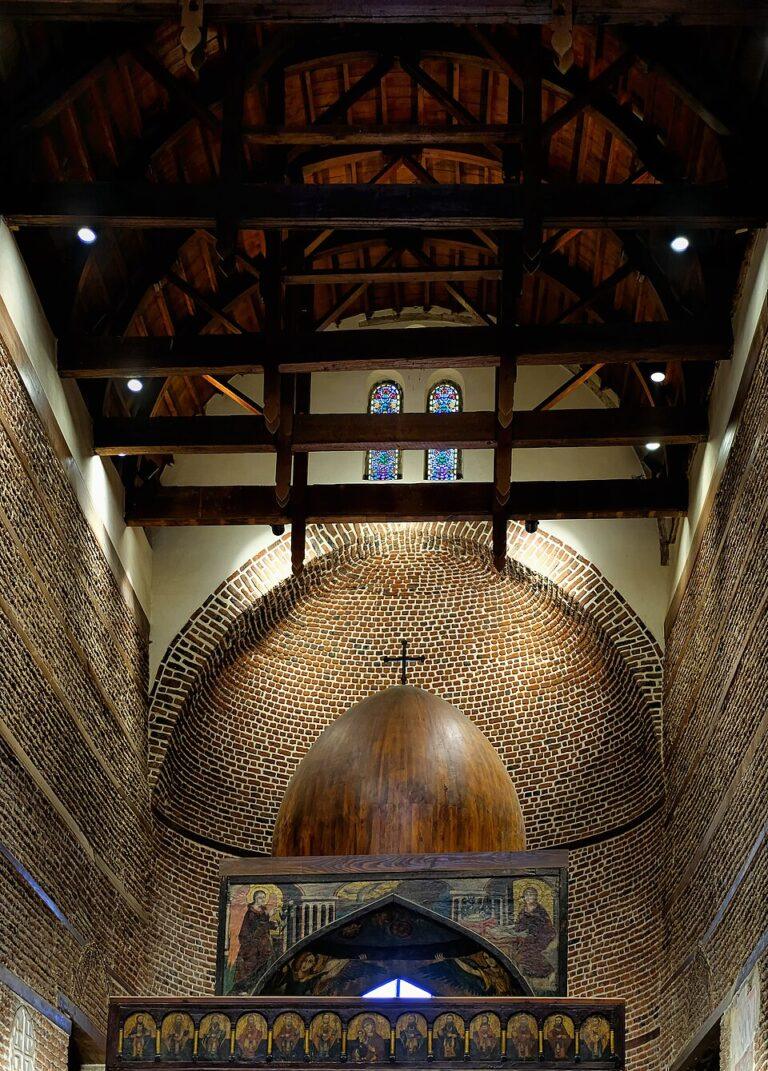
During the sixth century, after the ancient sanctuary had ceased operating in its former role, part of the Temple of Isis was adapted for Christian use.
Inscriptions record the establishment of a Christian sacred space dedicated to St. Stephen under Bishop Theodore. Crosses were carved into the ancient building, and Christian worship took place within a structure originally created for Isis.
That makes Philae particularly valuable for travelers interested in this part of Egyptian history.
Here, you do not have to imagine two different buildings standing on the same site.
You can physically see one religious space being used again in another period.
A Christian cross beside an ancient Egyptian relief at Philae is therefore not simply graffiti from a later visitor. It can be part of the documented Christian transformation of the temple itself.
Expert Insight: Philae is important because it shows why all Christian marks inside Egyptian temples should not be interpreted the same way. At Edfu, a cross may document Christian presence. At Dendera, Christians built a basilica within the older sacred precinct. At Philae, part of the Temple of Isis itself was adapted for Christian worship. The cross may look similar, but the archaeology behind it can tell a very different story.
Edfu: Christian Graffiti on an Exceptionally Preserved Temple
Edfu presents a different kind of evidence.
The Temple of Horus is famous for being one of Egypt’s best-preserved ancient temples. Its walls, roofed halls, pylons and sanctuary survive so completely that it can feel more purely “pharaonic” than many other sites.
But its history did not stop when its original religious function ended.
Researchers documenting the inscriptions and graffiti at Edfu have recorded Coptic graffiti alongside material left during other periods.
That distinction matters.
We do not need to claim that the entire Temple of Horus became a church to recognize its Christian history.
The graffiti themselves tell us that Christians were present within this ancient space and left evidence of that presence behind.
Edfu’s walls therefore preserve more than the religious texts and ritual scenes created for the Temple of Horus. Different generations subsequently encountered the same building and added their own marks.
Once you begin looking at an ancient Egyptian temple this way, even something as small as a scratched cross becomes part of a much longer timeline.
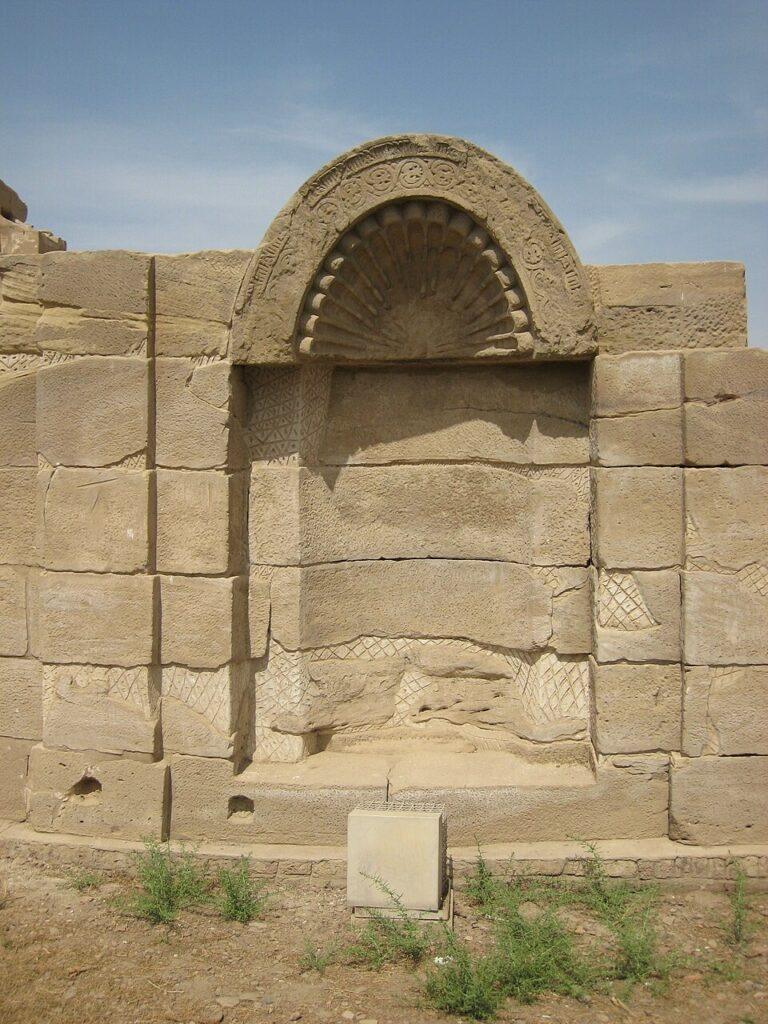
Dendera: A Christian Basilica Inside an Ancient Sacred Precinct
Dendera gives travelers something different again.
Within the wider Temple of Hathor complex are the remains of an early Christian basilica.
Here, the Christian presence was not limited to marking an older temple wall. Christians constructed their own religious architecture within the ancient sacred enclosure.
Christian graffiti survive around the complex as well. Crosses have been documented both in connection with the basilica and elsewhere at Dendera, sometimes accompanied by Coptic writing or Greek Christian abbreviations.
This helps explain what “Christian reuse” can actually mean.
It did not always involve converting an intact pharaonic sanctuary directly into a church.
Sometimes Christians built new religious structures within an ancient temple precinct, using a landscape whose monumental buildings and walls had already stood for centuries.
The Temple of Hathor naturally remains the visual focus for today’s visitor. Its columns, astronomical ceiling, crypts and reliefs dominate the experience.
But the basilica is another reminder that Dendera’s religious history did not end when the worship for which the ancient temple was created declined.
Abydos: Christian Graffiti Without Pretending We Know More Than We Do
Abydos requires more careful wording.
There is clear evidence of Christian activity inside the Temple of Seti I.
A substantial collection of Coptic graffiti survives there, and modern research into those inscriptions has revealed something particularly interesting: many were written by, or on behalf of, Christian women associated with monastic life.
That has led to suggestions that part of Seti I’s temple may once have housed a women’s monastery or Christian place of worship.
But this is where archaeological evidence matters more than a tidy story.
The surviving architecture does not currently allow us to say confidently that a particular part of Seti I’s temple was converted into a church or that the women who left the inscriptions actually lived inside the temple.
Recent research instead raises the possibility that members of a female Christian community visited the temple periodically and left their names, prayers and other inscriptions there.
That uncertainty makes Abydos more interesting, not less.
We know Christians were engaging with the ancient temple. We can still study what they wrote. What we cannot do is reconstruct a church or nunnery inside Seti I’s monument simply because the idea sounds plausible.
Expert Insight: Abydos is a good example of why Christian graffiti and Christian conversion are not interchangeable. The inscriptions establish Christian presence inside the Temple of Seti I. They even tell us something about the people who came here. What they do not establish is that the temple itself became a church or nunnery. Sometimes the most accurate interpretation of an archaeological site is also the less dramatic one.
The Valley of the Kings Has Christian Crosses Too
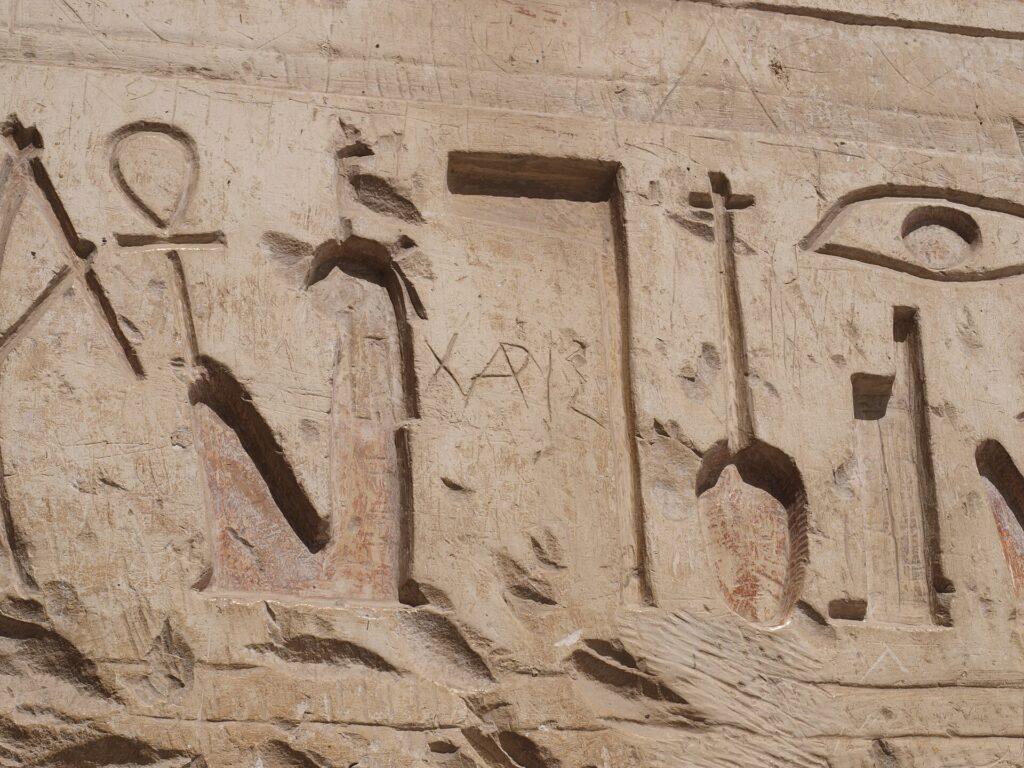
The phenomenon is not limited to temples.
Christian communities also reused parts of the Theban necropolis, including some of the ancient tombs.
Scholarly research on the later history of the Valley of the Kings has established that a small Christian community occupied the valley during Late Antiquity and reused some royal tombs for living and religious purposes.
One particularly interesting example is KV2, the tomb of Ramesses IV.
The tomb contains Coptic graffiti, including crosses and Christian figures, left more than a thousand years after Ramesses IV was buried there. The later Christian use of KV2 has been associated with devotion to a local saint as the tomb acquired a completely different meaning from the royal funerary monument it had originally been.
That is an extraordinary shift.
A chamber designed around the afterlife of a New Kingdom pharaoh could later become part of the religious landscape of Egyptian Christians.
And KV2 was not the only ancient tomb reused in this way.
Christian occupation and graffiti have been documented elsewhere across the Theban necropolis, where abandoned tombs and chambers could provide both shelter and separation from settled areas.
So when you notice a Christian cross among pharaonic scenes in an Egyptian tomb, you may be looking at evidence from a period when the tomb had already been ancient for well over a thousand years.
Did Christians Deface Ancient Egyptian Temples?
This is one of the questions travelers naturally ask once they start noticing crosses beside damaged ancient figures.
The answer is: sometimes ancient imagery was deliberately altered during Christian reuse—but that does not mean Christians caused every damaged face or chiseled figure you see in an Egyptian temple.
At some sites, there is archaeological context connecting Christian occupation with alterations to earlier religious imagery. Philae is an important example because Christian reuse of parts of the Temple of Isis is well documented alongside crosses and changes to earlier surfaces.
Expert Insight: A damaged face is not evidence by itself that Christians damaged it. Egyptian rulers erased the names and images of predecessors, later kings altered temples, stone was quarried and reused, and monuments suffered occupation, environmental deterioration and other damage over thousands of years. The damage has to be interpreted in its archaeological context before it can responsibly be attributed to a particular period or community.
The Christian period is one part of that long history, and where the evidence identifies Christian reuse or alteration, it should be described as such.
Where the evidence cannot identify who caused the damage, assigning it to Christians simply because Christian crosses appear somewhere nearby turns archaeology into guesswork.
Why Did Christians Reuse Ancient Egyptian Temples and Tombs?
The practical explanation matters.
These were enormous existing structures.
Ancient temple precincts offered walls, rooms, courtyards, columns, shelter and reusable building material. Tombs offered enclosed spaces cut directly into the desert cliffs.
As the original functions of some ancient monuments disappeared, later communities inherited an extraordinary built landscape.
They adapted it.
At Medinet Habu, an entire Christian town developed within and around a pharaonic temple complex. At Dendera, a Christian basilica was constructed within the ancient enclosure. At Philae, part of an Egyptian temple was adapted for Christian religious use. At Karnak, Christian occupation included monastic use within the enormous complex. In the Theban necropolis, ancient tombs could become Christian living or religious spaces.
Practical reuse, however, does not explain every decision.
These were also former religious spaces.
In some cases, transforming a place previously associated with older worship into a Christian space carried its own religious meaning. In others, the attraction may have been much more practical: a massive abandoned building or rock-cut tomb was already there and could be used.
We should not assume that the motivation was identical everywhere.
The archaeology shows different kinds of Christian interaction with ancient monuments, not one universal pattern.
The Crosses Are Part of the Monument’s History
It can initially feel strange to see a Christian cross cut across a monument created for an Egyptian god or pharaoh.
Travelers usually arrive at Karnak, Philae, Edfu, Dendera or the Valley of the Kings because they want to encounter ancient Egypt. Anything added centuries later can therefore look like something that does not belong.
Historically, it belongs because it came later.
Egypt did not stop existing when the pharaonic period ended.
The people living beside these monuments inherited enormous structures from an earlier religious world. They occupied them, adapted them, built around them, worshipped within some of them and sometimes wrote on their walls.
At Philae, you can see Christian symbols within a temple once dedicated to Isis.
At Medinet Habu, the mortuary complex of Ramesses III later stood within the Christian town of Jeme.
At Dendera, an early Christian basilica survives within the ancient sacred enclosure.
At Abydos, Coptic graffiti preserve evidence of Christian women engaging with the Temple of Seti I even though we cannot confidently reconstruct exactly how they used the space.
And in the Valley of the Kings, crosses and Christian graffiti appear inside tombs created for New Kingdom pharaohs.
Those later marks do not erase the ancient Egyptian story.
They show that the story kept going.
Frequently Asked Questions
Why are there Christian crosses carved into ancient Egyptian temples?
Many ancient Egyptian monuments remained standing long after their original religious functions ended. During Egypt’s Christian period, some temple spaces were reused for Christian worship, some ancient precincts contained newly constructed churches, and Christians also left crosses, prayers, names and other graffiti on older monuments. The circumstances differ from site to site.
Were ancient Egyptian temples turned into churches?
Some temple spaces were converted for Christian religious use, but this did not happen in the same way everywhere. Philae preserves well-documented Christian adaptation of part of the Temple of Isis, while churches also existed within ancient complexes such as Luxor Temple and Medinet Habu. At sites such as Edfu and Abydos, Christian graffiti demonstrate later Christian presence without proving that the entire temple became a church.
Did Christians destroy the faces on Egyptian temple carvings?
Some ancient religious images were deliberately altered during later Christian use of certain sites, but not every damaged face or relief in an Egyptian temple can be attributed to Christians. Egyptian monuments were erased, modified, quarried, reused and damaged during many different periods. The responsible period should only be identified where the evidence supports it.
Can you still see Christian crosses in ancient Egyptian monuments today?
Yes. Christian crosses, inscriptions, paintings, graffiti or architectural remains have been documented at major sites including Karnak, Luxor Temple, Medinet Habu, Philae, Edfu, Dendera and Abydos, as well as in parts of the Theban necropolis and some Valley of the Kings tombs.
Look Beyond the Pharaohs When You Travel Through Upper Egypt
The Christian traces inside Egypt’s ancient monuments are easy to walk straight past when your attention is focused on hieroglyphs, pharaohs and temple architecture. They become much more interesting once you understand that the same monuments were encountered and reused by people living centuries later.
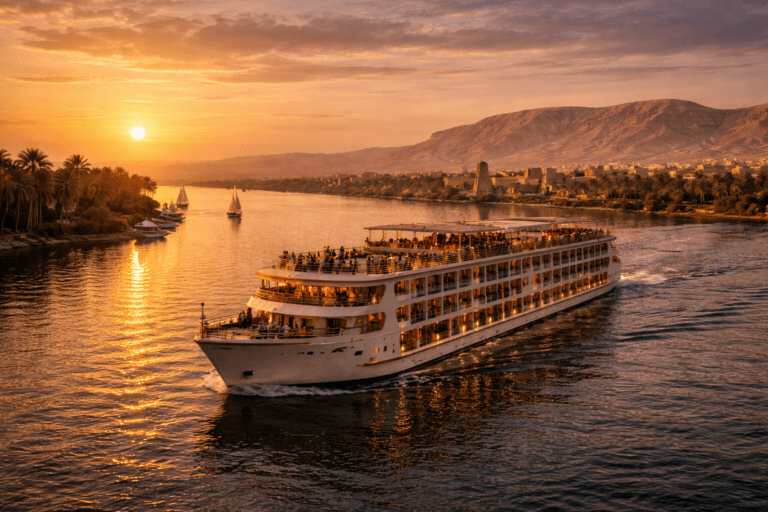
If you want to follow the Nile between Aswan and Luxor while visiting sites including Philae, Edfu, Karnak and Luxor Temple, Explore ENA’s Nile cruise tours combine these major temple sites within the same Upper Egypt journey. An Egyptologist can help you read the monuments as places that changed over time—not simply as buildings frozen at the end of the pharaonic period.