Common Tourist Mistakes in Egypt (And How to Avoid Them in 2026)
Egypt is one of the most rewarding travel destinations in the world — but it’s also a country where small planning mistakes can noticeably impact your experience.
Unlike simpler, single-destination trips, travel in Egypt involves multiple regions, complex logistics, and historically rich sites that require context to fully appreciate. Because of this, many first-time visitors make avoidable mistakes — not because Egypt is difficult, but because it operates differently from what they expect.
Most issues travelers encounter are not related to safety, but to planning, timing, and understanding how travel works across places like Cairo, Luxor, Aswan, and the Red Sea. Things like underestimating distances, choosing the wrong tour structure, or not planning logistics in advance can quickly affect comfort and pacing.
The good news is that these mistakes are predictable — and easy to avoid once you know what to look for.
Travelers can also review general travel guidance for Egypt from official sources such as the U.S. State Department.
Below is based on years of planning and operating tours across Egypt, these are the patterns we consistently see travelers struggle with — and how to avoid them.
Trying to Do Too Much in Too Little Time
One of the most common mistakes travelers make when planning a trip to Egypt is trying to see everything in a limited number of days.
On paper, Egypt may look compact — but in reality, the main destinations are spread across significant distances. A typical itinerary includes Cairo, Luxor, Aswan, and often a Red Sea destination like Hurghada or Sharm El Sheikh. Moving between these locations involves flights, early departures, and full travel days that are easy to underestimate.
Rushing through this route often leads to long, exhausting days with little time to actually experience each place. Instead of enjoying the Pyramids, temples, and landscapes, travelers end up moving quickly from one highlight to the next without context or rest.
There is also a cumulative effect. Early mornings, heat, and continuous site visits — especially in Upper Egypt — can become physically demanding when the itinerary is too compressed.
How to Avoid It
The key is to prioritize pacing over coverage.
Instead of trying to include every destination, focus on a logical route and allow time in each location. For most travelers, a well-balanced itinerary of 7 to 12 days provides enough time to experience Egypt’s highlights without feeling rushed.
If your trip is shorter, it is often better to focus on fewer regions and explore them properly rather than trying to fit in the entire country.
A well-paced itinerary doesn’t just reduce stress — it significantly improves how much you actually enjoy and remember the experience.
Underestimating the Importance of Logistics
Travel in Egypt is not difficult — but it is highly dependent on coordination.
Unlike destinations where you can move easily between attractions, Egypt requires careful planning across multiple elements: domestic flights, airport transfers, hotel locations, guided site visits, and timing around opening hours and travel distances. These details are what make the difference between a smooth experience and a stressful one.
For example, many sites — especially in Luxor and Aswan — are best visited early in the morning to avoid crowds and heat. Domestic flights often depart early, and delays or poor timing can disrupt an entire day’s plan. Even in Cairo, traffic can significantly affect how long it takes to move between locations.
When these elements are not aligned, small gaps in planning quickly add up — missed connections, long waits, inefficient routing, and unnecessary fatigue. Planning your trip properly — including understanding how many days you need in Egypt — helps avoid many of these common mistakes.
How to Avoid It
The key is structure.
Build your itinerary so that transportation, site visits, and daily timing flow logically from one step to the next. This includes choosing the right sequence of destinations, aligning flights with your schedule, and allowing buffer time where needed.
Many travelers choose to work with a reliable tour provider for this reason. A well-organized tour doesn’t just book hotels — it coordinates the entire journey, ensuring that each day runs smoothly and efficiently.
Good logistics are often invisible when done well — but they are one of the most important factors in how enjoyable your trip feels.
Choosing Tours Based Only on Price
One of the most common mistakes travelers make in Egypt is choosing a tour based primarily on price.
While lower prices can be appealing, they often reflect differences in structure, quality, and what is actually included. In Egypt, pricing is closely tied to how the experience is organized — not just the destinations themselves.
Lower-cost tours may involve compromises that are not always obvious at the time of booking. These can include lower-standard hotels or Nile cruises, shared transportation instead of private transfers, tightly packed itineraries with limited time at key sites, or additional costs that are introduced later for entry tickets, flights, or services that were assumed to be included.
The impact of these choices is usually felt during the trip. What initially appears to be a good deal can result in a more rushed, less comfortable, and less cohesive experience overall. Understanding how to book an Egypt tour safely helps avoid many of these issues.
How to Avoid It
The key is to evaluate value rather than price.
Look closely at what is included, how the itinerary is structured, and how the trip is paced. A well-designed Egypt tour should clearly define accommodation standards, transportation, guiding, and entry logistics.
In most cases, spending slightly more upfront leads to a significantly smoother and more enjoyable experience — with better pacing, clearer organization, and fewer unexpected costs along the way.
Visiting Major Sites Without Context
One of the most overlooked mistakes in Egypt is visiting major historical sites without understanding what you are actually seeing.
Egypt’s monuments are not just visually impressive — they are complex, layered, and deeply symbolic. Temples and tombs were designed with meaning built into their layout, inscriptions, and orientation. Without context, it is easy to walk through these sites without fully understanding their significance.
This is especially true in places like Karnak Temple or the Valley of the Kings, where the scale is enormous and signage is limited. These sites are not structured as self-guided experiences, and important details are often easy to miss without guidance.
As a result, visits can feel overwhelming or disconnected — impressive visually, but lacking depth. This is why many travelers consider whether they need a guide in Egypt for key sites.
How to Avoid It
The key is to add context where it matters most.
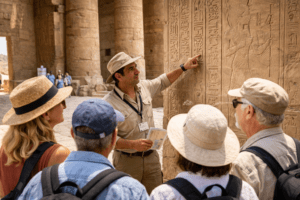
Using a licensed Egyptologist guide at major sites — particularly in Luxor and Aswan — can significantly change the experience. A guide helps structure the visit, explain key elements, and connect individual locations into a broader historical narrative.
Even a few guided days at the most important sites can transform how you experience Egypt, turning monuments into stories rather than just landmarks.
Not Understanding Tipping (Baksheesh)
Tipping in Egypt — known as baksheesh — is a normal part of everyday interactions, and not understanding how it works can lead to confusion or uncomfortable situations.
Unlike in some countries where tipping is optional or occasional, in Egypt it is expected in many service-related interactions. This includes hotel staff, drivers, guides, and even small forms of assistance at historical sites. Without this context, travelers may either overtip in an attempt to “do the right thing,” or hesitate when a tip is expected, which can create awkward moments.
Another common source of confusion is informal interactions — such as someone offering directions or help at a site. These situations can sometimes come with an expectation of a small tip, even if the assistance was not requested. Understanding local customs like tipping is essential — see our full guide to tipping in Egypt.
How to Avoid It
The key is consistency and awareness.
Carry small denominations of Egyptian pounds and treat tipping as a normal part of service. Small, reasonable tips given at appropriate moments are more than enough.
Understanding the general pattern — that tips follow service — makes it much easier to navigate these interactions comfortably throughout your trip.
Ignoring the Climate
Egypt’s climate plays a much larger role in your experience than many travelers expect.
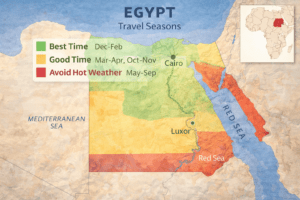
While the country is sunny year-round, temperatures — particularly in Upper Egypt (Luxor and Aswan) — can become extremely high, especially between May and September. Visiting temples, tombs, and open archaeological sites during peak heat can be physically demanding, even for experienced travelers.
The impact is not just comfort, but pacing. Long walking distances, minimal shade, and early start times can quickly lead to fatigue if the climate is not factored into your itinerary.
This is why two trips with the same itinerary can feel completely different depending on the season. Planning around weather is key — especially when deciding the best time to visit Egypt.
How to Avoid It
The key is to plan around the climate, not against it.
Traveling between October and April offers the most comfortable conditions for sightseeing, especially for multi-day itineraries that include Luxor and Aswan.
If you are traveling during warmer months, adjust your schedule accordingly. Start early in the morning, take breaks during peak heat hours, and prioritize hydration and lightweight clothing.
Understanding how climate affects your daily experience allows you to plan more realistically — and enjoy each destination without unnecessary strain.
Not Dressing Practically
Clothing in Egypt is less about strict rules and more about comfort, context, and cultural awareness.
While major tourist areas are generally relaxed, dressing without considering local norms can lead to unnecessary attention or discomfort — particularly in more traditional areas or when visiting mosques and religious sites.
This is not about restriction, but about practicality. Egypt’s climate, combined with long days outdoors at archaeological sites, makes clothing choices directly affect how comfortable your experience feels.
There is also a situational aspect. What feels appropriate at a Red Sea resort may feel out of place in Old Cairo or at a religious site.
How to Avoid It
The goal is to balance comfort with awareness.
Lightweight, breathable clothing that covers shoulders and knees is generally the most practical choice for both men and women. This not only aligns with local expectations but also provides protection from the sun during long days of sightseeing.
For visits to mosques or religious sites, more modest coverage is required, so it is helpful to plan ahead.
Dressing appropriately doesn’t just avoid discomfort — it allows you to move more easily between different environments throughout your trip.
Assuming Everything Works Like Western Destinations
One of the most common sources of frustration for travelers in Egypt is expecting things to operate the same way they do in Europe or North America.
Travel in Egypt follows a different rhythm. Timing can be more flexible, communication styles are more direct, and service often relies on personal interaction rather than fixed systems. This is especially noticeable when moving between cities, coordinating services, or navigating busy areas.
What might feel inefficient or unclear at first is often simply a different way of operating — one that prioritizes adaptability over rigid structure.
The issue is not that things don’t work, but that they don’t always work in the way travelers expect.
How to Avoid It
The key is adjusting expectations early.
Approaching the experience with flexibility and patience makes a significant difference. Allow for small delays, stay open to how things are handled locally, and focus on the overall experience rather than exact timing.
Once you understand that travel in Egypt has its own pace and logic, the experience becomes far more relaxed and enjoyable — rather than frustrating.
Not Planning Transportation in Advance
Transportation in Egypt is one of the most underestimated parts of trip planning.
While distances between major destinations may look manageable on a map, getting around efficiently often requires advance coordination. Traveling between Cairo, Luxor, Aswan, and the Red Sea typically involves a combination of domestic flights, long drives, or scheduled transfers — all of which need to be timed correctly.
Relying on last-minute arrangements can lead to limited availability, inconvenient departure times, or unnecessary delays. In some cases, it can also result in spending more time in transit than expected, reducing the time available to actually explore each destination.
Even within cities like Cairo, traffic and distance between sites can affect how much you are realistically able to see in a day. These factors also influence overall costs — especially when planning how much a trip to Egypt costs.
How to Avoid It
The key is to plan transportation as part of your itinerary — not as an afterthought.
Book domestic flights and long-distance routes in advance, align transfers with your daily schedule, and allow buffer time where needed. Structuring transportation properly ensures that each part of your trip flows smoothly and minimizes wasted time.
Well-planned transportation doesn’t just improve efficiency — it directly impacts how relaxed and enjoyable your overall experience feels.
Skipping Travel Insurance or Backup Plans
Most trips to Egypt go smoothly — but like any multi-destination journey, unexpected changes can happen.
Delays in domestic flights, schedule adjustments, weather conditions, or minor disruptions in transportation can affect how your itinerary unfolds. When traveling between multiple cities such as Cairo, Luxor, and Aswan, even small changes can have a ripple effect on the rest of the schedule.
Without any buffer or backup plan, these situations can quickly become stressful — especially when timing is tight or key connections are involved.
How to Avoid It
The goal is not to plan for problems, but to be prepared for them.
Having basic travel insurance provides reassurance in case of delays, cancellations, or unexpected changes. It also allows you to handle adjustments without added pressure.
Equally important is building flexibility into your itinerary. Allowing some buffer time between major travel days and avoiding overly tight schedules makes it easier to adapt if plans shift.
In Egypt, a small amount of flexibility goes a long way in keeping your trip smooth and enjoyable.
FAQ: Common Tourist Mistakes in Egypt
What are the most common mistakes tourists make in Egypt?
The most common mistakes include trying to see too much in a short time, underestimating travel distances, choosing tours based only on price, and visiting major sites without proper context or planning.
Is Egypt difficult to travel in for first-time visitors?
Egypt is not difficult to visit, but it requires more planning than many destinations. Understanding logistics, timing, and how to structure your itinerary makes a significant difference.
How many days do you need to avoid rushing in Egypt?
Most travelers need around 7 to 12 days to experience Egypt comfortably without feeling rushed. Shorter trips are possible but require focusing on fewer destinations.
Should you book a tour in Egypt or travel independently?
Both are possible, but many travelers find that organized or partially guided travel provides a smoother experience, especially when visiting multiple cities or historical sites.
Do you need a guide at Egypt’s historical sites?
While not required, having a licensed guide at major sites like Luxor and the Valley of the Kings significantly improves understanding and overall experience.
Is tipping something travelers should plan for?
Yes — tipping (baksheesh) is a normal part of travel in Egypt. Carrying small cash and understanding when to tip helps avoid confusion.
What is the biggest planning mistake in Egypt?
The biggest mistake is underestimating how much logistics and travel time affect the experience. Poor planning can lead to rushed days and unnecessary stress.
Can you visit Egypt without planning everything in advance?
Some flexibility is possible, but key elements like flights, transportation, and major experiences should be planned in advance to avoid delays and availability issues.
When is the best time to visit Egypt to avoid discomfort?
The best time to visit is between October and April, when temperatures are more comfortable for sightseeing.
How can you make your trip to Egypt smoother overall?
Focus on realistic pacing, plan transportation in advance, understand local customs, and prioritize well-structured itineraries over trying to see everything.
Final Thoughts: Travel Smarter, Not Harder
Most tourist mistakes in Egypt don’t come from major issues — they come from mismatched expectations.
Egypt is a destination where planning, pacing, and structure have a direct impact on how the experience feels. With the right approach, the same itinerary can feel smooth, engaging, and easy to navigate. Without it, even small details can become frustrating.
The key is simple: plan realistically, prioritize quality over shortcuts, and give yourself enough time to experience each destination properly.
When these elements are in place, Egypt becomes what it is meant to be — one of the most memorable and rewarding travel experiences in the world.

Planning Your Trip to Egypt?
At Explore Egyptian Nile Adventures (ExploreENA), we help travelers avoid common mistakes by designing well-structured Egypt tours that balance logistics, pacing, and meaningful experiences.
Whether you’re visiting for the first time or returning to explore more, our itineraries are built to help you travel smoothly and make the most of every moment.
👉 Explore our Egypt travel experiences and start planning your trip