Karnak Temple Guide (2026): What to See, How Long You Need & Visiting Tips
Karnak makes more sense once you stop thinking of it as a single temple. What visitors enter today is a vast religious complex built, altered, dismantled, enlarged, and reinscribed by generations of Egyptian rulers over roughly two millennia. The Temple of Amun-Ra dominates the visit, but beyond its main axis lie subsidiary temples, chapels, obelisks, courtyards, a Sacred Lake, processional routes, and structures that many travelers never reach because they assume the Great Hypostyle Hall is the end of the experience.
For a first visit, allow about two hours as a realistic minimum and closer to three if Karnak is one of your major reasons for visiting Luxor. One hour is enough only for the headline monuments. The difference between a rushed and a rewarding visit is not seeing more ruins for the sake of it; it is understanding how the spaces connect, then knowing which side areas deserve your remaining time.
Karnak is on Luxor’s East Bank, north of Luxor Temple, and forms part of the UNESCO World Heritage Site of Ancient Thebes with its Necropolis. UNESCO describes Karnak and Luxor as two of the great temple complexes of ancient Thebes, while the Egyptian Ministry of Tourism and Antiquities identifies Karnak as a complex containing distinct precincts rather than one building.
Expert Insight: Most first-time visitors spend too much of their attention looking upward in the Hypostyle Hall and then move quickly toward the exit. Karnak becomes much clearer if you keep asking one question: Which ruler added this section, and what older structure was already here when they did?
Quick Planning
| Planning point | Best default |
|---|---|
| Time needed | 2–3 hours |
| Minimum worthwhile visit | About 1 hour |
| Best time of day | At or soon after opening |
| Current official hours | 6:00 AM–5:00 PM daily |
| Main priority | Temple of Amun-Ra and Great Hypostyle Hall |
| Walking | Considerable; the complex is large |
| Shade | Some shade among structures, but long exposed sections |
| Guide value | High, because the site’s development is difficult to read independently |
| Natural pairing | Luxor Temple on the same East Bank day |
The Ministry currently lists Karnak as open daily from 6:00 AM to 5:00 PM. Visitor hours and prices can change, so verify them shortly before your visit.
Why Karnak Looks So Complicated
Karnak’s apparent disorder is part of its history.
The sanctuary of Amun grew in importance as Thebes itself became more powerful. The Ministry records evidence for Amun’s temple from at least the reign of Intef II in the Middle Kingdom, with major royal additions continuing through the New Kingdom, Late Period, Ptolemaic Period, and even into Roman times. Nearly every New Kingdom ruler had political and religious reasons to leave a mark here.
Some kings extended the main east–west route. Others added pylons, courts, obelisks, chapels, statues, and secondary axes. Structures could also be dismantled and their blocks reused by later rulers.
That is why Karnak does not read like a building designed from one architectural plan. It is closer to a monumental record of changing royal priorities.
The largest zone is the Precinct of Amun-Ra, which contains the majority of what a typical visitor sees. The wider Karnak complex also includes the Precinct of Mut to the south, the Precinct of Montu to the north, temples devoted to Khonsu and Opet, and remains associated with Akhenaten’s Aten cult.
You do not need to study every dynasty before arriving. You do need to understand that the layers are the point.
Start at the First Pylon, but Don’t Expect the Oldest Part First
The massive entrance façade known as the First Pylon gives Karnak an appropriately monumental beginning, but historically it belongs to a relatively late stage of the complex.
That is an important concept to carry through the site: as you proceed inward, you are not simply moving from newer to older in a neat straight line, but you are passing through architectural layers that reflect repeated expansion.
The pylon opens into the Great Court, one of the largest open spaces on Karnak’s principal route. Many visitors cross it quickly because the Hypostyle Hall is visible ahead, but slow down here.
The court includes the remains of important structures from different periods, including the temple of Ramesses III. That smaller temple is useful because its more contained plan helps travelers understand the basic progression of a traditional Egyptian temple—pylon, open court, columned spaces, then increasingly restricted sacred areas—before entering the much more complicated Amun complex.
If you have only an hour at Karnak, do not spend twenty minutes exploring every corner of the Great Court. If you have two or three hours, the Ramesses III temple is one of the first worthwhile detours.
The Great Hypostyle Hall Deserves More Than Ten Minutes
The Great Hypostyle Hall is the section most travelers remember, and for once the fame is justified by the physical experience.
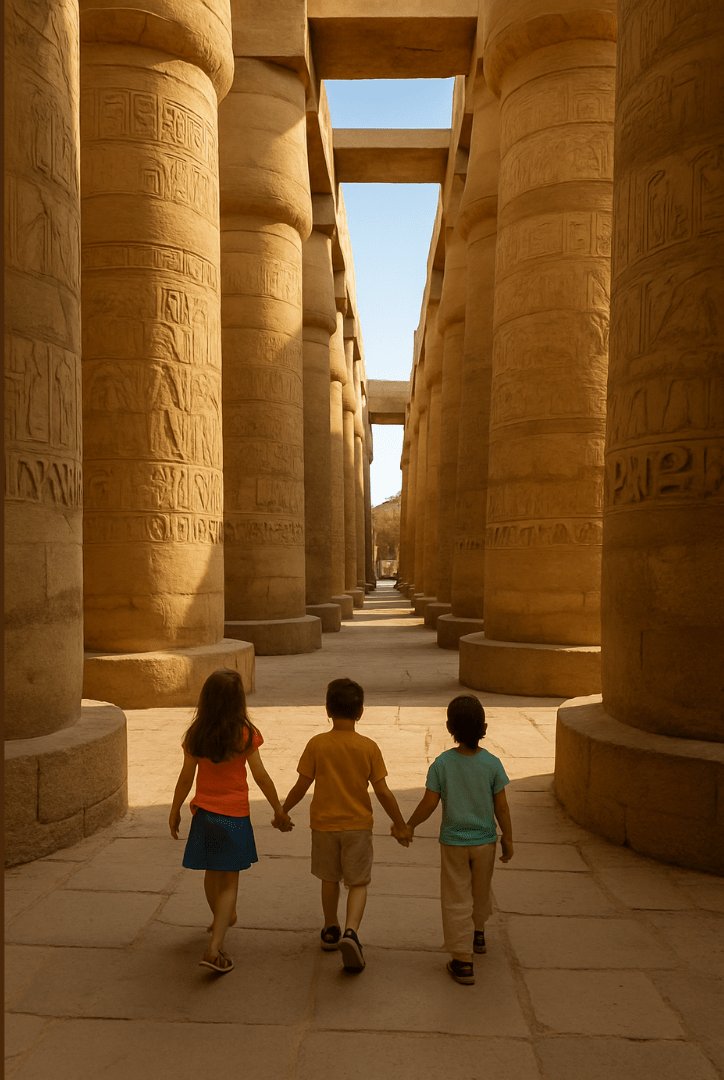
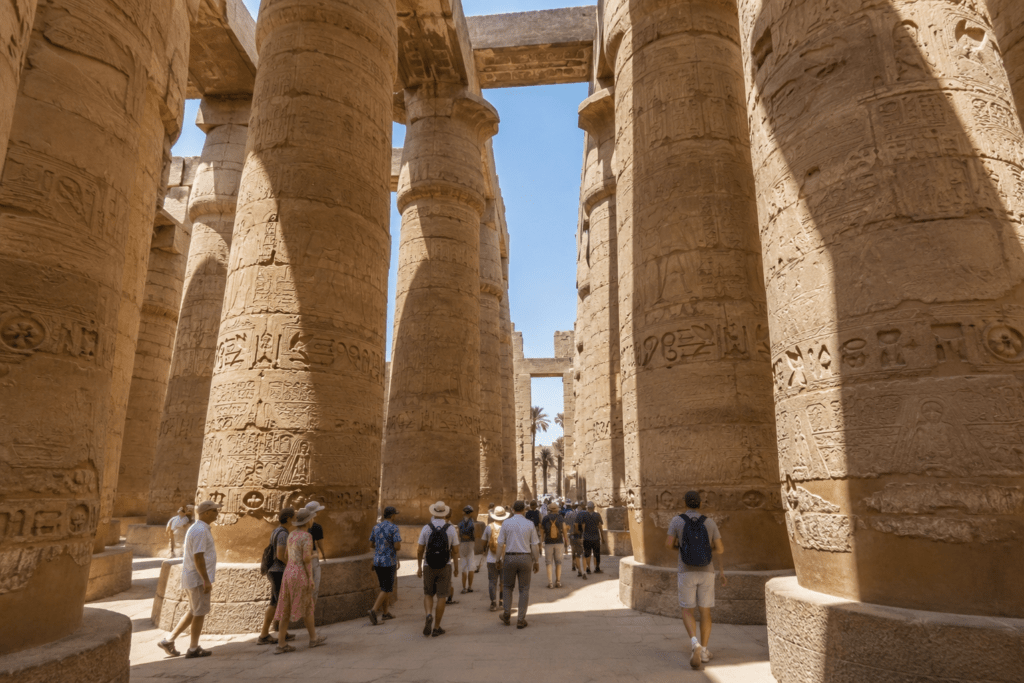
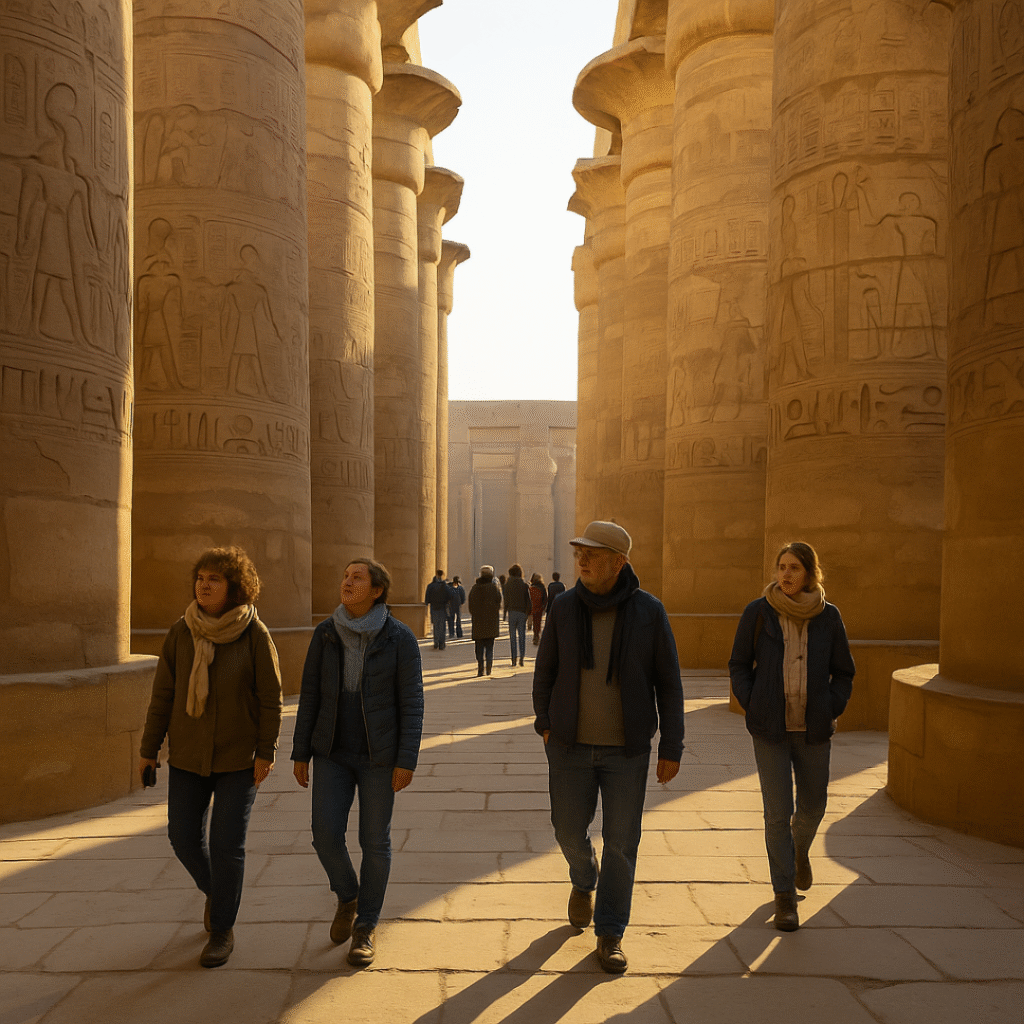
The hall contains 134 enormous columns. The twelve columns forming the central aisle rise to roughly 21 meters, while the surrounding columns are about 15 meters high. UNESCO describes the hall as covering approximately 5,000 square meters and identifies Seti I and Ramesses II with its principal construction and decoration.
The numbers are useful only until you walk inside.
From the edges, the columns seem dense enough to hide the rest of the building. Along the central route, the taller papyrus-form columns create a raised nave that once allowed light to enter through clerestory windows above the lower surrounding roof.
This is one of the places where rushing causes travelers to miss the interesting details.
Look at the carved surfaces at different heights. Notice where reliefs retain traces of color. Compare the decoration associated with Seti I with work completed under Ramesses II. Step away from the central tourist route rather than photographing the same corridor everyone sees from the entrance.
Recent 2026 visitors repeatedly identify the Hypostyle Hall as the highlight of Karnak, but they also describe the central areas becoming extremely crowded once morning tour groups arrive. One February visitor reported reaching Karnak at opening and finding the complex heavily crowded within about two hours.
That is one of the strongest arguments for arriving at 6:00 or soon afterward.
Hatshepsut’s Obelisk Is More Important Than Its Height Alone
Beyond the Hypostyle Hall, Karnak begins to reveal how successive rulers used monumental building as a political statement.
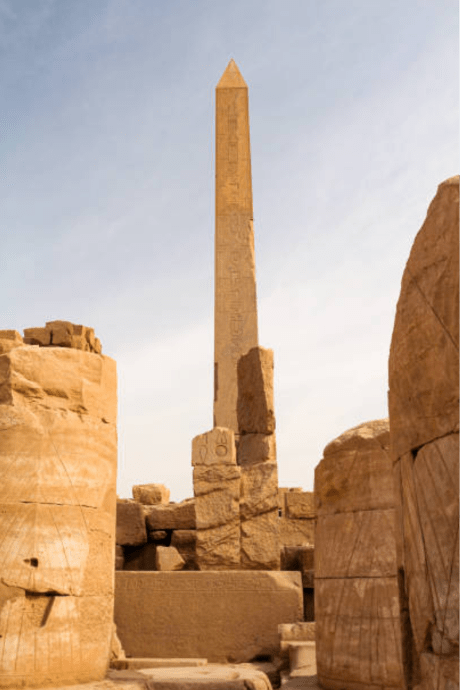
The most striking surviving obelisk here belongs to Hatshepsut. The Ministry gives its height at almost 30 meters and weight at more than 300 tons.
Obelisks were not simply decorative vertical accents. They carried solar symbolism and royal inscriptions and were erected in significant temple positions. Hatshepsut’s surviving obelisk therefore belongs to the same broader program of royal legitimacy visible in her mortuary temple at Deir el-Bahari.
This creates a useful connection with your Hatshepsut Temple Guide. At Deir el-Bahari, travelers see how Hatshepsut expressed kingship through her funerary complex, divine-birth narrative, and Punt reliefs. At Karnak, they see her intervening directly in the central sanctuary of Amun.
For travelers continuing to Aswan, there is another connection: the unfinished obelisk in the ancient granite quarries is generally associated with Hatshepsut and was probably intended for Karnak. The Ministry estimates that, had it been completed, it would have stood around 42 meters high.
The Sacred Lake Helps Explain How Karnak Functioned
The Sacred Lake is easy to treat as a pleasant end-of-visit photo stop.
It is more useful than that.
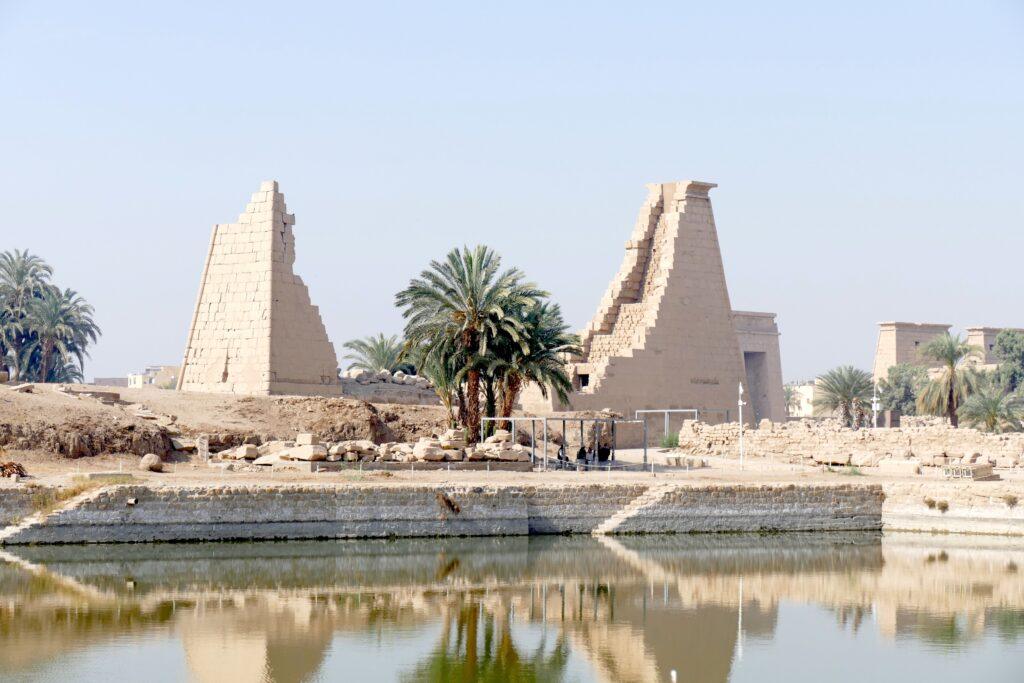
The Ministry explains that priests used the lake for ritual purification before carrying out temple duties.
That gives visitors a glimpse of Karnak as a functioning religious institution rather than a sequence of monumental façades.
Ancient temple complexes were supported by priests, workshops, storage facilities, administrative systems, ritual equipment, and enormous economic resources. Karnak was not merely a symbolic home for Amun. Its priesthood became exceptionally wealthy and politically influential.
The lake area also provides a useful physical break. By the time you reach it, especially in summer, the combination of stone surfaces, open courtyards, and walking can become tiring.
A recent 2026 visitor specifically mentioned appreciating the ability to pause near the Sacred Lake after spending hours exploring the complex.
Don’t Automatically Turn Around at the Sacred Lake
This is the point where many standard visits begin moving back toward the exit.
If you have more than two hours, keep exploring.
Farther east is the Akh-menu, or Festival Hall of Thutmose III. The Ministry describes it as a temple constructed by Thutmose III and dedicated to the cults of various deities, royal predecessors, and the king himself.
The importance is partly spatial. By continuing beyond the most famous sections, you begin to appreciate how much Karnak extends behind the areas photographed most often.
Travelers with three hours or more can also investigate quieter secondary monuments, depending on current access. The Temple of Khonsu, in the southwestern part of the complex, is particularly worthwhile because its more coherent architecture is easier to read than the accumulated main sanctuary. The Ministry dates its initial construction primarily to Ramesses III, with later additions, while recent visitors describe it as significantly quieter than Karnak’s principal axis.
These less crowded corners are often where a long Karnak visit becomes more rewarding rather than merely longer.
The North–South Axis Explains Karnak’s Relationship With Luxor Temple
Karnak’s main Temple of Amun is broadly organized along an east–west axis, but the complex also developed an important north–south processional axis.
That route points toward Luxor Temple.
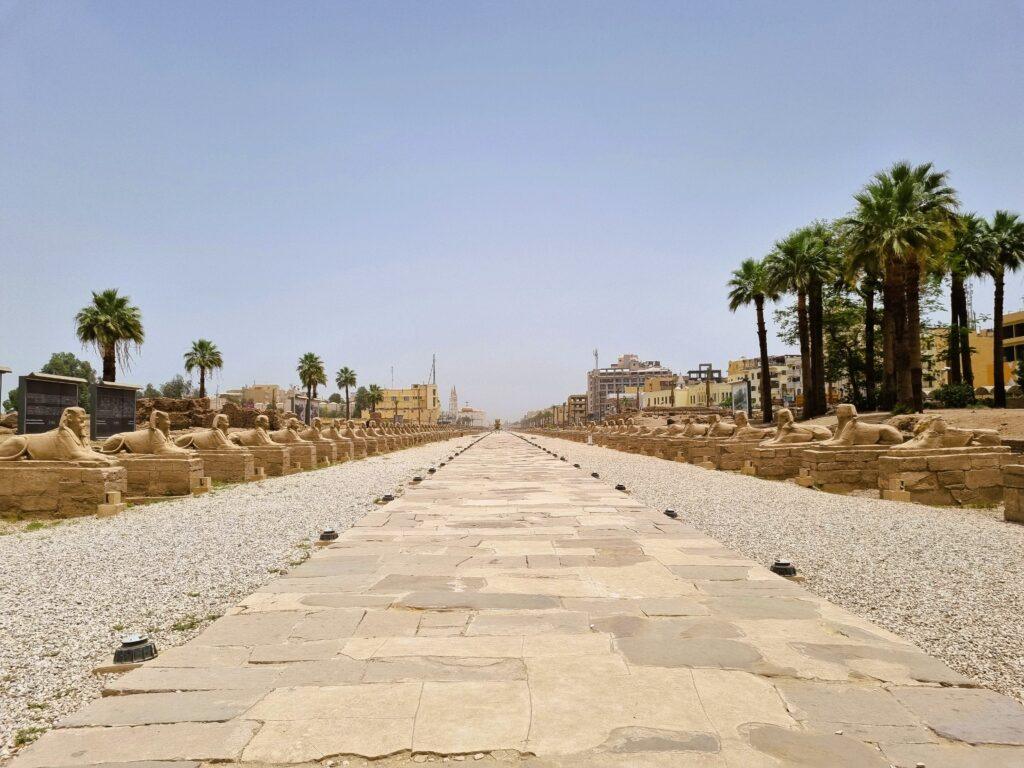
The two were linked by the Avenue of Sphinxes, approximately 2.7 kilometers long, used during religious processions including the Opet Festival. The Ministry explains that sacred images of Amun, Mut, and Khonsu traveled between the temple complexes during the festival.
This relationship is the strongest reason to visit Karnak and Luxor Temple as a pair rather than treating them as unrelated attractions.
Karnak was the great cult center of Amun. Luxor Temple had a different role within the renewal and festival traditions of ancient Thebes. The ancient ceremonial route physically connected the two.
Your Luxor Temple Guide should therefore be one of the strongest internal links from this article.
If you have enough energy, walking part or all of the Avenue of Sphinxes can make the relationship tangible. But do not casually add a 2.7-kilometer walk after three hours at Karnak during a hot afternoon. The historical connection is important; heat exhaustion is not required to understand it.
What to Prioritize With One, Two or Three Hours
If You Have About One Hour
Keep the visit disciplined.
Follow the main route through the First Pylon and Great Court, spend most of your time in the Great Hypostyle Hall, continue to Hatshepsut’s obelisk, and reach the central sacred areas before turning back.
You will miss much of Karnak, but you will at least experience the site’s principal architectural sequence.
Do not spend this hour trying to photograph every statue or inscription.
If You Have About Two Hours
Two hours is the strongest minimum for most first-time travelers.
After the Great Court and Hypostyle Hall, give proper attention to the obelisks, continue deeper into the sanctuary, and reach the Sacred Lake. Add the Ramesses III temple in the Great Court or another manageable side structure rather than making several long detours.
This is enough time for a guide to explain the site’s development without turning every wall into a lecture.
If You Have Three Hours or More
This is where Karnak stops feeling like a single famous temple and starts functioning as a complex.
Continue farther east, explore quieter secondary areas such as the Akh-menu or Temple of Khonsu when open, spend longer examining reliefs, and use the Open Museum if it is accessible under your current ticket.
The official Ministry ticket currently includes both Karnak Temple and the Open Museum for foreign visitors.
Three hours also gives photographers enough time to move away from the busiest central sightlines rather than waiting impatiently for groups to clear.

Morning Is the Best Default, but Later Has One Advantage
For most travelers, early morning is the right choice.
Karnak officially opens at 6:00 AM, and recent visitors confirm that the first hours can be dramatically quieter than the period after organized groups begin arriving. One February 2026 traveler described the site as becoming packed within two hours of opening.
Early light also works particularly well inside the Hypostyle Hall, where sunlight cuts between columns before the overhead sun flattens the contrast.
The trade-off is that Karnak is one of Luxor’s most important tour stops, so the morning can eventually become extremely busy.
Later in the day, crowd levels sometimes drop between waves of coach traffic. Experienced Luxor visitors have reported quieter periods around early afternoon before later groups arrive.
In winter, that can be a useful alternative.
In June, July, or August, I would not deliberately choose midday simply to avoid crowds. Karnak has more structural shade than the Valley of the Kings or Hatshepsut Temple, but large sections remain exposed, and the heat radiating from stone surfaces is physically draining.
Expert Tip: If your Luxor itinerary includes both East and West Bank archaeology, give the most heat-sensitive exposed sites the earliest slots. Karnak tolerates a later visit better than the Valley of the Kings, but “better” does not mean comfortable at 1:00 PM in August.
How Much Walking and Shade Should You Expect?
Karnak is large enough that footwear matters.
The most popular route involves substantial walking over stone and uneven surfaces, and longer visits add side temples and backtracking. Travelers with knee, balance, or stamina concerns should plan conservatively rather than assuming the site works like a compact museum.
Shade is uneven.
The Hypostyle Hall provides substantial relief from direct sun, and various temple structures create shaded areas during parts of the day. But the Great Court, processional spaces, sections around the Sacred Lake, and routes between secondary structures can be exposed.
Recent visitor reviews consistently mention the site’s size and the summer heat, while one July 2026 family specifically found the heat more intense than expected before returning later for the evening Sound & Light show.
Bring water, a hat, sunglasses, and shoes suitable for several hours on hard and irregular surfaces.
UNESCO’s 2025 conservation decision also references a disabled-access project at Karnak, indicating ongoing work around accessibility. However, that decision does not provide enough current visitor-level detail to guarantee which individual temple areas are step-free or wheelchair accessible. Travelers with specific mobility requirements should confirm current arrangements locally or through their hotel, guide, or official site management rather than assuming the entire archaeological complex is accessible.
Is a Guide Worth It at Karnak?
Yes, more than at many Egyptian sites.
You can appreciate Karnak without a guide. The Hypostyle Hall does not require explanation to feel enormous.
But understanding why one pylon faces a particular direction, why Hatshepsut placed obelisks where she did, why Ramesses II carved over or beside earlier decoration, how the Opet procession moved through the complex, and why certain walls preserve scenes of political and military importance requires context.
Recent independent visitors repeatedly make the same practical observation: the site is large enough that it is easy to walk through important areas without recognizing them. Some report returning independently after an initial guided visit because they wanted more time once the basic structure made sense.
The best compromise is often a knowledgeable Egyptologist for the first 90 minutes or two hours, followed by some independent wandering.
A guide should make the complex clearer, not turn Karnak into a three-hour standing lecture.
Karnak and Luxor Temple Belong on the Same East Bank Story
Karnak and Luxor Temple are only a few kilometers apart, and the official Experience Egypt guide estimates roughly four to five hours for a thorough visit to both.
That is reasonable for travelers who keep moving.
I would allow longer if history or photography is a priority.
The strongest sequence for many visitors is Karnak early, followed by a break during the hottest part of the day, then Luxor Temple later when the stone begins catching warmer evening light. Luxor Temple also works especially well around sunset because the urban setting produces a different atmosphere from Karnak’s sprawling archaeological landscape.
The Avenue of Sphinxes then gives the two sites a physical and historical relationship rather than merely placing two temple names on the same itinerary.
Use your Luxor Travel Guide to plan the wider East Bank and West Bank split rather than stacking Karnak, Luxor Temple, the Valley of the Kings, Hatshepsut Temple, and several secondary monuments into one exhausting day.
Karnak Makes More Sense After Hatshepsut Temple
If you visit Hatshepsut’s mortuary temple on the West Bank before Karnak, pay particular attention to how often Amun appears in her political and religious story.
Then come to Karnak.
Here, Hatshepsut was not building a private monument isolated from Egypt’s major religious institutions. She was contributing directly to the most important sanctuary of Amun at Thebes.
Her surviving obelisk is one of the clearest physical connections between the two sites.
Our Hatshepsut Temple Guide explains how her divine-birth scenes, Punt expedition, Osiride imagery, and relationship with Amun shaped the architecture and decoration at Deir el-Bahari. Karnak then shows that royal strategy operating inside the central religious landscape of Thebes.
Karnak Also Helps Explain the West Bank
Ancient Thebes should not be divided too rigidly into “temples on one side, tombs on the other.”
UNESCO treats Karnak, Luxor Temple, the Valley of the Kings, Valley of the Queens, Hatshepsut’s temple, and the wider Theban necropolis as parts of one cultural landscape.
The East Bank was associated with the living city and major state temples. Across the Nile, the western desert contained royal tombs and mortuary temples.
Seeing Karnak before or after the Valley of the Kings helps explain why the kings buried in those hidden tombs invested so heavily in monuments dedicated to Amun during their lifetimes.
Our Valley of the Kings Guide deals with a different practical question—how to choose among the open royal tombs—but historically the two sites belong to the same New Kingdom world.
Karnak by Day or the Sound & Light Show?
Choose the daytime visit if you can do only one.
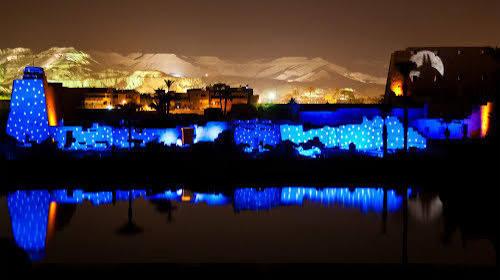
The Sound & Light show is atmospheric, particularly because the temperature is cooler and the monuments are illuminated after dark. The official show currently advertises an English presentation at 8:00 PM on most nights, followed by another language option or Arabic presentation depending on the day, with a regular ticket listed at US$20. The schedule is explicitly marked as subject to change.
But the evening show does not replace seeing Karnak properly in daylight.
During the day, you can examine reliefs, read spatial relationships, wander into secondary temples, study the obelisks, and understand the scale of the Hypostyle Hall under natural light.
Treat Sound & Light as an additional experience, particularly if you enjoy theatrical interpretation or want to see the site after dark.
Recent visitors are divided in exactly the way you would expect: some find the illuminated setting memorable, while others value independent daytime exploration more highly. That is not a contradiction. They are different experiences.
Common Mistakes at Karnak
The most damaging mistake is allocating too little time. Karnak often appears on itineraries as “Karnak Temple – 1 hour,” as though the complex were comparable in scale to a single monument.
The second is arriving late in the morning during the hottest months after already spending several hours sightseeing elsewhere.
The third is stopping mentally after the Hypostyle Hall. Once travelers have seen the famous columns, they sometimes begin walking through the remainder of the complex without paying attention. That means they miss the obelisks, sacred areas, processional logic, and quieter outer structures that explain why Karnak is more than one spectacular room.
Finally, do not judge a guide by the number of facts delivered. Karnak contains enough names, dynasties, kings, gods, inscriptions, and building phases to overwhelm almost anyone. The useful guide is the one who makes the sequence understandable.
Frequently Asked Questions
How long do you really need at Karnak Temple?
Two hours is the best minimum for a first visit. One hour covers the First Pylon, Great Court, Great Hypostyle Hall, and some of the central monuments but leaves little time for side areas. Three hours or more allows you to reach secondary structures, the Sacred Lake, the Akh-menu, and quieter parts of the complex without constantly checking the time.
What are Karnak’s current opening hours?
The Ministry currently lists Karnak as open 6:00 AM to 5:00 PM every day. Some third-party sites currently show an earlier closing time, which is exactly why the official Ministry listing should take priority when planning.
Is Karnak Temple the same as Luxor Temple?
No. Karnak and Luxor Temple are separate archaeological sites approximately 2.7–3 kilometers apart, but they were connected ceremonially by the Avenue of Sphinxes and played complementary roles in festivals such as Opet.
Can you walk from Karnak to Luxor Temple along the Avenue of Sphinxes?
The restored Avenue of Sphinxes physically connects the two temple areas over approximately 2.7 kilometers. Whether walking the full route fits your visit depends on current access arrangements, site hours, temperature, and your stamina. Do not add the walk casually in extreme heat simply because the sites are historically connected.
What should I prioritize if I have only one hour?
Go directly through the Great Court to the Great Hypostyle Hall, then continue toward Hatshepsut’s obelisk and the principal sanctuary area. Those spaces convey the scale, architectural layering, and royal competition that define Karnak better than trying to see several smaller temples superficially.
Is Karnak suitable for children?
Children who respond well to monumental spaces often enjoy the Hypostyle Hall, colossal statues, obelisks, and Sacred Lake more than sites that depend heavily on reading reliefs. The practical limit is heat and walking. Visit early, keep the historical explanation selective, and avoid turning the temple into a long sequence of names and dates.
Is Karnak worth visiting twice?
Travelers with a strong interest in Egyptology or photography can justify a second visit. One useful approach is a guided first visit to understand the plan, then an independent return to explore quieter side areas at your own pace. Recent visitors have reported doing exactly that because one pass through the complex did not feel sufficient.
Is the Karnak Sound & Light show worth it?
It is worthwhile as an atmospheric evening activity if you enjoy illuminated monuments and narrated historical presentations, particularly after seeing Karnak by day. It should not replace the daytime archaeological visit because many of the site’s most important architectural and decorative details are best understood in natural light. The official show schedule currently varies by language and day.
Karnak is easiest to under-plan because everyone already knows the photograph of the columns. The mistake is assuming that seeing those columns means you have understood the site. Explore ENA’s Luxor tours and Egypt itineraries to give Karnak enough time, connect it properly with Luxor Temple and the West Bank, and use an Egyptologist who can make two thousand years of building history readable without turning the visit into a lecture. Get the sequence right and Karnak explains ancient Thebes; rush through it, and it becomes a collection of impressive structures with their relationships missing.