Cairo’s City of the Dead: What It Is and What Visitors Should Know
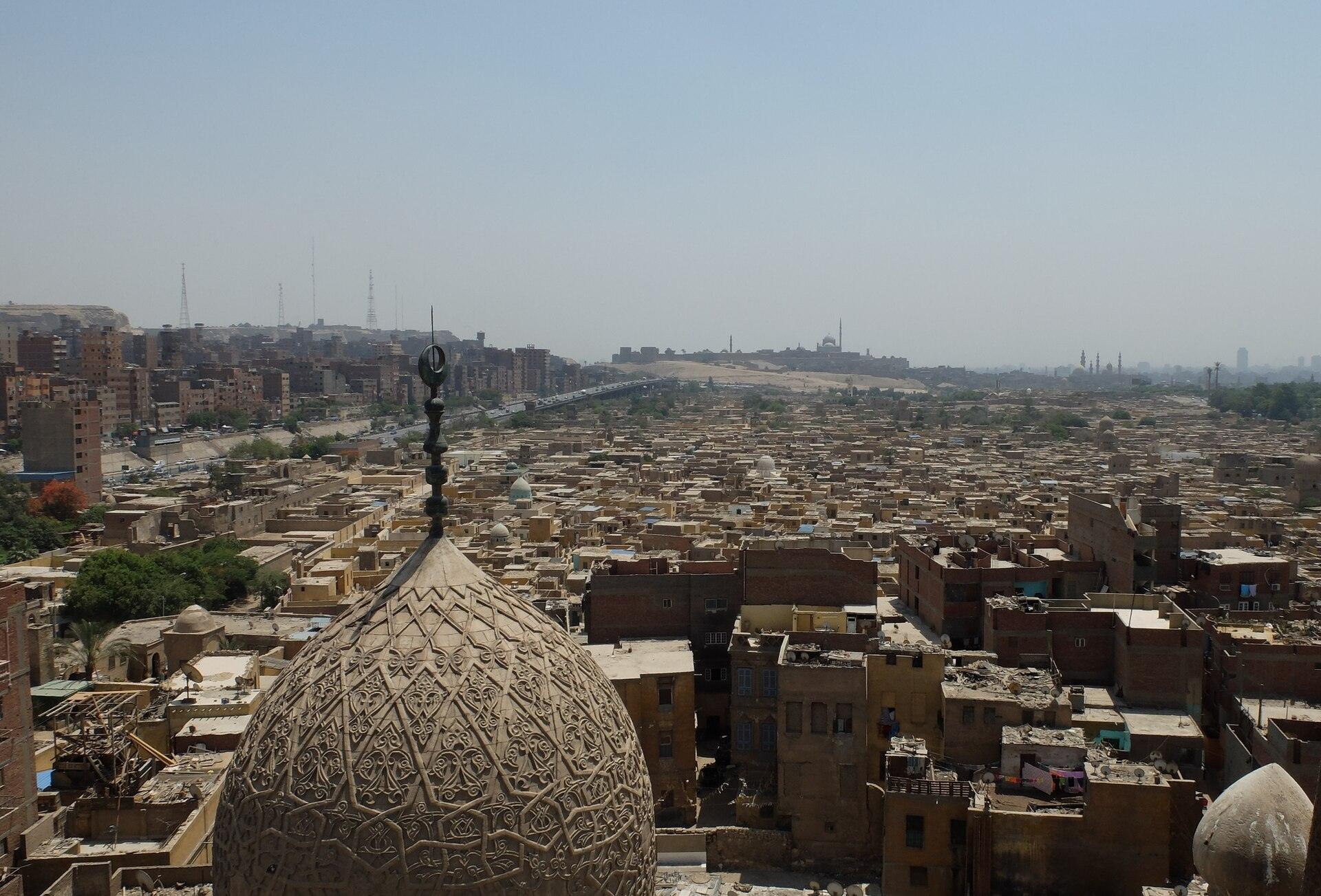
Cairo’s City of the Dead is unlike most cemeteries visitors have encountered. Medieval tombs and elaborate mausoleums stand along streets where people live, work and go about their daily routines. Some of the buildings are among Cairo’s finest examples of Islamic architecture, while others are family burial places that are still used today.
The cemeteries stretch across several districts rather than occupying one enclosed site. Their history reaches back to the early Islamic period, although many of the most impressive surviving monuments were built centuries later under the Mamluk rulers.
Parts of this historic landscape have changed considerably in recent years. Road construction and redevelopment have led to the demolition of some burial structures, making the preservation of Cairo’s cemeteries an increasingly contentious issue.
For travelers, the City of the Dead offers an opportunity to see important medieval monuments beyond Cairo’s familiar sightseeing routes. But it’s worth understanding how the cemeteries developed, which areas are suitable for visiting and why older travel information may no longer be reliable.
What Is Cairo’s City of the Dead?
The City of the Dead is the English name commonly used for Cairo’s historic cemeteries, associated with al-Qarafa.
These burial grounds developed over many centuries and occupy several districts rather than one enclosed cemetery. They extend through parts of eastern and southern Historic Cairo, including areas near the Citadel, the Muqattam hills and the older districts associated with Fustat.
Burials began in the early Islamic period, when cemeteries were established outside the main settled areas. As Cairo expanded, successive rulers, religious scholars and prominent families built tombs and religious foundations within the cemetery districts.
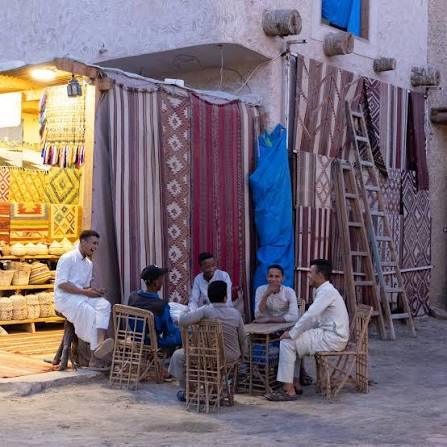
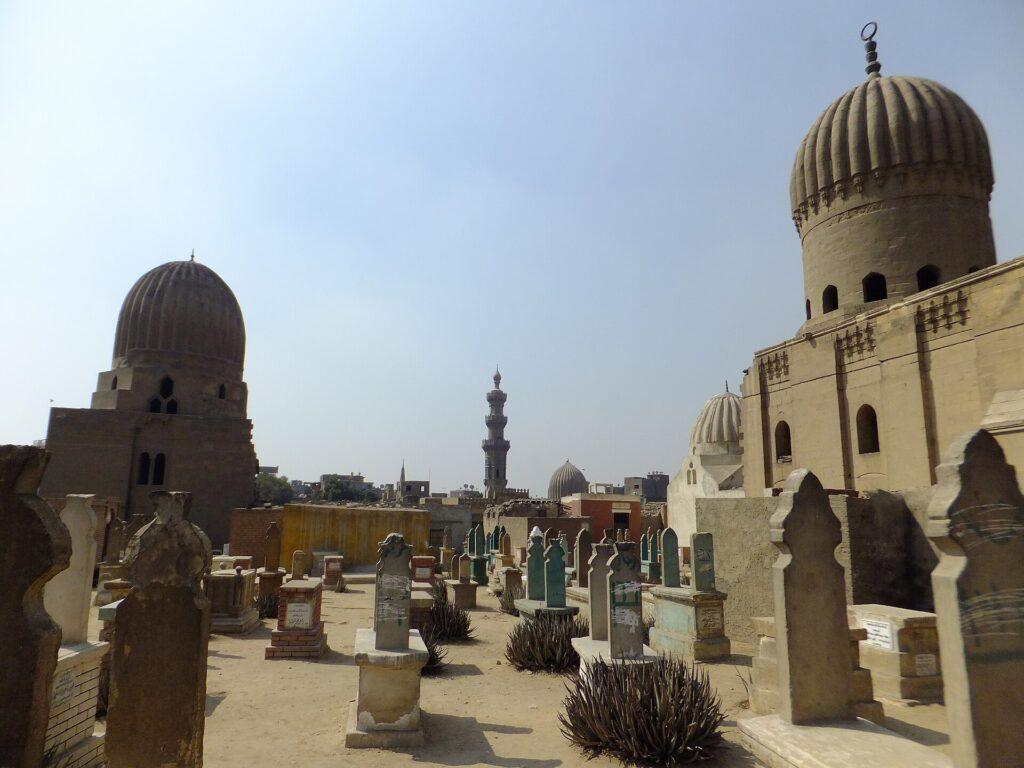
Some of the surviving monuments are enormous, with courtyards, prayer halls and richly decorated domes. Others are modest family mausoleums or ordinary burial compounds. Between them are mosques, shrines, streets, homes and small businesses.
The cemeteries have never been entirely separate from Cairo’s everyday life. Religious institutions, caretakers and people working in the surrounding neighborhoods have long been part of their history.
How the City of the Dead Developed
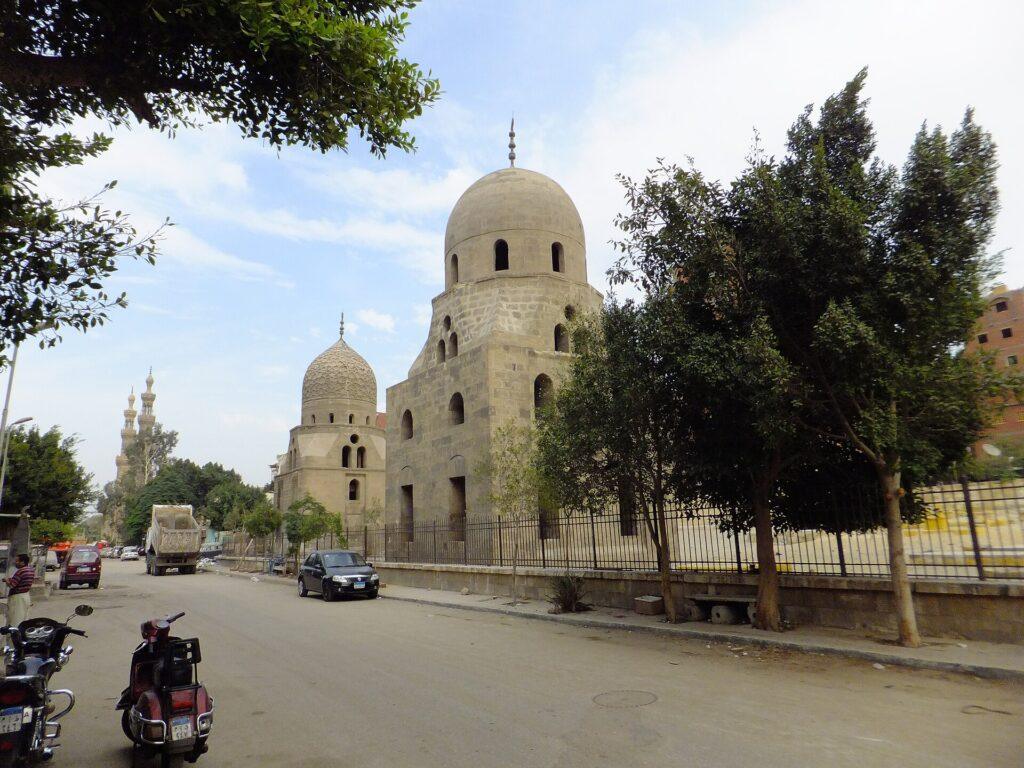
During the Mamluk period, Cairo’s rulers built far more than elaborate tombs.
Their funerary foundations often included mosques, religious schools and accommodation for scholars or Sufi communities. Many were supported by charitable endowments that funded their activities long after the original patron had died.
The cemetery districts beyond the crowded medieval city offered room for these large foundations, including courtyards, prayer halls, minarets and monumental domes.
The Northern Cemetery became particularly associated with Mamluk funerary architecture. Several of its most important complexes were built during the 14th and 15th centuries.
The Southern Cemetery has older burial traditions and contains important shrines connected with the early history of Islam in Egypt.
As Cairo continued expanding, streets and residential neighborhoods developed around burial compounds that had once stood beyond the main city.
Do People Really Live in the City of the Dead?
Yes, although the living arrangements vary considerably.
Some cemetery compounds historically included rooms for caretakers responsible for maintaining family burial places. In certain areas, these spaces were also used as homes.
Other residents live in ordinary houses and apartment buildings along streets that pass through or border the cemeteries.
Some families have lived and worked around the burial grounds for generations. Others settled in the surrounding neighborhoods for employment, family connections or housing.
A street may contain a medieval mausoleum, a family burial compound, a workshop and several homes. The buildings serve different purposes, even when they stand close together.
Northern Cemetery and Southern Cemetery: What’s the Difference?
The Northern and Southern Cemeteries have different histories and monuments. Unless you have plenty of time, it’s better to choose one area rather than trying to cover both in a single visit.
Northern Cemetery: Mamluk Architecture
The Northern Cemetery, also known as the Mamluk Cemetery, lies northeast of the Citadel.
This is where you’ll find some of Cairo’s finest surviving Mamluk funerary complexes, including those of Sultan Qaitbay, Sultan Faraj ibn Barquq and Sultan Barsbay.
Tall minarets rise above the surrounding streets, while carved stone domes display the geometric decoration for which Mamluk craftsmen became famous.
The same architectural traditions can be seen throughout Islamic Cairo, particularly along Al-Muizz Street, where medieval mosques, schools and mausoleums stand within the old city.
Some monuments are relatively compact. Others include enormous courtyards, prayer halls and buildings that once served religious and educational purposes.
For travelers interested in medieval architecture, the Northern Cemetery is usually the best place to begin.
Southern Cemetery: Religious History and Historic Shrines
The Southern Cemetery includes areas associated with Imam al-Shafi’i and al-Khalifa.
Its burial history reaches back to the early Islamic centuries, although many of the surviving monuments were built later.
Among its important sites are the Mausoleum of Imam al-Shafi’i and the Mausoleum of Shajar al-Durr.
The Southern Cemetery has also been affected by recent road construction and demolition, so older walking routes and descriptions may no longer reflect conditions on the ground.
The Southern Cemetery is especially interesting for its religious shrines and early Islamic history, but it requires more careful planning.
Important Monuments in Cairo’s City of the Dead
Sultan Qaitbay’s Funerary Complex
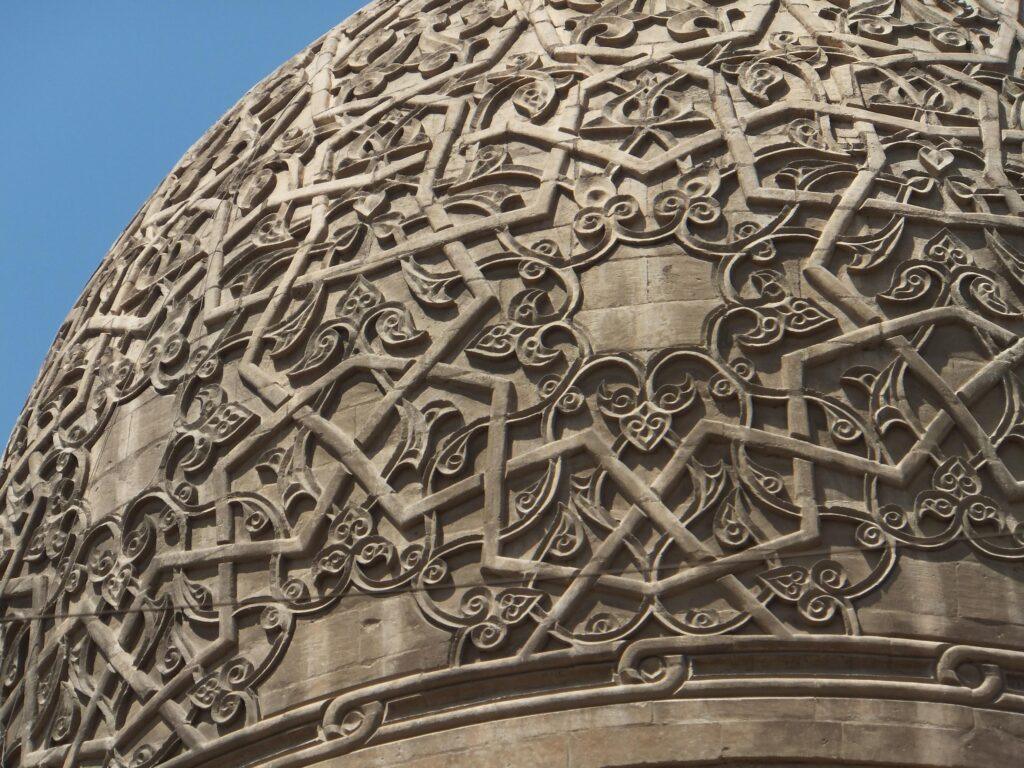
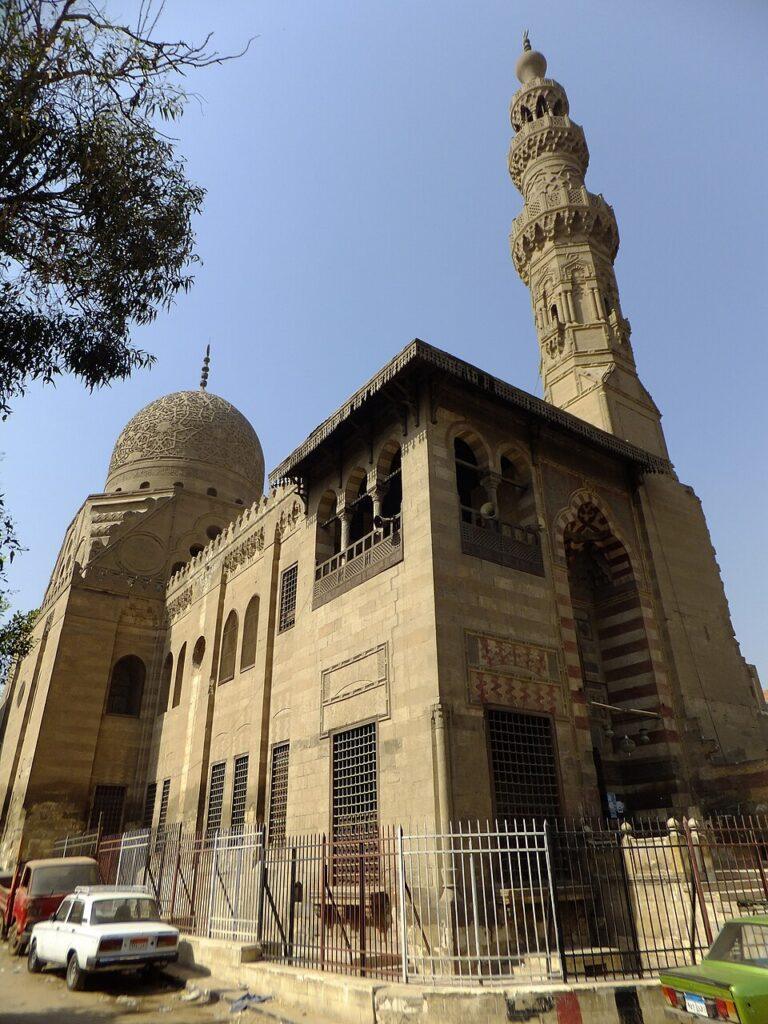
The intricately carved stone dome is the first feature that draws attention at Sultan Qaitbay’s funerary complex. Its geometric patterns seem to change as sunlight moves across the surface, and the surrounding stonework shows the skill of Cairo’s Mamluk craftsmen.
Built between 1472 and 1474, the complex includes a mosque-madrasa and mausoleum. The larger foundation also included a sabil (public water dispensary), a kuttab (elementary religious school) and a burial area associated with the sultan’s family.
The entrance and minaret are also worth examining. Their proportions and decoration are characteristic of the sophisticated architecture developed in Cairo during the late Mamluk period.
Homes, workshops and neighborhood businesses surround the complex. Conservation initiatives have worked to preserve historic buildings while supporting local craftsmanship and community life.
If you have time for only one major monument in the Northern Cemetery, Qaitbay is a good choice.
Sultan Faraj ibn Barquq’s Complex
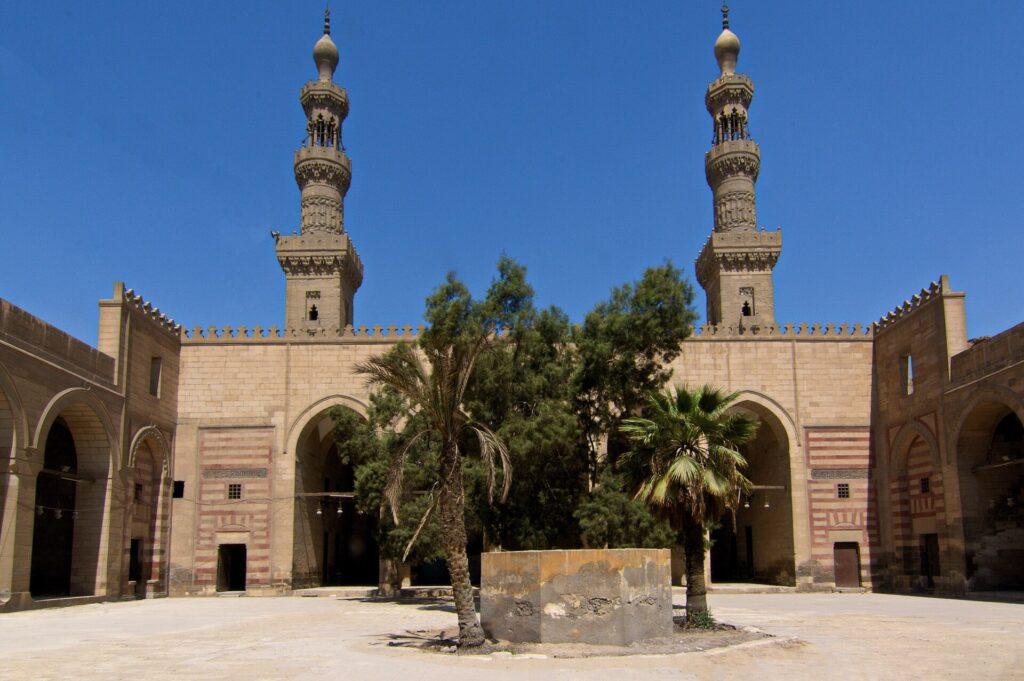
The enormous courtyard is one of the first things visitors notice at Sultan Faraj ibn Barquq’s complex. Its scale is quite different from the more intricate architecture of Qaitbay’s monument.
Constructed between 1398 and 1411 CE, the foundation contains a mosque, madrasa and khanqah, a religious institution associated with Sufi communities. It also contains the burial places of Sultan Barquq and members of his family.
The twin minarets and domes are prominent features of the Northern Cemetery, while the courtyard helps explain how large these medieval religious foundations could be.
Although the complex bears Sultan Faraj ibn Barquq’s name, it also serves as the burial place of his father, Sultan Barquq.
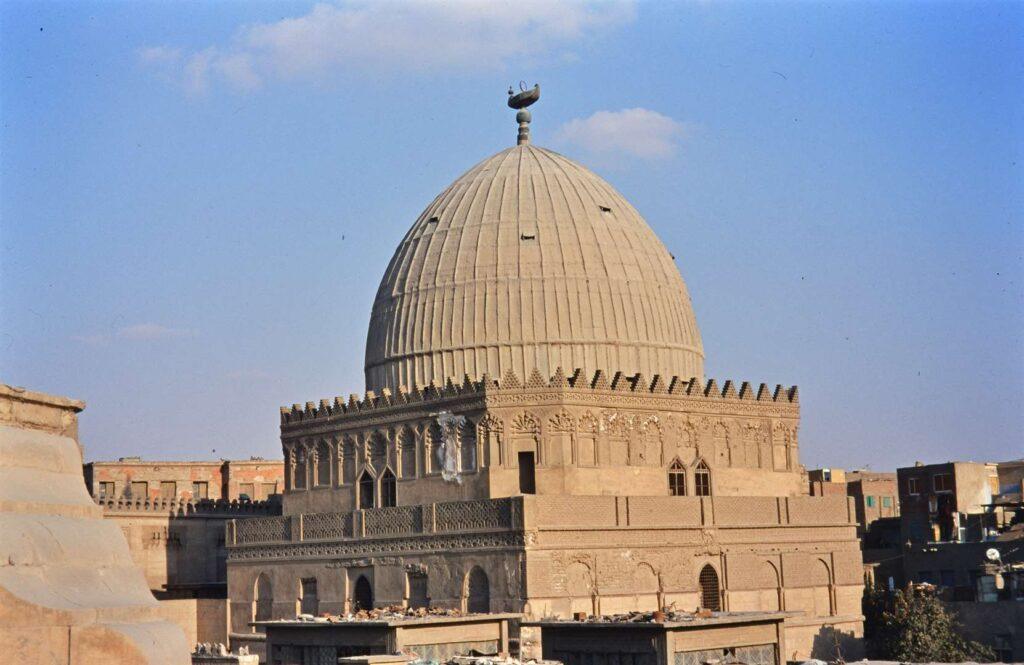
The Mausoleum of Imam al-Shafi’i
Imam al-Shafi’i was one of the most influential scholars in Islamic history. He died in Egypt in 204 AH (819–820 CE), and the Shafi’i school of Islamic jurisprudence takes its name from his teachings.
His grave became an important religious destination. Saladin supported construction at the burial site during the 12th century, while the surviving monumental mausoleum was built in 1211 during the Ayyubid period.
The building is particularly known for its enormous wooden dome, which underwent significant reconstruction under Sultan Qaitbay in 1480.
Later alterations and modern conservation work have also contributed to the structure visible today.
The mausoleum remains a place of religious significance, so visitors should approach it as an active shrine rather than simply an architectural monument.
The Mausoleum of Shajar al-Durr
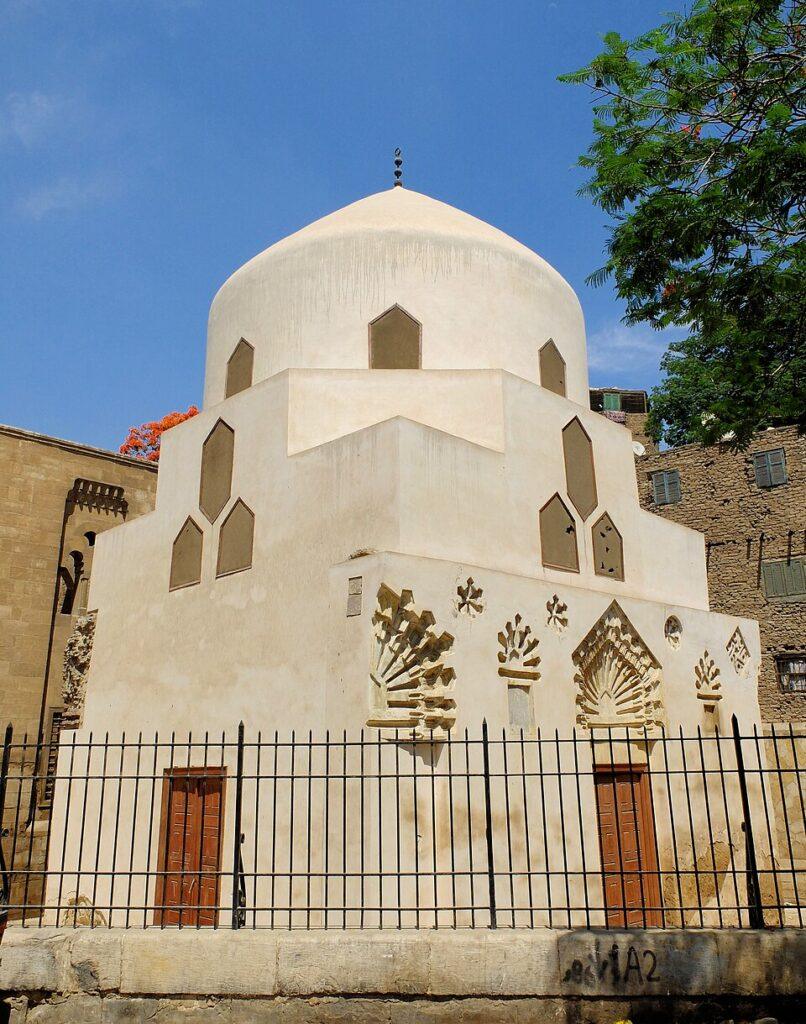
Few women held political power in medieval Egypt in the way Shajar al-Durr briefly did.
Following the death of Sultan al-Salih Ayyub in 1249, she helped manage a difficult political and military situation. In 1250, she ruled Egypt briefly in her own name before a new political arrangement brought Izz al-Din Aybak to power.
Her mausoleum is smaller than the great complexes of the Northern Cemetery, but its interior contains one of Cairo’s most distinctive surviving decorative features.
The glass mosaic mihrab, the niche indicating the direction of prayer, depicts a tree of pearls, a reference to Shajar al-Durr’s name.
Conservation work completed in 2015 revealed additional decorative details that had been concealed beneath later plaster.
Other monuments in the cemetery districts include the funerary complex of Sultan Barsbay and buildings associated with Amir Qurqumas. Some are accessible to visitors, while others may have restricted interiors or be undergoing conservation.
Why Is Cairo’s City of the Dead Being Demolished?
Road construction and redevelopment projects have affected sections of Cairo’s historic cemeteries in recent years.
Some historic tombs and family burial structures have been demolished or removed, while proposals to relocate graves have caused concern among families and heritage specialists.
Egyptian authorities have emphasized the need to improve road connections and traffic circulation as part of wider urban development. Restoration work has also been undertaken on important historic monuments.
Preservation advocates have raised concerns about the loss of burial structures, historic inscriptions and architectural details that may never have been formally registered as protected monuments.
Even when a major mosque survives, demolishing smaller tombs around it can permanently change the setting in which it was built. Family mausoleums also preserve evidence of Cairo’s social history, including names, dates, stonework and inscriptions that may not have been thoroughly documented.
Families whose burial places have been affected also face the loss or relocation of graves connected to earlier generations.
What Has UNESCO Said?
Historic Cairo has been on the UNESCO World Heritage List since 1979, and the designated property includes historic cemetery areas.
In 2021, UNESCO’s World Heritage Committee raised concerns about reported demolition associated with road construction through the Northern and Southern Cemeteries.
Egyptian authorities subsequently stated that the road construction had not involved demolishing tombs or mausoleums within the designated World Heritage property. UNESCO recorded that position in 2023 but continued to request information about reported damage and infrastructure projects.
In its 2026 decision on Historic Cairo, the committee welcomed restoration efforts while requesting further assessment of development projects and a joint World Heritage Centre–ICOMOS monitoring mission.
The wider historic cemetery landscape extends beyond the areas covered by the World Heritage designation. A family mausoleum may have considerable historical value without being individually registered as a protected monument.
For visitors, the changes also mean that older maps, photographs and walking routes may show buildings or streets that have since been altered.
Visiting Cairo’s City of the Dead
Visitors can explore important historic monuments in parts of the Northern and Southern Cemeteries, although access varies by building.
There is no single entrance or general admission ticket covering the entire City of the Dead. Some buildings are managed monuments, while others are active religious sites. Private family tombs and burial compounds are not automatically open to visitors.
For a first visit, concentrate on a few important monuments rather than trying to explore the entire cemetery district.
The Northern Cemetery is generally the more practical choice for travelers interested in Mamluk architecture. Sultan Qaitbay’s complex and Sultan Faraj ibn Barquq’s complex are the two principal monuments to consider.
You can visit some accessible monuments independently, but a knowledgeable local guide is particularly useful here.
At Qaitbay, a guide can explain how the mosque, mausoleum and surrounding buildings formed part of one larger religious foundation. At Faraj ibn Barquq’s complex, the different spaces make more sense when you understand their religious and educational functions.
Someone familiar with current conditions can also help identify appropriate entrances and avoid streets affected by construction or restricted access.
Getting There and Planning Your Time
For the Northern Cemetery, Sultan Qaitbay’s complex is a useful destination when arranging transport. Sultan Faraj ibn Barquq’s complex is another important landmark in the district.
For the Southern Cemetery, the Mausoleum of Imam al-Shafi’i is a clearer destination than simply entering City of the Dead into a map.
Uber can be useful for reaching an agreed meeting point. If you’re traveling with a guide and private vehicle, arrange the drop-off and collection locations in advance.
Allow around half a day for a focused Northern Cemetery visit, particularly if you want to see Qaitbay and Faraj ibn Barquq without rushing. The Southern Cemetery is better treated as a separate visit.
If you’re planning to explore more of Historic Cairo, allow enough time for the journey between districts. The Northern Cemetery isn’t immediately beside Khan el-Khalili or Al-Muizz Street, and Cairo traffic can make combining too many sites tiring. Our guide to how many days you need in Cairo can help you decide how much time to allow for the city’s different historic areas.
October through April is generally the most comfortable period for walking through Cairo’s historic districts. The Northern Cemetery has exposed streets and open areas, so summer heat can make extended visits tiring.
An earlier daytime visit is usually preferable, particularly if you plan to see several monuments.
Safety and Respectful Visiting
The practical difficulties are finding your way, avoiding construction areas and knowing which buildings are open.
Visit during daylight hours, plan your route and avoid entering damaged buildings or enclosed tomb compounds without permission.
The cemeteries are also places where families visit graves and residents go about their daily lives. Ask before photographing people, and avoid photographing private homes or funeral gatherings.
Dress modestly if you intend to enter mosques or religious shrines. Shoes may need to be removed before entering prayer areas, and photography rules can vary.
Frequently Asked Questions About Cairo’s City of the Dead
What is the City of the Dead in Cairo?
The City of the Dead is the popular name for Cairo’s historic cemeteries, associated with al-Qarafa. They contain medieval tombs, mausoleums, mosques, religious buildings and residential neighborhoods.
Do people still live in the City of the Dead?
Yes. Some people live in cemetery-associated compounds, while others live in ordinary homes in neighborhoods surrounding or overlapping the burial grounds.
Can tourists visit Cairo’s City of the Dead?
Yes, certain historic monuments are open to visitors. However, access varies, and the cemetery districts are not managed as one attraction.
Is the City of the Dead being demolished?
Parts of Cairo’s historic cemetery landscape have been affected by demolition, road construction and redevelopment. The situation differs between districts, and not every monument has been affected.
Is the City of the Dead part of UNESCO Historic Cairo?
Important cemetery areas are associated with the UNESCO-listed Historic Cairo property, but the wider area commonly called the City of the Dead is not identical to one uniformly protected heritage zone.
Which part of the City of the Dead is best to visit?
The Northern Cemetery is a good starting point for travelers interested in Mamluk architecture, particularly the complexes of Sultan Qaitbay and Sultan Faraj ibn Barquq.
Planning a Visit to Cairo’s Historic Cemeteries
If you’re interested in Cairo’s Mamluk architecture, the Northern Cemetery deserves consideration alongside the better-known monuments of Islamic Cairo. Qaitbay and Faraj ibn Barquq are two particularly worthwhile stops, provided current access allows a visit.
The Southern Cemetery is better suited to travelers who want to explore Cairo’s religious history. Either area is worth visiting with enough time to appreciate the buildings rather than simply stopping for photographs.
Explore ENA can help incorporate these monuments into a private Cairo itinerary, taking current access and your other sightseeing plans into account.