Tuna el-Gebel: Tombs, Catacombs & Visiting Guide
Tuna el-Gebel is one of the most unusual archaeological sites in Middle Egypt. Here, you can explore the decorated tomb of an Egyptian priest whose artists combined Egyptian and Greek styles and visit the burial place of a young woman whose death inspired a romantic legend.
There are also underground galleries used for the burial of thousands of sacred animals, along with a much older monument connected with Akhenaten’s capital at Amarna.
These remains span more than a thousand years of Egyptian history, yet they’re found within the same archaeological landscape near Minya.
If you’re exploring Middle Egypt beyond its better-known attractions, Tuna el-Gebel deserves serious consideration.
Where Is Tuna el-Gebel?
Tuna el-Gebel is in Minya Governorate, near Mallawi, on the western side of the Nile. It lies at the edge of the Western Desert, where the cultivated land of the Nile Valley gives way to the desert.
The site served as the necropolis for ancient Hermopolis, an important religious center dedicated to Thoth, the Egyptian deity associated with writing, wisdom and knowledge.
Tuna el-Gebel is approximately 43 km south of Minya. Amarna and Beni Hasan are on the opposite side of the Nile, so a day combining these sites needs to account for the available crossings and driving routes.
What Is Tuna el-Gebel?
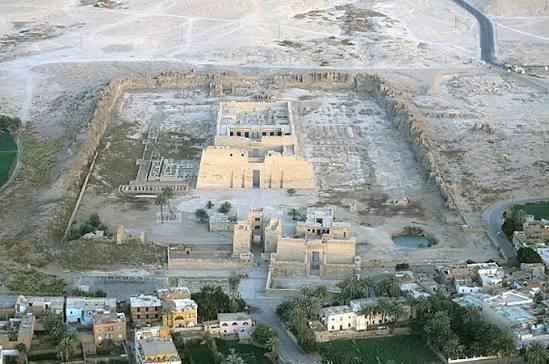
Tuna el-Gebel is an extensive ancient cemetery rather than a single monument.
Across the site are stone tombs, later mudbrick tomb houses, religious structures and underground galleries used for sacred-animal burials.
Much of the surviving cemetery developed during the Ptolemaic and Roman periods. Some tombs resemble small Egyptian temples, while others look more like houses, with rooms arranged around places of burial.
Archaeologists have been investigating Tuna el-Gebel for more than a century, and work continues to reveal more about the cemetery and its relationship with Hermopolis.
The best-known monuments include the Tomb of Petosiris, the Tomb of Isadora, the sacred-animal galleries and Akhenaten’s Boundary Stela A.
The Tomb of Petosiris
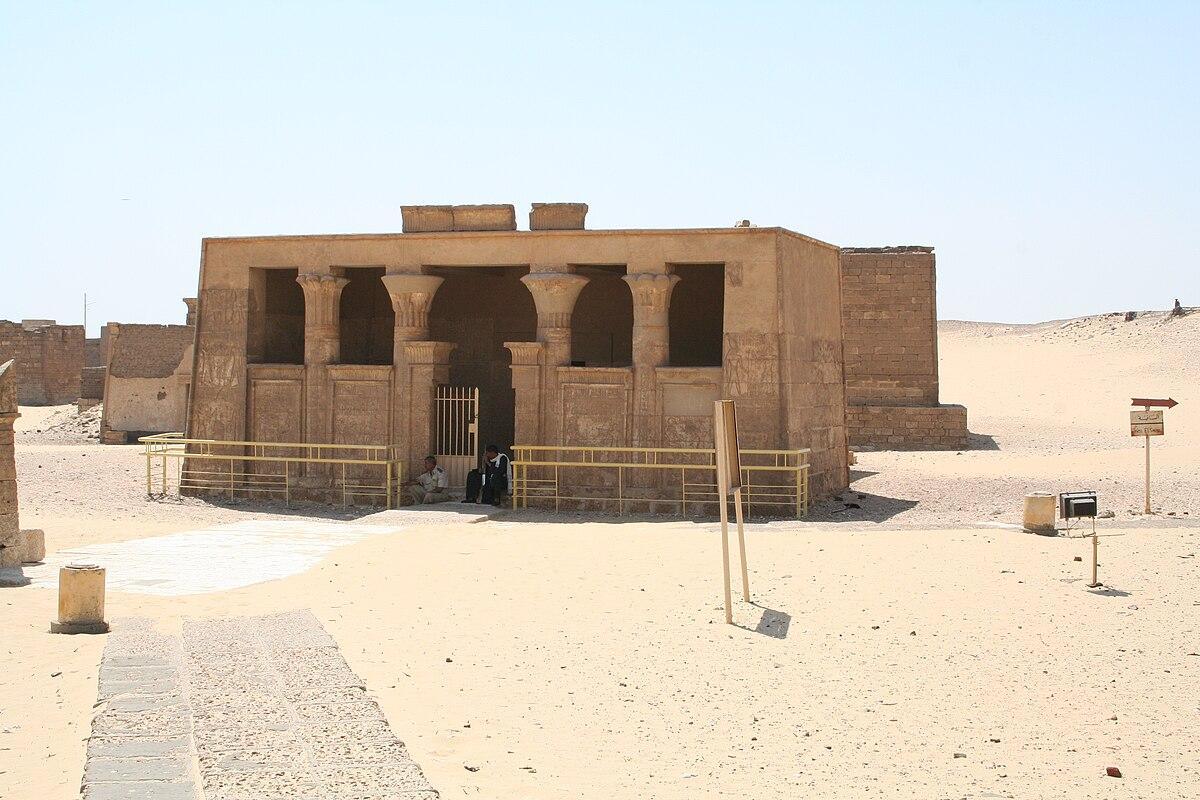
The Tomb of Petosiris is one of the main reasons to visit Tuna el-Gebel.
Petosiris was an important priest of Thoth. His tomb dates to the beginning of the Ptolemaic period, around the late fourth century BC.
From outside, the building resembles a small Egyptian temple, with a columned entrance and stone walls.
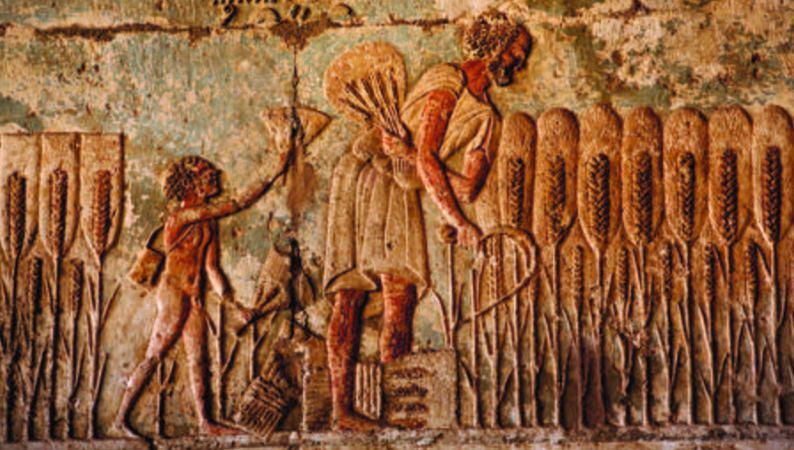
Inside, look closely at the people.
The walls show subjects familiar from Egyptian tombs, including agricultural work, crafts and offerings. Look closely and you’ll notice Greek influences in the clothing, proportions and movement of figures within otherwise traditional Egyptian scenes.
Don’t spend the entire visit looking only for the brightest surviving colors. The people, their clothing and the details of what they’re doing are worth slowing down for.
The experience is very different from the much earlier Middle Kingdom tombs at Beni Hasan or the New Kingdom tombs around Luxor.
The Tomb of Isadora
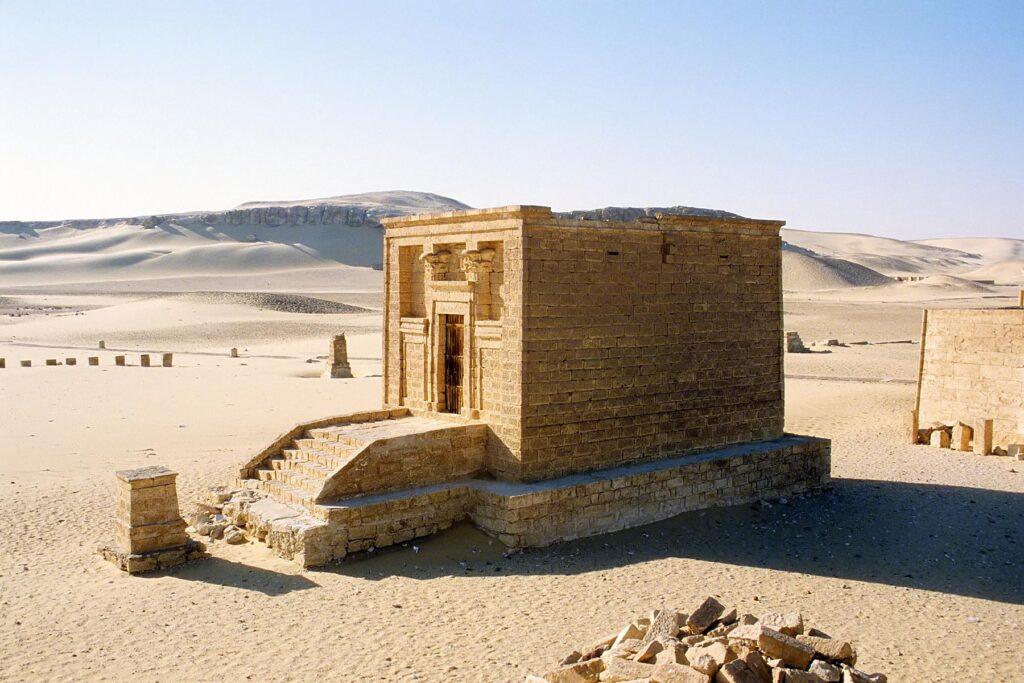
The Tomb of Isadora belongs to a young woman who lived during Egypt’s Roman period, around the second century AD.
Her burial is associated with one of Tuna el-Gebel’s best-known stories.
A later romantic tradition says Isadora fell in love with a young man her father opposed and drowned in the Nile while trying to reach him. The story is widely repeated, but the exact circumstances of her death are not securely established.
Isadora herself was real, and Greek funerary inscriptions preserve the grief surrounding her death. Minya Governorate’s tourism authority identifies her mummy as being housed within the tomb, although that does not establish whether visitors can currently view it.
In 2025, the Tuna el-Gebel archaeological mission documented restoration work on the pyramidal structure in front of the tomb.
It’s a different experience from Petosiris. Isadora’s tomb is memorable because the inscriptions preserve something personal about a woman who lived nearly two thousand years ago.
The Sacred-Animal Galleries
One of Tuna el-Gebel’s most distinctive features lies underground.
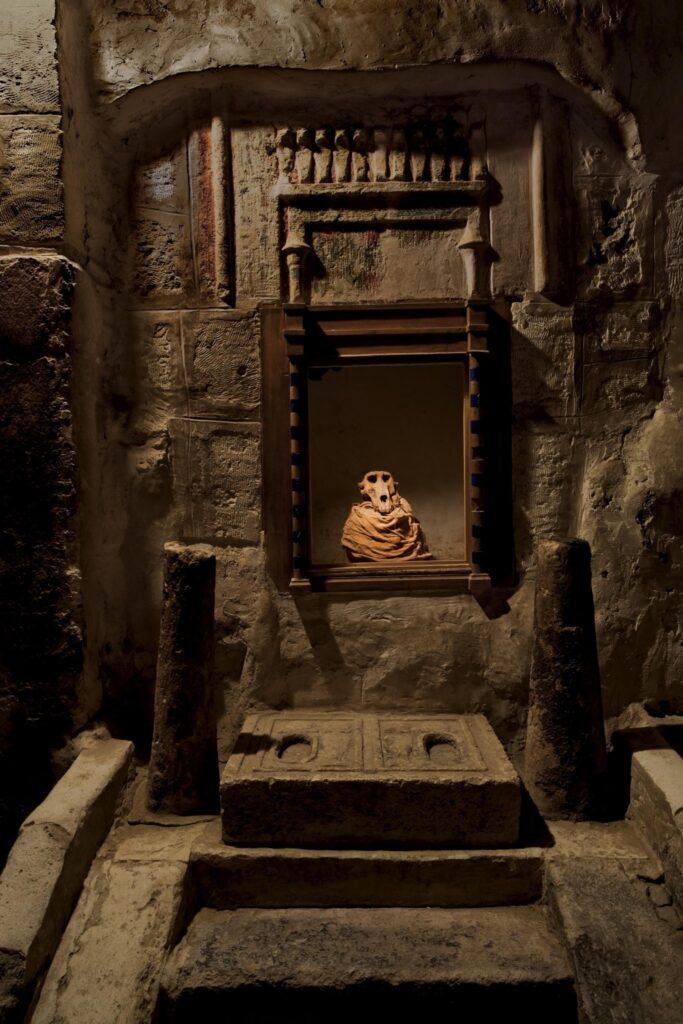
Extensive galleries were used for the burial of sacred animals associated with Thoth, the deity worshipped at nearby Hermopolis.
Thoth was commonly represented as an ibis-headed figure but could also appear in the form of a baboon. Both animals therefore had religious significance.
Large numbers of ibises and baboons were mummified and deposited in the underground galleries at Tuna el-Gebel.
These weren’t pets being buried by their owners. The animals were connected with the cult of Thoth and were mummified and deposited as part of religious practice.
The galleries contain an extraordinary number of animal burials, showing just how extensive this practice became.
The Tuna el-Gebel archaeological project’s research on the site provides more information about the necropolis, sacred precinct and underground galleries.
The Roman Water-Lifting Installation
Tuna el-Gebel also preserves the remains of a Roman-period saqiya, a water-lifting installation associated with the sacred precinct.
The installation drew water from a deep well and formed part of the infrastructure serving the complex.
Although most visitors come to see the tombs and underground galleries, the remains of the water-lifting system offer another glimpse of how the religious precinct functioned during the Roman period.
Akhenaten’s Boundary Stela A
One of Tuna el-Gebel’s oldest monuments belongs to the reign of Akhenaten, more than a thousand years before many of the site’s Greco-Roman tombs were constructed.
When Akhenaten established Akhetaten, his new capital at modern Amarna, he ordered large boundary inscriptions to be carved into the cliffs around the territory.
Most of the surviving boundary stelae are on the eastern side of the Nile, around Amarna itself.
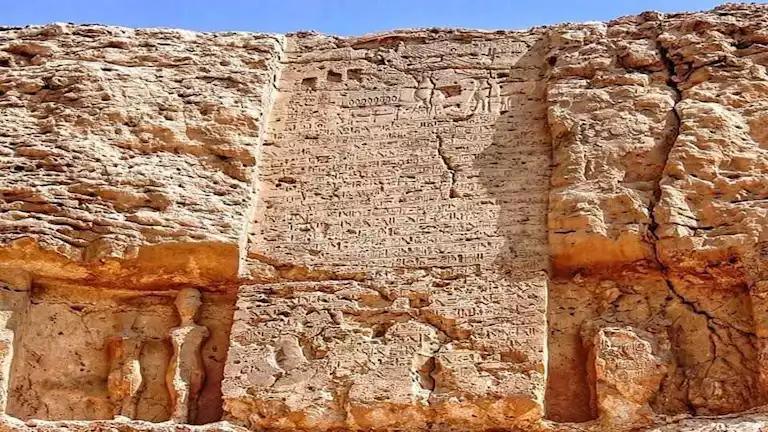
Boundary Stela A at Tuna el-Gebel marks part of the western boundary of Akhetaten’s territory.
The monument includes inscriptions and representations of Akhenaten, Nefertiti and members of their family worshipping the Aten.
Reaching the stela involves ascending toward the western escarpment. Visitors who have difficulty climbing should confirm the current access conditions before including it in their plans.
Tuna el-Gebel was not part of the ancient city itself. The stela is here because Akhenaten’s defined territory extended across the Nile.
If you’ve already visited Amarna, seeing Stela A helps put the wider territory of Akhenaten’s capital into perspective.
What Is Visiting Tuna el-Gebel Actually Like?
Tuna el-Gebel is spread across an exposed desert archaeological landscape.
You move between above-ground tombs, underground galleries and open areas containing the remains of other structures.
Petosiris rewards close attention to the decorated walls. Isadora’s tomb is smaller and more personal, while the underground galleries reveal an entirely different side of ancient Egyptian religion.
Boundary Stela A adds a climb if you choose to include it and access is available.
A knowledgeable guide is particularly useful here because the monuments belong to different periods. Understanding their connection with Hermopolis makes the visit much more interesting.
Is Tuna el-Gebel Suitable for Travelers With Limited Mobility?
Some parts of Tuna el-Gebel are more physically demanding than others.
The archaeological area includes uneven ground, enclosed tombs and underground spaces.
Boundary Stela A is the main concern for visitors who have difficulty climbing. Reaching it involves ascending toward the escarpment, and the route may not be suitable for everyone.
Travelers with significant mobility limitations should confirm current conditions before visiting, particularly if they want to enter the underground galleries or reach the boundary stela.
Archaeological and conservation work can also affect access to individual monuments.
How Long Do You Need at Tuna el-Gebel?
Allow several hours rather than treating Tuna el-Gebel as a quick stop.
Add more time if you plan to include Boundary Stela A.
If archaeology is one of the reasons you’re spending time in Minya, give the site a substantial part of the day rather than trying to squeeze another major archaeological site around it.
Planning Your Visit to Tuna el-Gebel From Minya
Can You Visit Tuna el-Gebel From Minya?
Yes. Minya is a practical base for visiting Tuna el-Gebel, particularly if you’re exploring several archaeological sites in Middle Egypt.
For most international visitors, the simplest arrangement is a private vehicle with a driver. Keep the vehicle with you rather than relying on finding transportation again when you’re ready to leave.
Should You Stay in Minya or Mallawi?
Minya is generally the better base if you’re exploring several parts of the governorate.
Mallawi is closer to Tuna el-Gebel and may make sense if most of what you want to see is in the southern part of the region.
Choose your base around the complete itinerary, not just the distance to Tuna el-Gebel.
Can You Combine Tuna el-Gebel With Amarna?
You can include both sites in the same Middle Egypt itinerary, but I wouldn’t automatically recommend visiting them on the same day.
Tuna el-Gebel is west of the Nile. Amarna is on the eastern side and covers a much larger archaeological landscape, with its main sites spread between the ancient city, desert cliffs and Royal Wadi.
If you want to explore Amarna properly, give it its own day.
Our guide to visiting Amarna explains what remains of Akhenaten’s capital and how much time to allow.
Can You Combine Tuna el-Gebel With Beni Hasan?
Yes, but I wouldn’t pair them automatically simply because both are in Minya Governorate.
Beni Hasan lies east of the Nile and north of Tuna el-Gebel. Whether the two work well on the same day depends on where you’re staying and what else is in your route.
What About Ancient Hermopolis?
Tuna el-Gebel was closely connected with ancient Hermopolis, at modern el-Ashmunein.
Hermopolis was an important religious center dedicated to Thoth, and Tuna el-Gebel served as its necropolis. That connection explains the priestly tombs and the enormous number of sacred-animal burials here.
The surviving remains at Hermopolis are much more fragmentary than the monumental temples visitors see in Luxor.
If both sites are accessible during your trip, visiting Hermopolis and Tuna el-Gebel together lets you see the ancient city and the cemetery connected with it.
When Is Tuna el-Gebel Open?
Tuna el-Gebel is open daily from 8:00 a.m. to 4:00 p.m. by Minya Governorate’s tourism authority and Egypt’s official ticketing platform.
Hours may differ during Ramadan or change for operational reasons.
Access to individual monuments can also be affected by archaeological and conservation work. If Petosiris, Isadora, the animal galleries or Boundary Stela A is essential to your visit, confirm access shortly beforehand.
What Should You Bring?
Wear comfortable shoes with good grip. The archaeological ground is uneven in places, and reaching Boundary Stela A involves climbing.
Bring water and sun protection, particularly during warmer months.
Carry your passport, as identification may be required at archaeological sites.
If you’re planning to enter the underground galleries, be prepared for enclosed spaces rather than assuming the entire visit takes place outdoors.
Is Tuna el-Gebel Worth Visiting?
If your main interest is Egypt’s largest temples and most famous royal monuments, Tuna el-Gebel may not be a priority on a short first trip.
But if you’re spending several days in Middle Egypt, it deserves a place on your itinerary.
The decorated tombs, animal galleries and connection with Akhenaten’s capital make it particularly rewarding for travelers who want to explore beyond Egypt’s most familiar archaeological sites.
Frequently Asked Questions About Tuna el-Gebel
Where is Tuna el-Gebel?
Tuna el-Gebel is in Minya Governorate, near Mallawi on the western side of the Nile. It was the necropolis associated with ancient Hermopolis.
What is Tuna el-Gebel famous for?
The site is best known for the Tomb of Petosiris, the Tomb of Isadora, underground galleries associated with mummified sacred animals and Akhenaten’s Boundary Stela A.
Who was Petosiris?
Petosiris was an important priest of Thoth. His tomb dates to the beginning of the Ptolemaic period and is famous for decoration combining Egyptian and Greek artistic traditions.
Is Isadora’s mummy still at Tuna el-Gebel?
Minya Governorate’s tourism authority identifies Isadora’s mummy as being housed within her tomb at Tuna el-Gebel. Current viewing arrangements should be confirmed before visiting.
Why were ibises and baboons buried at Tuna el-Gebel?
Ibises and baboons were associated with Thoth, the deity worshipped at nearby Hermopolis. Large numbers were mummified and deposited in underground galleries as part of religious practice.
Is Tuna el-Gebel part of Amarna?
No. Tuna el-Gebel was the necropolis associated with Hermopolis. Akhenaten’s Boundary Stela A is located there because the territory he defined for his capital extended across the Nile.
Can you visit Tuna el-Gebel and Amarna in one day?
It may be possible with a limited itinerary, but the sites are on opposite sides of the Nile and Amarna itself is extensive. If you want to see both properly, separate days make more sense.
Planning a Middle Egypt Itinerary
Exploring Middle Egypt? Beni Hasan, Amarna and Tuna el-Gebel make an excellent combination across several days.
Explore ENA can arrange a custom Middle Egypt itinerary that accounts for Nile crossings, driving times and enough time at each archaeological site.