Abydos Temple Guide (2026): Temple of Seti I, What to See & Day Trip from Luxor
Abydos is not the archaeological site to add casually to a crowded Luxor itinerary. The Temple of Seti I lies far enough north that visiting requires a real commitment to the road, and combining it with Dendera turns the excursion into a full sightseeing day. The reason to make that journey is that Abydos offers something Luxor cannot simply substitute: an exceptionally important cult center of Osiris, some of the finest surviving New Kingdom reliefs in Egypt, the famous Abydos King List, and a temple whose historical significance reaches much further back than Seti I himself.
For travelers primarily interested in seeing Egypt’s headline monuments, two well-planned days in Luxor are usually more valuable than sacrificing one of them for Abydos. For travelers with additional time—or a serious interest in Egyptology, royal history, temple reliefs, or ancient Egyptian religion—Abydos is one of the strongest excursions from Luxor.
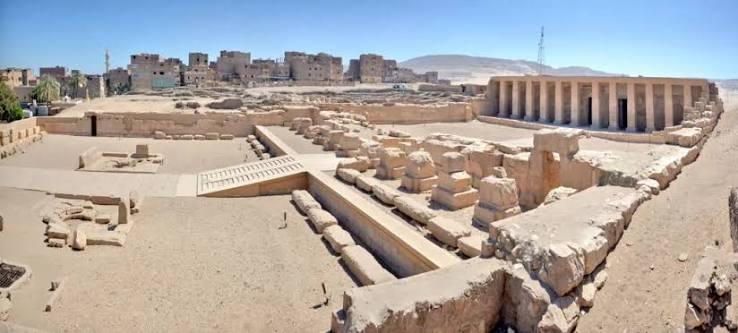
The Temple of Seti I is the focus of the modern visit. Egypt’s official tourism authority describes its unusual L-shaped plan and exceptional reliefs, while the wider archaeological landscape connects Abydos with Egypt’s earliest rulers and the later cult of Osiris.
Expert Insight: Abydos rewards travelers who already understand some Egyptian history. At Karnak, scale makes the immediate impression. At Dendera, preservation and color do. At Abydos, much of the value comes from recognizing what the reliefs, seven chapels, King List, and Osiris cult reveal about how Egyptians understood kingship, death, legitimacy, and historical memory.
Quick Planning
| Planning point | Best default |
|---|---|
| Location | Abydos, near Al-Balyana in Sohag Governorate |
| Main monument | Temple of Seti I |
| Time from Luxor | Roughly 2.5–3 hours each way; road conditions affect timing |
| Time at Abydos | Around 2 hours |
| Strongest highlights | Seti I reliefs, seven chapels, Abydos King List, Osireion |
| Additional site | Temple of Ramesses II, if time and access allow |
| Best departure | Early morning from Luxor |
| Heat | Significant outside; more shade within the temple |
| Walking | Moderate |
| Guide value | Very high |
| Best combination | Dendera, if you accept a long full day |
| Best for | Egyptology, reliefs, royal history, Osiris cult, repeat visitors |
Why Abydos Matters Long Before Seti I
It is easy to call the monument “Abydos Temple” and assume the story begins with Seti I.
It does not.
Abydos was one of ancient Egypt’s most important sacred landscapes. The area contains evidence associated with Egypt’s earliest kings, and the official Experience Egypt guide describes the surrounding early royal necropolis as a place that later became a major pilgrimage center associated with Osiris.
That relationship with Osiris transformed Abydos.
Osiris was closely associated with death, regeneration, legitimate kingship, and the afterlife. Abydos became one of his principal cult centers, and Egyptians sought different ways to connect themselves with the sacred landscape. The Metropolitan Museum describes Abydos as the place most sacred to Osiris and notes that Egyptian kings constructed temples and funerary chapels there so they could participate symbolically in the god’s cycle of death and rebirth.
This is the context you need before entering Seti I’s temple.
You are not simply visiting a beautifully decorated New Kingdom monument. You are entering a temple deliberately built within one of Egypt’s oldest and most religiously charged landscapes.
Egypt’s official tourism information for Abydos confirms the Temple of Seti I’s connection with Osiris, its completion by Ramesses II, its unusual plan, and the site’s relationship with Egypt’s early royal necropolis.
The Temple of Seti I Is the Main Reason to Make the Journey
Seti I, one of the principal rulers of Egypt’s Nineteenth Dynasty, commissioned the great temple that dominates the modern visit.
His son Ramesses II completed it after Seti’s death, and Egypt’s official tourism authority highlights both its unusual L-shaped layout and the quality of its relief decoration.
The Metropolitan Museum likewise describes Seti’s Abydos monument as a major mortuary temple and notes the high artistic standard associated with his reign.
The difference becomes visible when you stop treating the walls as background decoration.
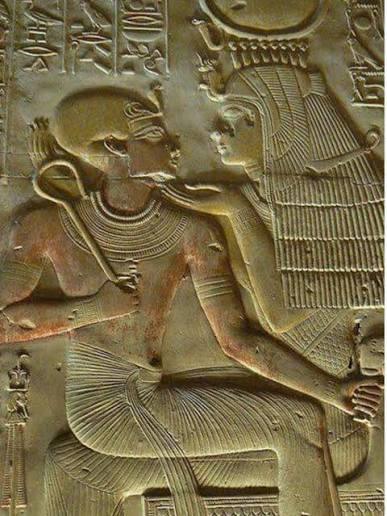
Figures have carefully modeled faces and bodies. Hieroglyphs are precisely cut. Ritual gestures, clothing, crowns, divine figures, and offerings are rendered with a refinement that rewards close viewing rather than quick photography.
Traces of ancient pigment remain in places.
If you have already visited Medinet Habu, Dendera, or the tombs of Luxor, Abydos provides another useful comparison. Preservation alone is not the point. What stands out is the quality of execution.
Give the inner parts of the temple time.
Seven Chapels Make the Temple Architecturally Unusual
One of Seti I’s temple’s defining features is the sequence of seven chapels.
They were dedicated to Seti I, Ptah, Ra-Horakhty, Amun-Ra, Osiris, Isis, and Horus.
That arrangement matters because most Egyptian temples ultimately concentrate movement toward one principal sanctuary.
At Abydos, the parallel chapels create a more complicated sacred plan.
The temple then bends into its characteristic L shape, with spaces particularly associated with the mysteries and cult of Osiris extending beyond the principal sanctuary sequence.
Do not rush through the chapels looking for the King List.
Look at how Seti appears before different gods and how the ritual imagery changes from room to room. The surviving reliefs are among the principal reasons archaeology-focused travelers consider the long drive worthwhile.
A recent Supreme Council of Antiquities project restored the chapel dedicated to Amun-Ra, evidence that conservation work at the temple remains active.
The Osiris Complex Explains Why This Temple Is at Abydos
The temple’s Osiris spaces are more important than their size might suggest.
Abydos’s sacred identity was intimately connected with Osiris, and the temple’s architecture deliberately incorporates that relationship.
Seti I is repeatedly shown participating in rituals before gods rather than simply appearing as a political ruler. That distinction is essential.
Egyptian temples were not galleries built to preserve artwork. The reliefs participated in the religious function of the building. Images of offerings, purification, divine embrace, sacred objects, and ritual performance helped maintain the relationship between king, gods, temple, and cosmic order.
At Abydos, that religious purpose becomes particularly powerful because of the site’s connection with Osiris.
A guide who explains only which pharaoh appears on which wall is therefore missing much of the temple.
The Abydos King List Is Easy to Miss—and Historically Crucial
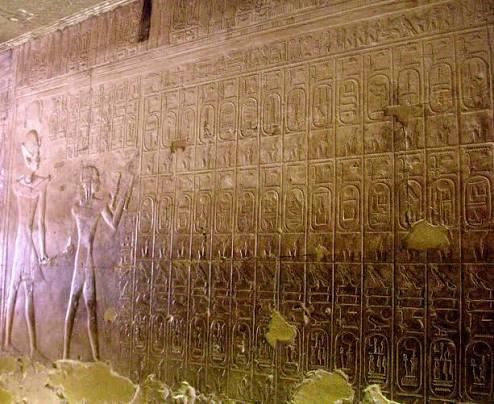
The Abydos King List is one of the temple’s most famous features, but its importance is often explained badly.
The surviving list in Seti I’s temple presents a sequence of 76 royal names, with Seti and the young Ramesses participating in the scene. Egypt’s official tourism guide specifically identifies the royal list as one of Abydos’s major surviving features.
At first glance, it can look like rows of cartouches.
Its historical value is much greater.
King lists help Egyptologists reconstruct royal succession, particularly when compared with inscriptions, archaeological evidence, papyri, and other chronological sources.
But the Abydos list is not an objective ancient history textbook.
That is one of the most important things to understand when you stand in front of it.
Certain rulers were omitted deliberately.
The British Museum explains that comparable Abydos lists exclude rulers from periods considered problematic or illegitimate in later royal memory. Female rulers are omitted, including Hatshepsut, as are the Amarna-period rulers between Amenhotep III and Horemheb. The museum emphasizes that these lists were created in a temple context to demonstrate royal legitimacy, not to provide future historians with a neutral chronology.
That makes the omissions as interesting as the names that survive.
Guide’s Note: Do not photograph the King List and move on. Ask why particular rulers disappeared from Seti I’s version of Egyptian history. The wall becomes much more interesting once you understand that it is simultaneously historical evidence, religious ritual, and royal political memory.
The Reliefs Are the Real Reason to Slow Down
The King List may be the feature you recognize before arriving, but the reliefs are what justify spending around two hours inside the temple.
Seti I’s reign produced some exceptionally refined carving.
Look closely at faces, fingers, offerings, clothing, and the transitions between figures and hieroglyphic text. In the better-preserved areas, the limestone surface allows a degree of subtlety that is very different from the deeper monumental carving seen at sites such as Medinet Habu.
The temple also rewards looking for changes in workmanship.
Seti died before the entire monument was completed, and Ramesses II finished parts of his father’s project. Once you know that, changes in carving technique and artistic treatment become more meaningful.
Do not try to inspect every wall.
Choose several well-preserved ritual scenes and actually look at them.
Abydos is a poor temple for speed.
The Osireion Is Unlike the Temple Above It
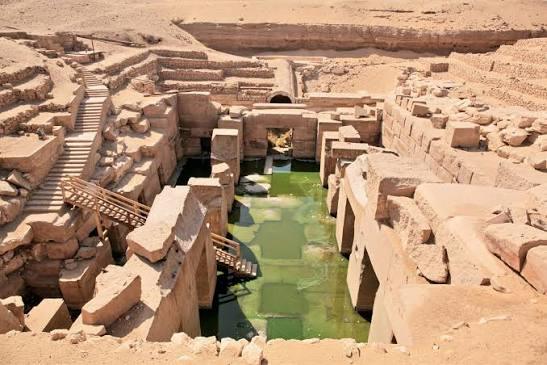
Behind Seti I’s temple lies one of Abydos’s most unusual structures: the Osireion.
Its architecture is markedly different from the decorated limestone rooms of the main temple. Massive stone blocks and a sunken central arrangement create a heavier, more austere environment associated with Osiris and the funerary symbolism of the site.
It was connected architecturally and conceptually with Seti I’s monument, but it should not be understood simply as another temple room.
Modern visitor access to the Osireion can be affected by site management, water conditions, conservation work, and restricted areas. Do not build your decision to travel to Abydos around the assumption that you will be able to walk freely through every part of it.
Even when close access is restricted, seeing its relationship to Seti I’s temple adds important context.
The mistake is treating the Osireion as a mysterious anomaly that somehow exists outside Egyptian archaeology.
It belongs within Abydos’s Osirian religious landscape.
The “Helicopter Hieroglyphs” Do Not Show a Helicopter
Abydos has acquired an entirely different kind of fame online.
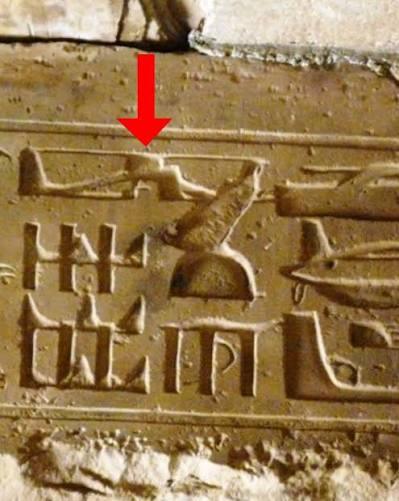
High on an architectural element in Seti I’s temple is a group of overlapping hieroglyphic forms that, to modern eyes, can resemble a helicopter and other mechanical vehicles.
The carvings themselves are real.
The interpretation as ancient machinery is not supported by Egyptology.
What you are seeing is a palimpsest: inscriptions belonging to Seti I were altered when Ramesses II’s titulary was recut over them. Plaster used in the alteration later deteriorated, leaving elements of both inscriptions visible together. The overlapping signs accidentally produce shapes that modern viewers recognize as technological objects. Published Egyptological work has identified the component signs and the two phases of inscription.
This is actually more useful archaeologically than the sensational version.
It shows that Egyptian monuments were not frozen at the moment they were constructed. Kings altered inscriptions, reused surfaces, changed names, and modified the visual record.
The “helicopter” therefore tells you something genuine about ancient Egyptian monument history.
It just does not tell you that Seti I owned an aircraft.
Expert Insight: Both Dendera and Abydos attract modern claims about supposedly advanced ancient technology. In each case, the better interpretation comes from reading the image with its inscriptions, architectural position, and archaeological context rather than deciding what it represents because its outline resembles a modern object.
Ramesses II Built His Own Temple Nearby
If time permits, Abydos has more to offer than Seti I’s monument.
Ramesses II constructed his own temple at Abydos, and archaeological work continues to improve our understanding of it.
The Ministry of Tourism and Antiquities has reported discoveries at the site including foundation deposits bearing Ramesses II’s throne name and substantial mudbrick storerooms connected with the temple palace. These finds helped confirm construction during Ramesses II’s own reign and revealed more about the temple’s economy and later religious activity.
The surviving temple is less complete than Seti I’s.
That does not make it unimportant.
It gives travelers with more time a direct father-and-son comparison and demonstrates that Abydos remained central to Ramesside royal religious activity.
Ramesses II’s temple also originally carried its own king list. Surviving fragments are now in the British Museum, while Seti I’s more complete list remains at Abydos.
If your combined Dendera-Abydos schedule is already tight, however, protect your time inside Seti I’s temple first.
How Much Time Do You Need at Abydos?
Around two hours at the main archaeological area is the strongest default.
That allows enough time for the temple’s principal halls, seven chapels, exceptional reliefs, King List, Osiris-related spaces, and the Osireion area where accessible.
Allow longer if you intend to examine Ramesses II’s temple as well.
A 60-minute visit is technically possible.
It is also difficult to justify after spending several hours reaching Abydos.
The site rewards exactly the kind of close looking that a rushed excursion eliminates.
If a combined tour allocates far more time to driving, lunch, and stops than to Seti I’s temple, the itinerary has lost its purpose.
The Drive from Luxor Changes the Decision
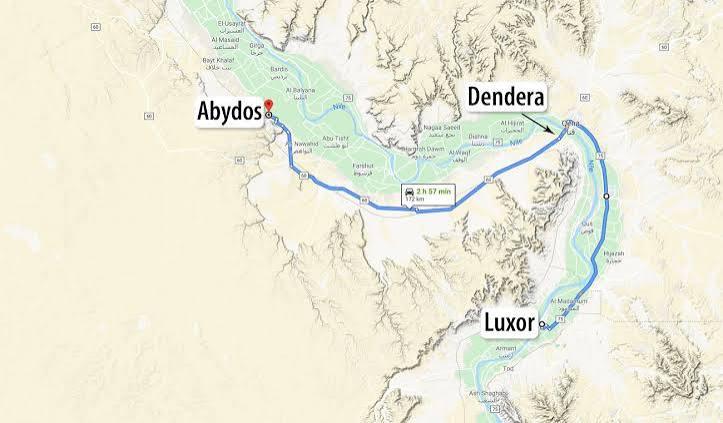
Abydos is significantly farther from Luxor than Dendera.
Travel times vary with the route, traffic, road conditions, checkpoints, and local arrangements, but roughly 2.5 to 3 hours each way from Luxor is a sensible planning range rather than a promise.
This is why Abydos should not be presented as another Luxor attraction.
It is an excursion into Middle/Upper Egypt beyond the standard Theban sightseeing circuit.
For most international visitors, a private vehicle with a driver—or an organized excursion with an Egyptologist—is the practical choice.
An early departure matters.
You are protecting against road delays, but you are also protecting your concentration. Arriving at Seti I’s temple already tired and then trying to understand its reliefs before a long return drive defeats much of the point.
The road journey is part of the cost of choosing Abydos.
Dendera + Abydos Makes Geographical Sense
Combining Dendera and Abydos is the obvious way to make better use of the journey north from Luxor.
Dendera lies on the same broader excursion route and offers an almost ideal contrast.
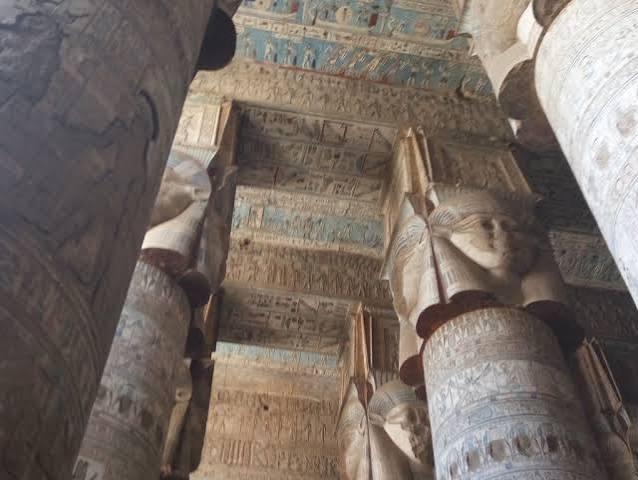
At Dendera, you encounter a largely Ptolemaic-Roman temple dominated by Hathor, with monumental columns, astronomical ceilings, crypts, rooftop spaces, and extensive surviving color.
At Abydos, the focus shifts to the New Kingdom, Seti I, Osiris, royal legitimacy, fine relief carving, and the King List.
Our Dendera Temple Guide explains the Temple of Hathor, current additional-access arrangements, the original Dendera Zodiac, and why Dendera alone works as the more relaxed excursion from Luxor.
The combination is strong because the temples are different.
It is not strong because the day is easy.
Does Combining Dendera and Abydos Become Too Rushed?
Not if the day is designed around the temples. It does if too many extras are added.
A sensible combined excursion requires an early departure from Luxor and most of the day.
Depending on traffic, road conditions, time at each site, breaks, and your Luxor hotel location, expect roughly 10–12 hours door to door rather than planning an evening around an optimistic return time.
Around two hours at Abydos and roughly two hours at Dendera gives each monument enough space to justify the journey.
The problems begin when an itinerary tries to add lengthy restaurant stops, shopping visits, unrelated attractions, or an ambitious Luxor evening afterward.
After several hours on the road and four hours concentrating on temple reliefs, another major monument is rarely the best use of your attention.
If you want a relaxed day, choose Dendera alone.
If you want the richer archaeological excursion and accept a long day, choose Dendera + Abydos.
Guide’s Note: Do not judge the combined trip by the number of kilometers alone. Four hours of detailed temple viewing requires concentration. A technically achievable schedule can still be a poor visitor experience if you reach Abydos already watching the clock.
Food, Water and Restrooms Need More Planning Than in Luxor
Abydos is not central Luxor.
Do not assume you can leave the temple and immediately choose among numerous tourist restaurants, cafés, and hotel facilities.
Carry sufficient water for the road and archaeological visit, particularly in warmer months. A private excursion should also establish the meal plan before leaving Luxor rather than improvising after everyone becomes hungry.
For a combined Dendera-Abydos day, a planned lunch or reliable packed food is more practical than allowing a restaurant stop to consume an unpredictable amount of sightseeing time.
Use restroom facilities when they are available at the archaeological sites or planned stops rather than assuming another convenient facility will appear twenty minutes later.
Because facility availability and condition are operational details that can change, they are better confirmed with your driver or guide on the day than treated as permanent features of the archaeological site.
Heat Is Not the Only Reason to Leave Early
The Temple of Seti I contains substantial covered areas, making parts of the visit more forgiving than fully exposed sites such as Hatshepsut Temple or the Valley of the Kings.
The wider archaeological area remains exposed.
Summer temperatures in Upper Egypt can make exterior exploration uncomfortable by late morning and afternoon, particularly after hours in a vehicle.
But early departure has another advantage: time.
A 6:00 or 6:30 AM start gives the day resilience. Traffic, checkpoints, slower-than-expected sightseeing, and a coffee stop do not immediately threaten the second temple.
Leaving Luxor late turns the entire excursion into schedule management.
Is a Guide Particularly Useful at Abydos?
Abydos is one of the Egyptian sites where a good Egyptologist adds substantial value.
The architecture is not especially difficult to navigate.
The interpretation is.
Why seven chapels?
Why is Osiris so important here?
Why does the King List omit certain rulers?
Why are Seti I’s reliefs stylistically significant?
How does Ramesses II’s completion of the temple affect what you see?
What exactly happened with the so-called helicopter inscription?
Without context, it is possible to leave Abydos remembering a row of cartouches, beautiful reliefs, and an internet mystery.
With good interpretation, those same features connect royal legitimacy, temple ritual, historical memory, artistic change, and the development of the Osiris cult.
That is a much better return on a five- or six-hour round-trip drive.
Is Abydos Worth the Long Drive from Luxor?
For every first-time visitor? No.
That is the wrong way to recommend Abydos.
If you have only two days in Luxor, use them in Luxor. Karnak, Luxor Temple, the Valley of the Kings, and the principal West Bank monuments deserve proper time before you spend half a day driving north.
If you have three days, Dendera is often the easier excursion because the journey is shorter and the Temple of Hathor offers an exceptionally preserved experience.
With four or more days, Abydos becomes much easier to justify, particularly when combined intelligently with Dendera.
Your interests matter just as much as your schedule.
If your priority is ancient Egyptian religion, New Kingdom art, royal chronology, Seti I, Osiris, or Egyptology more broadly, Abydos can be worth the drive even when your Luxor stay is relatively short.
If your priority is relaxed sightseeing, minimal road travel, family-friendly pacing, or simply seeing Egypt’s most famous monuments, you do not need to force Abydos into the itinerary.
That distinction is important.
Abydos is not better because fewer people reach it.
It is better for certain travelers because what survives there cannot be replicated by adding another Luxor temple.
How Abydos Fits Into a Longer Egypt Itinerary
Abydos works best from a Luxor base rather than as an isolated destination for most international travelers.
Complete the essential East and West Bank archaeology first.
Then use a separate day for Dendera and Abydos, returning to Luxor afterward.
This creates a useful progression through Egyptian temple history without forcing every monument into one geographical category. Karnak and Luxor Temple establish ancient Thebes. The West Bank develops royal death, memory, and mortuary cult. Dendera reveals a later Ptolemaic-Roman temple environment. Abydos then connects the New Kingdom back to one of Egypt’s oldest sacred landscapes.
Our Luxor Travel Guide should be the parent resource for deciding how many days to allocate and whether this excursion deserves one of them.
That is the decision to make before booking transport—not at breakfast on your final morning in Luxor.
Frequently Asked Questions
How far is Abydos from Luxor?
Abydos is far enough north of Luxor that travelers should treat it as a dedicated excursion rather than another Luxor sightseeing stop. Road conditions vary, but roughly 2.5–3 hours each way is a reasonable planning range. Build flexibility into the return rather than scheduling a tightly timed evening activity.
How long should I spend at the Temple of Seti I?
Around two hours gives the temple enough time to justify the journey. Travelers with a strong Egyptology interest may want longer, particularly if the Osireion and Ramesses II temple are accessible within their planned visit.
What is the Abydos King List?
The King List is a sequence of royal names displayed within Seti I’s temple. It is important for reconstructing Egyptian royal history, but it was never intended as a neutral record of every ruler. Significant kings and entire politically problematic periods were omitted, making the list evidence for both chronology and how Ramesside Egypt constructed legitimate royal memory.
Is Hatshepsut on the Abydos King List?
Hatshepsut is omitted. The list also excludes the Amarna rulers and other kings who did not fit the version of legitimate succession being presented by the Ramesside monarchy. That selective memory is one reason historians find the list so useful.
Can you visit the Osireion?
Access around the Osireion can change with conservation, site management, and local conditions. Do not assume that photographs showing unrestricted access represent the arrangement you will encounter. Check current access when purchasing your ticket or with your licensed guide.
Are the Abydos “helicopter hieroglyphs” real?
The carved forms are real; the helicopter interpretation is not supported archaeologically. The unusual shapes result from two phases of inscription—Seti I’s original text and later recutting under Ramesses II—becoming simultaneously visible as the material separating or covering elements deteriorated. The result is a palimpsest whose overlapping signs happen to resemble modern machines.
Is Abydos better than Dendera?
They answer different interests. Dendera is the stronger default excursion for travelers wanting a shorter road day, exceptional preservation, color, astronomical imagery, crypts, and a monumental temple interior. Abydos is stronger for Seti I’s reliefs, Osiris, New Kingdom religion, the King List, and royal historical memory. Travelers with enough time should see both.
Can Dendera and Abydos be visited in one day?
Yes, provided the entire day is protected for the excursion. Leave Luxor early and expect a long day. The combination becomes rushed when tours cut temple time to accommodate shopping, excessive stops, or an early return rather than because the two archaeological sites are inherently incompatible.
Is Abydos suitable for children?
Older children already interested in Egyptian history may enjoy the reliefs and stories, but the long road journey is the real consideration. For families with younger children, Dendera alone usually creates the easier excursion from Luxor.
Is Ramesses II’s temple worth seeing?
Add it when time and current access permit, particularly if you are interested in comparing the monuments of Seti I and his son. Archaeological work at Ramesses II’s temple has revealed foundation deposits, storage facilities, and evidence for the temple’s continuing sacred importance long after his reign.
The main mistake travelers make with Abydos is not deciding whether the temple is impressive enough—it is underestimating what the journey costs in time. Put it into a two-day Luxor itinerary and you risk sacrificing the monuments you traveled to Luxor to see; give Dendera and Abydos their own early-start full day and the same distance becomes worthwhile. Explore ENA’s Upper Egypt itineraries to build Abydos around realistic road time, enough time inside Seti I’s temple, and a properly paced Dendera stop, rather than turning two exceptional temples into a race back to Luxor.