Saqqara and Dahshur Guide (2026): Pyramids, Tombs, Tickets & How to Visit
Giza shows you the finished masterpiece of pyramid building. Saqqara and Dahshur show you how the Egyptians got there. South of Cairo, these two archaeological landscapes preserve the transition from mastaba tombs to Djoser’s revolutionary Step Pyramid, through Sneferu’s experimental Bent Pyramid, and finally to the Red Pyramid—the first successfully completed true pyramid that prepared the way for Khufu’s Great Pyramid at Giza. UNESCO recognizes this entire landscape as part of Memphis and its Necropolis – the Pyramid Fields from Giza to Dahshur.
That makes Saqqara and Dahshur far more than secondary pyramid sites for travelers who have already “done Giza.” Saqqara contains decorated mastaba tombs, royal pyramids, the underground Serapeum, New Kingdom burials, and monuments spanning thousands of years. Dahshur is quieter and more austere, dominated by Sneferu’s Bent and Red Pyramids rising from open desert.
For most first-time visitors, Saqqara deserves the larger share of the day, with Dahshur added before or afterward depending on opening hours and your route from Cairo. Trying to see every open monument at Saqqara is the wrong approach. Prioritize Djoser’s complex, one or two exceptional decorated tombs, the Pyramid of Unas if accessible, and the Serapeum; then give Dahshur enough time to stand back from the Bent Pyramid and, if you’re physically comfortable with confined spaces, consider entering the Red Pyramid.
Expert Insight: Visit Saqqara and Dahshur before Giza if your itinerary allows it. You will see pyramid architecture evolve almost step by step—from Djoser’s stacked mastabas to Sneferu’s changing angles and finally the true pyramid form. When you reach Khufu’s Great Pyramid afterward, it no longer feels like an isolated miracle.
Saqqara Is Much Bigger Than the Step Pyramid
The Step Pyramid dominates every first photograph of Saqqara, but treating Saqqara as a single-monument stop misses most of its importance.
The necropolis lies around 40 kilometers southwest of Cairo and served ancient Memphis, one of Egypt’s most important cities. The Ministry of Tourism and Antiquities describes Saqqara as an open-air museum containing evidence from virtually the entire span of ancient Egyptian history. Kings and elite officials were buried here from Egypt’s earliest dynasties, and the site continued to be used through later pharaonic periods and into the Coptic era.
Physically, that means Saqqara does not behave like a compact temple.
Important monuments are distributed across a large desert area. You may move between them by vehicle and then walk locally around individual complexes. In the cooler months this is comfortable; in summer, repeated crossings of exposed ground become tiring quickly.
This is one reason three hours should be considered a minimum rather than a complete Saqqara visit. History-focused travelers could spend most of a day here and still leave significant monuments unseen.
Djoser’s Step Pyramid Is the Beginning of the Story
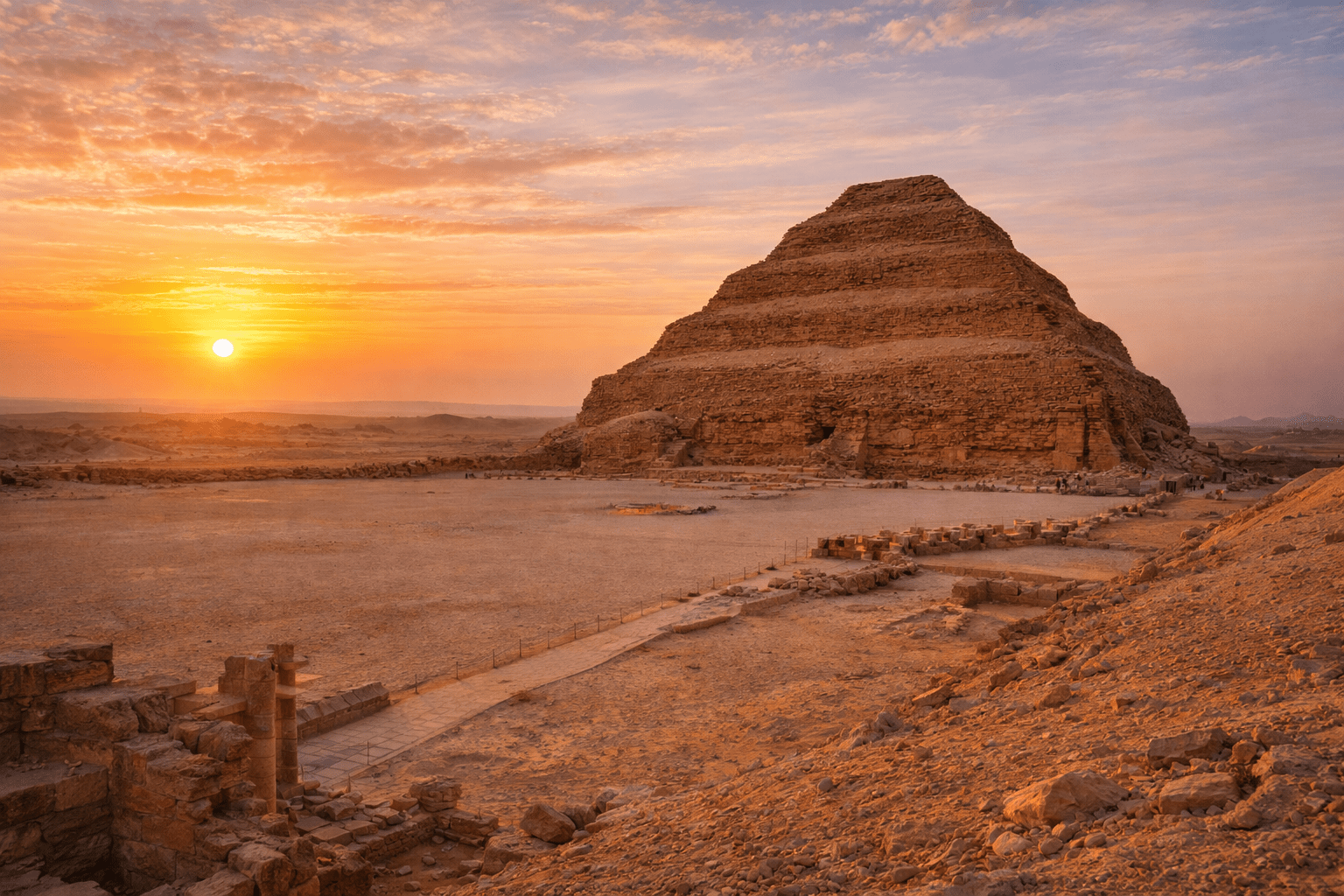
The Step Pyramid is where almost every first Saqqara visit should begin.
Built during the Third Dynasty for King Djoser, the monument represents a decisive break with earlier royal burial architecture. Before Djoser’s reign, elite funerary monuments generally took the form of rectangular mastabas. The Step Pyramid developed that basic form vertically, creating six progressively smaller levels and producing Egypt’s first pyramid.
More importantly, the Ministry describes Djoser’s complex as containing the oldest known monumental stone structure of its kind in Egypt, while UNESCO identifies the Saqqara pyramid complex as a masterpiece in the development of monumental stone architecture.
The name most closely associated with that transformation is Imhotep, Djoser’s architect.
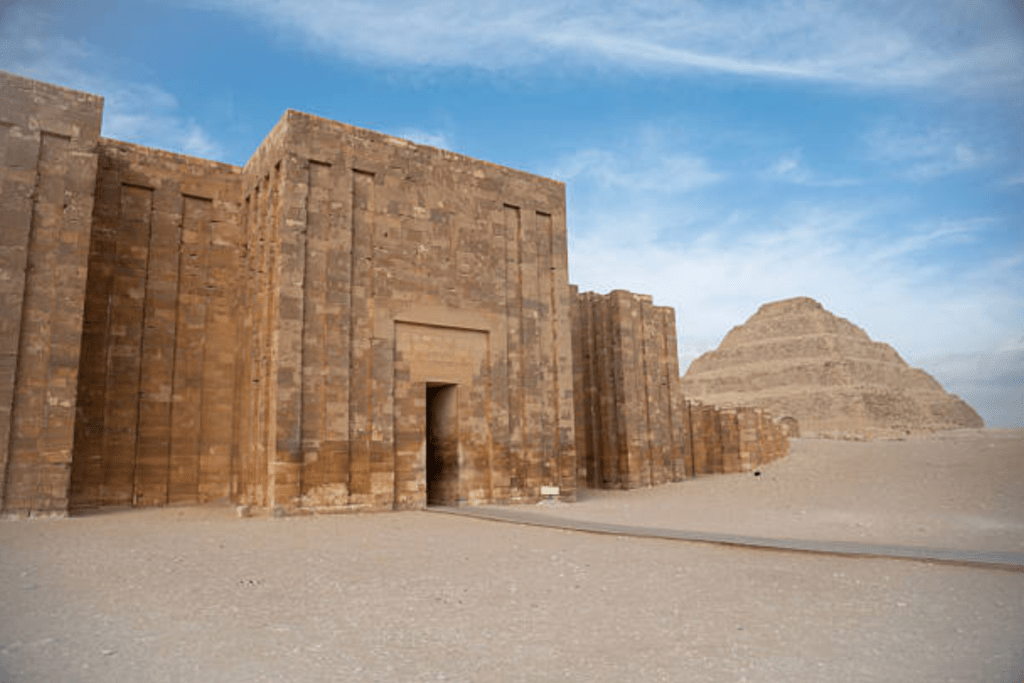
Do not walk straight toward the pyramid and ignore the surrounding complex. Entering through the colonnaded passage and emerging into the great court helps you understand that this was never intended to be a pyramid standing alone in the desert.
The surrounding courts and ritual buildings were connected with Djoser’s royal afterlife. Some recreated elements of the Sed Festival, a ceremony associated with renewing the king’s strength and authority. In stone, those ritual spaces could continue functioning symbolically for eternity.
Stand in the court for a moment before moving closer. This is the point where Egyptian royal architecture begins to operate on a monumental scale.
Should You Go Inside the Step Pyramid?
Entering Djoser’s pyramid is worthwhile for travelers interested in architecture, but it should not become the sole reason for visiting the complex.
The important experience is understanding the monument from outside and seeing how radically different it is from the smooth-sided pyramids that followed.
Access arrangements can change, and the Ministry currently lists entry inside the Pyramid of Djoser as an additional ticket rather than part of basic Saqqara admission.
There is also a separately ticketed South Tomb within the complex. Its underground corridors preserve striking blue faience decoration and reliefs of Djoser participating in the Sed Festival. The Ministry notes similarities between its underground architecture and the substructure of the Step Pyramid itself.
If you’re genuinely interested in early pyramid architecture, the South Tomb can be more revealing than adding another exterior photograph.
If you’re trying to cover Saqqara and Dahshur in a single day, however, do not allow additional interiors to consume the time you need for the rest of the necropolis.
The Pyramid of Unas Changes What a Pyramid Interior Can Be
From the outside, the Pyramid of Unas is easy to dismiss.
It is small, damaged, and visually insignificant beside Djoser’s Step Pyramid.
Inside is a different story.
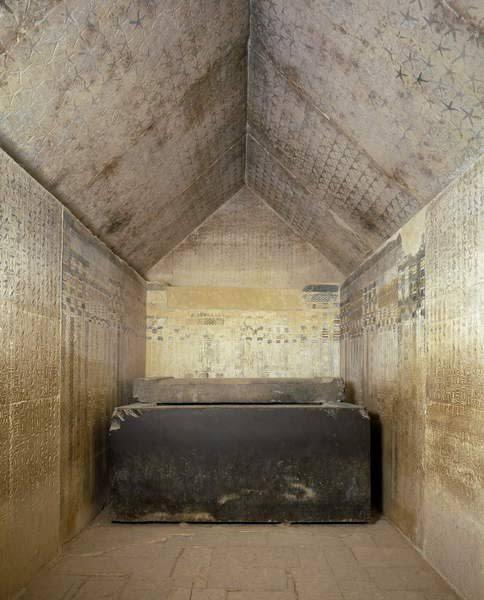
Unas, the last king of the Fifth Dynasty, was the first Egyptian ruler known to have the walls of his pyramid burial chambers inscribed with the Pyramid Texts. These religious spells were intended to help the deceased king reach the afterlife and achieve divine status.
That makes Unas one of Saqqara’s most important stops for understanding how Egyptian burial practices changed.
Earlier pyramid interiors can feel architecturally impressive but visually bare. With Unas, written religious language enters the royal burial chamber itself.
This development eventually leads toward the much richer funerary traditions travelers encounter in later periods—including the decorated royal tombs of Luxor.
If the Pyramid of Unas is open during your visit, prioritize it over entering multiple structurally similar pyramid interiors.
Saqqara’s Mastaba Tombs Show the Egypt the Pyramids Leave Out
Pyramids tell you about kings.
Saqqara’s mastaba tombs tell you considerably more about life.
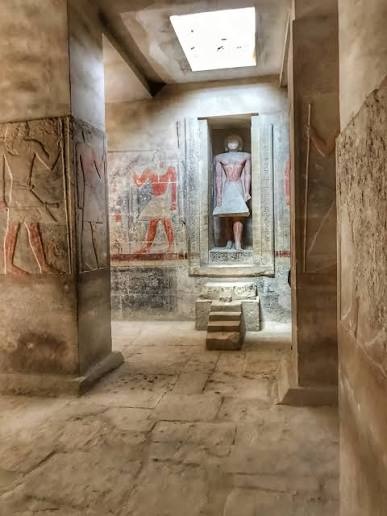
The decorated tombs of high officials preserve scenes of fishing, agriculture, livestock, food preparation, craftsmen, hunting, and household activity. They can feel unexpectedly intimate after the enormous scale of Djoser’s complex.
Mereruka’s tomb is one of the strongest examples. Mereruka served as vizier and married a daughter of King Teti. His mastaba contains thirty rooms, making it one of the largest Old Kingdom elite tombs at Saqqara. Its reliefs include cattle herding, fishing, fowling, hippopotamus hunting, and unusual scenes involving animals, while a life-size image of Mereruka appears to emerge from the false-door area.
This is why I would not spend an entire Saqqara visit moving only between pyramids.
After the Step Pyramid, choose at least one high-quality mastaba. The change in scale—from royal monument to scenes of everyday activity—is part of what makes Saqqara so rewarding.
Guide’s Note: Tomb openings and ticket combinations change. Ask which decorated mastabas are accessible when you arrive rather than building the entire visit around one name. A good Egyptologist should be able to redirect you toward the strongest open alternative without weakening the experience.
The Serapeum Is Saqqara’s Most Unexpected Experience
If your schedule allows one major addition beyond the pyramids and mastabas, choose the Serapeum.
The experience is completely different from the bright desert outside.
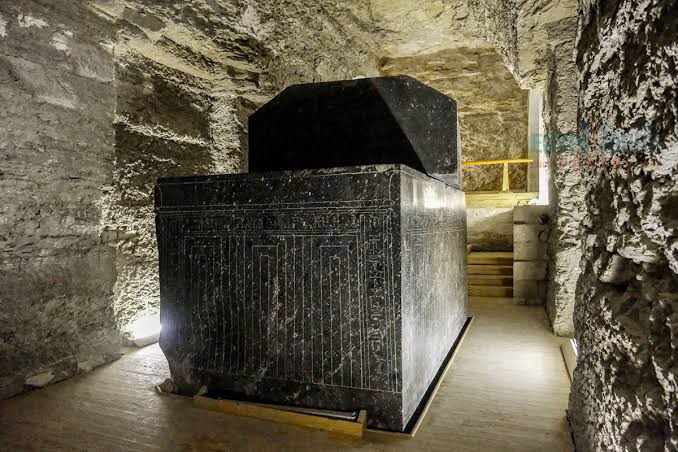
You descend into underground galleries associated with the burial of the sacred Apis bulls, animals connected with Ptah, the principal god of nearby Memphis. The Serapeum remained in use from the New Kingdom into the Ptolemaic Period.
Inside the galleries are enormous stone sarcophagi that once held the mummified sacred bulls.
The contrast is what makes the Serapeum memorable. Minutes earlier you may have been standing beneath an open desert sky beside a pyramid. Now you are walking through dim underground corridors lined with monumental stone coffins.
It also demonstrates why calling Saqqara a “pyramid site” is inadequate. The necropolis was used and reinterpreted for thousands of years.
The Serapeum currently requires additional admission under the Ministry’s ticket structure unless your chosen ticket package specifically covers it. Check the exact inclusions before purchasing.
Saqqara Continued Long After the Old Kingdom
Another common misunderstanding is that Saqqara belongs entirely to the age of the pyramids.
It does not.
The site contains later burials, including an important New Kingdom cemetery with a different architectural character. Rather than the rock-cut royal tombs familiar from Luxor, major New Kingdom burials at Saqqara could take the form of freestanding temple-tombs with pylons, courtyards, chapels, and small pyramidal elements.
One of the best-known figures associated with this cemetery is Horemheb.
Before becoming pharaoh, Horemheb constructed a tomb at Saqqara appropriate to his position as a powerful official and military commander. Once he became king, however, he built a new royal tomb in the Valley of the Kings.
That creates an unusually useful connection between Cairo and Luxor.
Our Valley of the Kings Guide explains the later royal burial landscape Horemheb ultimately joined and why New Kingdom pharaohs abandoned the pyramid tradition for hidden tombs in the Theban cliffs.
Dahshur Is Where Pyramid Building Becomes an Experiment You Can See
Drive south from Saqqara and the archaeological landscape changes.
Dahshur feels more open and less dense. Instead of dozens of competing monuments, two enormous pyramids dominate the experience: the Bent Pyramid and Red Pyramid, both associated with King Sneferu, founder of Egypt’s Fourth Dynasty.
This is the critical bridge between Djoser and Giza.
Sneferu’s reign represents one of the most important periods of experimentation in pyramid construction. The engineers were no longer building a stepped monument. They were trying to create the smooth-sided true pyramid that would define the Fourth Dynasty.
At Dahshur, you can see that process physically rather than reading about it in a museum.
Recent 2026 visitors continue to remark on how much quieter Dahshur feels compared with Giza. One traveler entering the Red Pyramid reported encountering only a handful of people inside and emphasized the amount of open space around the monuments.
That atmosphere is part of Dahshur’s appeal.
The Bent Pyramid Is an Engineering Problem Frozen in Stone
The Bent Pyramid is one of the most useful monuments in Egypt for understanding how architecture develops through trial and correction.
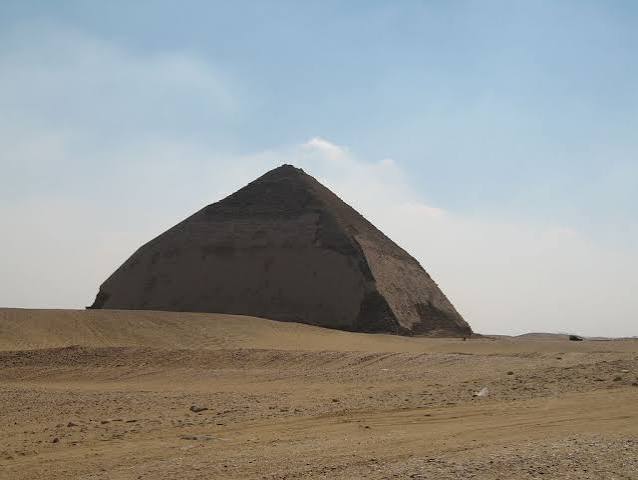
Its lower section rises at a steep angle of approximately 55 degrees. Partway up, the angle changes to roughly 43 degrees, creating the unmistakable bent profile that gives the pyramid its modern name. The Ministry attributes the change to structural concerns created during construction.
Do not think of it as a failed pyramid.
Think of it as evidence.
You are looking at engineers solving a monumental structural problem while the building was already rising.
The Bent Pyramid also preserves a substantial amount of its smooth outer casing, making it easier to imagine how Egypt’s great pyramids looked before most of their fine limestone surfaces were removed.
Walk far enough away to see the change of angle clearly. Up close, the monument’s scale dominates; from a distance, the engineering decision becomes obvious.
Should You Go Inside the Bent Pyramid?
Only if you’re physically confident and genuinely want the experience.
The Bent Pyramid is not a casual interior.
Its passages involve a demanding descent and ascent through confined spaces. A traveler who entered in 2026 described it as the hardest pyramid interior they had experienced after visiting numerous pyramids across multiple trips.
That is useful practical information because pyramid interiors are frequently undersold physically.
Expect steep movement, enclosed passages, warm or humid air, and sections where the posture is uncomfortable. If you dislike confined spaces, have knee or back problems, or simply do not enjoy strenuous enclosed climbs, remain outside.
You will still have experienced the monument that matters.
Entering a pyramid is optional. Understanding why its shape changes is not.
The Red Pyramid Is the Breakthrough
After the Bent Pyramid, Sneferu’s builders tried again.
The result was the Red Pyramid.
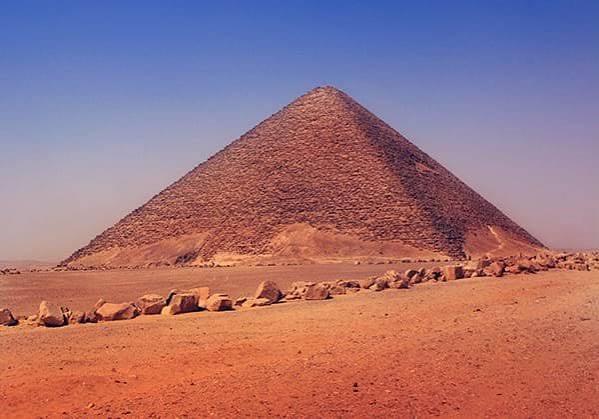
Built at a shallower, consistent angle, it became Egypt’s first successfully completed true smooth-sided pyramid and provided the architectural breakthrough that would soon culminate in the enormous pyramid projects at Giza. The Ministry describes it as the third-largest Egyptian pyramid after those of Khufu and Khafre.
Its modern name comes from the reddish color of the exposed stone. Originally, however, it was covered with fine white Tura limestone, just like other major pyramids. Much of that casing was later removed and reused.
Architecturally, the Red Pyramid is less visually unusual than the Bent Pyramid.
Historically, it is arguably more important.
This is where the experiment succeeds.
Is It Worth Going Inside the Red Pyramid?
The Red Pyramid is the pyramid interior I would choose at Dahshur if you want to enter one.
The entrance on the north face leads into a low descending passage before reaching chambers with dramatic corbelled ceilings. A further passage eventually reaches the chamber generally identified as the burial chamber.
Do not expect hieroglyph-covered walls or funerary treasures.
The value lies in the architecture and the physical experience of moving inside an early true pyramid.
The passage is only around a meter high and wide, so you will spend a significant portion of the descent crouched. Recent travelers describe Dahshur pyramid interiors as hot, confined, and physically demanding, even though the Red Pyramid generally attracts far fewer people than Khufu’s pyramid at Giza.
If you are planning to enter the Great Pyramid at Giza as well, you do not need to enter every pyramid at Saqqara and Dahshur simply to say you did.
Choose the interior that interests you most.
Saqqara or Dahshur: Which Matters More?
Choose Saqqara if you have time for only one.
It offers far greater archaeological variety: Djoser’s Step Pyramid, decorated mastabas, Pyramid Texts, the Serapeum, later tombs, and evidence spanning an extraordinary portion of Egyptian history.
Dahshur is the stronger addition when you want to understand the evolution of pyramid engineering.
That does not make the Red and Bent Pyramids lesser monuments. It simply means Dahshur’s story is more focused.
The ideal sequence is not Saqqara versus Dahshur.
It is Saqqara into Dahshur into Giza.
Together, those sites allow you to follow the development of Egyptian pyramid building in a way that Giza alone cannot provide.
How Long Should You Spend at Saqqara and Dahshur?
For a combined visit, allow at least five to six hours on the archaeological sites, excluding the drive to and from Cairo.
Saqqara deserves approximately three to four hours for a first visit. That is enough for Djoser’s complex, selected tombs, and one or two additional highlights such as the Serapeum or Pyramid of Unas without racing.
Dahshur generally needs around 90 minutes to two hours if you see both major pyramids and enter one.
Travelers with a serious interest in Egyptology should give Saqqara longer rather than adding more destinations to the day.
A recent traveler planning a 2026 visit specifically sought several hours at Saqqara without the rushed combination of Saqqara, Memphis, Giza, and Dahshur commonly sold as one compressed excursion. That instinct is correct.
The archaeological sites do not become more meaningful because you managed to fit four names into one day.
Should You Add Memphis?
Memphis is geographically logical but not automatically essential.
The ancient city was once the political and religious center associated with the enormous cemeteries stretching through Saqqara and Dahshur. Its connection to the necropolis is fundamental: Saqqara was one of the principal burial grounds serving the city, while Dahshur formed the southern part of the Memphite cemetery.
If you have enough time, seeing Memphis helps complete that relationship.
If adding Memphis means reducing Saqqara to the Step Pyramid and one hurried tomb, skip Memphis and protect your time at Saqqara.
This is a recurring Egypt itinerary problem: geographical convenience encourages travelers to keep adding sites until none receives enough attention.
Saqqara and Dahshur Tickets in 2026
Ticketing at Saqqara deserves attention because the basic area ticket does not automatically cover every interior.
Prices and access can change. Check the official Saqqara visitor information and official Dahshur listing shortly before visiting rather than relying on screenshots or older guidebooks.
Go Early Because Saqqara Has Almost Nowhere to Hide From the Sun
Saqqara and Dahshur are exposed desert archaeological sites.
That matters more than the kilometer distances suggest.
Between roughly May and September, the sun becomes the controlling factor in the day. You repeatedly move from vehicle to monument, walk across open ground, descend into enclosed tombs or pyramids, then return to intense light and heat.
There is shade inside some tombs and structures, but that is not the same as having shaded walking routes.
Start early. Carry water. Wear a hat and shoes that handle sand, stone, ramps, and uneven surfaces.
Winter makes the visit significantly more comfortable, but do not underestimate sun exposure simply because Cairo’s air temperature looks moderate on a weather app.
ENA Tip: Do not use your first two cool morning hours driving between minor stops. Reach your priority archaeological site early, then add secondary monuments once the day is underway.
You Need Road Transport Between the Sites
Saqqara and Dahshur are not destinations where most international visitors benefit from improvising transport monument by monument.
The sites are spread out, and Dahshur lies farther south.
A private driver is the strongest practical default, particularly if you are combining both locations. You can also visit with a driver and Egyptologist as part of a guided archaeological day.
Ride-hailing can get travelers into the broader area, and independent visitors report successfully hiring drivers for the day, but relying on repeatedly summoning separate cars around archaeological zones creates unnecessary uncertainty. One recent visitor described hiring a driver for the entire Saqqara–Dahshur day rather than using a guide, which worked well precisely because transport remained available throughout the route.
The problem is not finding Saqqara on a map.
It is moving efficiently between dispersed monuments and then continuing to Dahshur without wasting the cooler hours.
A Guide Adds More at Saqqara Than at Almost Any Pyramid Site
Independent travelers can certainly visit both sites.
But Saqqara particularly rewards a knowledgeable Egyptologist because its importance is chronological and contextual.
Without explanation, Djoser’s complex is an old pyramid, Unas is a damaged pyramid, Mereruka is a room full of attractive reliefs, and the Serapeum is a corridor containing enormous sarcophagi.
With the connections explained, you begin to see changes in architecture, kingship, religion, writing, elite life, and burial practices across thousands of years.
Dahshur requires less interpretation to appreciate visually, but understanding Sneferu’s engineering experiments dramatically improves what you’re seeing.
A guide also helps make the practical decision that matters on the day: which open tombs deserve your limited time.
Saqqara, Dahshur and Giza Should Not Be Rushed Into One Morning
It is physically possible to put all three names into a one-day itinerary.
That does not mean it is the strongest visit.
If you have only one Cairo archaeology day and this is your first trip to Egypt, Giza takes priority.
If you have two days, separate them. Give Giza and the Grand Egyptian Museum their own day, then use another for Saqqara and Dahshur.
Our Giza Pyramids Guide explains how Khufu, Khafre, and Menkaure represent the monumental Fourth Dynasty tradition that becomes much easier to understand after seeing the experiments preserved farther south.
The sequence becomes remarkably clear:
Djoser develops the first pyramid form at Saqqara. Sneferu experiments with true pyramids at Dahshur. The Red Pyramid succeeds. Then Khufu takes that accumulated knowledge to an unprecedented scale at Giza.
UNESCO’s World Heritage designation recognizes these sites as part of the same vast Memphite necropolis rather than unrelated attractions scattered around modern Cairo.
That is how you should experience them too.
Saqqara Also Connects Naturally to the Grand Egyptian Museum
There is another useful pairing.
Visit Saqqara first and you encounter architecture, tombs, inscriptions, and archaeological landscapes in their original setting. At the Grand Egyptian Museum, you encounter objects conserved and interpreted within a modern museum environment.
The experiences solve different problems.
Saqqara gives you physical context. GEM gives you concentrated access to artifacts and interpretation.
If you’re building several archaeology-focused days around Cairo, our Grand Egyptian Museum Guide explains how long the museum actually needs and why trying to squeeze it into a short afternoon after multiple desert sites weakens the experience.
Do not finish six hours at Saqqara and Dahshur and assume you will still want to spend another four hours seriously studying museum galleries.
Archaeological fatigue is real.
Photography Is Better at Dahshur Than Many Travelers Expect
Giza has the famous skyline, but Dahshur gives photographers something increasingly difficult to find around Egypt’s most visited monuments: space.
The Bent Pyramid is particularly strong from a distance because the change in angle needs room to become visually obvious. Move too close and you lose the profile that makes the monument distinctive.
The Red Pyramid benefits from a low viewpoint that emphasizes its enormous base and uninterrupted geometry.
At Saqqara, the classic photograph is Djoser’s Step Pyramid framed by the columns or doorways of the surrounding complex. But do not spend the entire visit photographing architecture. The mastaba reliefs, Pyramid Texts, and underground spaces provide the visual detail that distinguishes a Saqqara article from another generic pyramid gallery.
Recent visitors continue to describe Dahshur as noticeably less crowded than Giza, making wide compositions easier without waiting constantly for large groups to clear.
Frequently Asked Questions
Is Saqqara worth visiting if I’ve already seen Giza?
Saqqara becomes more valuable once you have seen Giza because it explains where pyramid architecture came from. Djoser’s Step Pyramid predates the Great Pyramid by more than a century, while later Saqqara monuments introduce developments such as the Pyramid Texts. Add Dahshur and you can physically follow the architectural experimentation that eventually produced Giza.
Should I visit Saqqara or Dahshur first?
The stronger order depends on your starting point, opening hours, season, and whether you want to enter a pyramid. What matters more is protecting sufficient time for Saqqara rather than treating it as a quick stop. If your Egyptologist or driver recommends reversing the order to take advantage of cooler conditions or site access, the archaeological story still works in either direction.
How long do Saqqara and Dahshur take together?
Allow five to six hours at the sites themselves for a strong first visit, plus transport. Saqqara deserves three to four hours, while Dahshur usually needs 90 minutes to two hours. Entering several pyramids or exploring additional tombs will extend the day.
Which is better, Saqqara or Dahshur?
Saqqara is the stronger choice if you can visit only one. Its archaeological range is exceptional, covering early royal burials, Djoser’s Step Pyramid, decorated Old Kingdom mastabas, Pyramid Texts, the Serapeum, and later cemeteries. Dahshur is the essential addition for travelers who want to understand how the true pyramid developed.
Is the Red Pyramid worth going inside?
Travelers interested in pyramid architecture generally find the Red Pyramid a worthwhile interior because of its descending passage and corbelled chambers. The experience is physically demanding and enclosed, however, and there is little decorative artwork inside. Skip it without regret if crouching, confined spaces, heat, or steep movement are uncomfortable.
Is the Bent Pyramid harder to enter than the Red Pyramid?
Recent experienced pyramid visitors describe the Bent Pyramid interior as particularly demanding, with one 2026 traveler calling it the hardest pyramid they had entered across numerous sites. The exterior already tells the monument’s essential engineering story, so entering is not necessary to understand why the pyramid matters.
Can I visit Saqqara, Dahshur and Memphis in one day?
A full day can accommodate all three if you start early and use private transport, but Saqqara and Dahshur should take priority. Add Memphis only if it does not force you to cut the best Saqqara tombs or the Serapeum. A longer list of archaeological sites is not automatically a better day.
Can I combine Saqqara and the Giza Pyramids?
You can, but travelers with two available sightseeing days should separate them. Giza deserves several hours of its own, while Saqqara’s scale is routinely underestimated. Combining Saqqara and Dahshur creates a more coherent archaeological day and leaves Giza free to pair naturally with GEM.
Is Saqqara suitable for children?
Children interested in pyramids can find Saqqara particularly engaging because the experience changes constantly between open desert, pyramid complexes, decorated tombs, and underground spaces. The limiting factor is usually heat rather than history. Avoid forcing young children into low, confined pyramid passages and protect the early morning hours during warmer months.
Why are Saqqara and Dahshur important to understanding the Giza Pyramids?
They preserve the development that came before Khufu. Djoser’s Step Pyramid represents the transformation from mastaba to pyramid; Sneferu’s Bent Pyramid preserves an engineering adjustment during construction; and his Red Pyramid represents the successful true pyramid form. Giza then shows that technology reaching monumental maturity. UNESCO includes all of these pyramid fields within the wider necropolis associated with ancient Memphis.
The mistake travelers make with Saqqara and Dahshur is treating them as leftover pyramids to squeeze in after Giza. They are the sites that make Giza intelligible. Explore ENA’s Cairo and Egypt itineraries to give Saqqara enough time for Djoser’s complex, the best available tombs and the Serapeum before continuing to Sneferu’s experiments at Dahshur. Sequence these sites properly and the Great Pyramid becomes the culmination of a story you have actually followed; rush them into a crowded half-day and that connection disappears.