White Desert Guide
Most travelers come to Egypt expecting pyramids, temples, and Nile cruises. Very few expect to find one of the most unusual desert landscapes on Earth.
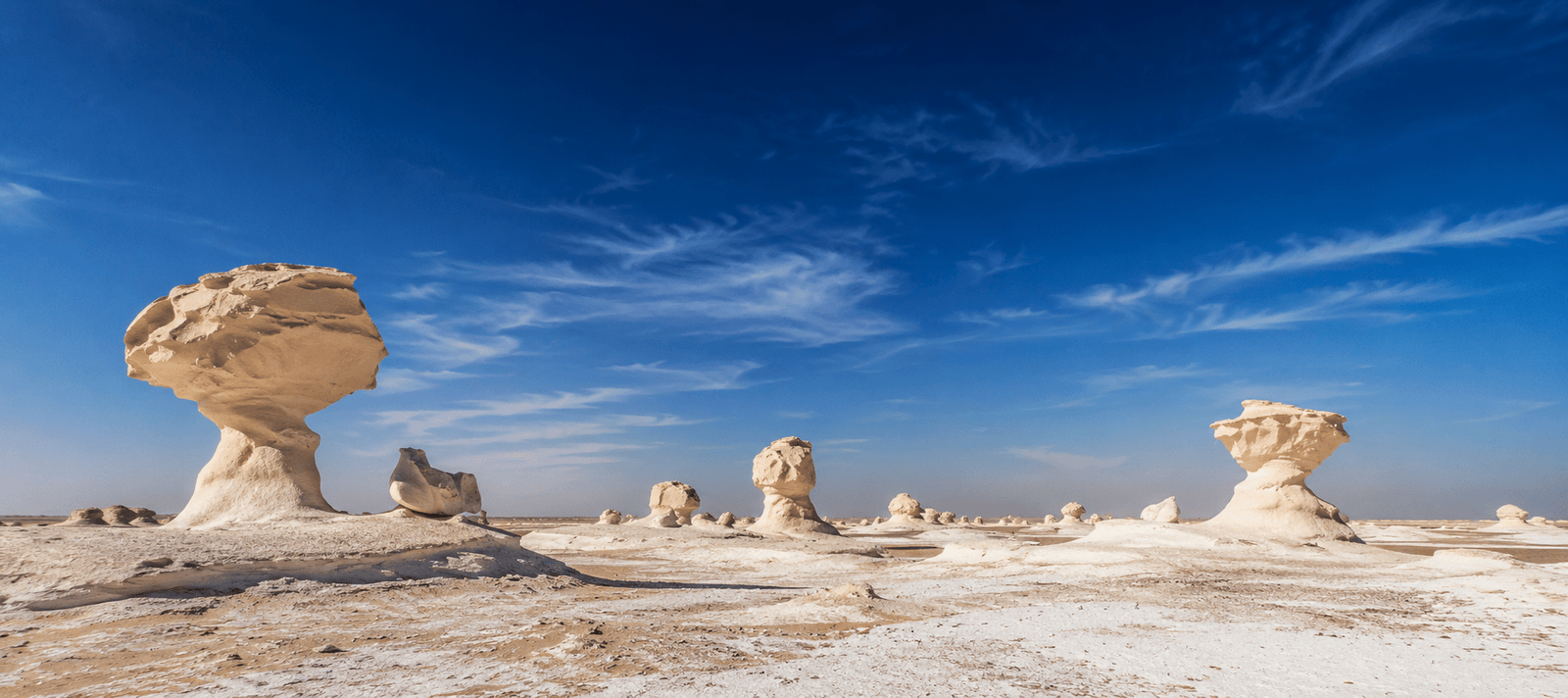
Located within Egypt’s Western Desert, the White Desert feels completely different from the rest of the country. Massive chalk formations rise from the sand in shapes that resemble mushrooms, ice cream cones, giant animals, and abstract sculptures. Under bright sunlight, the landscape appears almost snow-covered despite being surrounded by one of the driest environments in North Africa.
For travelers looking beyond Egypt’s ancient monuments, the White Desert offers one of the most memorable experiences in the country. The combination of remote wilderness, dramatic scenery, and overnight camping creates an adventure that feels far removed from the busy streets of Cairo and the crowded archaeological sites of the Nile Valley.
Expert Insight: Many travelers visit the White Desert expecting unusual rock formations. What surprises them most is the silence. Once the tour vehicles leave and the sun begins to set, the scale and isolation of the desert become the real attraction.
What Makes the White Desert Unique
The White Desert is unlike any other landscape in Egypt.
Its most famous feature is the bright white chalk rock formations scattered across the desert floor. Wind and sand have shaped these formations over millions of years into distinctive natural sculptures that appear almost artificial at first glance.
The contrast between the white rock, golden sand, and deep blue sky creates a landscape that often feels more like another planet than part of Egypt.
Unlike traditional sightseeing destinations where visitors move between monuments, the White Desert is valued for the environment itself. The scenery constantly changes depending on sunlight, weather conditions, and the angle from which the formations are viewed.
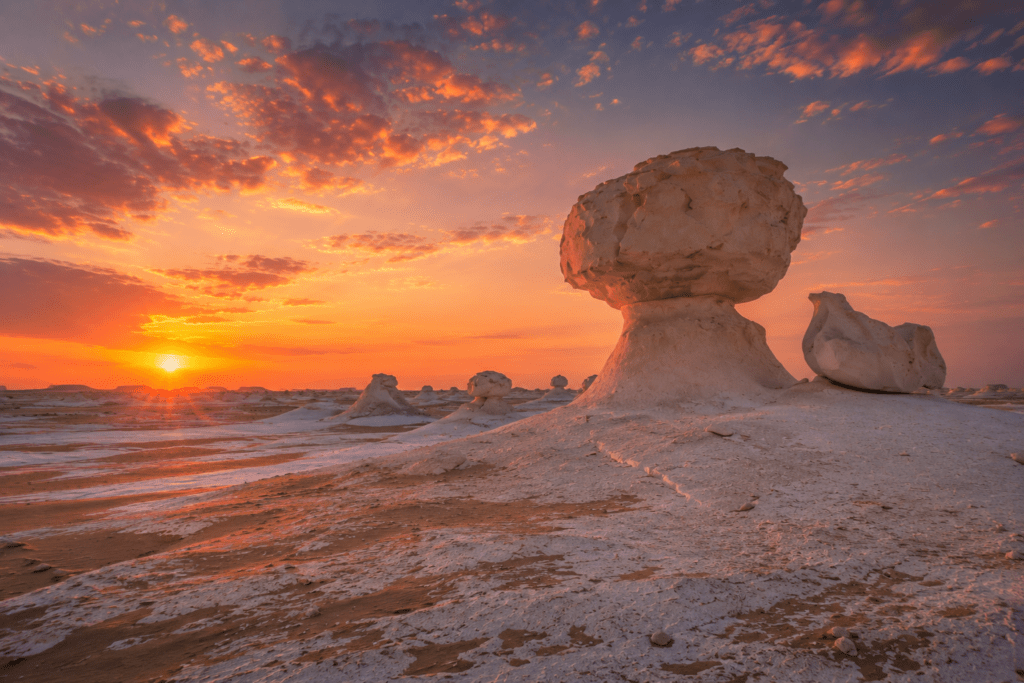
Sunrise and sunset are particularly spectacular because the white rock reflects changing colors throughout the day.
Geological Formation
The White Desert’s unusual appearance began when much of the region lay beneath an ancient sea.
Over time, layers of marine sediment accumulated and eventually hardened into soft limestone and chalk deposits. As sea levels retreated and the desert environment developed, wind erosion gradually sculpted the rock into the formations visible today.
The process continues even now.
Powerful desert winds slowly reshape the landscape, creating new contours and altering existing formations over thousands of years. This ongoing transformation helps explain why the White Desert remains one of Egypt’s most remarkable natural wonders.
The geological history is fascinating, but most visitors are captivated simply by the visual impact of the landscape itself.
Main Highlights
The White Desert contains dozens of unusual formations spread across a vast area.
While many rock formations remain unnamed, several have become iconic because of their distinctive shapes and popularity among visitors.
Exploring these formations is one of the highlights of any White Desert excursion because each area feels slightly different from the last.
Mushroom Rocks
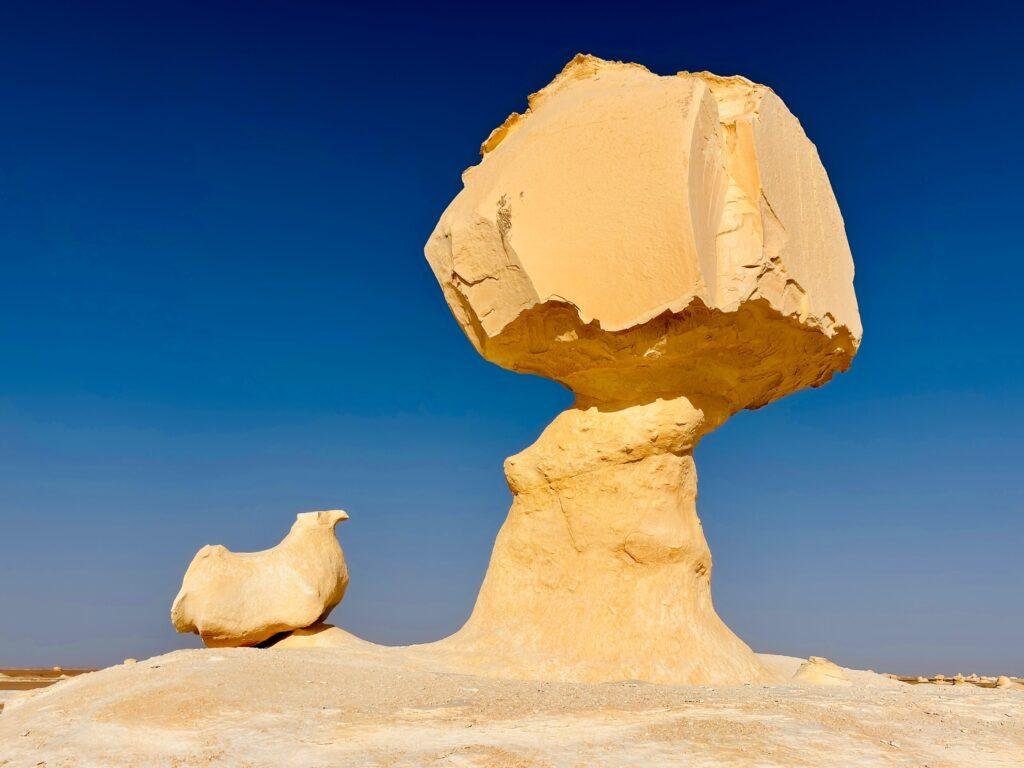
The Mushroom Rocks are among the most photographed formations in the White Desert.
Years of wind erosion carved away softer layers beneath harder upper sections, creating structures that genuinely resemble giant mushrooms rising from the desert floor.
These formations often become focal points during sunset photography because their unusual silhouettes stand out dramatically against the changing desert sky.
Many visitors are surprised by their size, as photographs rarely capture their true scale.
Ice Cream Cone Rocks
Another famous feature of the White Desert is the collection of formations commonly referred to as Ice Cream Cone Rocks.
These tall, tapered structures appear almost sculpted by hand. Their smooth surfaces and distinctive shapes contribute to the surreal atmosphere that makes the White Desert famous.
The formations are particularly striking during early morning hours when softer light emphasizes the textures and subtle color variations within the chalk.
They are among the most recognizable landmarks in the region and a favorite stop during guided desert tours.
Desert Camping
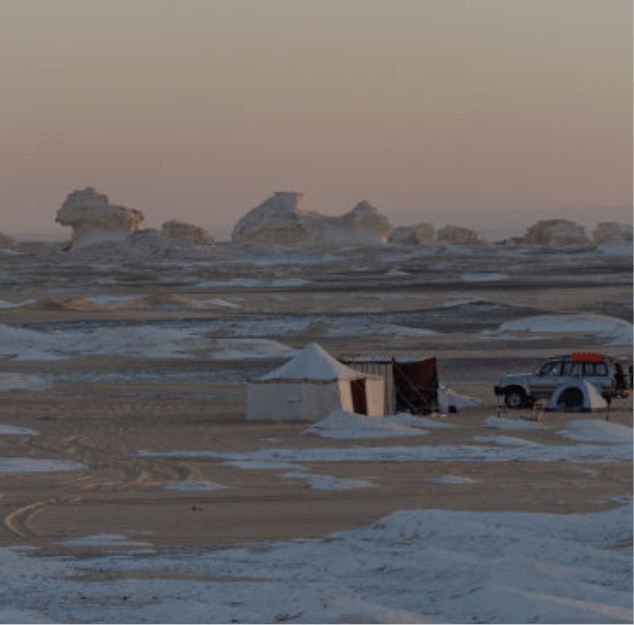
Camping is what transforms a White Desert visit from a sightseeing excursion into a genuine desert experience.
Most tours include overnight camps set among the rock formations, allowing visitors to experience the landscape after day-trippers have departed.
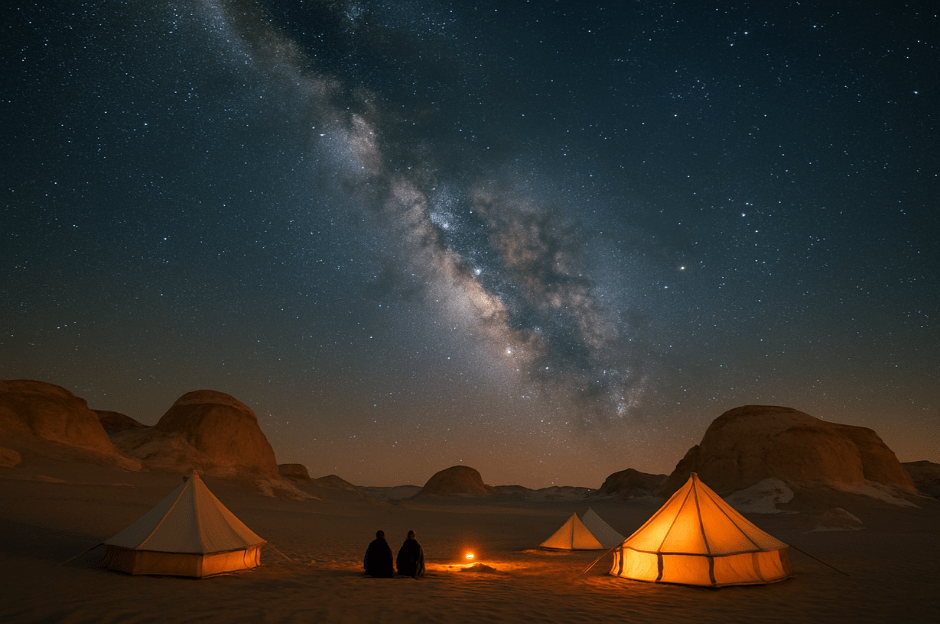
As darkness falls, the atmosphere changes completely. Temperatures drop, the sky fills with stars, and the silence becomes one of the defining features of the experience.
Dinner is often prepared by local guides over open fires while guests gather beneath the night sky surrounded by the white formations.
For many travelers, this evening becomes the most memorable part of the trip.
Overnight Experience
Spending the night in the White Desert provides a perspective that day visitors never experience.
The desert feels dramatically different after sunset. Artificial light disappears, temperatures become more comfortable, and the vastness of the landscape becomes easier to appreciate.
Sunrise is equally rewarding.
Early morning light creates soft shadows across the formations and often provides the best photography conditions of the entire trip. The desert is quiet, cool, and almost completely undisturbed.
The overnight experience is one of the main reasons travelers choose the White Desert rather than limiting themselves to a shorter excursion.
Guide’s Note: Winter nights in the White Desert can feel surprisingly cold. Travelers who only prepare for Egypt’s daytime heat are often caught off guard after sunset.
What to Pack
Packing correctly has a major impact on comfort during a White Desert trip.
The desert environment creates extreme contrasts between daytime and nighttime conditions. Warm afternoons can quickly give way to cold evenings, particularly between November and February.
Lightweight clothing works well during the day, but layers become essential after sunset. Comfortable closed-toe shoes help protect against sand and uneven terrain, while sunglasses, sunscreen, and a hat are important throughout the excursion.
A portable charger is useful because overnight camps typically have limited access to electricity.
White Desert FAQ
Is the White Desert worth visiting?
For travelers interested in natural landscapes, adventure, and experiences beyond Egypt’s historical sites, the White Desert is one of the most rewarding destinations in the country.
How many days do you need for the White Desert?
Most visitors join overnight tours lasting one night and two days. This provides enough time to experience the major formations, sunset, stargazing, and sunrise.
Is camping in the White Desert safe?
Organized tours with experienced desert guides are generally considered safe and are the standard way travelers visit the area.
When is the best time to visit the White Desert?
The most comfortable conditions usually occur between October and April when daytime temperatures are milder and overnight camping is more enjoyable.
Can you visit the White Desert independently?
Most travelers visit as part of an organized tour because access, navigation, permits, and logistics are significantly easier when handled by experienced local operators.
Many travelers focus entirely on Egypt’s ancient sites and leave without realizing the country contains some of the most remarkable natural landscapes in North Africa. Explore Egyptian Nile Adventures helps travelers balance iconic historical attractions with extraordinary experiences like the White Desert, creating itineraries that reveal a broader side of Egypt. Before finalizing your trip, compare itinerary options that combine the country’s famous monuments with destinations that most visitors never see.