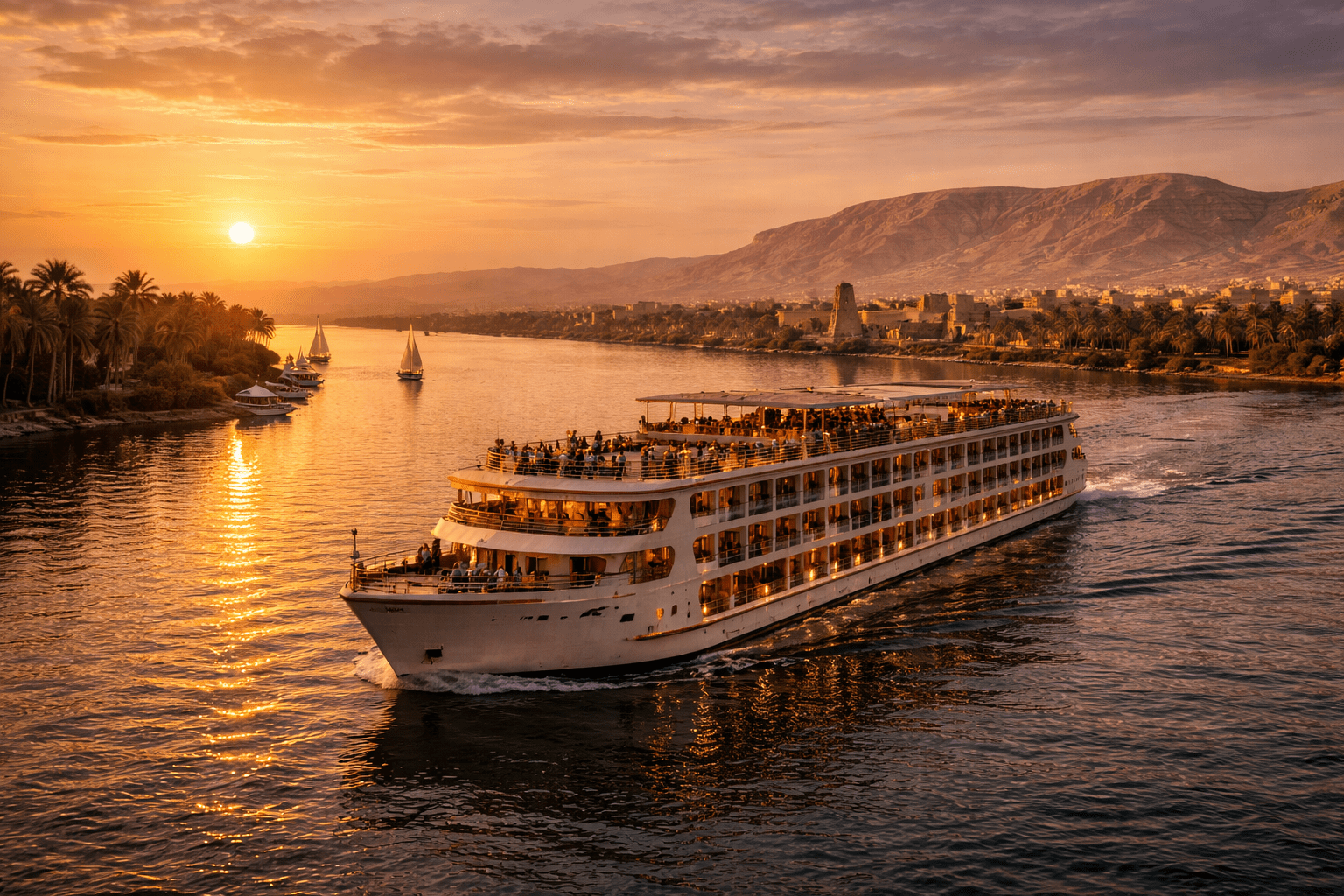
What a Nile Cruise Day Is Actually Like
Many travelers book a Nile cruise expecting a floating luxury hotel with occasional sightseeing. What surprises most people is that the rhythm of the cruise is actually built around the river itself, early temple timing, and the heat of Upper Egypt.
A Nile cruise is not a passive vacation where Egypt slowly drifts past your balcony all day. Some moments feel calm and slow, especially while sailing between Luxor and Aswan. Other parts of the experience begin before sunrise, with early departures to major temples before the heat becomes overwhelming.
The travelers who enjoy Nile cruises most are usually the ones who understand that the cruise is not just accommodation or transportation. It is the structure that holds Upper Egypt together. Once that rhythm makes sense, the experience starts to feel remarkably smooth.
Expert Insight: The best Nile cruises feel balanced rather than luxurious. Good pacing, smart temple timing, and realistic daily flow matter far more than having the largest cabin on the ship.
The Day Usually Starts Earlier Than Expected
One of the first surprises on a Nile cruise is how early many mornings begin.
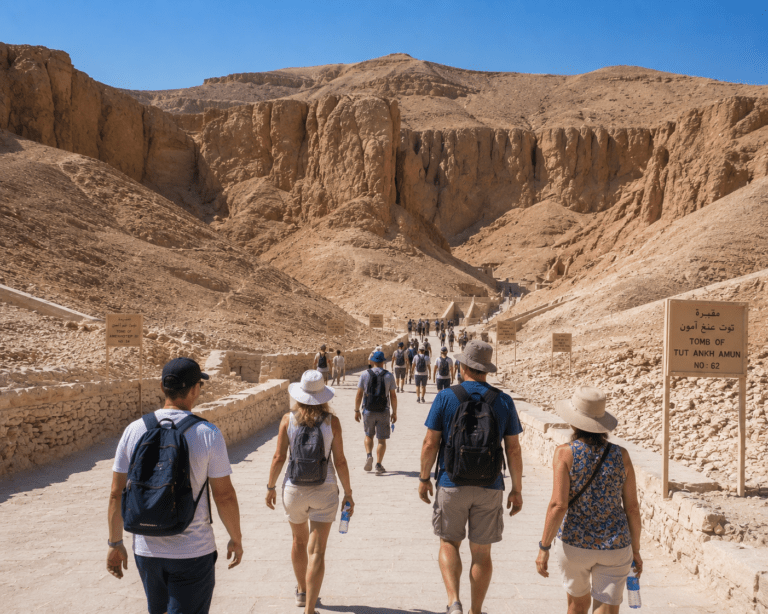
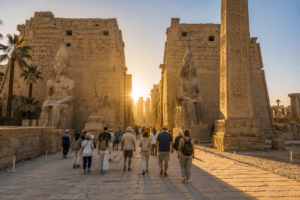
Temple visits in Upper Egypt are almost always scheduled around heat and crowd timing, which means wake-up calls around 5:00–6:00 AM are common on certain days. This is especially true for major sites like the Valley of the Kings, Abu Simbel, or Edfu Temple.
At first, many travelers assume those early starts will feel exhausting. In reality, they often become some of the best parts of the trip because the conditions are dramatically better before the midday heat arrives.
Luxor, in particular, becomes intensely hot later in the day. Walking through exposed temple complexes under direct afternoon sun feels completely different from arriving shortly after sunrise when the stone is still cool and the crowds are lighter.
The early pacing is not designed to make the trip feel rushed. It exists because Upper Egypt works best in the morning.
Excursions Are Usually Shorter Than Travelers Expect
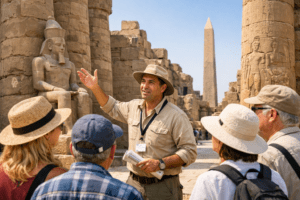
Many first-time cruise passengers imagine spending entire days touring temples. Most excursions are actually more focused and structured than that.
A typical temple visit may last between one and three hours depending on the site, followed by a return to the ship. This creates a rhythm where sightseeing is balanced with rest, meals, and sailing time instead of nonstop movement all day.
That balance matters because temple fatigue is real in Egypt. Sites like Karnak, Kom Ombo, and Philae are extraordinary, but they are also physically demanding in the heat, especially across multiple days.
Returning to the ship between excursions gives the trip a much steadier pace than land-based itineraries where travelers constantly pack, transfer hotels, and move between cities.
The Sailing Time Becomes Part of the Experience
The quietest moments on a Nile cruise are often the most memorable.
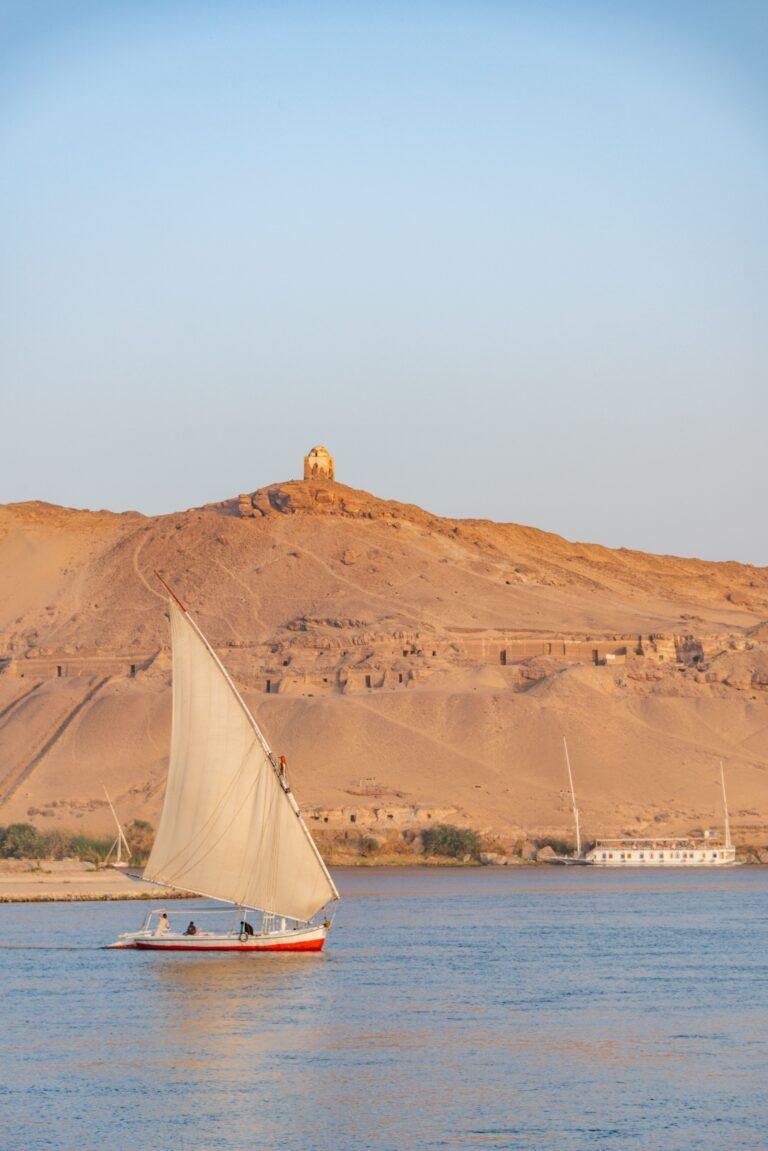
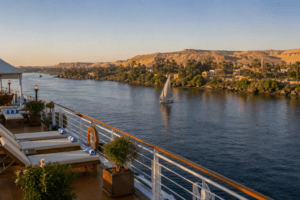
During sailing stretches between Luxor and Aswan, the pace slows completely. Palm groves, desert hills, farmland, fishing boats, and riverside villages move past gradually while the ship continues south or north along the Nile.
This is the part many travelers do not fully understand before arriving. The cruise is not only about temples. It is also about experiencing the Nile itself, which shaped ancient Egypt long before modern roads connected Upper Egypt. Travelers unfamiliar with Nile cruise routes and seasonal sailing conditions can also review Egypt’s official Nile cruise travel information before planning the experience.
Midday sailing hours often become recovery time after early excursions. Travelers rest on deck, eat lunch, sit beside the pool, or simply watch the riverbanks pass slowly in the background.
Guide’s Note: The strongest Nile cruise itineraries leave enough unstructured time onboard. A cruise that tries to maximize nonstop excursions often feels far more exhausting by the middle of the trip.
The Ships Vary More Than Travelers Expect
Not all Nile cruises feel the same.
Some ships focus heavily on classic sightseeing structure and smooth logistics. Others emphasize luxury interiors, larger cabins, or quieter atmospheres. The difference is not just visual—it directly affects the rhythm of the trip itself.
The most important differences usually involve:
- guide quality
- docking locations
- cruise pacing
- food consistency
- maintenance standards
- how organized excursions feel
Travelers sometimes focus heavily on cabin photos while overlooking how much execution affects the actual experience onboard.
A well-managed mid-range cruise often feels smoother than a luxury ship with poor scheduling or weak organization.
Docking Can Feel Busier Than Expected
One of the least discussed parts of Nile cruising is how ships dock.
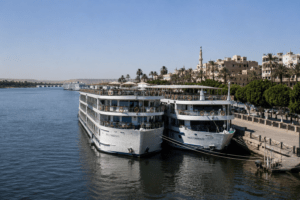
In Luxor and Aswan, multiple cruise ships often park side-by-side along the riverbanks, especially during busy travel months. This means passengers sometimes walk through neighboring ships to reach the dock itself.
For travelers expecting total isolation on the river, this can feel surprising at first.
However, the atmosphere changes quickly once the ship starts sailing again. The river sections between docking points are where the cruise feels calmest and most connected to the landscape.
Food and Evenings Onboard Are Usually Relaxed
Evenings on Nile cruises are generally quiet and slower-paced compared to ocean cruises.
After dinner, many travelers spend time on the upper deck, watch the river at night, or rest early before the next morning’s excursions. Some ships offer light entertainment or themed evenings, but the overall atmosphere remains much calmer than large commercial cruise environments.
Meals are typically served buffet-style with a mix of Egyptian and international dishes. The quality varies between ships, but most cruises prioritize consistency and convenience over elaborate dining experiences.
By the second or third evening, most travelers settle naturally into the rhythm of the river.
A Nile Cruise Feels Different From Regular Travel in Egypt
The biggest advantage of a Nile cruise is not luxury. It is continuity.
Without the cruise structure, Upper Egypt often involves repeated packing, hotel changes, long road transfers, and constant coordination between temples and cities. The cruise removes most of that friction by combining transportation, accommodation, and guided sightseeing into one continuous flow.
That changes how the trip feels physically.
Instead of constantly moving between disconnected travel days, travelers return to the same room, the same ship, and the same general rhythm each evening while Upper Egypt unfolds gradually around them.
Articles like How to Get Around Egypt and What to Expect When Visiting Ancient Egyptian Temples become much more useful once travelers understand how the Nile cruise structure actually works in practice.
FAQ: Nile Cruise Experience
What time do Nile cruise excursions usually start?
Many excursions begin early in the morning, especially in Luxor and during warmer months. Starting early helps avoid the strongest heat and busiest crowds later in the day.
Is a Nile cruise relaxing or busy?
The experience is usually a mix of both. Mornings can start early for sightseeing, while sailing periods and evenings feel much slower and calmer.
Do you spend a lot of time sailing on a Nile cruise?
Yes, especially between excursions. Some of the most memorable parts of the cruise happen during quiet sailing stretches along the Nile itself.
Are Nile cruise ships luxurious?
Some are highly luxurious, while others are more practical and sightseeing-focused. The overall experience depends more on organization, guide quality, and pacing than cabin size alone.
Is a Nile cruise worth it for first-time visitors?
For most travelers visiting Luxor and Aswan, a Nile cruise creates the smoothest and least stressful way to experience Upper Egypt because it combines transportation, accommodation, and sightseeing into one structure.
Many travelers choose a Nile cruise based entirely on cabin photos or star ratings, then discover too late that pacing, guide quality, and scheduling affect the experience far more than décor.
Explore Egyptian Nile Adventures helps travelers choose Nile cruises based on how they actually want to experience Upper Egypt—timing, comfort, excursion flow, and realistic daily rhythm—so the trip feels smooth instead of exhausting.
Explore Nile cruise options designed around real travel conditions on the Nile, not just marketing images.