
Are Walking Tours in Cairo Worth It?
Walking is one of the best ways to experience parts of Cairo—but only in the right places.
Many first-time visitors arrive expecting to explore the city the way they would Rome, Paris, or London, spending entire days wandering between attractions on foot. Cairo simply does not work that way. The city is enormous, neighborhoods are spread out, and major attractions are separated by busy roads, heavy traffic, and considerable distances.
That does not mean walking tours are a bad idea. In fact, they can be one of the most rewarding experiences in Cairo when chosen carefully. Historic districts such as Islamic Cairo and Khan El Khalili reveal details that are easy to miss from a vehicle, while other parts of the city are far better explored with private transportation.
Understanding where walking enhances the experience—and where it simply becomes exhausting—helps travelers make far better decisions when planning their time in Egypt’s capital.
Expert Insight: The best Cairo itineraries combine driving and walking. Trying to do everything on foot usually leads to frustration, while relying entirely on vehicles means missing the character that makes Cairo unique.
Walking Works Best in Historic Neighborhoods
Some of Cairo’s most fascinating areas were built centuries before modern traffic existed.
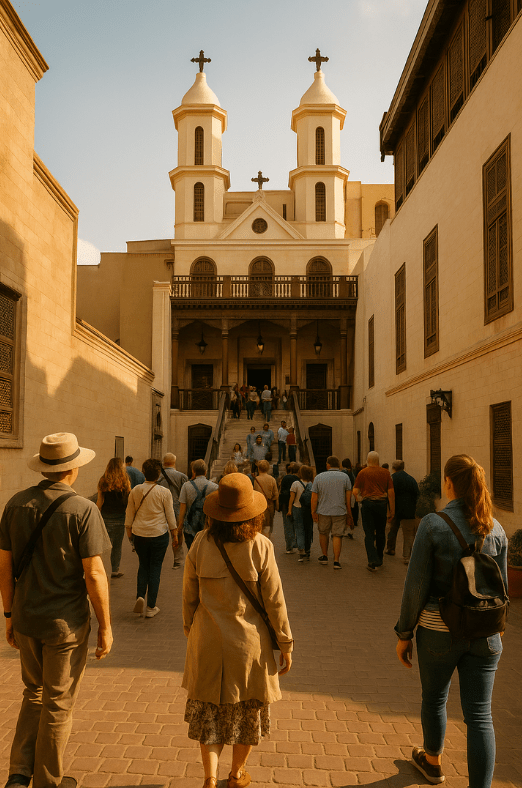
Some of Cairo’s most rewarding neighborhoods were designed to be explored on foot. Historic districts like Coptic Cairo, with its ancient churches, Roman fortress walls, and quiet lanes, simply cannot be appreciated from a vehicle. Likewise, areas such as Mokattam’s Cave Church reveal stories and details that only emerge when you spend time walking with someone who knows the neighborhood.
Walking allows visitors to notice architectural details, hear the sounds of everyday life, and discover places that tour buses and private cars simply cannot reach.
This slower pace often becomes one of the highlights of a Cairo visit because it transforms sightseeing into a more immersive cultural experience.

Walking Does Not Work Between Major Attractions
One of the biggest misconceptions about Cairo is that its famous attractions sit close together.
The Pyramids of Giza, Coptic Cairo, Islamic Cairo, and downtown Cairo are all located in different parts of the metropolitan area. While they may appear relatively close on an online map, traffic, road layouts, and the city’s enormous size make walking between them unrealistic.
Even within central Cairo, major roads can be difficult to cross, sidewalks vary considerably, and summer temperatures frequently exceed what most visitors find comfortable for extended walking.
For this reason, experienced travelers usually combine private transportation with shorter walking experiences once they reach each destination.
Guide’s Note: A fifteen-minute walk on a map can feel very different in Cairo during a hot afternoon with busy intersections and limited shade.

A Guide Adds More Than Historical Facts
Many travelers assume guides exist mainly to explain monuments.
In reality, a good Cairo guide provides context that transforms the entire experience.
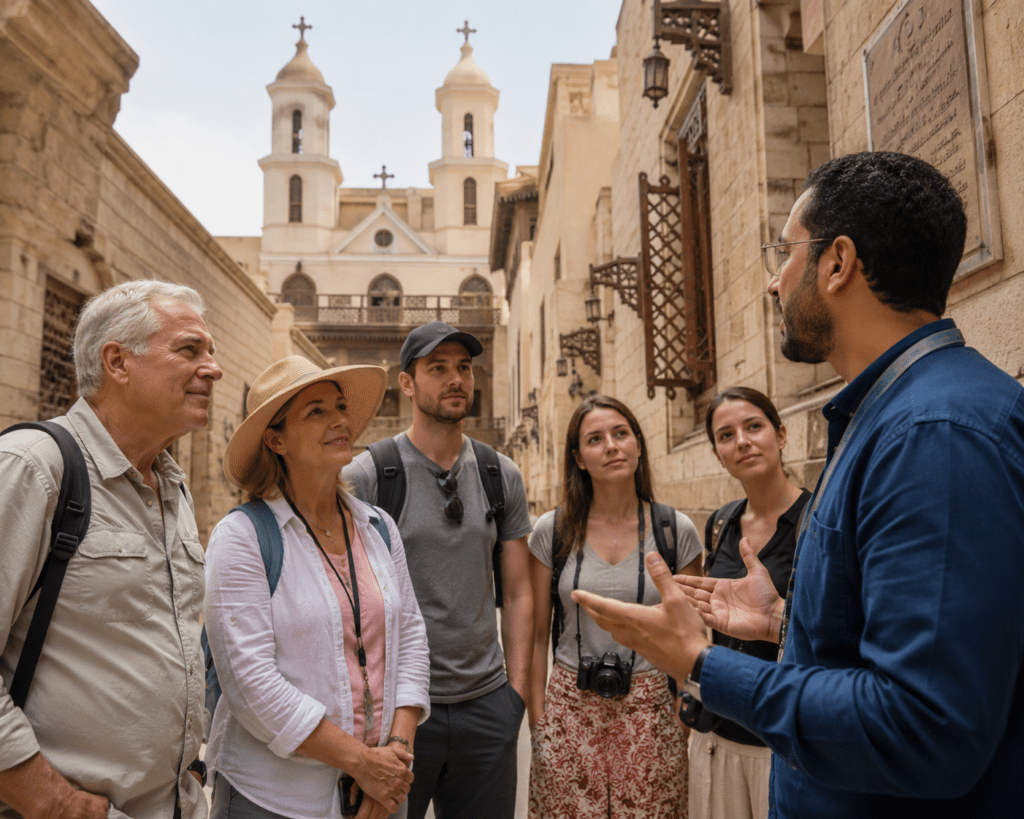
As you walk through historic neighborhoods, guides explain architectural details, point out buildings that visitors would otherwise pass without noticing, interpret religious and cultural traditions, recommend authentic local food, and answer questions that naturally arise throughout the day.
Perhaps more importantly, they help visitors navigate areas that initially feel overwhelming.
Instead of constantly checking maps, wondering whether a street leads somewhere interesting, or accidentally missing important landmarks, travelers can focus entirely on the experience itself.
For example, a walk through Coptic Cairo becomes far richer when someone explains how Roman Babylon Fortress, the Hanging Church, the Ben Ezra Synagogue, and centuries of Christian history all connect within a few small streets. Likewise, a visit to the Cave Church and the Zabbaleen community is less about seeing a famous church and more about understanding the remarkable community that built one of the world’s most efficient recycling systems while carving one of the Middle East’s largest churches into the cliffs of Mokattam.
The result is often a more relaxed and enjoyable day.
When You Should Book a Walking Tour
Walking tours work best when they focus on one neighborhood rather than trying to cover the entire city. A dedicated Coptic Cairo Walking Tour allows enough time to explore churches, Roman ruins, hidden courtyards, and local cafés without feeling rushed. A Cave Church & Mokattam Walking Tour offers a completely different experience, introducing visitors to one of Cairo’s least understood communities while explaining the history behind one of Egypt’s most extraordinary churches.
By concentrating on a single area, guides can spend less time moving between attractions and more time helping visitors understand the history, architecture, and everyday life that make each neighborhood unique.
Booking a guide is especially valuable for first-time visitors because these neighborhoods contain layers of history that are not immediately obvious without local interpretation.
Morning tours are generally the most comfortable, especially during the warmer months, when cooler temperatures make walking significantly more enjoyable.

When a Walking Tour Is Probably Not Necessary
Not every attraction benefits from a guided walking experience.
The Pyramids of Giza, Saqqara, Memphis, and many museums are typically visited as part of broader sightseeing days that involve significant driving between locations.
Likewise, neighborhoods that lack concentrated historical attractions rarely justify several hours on foot.
Choosing the right balance between walking and driving allows travelers to conserve energy while still enjoying Cairo’s most atmospheric districts.
The goal is not to walk as much as possible but to walk where it genuinely improves the experience.
Walking Helps You Experience the Real Cairo
Some of Cairo’s most memorable moments happen between the major landmarks.
The aroma of fresh bread drifting from a neighborhood bakery, craftsmen working inside small workshops, the call to prayer echoing through historic streets, and conversations unfolding in local cafés all contribute to the city’s character.
These everyday moments rarely appear on itineraries, yet they are often what travelers remember long after returning home.
Walking creates opportunities for these experiences in ways that simply passing through the city by vehicle cannot.
That is why many visitors who initially questioned whether a walking tour was worthwhile later describe it as one of the highlights of their time in Cairo.

Walking Tours FAQ
Are walking tours in Cairo safe?
Walking tours are generally very safe when conducted in established tourist areas with experienced guides. Historic districts such as Islamic Cairo and Old Cairo are regularly visited by travelers, and guides help visitors navigate unfamiliar streets confidently.
How long does a typical Cairo walking tour last?
Most walking tours last between two and four hours, depending on the neighborhood and the number of historical sites included.
Should I book a private or group walking tour?
Private tours provide greater flexibility, allow more time for questions, and can adjust the pace to individual interests. Group tours may be a good option for travelers seeking a lower-cost introduction to Cairo’s historic districts.
What should I wear for a Cairo walking tour?
Comfortable walking shoes are essential, and lightweight, modest clothing works best. A hat, sunglasses, sunscreen, and water are particularly important during warmer months.
Which Cairo walking tour is best for first-time visitors?
Travelers interested in history usually enjoy Coptic Cairo because its churches, Roman remains, and compact streets provide an excellent introduction to one of Egypt’s oldest neighborhoods. Visitors looking for a more unusual experience often choose the Cave Church & Mokattam Walking Tour, which combines local culture, panoramic viewpoints, and one of Cairo’s most remarkable religious sites.
Many visitors either skip Cairo’s historic neighborhoods entirely or rush through them without understanding what makes them special. Explore Egyptian Nile Adventures offers walking experiences that reveal the stories behind places like Coptic Cairo and the Cave Church in Mokattam, combining expert local guidance with enough time to experience each neighborhood properly. Before deciding how to explore Cairo, compare our walking tours and choose the experience that matches the side of the city you want to discover.