Black Desert Guide
Most travelers have heard of Egypt’s White Desert. Far fewer realize that one of the country’s most unusual landscapes appears just before it.
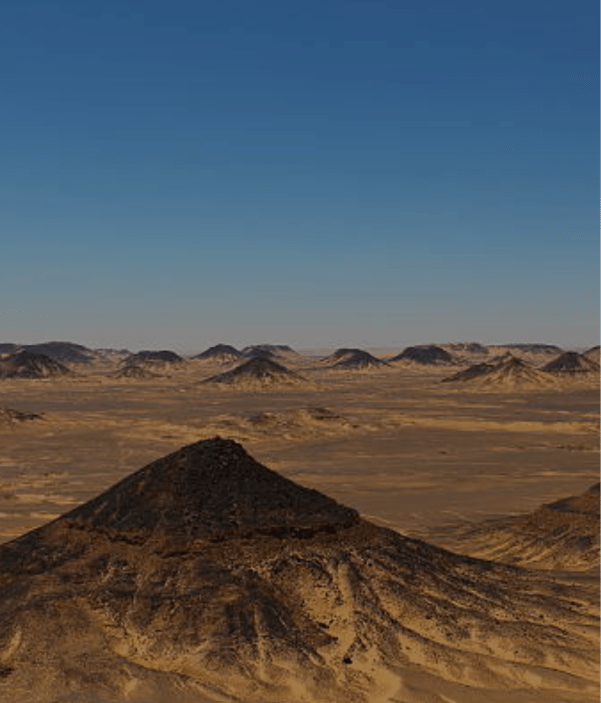
Located between Bahariya Oasis and the White Desert, the Black Desert presents a striking contrast to the bright chalk formations found farther south. Instead of white limestone sculptures, visitors encounter dark volcanic hills, black-covered slopes, and dramatic desert scenery shaped by millions of years of geological activity.
For travelers exploring Egypt’s Western Desert, the Black Desert is usually the first major stop on the journey toward the White Desert. While many visitors initially view it as a brief photo opportunity, the landscape offers far more than a quick roadside stop. The volcanic terrain, panoramic viewpoints, and unusual colors create an experience unlike anywhere else in Egypt.
Expert Insight: Travelers often focus almost entirely on the White Desert before arriving. Once they see the dramatic contrast between the two landscapes, they realize the journey itself is part of what makes Egypt’s Western Desert so remarkable.
Why the Desert Is Black
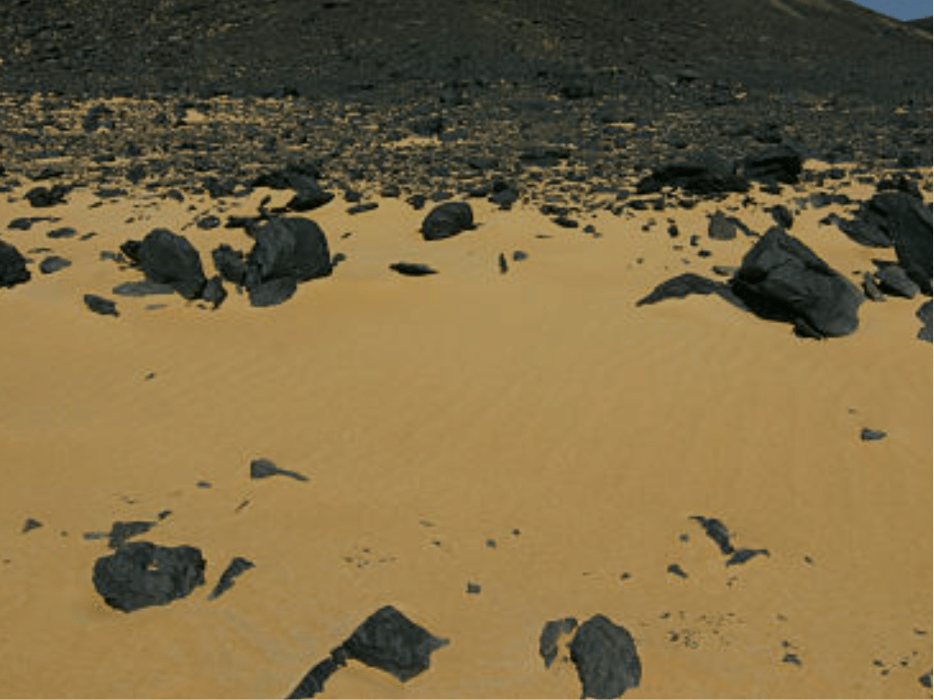
Despite its name, the Black Desert is not made entirely of black sand.
The dark appearance comes from volcanic rock that covers many of the hills and surrounding terrain. Millions of years ago, volcanic activity deposited basalt and other dark minerals across the region. Over time, erosion spread these materials across the landscape, creating the distinctive black coating visible today.
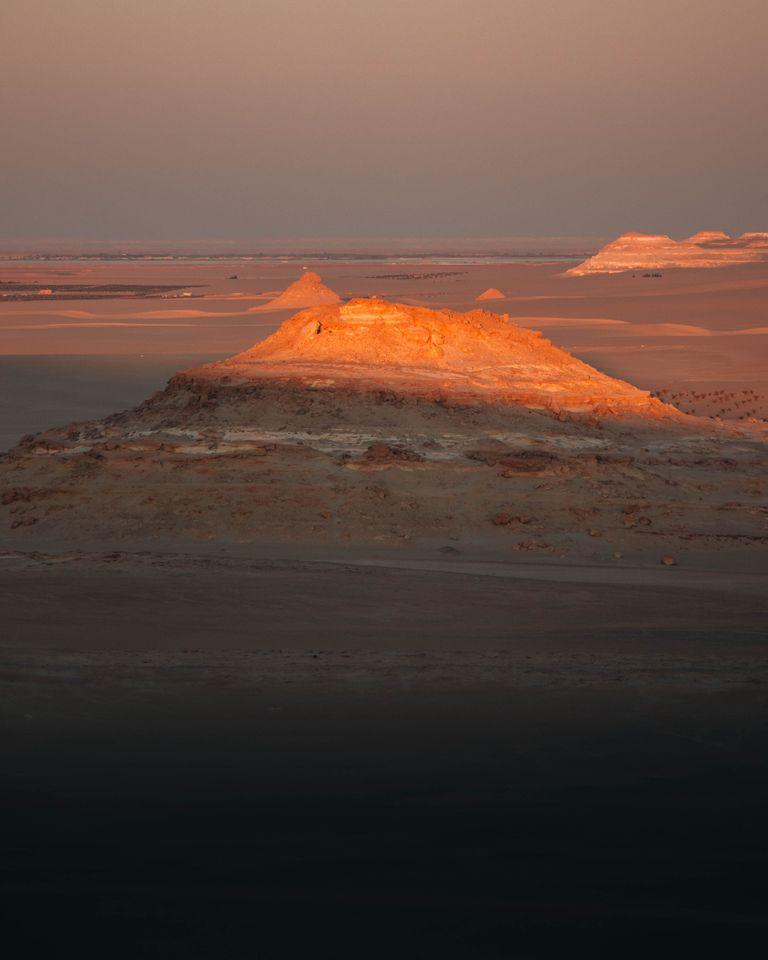
The result is a series of hills and ridges that appear dark against the surrounding desert. Under certain lighting conditions, especially during sunrise and sunset, the contrast becomes even more dramatic as shadows deepen the appearance of the volcanic slopes.
This geological history is what separates the Black Desert from many of Egypt’s other desert environments, making it one of the most visually distinctive landscapes in the Western Desert.
Main Attractions
The Black Desert is less about individual monuments and more about the overall landscape.
Rolling volcanic hills rise from the desert floor in every direction, creating a scenery that feels completely different from the Nile Valley or the Red Sea coast. The terrain changes constantly as visitors move through the area, with dark ridges giving way to golden sands and distant mountain-like formations.
One of the most popular stops is the English Mountain, a hill that offers wide views across the surrounding desert. During World War I, British forces reportedly used the area as a lookout point, giving the hill its modern name.
The scenery throughout the region rewards travelers who take the time to step away from the vehicles and appreciate the scale of the environment. Unlike Egypt’s archaeological sites, the attraction here is not a specific structure but the landscape itself.
Hiking the Volcanic Hills
One of the best ways to experience the Black Desert is on foot.
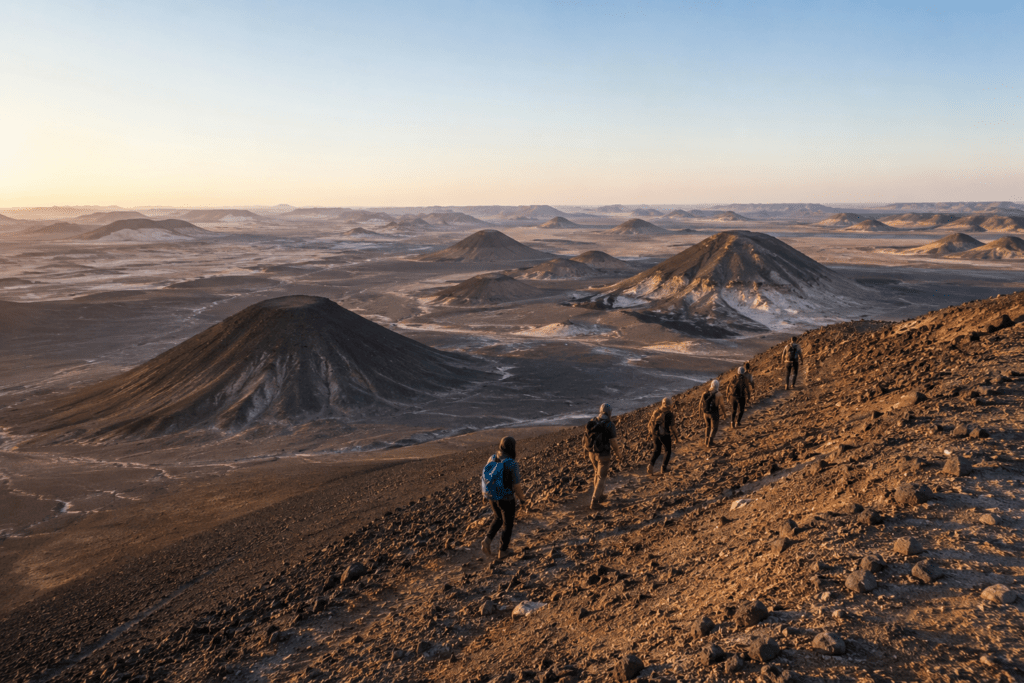
Several of the volcanic hills can be climbed relatively easily, rewarding visitors with panoramic views across the Western Desert. The hikes are generally short, but the loose volcanic rock and desert terrain require reasonable footwear and care while walking.
The effort is usually worth it.
From the higher viewpoints, travelers can see the transition between different desert environments and appreciate just how vast this region of Egypt really is. On clear days, the horizon seems endless.
The best hiking conditions typically occur during the cooler months between October and April when temperatures are more comfortable for outdoor activity.
Guide’s Note: Even short climbs can feel surprisingly strenuous under the desert sun. Carrying water and starting earlier in the day makes the experience far more enjoyable.
Photography Tips
The Black Desert is one of Egypt’s most rewarding destinations for landscape photography.
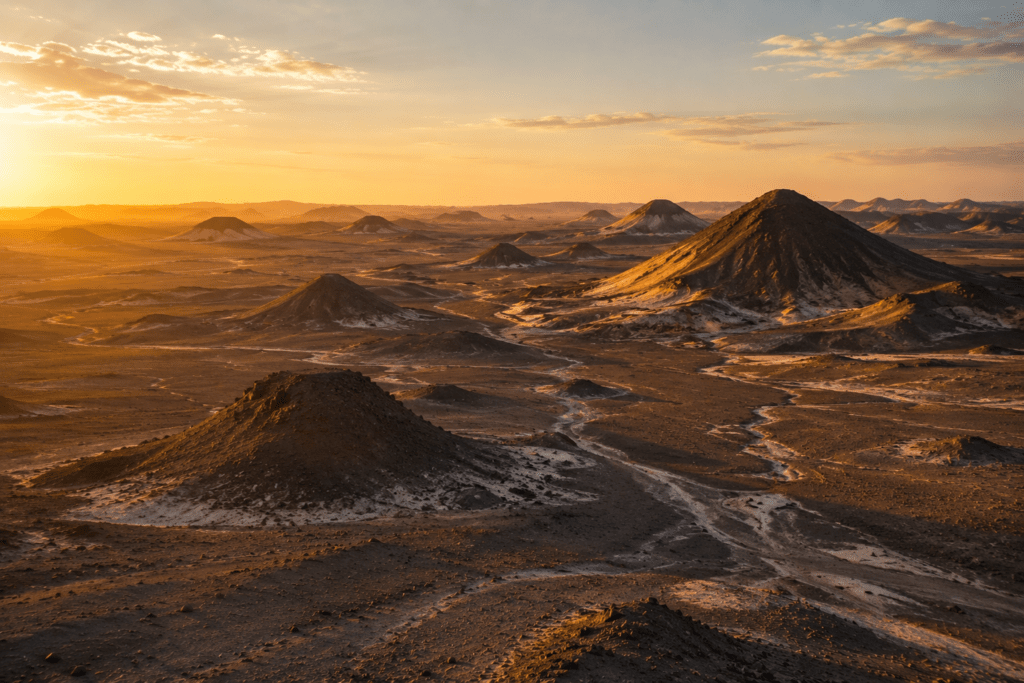
The strongest images often come from emphasizing the contrast between the dark volcanic hills and the surrounding lighter desert terrain. Early morning and late afternoon provide the best conditions because lower sunlight creates longer shadows and greater depth across the landscape.
Midday light tends to flatten the scenery and reduce the visual impact of the hills.
Wide-angle photography works particularly well because it captures the scale of the environment. Visitors interested in drone photography should always check current regulations and local permissions before flying.
Photographers who continue on to the White Desert often find that the visual contrast between the two locations creates some of the most memorable images of their Egypt trip.
Combining With White Desert Tours
Most travelers visit the Black Desert as part of a broader Western Desert itinerary that includes the White Desert.
This combination works exceptionally well because the two landscapes are completely different despite being relatively close together. The Black Desert’s volcanic terrain provides a dramatic introduction before visitors reach the surreal chalk formations of the White Desert later in the journey.
Most organized tours departing from Bahariya Oasis include both destinations, along with additional stops such as Crystal Mountain and various desert viewpoints.
Experiencing the Black Desert on its own can be rewarding, but the contrast between black volcanic hills and white chalk formations is what makes this route particularly memorable.
Travelers interested in desert adventures should view the Black Desert and White Desert as complementary experiences rather than separate destinations.
Black Desert FAQ
Is the Black Desert worth visiting?
For travelers exploring Egypt’s Western Desert, the Black Desert is absolutely worth visiting. Its volcanic landscape creates a dramatic contrast to the White Desert and provides some of the region’s best panoramic views.
How long do you spend in the Black Desert?
Most visitors spend between one and three hours exploring the area, depending on whether hiking, photography stops, and broader desert tours are included.
Why is the Black Desert black?
The dark appearance comes from volcanic rock and basalt deposits that cover many of the hills and surrounding terrain.
Can you hike in the Black Desert?
Several hills can be climbed relatively easily, offering excellent viewpoints across the Western Desert landscape.
Can you visit the Black Desert without visiting the White Desert?
It is possible, but most travelers combine both destinations because they are located along the same route and provide a much richer desert experience together.
Many travelers rush through the Western Desert focused entirely on reaching the White Desert, then miss one of the most distinctive landscapes in Egypt. Explore Egyptian Nile Adventures builds desert itineraries around the full experience, allowing travelers to appreciate the volcanic terrain of the Black Desert, the geological contrasts between destinations, and the gradual transformation of the landscape across the Western Desert. Before choosing a desert excursion, compare itineraries that treat the journey itself as part of the adventure rather than simply a transfer between highlights.