Medinet Habu Guide (2026): Ramses III’s Temple, What to See & Visiting Tips
Medinet Habu is the West Bank site many travelers discover only after they have already planned around the Valley of the Kings and Hatshepsut Temple. That is understandable—those names dominate first-time Luxor itineraries—but it also means visitors often miss one of the best-preserved and easiest-to-read mortuary temples in Egypt.
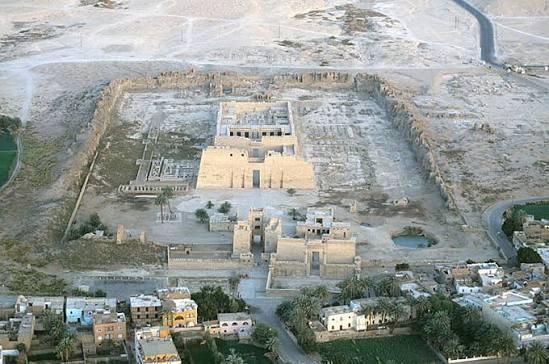
The reason to come is not simply that Medinet Habu is quieter. The Mortuary Temple of Ramesses III preserves monumental architecture, deeply carved reliefs, surviving color, military scenes, ritual imagery, palace remains, and an unusual fortified entrance within one compact complex. Unlike Karnak, where centuries of additions create an enormous architectural puzzle, Medinet Habu is easier to follow as the royal monument of one principal ruler.
It also rewards travelers who are already familiar with Luxor. After crowded tomb entrances and the immense scale of Karnak, Medinet Habu can feel refreshingly contained. Recent 2026 visitors repeatedly describe arriving to relatively light crowds, particularly early in the morning, while still finding the temple remarkably intact.
For most visitors, allow 90 minutes. Two hours is worthwhile if you are particularly interested in reliefs, surviving color, photography, or Ramesses III’s reign.
Expert Insight: Medinet Habu is not the West Bank site to add because you have spare time. Add it when you want one temple where the architecture, reliefs, and royal message remain coherent enough to understand without spending half the visit reconstructing missing walls in your imagination.
Quick Planning
| Planning point | Best default |
|---|---|
| Location | Luxor West Bank |
| Main monument | Mortuary Temple of Ramesses III |
| Current official hours | 6:00 AM–5:00 PM daily |
| Time needed | 1.5 hours; closer to 2 for detail |
| Best time | Early morning |
| Crowds | Usually lighter than Karnak or Hatshepsut Temple |
| Shade | Partial in halls and courts; exposed exterior areas |
| Walking | Moderate |
| Main priorities | High Gate, pylons, courts, surviving color, battle reliefs |
| Strongest nearby pairing | Valley of the Queens |
| Guide value | High for military and ritual reliefs |
The Ministry of Tourism and Antiquities currently lists Medinet Habu as open daily from 6:00 AM to 5:00 PM.
Why Medinet Habu Is Worth Adding After So Many Other Luxor Temples
Luxor does not suffer from a shortage of monumental architecture.
By the time many travelers reach the West Bank, they may already have seen Karnak’s Hypostyle Hall, Luxor Temple’s colonnade, Hatshepsut’s terraces, and several decorated royal tombs.
Medinet Habu still adds something different.
Its main monument belongs overwhelmingly to Ramesses III, the major king of Egypt’s Twentieth Dynasty. The Ministry dates his reign approximately to 1184–1153 BC and identifies the complex as his mortuary temple, constructed both for his funerary cult and for the worship of Amun.
Because the temple’s architectural program is comparatively unified, you can follow it more naturally.
You enter through a fortified precinct, pass a monumental gate, move toward the first pylon, then through successive courts, another pylon, columned halls, chapels, and the sacred interior.
The Ministry specifically describes that sequence—first pylon, first courtyard, second pylon, second courtyard, three columned halls, chapels, and the sanctuary—which is one reason the building works so well as a visitor experience.
Karnak gives you accumulation.
Hatshepsut gives you landscape and royal ideology.
Medinet Habu gives you a remarkably legible Ramesside temple.
The High Gate Immediately Tells You This Is Different
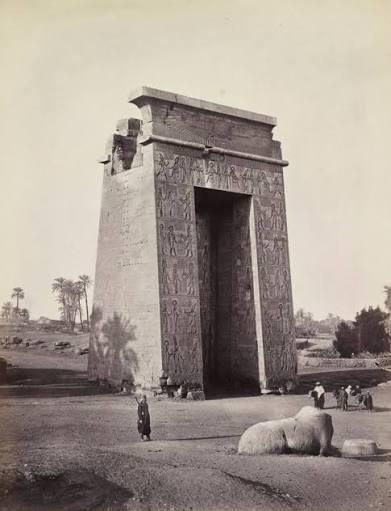
Before you even reach the main temple, Medinet Habu presents one of its most unusual architectural features: the Eastern High Gate, often compared with a Near Eastern migdol, or fortified gateway.
The Ministry describes it as a monumental entrance flanked by two towers with balconies. A similar western gate once existed but has not survived.
The structure is unusual enough that the University of Chicago’s long-running Epigraphic Survey devoted an entire scholarly volume to documenting its inscriptions and architecture, calling the Eastern High Gate unique among surviving ancient Egyptian buildings.
Do not treat it as a decorative prelude.
Its fortified appearance belongs to a larger reality around the complex. Medinet Habu was enclosed by substantial mudbrick walls, and the Ministry notes that the surrounding area could provide protection during periods of insecurity, particularly amid threats from the west during Ramesses III’s reign.
This makes the approach feel fundamentally different from the open ceremonial frontage of Luxor Temple or the processional scale of Karnak.
The First Pylon Sets the Royal Message Immediately
After passing through the outer precinct, the main temple begins with the First Pylon.
The monumental reliefs belong to the familiar visual language of Egyptian kingship: Ramesses III appears as the victorious ruler defeating enemies before the gods.
The imagery is not intended as neutral historical reporting.
It communicates order, royal power, divine approval, and Egypt’s victory over forces represented as threatening chaos.
That distinction matters when interpreting Medinet Habu’s famous military scenes later.
The walls preserve significant historical information, but they were also political and religious monuments created by the king’s own state.
Approach them as evidence, not photography.
The First Courtyard Is One of the Best Places to See Ramesses III’s Monumental Style
Inside the first court, Medinet Habu begins to show another reason it deserves more attention: preservation.
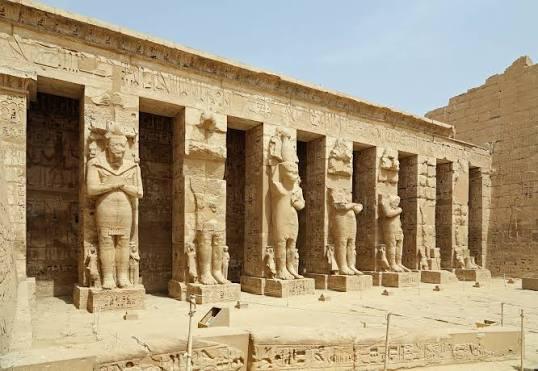
Columns, reliefs, royal statues, and architectural surfaces remain substantial enough that the court still reads as a coherent space rather than a field of isolated fragments.
The temple includes both papyrus-form columns and Osiride representations of Ramesses III, in which the ruler appears in a mummiform association with Osiris.
This is where the temple’s funerary function becomes easier to recognize.
A mortuary temple was not the king’s tomb. Ramesses III’s actual burial is in the Valley of the Kings.
Medinet Habu instead maintained royal ritual and memory in the world of the living.
That distinction is one of the most important ideas to carry across Luxor’s West Bank.
The Second Courtyard Is Where the Surviving Color Becomes Hard to Ignore
Many first-time visitors expect ancient Egyptian temples to be bare sandstone because that is how most ruins appear today.
Medinet Habu challenges that assumption.
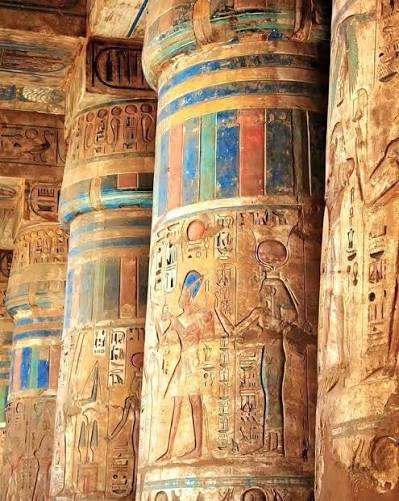
Significant traces of blue, red, yellow, green, and other pigments remain across reliefs, ceilings, columns, and protected architectural surfaces.
Recent 2026 visitors specifically single out the preserved color as one of the temple’s strongest features, with one April visitor describing it as rivaling anything they had seen elsewhere on the West Bank.
Look upward as well as sideways.
Protected ceilings and recessed reliefs often preserve pigment better than exposed exterior walls.
The surviving color is not simply decorative trivia. It helps correct one of the biggest visual misconceptions travelers carry through Egypt: these monuments were not designed as monochrome stone environments.
They were painted.
The Depth of the Reliefs Is Part of Why Medinet Habu Photographs So Well
Ramesses III’s reliefs at Medinet Habu are often cut deeply enough to create dramatic shadow.
That becomes particularly obvious when sunlight strikes the walls at an angle.
Instead of flat visual surfaces, figures, hieroglyphs, weapons, bodies, and divine imagery gain strong depth. For photographers, this is one of the temple’s major strengths.
Earlier morning light is generally more forgiving than harsh midday sun.
It also makes the surviving pigment easier to integrate into photographs without the extreme contrast created later in the day.
Do not spend the entire visit photographing only battle scenes.
Some of the best visual material lies in ritual images, processions, column decoration, ceiling color, and the architectural repetition of the courtyards.
The Sea Peoples Reliefs Matter—but Avoid the Simplified Story
Medinet Habu’s best-known historical scenes depict Ramesses III’s conflicts with groups conventionally known as the Sea Peoples.
The Ministry explicitly identifies scenes of battles against both the Sea Peoples and Libyan groups among the temple’s major military decorations.
These reliefs are exceptionally important historical sources for the late Bronze Age eastern Mediterranean.
They are not, however, a simple illustrated documentary showing one clearly defined people invading Egypt in one straightforward event.
The term Sea Peoples is a modern scholarly label applied to several groups named in Egyptian texts. Their identities, origins, movements, and role in the wider disruption affecting parts of the eastern Mediterranean around the end of the Bronze Age remain subjects of debate.
Ramesses III’s inscriptions present the king as decisively defeating these enemies.
That is exactly what a royal victory monument was designed to do.
The appropriate interpretation is therefore balanced: the scenes are major evidence for real military conflicts during Ramesses III’s reign, but their royal narrative should not be treated as an objective modern battlefield report.
This is one of the places where a knowledgeable Egyptologist adds considerable value.
Guide’s Note: If a guide explains the Sea Peoples as a single mysterious civilization that suddenly destroyed the Bronze Age world, the story has become too neat. Medinet Habu provides crucial evidence, but it does not settle every archaeological debate surrounding the period.
The Naval Battle Scene Is Unusual in Egyptian Art
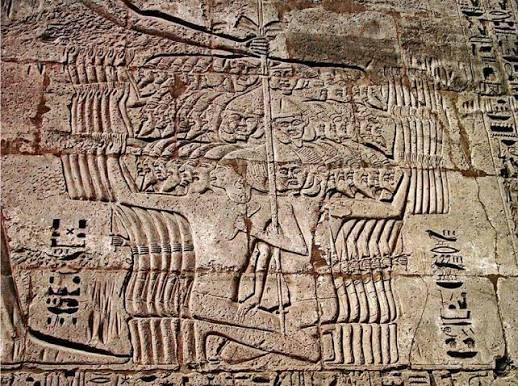
Among the conflict scenes, the naval battle imagery receives particular attention because large-scale representations of combat at sea are relatively unusual in surviving Egyptian monumental art.
The scenes show ships, fighters, archers, and chaotic confrontation.
What matters is not only the violence of the imagery.
It shows Ramesses III presenting the conflict in a form that differs from the classic chariot battles familiar from earlier New Kingdom monuments.
Take time to look at how bodies overlap, how ships are rendered, and how the Egyptian ruler’s forces are organized visually.
You do not need to decode every named group.
The compositional difference alone helps explain why these walls are so frequently discussed by historians of the late Bronze Age.
The Libyan Campaigns Add Another Military Layer
The Sea Peoples tend to dominate modern attention, but Medinet Habu also preserves extensive imagery connected with campaigns against Libyan groups.
The Ministry specifically includes the Libyan wars among the temple’s military decoration.
This matters because it places Ramesses III’s reign within a broader pattern of pressure along Egypt’s frontiers rather than reducing the entire period to one famous naval confrontation.
Again, use caution.
Royal monuments emphasize victory, enemy submission, and the king’s role as defender of Egypt.
They are invaluable historical sources precisely because they communicate how the state wanted these conflicts remembered.
Do Not Miss the Religious Scenes Because the Battles Are More Famous
The temple does not exist primarily as a military memorial.
It was a sacred building.
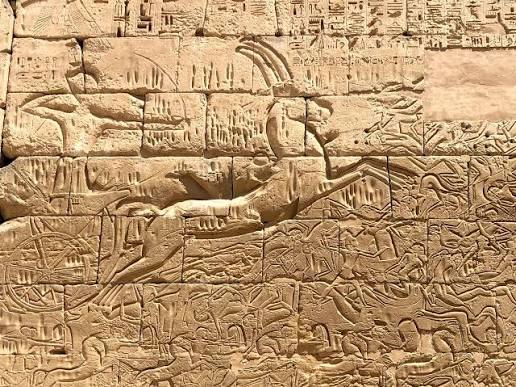
The Ministry notes that Medinet Habu also contains extensive scenes of Ramesses III worshipping deities, participating in festivals, hunting, and carrying out royal and ritual activities.
These quieter religious scenes are essential because they restore balance to the building.
Ramesses III needed to be shown not merely defeating enemies but maintaining the correct relationship between ruler, gods, temple ritual, and cosmic order.
If your guide spends forty minutes discussing war and five minutes on the temple’s religious function, the interpretation is incomplete.
The Palace Remains Change How You Read the Complex
Medinet Habu included more than the temple itself.
The Ministry records the remains of a royal palace, as well as storehouses, administrative buildings, and stables within the wider complex.
That tells you something about scale and function.
A great mortuary temple required economic administration, supplies, staff, storage, ritual infrastructure, and royal facilities.
It was not a monument isolated from daily activity.
The University of Chicago’s Institute for the Study of Ancient Cultures notes that Medinet Habu later became a regional governmental center and eventually supported a substantial Coptic Christian community within its fortified enclosure.
That long afterlife is easy to miss because Ramesses III dominates the visual experience.
Medinet Habu Is Better Preserved Than Many Visitors Expect
The Ministry explicitly describes the temple as notable for its good state of preservation.
That is important because preservation affects more than aesthetics.
At Medinet Habu, surviving walls still define the courts.
Reliefs can be read in relation to their architectural locations.
Columns retain scale and color.
The fortified precinct remains understandable.
This lets visitors interpret the temple spatially rather than reconstructing most of it mentally.
The site is still undergoing conservation and restoration. Recent March and June 2026 visitors reported temporary ropes, closures, or restricted access around parts of the mortuary temple and smaller structures.
Do not assume every subsidiary building or passage visible in an older guidebook will be accessible on your exact date.
The core monument remains worthwhile even when limited areas are under conservation.
Why Medinet Habu Often Feels Quieter
Medinet Habu sits within the same West Bank archaeological landscape as some of Egypt’s most heavily visited monuments.
Yet it routinely receives less pressure than the Valley of the Kings or Hatshepsut Temple.
Part of the reason is itinerary hierarchy.
Large first-time tour programs prioritize the royal tombs, Hatshepsut, and the Colossi of Memnon before secondary West Bank sites.
Medinet Habu therefore often receives travelers on longer Luxor stays, independent itineraries, or more archaeology-focused tours.
The temple remains relatively empty until around 8:30 AM, when buses began arriving. Medinet Habu and nearby secondary sites far quieter than the headline attractions.
Do not interpret “quieter” as “empty.”
Tour patterns change daily.
But if you are exhausted by competing for space in famous tomb corridors, Medinet Habu can feel noticeably easier.
How Long Should You Spend at Medinet Habu?
Around 90 minutes is the strongest default.
An hour is enough for the High Gate, principal pylons, courts, major reliefs, and surviving color if you move efficiently.
Two hours works better if you want to study the military imagery, inspect the palace area where accessible, photograph the columns, and walk around portions of the outer enclosure.
Do not allocate three hours unless you have a specialist interest in Ramesside epigraphy or architecture.
At the opposite extreme, thirty minutes is too little.
Medinet Habu’s strength is precisely that the site rewards looking carefully at surfaces and architectural relationships. Reducing it to a pylon photograph and quick walk through the courts throws away much of what distinguishes it.
Early Morning Is the Strongest Default
The official opening time is 6:00 AM, and Medinet Habu is worth using early.
You benefit from cooler temperatures, stronger angled light on the carved walls, and usually lower visitor numbers before larger tour groups reach the site.
That said, Medinet Habu does not compete for early morning quite as aggressively as the Valley of the Kings or Hatshepsut Temple.
If you have only one West Bank day, protect the first hour for whichever high-priority site is most sensitive to heat and crowds.
On a second West Bank day, Medinet Habu near opening works beautifully.
The temple contains more architectural shade than Hatshepsut’s exposed terraces, but the outer approach, courts, and surrounding spaces still receive direct sun.
Summer remains summer.
Heat and Shade Are More Manageable Than at Hatshepsut—but Not Trivial
Medinet Habu is easier physically than the Valley of the Kings because you are not repeatedly walking across an exposed valley between tomb entrances.
It is also more forgiving than Hatshepsut Temple because tall walls, pylons, columns, and roofed or partially roofed areas create intermittent shade.
But much of the site remains outdoors.
Between May and September, late-morning heat can become draining, particularly if Medinet Habu is the fourth or fifth stop in a packed West Bank circuit.
Carry water and wear proper sun protection.
The issue is not whether you can visit at 1:00 PM.
It is whether you will still have enough concentration to notice the surviving pigment and complicated reliefs when the stone around you is radiating heat.
Valley of the Queens Is the Best Natural Pairing
Medinet Habu and the Valley of the Queens belong together particularly well.
They are geographically close, but the stronger reason is historical.
Two of the principal tombs currently relevant to visitors in the Valley of the Queens—QV44 Khaemwaset and QV55 Amunherkhepshef—belong to sons of Ramesses III.
At Medinet Habu, you see their father presenting himself as pharaoh, warrior, temple patron, and participant in divine ritual.
In the Valley of the Queens, you see him within the funerary programs created for his children.
Our Valley of the Queens Guide explains the current tomb-access situation, including the continued closure of Nefertari’s QV66 and the Ramesside tombs that make the valley worthwhile in 2026.
This is one of the strongest examples of internal linking that also reflects how a traveler should actually build the day.
Deir el-Medina Works Well on the Same Second West Bank Day
If you want to make that day richer without simply adding another royal monument, consider Deir el-Medina.
There you encounter the settlement and tombs of the craftsmen responsible for building and decorating royal tombs in the Theban necropolis.
The contrast is excellent.
Medinet Habu shows royal state architecture.
The Valley of the Queens shows royal-family burial.
Deir el-Medina shows the community of skilled workers who helped create those funerary environments.
Three nearby sites then tell three different parts of the same New Kingdom society.
That is considerably more coherent than adding monuments simply because a driver says they are nearby.
How Medinet Habu Relates to the Valley of the Kings
Ramesses III was not buried at Medinet Habu.
His royal tomb is in the Valley of the Kings.
This is a useful opportunity to reinforce the distinction between a mortuary temple and a tomb.
The king’s body belonged in the protected royal necropolis.
His mortuary temple functioned in the cultivated landscape closer to the Nile, where ritual, offerings, priesthood, administration, and royal memory could continue.
Our Valley of the Kings Guide explains how the royal tombs function and why the New Kingdom pharaohs abandoned the exposed pyramid tradition in favor of hidden rock-cut burials.
Seeing both sites makes the West Bank clearer.
At the Valley of the Kings, Ramesses III is a deceased ruler preparing for eternity.
At Medinet Habu, he is still performing kingship on an enormous public scale.
Medinet Habu and Hatshepsut Temple Are Not Substitutes
Travelers occasionally ask whether they should visit Medinet Habu instead of Hatshepsut Temple because both are mortuary temples.
The answer depends on the itinerary, but the visitor experiences are fundamentally different.
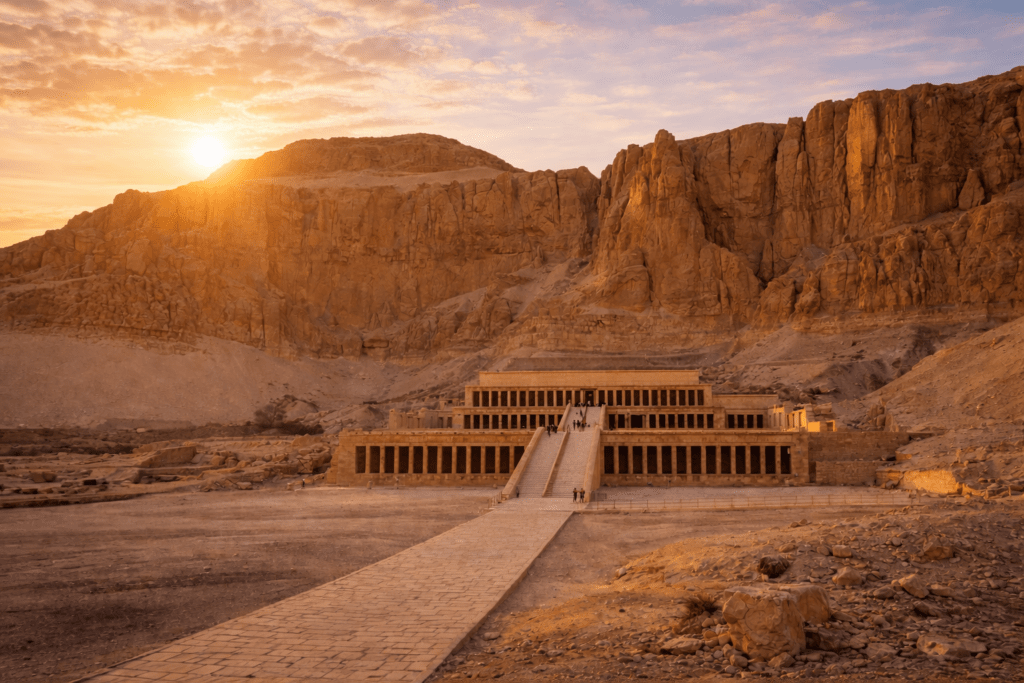
Hatshepsut’s temple is defined by its integration into the cliffs of Deir el-Bahari, its terraces, Punt reliefs, divine-birth narrative, and unusual political story.
Medinet Habu is more enclosed and fortress-like, with exceptional Ramesside reliefs, preserved color, and a stronger sense of a complete traditional temple plan.
Our Hatshepsut Temple Guide explains why its exposed cliff setting makes timing especially important.
If you have sufficient Luxor time, seeing both gives you a better understanding of how much mortuary-temple architecture changed across the New Kingdom.
Is Medinet Habu Worth Visiting If You Only Have Two Days in Luxor?
Not automatically.
This is where itinerary priorities matter.
If two days means one East Bank day and one West Bank day, a first-time visitor should normally protect time for Karnak, Luxor Temple, the Valley of the Kings, and Hatshepsut Temple before adding Medinet Habu.
Those sites establish the essential structure of ancient Thebes.
If your West Bank day is efficiently planned and you still have around 90 minutes available without turning lunch into a moving vehicle and Hatshepsut into a twenty-minute photo stop, add Medinet Habu.
It is a stronger addition than many minor stops.
But if including it means rushing the Valley of the Kings or cutting Hatshepsut Temple to thirty minutes, leave Medinet Habu for a future visit.
The decision changes if your interests are specific.
Travelers particularly interested in Ramesses III, military history, surviving temple color, monumental reliefs, or quieter archaeology may reasonably choose Medinet Habu over a longer Hatshepsut visit or another secondary West Bank attraction.
Families may also appreciate its relatively straightforward architecture more than another sequence of tomb interiors.
The right answer is therefore:
Medinet Habu is one of Luxor’s strongest second-tier priorities, but it should not force the essential first-tier sites into a rushed schedule.
Expert Tip: Two days in Luxor should not become a competition to accumulate monument names. If adding Medinet Habu means every major site loses twenty minutes, the itinerary has become worse, not richer.
Medinet Habu Belongs Naturally on a Second West Bank Day
With three or more days in Luxor, the decision becomes easier.
Use your principal West Bank morning for the Valley of the Kings and Hatshepsut Temple, adding another major site only if timing and heat remain comfortable.
Then build a second West Bank day around Medinet Habu + Valley of the Queens + Deir el-Medina.
That sequence gives each day its own identity.
The first centers on kingship, royal burial, and Hatshepsut’s exceptional mortuary architecture.
The second becomes more intimate and social: Ramesses III’s mortuary temple, the tombs of royal family members, and the community of craftsmen responsible for creating elite tombs.
Your future Luxor Travel Guide should manage that larger itinerary choice rather than forcing all West Bank planning into individual archaeological-site articles.
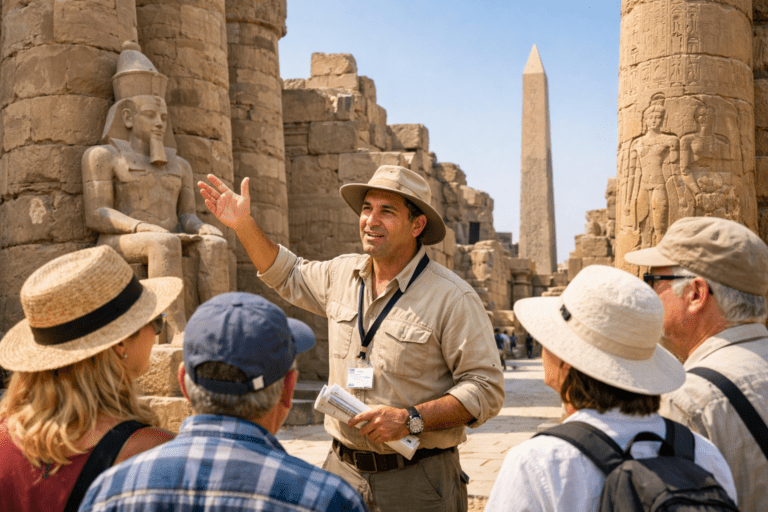
Is a Guide Particularly Useful Here?
Yes, but this is also one of the easier Luxor temples to enjoy independently.
The architecture is coherent enough that a prepared traveler can follow the processional sequence without getting lost.
A guide becomes particularly valuable at the reliefs.
The Sea Peoples scenes, Libyan campaigns, royal ritual imagery, palace remains, and relationship between Medinet Habu and Ramesses III’s reign all benefit from historical explanation.
The University of Chicago’s Epigraphic Survey has documented Medinet Habu for more than a century precisely because its inscriptions are such an important historical resource. Its work began here in 1924, and the institute continues conservation and documentation projects on the site.
A good Egyptologist should use that richness selectively.
You do not need every enemy name translated.
You need to understand what the king is claiming, why the scenes matter, and where scholarship remains cautious.
Practical Access in 2026
One recent issue deserves attention.
The ticket office feels inconveniently distant from the temple entrance but an online purchasing or a QR code at the entrance provides an alternative.
Operational arrangements can change quickly.
If Egypt’s official e-ticket system offers Medinet Habu for your travel date, buying electronically can reduce unnecessary movement in the heat.
Recent visitors also report temporary restoration barriers around parts of the complex in 2026.
Treat those restrictions as current conservation realities rather than evidence that the temple is not worth visiting.
Photography Is One of Medinet Habu’s Strengths
The combination of preserved architecture, deep relief, color, and lower visitor density gives Medinet Habu strong photographic potential.
Early morning is ideal.
Begin with a wide architectural photograph of the High Gate or pylons.
In the courts, use the columns and Osiride figures to create depth rather than photographing flat walls straight on.
Then move closer to the reliefs, particularly where carved depth catches side light.
Surviving pigment is best photographed without pushing color saturation artificially afterward. Part of its value lies in seeing what actually remains after more than three thousand years.
If military scenes interest you, photograph enough surrounding inscription and architecture to retain context rather than isolating a dramatic figure and turning it into anonymous battle imagery.
Frequently Asked Questions
What is Medinet Habu?
Medinet Habu is a wider archaeological precinct on Luxor’s West Bank, dominated by the Mortuary Temple of Ramesses III. The complex also contains earlier and later monuments, administrative and palace remains, fortification walls, and evidence of long occupation after the New Kingdom.
What are Medinet Habu’s opening hours?
The Ministry currently lists the site as open 6:00 AM–5:00 PM daily.
How long should I spend at Medinet Habu?
Allow around 90 minutes. One hour can work for a focused visit, while two hours suits travelers interested in reliefs, surviving pigment, architecture, and photography.
Is Medinet Habu better than Hatshepsut Temple?
They offer different experiences. Hatshepsut is stronger for distinctive architecture, landscape, and the history of one of Egypt’s most unusual rulers. Medinet Habu is stronger for Ramesside reliefs, surviving color, military imagery, and a coherent traditional temple plan. A first-time traveler with enough West Bank time should ideally see both.
Is Medinet Habu worth visiting after Karnak?
Yes, because it is not trying to compete with Karnak on scale. Karnak represents centuries of development around Amun’s great sanctuary; Medinet Habu is a far more unified mortuary complex centered principally on Ramesses III. Its quieter atmosphere and surviving color create a different experience.
What are the Sea Peoples reliefs?
They are military scenes and inscriptions associated with groups modern scholars conventionally call the Sea Peoples, whom Ramesses III’s monuments describe fighting during his reign. The scenes are crucial historical evidence but are also royal victory propaganda, so they should not be treated as neutral documentary records of the wider late Bronze Age crisis.
Why is there so much color at Medinet Habu?
Protected architectural surfaces have retained substantial ancient pigment. Egyptian temple reliefs were originally painted far more extensively than most surviving sandstone monuments suggest, and Medinet Habu gives visitors an unusually clear sense of that lost visual environment.
Is Medinet Habu crowded?
It generally receives fewer visitors than the Valley of the Kings, Karnak, or Hatshepsut Temple, although tour buses still arrive. There’s especially light crowds before roughly 8:30 AM.
Should I combine Medinet Habu with the Valley of the Queens?
Yes. It is one of the strongest West Bank combinations because currently accessible Valley of the Queens tombs QV44 and QV55 belong to sons of Ramesses III. The pairing therefore connects a king’s monumental mortuary temple directly with the funerary world of his family.
Is Medinet Habu suitable for children?
Its open courts, towering pylons, remaining color, and dramatic reliefs can be easier for children to engage with than a long sequence of similar tomb interiors. Heat remains the main concern. Go early during warmer months and keep historical explanation selective.
The mistake with Medinet Habu is treating it as either essential for everyone or expendable because Luxor already has enough temples. Its real value depends on your itinerary. On a rushed two-day first visit, protect Karnak, Luxor Temple, the Valley of the Kings, and Hatshepsut first. With a second West Bank morning, Medinet Habu becomes one of the smartest additions you can make, especially beside the Valley of the Queens. Explore ENA’s Luxor and West Bank itineraries to sequence those sites around the cooler hours and real visitor pace, so Medinet Habu adds depth to Luxor rather than becoming one more temple squeezed into an already exhausted afternoon.