Djara Cave Egypt: Prehistoric Rock Art, Ancient Climate & How to Visit
Djara Cave Egypt: Prehistoric Rock Art, Ancient Climate & How to Visit
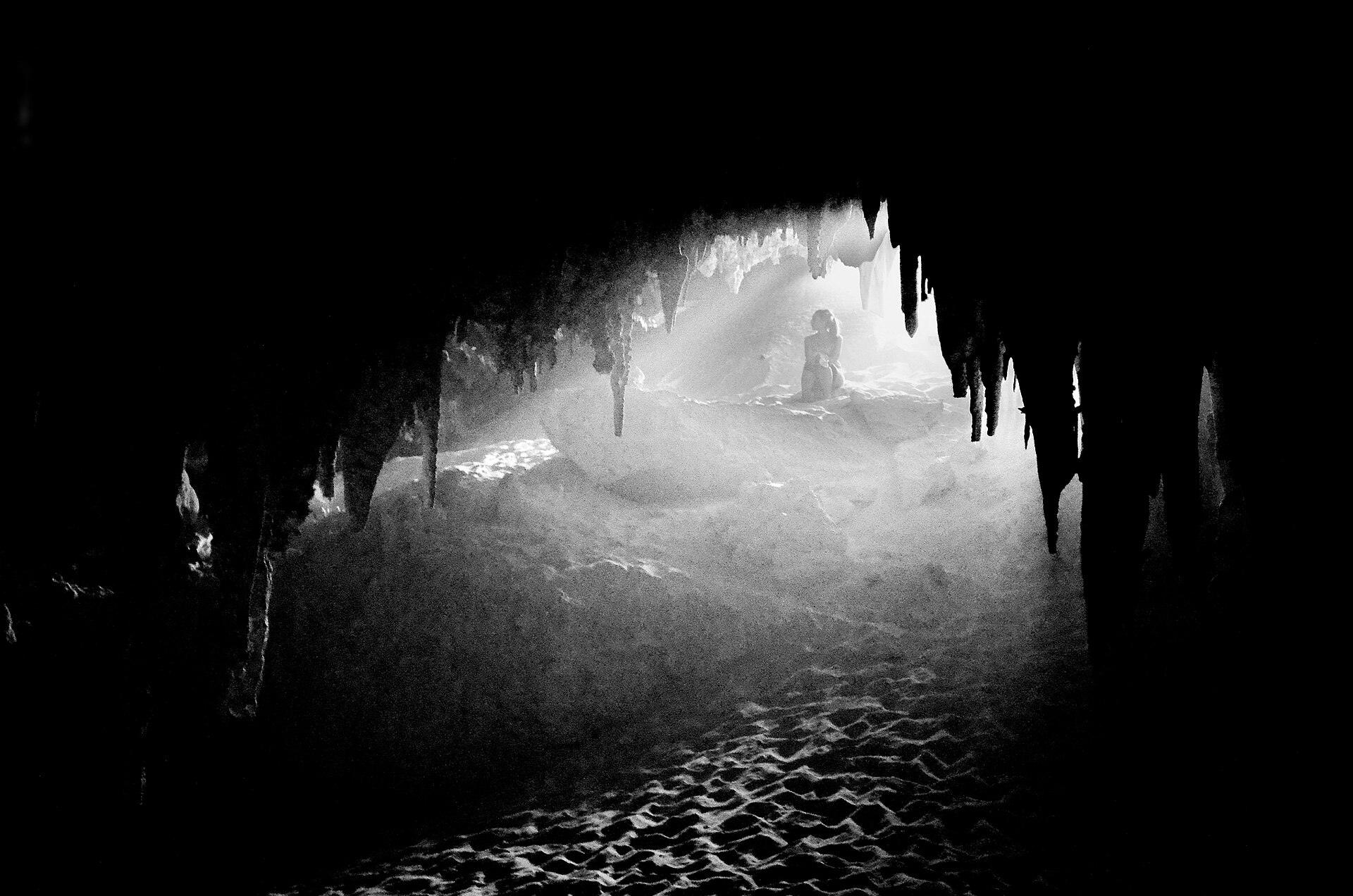
Far out in Egypt’s Western Desert, Djara Cave holds something you wouldn’t expect beneath today’s dry limestone plateau: stalactites, stalagmites and other formations created when this part of North Africa was much wetter.
Then there are the engravings.
Prehistoric people used the cave thousands of years ago, and its walls preserve figures carved by people in the region’s prehistoric past. Archaeologists have also found evidence of human activity inside the cave and at numerous sites in the surrounding desert.
Djara is remote even by Western Desert standards, and its future as a visitor site is still developing. In October 2026, Egypt’s environmental authorities inspected the area as part of preparations to designate it the country’s 32nd natural protectorate. For travelers, that makes current access something to confirm rather than assume.
What Is Djara Cave?
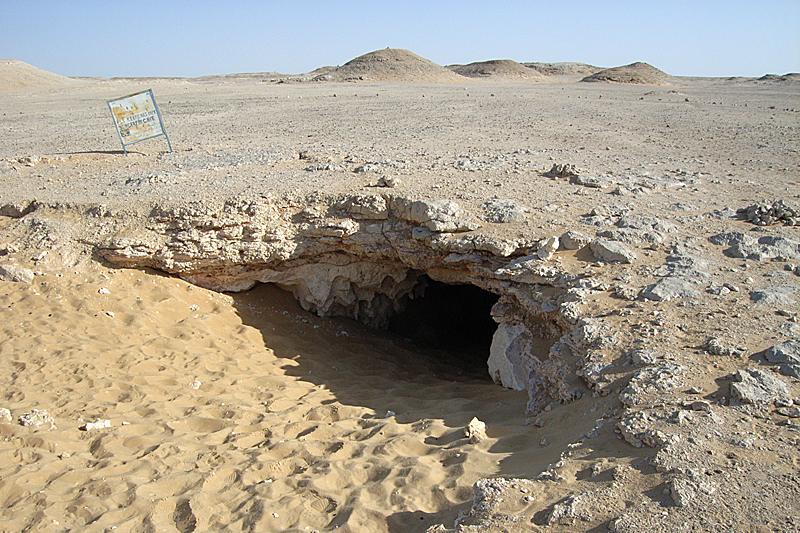
Djara, sometimes written Gara Cave, is a natural limestone cave on the Egyptian Limestone Plateau in the Western Desert.
Inside are stalactites, stalagmites, columns and flowstone. The cave walls also contain prehistoric engravings, while archaeological work in the surrounding area has uncovered evidence of people repeatedly using this part of the desert during the early and middle Holocene.
The geology and archaeology don’t belong to a single period. In fact, the cave formations were already ancient long before prehistoric people began leaving evidence of their presence here.
Where Is Djara Cave?
Djara lies deep in Egypt’s Western Desert, on the limestone plateau roughly halfway between the Nile Valley around Asyut and Farafra Oasis.
You’ll sometimes see Djara associated with Bahariya in desert itineraries. Our Bahariya Oasis travel guide covers the oasis and the places normally visited on a Bahariya journey, but reaching Djara means extending the trip much farther into the desert.
DJARA IS NOT IN BAHARIYA OASIS
Djara can potentially be added to a longer Bahariya and Western Desert trip, but the cave itself is much farther into the desert, on the limestone plateau roughly between the Nile Valley around Asyut and Farafra.
Why Djara Is Different From Egypt’s Other Desert Sites
A Western Desert trip can take you through remarkably different landscapes. Around Bahariya, the dark hills of the Black Desert give way farther south to pale limestone, Crystal Mountain and eventually the formations of the White Desert.
At Djara, the experience shifts underground.
The limestone chambers contain dripstone formations formed during much wetter periods in the region’s distant past. On the walls, prehistoric engravings record the presence of people who arrived far later.
Inside Djara Cave
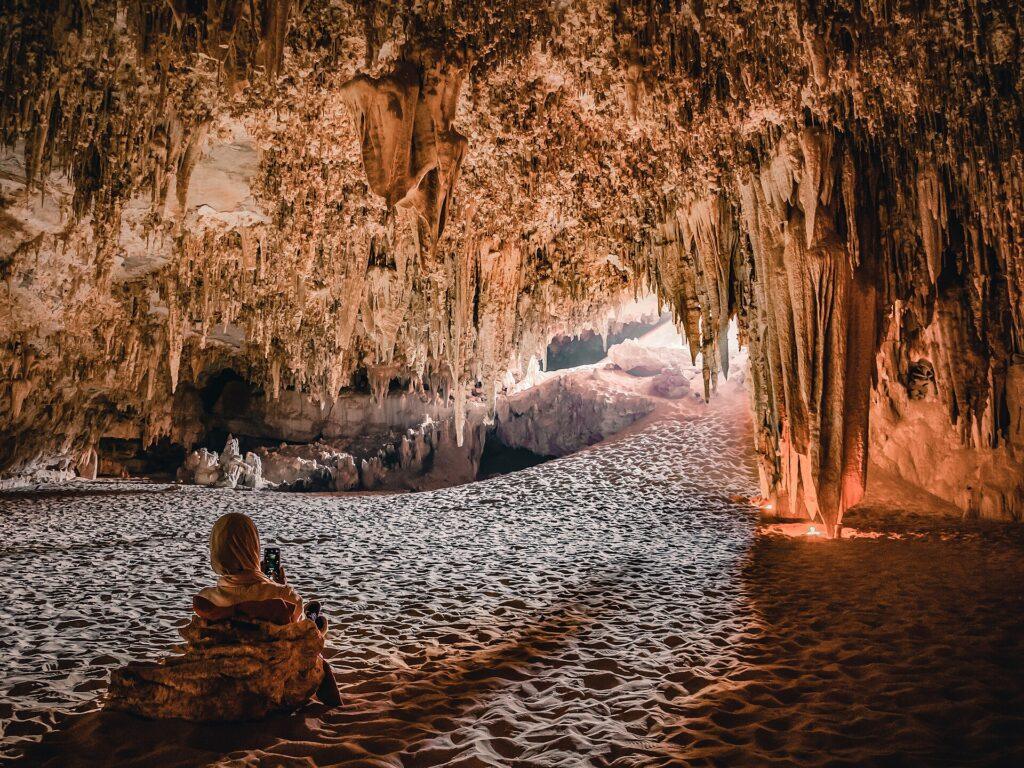
The substantial dripstone formations are striking against the reality of the extremely dry desert above.
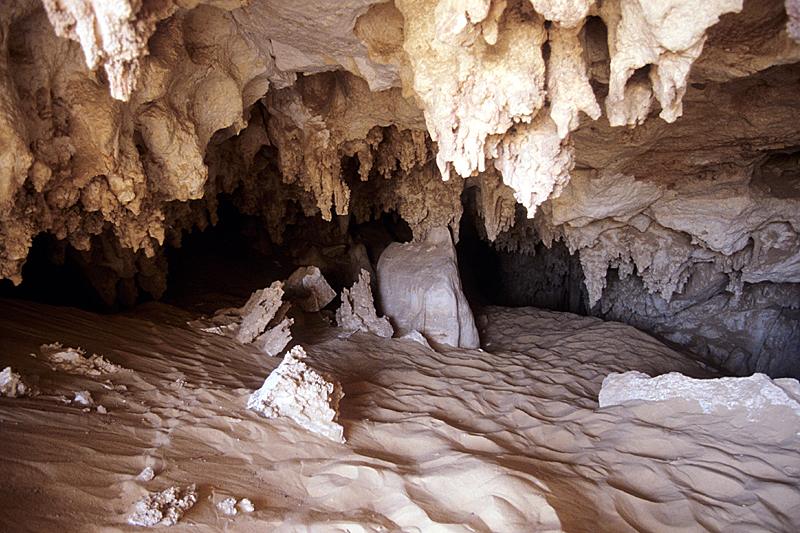
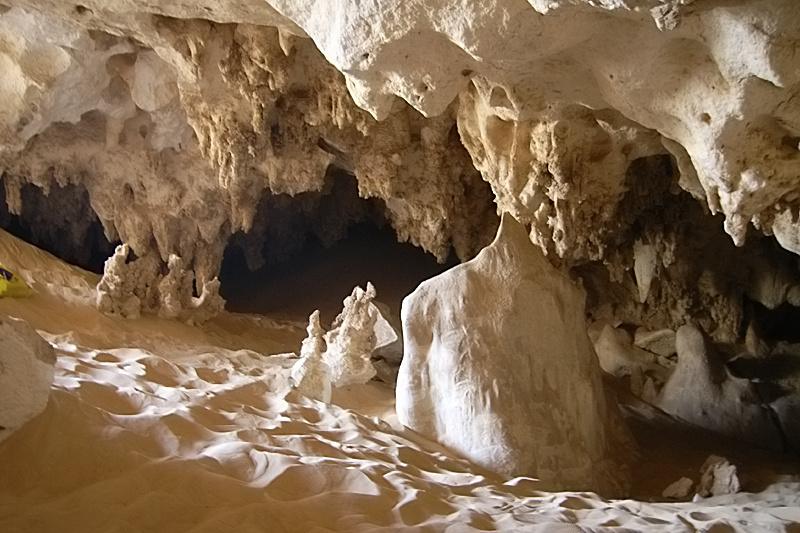
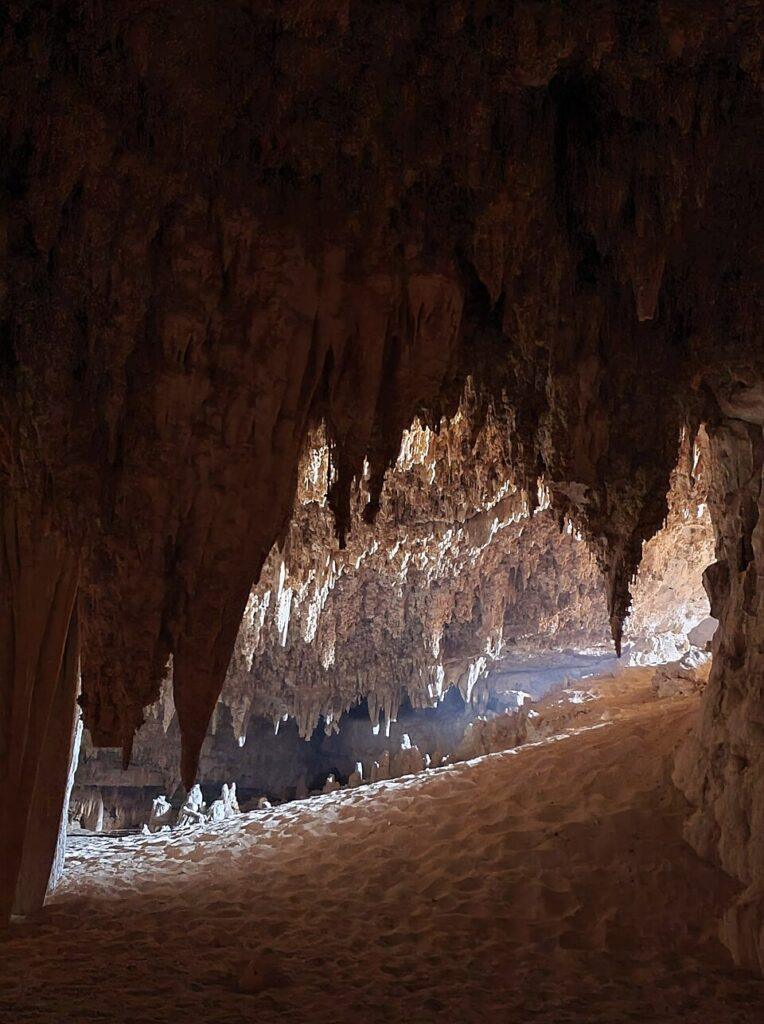
Stalactites descend from the ceiling and stalagmites rise from the cave floor. Elsewhere, formations have developed into columns and deposits of flowstone. Researchers have documented formations reaching several meters in height.
They are remnants of climatic conditions very different from those outside the cave today. Enough water once moved through the limestone for mineral deposits to accumulate slowly, creating formations that survived as the environment above them became increasingly arid.
The Cave Formations Are Far Older Than the Rock Art
The stalactites and engravings aren’t evidence from the same wet period.
Geological dating of sampled cave formations has placed them roughly between 140,000 and 283,000 years ago. Prehistoric human activity documented at Djara comes much later, during wetter periods of the early and middle Holocene.
By the time people were using the cave, its major dripstone formations were already ancient.
That distinction is easy to miss when Djara is described simply as evidence of a “greener Sahara.” North Africa experienced more than one humid phase, and the cave preserves evidence from very different periods.
THE ROCK ART AND CAVE FORMATIONS ARE NOT THE SAME AGE
The formations you see inside Djara were already ancient when prehistoric people began using the cave. They preserve evidence from different wet periods in the Western Desert’s past.
The Prehistoric Rock Art of Djara
Djara’s engravings are one of the main reasons archaeologists have taken such an interest in the cave.
Researchers have documented animals, human representations and geometric or abstract forms carved into its surfaces. The published archaeological study of Djara’s cave art also shows why its location inside a true cave is important: most known rock art in this part of the Western Desert occurs in rock shelters rather than deeper cave environments.
Some of the more unusual figures have been debated by researchers, and that’s one area where it’s better not to turn an interpretation into a fact. We don’t know exactly what every figure represented to the people who made it.
What archaeologists can establish is that prehistoric people deliberately marked the cave walls.
The location makes those engravings particularly interesting. Much of the prehistoric rock art known from the Sahara survives on exposed rock surfaces or in shelters. Djara gives us something less common: engravings within a substantial cave.
People Were Using This Desert Thousands of Years Ago
The rock art is only part of the evidence.
Archaeological surveys have documented numerous early- and middle-Holocene sites across the wider Djara area. Researchers have found stone tools and other archaeological material, and excavations inside the cave revealed an ash-rich occupation layer.
Radiocarbon evidence places human activity in the cave roughly between 7000 and 6200 BC.
The Western Desert wasn’t another Nile Valley at the time. It was, however, wetter than it is now. Conditions allowed prehistoric communities to use areas that today are extremely arid.
Finding so many archaeological sites around Djara also changes how you look at the cave. This wasn’t simply one unusual place that somebody happened to find in an otherwise empty desert. It was part of a landscape people returned to and used over a long period.
Who Recorded Djara Cave?
German explorer Gerhard Rohlfs recorded Djara during his 1873 expedition across the Western Desert between Asyut and Farafra.
It would be misleading to say Rohlfs “discovered” the cave. His caravan was led through a landscape already known to local people. What he left was an early European written description of Djara.
Rohlfs described an impressive dripstone cave, but he doesn’t appear to have recognized or recorded the prehistoric engravings that would later attract archaeological attention.
More than a century later, desert traveler Carlo Bergmann relocated Djara in 1989. He reported engravings inside the cave and stone artifacts around its entrance.
Archaeologists subsequently began investigating Djara and eventually expanded their work into the surrounding desert. The result is a much fuller picture than the cave alone could provide, with evidence of repeated prehistoric activity across the wider area.
Egypt Is Moving to Protect Djara
Djara received renewed official attention in October 2026, when Egypt’s environmental authorities inspected the cave and surrounding area as part of preparations to designate it the country’s 32nd natural protectorate.
The designation was still being prepared at the time of that announcement; it had not yet been presented as completed.
The Egyptian Environmental Affairs Agency’s announcement about Djara discusses the area’s geological and archaeological importance and plans for protecting it while allowing responsible visitation. Environmental assessment, management and access to the area are among the issues being considered.
For anyone planning a trip, the practical consequence is simple: don’t rely on an old blog post or trip report to tell you what access requires now. Arrangements may change as the protection and management process develops.
Can You Visit Djara Cave?
Travelers and archaeological expeditions have reached Djara, but current access should be confirmed before planning a trip around the cave.
Its remoteness alone demands more preparation than a normal sightseeing day. Access involves desert tracks, and conditions can affect the route. A vehicle problem or navigation mistake this far into the Western Desert is a very different situation from breaking down on a paved road between established destinations.
Egypt is also considering formal protected status and management of the area, so procedures that applied to previous visitors may not remain the same.
CHECK ACCESS BEFORE YOU PLAN AROUND DJARA
Don’t rely on an older blog or trip report for permit or access information. Confirm whether Djara is accessible for your actual travel dates before building the rest of your Western Desert itinerary around it.
Getting to Djara
A trip to Djara requires an appropriate 4×4, serious desert planning and people who know the area.
It also shouldn’t be squeezed into an already full Bahariya sightseeing day. Going this far into the desert means thinking about the route, fuel, water, supplies, vehicle condition and communications rather than simply calculating the distance on a map.
For the same reason, I wouldn’t put a fixed driving time on the journey. The starting point, route, desert conditions and current access arrangements all matter.
Djara is better treated as an extension within a longer Western Desert journey.
What Is It Like Inside Djara?
Outside the cave, you’re surrounded by the exposed limestone plateau. Once inside, the natural light quickly drops away and the scale of the experience becomes much smaller: cave walls, rock underfoot, formations overhead and engravings that can be surprisingly easy to miss if you don’t know where to look.
This is still a natural cave rather than a visitor attraction designed around easy movement. Footing can be uneven and lighting is limited.
Anyone with significant mobility limitations should take that into account before deciding to make the journey. Getting all the way to Djara only to discover that the cave environment itself is difficult for you would be a frustrating outcome.
Photography also needs some restraint. A better photograph isn’t worth touching an engraving or cave formation, moving something archaeological, or doing anything else that could damage the site.
Can You Combine Djara With Bahariya and the White Desert?
For most travelers interested in Djara, adding it to a longer Western Desert trip makes far more sense than trying to arrange a journey solely for the cave.
That doesn’t mean adding “Djara Cave” as one more line to a standard Bahariya and White Desert itinerary.
The extra distance and logistics change the trip, and access has to be confirmed. Depending on the itinerary, additional time may be needed so the cave doesn’t turn the rest of the desert journey into a rush.
If Djara is a priority, I would plan the extension around it rather than try to squeeze it between the usual Bahariya stops.
Leave Djara as You Found It
Cave formations grow extraordinarily slowly. Once one is broken, there is no practical way to put it back.
The prehistoric engravings are just as irreplaceable.
Don’t carve names or symbols into the walls. Don’t trace engravings with your fingers. Don’t break or remove formations, collect archaeological material or take stones as souvenirs. Even repeated touching can leave oils and dirt on cave formations and archaeological surfaces.
Djara survived thousands of years before modern tourism reached it. Growing interest in the cave makes careful visitation more important, not less.
Frequently Asked Questions
Is Djara Cave in Bahariya Oasis?
No. Djara is on the limestone plateau deeper in Egypt’s Western Desert, roughly between the Nile Valley around Asyut and Farafra. It may be possible to incorporate it into a longer Western Desert journey that includes Bahariya, but the cave itself isn’t in Bahariya Oasis.
Is there prehistoric rock art inside Djara Cave?
Yes. Archaeologists have documented prehistoric engravings inside Djara, including animal and human representations along with other forms. Evidence from the cave and surrounding area also shows prehistoric human activity during wetter periods of the early and middle Holocene.
How old is Djara Cave?
There isn’t one age that applies to everything you see at Djara. Sampled cave formations have been dated to roughly 140,000 to 283,000 years ago. The documented prehistoric human activity is much younger.
Do you need permission to visit Djara Cave?
Current access requirements should be confirmed before travel. In October 2026, Egyptian environmental authorities inspected Djara as part of preparations to designate the area a natural protectorate. As the protection and management process develops, older information about permits or unrestricted access may no longer be reliable.
Can I add Djara Cave to a Bahariya trip?
Potentially. Djara requires additional time and desert logistics, so it shouldn’t simply be inserted into a standard Bahariya itinerary. Access also needs to be confirmed before the extension is finalized.
Want to Add Djara Cave to a Bahariya Trip?
If you’re planning a Bahariya and Western Desert journey and would like to include Djara, we can look at adding the cave as an extension to the trip.
We’ll first need to confirm whether Djara is accessible for your travel dates. If it is, we can work out the additional time and desert logistics rather than squeezing it into the standard Bahariya itinerary.
Contact Explore ENA and tell us you’d like to include Djara when you plan your Bahariya trip. We’ll check the current access situation before we build it into your itinerary.