Philae Temple Guide (2026): Boat Trip, What to See & Visiting Tips
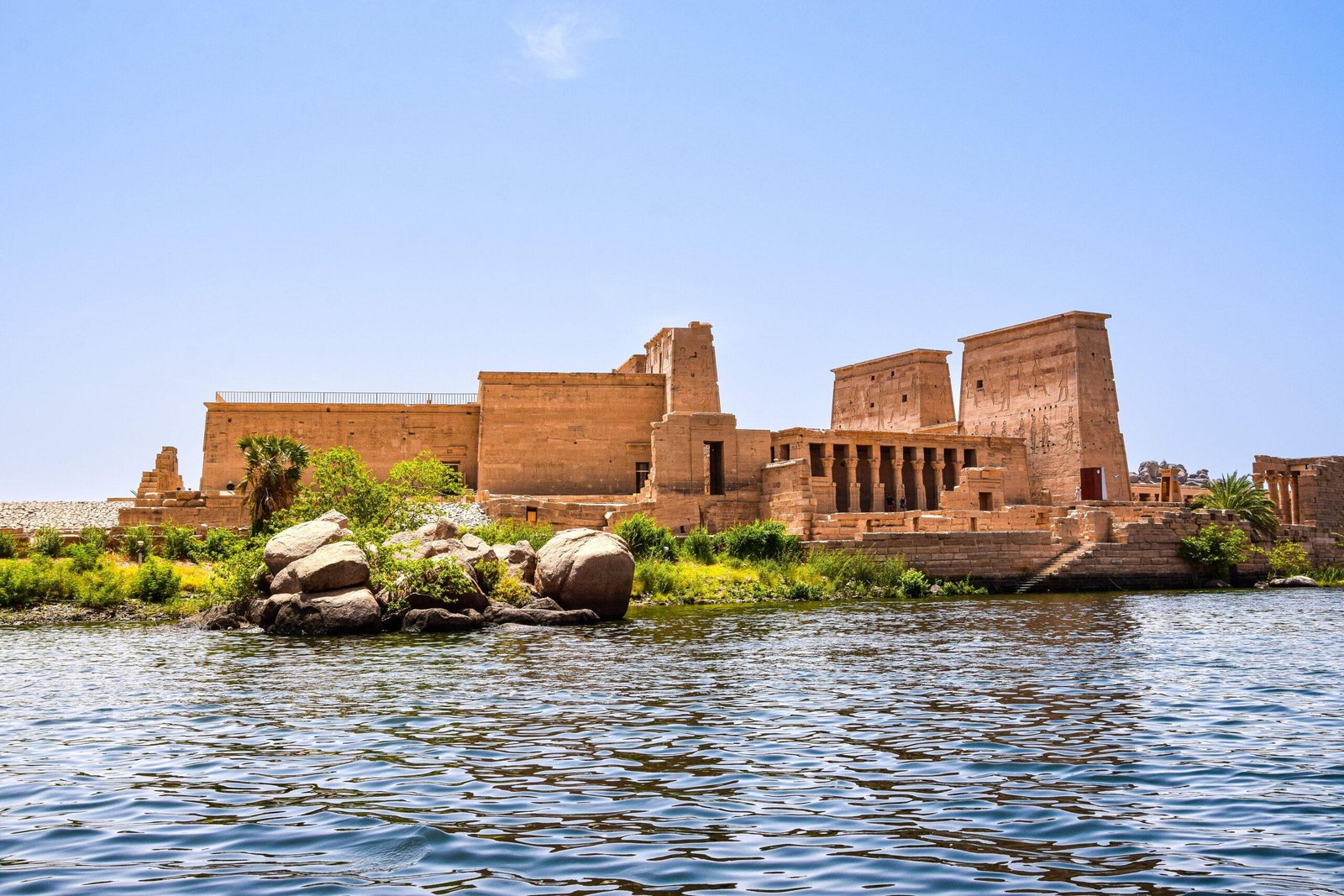
Philae is one of the few major archaeological sites in Egypt where the visit begins before you reach the monument. You do not simply drive to a gate, buy a ticket, and walk inside. The temple complex sits on Agilkia Island south of Aswan, so every visit involves road transport to the marina, archaeological-site admission, and a separate boat crossing before you reach the first colonnade.
That extra logistics layer is not a drawback, but it needs to be understood in advance. The boat ride is part of the appeal: the temple appears gradually above the water, framed by granite islands and the Nile landscape around Aswan. At the same time, boat pricing can be less standardized than the temple ticket itself, and travelers who arrive independently can lose time negotiating before the visit has even started.
For most visitors, allow around 2.5 to 3 hours from arrival at the marina to return, rather than budgeting only the 60–90 minutes you intend to spend inside the temple. The archaeological visit itself is compact, but buying tickets, arranging the boat, crossing in both directions, waiting at the dock, and taking photographs all add time.
Expert Insight: The strongest Philae visit is not the one with the longest temple tour. It is the one where the boat, ticket, and timing are already understood before you arrive, leaving the island itself calm enough to appreciate properly.
Quick Planning
| Planning point | Best default |
|---|---|
| Location | Agilkia Island, south of central Aswan |
| Access | Motorboat from the mainland marina |
| Current official hours | 7:00 AM–4:00 PM daily |
| Boat fare | Separate in normal independent visits; confirm before boarding |
| Time on island | Around 1–1.5 hours |
| Realistic total visit | 2.5–3 hours including boats and marina |
| Best time | Early morning |
| Main priority | Temple of Isis |
| Other highlights | Trajan’s Kiosk, Nectanebo I kiosk, Temple of Hathor, Hadrian’s Gate |
| Shade | Partial inside buildings and colonnades; exposed areas remain hot |
| Guide value | High for Isis cult, Ptolemaic/Roman context, and relocation story |
| Best pairing | Another Aswan sight, not an overloaded full-day circuit |
The Egyptian Ministry of Tourism and Antiquities currently lists Philae as open daily from 7:00 AM to 4:00 PM.
Philae Is on Agilkia Island, Not the Original Philae Island
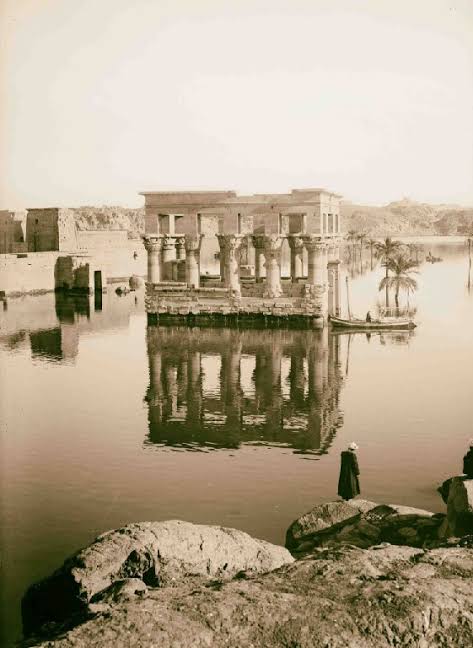
The monuments you visit today are authentic ancient structures, but they are no longer standing in their original location.
The historic sanctuary occupied Philae Island, which began suffering regular inundation after construction of the first Aswan Dam at the beginning of the twentieth century. The later High Dam project threatened the wider Nubian archaeological landscape with permanent flooding.
UNESCO’s International Campaign to Save the Monuments of Nubia, launched in 1960, led to the rescue of major sites from Aswan south toward the Sudanese border. Philae was eventually dismantled and reconstructed on the nearby, higher Agilkia Island. UNESCO records that the Philae monuments were transferred there between 1972 and 1979.
The relocation was not simply a matter of moving a handful of statues. The sanctuary complex was documented, dismantled, and rebuilt in a landscape reshaped to resemble the setting of the original island.
That story matters when you arrive by boat because the water surrounding the complex can make Philae look as though it has always occupied this island.
It has not.
UNESCO now lists Philae on Agilkia Island as one component of the World Heritage Site Nubian Monuments from Abu Simbel to Philae.
Getting to Philae Requires Two Separate Journeys
From a hotel or Nile cruise in Aswan, you first travel by road toward the Philae marina south of the city.
The exact driving time depends on where you are staying and Aswan traffic, but the road portion is straightforward.
The important transition comes at the marina.
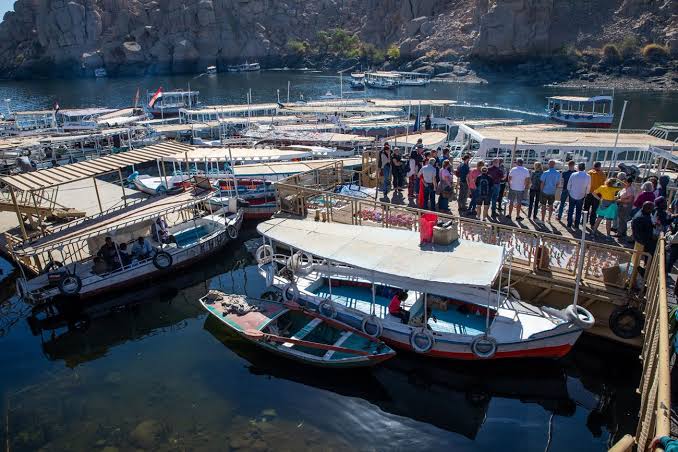
You purchase or confirm your archaeological admission, then take a small motorboat across to Agilkia Island. The Ministry’s own Aswan guide describes Philae as being reached by boats hired for the purpose.
The crossing itself is short, but factor in time for arranging a boat and coordinating your return.
If you are visiting with a tour, the boat may already be arranged.
If you are traveling independently, do not assume the archaeological ticket automatically includes your private daytime boat transfer unless the ticket or booking explicitly says so.
The Boat Fare Is the Practical Detail Most Likely to Cause Confusion
The archaeological ticket has an official published price.
The boat transfer is less straightforward.
Instead, confirm three things before boarding: whether the quoted amount covers the whole boat or each passenger, whether it includes the return journey, and how long the boatman will wait while you visit the island.
Agree on the total amount before leaving the dock.
Expert Tip: If you’re visiting independently, treat the temple ticket and boat negotiation as two separate transactions. A quoted “Philae price” means very little until you know exactly which of those two it includes.
The Boat Ride Is More Than Transportation
Once the practical arrangement is settled, the crossing becomes one of the most enjoyable approaches to an Egyptian temple.
Philae is not revealed from a parking lot.
As the boat moves between rocky islands, the columns and temple walls gradually appear across the water. That separation from roads and city traffic is one of the reasons Philae feels different from Karnak, Luxor Temple, or Edfu.
It is also one of the strongest photography opportunities of the visit.
Do not put your camera away after boarding. The broadest view of the temple complex often comes from the water, when enough distance remains to see the buildings in relation to the island.
Ask your boatman before assuming they will slow or stop for photographs. If photography is important, agree on that expectation at the marina rather than trying to negotiate it halfway through the crossing.
The Temple of Isis Is the Main Reason You Are Here
The principal sanctuary at Philae is the Temple of Isis.
Most of what survives belongs to the Ptolemaic and Roman periods rather than the era of Egypt’s great New Kingdom temple builders. The Ministry notes that much of the main temple was constructed and decorated during the third and second centuries BC.
That later date does not make Philae less important.
By this period, Isis had become one of the Mediterranean world’s most widely revered deities. Her cult extended far beyond Egypt, and Philae became one of its most important sanctuaries.
The visit unfolds through pylons, courts, colonnades, side chambers, and increasingly restricted sacred spaces.
If your time is limited, prioritize the main Temple of Isis rather than circling the island collecting every secondary structure.
Look at the First Pylon Before Walking Through It
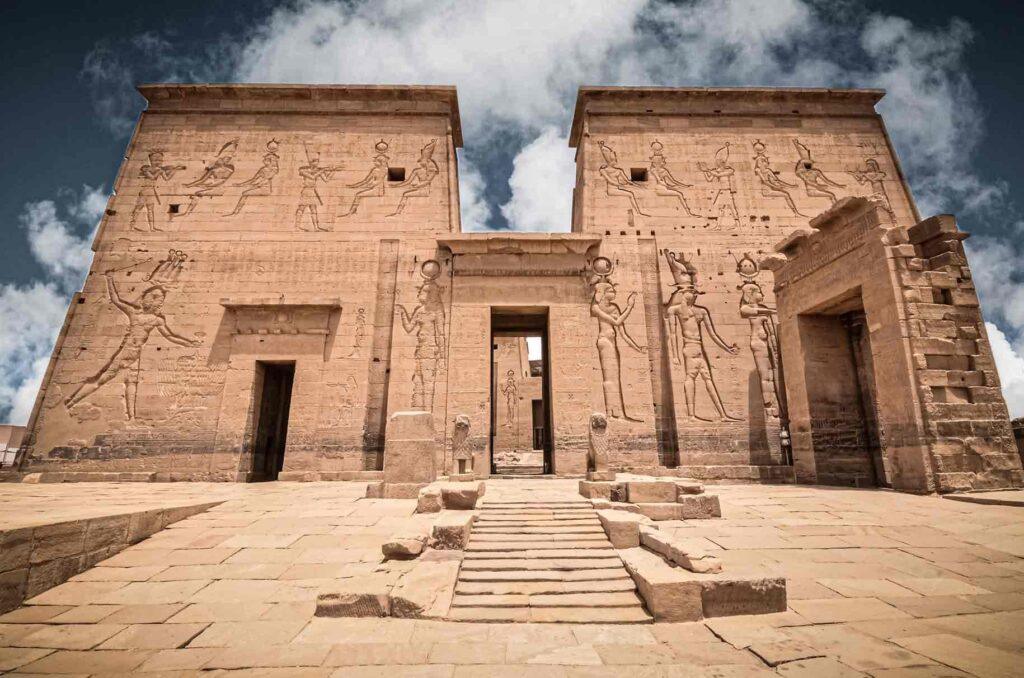
The monumental first pylon is one of the temple’s strongest exterior surfaces.
Stand back before entering.
The reliefs present rulers in the established visual language of Egyptian kingship, even though many of the rulers responsible for constructing and decorating Philae were members of the Greek-speaking Ptolemaic dynasty.
This is an important idea to understand.
Ptolemaic rulers did not build Philae as a Greek temple transplanted into Egypt. They represented themselves within Egyptian religious traditions, offering to Egyptian gods and using pharaonic forms of kingship.
Without that context, visitors sometimes divide Egyptian history too sharply into “pharaonic” and “Greek” periods. Philae shows how much continuity remained within temple religion and royal imagery.
The Inner Temple Is More Important Than Photographing Every Court
As you move deeper into the Temple of Isis, spaces become smaller and more enclosed.
This progression is deliberate.
Egyptian temples generally moved from open and publicly accessible areas toward increasingly restricted sacred zones. The sanctuary was the ritual center rather than simply another room at the far end.
Look for the change in light.
Outside, the Aswan sun can be extremely harsh. Inside, narrow doorways, thick walls, and smaller chambers create a much darker experience.
This is also where a guide earns their value.
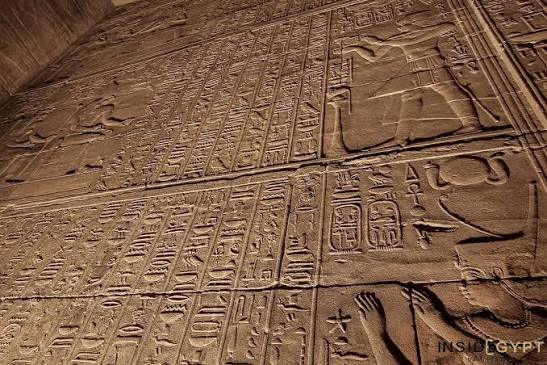
Without interpretation, many reliefs can blur together into repeated images of rulers presenting offerings to deities. A strong Egyptologist should explain selected scenes rather than attempt to translate every wall.
The objective is to understand how Isis was worshipped here, not to memorize a catalogue of ritual poses.
Trajan’s Kiosk Is the Island’s Most Photogenic Secondary Monument
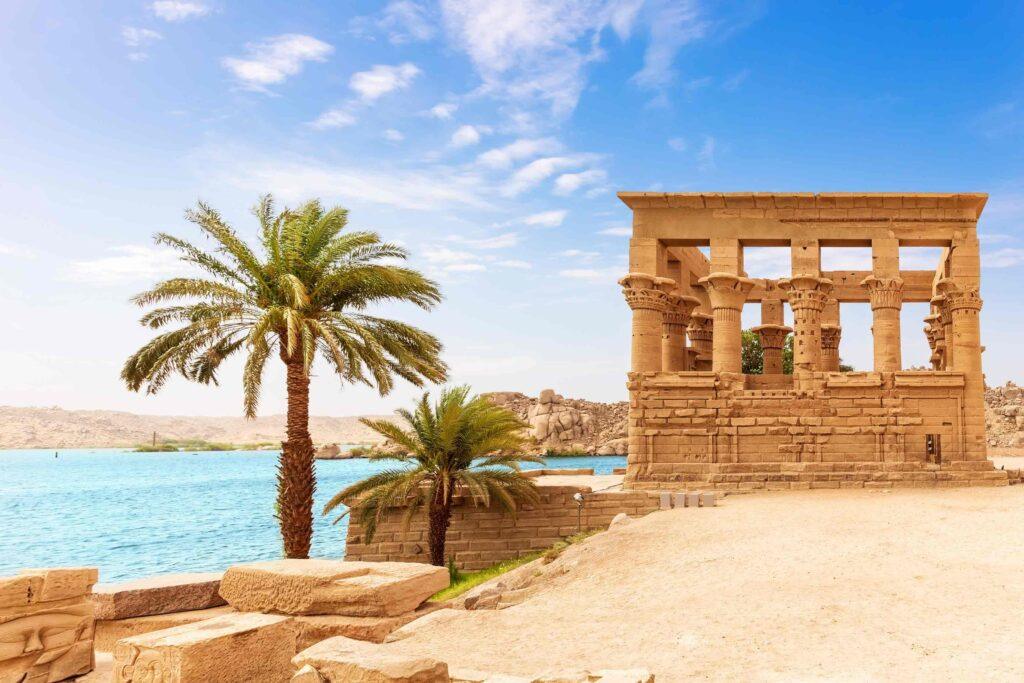
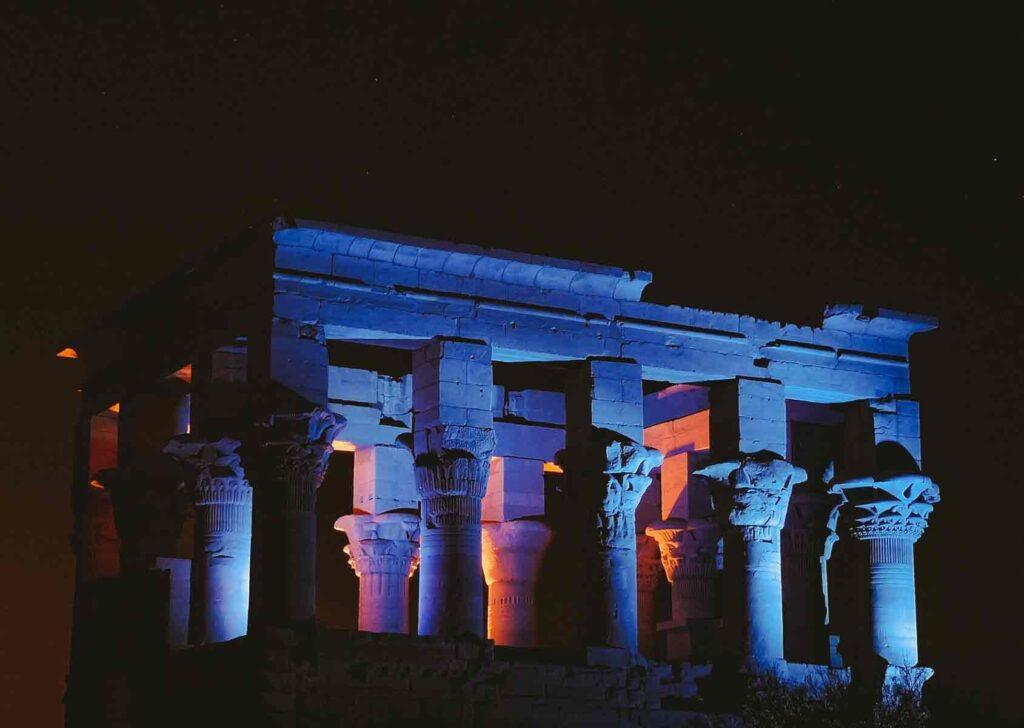
The Kiosk of Trajan sits closer to the water and has become one of Philae’s most recognizable structures.
Its open arrangement of columns gives it a very different character from the heavy enclosed pylons of the Isis temple.
The Ministry dates it to the reign of the Roman emperor Trajan, AD 98–117, and notes that the roof has disappeared. Reliefs show the emperor making offerings to Isis, Osiris, and Horus.
Again, notice the cultural continuity.
Trajan was a Roman emperor, but inside this Egyptian sanctuary he appears participating in Egyptian ritual imagery.
The kiosk is particularly strong photographically when viewed from the side, where the columns can be framed against the water.
Do not leave it for the final thirty seconds because your boatman is already waiting.
Nectanebo I’s Kiosk Takes You Earlier Than Most of the Complex
Philae is usually associated with Ptolemaic and Roman Egypt, but the island includes earlier material.
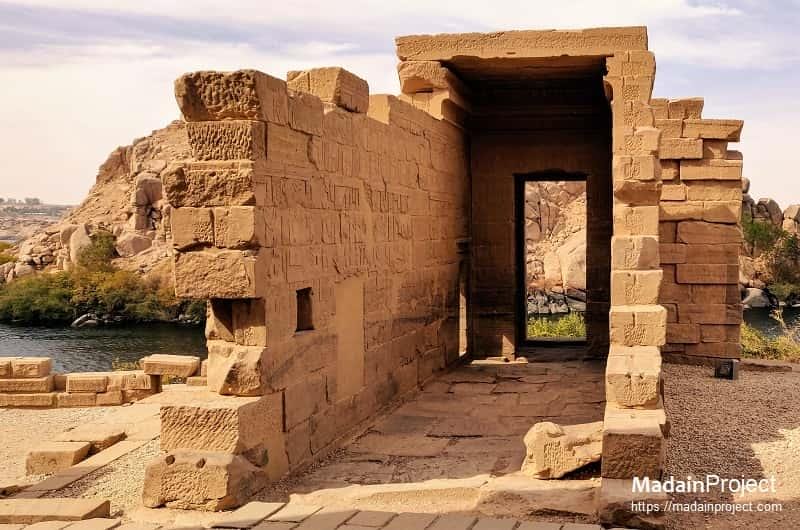
The Kiosk of Nectanebo I, dating to approximately 380–362 BC, is identified by the Ministry as the island’s earliest surviving structure.
It is worth noticing precisely because it disrupts the idea that Philae was built all at once.
Like Karnak, though on a far smaller scale, Philae accumulated architecture across different rulers and political eras.
You do not need a long stop here. A few minutes is enough to place the structure chronologically before continuing toward the dominant Ptolemaic sanctuary.
The Temple of Hathor Adds a More Intimate Stop
The Temple of Hathor is smaller than the main Isis sanctuary and easy to overlook.
That makes it useful.
After the monumental pylons and courts, its smaller scale gives you a chance to look more closely at decorative details without the same visitor concentration.
Hathor was associated with music, joy, fertility, motherhood, and divine femininity, making her an entirely appropriate presence within a complex centered on Isis.
If your guide is rushing directly from the main temple to Trajan’s Kiosk, ask whether the Hathor temple is open and worth including on the day.
It does not need fifteen minutes of explanation. It does deserve more than being walked past without recognition.
Hadrian’s Gate Is Historically Important for a Different Reason
The so-called Gate of Hadrian is another secondary structure worth knowing about before you visit.
Its historical significance extends beyond architecture because the Philae complex preserves some of the latest known hieroglyphic inscriptions from ancient Egypt.
This matters because Philae remained an important religious center unusually late.
The temple complex therefore helps visitors understand not only the endurance of Egyptian religion under Greek and Roman rule but also its eventual transformation in the Christian period.
UNESCO notes that the sanctuary of Isis was later converted for Christian use, while the wider site preserves evidence of subsequent religious occupation.
That later history is interesting, but it should support rather than overwhelm the visit. The main archaeological experience remains the sanctuary of Isis.
How Long Should You Spend on the Island?
Around 90 minutes is enough for most first-time visitors.
That gives you time for the Temple of Isis, Trajan’s Kiosk, several secondary structures, photography, and a few moments simply looking across the water.
A focused visitor can see the essentials in about an hour.
Travelers with a strong interest in Ptolemaic religion, architecture, inscriptions, or photography may want closer to two hours.
The crucial distinction is between time on the island and total excursion time.
From marina arrival to marina return, two and a half to three hours is a safer planning figure.
Go Early Because the Island Has Limited Escape From Aswan’s Heat
Philae is surrounded by water, but do not assume the island remains cool.
Aswan can be intensely hot, particularly from late spring through early autumn. Large parts of the complex are exposed, and stone surfaces accumulate heat as the day progresses.
The official opening time of 7:00 AM is worth using.
Early arrival also improves photography. The light is softer across the pylons, the boat approach is more pleasant, and you have a better chance of experiencing courtyards before larger guided groups accumulate.
Inside the temple there is meaningful shade, but the island route repeatedly moves back into open sun.
Carry water, use sun protection, and do not schedule Philae after several hours outdoors simply because it looks compact on a map.
Photography Is Best From Three Different Distances
Philae rewards photography at three stages.
The first is from the boat, before landing. This is where the relationship between architecture, island, water, and granite landscape is clearest.
The second is from the approach to the Temple of Isis, where pylons and colonnades create stronger architectural compositions.
The third is around Trajan’s Kiosk, particularly when columns can be isolated against open water.
Inside, focus on selected reliefs rather than attempting to photograph every wall. The variation between intense exterior light and dim temple interiors can be significant, so mobile phones and cameras may need exposure adjustment.
Current official visitor information does not publish a detailed photography rule set on the main Philae page. Treat any restrictions posted at the site as controlling and avoid flash where prohibited.
Commercial photography and drones should never be assumed to fall under ordinary tourist photography rules.
Accessibility Begins With the Boat, Not the Temple
This is one of the most important practical differences between Philae and many land-based archaeological sites.
The first accessibility issue is boarding the small motorboat.
Independent accessibility sources disagree somewhat on how manageable Philae is with assistance. Some describe the main island routes as relatively manageable, while others emphasize steps, uneven stone, ancient thresholds, and the difficulty of independent boat boarding.
Because there is no sufficiently detailed official accessibility map publicly available, travelers with significant mobility limitations should not assume step-free independent access.
Arrange assistance in advance through your guide, hotel, cruise operator, or local organizer.
Ask specifically about transferring into the boat, disembarking on Agilkia Island, wheelchair handling, and which temple interiors can be reached.
A generic statement that “Philae is accessible” is not enough.
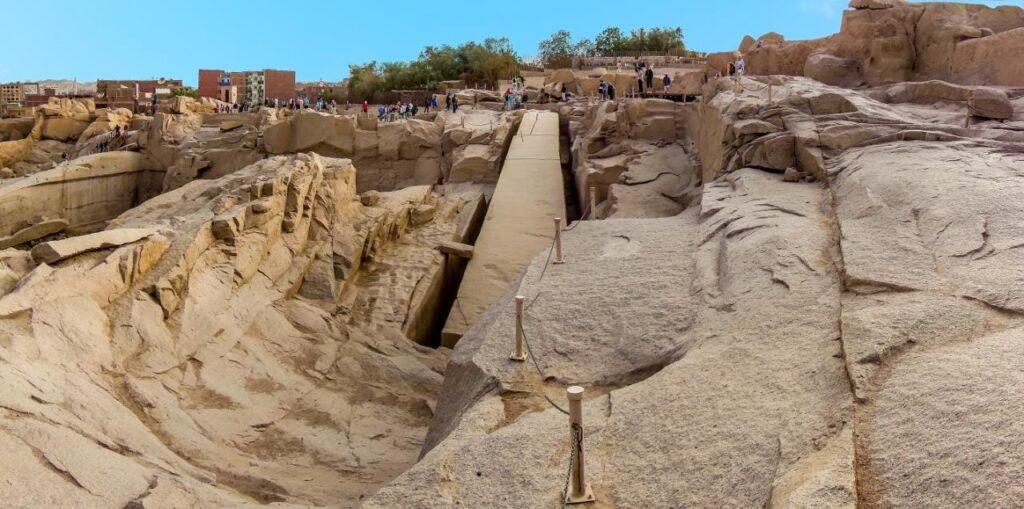
Philae Works Particularly Well With the Unfinished Obelisk
If you want to combine Philae with another Aswan archaeological site, the Unfinished Obelisk is one of the most logical choices.
The experiences complement each other.
At the quarry, you see how enormous granite monuments were being cut directly from Aswan’s bedrock.
At Philae, you see finished temple architecture assembled from monumental stone in a sacred landscape.
Together they create a clearer picture of Aswan’s importance as both a religious region and a major source of building stone.
The pairing also works logistically without consuming the entire day.
See our Aswan Travel Guide for more information on Aswan.
Philae and the High Dam Are Connected Historically, but Don’t Let That Dictate Your Day
Tour itineraries frequently pair Philae with the Aswan High Dam because the modern dam project is directly connected with the rescue of Nubian monuments.
The historical connection is valid.
The High Dam contributed to the conditions that required an international campaign to save Philae, Abu Simbel, and other Nubian monuments.
But that does not mean every traveler needs to spend substantial sightseeing time at the dam.
If modern engineering interests you, add it.
If your priority is archaeology, protect more time for Philae or the Nubian Museum rather than assuming a standard tour-company sequence is automatically the best use of the day.
Don’t Combine Philae and Abu Simbel Just Because Both Are South of Aswan
This is a more serious itinerary mistake.
Abu Simbel is not another nearby Aswan temple.
A conventional road visit to Abu Simbel involves a long journey south and an early start. Adding Philae afterward can technically be done, but by then travelers have already spent hours on the road and significant time under the Nubian sun.
That often turns one of Aswan’s most atmospheric temples into an exhausted final stop.
If your itinerary has enough nights in Aswan, separate them.
Use our Abu Simbel Guide for the decision about road versus air access, departure times, heat, crowds, and how much of a day the excursion genuinely consumes.
Philae deserves at least one part of a day when you are not simply counting down to your hotel.
Philae Fits Naturally Before or After a Nile Cruise
For travelers beginning or ending a Nile cruise in Aswan, Philae is one of the easiest major sites to build around embarkation logistics.
The important question is your cruise schedule.
Do not assume “embarkation day” means you have an unrestricted afternoon. Cruise check-in, lunch, sailing times, and organized excursion programs vary.
If you arrive in Aswan the day before embarkation, Philae works particularly well as an early-morning visit while the city is still relatively quiet.
If your cruise ends in Aswan, avoid booking an independent Philae visit too tightly against disembarkation or onward transport.
Our Nile Cruise Guide should handle the broader question of how much independent sightseeing belongs before, during, or after the cruise itinerary.
Should You Visit With an Egyptologist?
A guide is useful here, but not because Philae is difficult to navigate.
The physical route is straightforward.
The value comes from understanding why Isis mattered, how Ptolemaic and Roman rulers represented themselves in Egyptian form, what changed across the different building periods, and how Philae remained religiously important so late.
A good Egyptologist can also explain the relocation without allowing the entire visit to become a lecture about UNESCO engineering.
That balance matters.
You should leave understanding both the ancient sanctuary and the modern rescue, but the relocation story should not eclipse what the temple was built to do in antiquity.
Is the Philae Sound & Light Show Worth It?
Philae’s Sound & Light Show offers a completely different version of the island.
The official operator currently lists shows beginning around 8:00 PM and 9:00 PM, with language schedules changing by day.
The strongest part of the experience may be the setting itself.
Approaching an illuminated island by boat after dark is very different from arriving under the morning sun.
But the show should be treated as an additional evening experience, not a replacement for a daytime visit if archaeology is your priority.
Daylight is far better for examining reliefs, architectural relationships, and secondary monuments.
Common Mistakes at Philae
The most common mistake is budgeting only the temple time and forgetting the marina and boat logistics.
The second is failing to establish the boat fare clearly before departure. Confirm whether the price is for the boat or passenger, whether it includes the return, and how long the driver will wait.
Another mistake is arriving around midday in the warmer months after already visiting multiple outdoor sites. Philae feels beautiful from the boat, but the island itself remains exposed to Aswan’s sun.
Travelers also frequently overfill the same day with the High Dam, Unfinished Obelisk, Nubian Museum, Nubian Village, felucca ride, and Philae because tour listings make those names appear close and efficient.
They are geographically manageable.
That does not mean they are experientially sensible in one uninterrupted block.
Frequently Asked Questions
Is the Philae Temple ticket separate from the boat?
For a normal independent daytime visit, treat them as separate unless your booking specifically states otherwise. The Ministry publishes an archaeological-site admission fee but describes access to Agilkia as being by hired boat. Recent independent travelers continue to report negotiating or separately paying for daytime motorboat transfers.
How long does a Philae visit take?
Allow around 90 minutes on Agilkia Island and approximately 2.5 to 3 hours overall once marina arrangements and boat transfers are included. Independent visits can take longer if you need to organize transportation on arrival.
What are Philae’s current opening hours?
The Ministry currently lists Philae as open 7:00 AM to 4:00 PM every day.
What should I prioritize if I have limited time?
Concentrate on the Temple of Isis, then see Trajan’s Kiosk before returning to the dock. If you still have time, add Nectanebo I’s kiosk, the Temple of Hathor, and Hadrian’s Gate rather than racing equally through every structure.
Why was Philae moved?
The Nubian monuments were threatened by rising waters associated with dam construction in the Aswan region. UNESCO’s international rescue campaign led to Philae’s dismantling and reconstruction on higher Agilkia Island between 1972 and 1979.
Is Philae the original island?
No. The ancient temple complex originally stood on Philae Island. The monuments now occupy nearby Agilkia Island, which was adapted to receive the reconstructed complex.
Is Philae wheelchair accessible?
The island is not reliably step-free for independent wheelchair users. Boat transfers, uneven ancient surfaces, thresholds, and steps create practical barriers. Visitors with significant mobility limitations should arrange assistance in advance and confirm the exact boarding and island-access setup rather than relying on a generic accessibility claim.
Is Philae worth visiting if I’m also going to Abu Simbel?
Yes. The two solve completely different visitor experiences. Abu Simbel is dominated by Ramesses II’s rock-cut temples and the extraordinary relocation project there; Philae is an island sanctuary centered on Isis with strong Ptolemaic and Roman layers. The mistake is not seeing both—it is squeezing them together so tightly that Philae becomes an exhausted afterthought.
Is the Philae Sound & Light show the same as a normal visit?
No. The evening show offers illuminated architecture and narration but does not replace the archaeological visibility of a daytime visit. If history and reliefs are your priority, visit by day first and consider the evening show separately.
Philae goes wrong when travelers think the itinerary reads simply “drive to temple.” The boat must be arranged, the fare needs to be clear, and enough time has to remain after the crossing for the Temple of Isis and Trajan’s Kiosk to feel like the purpose of the journey rather than something squeezed between transfers. Explore ENA’s Aswan tours and Egypt itineraries to fit Philae into the right part of your Aswan stay, with the boat and timing handled before you reach the marina—so the island approach remains part of the experience instead of becoming the day’s main logistical problem.