Rosetta (Rashid), Egypt: What to See in the City Behind the Rosetta Stone
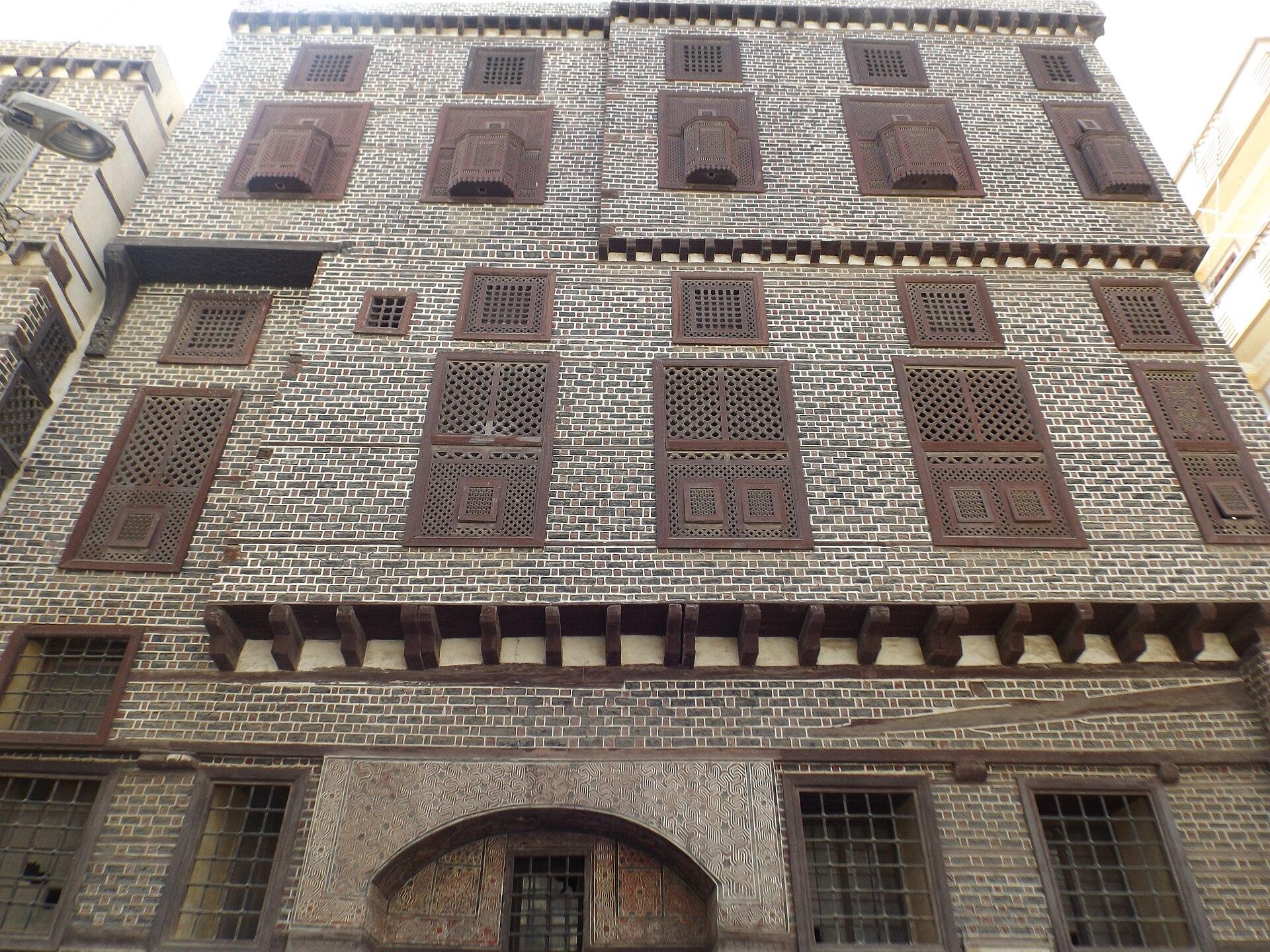
Rosetta gave its name to one of the world’s most famous archaeological discoveries, but the city has a history of its own. Known in Egypt as Rashid, this old Nile Delta port still has streets lined with Ottoman-era merchant houses. Their patterned brick facades and projecting wooden windows date from a period when Mediterranean trade brought considerable wealth to the city.
Rosetta’s historic center is best explored on foot, where the details are easy to miss from a passing car. Look up at the wooden mashrabiya windows projecting over narrow streets, the alternating colors of the brickwork and the carved entrances of houses built by the city’s merchant families.
There are also historic mosques, a traditional grain mill, a national museum and the fortress where French soldiers discovered the Rosetta Stone in 1799.
About 65 kilometers east of Alexandria, the city makes an interesting day trip for travelers who want to explore a less familiar part of northern Egypt. It receives relatively few international visitors, and some historic buildings have limited access, but there’s enough here to fill a day.
Where Is Rosetta (Rashid) in Egypt?
Rosetta lies in Beheira Governorate, on the western branch of the Nile, close to the Mediterranean coast.
Rashid is the city’s Arabic name, sometimes written Rasheed. Rosetta is the European name that became familiar internationally through the discovery of the famous stone.
Its position between the Nile and Mediterranean shaped its fortunes for centuries. Agricultural products and other goods could travel along the river, while ships connected the port with trading centers across the Mediterranean.
Alexandria is the most convenient base for a visit. If you’re planning time in northern Egypt, our guide to how many days you need in Alexandria can help you decide whether to include a separate day for Rashid.
Why Is Rosetta Famous?
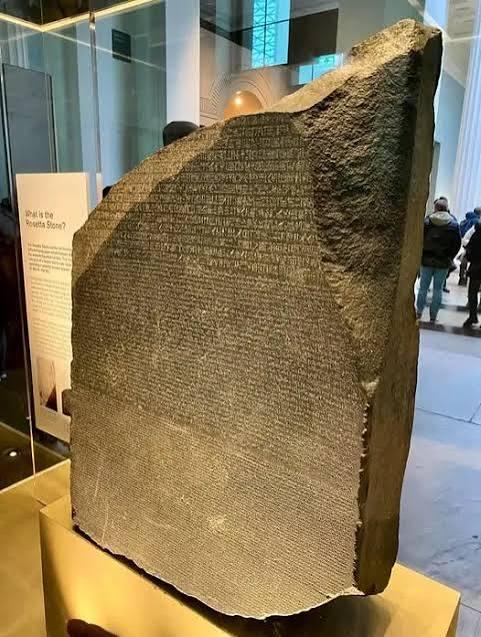
In July 1799, French soldiers working on fortifications near Rashid uncovered a broken stone slab covered with inscriptions.
The stone carried a decree issued in 196 BCE during the reign of Ptolemy V. The same decree appeared in three scripts: ancient Egyptian hieroglyphs, Egyptian Demotic and ancient Greek.
Scholars could still read Greek, giving them a starting point for understanding the Egyptian inscriptions. Thomas Young made important advances in identifying the sounds represented by certain hieroglyphs, while Jean-François Champollion’s work in 1822 established crucial principles for deciphering ancient Egyptian writing.
The discovery opened the way to reading inscriptions on temples, tombs and other monuments throughout Egypt.
The stone was found during French military work at Fort Saint Julien, a fortification near Rosetta. It had been reused as building material, although its original location in antiquity remains uncertain.
Following the French defeat in Egypt, the stone passed into British possession under the 1801 Treaty of Alexandria. It has been held by the British Museum since 1802, apart from periods when it was moved for safekeeping.
The original Rosetta Stone is in London, not Rosetta. Visitors to Rashid can see a replica at the national museum and visit the fortress associated with its discovery.
The British Museum’s Rosetta Stone collection record provides further information about the inscription and its discovery.
What to See in Rosetta, Egypt
Most of Rosetta’s historic houses, mosques and museum buildings are concentrated in the old town. The fortress is farther north, so it’s worth arranging transport for that part of the visit.
1. Walk Through Rosetta’s Historic Ottoman Houses
Rosetta’s old houses are its greatest architectural attraction.
Many were built during the 18th and 19th centuries, when merchants and officials invested in substantial residences. Several streets still contain examples of the distinctive brick architecture for which the city is known.
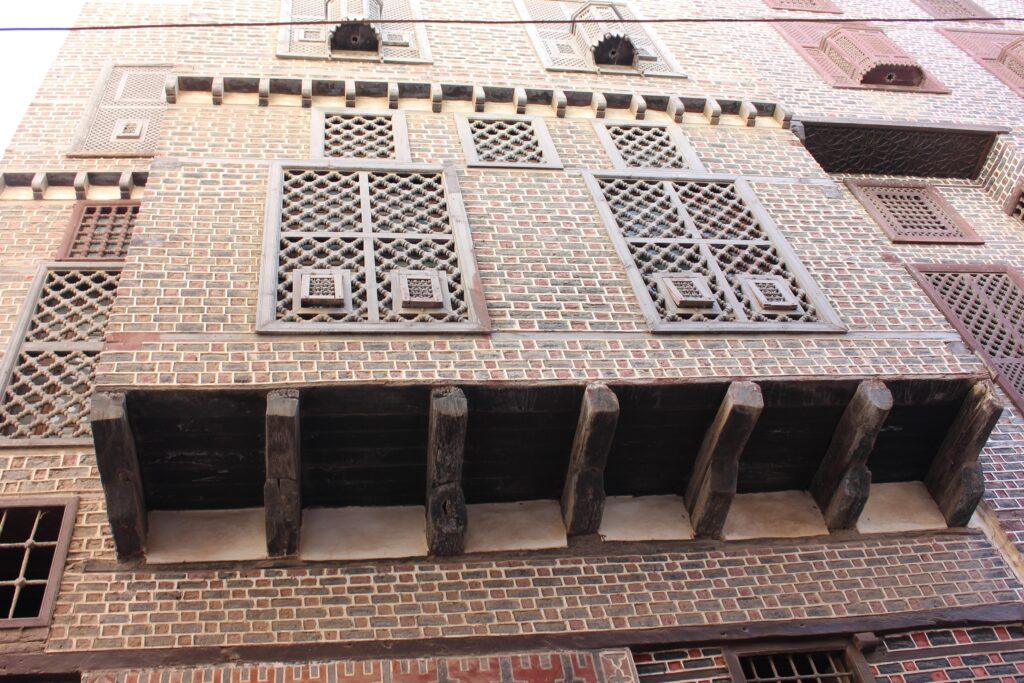
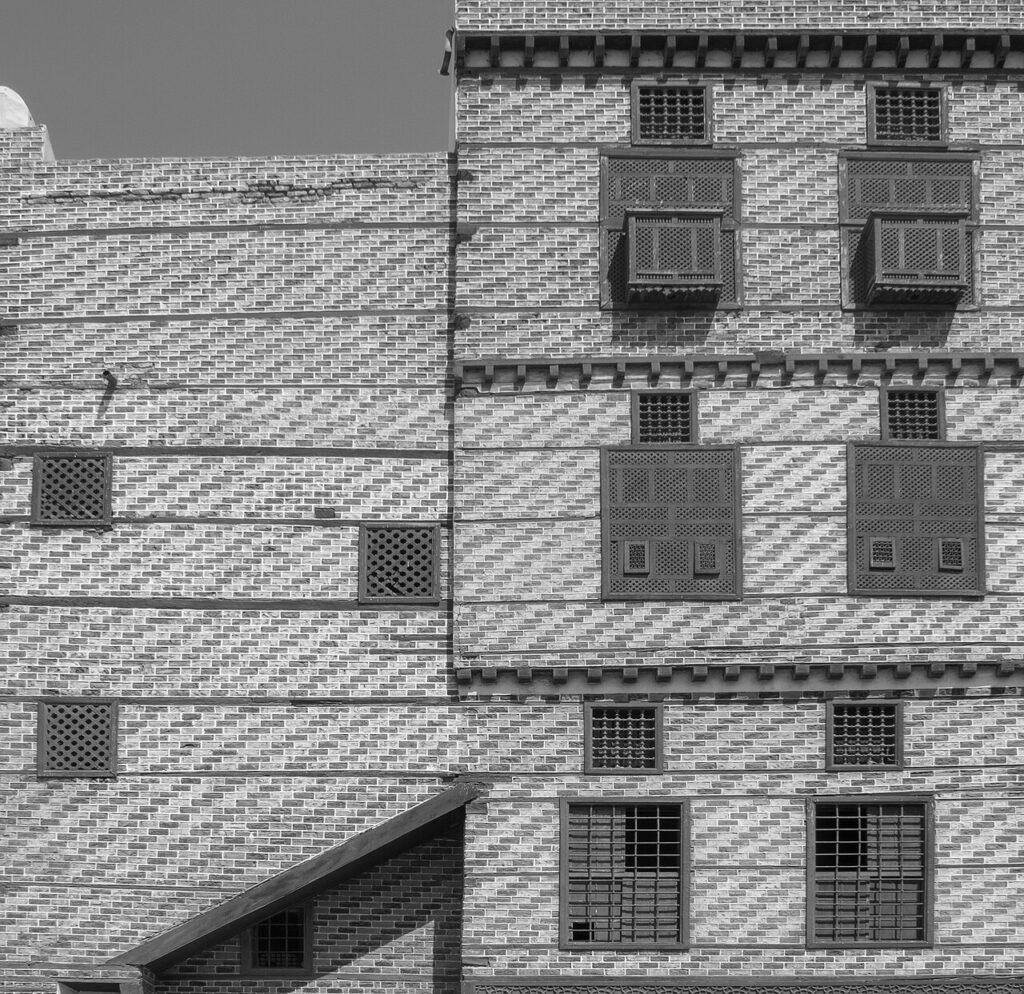
The facades often use alternating red and dark bricks, sometimes arranged in geometric patterns. Upper floors project over the street, while carved mashrabiya screens cover the windows.
These wooden screens provided shade and ventilation while allowing household members to look outside without exposing the interior rooms to the street.
The houses were also designed for a busy commercial town. Ground floors could accommodate storage and business activities, while reception rooms and family living quarters occupied the upper levels.
As you walk through the old center, look at the differences between the buildings. Some have elaborate wooden windows extending across much of the facade. Others are distinguished by their brick patterns, carved doors or unusual corner details.
Rosetta’s historic quarters and monuments have been on Egypt’s UNESCO World Heritage Tentative List since 2003. The nomination documented 22 surviving historic houses at that time, although this should not be taken as a current count. Rosetta has not been inscribed as a UNESCO World Heritage Site.
Several houses have undergone restoration, while others are visible only from outside. The streets themselves are part of the attraction.
2. Al-Amasyali House
Al-Amasyali House offers a closer look at how a prosperous Rosetta household was organized.
Built in 1808 by Osman Agha al-Topgi, an Ottoman military official, the house later became associated with Ahmed al-Amasyali.
Its three floors accommodated different parts of household life, including reception areas, storage, service rooms and private living spaces.
One particularly interesting feature is a rotating wooden serving cupboard built into a wall. It allowed food and drinks to be passed between rooms, an arrangement suited to the privacy of a traditional household.
The house also had a private bathing area, with colored-glass openings in the ceiling that admitted light while preserving privacy.
Outside, the patterned brickwork and projecting wooden windows are characteristic of Rosetta’s merchant houses.
Al-Amasyali is one of the buildings to prioritize if interiors are open during your visit.
3. Abu Shahin Mill
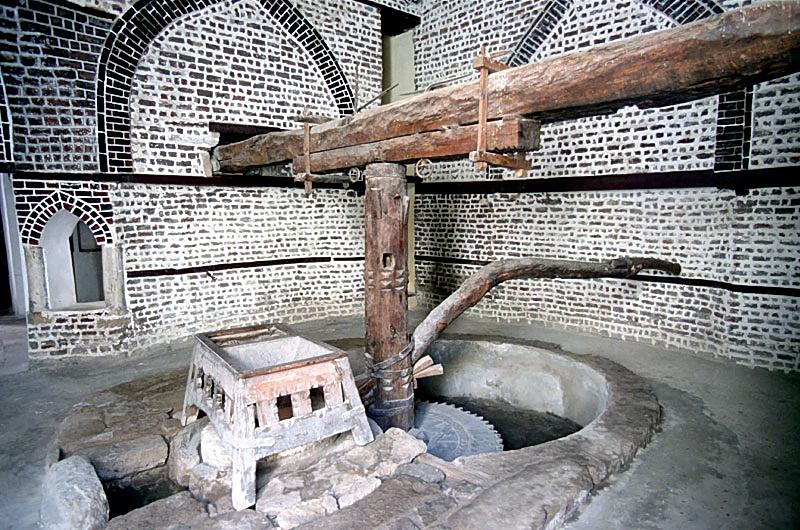
Beside Al-Amasyali House is Abu Shahin Mill, where grain was once ground using machinery powered by animals.
Osman Agha al-Topgi added the mill to the house complex. Its equipment was designed to process grain using the movement of animals rather than human labor turning the grinding stones directly.
The mill could process two types of grain at the same time. It also contained areas for storing and ventilating grain, accommodation for the miller and space for the animals.
Its name comes from Abu Shahin, identified in the Egyptian Ministry of Tourism and Antiquities’ monument description as the last miller who worked there.
4. Rashid National Museum
Rashid National Museum occupies Hussein Arab Killy House, an Ottoman-era residence associated with the city’s former administration.
The building belongs to the same architectural tradition as the merchant houses found elsewhere in the old center.
Its collections introduce different periods of Rosetta’s history through objects associated with trade, daily life and military activity. There is also a replica of the Rosetta Stone.
If the museum is open, it’s a useful first stop before walking through the old town. Allow time to look around the house itself, not just the exhibits.
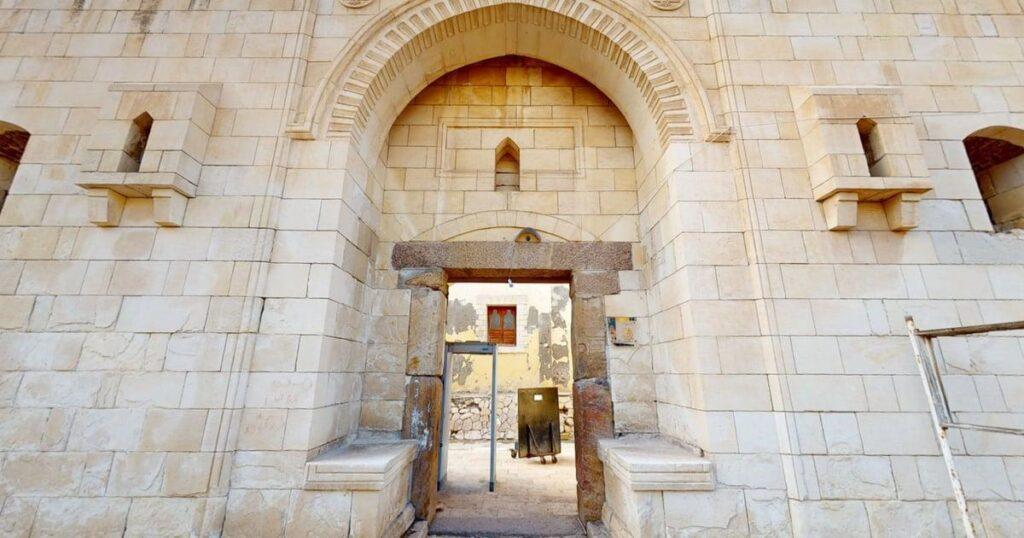
5. Qaitbay Fort: Where the Rosetta Stone Was Discovered
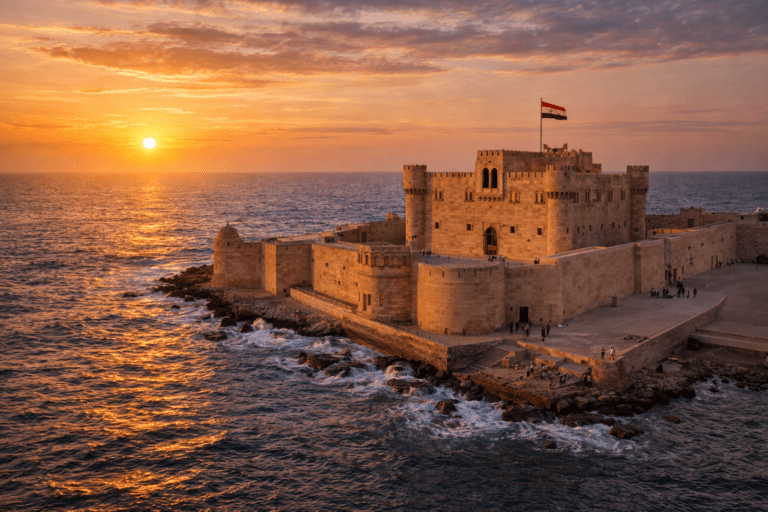
The fortress north of Rashid became famous in 1799, when French soldiers uncovered the Rosetta Stone while working on its defenses.
Known as Qaitbay Fort, Fort Julien or Fort Saint Julien, the fortification dates to the reign of Sultan al-Ashraf Qaitbay.
UNESCO’s documentation of Rosetta’s historic monuments dates the fortress to 1479, although other accounts give slightly different dates within Qaitbay’s reign.
Its position near the Rosetta branch of the Nile allowed it to protect the approach from the Mediterranean. The surviving structure includes defensive walls and towers, with later military alterations reflecting its continued use.
The stone discovered here was much older than the fortress itself. It had been carved during the Ptolemaic period, nearly two thousand years before the French expedition, and was reused in the fortifications.
Visitors may be able to explore the surviving military structure, depending on current access arrangements, and see the river landscape that made the location strategically important.
The fortress lies several kilometers outside central Rashid, so it should be planned as a separate stop rather than included in the old-town walking route.
There is also an important distinction for travelers visiting Alexandria: Qaitbay Fort in Rosetta and Qaitbay Citadel in Alexandria are two different monuments. Both are associated with the same Mamluk ruler, but they stand at different points along Egypt’s northern coast.
6. Zaghloul Mosque and the British Expedition of 1807
In 1807, British troops entered Rosetta during a military expedition intended to establish control over part of Egypt’s northern coast.
The attempt went badly.
Egyptian defenders resisted the British advance, and fighting in the streets inflicted heavy losses on the invading force. The defeat at Rosetta became one of the most significant episodes of the expedition.
Zaghloul Mosque is closely associated with the events. Local historical accounts describe its minaret being used to signal the beginning of the resistance.
The mosque itself dates to the Ottoman period, with origins in the 16th century. It became known for its numerous domes and columns, although the structure has undergone changes over time.
Interior access should be checked locally, particularly where restoration or religious activities affect visiting arrangements.
7. Abu Mandour Mosque
South of central Rashid, Abu Mandour Mosque stands near the Nile.
It is a historic religious landmark associated with the local figure known as Abu Mandour. Its riverside position makes it a different stop from the mosques and merchant houses of the old center.
The building is best included when traveling along the Nile waterfront or exploring the southern part of Rashid. It is not necessary to add it to a short walking tour focused on the historic houses.
8. The Nile Waterfront
The Nile was central to Rosetta’s prosperity. Boats brought agricultural produce and other goods north through the Delta, where they could be transferred to ships trading across the Mediterranean.
Today, parts of the waterfront remain working areas, with boats and everyday commercial activity.
A walk along a suitable stretch of the river gives you a clearer sense of the city’s setting. It also provides a change from the narrow streets of the historic center.
The point where the Rosetta branch reaches the Mediterranean is farther north, beyond the main city. If you want to see the river mouth, allow additional travel time rather than assuming it is part of a central Rosetta visit.
How Rosetta Became a Prosperous Trading Port
Rosetta’s location made it an important link between Egypt’s agricultural interior and Mediterranean shipping routes.
During the Ottoman period, merchants used the port to trade with other parts of the empire and beyond. Goods arriving along the Nile could be transferred to maritime trade, while imported products moved inland through the Delta.
Commercial wealth supported the construction of the townhouses that still distinguish the old center. Wealthy residents invested in substantial homes, mosques and other buildings, leaving a concentration of Ottoman architecture unusual in Egypt today.
Rosetta’s position changed during the 19th century as Alexandria’s port and transport connections developed.
The Mahmoudiya Canal improved Alexandria’s connection with the Nile. Alongside changes in shipping and infrastructure, this helped shift trade toward Alexandria.
Silting in the waterways also made navigation increasingly difficult, contributing to the port’s decline.
These developments gradually reduced its former commercial importance. The houses that remain are evidence of the period when Rosetta was one of Egypt’s prosperous trading centers.
Is Rosetta Worth Visiting?
Rosetta is worth visiting for its Ottoman architecture, particularly if you’re already spending time in Alexandria.
The old merchant houses are the main attraction, with Abu Shahin Mill, Rashid National Museum and Qaitbay Fort adding to the experience.
It isn’t a polished tourist destination. Some historic buildings may be closed, and much of the sightseeing takes place along ordinary city streets rather than within organized archaeological sites.
For travelers interested in Egypt’s history beyond the pharaonic period, Rosetta is an appealing addition to a northern Egypt itinerary.
Visiting Rosetta From Alexandria or Cairo
From Alexandria
Alexandria is the easiest starting point.
A full-day excursion gives you time to explore the old town and visit Qaitbay Fort without squeezing Rosetta into an already busy Alexandria sightseeing schedule.
Arrange a vehicle for the journey and the sites outside the historic center. Walking is better once you’re among the old houses.
If you’re planning an Alexandria stay and want to include Rashid, Explore ENA can help arrange a private itinerary that allows enough time for both cities.
From Cairo
Rosetta is a considerably longer journey from Cairo.
Although a road trip is possible, a same-day return would involve substantial driving. Most travelers will find it more practical to visit while staying in Alexandria or to include Rashid in a wider northern Egypt itinerary.
Getting Around Rosetta
The historic center is best explored on foot, particularly around the Ottoman houses, museum and Abu Shahin Mill.
Qaitbay Fort and Abu Mandour Mosque require additional transport.
Do not rely on Uber being available for journeys within Rashid. If you arrive with a private driver, arrange your route and collection points before beginning the walking portion of the visit.
How to Spend One Day in Rosetta
Begin in the old town, ideally at Rashid National Museum. From there, continue to Al-Amasyali House and Abu Shahin Mill, provided those interiors are accessible.
Spend time walking through the surrounding streets rather than moving directly from one building to another. Some of Rosetta’s most interesting architectural details are visible on houses that aren’t open to the public.
Continue toward Zaghloul Mosque, then take a break before heading north to Qaitbay Fort if it is open to visitors.
If you have extra time, include a stretch of the Nile waterfront or Abu Mandour Mosque.
The route can be adjusted around current access without repeatedly crossing the city.
Practical Tips for Visiting Rosetta
The most important preparation is checking which historic buildings are currently accessible. Restoration work and local visiting arrangements can affect individual houses, museums and mosques.
Carry your passport for identification and possible site-entry requirements, and keep some cash available for smaller purchases.
Wear comfortable shoes for the old streets, where pavements and road surfaces can be uneven.
October through April generally provides more comfortable conditions for walking, although the northern Delta is cooler and more humid than Upper Egypt during parts of the year.
Historic mosques remain places of worship. Dress modestly, respect prayer times and ask permission before photographing people.
A local guide familiar with Rosetta’s architecture can be helpful, especially when visiting houses whose original functions aren’t immediately obvious.
Frequently Asked Questions About Rosetta, Egypt
Is Rosetta the same as Rashid?
Yes. Rashid, also written Rasheed, is the Arabic name of the Egyptian city known internationally as Rosetta.
Where was the Rosetta Stone found?
French soldiers discovered it in 1799 during work on the fortifications near Rashid, now commonly called Fort Julien or Qaitbay Fort.
Can you see the original Rosetta Stone in Rosetta?
No. The original is at the British Museum in London. Rashid National Museum has a replica.
Is Rosetta a UNESCO World Heritage Site?
No. Rosetta’s historic quarters and monuments have been on Egypt’s UNESCO World Heritage Tentative List since 2003, but the city has not been inscribed on the World Heritage List.
What is Rosetta famous for besides the Rosetta Stone?
Rosetta is known for its Ottoman merchant houses, decorative brickwork, wooden mashrabiya windows, historic mosques and its former importance as a Mediterranean trading port.
Can you visit Rosetta from Alexandria in one day?
Yes. A full day allows time for the historic center and Qaitbay Fort, provided you arrange transport and check access to the main monuments.
Do you need a guide to visit Rosetta?
A guide isn’t essential for walking through the old town, but someone knowledgeable about the city’s history can explain the buildings and help with current visiting arrangements.
Planning a Visit to Rosetta
Rosetta works particularly well as a day trip from Alexandria, especially for travelers interested in Egypt’s Ottoman architecture and the history of the Nile Delta.
Explore ENA can arrange a private Rosetta excursion or include Rashid in a longer northern Egypt itinerary, with transport and sightseeing planned around current access to the historic buildings.