Is Tanis Worth Visiting? Egypt’s Forgotten Delta Capital
Tanis is one of those places where knowing the history before you arrive makes an enormous difference. It was once the seat of Egypt’s northern kings, and its royal tombs yielded treasures that rank among the country’s most remarkable archaeological discoveries. Yet much of what you’ll see today is scattered stonework, fallen obelisks and the remains of temples that have lost nearly all their original height.
That doesn’t make Tanis uninteresting. It does mean the site appeals to a particular kind of traveler.
If you’ve already visited Egypt’s major monuments and want to explore the history of the Nile Delta, Tanis is worth considering. For a first visit to Egypt, particularly with limited time, I’d usually recommend somewhere with more substantial surviving architecture.
Where Is Tanis in Egypt?
Tanis lies in the northeastern Nile Delta, at modern San el-Hagar in Sharqia Governorate, northeast of Cairo.
The landscape is very different from the desert plateaus and cliffs where many of Egypt’s best-known monuments stand. Agricultural fields, villages and waterways dominate the surrounding region, and the ancient city developed in an area where access to the Nile was essential for trade and settlement.
Tanis once stood beside a branch of the river that eventually silted up. As the Delta’s waterways changed, so did the fortunes of the towns and cities that depended on them.
Today, San el-Hagar is not a major international tourist destination. Tanis receives relatively few visitors compared with Giza, Saqqara, Luxor or Aswan, and it’s best approached as a dedicated excursion rather than a casual sightseeing stop.
Djanet, Tanis and Zoan: Why Does the City Have So Many Names?
The city appears under different names because its history was recorded in Egyptian, Greek and biblical sources.
Its ancient Egyptian name is commonly rendered Djanet. Greek writers called it Tanis, the name generally used in modern historical and archaeological writing.
Zoan is the biblical name traditionally identified with Tanis. It appears in several passages of the Hebrew Bible referring to Egypt’s northeastern Delta.
Modern San el-Hagar is the settlement associated with the archaeological site today.
These names are generally connected with the same location, but Tanis should not be confused with two other ancient cities in the eastern Delta: Avaris and Pi-Ramesses.
Avaris was the Hyksos capital during the Second Intermediate Period. Pi-Ramesses was the great royal residence associated with Ramesses II during the New Kingdom. Both stood farther south.
For years, archaeologists confused Tanis with Pi-Ramesses because so many monuments bearing the names of Ramesses II and other New Kingdom kings were found there. Later archaeological work established that they were separate cities.
Tanis (Zoan) in the Bible: What Does Scripture Say?
Tanis is traditionally identified with Zoan, a city mentioned several times in the Old Testament. Although the Bible doesn’t describe its temples or royal tombs, the references connect Zoan with Egypt’s rulers, the Exodus account and the political relationships between Egypt and its neighbors.
The first mention appears in Numbers 13:22, where Hebron is described as having been built seven years before Zoan in Egypt. The verse offers an unusual chronological comparison between two ancient cities, although it doesn’t explain why Zoan was chosen as the point of reference.
Zoan appears again in Psalm 78:12 and 78:43. Both verses describe God’s wonders in Egypt as taking place in the field of Zoan. These are among the most interesting biblical references for visitors because they associate the region with the events surrounding Israel’s deliverance from Egypt.
The prophets provide another perspective. In Isaiah 19:11–13, the princes of Zoan are criticized for their lack of wisdom, while Isaiah 30:4 refers to Egyptian officials at Zoan during Judah’s efforts to seek political support from Egypt. Together, these passages portray Zoan as a place associated with Egyptian authority and diplomacy.
Ezekiel 30:14 also names Zoan among the Egyptian cities facing judgment, alongside other important centers.
For travelers interested in biblical history, Tanis is worth knowing about because of its traditional identification with Zoan. Visiting the archaeological site offers a connection to a place named in Scripture, while also revealing a later chapter of Egypt’s history that is remarkable in its own right.
Was Tanis Really a Capital of Ancient Egypt?
Yes. Tanis became the principal royal center of the Twenty-first Dynasty, beginning around 1070 BCE, during the Third Intermediate Period.
By then, the centralized political system of the New Kingdom had weakened. Egypt’s rulers were operating within a different balance of power, with northern kings based at Tanis and powerful high priests of Amun exercising authority from Thebes, modern Luxor.
The relationship between north and south was more complicated than a simple division into two independent countries. Royal marriages, religious appointments and family connections helped maintain ties between the two centers, even when political authority was shared.
The northern kings governed from Tanis and built temples that connected their rule with Egypt’s established religious traditions, particularly the worship of Amun.
The city remained important during the Twenty-second Dynasty, although political power and royal residences shifted over time.
Tanis belongs to a much longer history of Egyptian capitals rising, declining and sometimes being replaced as the country’s political geography changed. Our article on the forgotten capitals of ancient Egypt explores Memphis, Akhetaten, Avaris and Thebes, four other centers whose roles changed dramatically over time.
Why Does Tanis Have So Many Monuments of Ramesses II?
One of the most interesting things about Tanis is that much of its surviving stonework predates the city’s greatest period of political importance.
Obelisks, statues and architectural blocks bear the names of Ramesses II and other New Kingdom rulers who lived before Tanis became the principal royal center of the Twenty-first Dynasty. Early archaeologists initially took these inscriptions as evidence that Tanis might have been Pi-Ramesses.
The answer begins farther south, at Pi-Ramesses, where changes in the Nile’s course eventually made the old royal city less practical.
Monuments and architectural materials from the earlier capital were transported north and reused at Tanis. Some were enormous, making their movement an impressive undertaking in itself.
The kings of Tanis weren’t simply collecting convenient building materials. Incorporating monumental stonework from earlier rulers also helped associate their city with the prestige of Egypt’s New Kingdom pharaohs.
A statue inscribed for Ramesses II at Tanis, therefore, doesn’t necessarily mean he erected it there. Some of the stones have a history that began centuries before their final placement in the city.
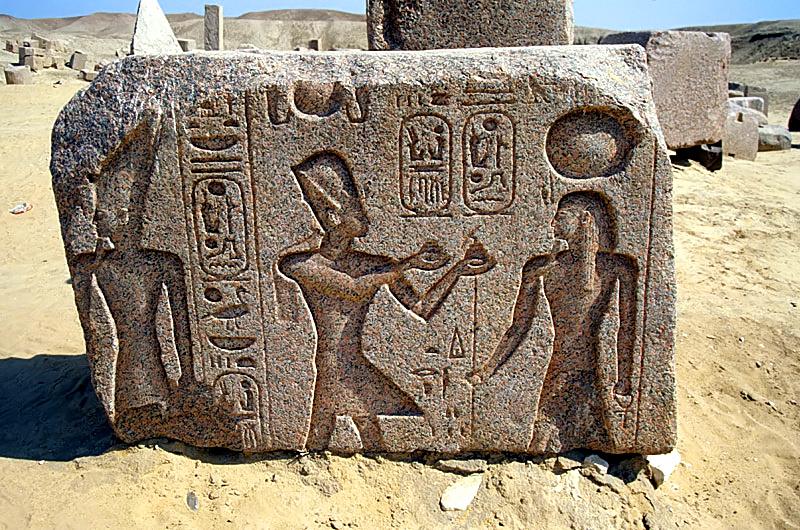
The Temples of Tanis: What Once Stood Here?
The principal religious complex at Tanis was dedicated to Amun, one of ancient Egypt’s most important gods.
The northern kings adopted religious traditions strongly associated with Thebes, where Amun’s great temple at Karnak had long been a center of royal authority. At Tanis, they developed their own sacred precinct, with pylons, courts, statues, obelisks and temple buildings.
Other structures were associated with Mut and Khonsu, who formed the Theban divine family with Amun. The religious landscape also included additional shrines and sacred spaces.
The site continued to develop long after the Twenty-first Dynasty, with later kings, including Nectanebo I of the Thirtieth Dynasty, contributing to its religious buildings.
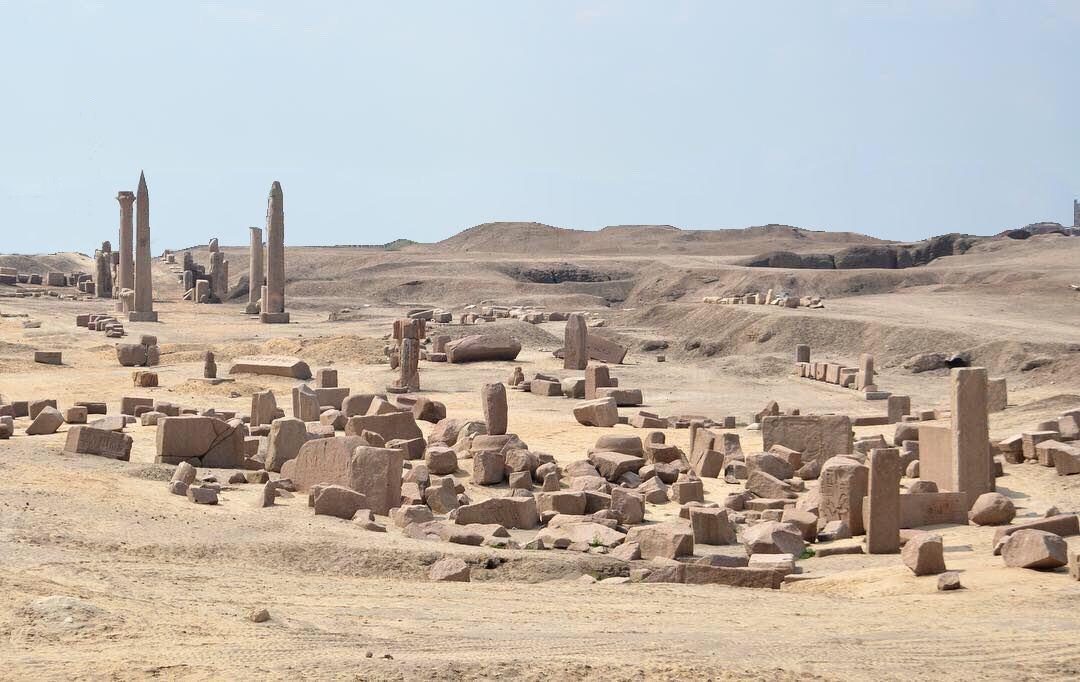
Most of the walls and roofed structures have disappeared. Fallen obelisks, broken columns and scattered architectural blocks now mark places where substantial buildings once stood.
Some fragments preserve inscriptions and reliefs, but others are difficult to interpret without an archaeological plan.
The Royal Tombs of Tanis: One of Egypt’s Greatest Discoveries
Tanis might be far less famous today if archaeologists hadn’t uncovered its royal cemetery.
In 1939, French Egyptologist Pierre Montet and his team began uncovering the royal necropolis within the great temple precinct. Excavations continued into 1940, bringing to light the remarkable burial of Psusennes I and its extraordinary funerary treasures.
Several burials contained precious metalwork, jewelry, funerary masks, coffins and other objects that had survived centuries of disturbance and looting elsewhere in Egypt.
The finds included material associated with Psusennes I, Amenemope and Shoshenq II, along with other royal and elite burials.
The discovery came at an unfortunate moment for international publicity. Europe was entering the Second World War, and the attention that might otherwise have surrounded the excavation was overshadowed by events far beyond Egypt.
Yet the archaeological importance was enormous. The tombs provided direct evidence of royal wealth, religious traditions and funerary craftsmanship during the Third Intermediate Period, a chapter of Egyptian history that receives far less popular attention than the age of Tutankhamun.
Archaeological work at Tanis has continued long after Montet’s discoveries.
In November 2025, a French archaeological mission led by Egyptologist Frédéric Payraudeau announced the discovery of 225 funerary shabti figures belonging to Shoshenq III. They were found while archaeologists were cleaning the northern chamber of Osorkon II’s tomb. The figures had remained buried in layers of silt, offering another glimpse into the royal burials of the Twenty-second Dynasty.
The discovery didn’t reveal a previously unknown royal tomb. It added new evidence from a burial complex archaeologists had already identified.
Who Was Psusennes I?
Psusennes I was one of the most important kings of the Twenty-first Dynasty and ruled for several decades.
When Montet opened his burial chamber in 1940, he found something remarkable: a royal coffin made of silver. Gold was familiar in Egyptian royal burials, but silver was far less readily available in Egypt and often had to be imported. A coffin made from it was an extraordinary display of wealth.
The burial also contained a gold funerary mask, jewelry and other beautifully worked objects. They offer a very different picture of the Twenty-first Dynasty from the one suggested by the phrase Third Intermediate Period, which can make the era sound like little more than a gap between more important chapters of Egyptian history.
The treasures show that the northern royal court possessed considerable resources, although they don’t necessarily tell us how prosperous ordinary Egyptians were.
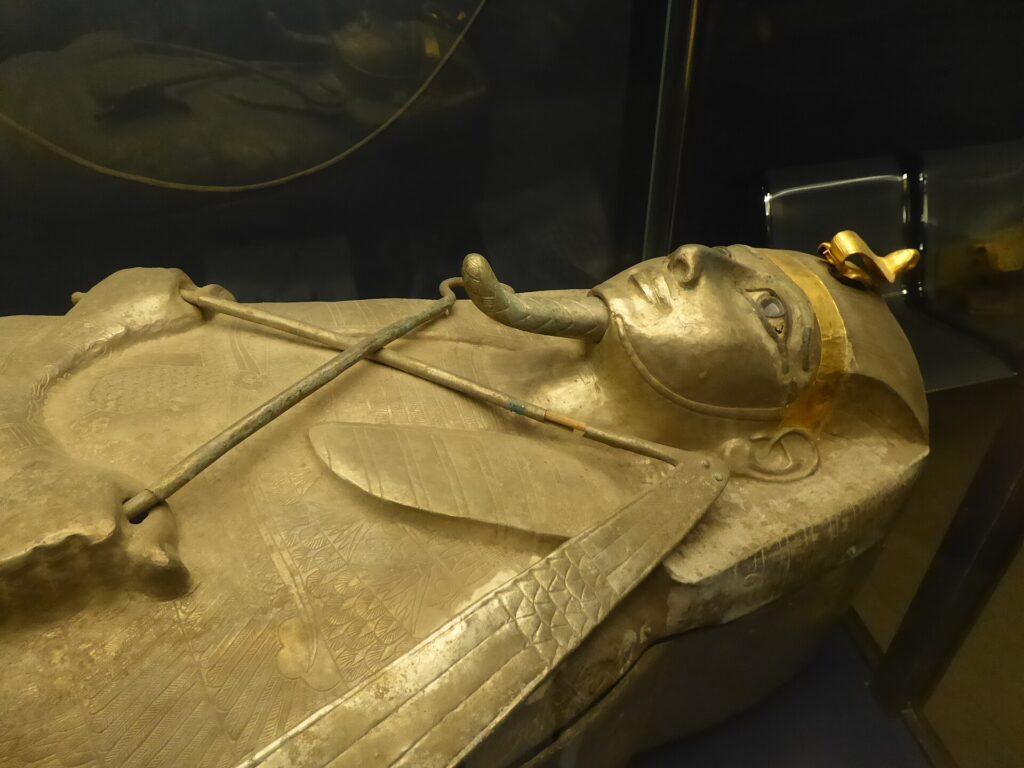
Where Are the Treasures of Tanis Today?
The gold masks, silver coffins and jewelry recovered from the royal tombs are not displayed among the ruins at Tanis. They were removed for preservation, study and museum display.
The Egyptian Museum in Tahrir Square, Cairo, holds major objects from the Tanis discoveries, including royal funerary treasures.
The museum has been working on the conservation and planned redisplay of approximately 2,500 objects from the royal cemetery. You can read about this work in the Egyptian Museum’s Tanis collection conservation project.
If seeing the gold and silver treasures is one of your main interests, a visit to the Egyptian Museum can be an important complement to visiting Tanis itself.
Gallery arrangements and individual object displays can change, so confirm the current location of any particular artifact before making a special trip to see it.
At Tanis, you see where the royal tombs were discovered and how they fit into the ancient temple precinct. In Cairo, you can appreciate the craftsmanship and wealth represented by the objects recovered from those burials.
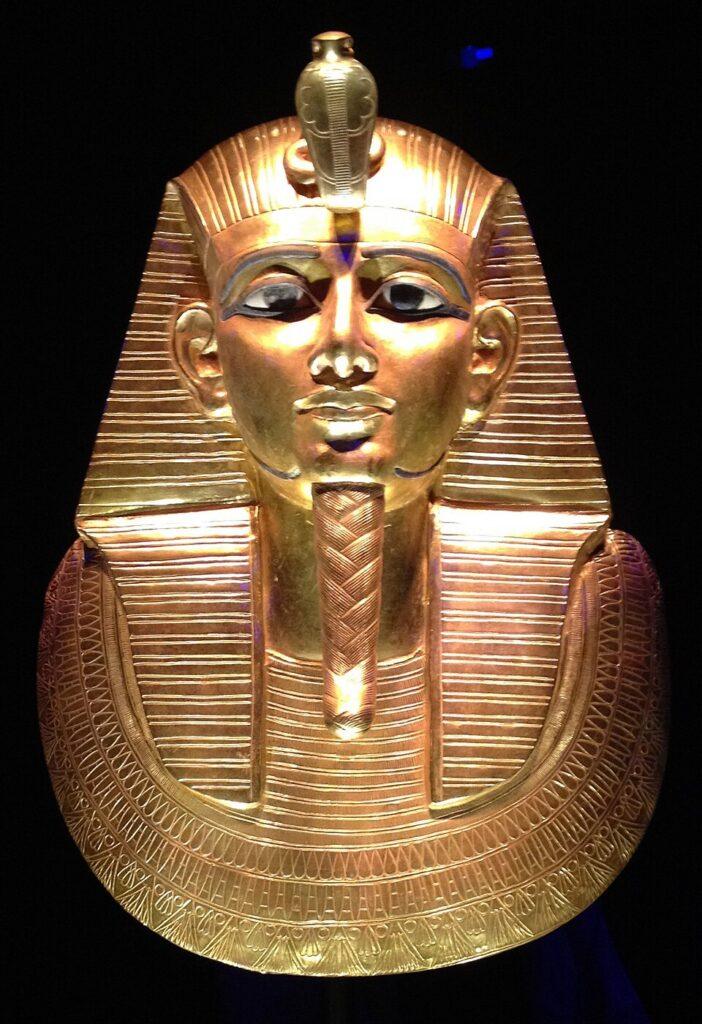
What Can Visitors Actually See at Tanis Today?
Tanis is an extensive archaeological site, but much of what survives is fragmentary.
The most visible remains include fallen obelisks, broken statues, carved blocks, column fragments and the foundations of temple structures. Some of the obelisks preserve royal inscriptions, while others lie broken across the site, where their scale becomes easier to appreciate when standing beside them.
You move between groups of fallen stonework rather than through a continuous series of standing temples. Some pieces are enormous, but without their original buildings around them, it’s not always obvious where they belonged.
The great temple precinct is the principal area of interest. Its surviving architectural elements help identify the spaces once occupied by major religious buildings, even though most of the original structures are gone.
The royal necropolis is another important part of the site. The tomb structures and burial chambers survive within the precinct, although access to individual chambers may be restricted and shouldn’t be assumed.
Visitors may also encounter remains associated with the wider sacred landscape, including features connected with temple water installations and later building phases.
What you won’t find is an intact royal palace, a monumental avenue lined with standing statues or a temple interior comparable to those at Karnak or Luxor.
A knowledgeable guide can help you make sense of the temple layout, reused monuments and royal tombs, especially when the surviving architecture offers few obvious clues.
Why Does So Little of Tanis Survive?
Tanis suffered from many of the processes that affected other ancient settlements in the Nile Delta.
Buildings were dismantled, and stone was reused for later construction. Mudbrick structures deteriorated, while changing settlement patterns altered the ancient landscape.
The Delta environment also differs from the dry desert conditions that helped preserve many monuments in Upper Egypt. Moisture, groundwater, agricultural activity and centuries of environmental change have affected the survival and visibility of archaeological remains.
At Tanis, these processes left behind a substantial archaeological record but relatively little standing architecture.
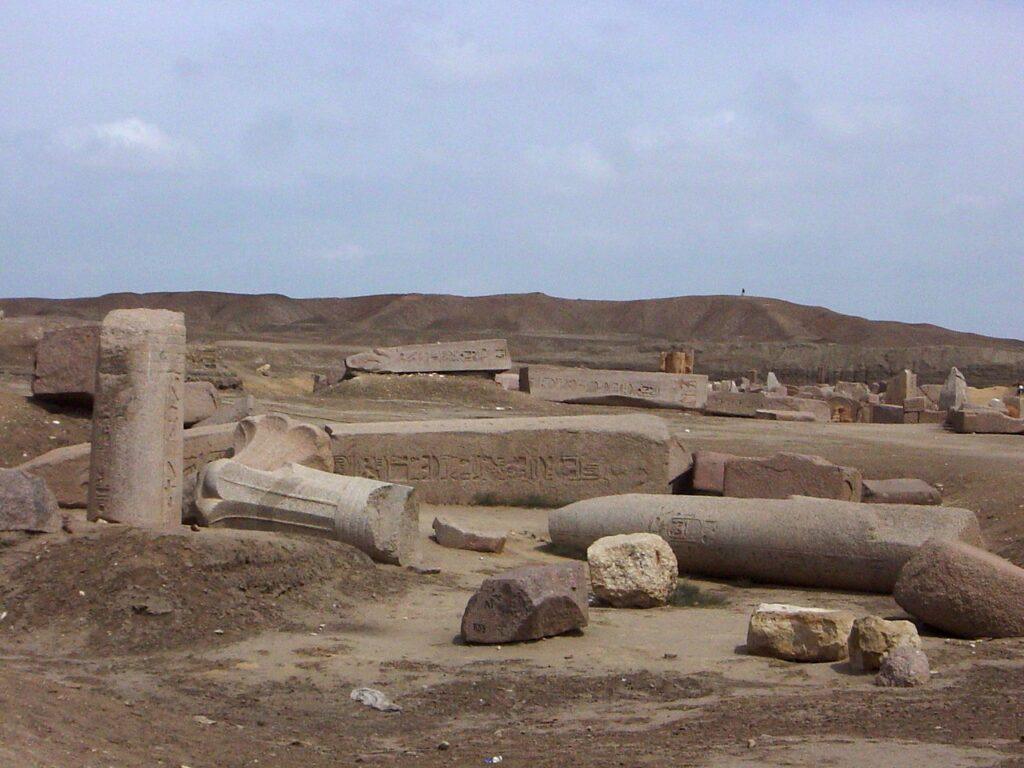
Is Tanis Worth Visiting Compared With Other Egyptian Sites?
For most first-time visitors, Tanis should come after Egypt’s better-known archaeological attractions.
If you haven’t yet visited Giza, Saqqara, Karnak, Luxor Temple or the Valley of the Kings, those sites generally provide a stronger introduction to ancient Egyptian architecture and royal history.
Tanis becomes more rewarding once you’ve seen the major monuments and want to explore less familiar periods or regions.
It’s particularly worthwhile for travelers interested in the Third Intermediate Period, the political relationship between Tanis and Thebes, the reuse of Ramesside monuments or the discovery of royal tombs.
It also appeals to people who enjoy archaeological sites that haven’t been extensively reconstructed for tourism.
If you’re looking for spectacular architecture and easily recognizable temples, other sites are likely to be more satisfying. But if you enjoy exploring the history behind surviving fragments, Tanis has plenty to offer.
How to Visit Tanis From Cairo
Tanis is best treated as a dedicated excursion into the northeastern Nile Delta.
A private vehicle with a driver is generally the most practical choice for international visitors, particularly because the site lies outside Egypt’s established tourist routes.
The journey passes through populated Delta areas, and travel times can vary with traffic, road conditions and the route taken.
Public transportation exists in the region, but reaching the archaeological site may involve several connections and additional local arrangements. That is rarely the most convenient option for visitors with limited time.
Don’t assume that an Uber will be available for the return journey.
Before traveling, confirm the site’s current opening arrangements and whether any areas are temporarily restricted.
Practical Tips for Visiting Tanis
The archaeological site is exposed, with limited shade across much of the ruins. Bring drinking water, sun protection and comfortable shoes suitable for uneven ground.
Carry your passport for identification and possible site-entry requirements.
October through April generally offers more comfortable conditions for walking around open archaeological sites than the hottest summer months.
Frequently Asked Questions About Tanis
Is Tanis worth visiting?
Yes, particularly for travelers interested in ancient Egyptian history beyond the major tourist sites. Tanis was an important royal center, but its surviving ruins are fragmentary, so it’s best visited with realistic expectations.
What was the ancient Egyptian name of Tanis?
The ancient Egyptian name is commonly rendered Djanet. Tanis is the Greek name, while Zoan is the biblical name traditionally associated with the city.
Was Tanis the capital of Egypt?
Tanis was the principal royal center of the Twenty-first Dynasty during the Third Intermediate Period. Political and religious authority was also exercised from Thebes in southern Egypt.
Is Tanis the same as Avaris or Pi-Ramesses?
No. They were separate sites in the eastern Nile Delta. Earlier confusion arose because many monuments from Pi-Ramesses were transported to and reused at Tanis.
Who discovered the royal tombs at Tanis?
French Egyptologist Pierre Montet and his team began uncovering the royal necropolis in 1939, with major discoveries continuing in 1940 and subsequent campaigns.
Where is the gold of Tanis?
Major treasures recovered from the royal tombs are held by the Egyptian Museum in Cairo. Confirm current displays before planning a museum visit specifically to see them.
Is Tanis mentioned in the Bible?
Tanis is traditionally identified with biblical Zoan, which appears in several passages referring to ancient Egypt. This identification is distinct from the archaeological question of where Avaris and Pi-Ramesses stood.
Should You Add Tanis to Your Egypt Itinerary?
Tanis isn’t a site I’d squeeze into an already crowded Egypt itinerary. The journey into the northeastern Delta takes time, and the ruins are best appreciated without rushing.
But if the royal tombs, the history of Psusennes I or the changing capitals of ancient Egypt interest you, there’s plenty here to justify the journey.
If Tanis is a priority for your trip, contact Explore ENA about including it in a private Delta itinerary with suitable transport and guiding.