Valley of the Queens Guide (2026): Tombs, Nefertari & Visiting Tips
The Valley of the Queens should not be treated as a smaller version of the Valley of the Kings. It served a different royal community, its accessible tombs are generally more compact, and the visitor experience is noticeably quieter. Here you find the burials of queens, princes, princesses, and other members of New Kingdom royal families rather than the long sequence of pharaohs buried in the neighboring royal valley.
The planning question in 2026 is complicated by one tomb: Nefertari’s QV66. It is the reason many travelers first become interested in the Valley of the Queens, but it is currently closed to visitors. Egypt’s Ministry of Tourism and Antiquities confirms that the tomb was closed in March 2024 for environmental monitoring after concerns about humidity and heavy visitor pressure, and no official reopening date has been announced. Recent visitors through 2026 continue to report it closed.
That does not make the valley pointless. As of August 2026, recent visitor reports identify QV44, the Tomb of Khaemwaset; QV55, the Tomb of Amunherkhepshef; and QV52, the Tomb of Queen Tyti, as the principal accessible tombs. They provide an intimate look at Ramesside royal funerary art and, because the valley attracts fewer visitors than the Valley of the Kings, can often be examined with considerably less pressure.
For most travelers, allow about one hour for the currently accessible valley. If Nefertari eventually reopens, the planning equation changes immediately: expect separate access conditions, conservation restrictions, and potentially a premium ticket, all of which should be rechecked at the time rather than relying on historic prices.
Expert Insight: In 2026, visit the Valley of the Queens for the quality and intimacy of the currently open royal-family tombs—not on the assumption that Nefertari will be available. If QV66 is the deciding reason for adding the valley, verify its official status immediately before your trip.
Quick Planning
| Planning point | Current best guidance |
|---|---|
| Location | Luxor West Bank, within the Theban Necropolis |
| Main accessible tombs reported in 2026 | QV44 Khaemwaset, QV55 Amunherkhepshef, QV52 Tyti |
| Nefertari QV66 | Closed as of August 2026; no confirmed reopening date |
| Current general hours | 6:00 AM–5:00 PM summer; 6:00 AM–4:00 PM winter |
| Time needed | About 45–75 minutes without Nefertari |
| Best time | Early morning, especially May–September |
| Photography | Mobile photography without flash currently permitted under published ticket rules |
| Walking | Moderate, with exposed desert paths |
| Tomb access | Stairs and confined interiors vary by tomb |
| Best nearby pairing | Medinet Habu and/or Deir el-Medina |
Egypt’s current archaeological ticket platform lists summer opening from 6:00 AM to 5:00 PM and winter closing at 4:00 PM. Mobile-phone photography is listed as free. Because tomb access changes for conservation, verify both the price and the open-tomb roster shortly before visiting.
The Valley of the Queens Was Not Only for Queens
The modern name is slightly misleading.
The necropolis contains tombs associated not only with royal wives but also with princes, princesses, and other members of the royal household. This is one of the clearest differences from the Valley of the Kings, whose best-known function was the burial of New Kingdom pharaohs.
The Valley of the Queens forms part of the UNESCO World Heritage Site of Ancient Thebes with its Necropolis, alongside the Valley of the Kings, Hatshepsut’s temple, Medinet Habu, Deir el-Medina, Karnak, and Luxor Temple. Egypt’s Ministry likewise treats these monuments as parts of one Theban landscape rather than isolated tourist attractions.
The valley was known in antiquity as Ta-Set-Neferu. Its precise translation has been discussed, but it is commonly rendered along the lines of “Place of Beauty” or associated with royal children.
What matters to a visitor is that the tombs tell a different family story from the royal burials next door.
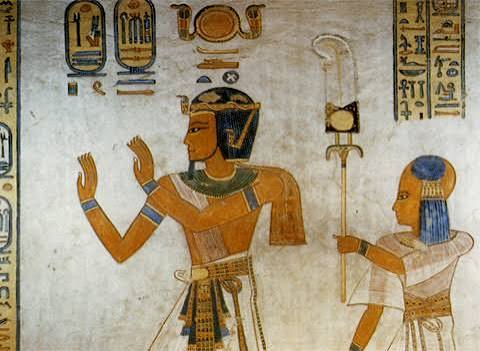
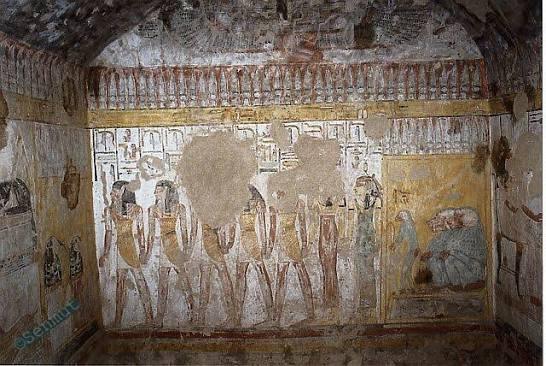
At QV44 and QV55, for example, the deceased are sons of Ramesses III. Their father appears prominently in the decoration, introducing the young princes to gods of the afterlife.
That immediately gives the valley a different emotional and artistic character from the enormous royal tombs of kings such as Seti I or Ramesses VI.
Valley of the Queens vs Valley of the Kings
If you have already visited the Valley of the Kings, the question is not whether the Valley of the Queens contains bigger or more elaborate tombs.
It usually does not.
The Valley of the Kings offers greater scale, more extensive royal funerary texts, and a wider range of monumental burial designs. Its tombs can descend through long corridors into large pillared chambers and elaborate burial halls.
The Valley of the Queens feels smaller and more intimate.
The accessible tombs are easier to cover in a relatively short visit, and the artwork associated with royal children creates a perspective that the kings’ tombs do not.
Crowds are also commonly lighter. A February 2026 visitor reported finding the valley almost deserted and being able to spend time quietly examining the open tombs even though Nefertari remained closed.
Our Valley of the Kings Guide explains the other side of the decision: which royal tombs to prioritize, how the general ticket works, and which premium tombs actually justify extra time.
If your Luxor stay is short, the Valley of the Kings still takes priority. See our Luxor Travel Guide.
If you have an additional West Bank morning or a strong interest in tomb painting, royal families, or quieter archaeology, the Valley of the Queens earns its place.
QV55: Amunherkhepshef Is the Tomb I Would Prioritize First
With Nefertari closed, QV55—the Tomb of Prince Amunherkhepshef—is the strongest current priority for many visitors.
Amunherkhepshef was a son of Ramesses III, and the tomb’s decoration repeatedly shows the king accompanying his son before different deities.
The prince is represented with the sidelock of youth, making his status visually clear.
That changes the emotional tone of the imagery. Instead of seeing an adult ruler independently navigating the afterlife, you repeatedly see a royal father presenting his deceased child to divine figures.
Recent August 2026 visitors continue to describe QV55 as one of the three accessible tombs and emphasize the quality of its surviving color.
The tomb is much smaller than the major royal burials in the Valley of the Kings.
Do not rush because of that.
The reduced scale lets you stand closer to the decorative program and understand the sequence more easily.
Guide’s Note: QV55 is a good example of why the Valley of the Queens is worth seeing even while Nefertari remains closed. Its value lies in the combination of preserved color and a funerary story you do not encounter in the same form in the royal kings’ tombs.
QV44: Khaemwaset Shows a Similar Royal-Family Story
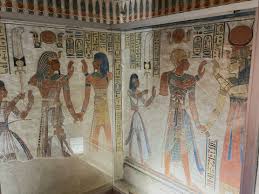
QV44 belonged to Prince Khaemwaset, another son of Ramesses III.
Like QV55, its reliefs show the prince being led through the afterlife and appearing with his father before Egyptian deities.
This similarity is useful rather than repetitive.
Seeing the two tombs together reveals that these royal children’s burials followed recognizable decorative conventions. Ramesses III appears repeatedly as the active royal figure introducing or accompanying his son.
The tomb also had a later history. When Italian excavators working under Ernesto Schiaparelli investigated it in the early twentieth century, they found evidence that the burial space had been reused in later periods.
For a visitor, QV44 is worth prioritizing for its preserved wall scenes rather than for architectural complexity.
If QV55 is crowded when you arrive, QV44 may also provide a quieter first tomb before groups redistribute through the valley.
QV52: Queen Tyti Gives You the Queen’s Perspective
The currently accessible group would feel incomplete without QV52, traditionally associated with Queen Tyti.
Unlike QV44 and QV55, this brings you back to the royal women for whom the modern valley is named.
Tyti’s precise family relationships have been debated by Egyptologists, so avoid confident guidebook claims that assign her an exact husband or genealogy without qualification. What is clear is that her tomb belongs to the Ramesside royal environment and preserves scenes of the queen appearing before deities and participating in the funerary journey.
Recent visitors in August 2026 reported QV52 accessible alongside QV44 and QV55, although they found its decoration less consistently preserved than the princes’ tombs.
That makes it the tomb I would normally visit after QV55 and QV44, not before them.
But current conservation access should always control the order.
If one of those tombs closes temporarily, the available experience may change without invalidating the whole visit.
Nefertari’s Tomb Is Exceptional—But Currently Closed
QV66, the Tomb of Queen Nefertari, is the valley’s great masterpiece.
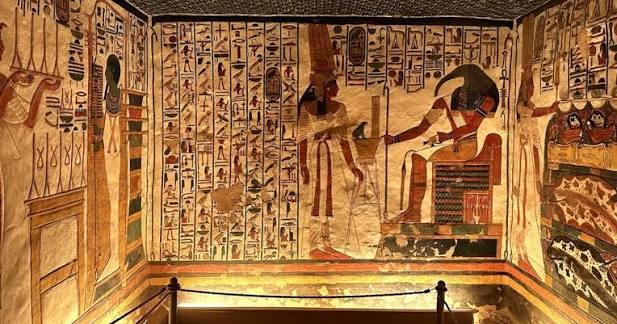
Nefertari was the principal wife of Ramesses II, and her tomb is celebrated for the quality, preservation, and sophistication of its painted decoration. Unlike the rougher carved surfaces in many tombs, much of QV66’s decoration was applied over prepared plaster, producing extraordinarily refined painted figures against white backgrounds and deep blue star-covered ceilings.
The imagery follows Nefertari through her transformation in the afterlife. She appears before deities including Isis, Hathor, Horus, and Osiris, while passages from the Book of the Dead accompany her journey.
The overall effect is much lighter and more painterly than many royal tombs.
When the tomb has been open, travelers frequently describe it as one of the strongest artistic experiences anywhere on the West Bank. But that beauty is also extremely vulnerable.
The Getty Conservation Institute and Egyptian antiquities authorities undertook a major conservation program beginning in the 1980s because salts, plaster separation, moisture, and environmental instability threatened the decoration. Getty’s detailed Valley of the Queens assessment documents how tightly visitation has historically been controlled because visitor-generated humidity and carbon dioxide can affect the tomb environment.
In March 2024, Egyptian authorities closed QV66 again to monitor humidity and determine whether it could safely reopen under controlled conditions. The Ministry subsequently confirmed that reason publicly.
As of August 2026, there is still no confirmed official reopening date. Travelers reported the tomb closed in January and February 2026, and current listings continue to identify it as temporarily unavailable.
Does Nefertari Require a Separate Ticket?
Not in any practical sense while QV66 remains closed.
Historically, when Nefertari was open to ordinary visitors, it required a separate premium ticket and at various times operated under strict time or visitor limits because of conservation concerns.
Do not use it for planning a 2026 visit.
There is currently no normal public Nefertari visit to purchase. If the tomb reopens, expect a new official access policy to be announced, potentially involving separate admission, timed entry, daily limits, or other conservation restrictions.
Check the official ticket system before paying anyone for a tour advertised as including Nefertari.
Recent travelers have reported discovering only after booking that the tomb named in their itinerary was actually closed.
That is exactly the planning mistake to avoid.
What the Standard Ticket Covers in 2026
Current August 2026 visitor evidence identifies three accessible tombs:
QV44 — Khaemwaset
QV55 — Amunherkhepshef
QV52 — Tyti
Those three are therefore the practical core of the current visit.
Do not assume the same three will remain open indefinitely.
Tombs across Luxor are regularly closed or rotated for conservation, restoration, safety, or visitor management. That is especially important here because the valley’s decorative surfaces are vulnerable and its conservation history is unusually well documented.
Check the open-tomb roster at the ticket office or with your Egyptologist on the morning of the visit.
Photography Rules
The current Valley of the Queens ticket information states that mobile-phone photography is permitted free of charge.
That should not be interpreted as unlimited photography rights.
Do not use flash where prohibited, do not touch walls to position yourself or a phone, and follow tomb-specific instructions from site staff. Professional photography, tripods, lighting equipment, commercial shoots, and video can fall under different permit rules.
If Nefertari eventually reopens, do not assume the standard valley photography rule will automatically apply inside QV66.
Its conservation requirements have historically been far stricter than the other accessible tombs.
Check the rules that exist at the time of reopening.
How Long Should You Spend?
With the current three-tomb setup and Nefertari closed, 45 to 75 minutes is realistic for most travelers.
An hour lets you visit QV55, QV44, and QV52 without treating them as entrances to collect.
Allow longer if photography, painted detail, or funerary art is a major interest.
You generally do not need two or three hours here under current access conditions.
That is another important distinction from the Valley of the Kings, where the distance between tombs, premium-ticket choices, deeper corridors, and greater number of options can easily consume half a morning.
If Nefertari reopens, add time.
Historic access rules sometimes limited QV66 visits to around ten minutes precisely to reduce environmental impact, but future restrictions may be different.
Do not build a future itinerary around old time limits until new rules are officially published.
Go Early for Heat, Not Mainly for Crowds
The Valley of the Queens is often significantly quieter than the Valley of the Kings.
That changes the timing calculation.
At the Valley of the Kings, arriving early helps with both heat and crowd pressure around famous tombs.
At the Valley of the Queens in 2026, heat is the stronger reason.
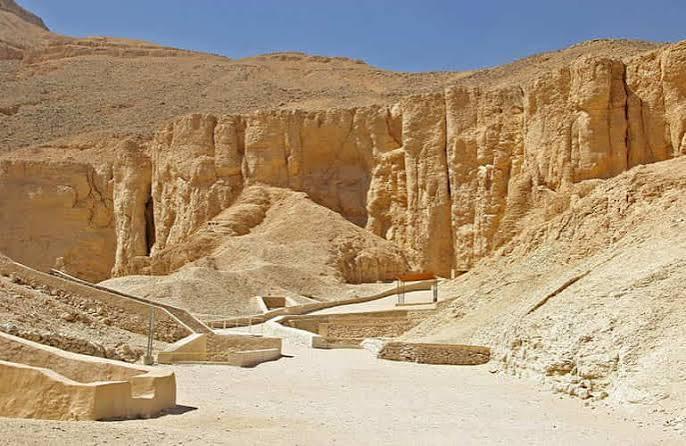
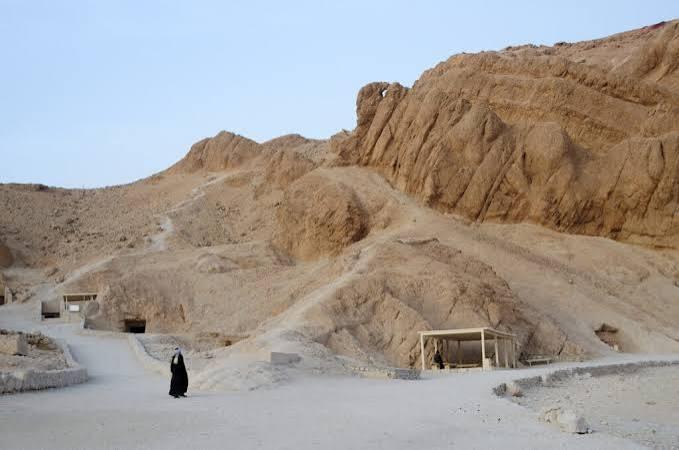
The valley is an exposed desert wadi. Paths between the entrance and tombs receive direct sunlight, and the surrounding limestone landscape offers little natural shade.
Current visitor information lists opening from 6:00 AM, making early arrival easy to justify during late spring, summer, and early autumn.
Inside the tombs, temperatures are naturally more protected from direct sun, but access may involve stairs and compact corridors.
That repeated transition—hot exposed path, enclosed tomb, hot path again—can become tiring when Luxor temperatures climb above 40°C.
If you are visiting between May and September, get the tombs done before the West Bank becomes physically punishing.
The Walking Is Easier Than the Valley of the Kings, but Tomb Access Still Matters
The Valley of the Queens is more compact than its famous neighbor.
Getty’s conservation assessment shows the visitor route branching through the main wadi toward QV52 and QV55 and into a side section toward QV44, rather than requiring long transfers between widely dispersed monuments.
That makes the overall walking manageable.
Individual tombs are a different issue.
Some involve stairs, sloping passages, narrow thresholds, or confined interiors. Third-party accessibility assessments consistently caution that wheelchair access inside most tomb chambers is limited.
Travelers with reduced mobility should ask which currently open tomb offers the easiest access on the day instead of buying admission and assuming every tomb will be physically possible.
The open-air valley itself is not the primary obstacle.
The underground entrances are.
Is It Worth Visiting Without Nefertari?
Yes—but it should move down your West Bank priority list.
If this is your first day in Luxor and you still have not seen the Valley of the Kings, Hatshepsut Temple, Karnak, or Medinet Habu, do not prioritize the Valley of the Queens simply because Nefertari’s name appears in old guidebooks.
With QV66 closed, the valley becomes a strong secondary West Bank site rather than an essential first-tier stop for every traveler.
That is not criticism of QV44, QV55, or QV52.
The princes’ tombs are beautifully painted and historically interesting, and the lighter visitor pressure can make them extremely rewarding.
But itinerary hierarchy matters.
A traveler with two full Luxor days has an easier case for including the valley than someone trying to see the entire city in 36 hours.
Expert Insight: Without Nefertari, the strongest reason to visit is not fame. It is contrast: smaller royal-family tombs, excellent Ramesside color, fewer visitors, and an easy geographical pairing with Medinet Habu or Deir el-Medina.
Medinet Habu Is the Strongest Nearby Pairing
If you are building a West Bank morning around the Valley of the Queens, Medinet Habu is one of the best sites to combine with it.
The two visits are physically close but completely different.
The Valley of the Queens puts you underground in intimate painted tombs.
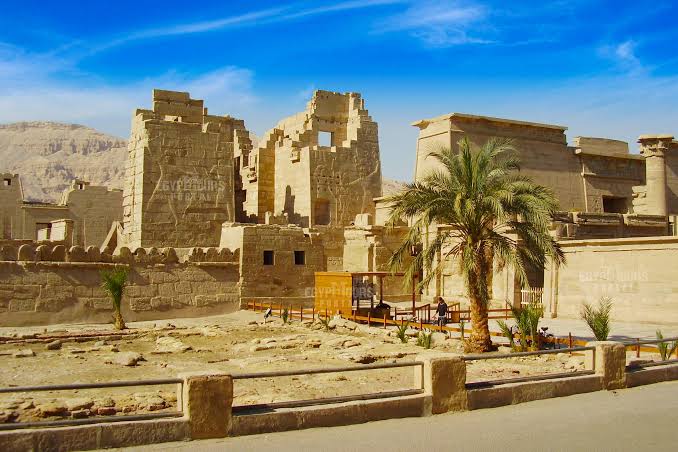
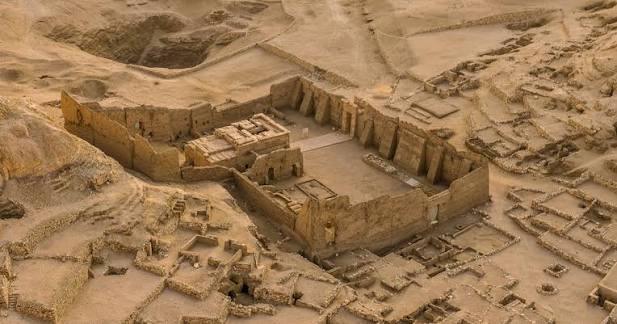
Medinet Habu puts you inside the enormous mortuary temple of Ramesses III, with monumental pylons, courts, deeply carved reliefs, preserved color, and some of the most important military imagery of the late New Kingdom.
There is also a direct historical relationship.
Two of the principal currently accessible Valley of the Queens tombs—QV44 and QV55—belong to sons of Ramesses III, the same king whose great mortuary complex dominates Medinet Habu.
That makes this more than a geographically convenient pairing.
At Medinet Habu you encounter the king presenting himself through state religion and monumental royal imagery.
In the valley, you see him in the funerary programs created for his children.
See our Medinet Habu Guide.
Deir el-Medina Is an Even Better Addition for Travelers Interested in Tomb Painting
Another logical nearby choice is Deir el-Medina, the settlement associated with the craftsmen who constructed and decorated royal tombs in the Theban necropolis.
This pairing changes the perspective again.
At the Valley of the Kings and Valley of the Queens, you see what the craftsmen produced for royalty.
At Deir el-Medina, you see where those workers lived and how they decorated tombs for themselves.
The result can be more illuminating than adding another monumental temple to the same morning.
A knowledgeable Egyptologist can use the three sites to connect royal patrons, tomb painters, funerary beliefs, and daily life without relying on a long lecture.
If you have enough time for a deeper West Bank day, Valley of the Queens + Deir el-Medina + Medinet Habu is a more coherent combination than simply adding every famous monument within driving distance.
Don’t Automatically Combine Both Royal Valleys Back-to-Back
It is perfectly possible to visit the Valley of the Kings and Valley of the Queens on the same day.
That does not automatically make it the best structure.
After several tombs in the Valley of the Kings, another sequence of painted funerary corridors can begin to blur together, especially if your guide provides similar explanations in each.
A better approach for many travelers is to alternate site types.
Visit the Valley of the Kings early, then Hatshepsut Temple.
On another West Bank morning, combine the Valley of the Queens with Medinet Habu or Deir el-Medina.
This gives each valley more distinct context.
Our Valley of the Kings Guide should be used to choose the strongest royal tombs rather than trying to compensate for limited time by entering as many tombs as possible.
Hatshepsut Temple Solves a Different West Bank Question
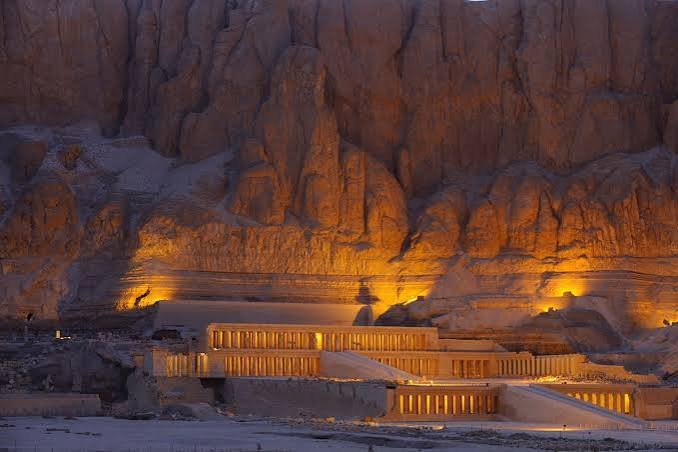
The Temple of Hatshepsut at Deir el-Bahari is close enough to fit within a wider West Bank itinerary but should not be treated as interchangeable with the tomb valleys.
Its open terraces, monumental architecture, Punt reliefs, divine-birth narrative, and relationship with Amun at Karnak give you an entirely different experience.
Our Hatshepsut Temple Guide explains why early timing matters there in particular: the limestone cliffs behind the temple reflect heat across the terraces.
That matters when sequencing a day.
If temperatures are severe, protect the earliest hours for whichever exposed site suffers most from heat rather than automatically following a standard tour-company order.
The Valley of the Queens is compact enough that it can sometimes fit more flexibly later in a cool-season morning.
Is a Guide Worth It?
A guide is useful, but not essential for navigation.
The valley is relatively straightforward.
The value of an Egyptologist is in understanding why royal children are buried here, why Ramesses III appears so prominently in his sons’ tombs, how the funerary imagery differs from the kingly programs across the cliffs, and why conservation dictates which tombs you can enter at all.
Guides have historically been restricted from delivering full narration inside certain tombs in order to reduce environmental pressure and congestion; Getty’s management research records such controls in the Valley of the Queens.
That makes explanation outside the tomb particularly useful.
A good guide should prepare you before entry, then let you look.
You do not need someone speaking continuously while you are trying to examine fragile painted surfaces in a small chamber.
First-Time Mistakes to Avoid
The biggest mistake in 2026 is buying a tour because it advertises Nefertari without confirming whether QV66 is actually open.
It is not currently open.
A second mistake is skipping the valley entirely simply because Nefertari is unavailable. If you have enough West Bank time, QV55 and QV44 remain strong examples of Ramesside funerary painting.
The third is giving the valley two or three hours while compressing Medinet Habu into thirty minutes. Under the current access arrangement, that allocation is backwards for most travelers.
Finally, do not touch painted surfaces, even if another visitor does. Nefertari’s closure is a reminder that tomb environments are fragile. Conservation restrictions are not arbitrary obstacles inserted between travelers and archaeology; they are part of the reason any of this painting survives.
Frequently Asked Questions
Is Nefertari’s tomb open in 2026?
No. As of August 2026, QV66 remains closed to ordinary visitors and no confirmed official reopening date has been announced. Egypt’s Ministry states that the tomb was closed in March 2024 to monitor humidity and assess future controlled access, and visitor reports through 2026 continue to confirm the closure.
Can I buy a separate Nefertari ticket?
If QV66 reopens, check the new official ticket and conservation rules.
Which tombs are open in the Valley of the Queens?
Current August 2026 visitor reporting identifies QV44 Khaemwaset, QV55 Amunherkhepshef, and QV52 Tyti as the accessible tombs. Tomb availability can change for conservation, so verify the roster when you arrive.
Which current tomb is best?
QV55 Amunherkhepshef is the strongest first priority for most visitors. Its color remains impressive, and the repeated images of Ramesses III presenting his young son to the gods give the tomb an unusually clear funerary story. QV44 is the next strong choice, with QV52 adding the perspective of a royal woman.
How long do you need at the Valley of the Queens?
With Nefertari closed, about one hour is sufficient for most travelers. Allow closer to 75–90 minutes if you study the decoration carefully or move slowly. If QV66 eventually reopens, recalculate the visit based on whatever timed-access system is introduced.
Is the Valley of the Queens worth visiting after the Valley of the Kings?
It is worthwhile if you have enough Luxor time because the experience is different: smaller tombs, royal women and children, fewer visitors, and a more intimate scale. Travelers with only a very short West Bank itinerary should prioritize the Valley of the Kings first.
Can I take photographs inside the tombs?
Current ticket information states that mobile-phone photography without flash is allowed under the standard site rules. Follow any restrictions posted at individual tombs. Professional equipment and commercial photography can require separate permissions.
Is the Valley of the Queens difficult to walk?
The overall valley is relatively compact, but individual tombs can involve stairs, slopes, low entrances, and confined interiors. Travelers with mobility limitations should ask about the easiest currently open tomb before beginning the route.
Should I combine the Valley of the Queens with Medinet Habu?
Yes. This is one of the strongest combinations on the West Bank. QV44 and QV55 belong to sons of Ramesses III, while Medinet Habu is his great mortuary temple. The two sites therefore connect historically as well as geographically.
The mistake in 2026 is planning the Valley of the Queens as though Nefertari were still automatically available—or dismissing the entire necropolis once you discover she is not. The stronger approach is to verify QV66’s status, give the current Ramesside tombs about an hour, then connect them with Medinet Habu or Deir el-Medina so the royal-family burials become part of a coherent West Bank story. Explore ENA’s Luxor and West Bank itineraries to sequence these sites around current tomb access and the cooler hours, rather than paying for an outdated itinerary built around a tomb that remains closed.