5 Day Egypt Itinerary: How to See the Best of Egypt in Five Days
Planning a trip to Egypt with limited time can feel overwhelming. The country is packed with iconic sites—pyramids, temples, ancient tombs, and vibrant cities—spread across a large geography. The good news is that with the right plan, five days in Egypt is enough to experience several of the country’s most famous highlights.
A well-structured itinerary focuses on Cairo’s pyramids and museums, then moves south to Luxor, where ancient temples and royal tombs reveal the peak of ancient Egyptian civilization.
This guide outlines a practical and rewarding 5 day Egypt itinerary, including what to see each day, how to travel between cities, and how to maximize your time without turning the trip into a rushed checklist.
Is 5 Days Enough for Egypt?
Five days is not enough to see everything Egypt offers—but it is enough to experience the country’s most iconic landmarks. Egypt can be visited year-round, but temperatures vary significantly between seasons, so it’s worth reviewing the best time to visit Egypt before planning your itinerary.
With smart planning, travelers can visit:
- The Pyramids of Giza
- The Egyptian Museum or Grand Egyptian Museum
- Karnak Temple
- Luxor Temple
- The Valley of the Kings
- The Temple of Hatshepsut
This combination gives you a powerful overview of ancient Egypt while keeping travel manageable.
The key is focusing on two major destinations: Cairo and Luxor.
Overview of the 5 Day Egypt Itinerary
Day 1 — Cairo arrival and pyramids
Day 2 — Cairo museums and Old Cairo
Day 3 — Fly to Luxor, visit Karnak and Luxor Temple
Day 4 — West Bank: Valley of the Kings and Hatshepsut Temple
Day 5 — Sunrise Luxor experience and departure
This route minimizes travel time while maximizing historical depth.
Day 1: Cairo and the Pyramids of Giza
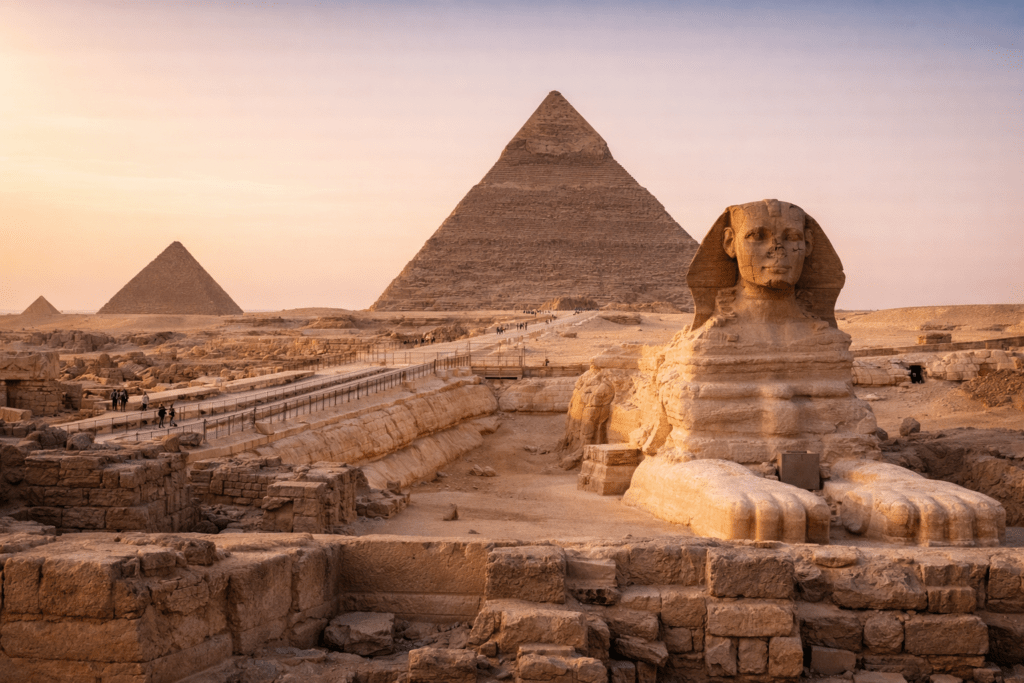
Most Egypt trips begin in Cairo, the country’s capital and gateway to the pyramids.
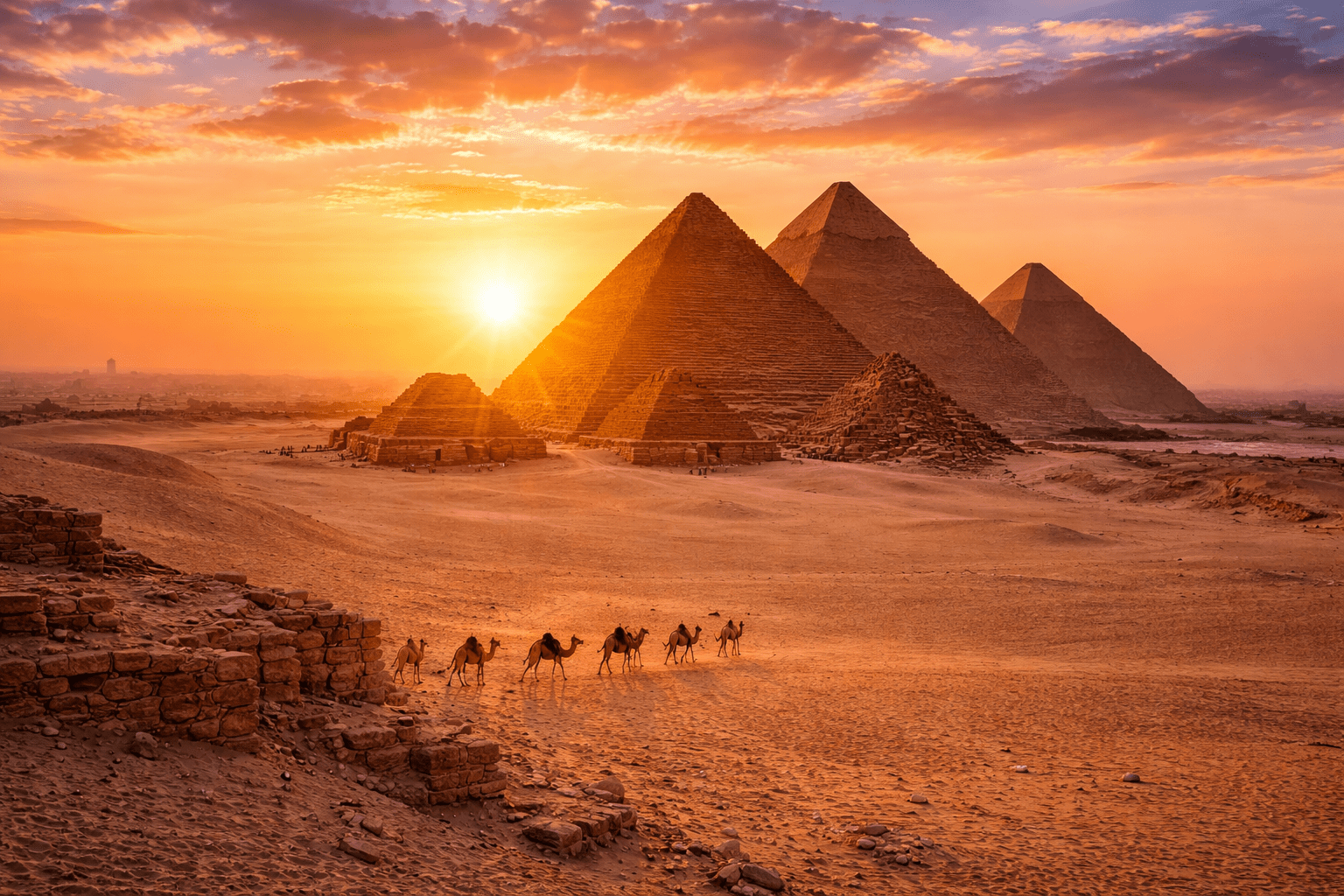
Your first major stop should be the Pyramids of Giza, located about 45 minutes from central Cairo.
Here you’ll see three of the most famous monuments in the world:
- The Great Pyramid of Khufu
- The Pyramid of Khafre
- The Pyramid of Menkaure
Nearby stands the Great Sphinx, a limestone statue with the body of a lion and the head of a pharaoh.
Take time to walk across the plateau to the panoramic viewpoint, where all three pyramids align in a classic desert landscape.
If time allows, consider adding Saqqara, home to the Step Pyramid of Djoser—the earliest pyramid ever built.
End the day with dinner overlooking the Nile or a rooftop view of the pyramids.
Day 2: Cairo Museums and Historic Districts
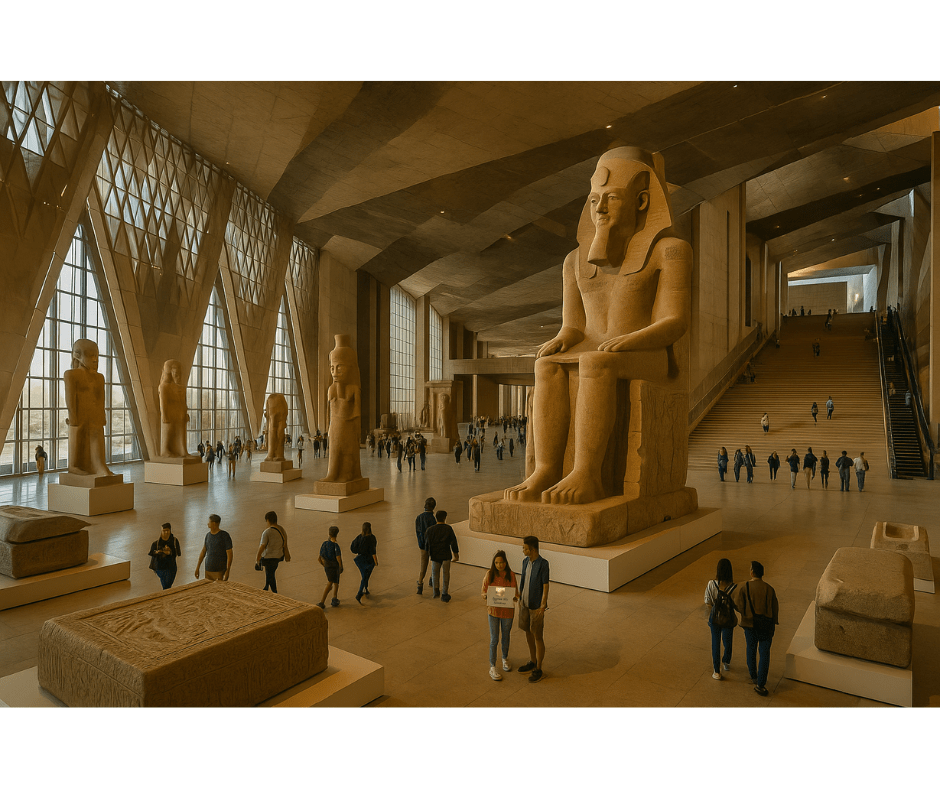
Your second day in Cairo focuses on the artifacts that bring ancient history to life.
Egyptian Museum or Grand Egyptian Museum
Cairo is home to two major museum experiences.
The Egyptian Museum in Tahrir Square houses thousands of artifacts, including royal statues, burial objects, and the famous treasures of Tutankhamun.
The Grand Egyptian Museum (GEM) near Giza is a massive modern complex designed to display Egypt’s history on a much larger scale.
Either museum provides essential context for the monuments you see throughout Egypt.
Islamic Cairo and Khan el-Khalili
After the museum, explore Islamic Cairo, one of the richest concentrations of medieval architecture in the world.
Highlights include:
- The Citadel of Saladin
- The Muhammad Ali Mosque
- Historic streets such as Al-Muizz Street
Nearby, Khan el-Khalili Bazaar offers a lively market atmosphere where travelers can browse spices, crafts, and traditional souvenirs.
Day 3: Fly to Luxor – Temples of Ancient Thebes
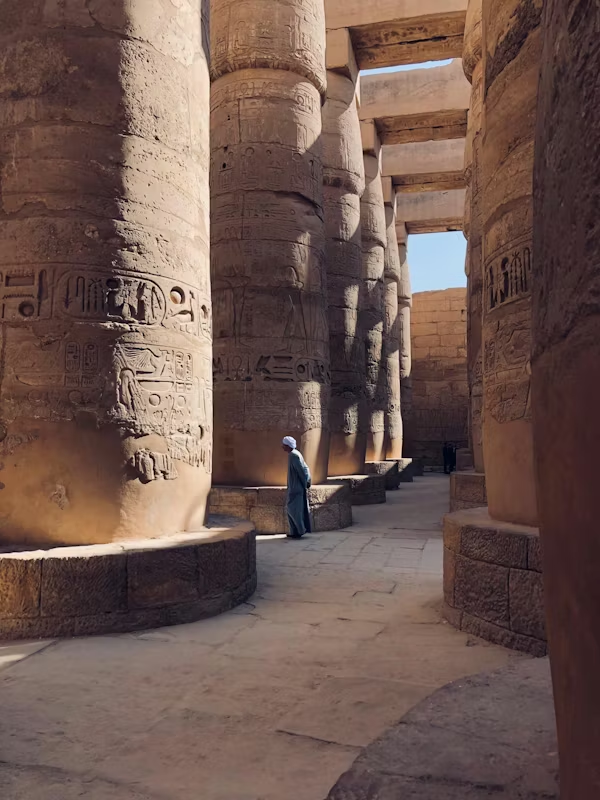
On the third day, fly south to Luxor, the ancient city of Thebes and the religious capital of Egypt during the New Kingdom.
Luxor contains one of the world’s greatest concentrations of ancient monuments.
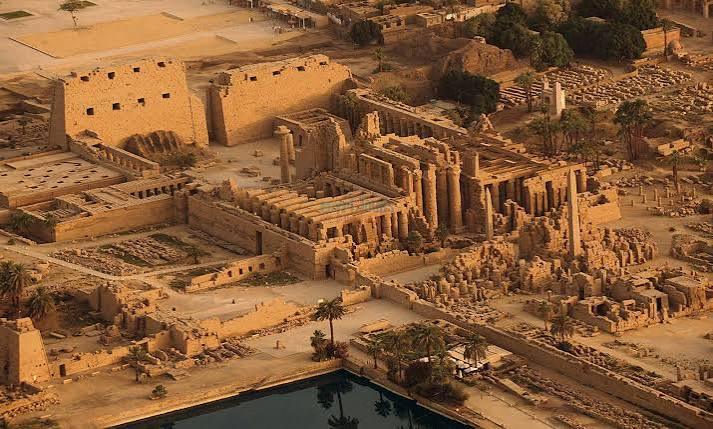
Karnak Temple
Begin at Karnak Temple, a vast religious complex expanded over nearly 2,000 years.
The most famous area is the Great Hypostyle Hall, where towering columns create a forest of stone decorated with hieroglyphic carvings.
Luxor Temple
Later in the day, visit Luxor Temple, located in the heart of the modern city.
Unlike many temples, Luxor Temple was closely connected to royal ceremonies and festivals.
At sunset or after dark, the temple lighting transforms the site into one of the most atmospheric monuments in Egypt.
Day 4: Luxor West Bank – Tombs and Royal Monuments
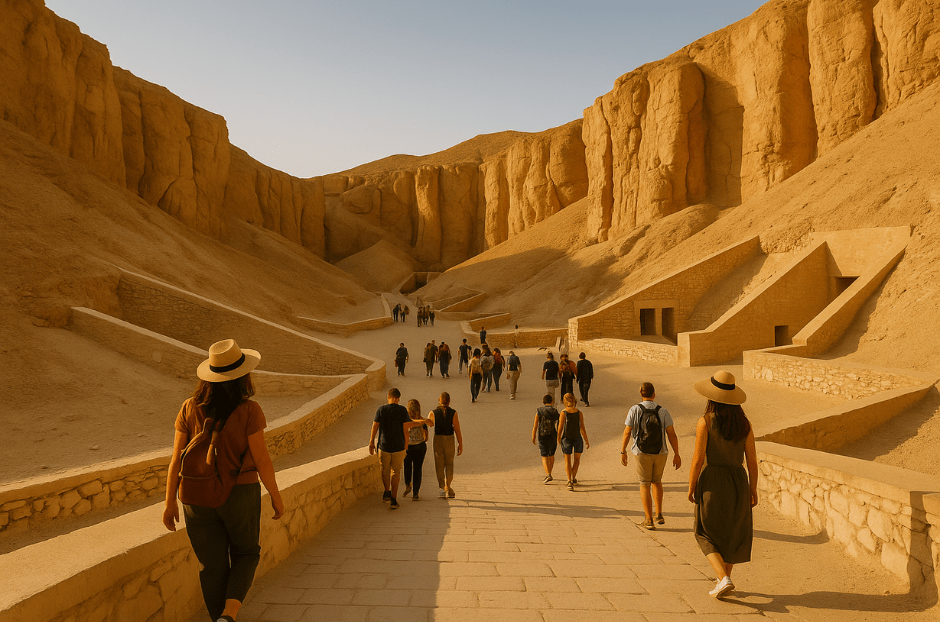
The West Bank of Luxor was the burial ground for pharaohs and nobles during the New Kingdom.
Valley of the Kings
This desert valley contains the tombs of many famous rulers, including Tutankhamun.
Inside the tombs, colorful wall paintings depict the pharaoh’s journey through the afterlife.
Most visitors explore three tombs included with the entry ticket.
The Valley of the Kings is part of the Ancient Thebes UNESCO World Heritage Site, which includes many of Luxor’s temples and royal tombs.
Temple of Hatshepsut
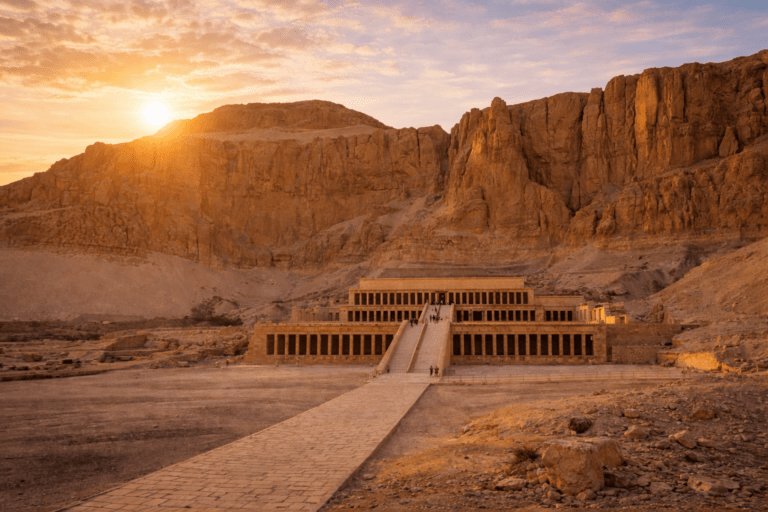
Nearby stands the Temple of Hatshepsut, one of the most striking monuments in Egypt.
Built into the cliffs of Deir el-Bahari, the temple’s terraces rise dramatically against the desert mountains.
Hatshepsut ruled as one of Egypt’s most successful female pharaohs, and her temple reflects both political power and religious symbolism.
Colossi of Memnon
Before leaving the West Bank, stop at the Colossi of Memnon, two massive statues that once guarded a vast temple complex.
Day 5: Sunrise in Luxor and Departure
Your final day offers a chance to experience Luxor in a more relaxed way before departure.
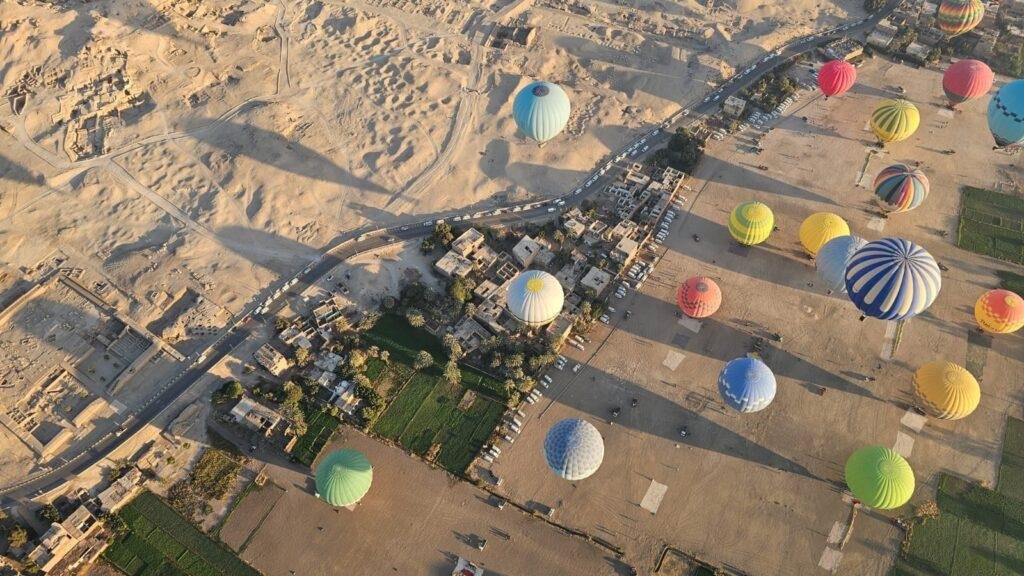
One of the most memorable activities is a sunrise hot air balloon ride over the West Bank. From the air, you can see temples, farmland, and the Nile River glowing in the early morning light.
After breakfast, you can explore local markets, enjoy a Nile-side café, or take a short boat ride before flying back to Cairo for international departure.
Can You Add a Nile Cruise to a 5 Day Egypt Trip?
Yes — a Nile cruise can absolutely be included in a five-day Egypt itinerary if the trip is structured correctly.
While traditional cruise schedules run 3 or 4 nights between Luxor and Aswan, many travelers combine a short cruise with a focused visit to Cairo. This creates a compact itinerary that includes Egypt’s most famous monuments while still allowing time to sail the Nile.
A typical 5-day itinerary that includes a cruise might look like this:
Day 1 — Cairo arrival and the Pyramids of Giza
Day 2 — Cairo museums and flight to Luxor
Day 3 — Begin Nile cruise and visit Karnak Temple and Luxor Temple
Day 4 — Sail to Edfu and Kom Ombo
Day 5 — Arrive in Aswan, visit Philae Temple and depart
This structure allows travelers to experience three of Egypt’s most important regions in one trip: Cairo, Upper Egypt’s temples, and the Nile River itself.
Why a Short Nile Cruise Works Well
A Nile cruise is often the most comfortable way to explore Upper Egypt because it combines transportation, accommodation, and guided tours into one seamless experience.
Instead of changing hotels or driving long distances between archaeological sites, travelers simply wake up each morning in a new location along the Nile.
During the cruise, visitors typically see several of Egypt’s most important temples, including:
- Karnak Temple in Luxor
- The Temple of Horus at Edfu
- Kom Ombo Temple
- Philae Temple in Aswan
Between visits, the ship sails through the Nile Valley, passing villages, farmland, and desert landscapes that have changed little over thousands of years.
Who Should Include a Nile Cruise in a Short Trip
A Nile cruise works particularly well in a five-day itinerary for travelers who:
- Want to see multiple major temples efficiently
- Prefer organized travel with expert guides
- Enjoy scenic journeys and relaxing evenings
- Want to experience the Nile itself, not just Egypt’s cities
Because cruises combine lodging, meals, and excursions, they can actually simplify short itineraries rather than complicate them.
When to Consider a Longer Trip
If you have more time, extending your trip to 7–10 days allows for a slower pace and more time in Cairo or along the Red Sea.
However, even in five days, a well-planned itinerary can still include the Nile — giving travelers one of Egypt’s most iconic experiences without requiring a long vacation.
5 Day Egypt Itinerary Map and Travel Times
Understanding the distances between Egypt’s major destinations helps explain why this itinerary works well in five days.
Egypt’s most visited historical sites are concentrated in two main regions:
- Cairo and Giza in northern Egypt
- Luxor and Aswan in Upper Egypt along the Nile
Because these regions are several hundred kilometers apart, most travelers use domestic flights to move between them efficiently.
Key Travel Distances
Cairo → Luxor
Approx. 650 km (400 miles)
Flight time: 1 hour
Luxor → Aswan
Approx. 220 km (135 miles)
Sailing time during a Nile cruise: 1–2 days with temple stops
Cairo → Aswan
Approx. 870 km (540 miles)
Flight time: 1.5 hours
Why Flights Are Important
Driving between Cairo and Luxor can take 9–10 hours, which would consume too much time in a short itinerary.
Domestic flights allow travelers to:
- Spend more time exploring temples and museums
- Reduce long travel days
- Keep the trip comfortable and efficient
Because flights within Egypt are short and frequent, combining Cairo with a Luxor or Nile cruise experience becomes very manageable even on a five-day trip.
The Geography of the Trip
A simplified travel flow looks like this:
Cairo → Luxor → Nile Cruise → Aswan
This route follows the natural historical geography of ancient Egypt, moving south along the Nile Valley where the New Kingdom temples were built.
Is 5 Days in Egypt Too Rushed?
A five-day trip to Egypt can feel fast, but it does not have to feel rushed if the itinerary focuses on the right experiences.
Egypt is a large country with thousands of archaeological sites, but most travelers come to see a core group of highlights. By concentrating on those highlights, five days can provide a surprisingly rich introduction to Egyptian history and culture.
What You Can Realistically See
In five days, travelers can comfortably experience:
- The Pyramids of Giza
- One of Cairo’s major museums
- Historic districts of Cairo
- Major temples in Luxor
- Royal tombs in the Valley of the Kings
- A Nile cruise experience or Upper Egypt temples
This combination covers several of the most famous monuments in the world.
The Key Is Smart Planning
Short Egypt trips work best when they follow a few simple principles:
Limit the number of destinations
Trying to include Cairo, Luxor, Aswan, Abu Simbel, and the Red Sea in five days creates an exhausting schedule. Focusing on Cairo and Upper Egypt keeps travel manageable.
Use flights instead of long drives
Flying between cities saves valuable sightseeing time.
Prioritize quality experiences
Seeing fewer sites with proper time and guidance is usually more rewarding than rushing through a long list of monuments.
Who a 5 Day Egypt Trip Is Best For
A five-day itinerary is ideal for travelers who:
- Are visiting Egypt as part of a longer international trip
- Want to see the country’s most famous monuments
- Prefer a fast-paced but efficient travel experience
When to Consider a Longer Trip
If you want a slower pace or additional destinations, extending your itinerary to 7–10 days allows you to add experiences such as:
- Abu Simbel
- The Red Sea (Hurghada or Sharm El Sheikh)
- Siwa Oasis
- More time exploring Cairo
But even in a shorter trip, Egypt’s most iconic landmarks can still leave a powerful impression.
Tips for Planning a Short Egypt Trip
Fly Instead of Driving
Egypt’s major historical destinations are spread across long distances. Domestic flights between Cairo and Luxor save many hours compared to road travel and allow you to spend more time exploring monuments rather than sitting in transit.
Start Early
Many of Egypt’s most famous sites are outdoors, and temperatures can rise quickly later in the day. Early morning visits help travelers avoid both the heat and the largest tour groups.
Choose Quality Over Quantity
Trying to see too many destinations in a five-day trip can quickly become exhausting. Instead of rushing between multiple cities, focus on the most meaningful highlights such as the Pyramids of Giza, Luxor’s temples, and the Valley of the Kings.
Use Guided Tours
Experienced guides help bring Egypt’s monuments to life. Rather than simply walking through temples, travelers gain insight into the symbolism, history, and stories behind the carvings and architecture.
If this is your first visit to the country, it’s also helpful to review a broader guide on how to plan a trip to Egypt, including visa information, transportation options, and how to structure a multi-day itinerary.
Is a 5 Day Egypt Trip Worth It?
Absolutely.
Even a short visit can reveal the scale and sophistication of ancient Egyptian civilization. Seeing the pyramids, walking through temples, and descending into royal tombs creates memories that last long after the trip ends.
For travelers with limited time, a well-planned 5 day Egypt itinerary provides a powerful introduction to one of the world’s most fascinating destinations.
FAQ — 5 Day Egypt Itinerary
Is 5 days enough time to visit Egypt?
Yes, five days is enough time to experience some of Egypt’s most iconic sites if the itinerary is planned carefully. A well-designed 5 day trip typically focuses on Cairo and Luxor, allowing travelers to see the Pyramids of Giza, major museums, Karnak Temple, Luxor Temple, and the Valley of the Kings. While it is not enough time to explore the entire country, five days can provide a meaningful introduction to Egypt’s ancient history and culture.
What is the best 5 day Egypt itinerary?
One of the most effective 5 day Egypt itineraries includes two days in Cairo and two to three days in Luxor.
A typical structure looks like this:
Day 1 — Cairo and the Pyramids of Giza
Day 2 — Egyptian Museum and historic Cairo
Day 3 — Fly to Luxor and explore Karnak Temple and Luxor Temple
Day 4 — Valley of the Kings and Hatshepsut Temple
Day 5 — Sunrise experience in Luxor and departure
This itinerary balances travel time with major historical highlights.
Should you visit Luxor or Aswan on a short Egypt trip?
If you only have five days, Luxor is usually the better choice because it contains a higher concentration of major monuments. Luxor includes the Valley of the Kings, Karnak Temple, Luxor Temple, and several other important archaeological sites.
Aswan is beautiful and relaxing but works best when travelers have more time or are taking a Nile cruise.
Can you see the pyramids and Luxor in 5 days?
Yes, and this combination is actually one of the most popular short Egypt itineraries. Cairo provides access to the Pyramids of Giza and Egypt’s major museums, while Luxor offers the most impressive temples and royal tombs from the New Kingdom.
Domestic flights between Cairo and Luxor make it easy to connect the two cities within a short trip.
Is a Nile cruise possible in a 5 day Egypt itinerary?
Yes, a Nile cruise can be included in a well-planned 5 day Egypt itinerary. Many travelers combine two days in Cairo with a 3–4 night Nile cruise between Luxor and Aswan, allowing them to experience both the Pyramids of Giza and several of Upper Egypt’s most important temples.
Short itineraries like this typically include visits to Karnak Temple, Luxor Temple, Edfu Temple, Kom Ombo, and Philae Temple while sailing the Nile between destinations.
Because cruises combine transportation, accommodation, and guided tours, they can actually make a short itinerary more efficient rather than more complicated.
If you have 7–10 days, you can add more time in Cairo, include Abu Simbel, or explore additional destinations such as the Red Sea.
What is the best time of year for a 5 day Egypt trip?
The most comfortable months for visiting Egypt are generally October through April, when temperatures are cooler for sightseeing.
Summer travel between May and September is still possible, but visitors should plan early morning tours and expect very hot temperatures, especially in Upper Egypt.
Ready to Plan Your Egypt Trip?
If you want to experience Egypt’s pyramids, temples, and ancient cities without the stress of planning every detail, explore our curated Egypt tour itineraries designed to combine Cairo and Luxor with smart pacing and expert guidance.