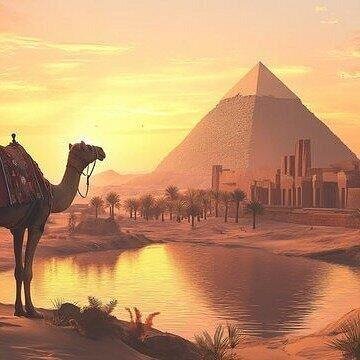
Scroll VI – When the Nile Forgot to Forgive
Alexandria & The Nile Valley, c. 55–52 BCE — After the Exile, Before the Crown
Translated and restored for the modern traveler.
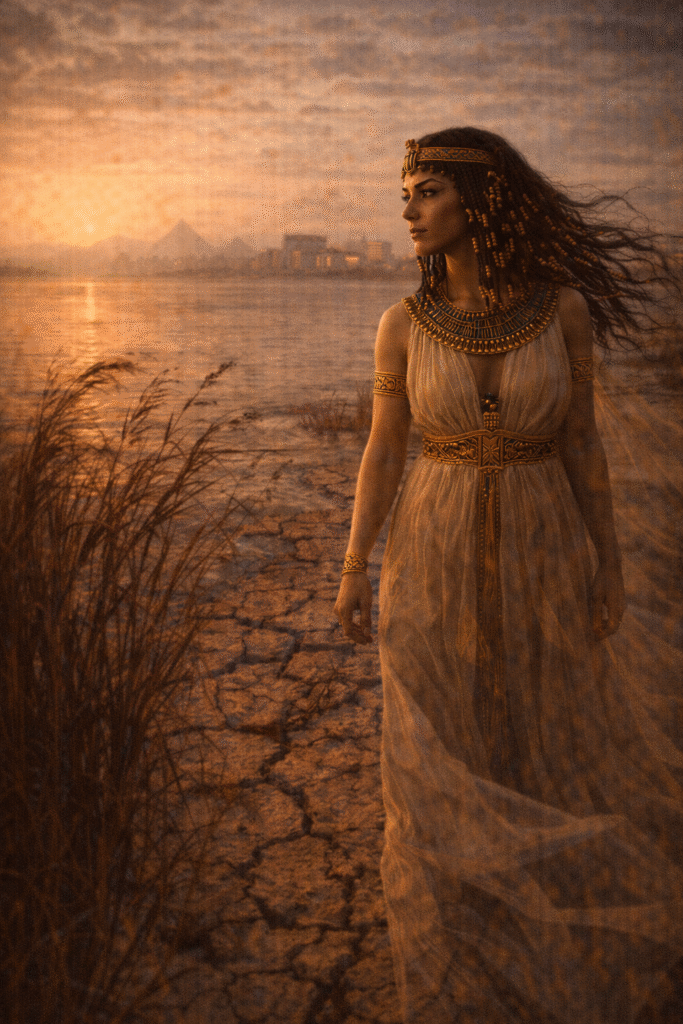
Prologue — Egypt’s First God Was the River
Before the kings,
before the temples,
before the scribes
drew falcons and suns
on clay tablets—
Egypt bowed
to water.
The Nile
was our calendar,
our harvest,
our breath.
When it rose,
Egypt rose.
When it shrank,
Egypt trembled.
When it failed—
Egypt broke.
The gods
could forgive many sins.
But the Nile
did not forgive.
And one year,
as I returned from exile,
the Nile
decided
to teach us a lesson
in humility.
This Scroll
is the story
of Egypt’s hunger—
and how hunger
shapes rulers
more than luxury ever can.
PART I — The River That Did Not Rise
It began
with silence.
The kind of silence
that does not belong
in a land
known for the hiss
of water on silt
as the flood pushes inland.
The day
the Nile should have begun
its annual swelling,
priests stood on the banks
in white linen
waiting for the first
brown surge.
They waited
through the morning.
Through midday.
Through dusk.
Nothing.
The water stayed low,
glassy,
still.
The star Sopdet
(Sirius)
had risen on time.
The rituals
were performed flawlessly.
The gods
had received
their offerings.
But the river
did not come.
The priests
looked at one another.
This had happened before.
Rarely.
Dangerously.
A missing flood
was not merely
an ecological event.
It was a curse.
A judgment.
A warning.
Egypt would pay.
And she did.
PART II — The First Signs of Hunger
The Nile’s waters
feed canals.
The canals
feed fields.
The fields
feed Egypt.
When the flood fails,
the canals dry.
When canals dry,
harvests fail.
When harvests fail,
even gold
cannot buy grain.
I saw the first signs
from the palace balcony.
Fewer market boats.
Fewer fishermen.
Wheat baskets
looking thinner.
Then
the cries began.
Soft at first.
Mothers hushing children
who wanted bread.
Men selling tools
to buy flour.
Then
sharp.
“Where is the Nile?”
“Where is the King?”
“Where is justice?”
My father panicked.
He sent envoys
to temples
to beg for divine intervention.
He sent soldiers
to guard granaries
against theft.
He raised taxes
to buy imported grain
from Cyprus and Syria—
grain
that was already depleted
because drought
had struck more lands
than ours.
And when he was desperate,
he raised taxes again.
It was the wrong move.
It was the worst move.
And the one
Egypt would never forgive.
PART III — The Day the Bread Riots Began
I heard them
before I saw them.
A roar
from the harbor district—
not the roar of celebration,
or drunk sailors,
or trade.
A roar
of grief.
A roar
of hunger.
I ran to the balcony
overlooking the Canopic Way.
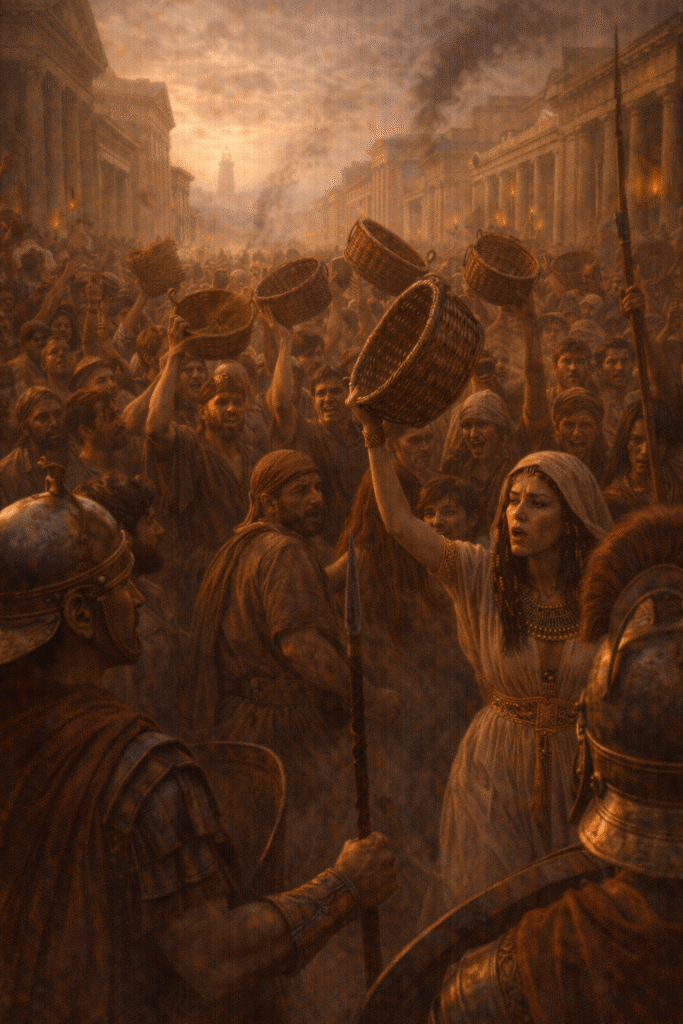
Thousands.
Not hundreds.
Thousands.
Holding empty baskets.
Holding children.
Holding wheat husks
as if they might transform
into something edible
if they stared hard enough.
“Give us grain!”
“Lower the tribute!”
“End Roman taxes!”
“End the king’s greed!”
Their voices
were thunder.
Not disrespect.
Desperation.
My father
heard only noise.
He ordered
the palace guards
to repel them.
The guards
stood uncertain.
Some had families
in the crowd.
Some had grown up
in the floodplain villages
now suffering.
One of the guards
trembled
so visibly
I thought he might fall.
And then I heard
something worse than shouts.
Stones.
Thrown.
Not at the guards.
At the palace.
At the king.
At us.
One stone
landed near my foot
on the balcony.
It was smooth,
river-worn,
painted with ink:
Amapep
—hunger demon.
The message
was clear.
The people
did not blame Rome.
They blamed
the throne.
PART IV — The Priestess Who Spoke Against Us
In times of drought,
Egyptians turned
to the temples.
To the gods.
To the priestesses.
To the rituals
older than pyramids.
One morning,
my father summoned
the High Priestess of Isis
to the palace.
He wanted her
to reassure the people
that the gods
still favored him.
She refused.
In front of the throne
and half the court,
she said:
“The gods
do not answer kings
who answer only to Rome.”
A gasp
spread through the hall.
My father
went pale.
But the priestess
continued:
“When a Pharaoh
forgets his people,
the Nile
forgets him.”
This was sacrilege.
This was truth.
She bowed stiffly
and left.
My father
collapsed into his chair.
“She has doomed us,”
he whispered.
“No,” I said quietly.
“She has warned us.”
I was not defending her.
I was listening.
Egyptians loved
their priestesses
more than their kings.
If the temples
turned against the palace,
we would not face
an uprising.
We would face
a revolution.
PART V — My First Attempt at Leadership
My father hid.
He locked himself
in the blue-tiled music chamber
and drank
while the city starved.
But I could not hide.
I would not hide.
I left the palace
with only two guards
and ordered a litter
to take me
to the grain district.
The guards
tried to stop me.
“It is not safe,”
they said.
“Neither is hunger,”
I replied.
When I entered the district,
the crowd froze.
They stared
at the royal litter
with wariness—
then resentment.
But when I stepped out,
without crown
or jewels,
their expressions shifted.
“You came,”
a woman murmured.
“Yes,” I said.
“What will you do?”
a man demanded bitterly.
“Listen,” I answered.
They did not expect that.
Kings speak.
Queens command.
People obey.
But I listened.
I listened
to mothers
with thin infants.
To farmers
whose fields had cracked.
To workers
whose wages
were paid
in promises.
And they told me
something
I had never understood
so clearly before:
Hunger
was not merely
the absence of food.
It was the absence
of trust.
Trust in the river.
Trust in the court.
Trust in the gods.
I could not feed them.
But I could witness them.
And sometimes
witness
is the first form of healing.
PART VI — The Day I Spoke to the Nile
After meeting the people,
I traveled—
against my father’s orders—
to a small shrine
on the banks
of the nearly barren river.
The priestess of that shrine
was old,
wrinkled like papyrus,
eyes bright as obsidian.
“You come for answers,”
she said.
“I come for Egypt,”
I replied.
She nodded once.
“Then speak to the river.”
I knelt
on sand
that should have been
underwater.
The air smelled
of heat
and abandonment.
I placed my hand
in the shallow pool
left behind by the receding water.
It was warm.
Too warm.
“Why have you forsaken us?”
I whispered.
The priestess
placed her hand
on the back of my neck.
“The river
does not forsake,”
she said.
“It reflects.”
“Reflects what?”
“What we have become.”
Her meaning
was unmistakable.
Egypt
was out of balance.
Not because of the drought.
Because of the court.
Because of Rome.
Because of hunger
and betrayal
and fear.
“The river returns
when Egypt returns,”
she said.
“How long will that take?”
She looked at me
with a knowing
that unsettled me.
“As long as it takes
for the rightful one
to lead her.”
I swallowed.
She had not said
“king.”
She had not said
“Pharaoh.”
She had said
rightful one.
The river
was a judge.
And it had judged
my father.
[Suggested Visual: Cleopatra kneeling at a low Nile bank during drought, touching warm shallows, an elderly priestess behind her.
AI Prompt: “Young Cleopatra VII kneeling at shallow Nile during drought, touching water, elderly Egyptian priestess behind her, cinematic realism.”]
PART VII — My Father’s Rage
When I returned
to the palace,
my father was furious.
“You humiliated me,”
he shouted.
“You went to the grain district
like a commoner!”
“I went
like a leader,”
I replied.
His hand
flew to strike me.
He stopped
just before contact,
his fingers trembling.
“You are a girl,”
he hissed.
“You do not understand
the burden of rule.”
“I understand hunger,”
I said quietly.
“And Egypt understands
that you do not.”
His face
crumpled.
Not from anger.
From fear.
“Cleopatra,”
he whispered,
“you will make them love you
more than they love me.”
It was not a compliment.
It was an accusation.
A prophecy.
A warning.
“You will divide the kingdom,”
he said.
“You will become
a danger.”
I did not answer.
Not because he was right—
but because arguing
with a frightened man
only feeds his terror.
Inside,
I felt something shift.
If loving my people
made me dangerous,
then dangerous
was what Egypt needed.
PART VIII — The Grain Theft Scandal
Hunger
turns men
into creatures.
And power
turns creatures
into thieves.
One night,
grain bins
in the royal granary
were found
half-empty.
Not because
the people stole them.
Because
the officials did.
My father
was ready to execute
the nearest scribe.
I demanded
an investigation.
He refused.
So I sent
my own guards.
Not palace guards.
Egyptian city guards—
men who belonged
to the Nile
not the court.
They followed
the grain trail
to a noble’s storehouse.
Someone
had stolen grain
to sell
on the black market
to desperate families.
Someone connected
to my brother.
Someone
connected
to the palace.
My father
froze.
If he punished
the noble,
he risked losing
the noble faction.
If he did nothing,
he risked losing
the people.
He chose
inaction.
And Egypt saw it.
I chose
action.
And Egypt saw that too.
I ordered
the grain returned
and distributed
in the city squares
with scribes recording
every name.
It was not enough.
But it was something.
Later that night,
a woman approached me
while we loaded baskets.
She placed her hand
on my arm
and whispered:
“Daughter of the Nile.”
It was the second time
I had heard the title.
It would not be the last.
PART IX — The Moment the People Shifted
One day,
as I walked through the harbor,
a fisherman bowed.
Not the polite bow
of courtesy.
A deep bow.
Reverence.
He said:
“Egypt sees you.”
It struck me harder
than any crown.
The people
were choosing.
They were not blind
to failures.
They were not blind
to corruption.
They were not blind
to Rome’s shadow.
But they were also
not blind to hope.
I was fourteen.
Almost fifteen.
Not old enough
to rule.
But old enough
to understand
what was happening:
Egypt was shifting
toward me.
Not because
I had power.
Because I had listened.
And in a land
where kings
spoke too loudly—
listening
was a revolution.
🌿 MID-SCROLL CTA — Walk the Egypt She Saw at Its Weakest
If you want to understand
Cleopatra’s Egypt—
not the gold,
not the temples,
but the hunger,
the desperation,
the breaking point
that shaped her rule—
come with ENA.
Stand at the Nile edge
where the river
once refused to rise.
Walk the grain district
where the riots began.
Stand in the palace halls
where leadership
and cowardice
clashed in equal measure.
Journey with ENA.
Queens are not molded
in luxury,
but in scarcity.
PART X — When the Nile Finally Returned
The following year,
as the star Sopdet
rose again in the dawn sky,
Egypt held its breath.
Priests gathered.
Farmers gathered.
Children gathered.
A hush
fell over the riverbank.
Then—
a sound.
Low.
Rumbling.
Alive.
Water.
A surge
of silty brown floodwater
rushed forward
like a beast awakening.
People wept.
Fell to their knees.
Praised the gods.
The Nile
had forgiven us.
Partly.
But forgiveness
is not kindness.
Forgiveness
is warning.
The river
gave us back life—
but it took something
in return:
The illusion
that Egypt
could survive
under a weak king.
When the flood returned,
the people returned
to their fields.
The riots stopped.
The treasury stabilized.
The famine eased.
But the belief
in my father
did not return.
Instead,
something else
took root.
A whisper.
A possibility.
A name.
Mine.
PART XI — The Lesson the Nile Gave Me
The Nile
taught me something
nothing else could:
A ruler
is not the one
who takes the throne.
A ruler
is the one
the people turn to
when everything breaks.
And they had turned to me.
Not because I was royal.
Not because I was eldest.
Not because I was male.
But because I cared.
Because I listened.
Because I acted.
Because I walked
among them
instead of above them.
The Nile
had shown me
the truth:
To rule Egypt
is to be responsible
for the river’s people—
not the palace’s comfort.
That truth
became the foundation
of my reign.
And it would carry me
through exile,
civil war,
Roman invasion,
alliances,
motherhood,
and the final dawn.
Ancient Questioner’s Desk — The Nile Edition
A student asked:
“Was Cleopatra chosen by the gods?”
The elder replied:
“She was chosen by the hungry.”
Another asked:
“Did Cleopatra fear natural disasters?”
The historian wrote:
“She feared the court more.”
A traveler wondered:
“Why did the people love her?”
The scribe answered:
“Because she walked
where they starved.”
A final question came:
“What does the Nile remember?”
The old master smiled.
“The Nile remembers
every ruler
who listened.”
FINAL CTA — Walk the River That Made Her Pharaoh
This Scroll ends here—
not in the palace,
but at the river
that judged Egypt
long before any dynasty.
If you want to feel
the truth of Cleopatra’s Egypt—
the hunger,
the fear,
the desperation,
and the birth
of a queen’s responsibility—
walk the Nile
with ENA.
Stand where she stood
as a girl
and felt the weight
of an entire civilization
on her shoulders
for the first time.
Journey with ENA.
True queens rise
when the river falls.
Historical Context
Egypt’s economy depended on the annual Nile inundation. Periods of poor flooding caused famine, unrest, and weakened royal authority.
This scroll uses environmental stress as narrative tension, reflecting real vulnerabilities faced by rulers rather than a single recorded disaster event.