Nile Cruise Egypt: The Complete Guide to Sailing the Nile River
A Nile cruise Egypt experience is not just a hotel on water. It’s a moving front-row seat to 3,000 years of history.
While most Egypt itineraries focus on Cairo’s pyramids or Luxor’s temples, a Nile River cruise connects everything. You don’t rush between A Nile cruise in Egypt is one of the most iconic travel experiences in the world — and for good reason. For thousands of years, the Nile has been the lifeline of Egyptian civilization. The temples, tombs, and cities that define ancient Egypt were built along its banks, connected by the same river travelers still sail today.
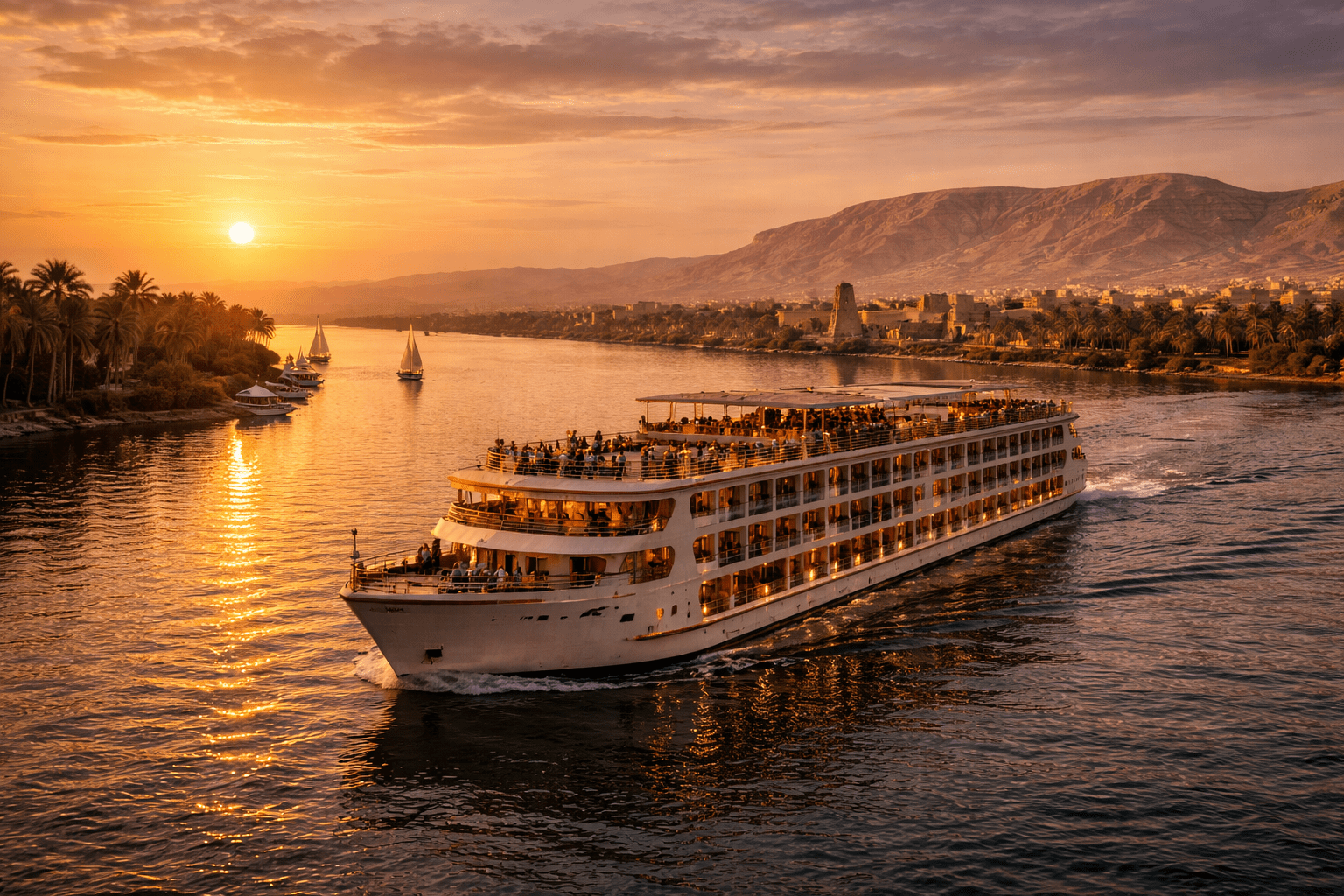
A Nile cruise Egypt journey is not simply transportation between Luxor and Aswan. It is a moving viewpoint into the heart of the ancient world. As the boat glides south along the river, the modern landscape fades into scenes that would have been recognizable to ancient Egyptians: desert cliffs rising beyond fertile farmland, palm groves lining the water’s edge, and monumental temples appearing almost suddenly on the horizon.
Unlike fast-paced overland tours, a Nile River cruise allows travelers to experience Egypt the way it was historically experienced — by following the river that connected the entire civilization.
Most Nile cruises travel between Luxor and Aswan, stopping at legendary sites such as Karnak Temple, the Valley of the Kings, Edfu Temple, Kom Ombo, and Philae Temple. Instead of rushing between destinations, you wake up each day already close to the next chapter of the story.
For many travelers, the cruise becomes the most memorable part of their trip because it combines world-class archaeology, scenic river landscapes, and relaxed travel pacing.
If you’re planning a trip to Egypt and wondering whether a Nile cruise from Luxor to Aswan is worth it, how many nights to choose, when to go, and what the experience is actually like, this guide will walk you through everything you need to know. sites. You glide between them. The landscape changes slowly. The desert opens. Palm groves appear. Temples rise directly from the riverbanks — exactly as ancient travelers first saw them.
If you’re planning a trip and wondering whether a Nile cruise from Luxor to Aswan is worth it, how many nights to choose, or when to go — this guide covers everything.
Why a Nile Cruise Is Different from the Rest of Egypt
Traveling through Egypt on land can feel dramatic and intense. Cairo is energetic and sprawling. Luxor is monument-heavy and powerful. Aswan feels quieter but still structured around individual sites.
A Nile cruise changes the rhythm completely.
Instead of constantly moving between cities, packing luggage, and navigating long desert drives, the cruise ship becomes your floating base. You unpack once and let the river carry you through the heart of Upper Egypt.
Each day unfolds naturally. In the morning, you might step off the ship to explore a temple complex that has stood for thousands of years. By midday you are back on board, sailing past riverbanks that still support the same agricultural life that existed in ancient times. Palm trees line the water, farmers work narrow fields beside the river, and desert cliffs rise in the distance.
The pace is slower, and that slower pace is exactly what makes the experience powerful.
Instead of treating Egypt as a checklist of monuments, a Nile cruise connects the temples, tombs, and landscapes into a continuous journey. You begin to understand how the river itself shaped Egyptian civilization. Cities grew where the Nile allowed life to exist. Temples were built where travelers arriving by boat would see them first. The river was not just geography—it was the backbone of the entire culture.
This is why so many travelers say the cruise becomes the emotional center of their trip. It combines guided visits to extraordinary historical sites with quiet moments of sailing, river views at sunset, and evenings spent watching the landscape drift by.
Rather than feeling like a series of separate destinations, Upper Egypt begins to feel like one connected story.y.
What a Nile Cruise Actually Includes
Many first-time travelers assume a Nile cruise is simply transportation between Luxor and Aswan. In reality, it functions more like a fully organized travel experience that combines accommodation, guided sightseeing, and river travel into one itinerary.
Instead of planning hotels, drivers, guides, and tickets separately, most Nile cruises package these elements together so that the journey unfolds smoothly along the river.
Accommodation is provided in private cabins designed for comfort during multi-day sailing. Cabins typically include a private bathroom, air conditioning, and large windows or panoramic glass so passengers can watch the Nile landscape throughout the journey. Because the ship moves slowly along the river, the views are constantly changing — farmland, desert cliffs, traditional villages, and temple sites appear along the banks.
Meals are usually included as full board, meaning breakfast, lunch, and dinner are served daily on the ship. Most cruise vessels operate buffet-style dining that blends international dishes with Egyptian cuisine. Meals become part of the rhythm of the journey: sightseeing in the morning, lunch during sailing, and dinner while docked in a historic Nile-side city.
Another major component is guided temple visits. Most cruises include an Egyptologist guide who accompanies guests to the key archaeological sites along the route. These guided visits typically cover the major highlights between Luxor and Aswan, including temples such as Edfu, Kom Ombo, and Philae, along with the major monuments at the beginning and end of the journey.
Transportation logistics are also handled for you. When the ship docks, organized vehicles transfer guests between the river port and nearby historical sites, eliminating the need to arrange drivers or navigate unfamiliar locations.
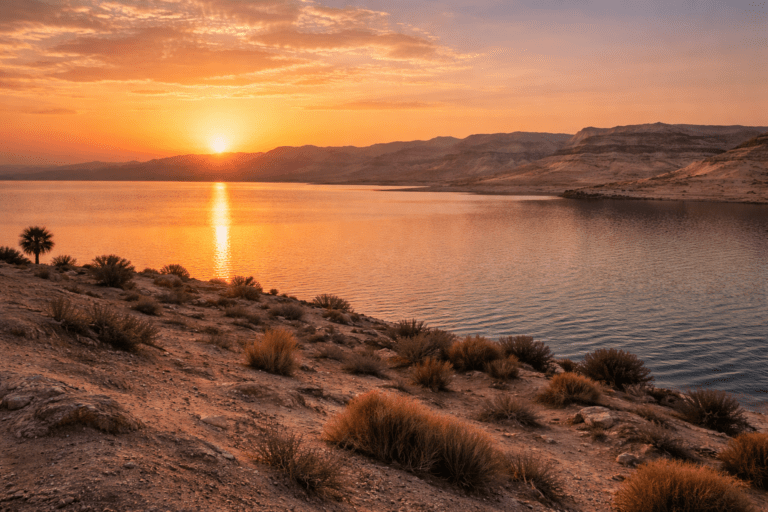
Perhaps the most memorable element of the experience, however, is the sailing itself. As the cruise moves along the Nile, the scenery changes gradually — fishermen crossing the river in small boats, palm trees lining fertile farmland, and distant desert hills rising beyond the floodplain. This slow movement through the landscape allows travelers to experience Upper Egypt in a way that closely resembles how the region was historically traveled.
Because accommodation, meals, guided visits, and transportation are integrated into one schedule, many travelers find that a Nile cruise is the most comfortable and efficient way to explore Upper Egypt’s temple corridor.
Nile Cruise Itinerary: Luxor to Aswan
A Typical Day-by-Day Journey
Most Nile cruises follow the classic Luxor to Aswan route, sailing through the heart of Upper Egypt. This stretch of the Nile contains one of the greatest concentrations of ancient temples anywhere in the world, and the cruise itinerary is designed to reveal these sites in a logical historical sequence.
While the exact schedule varies slightly between ships, most cruises follow a similar rhythm: morning excursions to archaeological sites, relaxed sailing during the day, and evenings spent docked near historic river cities.
Understanding how the journey typically unfolds helps travelers visualize what the experience is actually like.
Day 1: Luxor — The World’s Greatest Open-Air Museum
Luxor serves as the starting point for most Nile cruises and is often described as the world’s greatest open-air museum. The city was once ancient Thebes, the religious capital of Egypt during the New Kingdom, when powerful pharaohs built some of the most impressive monuments in Egyptian history.
Cruise itineraries usually begin with visits to several of Luxor’s most important sites.
Travelers often explore the Karnak Temple Complex, one of the largest religious structures ever built, where towering columns and monumental pylons reveal centuries of expansion by successive pharaohs. Nearby Luxor Temple, located in the center of the modern city, offers a different atmosphere and is particularly striking when illuminated in the evening.
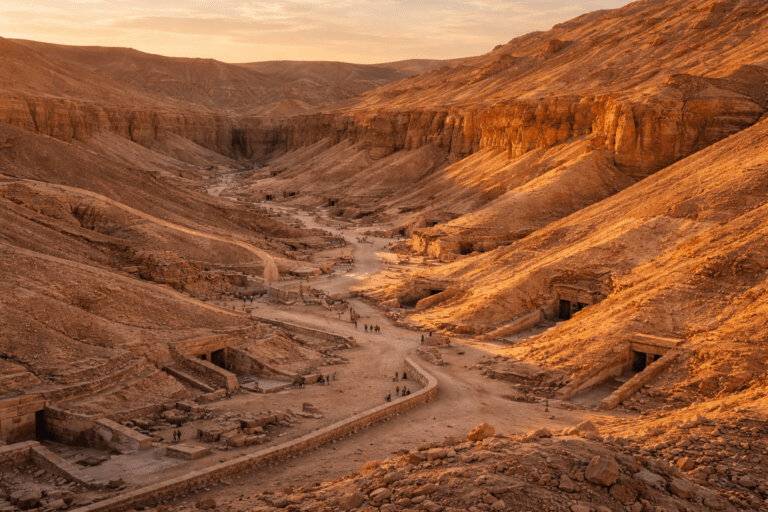
Excursions on the West Bank of the Nile often include the Valley of the Kings, where pharaohs such as Tutankhamun were buried in elaborately decorated tombs carved into the desert cliffs. Visitors may also stop at the Temple of Hatshepsut, dramatically built into the rock face at Deir el-Bahari, and the Colossi of Memnon, the massive statues that once guarded a vast mortuary temple.
After these visits, the cruise ship typically begins sailing in the late afternoon or evening, marking the beginning of the river journey south.
Day 2: Edfu — The Temple of Horus
The next major stop is usually Edfu, home to one of the best-preserved temples in Egypt.
Dedicated to Horus, the falcon-headed god associated with kingship and protection, the Temple of Edfu dates primarily to the Ptolemaic period. Because it was buried under desert sand for centuries, much of the structure remained remarkably intact.
Walking through the temple today feels almost like stepping into a complete ancient complex. Massive entrance pylons lead into open courtyards and columned halls covered in detailed hieroglyphic carvings that describe religious rituals and mythological stories.
Many travelers are surprised by how well-preserved Edfu feels compared to older temples. Its scale, symmetry, and level of detail make it one of the most impressive stops along the Nile.
Day 3: Kom Ombo — A Temple of Duality
Further south along the river lies Kom Ombo, a temple that stands directly beside the Nile and offers one of the most distinctive architectural designs in Egypt.
What makes Kom Ombo unique is that the temple is dedicated to two different gods at once.
One half honors Sobek, the crocodile god associated with the Nile’s power and fertility. The other half honors Horus the Elder, a falcon-headed deity connected to kingship and protection.
The temple’s layout reflects this dual dedication. Its halls, courtyards, and sanctuaries are arranged in a mirrored design so that each god has an equal presence within the structure.
Kom Ombo’s riverside location also creates a dramatic setting, especially during late afternoon or sunset visits when the light reflects across the water and the temple appears almost golden against the desert landscape.
Day 4: Aswan — Grace and Beauty Along the Nile
Aswan provides a gentle and scenic conclusion to most Nile cruise journeys.
Compared with Luxor’s monumental scale, Aswan feels quieter and more relaxed. Palm-lined islands dot the Nile, traditional felucca sailboats drift along the water, and the pace of the city feels slower.
Excursions in Aswan often include several well-known landmarks.
The Temple of Philae, dedicated to the goddess Isis, is one of the most beautiful temples in Egypt. Relocated to Agilkia Island during the 20th century to save it from flooding, the temple complex now sits surrounded by water, creating a striking and almost cinematic setting.
Other stops may include the Aswan High Dam, an important modern engineering project that reshaped Egypt’s water management, and the Unfinished Obelisk, which offers insight into how ancient Egyptians carved monumental stone structures directly from bedrock.
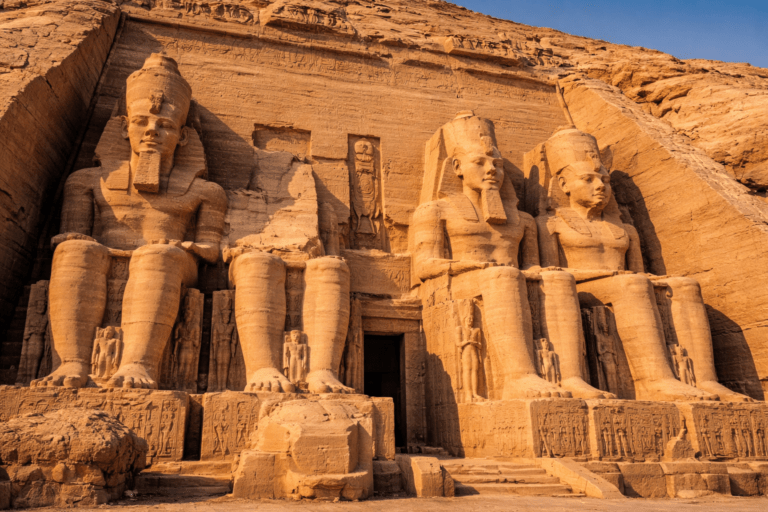
Many cruises also offer an optional excursion to Abu Simbel, the massive rock temples built by Ramses II near Egypt’s southern border. Although located several hours from Aswan, Abu Simbel is often considered one of the most spectacular monuments in the country.
Ending the cruise in Aswan allows travelers to finish the journey in one of Egypt’s most scenic and tranquil Nile landscapes.
3 Nights vs 4 Nights: What’s the Difference?
One of the most common questions travelers ask when researching Nile cruise Egypt options is whether to choose a 3-night or 4-night itinerary.
Both routes typically cover the same major temples between Luxor and Aswan, but the difference lies in pacing.
A 3-night cruise, usually sailing from Aswan to Luxor, follows a faster schedule designed for travelers with limited time. The key temples are still included, but the pace can feel more compressed.
A 4-night cruise, typically sailing from Luxor to Aswan, offers a slightly slower rhythm. Excursions feel less rushed, sailing time becomes part of the experience, and the journey tends to feel more relaxed overall.
Because the river landscape is such an important part of the experience, many travelers prefer the 4-night itinerary, which allows more time to enjoy the atmosphere of sailing along the Nile.
Best Time to Take a Nile Cruise in Egypt
The timing of your Nile cruise can significantly shape your experience. Upper Egypt has a desert climate, which means sunshine almost year-round but also large seasonal differences in temperature.
Because most Nile cruise itineraries include outdoor temple visits at places like Luxor, Edfu, Kom Ombo, and Philae, the weather can affect how comfortable sightseeing feels.
Fortunately, the presence of the river itself helps moderate temperatures slightly compared with the surrounding desert, making cruising one of the more comfortable ways to explore Upper Egypt.
March to May: Warm and Pleasant
Spring is one of the most popular seasons for a Nile cruise.
During these months, temperatures are warm but generally manageable for sightseeing. Daytime conditions are comfortable enough to explore temples without the extreme heat of summer, while evenings on the river remain pleasant.
Travelers who want warm weather without the peak crowds of winter often find March, April, and early May to be an excellent balance.
September to November: Another Ideal Window
Autumn offers another excellent period for sailing the Nile.
Temperatures begin to drop after the intense summer heat, and the landscape feels slightly calmer before the winter tourism season reaches its peak. Days are still warm, but mornings and evenings become more comfortable for exploring temples and enjoying time on the ship’s deck.
Many experienced travelers consider October and November among the best months for a Nile cruise Egypt itinerary.
December to February: Peak Travel Season
Winter is the busiest season for Nile cruises, especially for travelers visiting from colder climates.
Daytime temperatures are typically mild and ideal for sightseeing, while mornings and evenings can feel surprisingly cool along the river. This climate makes winter one of the most comfortable periods for visiting temples such as Karnak, the Valley of the Kings, and Philae.
Because conditions are so pleasant, this period also brings higher demand and higher cruise prices.
June to August: Hot but Quiet
Summer in Upper Egypt can be extremely hot, with daytime temperatures often exceeding 40°C (104°F).
However, some travelers intentionally choose this period because cruise prices are usually lower and major sites are less crowded.
If you visit during summer, tours are typically scheduled early in the morning to avoid the most intense heat. Many cruise ships also provide shaded deck areas and air-conditioned cabins that make the sailing portion of the journey comfortable.
The Most Comfortable Choice
For most travelers, the most comfortable time for a Nile cruise falls between October and April, when temperatures are cooler and sightseeing conditions are ideal.
However, every season offers its own advantages. Winter provides the best weather, spring and autumn balance comfort with fewer crowds, and summer offers lower prices for travelers who can handle the heat.
Ultimately, the best time depends on your travel style, schedule, and tolerance for warm desert climates.
Types of Nile Cruises
Not all Nile cruises offer the same experience. While most follow the same route between Luxor and Aswan, the ships themselves vary significantly in size, atmosphere, and level of service.
Understanding the main categories can help travelers choose the cruise that best matches their expectations for comfort, pacing, and style of travel.
Standard 5-Star Nile Cruise
The most common option is the standard 5-star Nile cruise, which provides a comfortable and well-organized way to explore Upper Egypt.
These ships typically feature spacious cabins with private bathrooms, air conditioning, and large windows or balconies overlooking the Nile. Meals are usually served buffet-style, combining international dishes with Egyptian cuisine.
Excursions to major sites such as Karnak Temple, the Valley of the Kings, Edfu, Kom Ombo, and Philae Temple are included and led by professional Egyptologist guides.
For many travelers, this category offers the best balance between comfort, convenience, and price.
Luxury Nile Cruise
Luxury cruises offer a more refined version of the traditional Nile cruise experience.
These ships are often smaller and feature upgraded cabins or suites with more space and higher-end finishes. Dining tends to be more curated, with à la carte menus and higher-quality ingredients rather than large buffet service.
Service is usually more personalized, and the overall atmosphere is quieter and less crowded.
Travelers who want additional comfort and a more upscale environment often find that a luxury cruise provides a noticeably smoother experience.
Ultra-Luxury Nile Cruise
At the top end of the spectrum are ultra-luxury Nile cruises, which focus on boutique-style travel.
These vessels typically have fewer cabins, allowing for a more private and exclusive atmosphere. Interiors often resemble high-end boutique hotels, and service levels are designed to be extremely attentive.
Excursions may include smaller group sizes, carefully curated itineraries, and additional cultural experiences beyond the standard temple visits.
For travelers seeking a premium experience with maximum comfort and minimal crowds, this category represents the most exclusive way to sail the Nile.
Dahabiya Nile Cruise
A Dahabiya offers a completely different style of Nile cruising.
These traditional sailing vessels are much smaller than modern cruise ships and typically carry only 8–12 cabins. Because of their size, Dahabiyas can travel at a slower pace and often stop at smaller villages or lesser-known sites along the river.
The atmosphere is intimate and quiet, with a focus on relaxation, scenery, and personalized service.
Many travelers choose a Dahabiya when they want a more authentic, peaceful experience on the Nile rather than the structured schedule of a larger cruise ship.
Choosing the Right Nile Cruise
The best type of Nile cruise ultimately depends on your travel style.
Travelers who prioritize convenience and value often choose standard cruises. Those seeking more comfort and quieter ships may prefer luxury vessels, while ultra-luxury options focus on exclusivity and premium service.
Dahabiya cruises appeal to travelers who want a slower, more intimate journey along the Nile.
Regardless of the category, the route itself remains one of the most remarkable travel experiences in the world — a journey through the landscape that shaped ancient Egyptian civilization.
Is a Nile Cruise Worth It?
For most travelers visiting Egypt, the short answer is yes — a Nile cruise is absolutely worth it.
But the real value goes beyond convenience.
Traveling through Upper Egypt without a cruise usually requires moving between several cities by road. Visitors must arrange transportation between Luxor, Edfu, Kom Ombo, and Aswan, check into multiple hotels, and coordinate guides or drivers for each archaeological site.
A Nile cruise simplifies that entire process.
Instead of constantly packing and unpacking, your ship becomes a floating base. You wake up near the next historical site, step off the boat for guided temple visits, and return to the ship to relax while the river carries you to the next destination.
This structure transforms what could be a series of disconnected stops into a continuous journey through ancient Egypt.
But the deeper reason a cruise is worth it is historical context.
The temples along the Nile were never meant to be experienced as isolated landmarks. Ancient Egyptians traveled almost exclusively by river, and the Nile was the lifeline that connected their cities, temples, and agricultural lands.
Sailing between these monuments allows travelers to experience the same landscape that shaped the civilization itself.
As the boat moves slowly along the river, you see farmland sustained by the Nile’s waters, villages clustered near the fertile floodplain, and desert cliffs rising beyond the green valley. The geography suddenly makes sense in a way that driving between sites cannot replicate.
For many visitors, this perspective changes the entire trip.
The cruise becomes more than transportation. It becomes the moment when the temples, the river, and the landscape come together into one story.
That is why so many travelers say a Nile cruise Egypt experience becomes the highlight of their entire journey.
Who Should Take a Nile Cruise?
A Nile cruise appeals to many different types of travelers because it combines sightseeing, scenery, and comfort into one experience. Instead of constantly coordinating transportation and hotels between cities, the cruise creates a structured journey through Upper Egypt.
For many visitors, that balance between exploration and relaxation is exactly what makes the experience so memorable.
A Nile cruise Egypt journey is especially appealing for travelers who appreciate well-organized itineraries and guided historical interpretation. Because the temples and archaeological sites along the Nile contain layers of symbolism and history, having expert guidance often makes the experience far more meaningful.
Travelers who enjoy scenic travel also tend to appreciate the rhythm of sailing the Nile. Between temple visits, the landscape unfolds slowly — green farmland along the riverbanks, traditional villages, palm groves, and desert cliffs beyond the valley.
The cruise format also appeals to travelers who value convenience. Instead of repacking luggage and moving between hotels, you remain in the same cabin while the ship carries you between destinations.
Many couples and honeymoon travelers also find Nile cruises particularly appealing. The combination of historic monuments, sunset views along the river, and relaxed evenings on deck creates a romantic atmosphere that is difficult to replicate with a traditional land itinerary.
However, a Nile cruise may not be ideal for every travel style.
Travelers who prefer complete independence or spontaneous daily planning may find the structured schedule less appealing. Cruise itineraries usually follow a fixed sequence of temple visits and sailing times, which means there is less flexibility than an entirely self-planned journey.
Likewise, visitors seeking vibrant nightlife or a fast-paced city environment may prefer to spend more time in destinations such as Cairo instead of the quieter Nile Valley.
For most travelers, however, the balance works well.
A Nile cruise combines historical exploration, scenic travel, and comfortable logistics, allowing visitors to experience the temples of Upper Egypt in a way that feels both immersive and relaxing.
Nile Cruise vs Land Travel: Which Is Better?
Some travelers planning a trip to Egypt debate whether they should explore Upper Egypt by Nile cruise or travel independently between Luxor and Aswan by land.
Both approaches can work, but they create very different travel experiences.
Traveling by land offers flexibility. Visitors can choose their own hotels, move at their own pace, and spend more or less time in each location depending on personal interests. For experienced independent travelers who enjoy planning logistics themselves, this approach can sometimes reduce costs and allow greater schedule freedom.
However, land travel also requires significantly more coordination.
Visitors must arrange transportation between cities, book multiple hotels, schedule guides or drivers for temple visits, and manage travel time along desert highways between destinations.
A Nile cruise simplifies nearly all of these logistics.
Accommodation, transportation, meals, and guided excursions are integrated into one organized journey. Instead of driving between archaeological sites, travelers wake up each day already near the next stop along the river.
The cruise format also introduces something that land travel cannot replicate: the rhythm of the Nile itself.
Sailing between Luxor and Aswan allows travelers to see the landscape that shaped ancient Egyptian civilization. Fields of green agriculture stretch along the riverbanks, small villages appear between palm trees, and desert cliffs rise just beyond the fertile valley.
Experiencing these transitions slowly, from the deck of a boat moving along the Nile, creates a sense of continuity that is difficult to capture when traveling by road.
For many visitors, this rhythm becomes one of the most memorable aspects of the journey.
While land travel provides flexibility, a Nile cruise connects the temples, landscapes, and history of Upper Egypt into one continuous experience — which is why so many travelers consider it the classic way to explore the Nile Valley.
What to Pack for a Nile Cruise
Packing for a Nile cruise is relatively straightforward, but choosing the right clothing and travel essentials can make temple visits and long days of sightseeing much more comfortable.
Because most Nile cruise itineraries include outdoor archaeological sites in Luxor, Edfu, Kom Ombo, and Aswan, travelers should plan for warm temperatures, strong sun, and plenty of walking.
Lightweight, breathable clothing is essential. Natural fabrics such as cotton or linen help keep you comfortable while exploring temples under the desert sun. Loose-fitting clothing is also practical for both comfort and cultural respect when visiting historic sites.
Comfortable walking shoes are one of the most important items to bring. Many temple complexes have uneven stone surfaces, steps, and large open courtyards, so supportive footwear makes exploring far easier.
Sun protection is also critical. The combination of desert climate and reflective stone structures can intensify sunlight, especially during midday visits. Packing sunglasses, a wide-brim hat, and sunscreen helps protect against the heat while sightseeing.
If you are traveling during the winter months, a light jacket or sweater is useful for early mornings and evenings along the river, when temperatures can feel cooler.
Many cruise ships also feature small pools or sun decks, so bringing a swimsuit can be a nice way to relax during sailing time between destinations.
When visiting temples and historical sites, modest attire is recommended. This does not require formal clothing, but wearing tops with sleeves and avoiding extremely short shorts or revealing outfits helps maintain respect for cultural norms.
Evenings on most Nile cruise ships tend to be casual-smart. Comfortable yet slightly dressier clothing works well for dinner and evening relaxation on deck while watching the Nile landscape pass by.
With the right clothing and essentials packed, travelers can focus less on logistics and more on enjoying one of the world’s most remarkable journeys along the Nile.
What a Day on a Nile Cruise Feels Like
A Nile cruise follows a natural rhythm that balances sightseeing with relaxation. Instead of rushing between destinations, the day unfolds in a steady flow that mirrors the pace of the river itself.
Morning: Breakfast on the Nile
Mornings usually begin quietly. Passengers wake up to views of the Nile through their cabin windows, often with the river already drifting past farmland, palm groves, and small villages.
Breakfast is served onboard while the ship remains docked or slowly sails toward the next destination. The atmosphere is calm and unhurried, giving travelers time to enjoy the scenery before the day’s first excursion.
Mid-Morning: Temple Exploration
After breakfast, guests typically leave the ship for the day’s guided visit.
Most cruise itineraries schedule temple excursions in the morning when temperatures are cooler and sites are easier to explore. Depending on the day, this might include famous monuments such as Edfu Temple, Kom Ombo, or the temples of Luxor and Karnak.
Travelers explore the temples with an Egyptologist guide who explains the historical and symbolic meaning behind the carvings and architecture.
Afternoon: Sailing the Nile
After returning from the morning excursion, the pace shifts again.
Lunch is served onboard while the ship begins sailing toward the next destination. This sailing time becomes one of the most memorable parts of the journey.
From the deck, passengers watch life unfold along the Nile. Farmers tend narrow fields along the riverbanks, fishermen cross the water in small wooden boats, and desert cliffs rise beyond the green agricultural valley.
The slow movement of the ship allows travelers to absorb the landscape in a way that simply isn’t possible when traveling by road.
Evening: Docking and Relaxation
By evening, the ship typically docks near one of the historic Nile towns.
Dinner is served onboard, and many cruises offer optional evening entertainment. This might include traditional music performances, cultural shows, or themed events such as Galabeya night, where guests dress in traditional Egyptian clothing.
Evenings often end quietly on the ship’s deck, watching the lights of the riverbank towns reflect across the Nile.
The Rhythm of the River
The structure of the day provides organization, but the experience rarely feels rushed. Instead, each day blends exploration, scenery, and relaxation into a natural rhythm shaped by the river itself.
For many travelers, this balance between discovery and calm sailing is what makes the Nile cruise Egypt experience so memorable.

Abu Simbel: Optional but Iconic
Many Nile cruise itineraries offer an optional excursion to Abu Simbel from Aswan. Although the temples are not located directly on the Luxor–Aswan cruise route, they are often included as a pre- or post-cruise extension.
For travelers interested in ancient Egyptian monuments, Abu Simbel is widely considered one of the most spectacular sites in the entire country.
The Temples of Ramses II
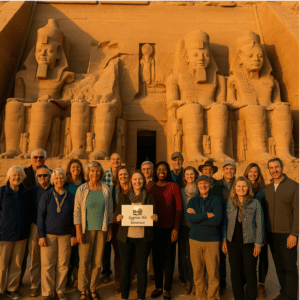
The site consists of two enormous rock temples built during the reign of Ramses II in the 13th century BC.
The larger temple is dedicated to Ramses II himself and features four colossal seated statues of the pharaoh carved directly into the cliff face. Each statue stands more than 20 meters tall, creating one of the most dramatic façades in Egyptian architecture.
Nearby stands the smaller temple dedicated to Queen Nefertari and the goddess Hathor, which is equally impressive for its symmetry and artistic detail.
One of the Greatest Archaeological Rescues
Abu Simbel also has one of the most remarkable modern histories of any Egyptian monument.
In the 1960s, the construction of the Aswan High Dam threatened to submerge the temples beneath Lake Nasser. In response, an international effort led by UNESCO carefully dismantled and relocated the entire complex to higher ground.
The temples were reconstructed piece by piece, preserving the original design and orientation while protecting them from flooding.
Today the site stands as both an ancient masterpiece and a symbol of global cooperation to preserve cultural heritage.
How Most Travelers Visit
Because Abu Simbel is located about 3–4 hours south of Aswan, most visitors reach the site through a day excursion from Aswan.
These trips typically depart very early in the morning and return later the same day. Some luxury itineraries include flights, while others travel by road across the desert.
Although the journey requires extra effort, many travelers consider Abu Simbel one of the most memorable highlights of an Egypt trip.
Is Abu Simbel Worth Adding?
If your schedule allows, Abu Simbel is absolutely worth considering.
The scale of the statues, the precision of the rock-cut architecture, and the remote desert setting combine to create an experience unlike any other monument in Egypt.
For travelers completing a Nile cruise Egypt journey, adding Abu Simbel often feels like the perfect grand finale to the story of the Nile.
Frequently Asked Questions
How long is a Nile cruise?
Most Nile cruises last 3 or 4 nights, sailing between Luxor and Aswan along the most famous stretch of the Nile River.
A 3-night cruise usually travels from Aswan to Luxor and follows a slightly faster schedule, while a 4-night cruise typically sails from Luxor to Aswan with a more relaxed pace. Both itineraries normally include major temple visits such as Edfu, Kom Ombo, and Philae, along with excursions in Luxor and Aswan.
Some luxury cruise programs extend the journey to 5 or 7 nights, adding additional sailing time, cultural experiences, or smaller stops along the Nile.
Are Nile cruises safe?
Yes. Nile cruises are a major part of Egypt’s tourism infrastructure and operate under strict regulations and oversight.
The cruise ships themselves are professionally operated vessels with trained crews, licensed captains, and safety procedures similar to other international river cruises. In addition, the main cruise route between Luxor and Aswan is one of the most established tourism corridors in the country.
Excursions to temples and archaeological sites are typically conducted with licensed Egyptologist guides and organized transportation, which helps ensure smooth logistics and a comfortable experience for travelers.
Do Nile cruises operate year-round?
Yes. Nile cruises operate throughout the year, although the experience varies depending on the season.
The most popular months are October through April, when temperatures are cooler and sightseeing conditions are more comfortable. This period is considered the peak season for Nile cruise travel.
Cruises still operate during the summer months (June–August), but temperatures can be significantly higher. Because of the heat, tours are usually scheduled early in the morning and cruise prices may be lower during this time.
Regardless of the season, the sailing portion of the journey remains comfortable thanks to air-conditioned ships and shaded deck areas.
Is a Nile cruise suitable for families?
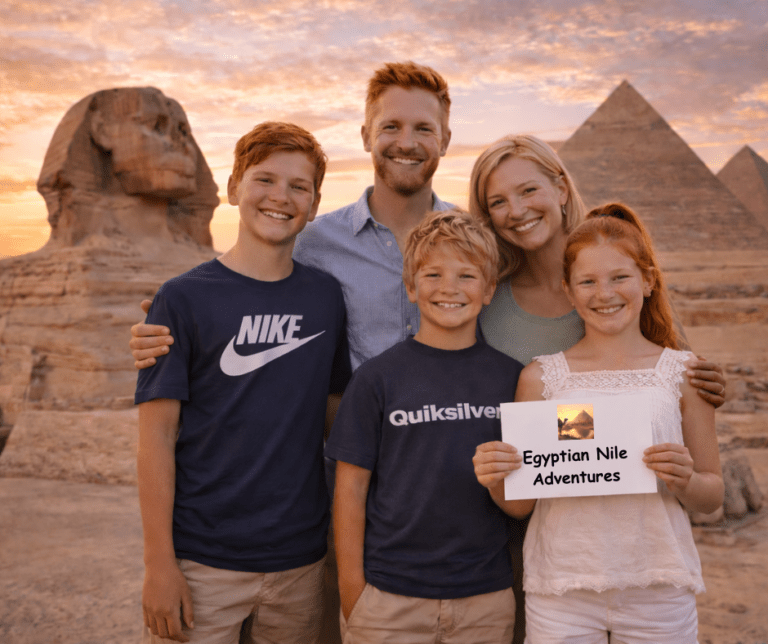
Yes, a Nile cruise can be a great experience for families, especially for children who are interested in history and culture.
The structured itinerary makes travel logistics easy, since transportation, accommodation, and guided excursions are already organized. This removes much of the stress that can come with planning multi-city travel.
Older children and teenagers often enjoy exploring famous archaeological sites such as the Valley of the Kings, Karnak Temple, and Philae Temple, where ancient history becomes much more engaging than reading about it in books.
Families with very young children may want to choose cruises with flexible schedules and comfortable onboard amenities.
Can I combine a Nile cruise with Cairo?
Absolutely. In fact, most Egypt itineraries combine Cairo and a Nile cruise.
Travelers usually begin their trip in Cairo to visit the Pyramids of Giza, the Sphinx, and the Egyptian Museum or Grand Egyptian Museum. From there, they typically take a short flight to Luxor or Aswan, where the Nile cruise begins.
This combination allows visitors to experience both the iconic pyramids of northern Egypt and the temple landscapes of Upper Egypt in one itinerary.
Many travelers consider the Cairo + Nile cruise combination the classic way to experience the highlights of Egypt.
Is it better to cruise from Luxor to Aswan or Aswan to Luxor?
Both directions follow the same stretch of the Nile and include the same major temples, but the pacing can feel slightly different.
A Luxor to Aswan cruise usually lasts four nights and begins with several major temple visits before settling into a relaxed sailing rhythm. Many travelers prefer this direction because it feels like a gradual journey toward the scenic landscapes of Aswan.
An Aswan to Luxor cruise typically lasts three nights and follows a slightly faster schedule. It still includes the same highlights but may feel more condensed.
In practice, the experience is similar in both directions, and the choice usually depends on your overall Egypt itinerary.
How a Nile Cruise Completes Your Egypt Trip
Egypt is a layered destination.
Cairo introduces the beginnings of the story — the pyramids, the royal artifacts, and the vast urban energy of a civilization that shaped the ancient world.
Luxor reveals the height of that civilization’s power, where monumental temples and royal tombs show how pharaohs expressed religion, authority, and eternity in stone.
Aswan offers a quieter perspective, where the Nile widens, palm-lined islands appear, and the pace of the landscape slows.
But a Nile cruise is what connects all of these chapters.
Sailing the river allows you to experience Egypt the way ancient travelers once did. For thousands of years the Nile was the country’s main highway, carrying traders, priests, and rulers between the temples and cities that lined its banks.
Seeing these monuments from the water restores that historical perspective.
Instead of visiting isolated landmarks, you begin to understand how the civilization itself was connected by the river.
That continuity transforms the journey.
A Nile cruise Egypt experience becomes more than transportation between Luxor and Aswan. It becomes the moment when Egypt’s temples, landscapes, and history finally feel like one complete story.
Final Take
A Nile cruise is more than transportation between Luxor and Aswan — it is one of the most immersive ways to experience Egypt.
Sailing the river slows the pace of travel, removes much of the logistical complexity of moving between cities, and reconnects the temples of Upper Egypt to the landscape that shaped them.
Instead of visiting monuments as isolated stops, you experience them as part of a continuous journey along the Nile — the same river that carried traders, priests, and pharaohs through ancient Egypt for thousands of years.
That perspective changes the trip.
For many travelers, a Nile cruise Egypt experience becomes the defining memory of their entire visit, combining history, scenery, and atmosphere in a way that land travel alone cannot replicate.
If your itinerary includes Luxor, Aswan, and the great temples of Upper Egypt, sailing the Nile between them is the most natural way to bring the journey together.
Explore our curated Nile cruise Egypt experiences designed for seamless travel between Luxor and Aswan with expert guiding and thoughtfully paced itineraries.
Planning a full trip? See our 7-day Egypt itinerary with kids for a complete guide to building the perfect Egypt journey.
Plan Your Nile Cruise Journey
Ready to experience the Nile the way ancient Egypt intended?
Explore our curated Nile cruise Egypt itineraries designed to combine Luxor’s temples, the Valley of the Kings, Edfu, Kom Ombo, and Aswan into one seamless journey along the river.
You can also explore our destination guides for Cairo, Luxor, and Aswan to build the perfect Egypt itinerary around your cruise experience.