Egypt Itinerary for First-Time Visitors
A Complete Guide to Planning Your First Trip to Egypt
For first-time visitors, Egypt can feel both exciting and overwhelming. The country is home to some of the most recognizable landmarks in human history — the Pyramids of Giza, the temples of Luxor, the Nile River, and the coral reefs of the Red Sea — yet these sites are spread across a surprisingly large and varied landscape.
Unlike many destinations where major attractions are concentrated in one area, Egypt’s historical sites are distributed across several regions of the country. The pyramids and major museums sit near Cairo in northern Egypt, the monumental temples of ancient Thebes are located around Luxor, the southern city of Aswan marks the traditional frontier of ancient Egypt, and the country’s most popular beach destinations lie along the Red Sea coast.
Because of this geography, planning a first trip to Egypt requires more than simply choosing a list of places to visit. Travelers need an itinerary that moves through the country in a logical sequence, minimizing travel time while allowing enough days in each destination to properly experience its history and landscapes.
A well-structured itinerary typically begins in Cairo, where visitors explore the pyramids and museums that introduce the foundations of ancient Egyptian civilization. From there, most journeys continue south along the Nile Valley, visiting the temples of Luxor and Aswan, often combined with a Nile cruise that connects several important archaeological sites along the river.
After several days of exploring temples and monuments, many travelers finish their trip along the Red Sea, where warm water, coral reefs, and coastal resorts provide a relaxing contrast to Egypt’s historical cities.
For first-time visitors, this progression — from pyramids to temples to the sea — offers the most complete introduction to the country.
This guide explains how to structure an Egypt itinerary for your first visit, including which destinations to prioritize, how long to spend in each location, and how to create a route that balances historical exploration with time to relax. Whether you have a short trip or two full weeks to explore the country, the right itinerary can transform a complex destination into a smooth and unforgettable journey.
How Many Days Do You Need for Your First Trip to Egypt?
The ideal length for a first trip to Egypt depends largely on how many regions you want to explore and how quickly you prefer to travel. Because Egypt’s most famous destinations are spread across several parts of the country, the amount of time available will shape the type of itinerary you can realistically follow.
Short Trips: 5–7 Days
A shorter trip of five to seven days usually focuses on Egypt’s most famous highlights. Most itineraries at this length include Cairo and the Pyramids of Giza, along with either Luxor or a short Nile cruise segment.
This type of trip allows visitors to experience some of Egypt’s most iconic monuments, including the pyramids, the Valley of the Kings, and major temples such as Karnak. However, the pace can feel fast because travel between regions often requires flights and tightly scheduled sightseeing days.
For travelers with limited vacation time, a week in Egypt can still be memorable, but it typically focuses on the country’s most famous archaeological sites rather than offering a broader experience of its landscapes and culture.
Balanced Trips: 10–12 Days
With ten to twelve days, travelers gain enough time to move through Egypt at a more comfortable pace. This length of trip usually includes Cairo, a Nile cruise between Luxor and Aswan, and an opportunity to visit Abu Simbel.
At this stage, the itinerary begins to feel more complete. Instead of rushing through monuments, visitors have time to understand the historical context of ancient sites and enjoy the landscapes along the Nile Valley.
Many travelers also add a short stay along the Red Sea, allowing them to relax after several days of temple exploration.
The Ideal Length: 14 Days
For many visitors, two weeks is the ideal length for a first trip to Egypt.
Fourteen days allows travelers to experience the country’s most important historical regions while also exploring places beyond the traditional Nile Valley route. A two-week itinerary often includes Cairo, Alexandria, the Fayoum Oasis, Luxor, a Nile cruise to Aswan, the temples of Abu Simbel, and time along the Red Sea coast.
This amount of time also allows the journey to unfold naturally. Travelers can move gradually from the pyramids and museums of Cairo to the monumental temples of Upper Egypt before finishing the trip beside the Red Sea.
The result is a travel experience that feels balanced rather than rushed — combining ancient history, landscapes, and cultural encounters in a way that gives first-time visitors a deeper understanding of Egypt.
Why Time Matters in Egypt
Egypt’s monuments are not just individual attractions; they are part of a civilization that developed over thousands of years. Allowing enough time in the country helps visitors see how these sites connect to one another — geographically, historically, and culturally.
For first-time travelers, spending ten to fourteen days in Egypt provides the opportunity to experience the country as more than a list of landmarks. It becomes a journey through the landscapes and history that shaped one of the world’s greatest civilizations.
The Best Route for First-Time Visitors to Egypt
For first-time travelers, one of the most important planning decisions is choosing a route through the country that makes geographic and logistical sense. Egypt’s major destinations are spread across several regions, and moving between them efficiently can make a significant difference in how comfortable and enjoyable the trip feels.
Fortunately, Egypt’s geography naturally suggests a logical travel sequence. Most visitors begin in Cairo, then move south through the Nile Valley, and finally end their journey along the Red Sea coast before returning to Cairo for departure.
A typical route for a first-time Egypt itinerary looks like this:
Cairo → Luxor → Nile Cruise → Aswan → Abu Simbel → Red Sea → Cairo
This route works well because it follows the same north-to-south path that defined ancient Egyptian civilization. The Nile River flows from the south toward the Mediterranean, and many of the country’s most important archaeological sites are located along its banks.
Starting in Cairo
Most international flights arrive in Cairo, making it the natural starting point for the journey. Here, travelers explore the Pyramids of Giza, major museums, and historic districts that introduce the foundations of ancient Egyptian civilization.
Beginning in Cairo also allows visitors to adjust to the country’s climate, culture, and pace before traveling to more remote archaeological regions.
Moving South to Luxor
From Cairo, travelers usually fly south to Luxor, the heart of ancient Thebes and one of the most important archaeological regions in the world.
Luxor contains a remarkable concentration of temples and tombs, including Karnak Temple, Luxor Temple, and the Valley of the Kings. Because of this density of monuments, Luxor is often described as the world’s greatest open-air museum.
Cruising the Nile to Aswan
Many first-time visitors then continue their journey with a Nile cruise between Luxor and Aswan. These cruises typically last three to four nights and stop at several important temples along the river.
Traveling this way recreates the historic route used by ancient Egyptians and later travelers, offering a slower and more scenic perspective on the Nile Valley.
Exploring Aswan and Abu Simbel
At the southern end of the Nile cruise route lies Aswan, a city known for its scenic river islands and strong Nubian cultural heritage.
From Aswan, travelers often take a day trip to Abu Simbel, where the colossal temples built by Ramses II stand near the southern frontier of ancient Egypt.
Ending on the Red Sea
After several days of exploring temples and archaeological sites, many itineraries finish along the Red Sea coast, usually in Hurghada or Sharm El Sheikh.
This part of the trip offers a change of pace. Instead of ancient monuments, travelers enjoy coral reefs, warm water, and coastal landscapes — a relaxing contrast to the historical intensity of the Nile Valley.
Why This Route Works
Following this route minimizes unnecessary backtracking and keeps travel distances manageable. It also creates a natural narrative for the journey: beginning with the pyramids, continuing through the temples of Upper Egypt, and ending beside the sea.
For first-time visitors, this progression provides one of the most balanced ways to experience Egypt’s history, landscapes, and culture.
Essential Destinations for a First-Time Egypt Trip
Egypt is a large and geographically diverse country, and its most important historical sites are spread across several regions. For first-time visitors, the key to building a successful itinerary is focusing on the destinations that provide the clearest introduction to Egypt’s history, landscapes, and culture.
While there are many fascinating places to explore — including desert oases, Mediterranean cities, and lesser-known archaeological sites — most first-time travelers prioritize a group of destinations that represent the core of ancient Egyptian civilization.
These regions together tell the story of Egypt from north to south:
- Cairo, home to the pyramids and the country’s most important museums
- Luxor, where the temples and tombs of ancient Thebes reveal the power of the New Kingdom
- The Nile River, which connects major archaeological sites and shaped Egyptian civilization for thousands of years
- Aswan, the southern frontier of ancient Egypt and gateway to Abu Simbel
- The Red Sea coast, where travelers can relax after several days of exploring temples and monuments
Each of these destinations offers a different perspective on Egypt. Cairo introduces the origins of the civilization through the pyramids and museums. Luxor and the Nile Valley reveal the monumental architecture of the pharaohs. Aswan highlights the southern cultural influences of Nubia and the dramatic temples near the Sudanese border. Finally, the Red Sea provides a completely different environment — clear water, coral reefs, and coastal landscapes that contrast with the desert and river scenery of the Nile Valley.
For most first-time visitors, focusing on these regions creates the most balanced and rewarding introduction to Egypt. Together they provide a journey through the country’s most famous monuments while also revealing the landscapes that shaped one of the world’s oldest civilizations.
Cairo and the Pyramids of Giza
Cairo is the starting point for most Egypt itineraries and the gateway to one of the world’s most extraordinary archaeological landscapes.
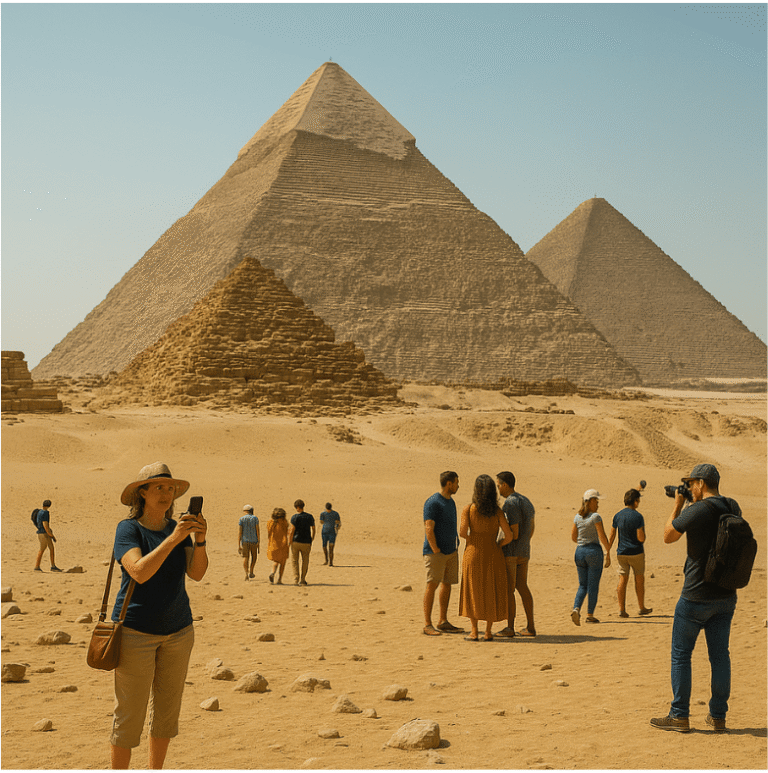
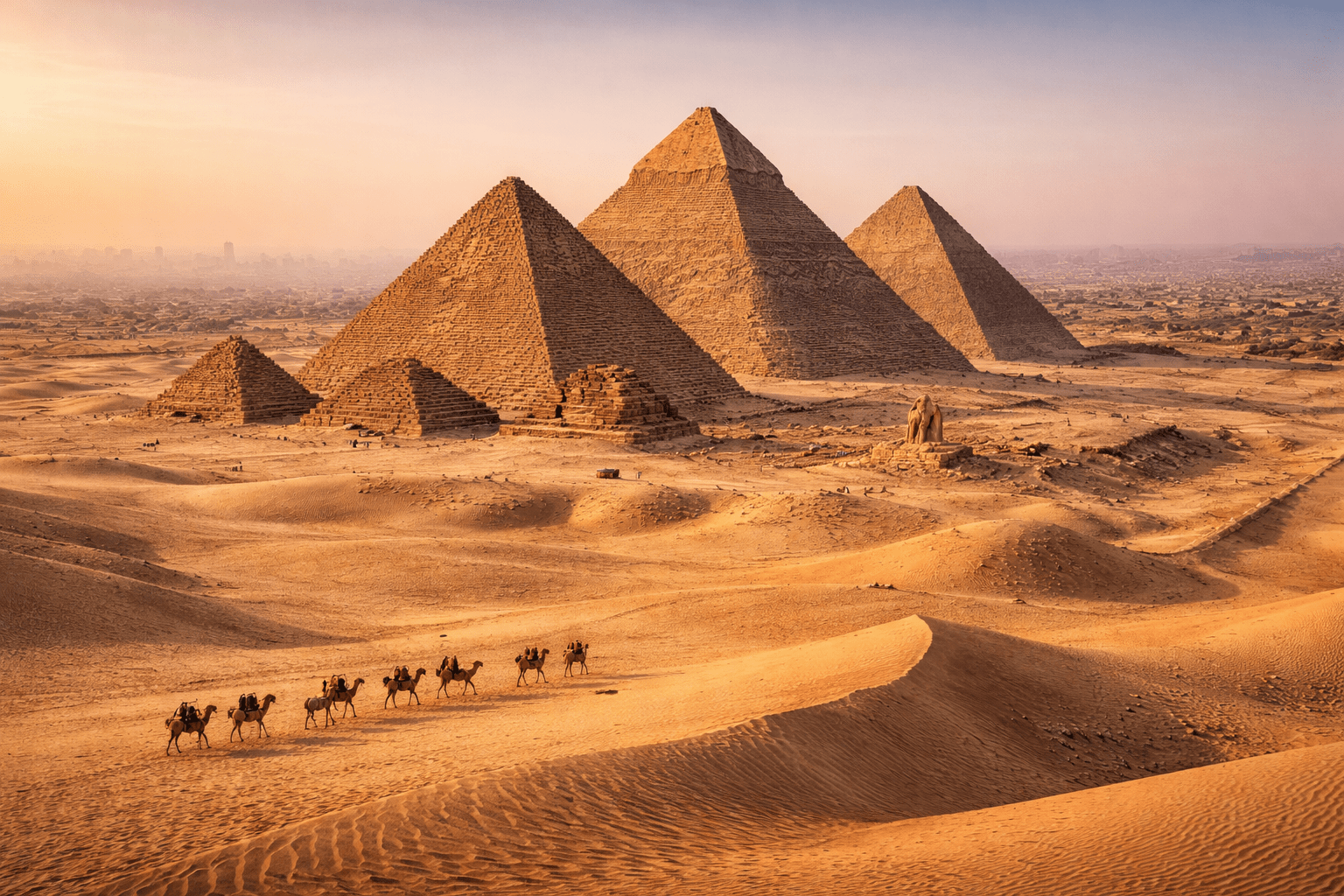
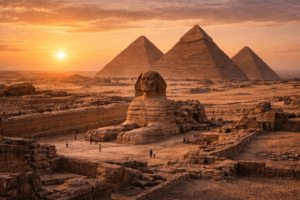
Just outside the city stands the Giza Plateau, where the Pyramids of Giza have dominated the desert skyline for more than 4,500 years. Built during Egypt’s Fourth Dynasty, these pyramids were part of vast funerary complexes designed to honor the pharaohs and ensure their journey into the afterlife.
The complex includes:
- The Great Pyramid of Khufu, the largest pyramid ever constructed in Egypt and the only surviving Wonder of the Ancient World
- The Pyramid of Khafre, recognizable by the remaining casing stones near its summit
- The Pyramid of Menkaure, the smallest of the three major pyramids
- The Great Sphinx, the iconic limestone statue believed to represent the pharaoh Khafre
Walking across the Giza Plateau offers a sense of scale that photographs rarely convey. These monuments were not isolated structures but part of enormous ceremonial landscapes that included temples, causeways, and royal burial sites.
Cairo itself also plays an essential role in understanding ancient Egypt. The city’s museums contain some of the most important archaeological discoveries ever made, including royal statues, monumental sculptures, and the famous treasures of Tutankhamun.
Beyond the ancient world, Cairo reveals another layer of Egyptian history. The districts of Islamic Cairo contain centuries of architecture, including mosques, madrasas, and medieval gates that reflect the city’s role as one of the great capitals of the Islamic world. Nearby, Khan el-Khalili Bazaar provides a glimpse into the lively market culture that has shaped Cairo for generations.
For first-time visitors, Cairo serves as both an introduction to Egypt’s ancient civilization and a living city where past and present exist side by side.
Luxor: The World’s Greatest Open-Air Museum
If Cairo introduces the story of ancient Egypt, Luxor reveals its monumental scale.
Located about 650 kilometers south of Cairo along the Nile, Luxor occupies the site of ancient Thebes, the capital of Egypt during the powerful New Kingdom period. Today the city contains one of the greatest concentrations of archaeological sites anywhere in the world.
Luxor is traditionally divided by the Nile into two symbolic halves.
On the East Bank, visitors explore temples associated with life and worship.
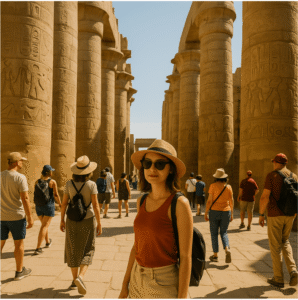
The most impressive is Karnak Temple, a vast complex built over nearly two thousand years. Its famous Great Hypostyle Hall, filled with towering stone columns covered in hieroglyphs, remains one of the most dramatic architectural spaces in Egypt.
Nearby stands Luxor Temple, located in the heart of the modern city. Unlike many temples in Egypt, Luxor Temple was closely connected with royal rituals and festivals. Visiting the temple at sunset or in the evening, when the monuments are illuminated, is often one of the highlights of a Luxor visit.
Across the Nile lies the West Bank, the ancient necropolis where pharaohs were buried.
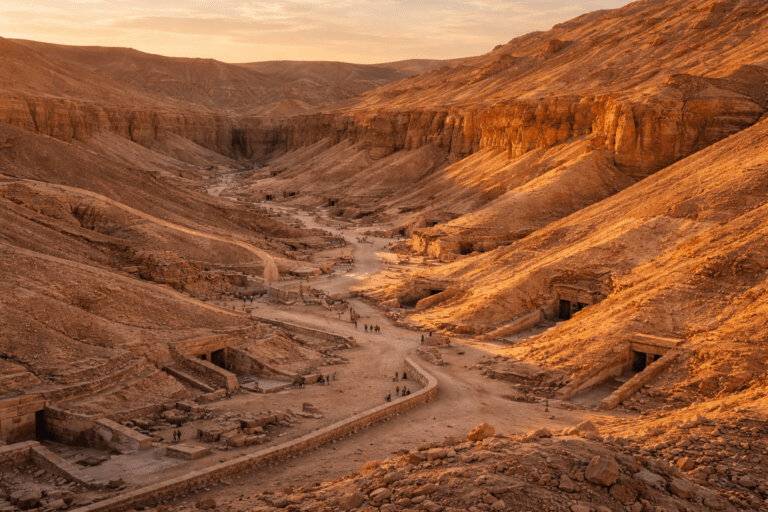
The most famous site here is the Valley of the Kings, where richly decorated tombs were carved deep into desert cliffs. These tombs contain some of the most detailed and colorful wall paintings in Egypt, depicting the pharaoh’s journey through the afterlife.
Other important sites include the Temple of Hatshepsut, dramatically built against towering limestone cliffs, and the Colossi of Memnon, two massive statues that once guarded a vast mortuary temple.
Because of the density of these monuments, Luxor is often described as the world’s greatest open-air museum.
The Nile Cruise Experience
For many first-time visitors, the most memorable part of an Egypt trip is a Nile cruise between Luxor and Aswan.
These cruises typically last three or four nights, allowing travelers to move slowly along the Nile while visiting several important temples located between the two cities.
Cruising the river offers a unique perspective on Egypt’s geography. Along the banks of the Nile, travelers see palm groves, small villages, and farmland that still depend on the river much as they did thousands of years ago.
Several important archaeological sites are visited during the cruise.
One of the most impressive is Edfu Temple, dedicated to the falcon-headed god Horus. Built during the Ptolemaic period, Edfu is one of the best-preserved temples in Egypt and provides valuable insight into ancient religious rituals.
Another highlight is Kom Ombo Temple, located on a bend in the Nile. The temple is unusual because it is dedicated to two deities simultaneously: Sobek, the crocodile god associated with fertility and the Nile, and Horus the Elder.
Between temple visits, travelers spend time sailing along the river, watching the landscape pass slowly by. This slower pace helps recreate the traditional rhythm of travel in ancient Egypt, when the Nile served as the country’s main transportation route.

Aswan and Abu Simbel
Located near Egypt’s southern frontier, Aswan offers a calmer and more scenic atmosphere than Cairo or Luxor.
The Nile widens here, forming granite islands surrounded by palm groves and desert hills. For many travelers, Aswan provides a welcome change of pace after several days of exploring temples and archaeological sites.
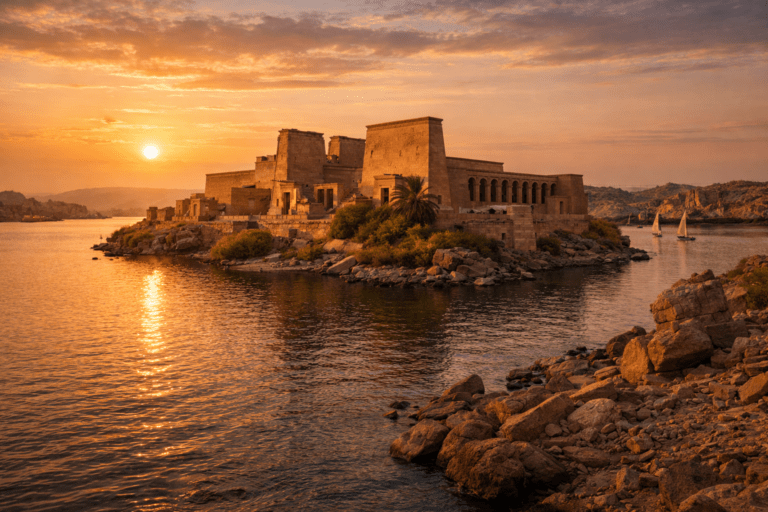
One of the city’s most famous attractions is Philae Temple, dedicated to the goddess Isis. The temple sits on an island in the Nile and is reached by boat, making the approach especially memorable.
Aswan is also closely associated with Nubian culture, which has influenced the region for centuries. Visiting a Nubian village allows travelers to experience traditional architecture, colorful houses, and local customs that differ from those found in northern Egypt.
From Aswan, many travelers take a day trip to Abu Simbel, one of Egypt’s most spectacular monuments.
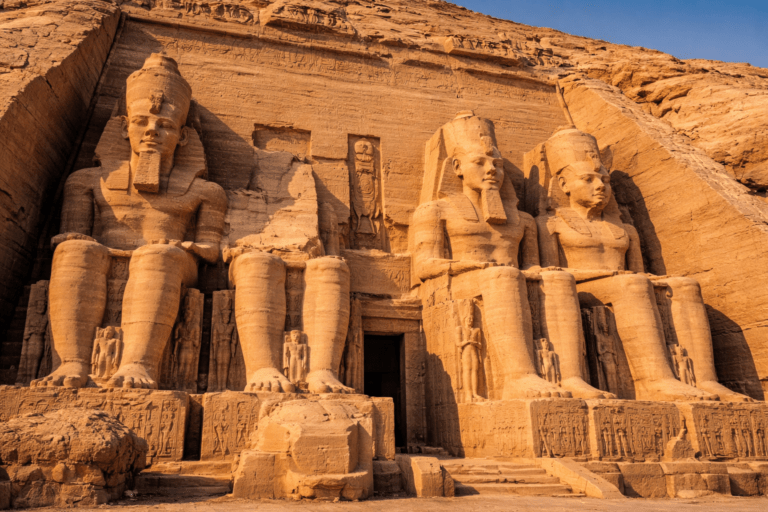
Built by Ramses II, the temples are famous for the four colossal statues that guard their entrance. In the 1960s, the entire complex was relocated to higher ground during the construction of the Aswan High Dam — one of the greatest archaeological preservation efforts ever undertaken.
For many visitors, the journey to Abu Simbel becomes one of the most unforgettable moments of their trip.
The Red Sea Coast
After several days of exploring ancient temples and archaeological sites, many travelers include time along the Red Sea coast.
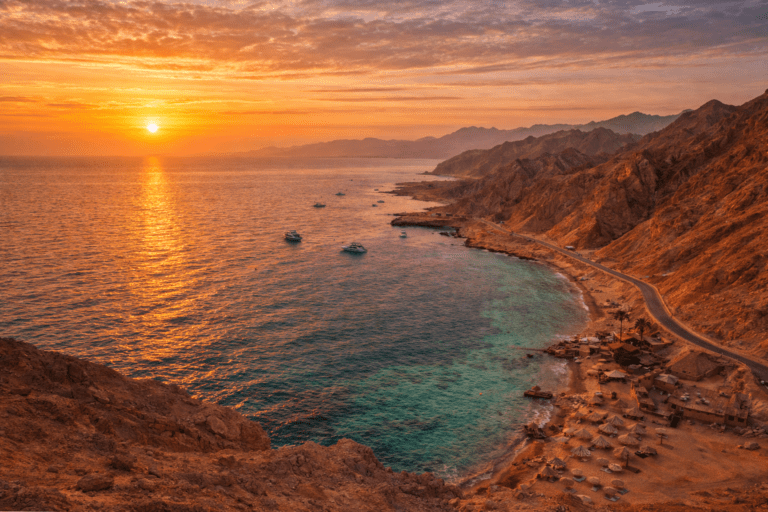
The Red Sea is famous for its clear water, vibrant coral reefs, and year-round sunshine, making it one of the world’s most popular destinations for snorkeling and diving.
Two of the most common destinations for Egypt itineraries are Hurghada and Sharm El Sheikh.
Hurghada, located on Egypt’s eastern mainland coast, is known for its beach resorts, island excursions, and accessible coral reefs. The region offers excellent opportunities for snorkeling, scuba diving, and boat trips to nearby islands.
Sharm El Sheikh, located on the Sinai Peninsula, is internationally recognized for its diving sites and marine life. The nearby Ras Mohammed National Park contains some of the most spectacular coral reefs in the Red Sea.
Spending a few days along the Red Sea provides a relaxing contrast to Egypt’s historical cities. After exploring pyramids, temples, and desert landscapes, travelers can slow down, enjoy the sea, and reflect on the journey.

Sample Egypt Itinerary for First-Time Visitors (10–14 Days)
For travelers visiting Egypt for the first time, a 10–14 day itinerary provides enough time to explore the country’s most important historical regions while maintaining a comfortable pace between destinations.
The following sample itinerary combines Egypt’s most iconic experiences — the pyramids of Cairo, the temples of Luxor, a Nile cruise through Upper Egypt, the monuments of Aswan, and the beaches of the Red Sea. This structure allows visitors to move through the country logically while balancing sightseeing with time to relax.
Days 1–3 — Cairo and the Pyramids
Begin your journey in Cairo, Egypt’s largest city and the gateway to the pyramids.
Your first full day is typically spent exploring the Pyramids of Giza, one of the most famous archaeological sites in the world. Walking across the Giza Plateau allows visitors to see the Great Pyramid of Khufu, the Pyramid of Khafre, the Pyramid of Menkaure, and the Great Sphinx up close.
Another important stop in Cairo is one of the country’s major museums, where visitors can see artifacts that span thousands of years of Egyptian history. Many travelers choose to visit the Grand Egyptian Museum near Giza, which houses some of the most significant discoveries from ancient Egypt.
Beyond ancient monuments, Cairo also offers centuries of Islamic architecture and lively markets. Exploring areas such as Islamic Cairo, the Citadel of Saladin, and Khan el-Khalili Bazaar provides insight into the city’s long history as one of the Middle East’s most important cultural centers.
Spending several days in Cairo also allows travelers time to adjust to the country’s pace before continuing their journey south.
Day 4 — Fly to Luxor
After exploring Cairo, most itineraries continue south to Luxor, the site of ancient Thebes and one of the most important archaeological regions in the world.
Luxor is often described as the world’s greatest open-air museum because of the remarkable concentration of temples and tombs located along the Nile.
On the East Bank, visitors typically explore Karnak Temple, the largest temple complex ever built in Egypt. Its Great Hypostyle Hall, filled with towering columns carved with hieroglyphs, remains one of the most impressive spaces in ancient architecture.
Nearby stands Luxor Temple, which was connected to Karnak by a ceremonial avenue lined with sphinx statues. Visiting Luxor Temple in the evening, when the monuments are illuminated, can be one of the most atmospheric experiences in the city.
Days 5–7 — Nile Cruise Through Upper Egypt
One of the highlights of a first trip to Egypt is a Nile cruise between Luxor and Aswan.
These cruises usually last three or four nights and allow travelers to visit several important temples located between the two cities while enjoying scenic sailing along the river.
Before departing Luxor, travelers typically visit the West Bank, where some of Egypt’s most famous tombs are located. The Valley of the Kings contains the burial sites of several pharaohs, including Tutankhamun, and the tombs are known for their detailed wall paintings depicting the journey to the afterlife.
Another important site on the West Bank is the Temple of Hatshepsut, built into dramatic limestone cliffs at Deir el-Bahari.
As the cruise travels south along the Nile, several major temples are visited.
At Edfu, travelers explore one of the best-preserved temples in Egypt, dedicated to the falcon god Horus.
Further along the river lies Kom Ombo Temple, uniquely dedicated to two deities — Sobek, the crocodile god, and Horus the Elder.
Between temple visits, the cruise offers opportunities to relax on deck while watching the landscapes of the Nile Valley pass by.
Days 8–9 — Aswan and Abu Simbel
The cruise usually concludes in Aswan, a city known for its beautiful Nile scenery and relaxed atmosphere.
One of the most memorable visits in Aswan is Philae Temple, dedicated to the goddess Isis. The temple sits on an island in the Nile and is reached by boat, creating one of the most picturesque approaches to any temple in Egypt.
Many travelers also take time to explore the region’s Nubian culture, visiting villages along the river that reflect traditions distinct from those found in northern Egypt.
From Aswan, visitors often take a day trip to Abu Simbel, one of the most extraordinary monuments in Egypt.
The temples of Abu Simbel were built by Ramses II and feature colossal statues carved directly into the sandstone cliffs. In the 1960s, the temples were relocated to higher ground to protect them from flooding caused by the construction of the Aswan High Dam.
For many travelers, the journey to Abu Simbel becomes one of the most unforgettable highlights of their trip.
Days 10–12 — Relax on the Red Sea
After several days of exploring temples and archaeological sites, many itineraries include time to relax along the Red Sea coast.
Destinations such as Hurghada and Sharm El Sheikh offer warm weather, beautiful beaches, and coral reefs that attract snorkelers and divers from around the world.
Visitors can spend their days snorkeling among colorful marine life, taking boat trips to nearby islands, or simply enjoying the beaches and resorts along the coast.
The Red Sea provides a welcome contrast to Egypt’s historical cities and allows travelers time to unwind before the final stage of the trip.
Days 13–14 — Return to Cairo
Return to Cairo for the final days of the journey.
These last days provide an opportunity to explore additional sites that may not have been included earlier in the trip. Many travelers visit nearby archaeological areas such as Saqqara, home to the Step Pyramid of Djoser, or Memphis, the ancient capital of Egypt.
Others simply enjoy Cairo at a slower pace, visiting cafés, walking along the Nile, or revisiting favorite sites before departure.
After two weeks traveling through Egypt — from pyramids and temples to desert landscapes and coral reefs — visitors leave with a deeper appreciation of the country’s remarkable history and culture.
Optional Day Trips from Cairo
While the core itinerary for first-time visitors usually focuses on Cairo, Luxor, the Nile, and the Red Sea, travelers with extra time can also explore several fascinating destinations within easy reach of Cairo.
These optional excursions add variety to the trip and provide insight into different layers of Egypt’s history and landscapes.
Alexandria
Located about 220 kilometers north of Cairo, Alexandria sits along Egypt’s Mediterranean coast and offers a completely different atmosphere from the country’s inland cities.
Founded by Alexander the Great in 331 BC, Alexandria became one of the most important intellectual centers of the ancient world. The city was once home to the famous Library of Alexandria and the Lighthouse of Pharos, one of the Seven Wonders of the Ancient World.
Today visitors can explore:
- Qaitbay Citadel, built on the site of the ancient lighthouse
- Bibliotheca Alexandrina, a modern cultural center inspired by the ancient library
- The Catacombs of Kom El Shoqafa
An Alexandria day trip provides a glimpse into Egypt’s Greco-Roman heritage and its Mediterranean identity.
Fayoum Oasis
Located about two hours southwest of Cairo, the Fayoum Oasis offers a completely different landscape from Egypt’s major cities.
Instead of temples and pyramids, Fayoum is known for its desert scenery, lakes, and fossil sites. The region provides one of the easiest opportunities to experience Egypt’s desert environments without traveling deep into the Sahara.
Highlights include:
- Wadi El Hitan (Whale Valley), a UNESCO World Heritage Site containing ancient whale fossils
- The waterfalls and lakes of Wadi El Rayan
- Tunis Village, known for pottery workshops and artisan studios
Fayoum offers a quieter, nature-focused experience that contrasts with the archaeological intensity of Cairo and Luxor.
Why These Day Trips Work Well
Both Alexandria and Fayoum can be visited as day trips from Cairo, making them easy additions to a first-time itinerary.
Travelers who have extra time in the capital often include one of these excursions to experience another side of Egypt — whether the Mediterranean coastline of Alexandria or the desert landscapes of Fayoum.
Tips for Planning Your First Egypt Trip
Planning a first trip to Egypt becomes much easier when the itinerary is structured around the country’s geography and travel logistics. Because Egypt’s most important sites are spread across several regions, thoughtful planning can save time and make the overall experience far more enjoyable.
Use Domestic Flights to Save Time
Egypt is a large country, and traveling between major destinations by road can take many hours. For most first-time visitors, the most efficient way to move between regions is by taking domestic flights, especially between Cairo and Luxor.
Flights typically take about one hour and allow travelers to maximize sightseeing time rather than spending long days in transit. This is particularly helpful when combining Cairo with destinations in Upper Egypt such as Luxor and Aswan.
Start Sightseeing Early
Many of Egypt’s most famous sites — including the Pyramids of Giza, Karnak Temple, and the Valley of the Kings — are large open-air archaeological areas with limited shade.
Visiting these sites early in the morning offers several advantages. Temperatures are cooler, lighting is better for photography, and the crowds are usually smaller. Starting early also leaves the afternoon available for museums, relaxing at your hotel, or enjoying time along the Nile.
Balance Sightseeing With Rest
Egypt’s archaeological sites are extraordinary, but visiting several temples or tombs in one day can be physically demanding. Many monuments require significant walking in desert conditions, and the scale of the sites can be overwhelming.
Including rest periods in your itinerary helps maintain energy throughout the trip. Many travelers schedule slower afternoons during their Nile cruise or include a few relaxing days along the Red Sea coast to balance the intensity of historical sightseeing.
Consider Guided Tours for Major Sites
While it is possible to visit many locations independently, guided tours often enhance the experience — especially at Egypt’s most historically complex sites.
An experienced Egyptologist guide can explain the symbolism behind temple carvings, the meaning of tomb paintings, and the historical context of monuments that might otherwise appear difficult to interpret.
For first-time visitors, guided tours often transform what could feel like ancient ruins into a deeper understanding of one of the world’s oldest civilizations.
Plan Your Route Before Booking Hotels
Because Egypt’s major destinations follow a north-to-south pattern along the Nile, it is helpful to decide on a travel route before reserving accommodations.
Most successful itineraries begin in Cairo, continue south through Luxor and Aswan, and end along the Red Sea before returning to Cairo for departure. Planning the route in advance helps avoid unnecessary backtracking and simplifies transportation arrangements.
Leave Room for Unexpected Discoveries
Egypt is a country filled with surprises — from small archaeological sites and traditional markets to quiet Nile sunsets and local cafés. Leaving some flexibility in your itinerary allows time to explore these moments without feeling rushed.
Many travelers find that the most memorable parts of their trip are not only the famous monuments, but also the unexpected experiences that happen along the way.
Common Mistakes First-Time Visitors Make in Egypt
Even experienced travelers sometimes underestimate how large and diverse Egypt is. Planning a trip carefully can help avoid several common mistakes that first-time visitors make.
Trying to See Too Much in Too Little Time
Egypt’s monuments are spread across a large area, and travel between regions can take time. Many travelers attempt to include too many destinations in a short trip, which can make the experience feel rushed.
A better approach is to focus on a logical route — usually Cairo, Luxor, Aswan, and the Red Sea — and allow enough time to enjoy each location.
Underestimating the Heat
Many of Egypt’s most famous sites are open-air archaeological areas located in desert environments.
Sites such as the Pyramids of Giza, Karnak Temple, and the Valley of the Kings can become extremely hot during midday, particularly in summer months.
Starting sightseeing early in the morning and planning indoor activities later in the day can make a big difference in comfort.
Not Building in Rest Days
Temple visits can be physically demanding. Walking long distances in the sun while exploring large archaeological sites can quickly become tiring.
Adding relaxing moments — such as a Nile cruise sailing afternoon or several days on the Red Sea coast — helps balance the trip and keeps the experience enjoyable.
Skipping Context and Historical Explanation
Egypt’s monuments become far more meaningful when visitors understand the history behind them.
Guides or well-researched tours can help travelers understand the symbolism of temple carvings, burial traditions, and the stories behind Egypt’s famous pharaohs.
Without context, many visitors find the sites impressive but difficult to fully interpret.
What to Pack for Your First Trip to Egypt
Packing for Egypt is relatively simple, but a few essentials can make sightseeing much more comfortable.
Lightweight Clothing
Egypt’s climate is warm for most of the year, especially in southern regions such as Luxor and Aswan. Lightweight, breathable clothing helps travelers stay comfortable while visiting outdoor archaeological sites.
Loose-fitting clothing that covers shoulders and knees is also helpful when visiting mosques or religious sites.
Comfortable Walking Shoes
Many historic sites involve extensive walking over uneven stone surfaces. Comfortable walking shoes are essential, especially when exploring places like the Valley of the Kings, Karnak Temple, or the Giza Plateau.
Sun Protection
The Egyptian sun can be intense even during cooler months. Travelers should pack:
- Sunglasses
- Sunscreen
- A hat or cap
These items make long outdoor visits significantly more comfortable.
Light Layers for Evenings
Winter evenings along the Nile can be cooler than many visitors expect. A light jacket or sweater is useful for evenings in Cairo, on Nile cruise decks, or during desert excursions.
Daypack for Excursions
A small backpack is helpful for carrying water, sunscreen, cameras, and other essentials during sightseeing days.
Because many sites involve walking away from buses or entrances, having personal items easily accessible makes exploring more convenient.
FAQ: Egypt Itinerary for First-Time Visitors
How many days do you need for a first trip to Egypt?
Most travelers find that 10–14 days is ideal for a first visit to Egypt. This amount of time allows visitors to explore the country’s most important regions without feeling rushed.
In ten to fourteen days you can typically experience:
Cairo and the Pyramids of Giza
Luxor and the temples of Upper Egypt
A Nile cruise between Luxor and Aswan
Abu Simbel in southern Egypt
Several days relaxing along the Red Sea coast
Shorter trips of 5–7 days are possible, but they usually require a faster pace and fewer destinations.
What is the best route for a first-time Egypt itinerary?
The most efficient route follows Egypt’s geography along the Nile.
A typical route looks like this:
Cairo → Luxor → Nile Cruise → Aswan → Red Sea → Cairo
This route works well because it allows travelers to gradually move south through the Nile Valley before ending the trip along the Red Sea for relaxation.
Following this sequence reduces travel time and avoids unnecessary backtracking.
Is a Nile cruise necessary for a first trip to Egypt?
A Nile cruise is not strictly required, but many travelers consider it one of the highlights of an Egypt trip.
Cruises between Luxor and Aswan typically last three or four nights and include guided visits to temples such as:
Edfu Temple
Kom Ombo Temple
Karnak Temple
Luxor Temple
Cruising the Nile also provides a chance to experience the landscapes and traditional villages that shaped Egyptian civilization for thousands of years.
For many first-time visitors, the cruise becomes one of the most memorable parts of the journey.
Is Egypt safe for first-time visitors?
Egypt is one of the most visited countries in the Middle East and North Africa, and millions of tourists visit each year.
Major tourist destinations such as Cairo, Luxor, Aswan, and the Red Sea resorts have well-developed tourism infrastructure and security measures.
As with travel anywhere, visitors should follow basic precautions:
Use reputable transportation and guides
Stay aware of surroundings in crowded areas
Follow local advice and regulations
Most travelers find Egypt welcoming and hospitable, especially when visiting well-established tourism areas.
When is the best time to visit Egypt?
The most comfortable time to visit Egypt is usually between October and April, when temperatures are cooler and more suitable for sightseeing.
During these months, daytime temperatures are generally pleasant for exploring outdoor archaeological sites such as the pyramids and temples.
Summer months can be very hot, especially in southern Egypt around Luxor and Aswan, although the Red Sea resorts remain popular year-round.
Travelers planning a trip can learn more in our guide to the best time to visit Egypt, which explains weather, crowds, and seasonal pricing.
Is Egypt expensive for travelers?
Egypt is often considered affordable compared with many other major travel destinations.
Costs vary depending on travel style, but many travelers find that Egypt offers good value for experiences such as guided tours, accommodations, and domestic flights.
Budget travelers can explore Egypt relatively inexpensively, while luxury travelers can also find high-end hotels, Nile cruises, and private tours.
Because of this range of options, Egypt can accommodate a wide variety of travel budgets.
Should first-time visitors include the Red Sea?
Many travelers choose to include the Red Sea coast after visiting Egypt’s historical sites.
Destinations such as Hurghada and Sharm El Sheikh offer warm weather, beaches, snorkeling, and coral reefs.
Adding several days at the Red Sea provides a relaxing contrast to the temples and archaeological sites visited earlier in the trip.
For travelers who enjoy nature, water activities, and scenic coastlines, this part of the itinerary often becomes a favorite.
Can Alexandria or Fayoum be added to a first Egypt trip?
Yes. Both Alexandria and Fayoum Oasis can be added as optional day trips from Cairo.
Alexandria offers a Mediterranean atmosphere and a glimpse into Egypt’s Greco-Roman history, while Fayoum provides desert landscapes, lakes, and fossil sites.
These excursions are particularly good options for travelers who have extra time in Cairo or who want to explore beyond the country’s most famous archaeological sites.
Final Thoughts: Planning Your First Journey Through Egypt
Egypt is one of the most historically rich destinations in the world. For first-time visitors, the experience can feel overwhelming because of the sheer number of monuments, temples, and landscapes to explore.
A well-planned itinerary helps transform that complexity into an unforgettable journey. By beginning in Cairo, traveling south along the Nile, and ending beside the Red Sea, travelers can experience the country in a way that feels both logical and rewarding.
For many visitors, a first trip to Egypt becomes the beginning of a lifelong fascination with the country’s history, culture, and landscapes.
If you’re planning your first journey to Egypt, explore our Egypt tour itineraries designed specifically for first-time visitors. Our guided experiences combine Cairo’s pyramids, Nile cruises through Luxor and Aswan, visits to Abu Simbel, and relaxing days along the Red Sea.
Whether you prefer a private tour, a family-friendly itinerary, or a carefully paced cultural journey, our team can help you plan the perfect introduction to Egypt.Final Thoughts: Planning Your First Journey Through Egypt
A first journey through Egypt is unlike almost any other travel experience. Few countries offer the opportunity to walk beside monuments that are more than four thousand years old, sail along a river that shaped one of the world’s earliest civilizations, and end the trip beside coral reefs and desert horizons.
Because Egypt’s highlights are spread across several regions, the key to a successful first trip is structure. Starting in Cairo introduces travelers to the pyramids and the story of ancient Egypt. Continuing south through Luxor and Aswan reveals the temples and royal tombs of the Nile Valley. Finishing the journey along the Red Sea provides the balance of relaxation that many travelers appreciate after days of historical exploration.
When planned well, this route transforms Egypt from a list of famous landmarks into a cohesive travel experience — one that moves gradually through the country’s landscapes, history, and cultures.
For many visitors, a first trip to Egypt becomes the beginning of a lasting fascination with the country. It is a destination that rewards curiosity and often inspires travelers to return to explore even more of its deserts, oases, and ancient cities.
Plan Your First Egypt Journey
If you’re planning your first journey to Egypt, choosing the right itinerary can make the difference between a rushed trip and a truly memorable experience.
Explore our curated Egypt tour itineraries designed specifically for first-time visitors, combining the country’s most iconic experiences:
- The Pyramids of Giza and Cairo’s historic districts
- A Nile cruise between Luxor and Aswan
- A visit to the monumental temples of Abu Simbel
- Relaxing days along the Red Sea coast
Whether you’re interested in a private cultural tour, a family-friendly itinerary, or a carefully paced two-week journey, our team can help you design the perfect introduction to Egypt — one that balances history, landscapes, and unforgettable moments along the Nile.